
הסיפור של Stumperschul, Vienna
The Stumperschul stood behind an apartment house on the corner of Stumpergasse and Schmalzhofgasse in Mariahilf, Vienna's 6th district. Like many Viennese association synagogues it was invisible from the street: the prayer hall occupied the rear courtyard of the house at Stumpergasse 42 / Schmalzhofgasse 23. It was a different building from the larger Schmalzhoftempel a few doors away at Schmalzhofgasse 3. The dating is uncertain. Bob Martens, whose research on Vienna's destroyed synagogues underlies the city's history wiki, dates it to 1864 and the district museum gives the same year, while the city archives hold a building plan by the architect and master builder Gottfried Berger approved on 31 January 1891. The congregation behind it, registered in 1893 and renamed the Israelitischer Tempel- und Schulverein in 1896, had 200 seats. From 1913 its rabbi was Moses David Flesch, whose sermons in the First World War inspired the refugee Sarah Schenirer to found the Beit Jaakov schools for Orthodox girls. On 10 November 1938, during the November Pogrom, the synagogue was set on fire with the participation of the Nazi SS-Standarte 89 and its interior burned out. The house and the ruined synagogue survived the war and were demolished in 1976-78 for a council housing block.
Where it stood for nearly 95 years
Historic: rear courtyard of Stumpergasse 42 / Schmalzhofgasse 23, VI. Bezirk (Mariahilf), Vienna. Today: Gemeindebau Stumpergasse 42 / Schmalzhofgasse 23, 1060 Vienna (the address is exact; the pin marks the present building on the plot, so the courtyard position is approximate).
פתיחת מפה גדולה ←הקהילה היהודית
The congregation was one of the many private prayer-house associations (Vereine) that served Vienna's Jews alongside the community's main temples. The district museum says the Israelitischer Tempel- und Schulverein was founded in 1860. The city archives show a Talmud Thora- und Bethaus-Verein im VI. Bezirke, proposed by Leopold Werter and approved in April 1893, which in 1896 took the name Israelitischer Tempel- und Schulverein; its statutes of that year already speak of a temple with 200 seats. As the name says, the association ran a religious school as well as the synagogue. Two related societies grew up around it: a Bikur Cholim and Chewra Kadischa society founded in 1922, proposed by Moritz Felsenburg and Adolf Glatter, and a women's sick-benefit society founded in 1923, proposed by Rosa Felsenburg and Bella Glatter. Leib Mendl was the last chairman of two of the associations, and Abraham Frenkel the last chairman of the Tempel- und Schulverein. Abraham Mordko Blum was its treasurer in 1938. A 2025 magazine account calls it the Orthodox synagogue on Stumpergasse.
אדריכלות ועיצוב
No photograph of the synagogue itself is known; the city history wiki states that no pictures of the building as built survive, and the only views published are modern computer reconstructions, which are not reproduced here. What is known comes from building files. A plan by Gottfried Berger, architect and master builder of Stumpergasse 49, approved by the Vienna Magistrat on 31 January 1891, shows the synagogue as a three-storey courtyard building, although it is not certain that the third storey was ever built. A seating plan of September 1891 describes a prayer room for men on the ground floor and a prayer room for women in the gallery above, so the hall had the usual women's gallery. The statutes of 1896 give 200 seats. In November 1938 the fire brigade protected a workshop on the first floor, which suggests other uses shared the building or the adjoining wing. The street house in front was a plain four-storey corner block; a photograph of 1956 shows it with shops on the ground floor. The exterior style, the decoration and the furnishings of the hall are unknown.
החיים בבית הכנסת
The association combined a synagogue with a school, and its activity is best documented for the years around the First World War. Moses David Flesch, born in Pressburg in 1879, became its rabbi in 1913. He was a follower of the neo-Orthodox teaching of Samson Raphael Hirsch, and his sermons stressed the role of women in Jewish history. When war broke out in 1914, many Orthodox Jews from Galicia fled to Vienna, among them a young woman from Kraków, Sarah Schenirer. A magazine account of 2025 follows her into the Orthodox synagogue on Stumpergasse on a Sabbath of Chanukah and calls the synagogue the cradle of the movement she later founded. Inspired by Flesch, she returned to Kraków and opened the first Beit Jaakov school for Orthodox girls there; Flesch later visited her school at her invitation. In the interwar years the congregation supported a burial and sick-visiting society from 1922 and a women's sick-benefit society from 1923, a sign of an active circle of families around the building.
הרס
Five days before the pogrom, on 5 November 1938, the owner of the property, Martha Ehrlich, widow of Leo Ehrlich, agreed to sell the house to the City of Vienna, represented by its mayor Hermann Neubacher, for 60,000 Reichsmarks; whether she was ever paid is unknown. On 10 November 1938, during the November Pogrom, the synagogue was set on fire with the participation of the Nazi SS-Standarte 89. The fire brigade's log records that its crew began work at 10:12; the furnishings of the synagogue burned, and the firemen kept the fire from spreading to the workshop on the first floor. The building was left unusable for worship and teaching. Earlier, in March 1938, the Nazi Sturmführer Brauner had seized the association's assets. The ruin was not pulled down during the Nazi period. Before the 1970s the ground floor of the street wing housed a police station. On 24 April 1973 the City of Vienna's council committee 9 approved the demolition of the whole property, and the house and the synagogue were demolished between 1976 and 1978.
גורל הקהילה
The Nazi takeover in March 1938 ended the congregation's life. That month the Nazi Sturmführer Brauner seized the association's property, according to a questionnaire later compiled for Gauleiter Josef Bürckel, and about 8,080 schillings in cash were taken from the home of the treasurer, Abraham Mordko Blum; the money ended up with the Gestapo. In 1938-39 the Nazi Stillhaltekommissar, the official who liquidated Jewish and other associations, dissolved the Tempel- und Schulverein and its two affiliated societies; what was left of their assets went partly to the Israelitische Kultusgemeinde and partly to fees and levies. Rabbi Moses David Flesch fled with his family to the Netherlands, but he died in the Nazi concentration camp of Buchenwald in 1944. The fate of the congregation's other members, including its last chairmen Leib Mendl and Abraham Frenkel and the treasurer Blum, has not been traced in the sources consulted. No congregation of the Stumperschul was re-formed after 1945.
האתר כיום
The plot at the corner of Stumpergasse 42 and Schmalzhofgasse 23 is occupied by a municipal housing block (Gemeindebau) without a name, designed by the architect Adolf Svancar and built in 1975-78. According to the Mariahilf district museum it is a seven-storey block with originally 54 flats, an underground garage for 16 cars and a planted inner courtyard with a playground and seating, roughly where the synagogue once stood behind the old house. The facade is entirely plain, with orange-framed windows and a grey-rendered ground floor. OpenStreetMap again lists a police station at the address. Nothing of the synagogue survives above ground, and no marker on the site was found in the sources consulted.
שמות בולטים
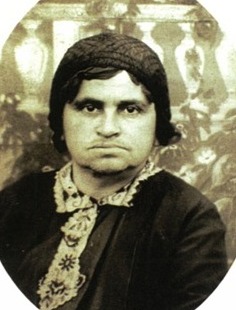
Sarah Schenirer
1883-1935Worshipper during the First World War; founder of the Beit Jaakov schoolsSchenirer, a young woman from Kraków, fled to Vienna with her family during the First World War. There she attended the Orthodox synagogue on Stumpergasse and heard the sermons of its rabbi, Moses David Flesch, on the role of women in Jewish history. They inspired her to found the Beit Jaakov schools for Orthodox girls, the start of a worldwide school movement; a 2025 account calls the Stumpergasse synagogue its cradle.
ביוגרפיה או מקור ←Moses David Flesch
1879-1944Rabbi of the Stumperschul from 1913Flesch, born in Pressburg in 1879, became rabbi of the Israelitischer Tempel- und Schulverein at Stumpergasse 42 in 1913. A follower of Samson Raphael Hirsch's neo-Orthodoxy, he preached on the place of women in Jewish history, and his sermons during the First World War inspired Sarah Schenirer to found the Beit Jaakov girls' schools; he later visited her school in Kraków. After 1938 he fled with his family to the Netherlands and died in the Nazi concentration camp of Buchenwald in 1944.
ביוגרפיה או מקור ←Gottfried Berger
UnknownArchitect and master builder of the 1891 planBerger, an architect and Stadtbaumeister with an office at Stumpergasse 49, a few doors from the synagogue, drew the building plan for the courtyard synagogue that the Vienna Magistrat approved on 31 January 1891. The plan shows a three-storey courtyard building; whether the third storey was built is not known, and it is not clear whether his plan created the synagogue or altered an earlier building that Bob Martens dates to 1864.
ביוגרפיה או מקור ←Abraham Frenkel
UnknownLast chairman (Obmann) of the Israelitischer Tempel- und SchulvereinFrenkel is named in the city archives' association files as the last chairman of the Israelitischer Tempel- und Schulverein, the association that owned and ran the Stumperschul and its religious school. He held office when the Nazis seized the association's assets in March 1938 and when the Stillhaltekommissar dissolved it in 1938-39. Nothing further about his life or his fate was found in the sources consulted.
ביוגרפיה או מקור ←יש לכם משהו לתרום?
תמונות, מסמכים, סיפורי משפחה וזיכרונות מבית הכנסת ומהקהילה שלו עוזרים לשמור על ההיסטוריה שלו בחיים.
Share a memory or thought
No comments yet. Be the first to add one.