
La historia de Turnertempel (Turnergasse Synagogue), Vienna
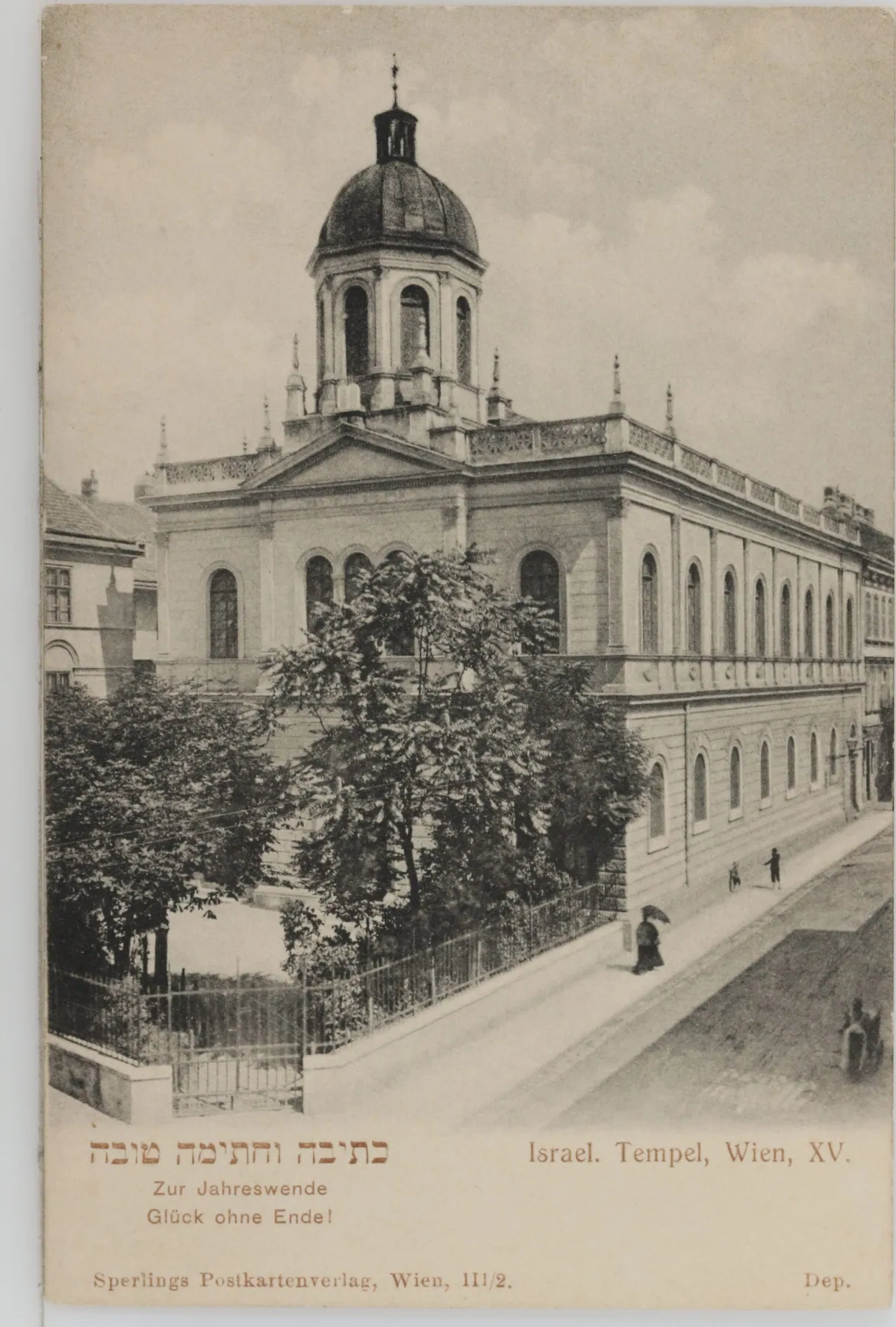
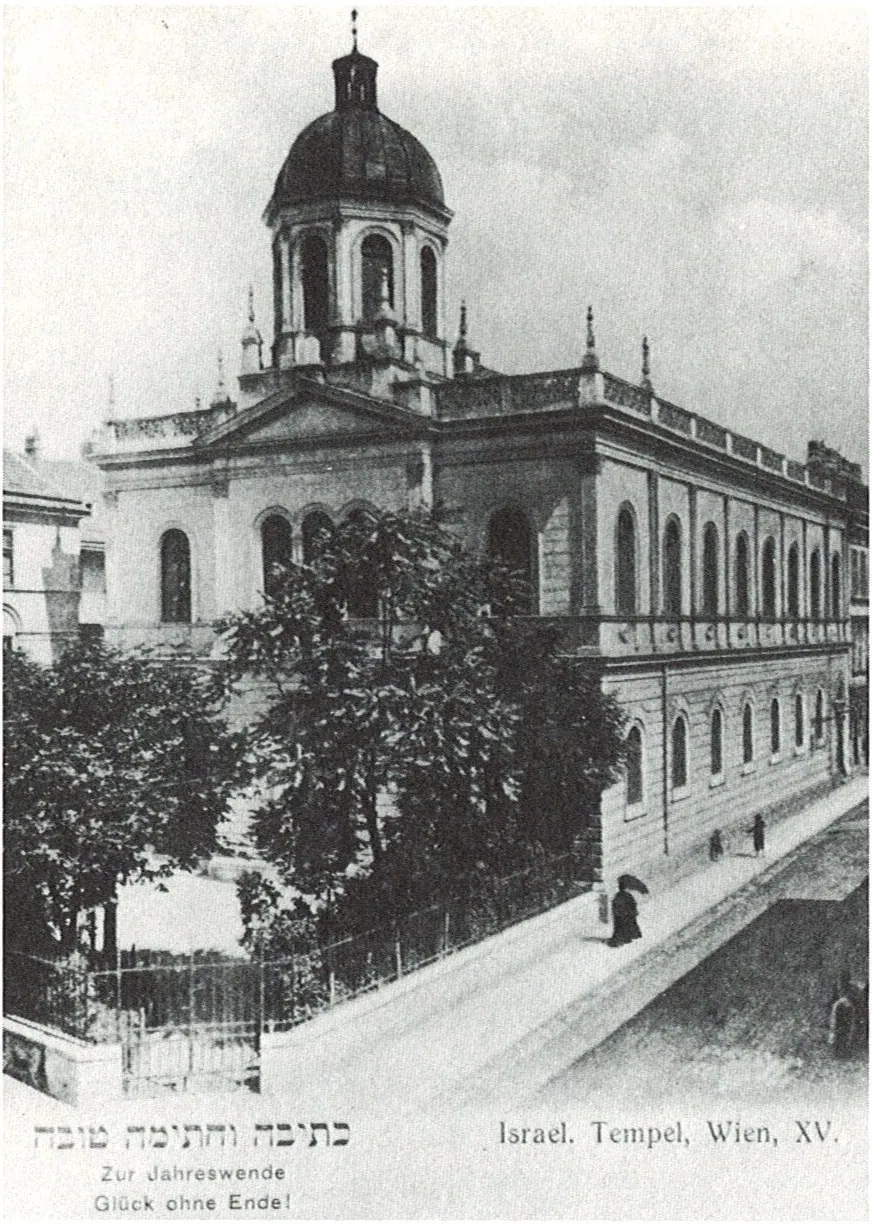
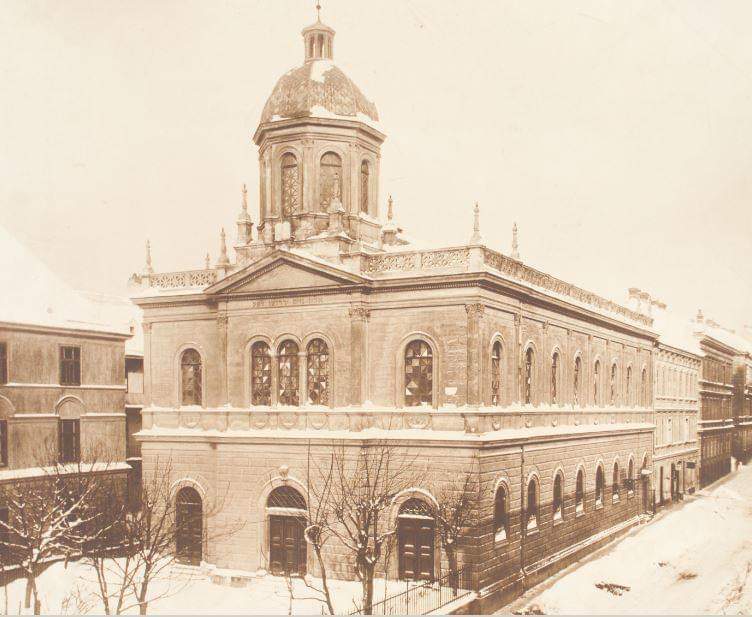
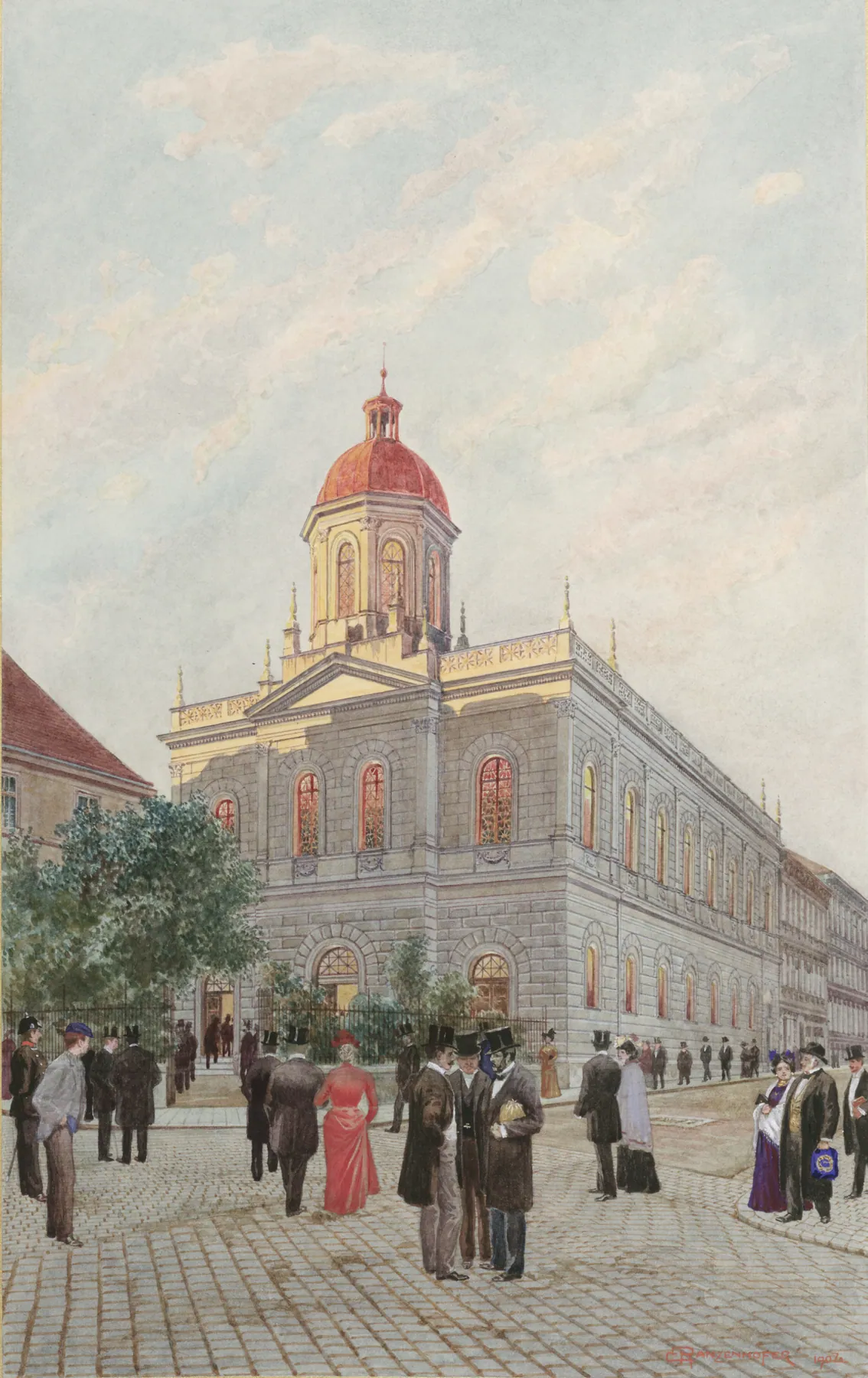
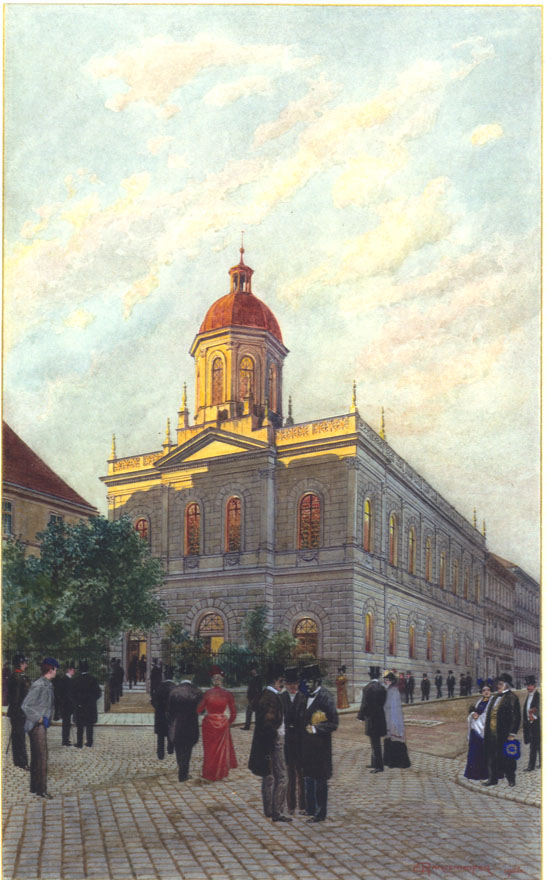
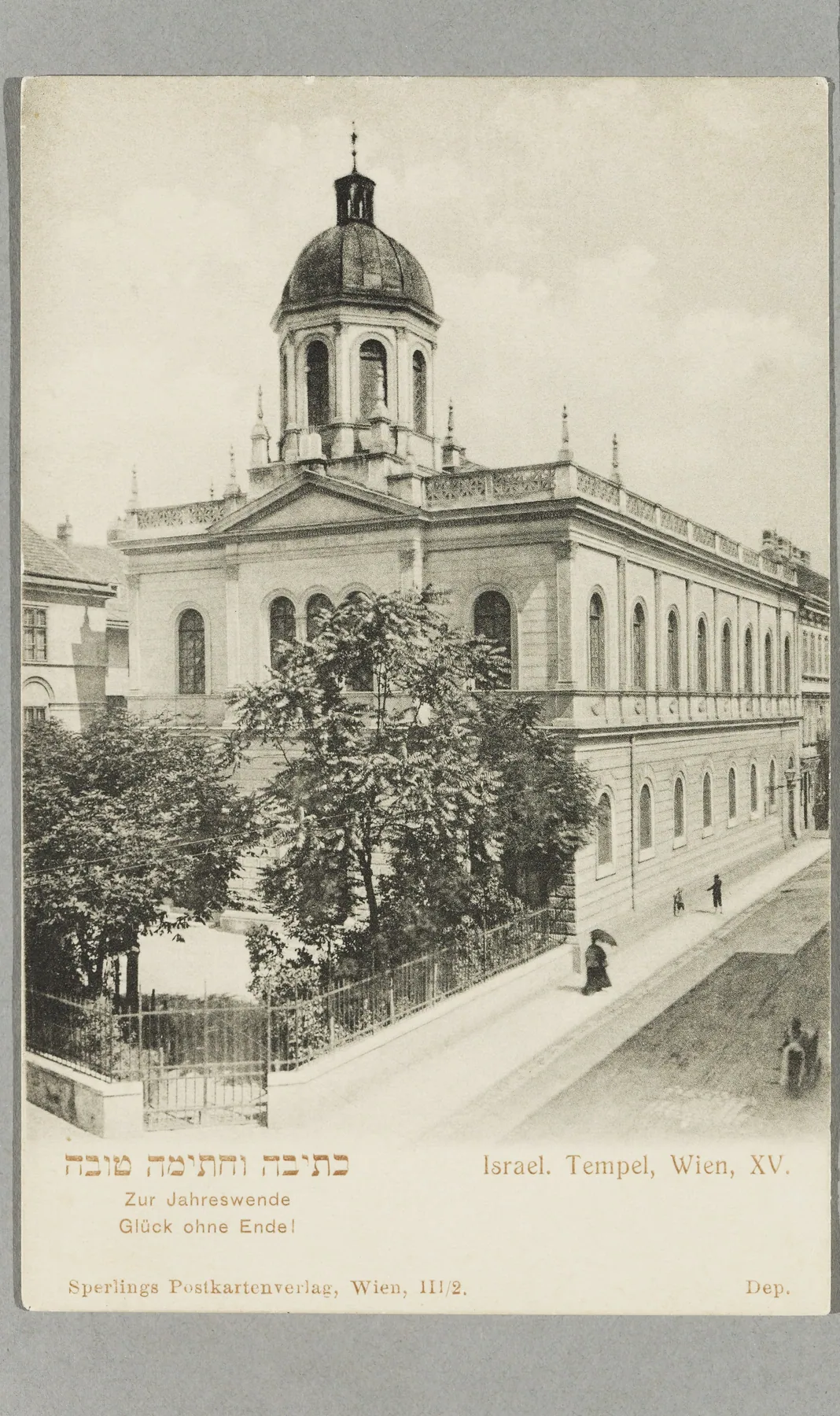
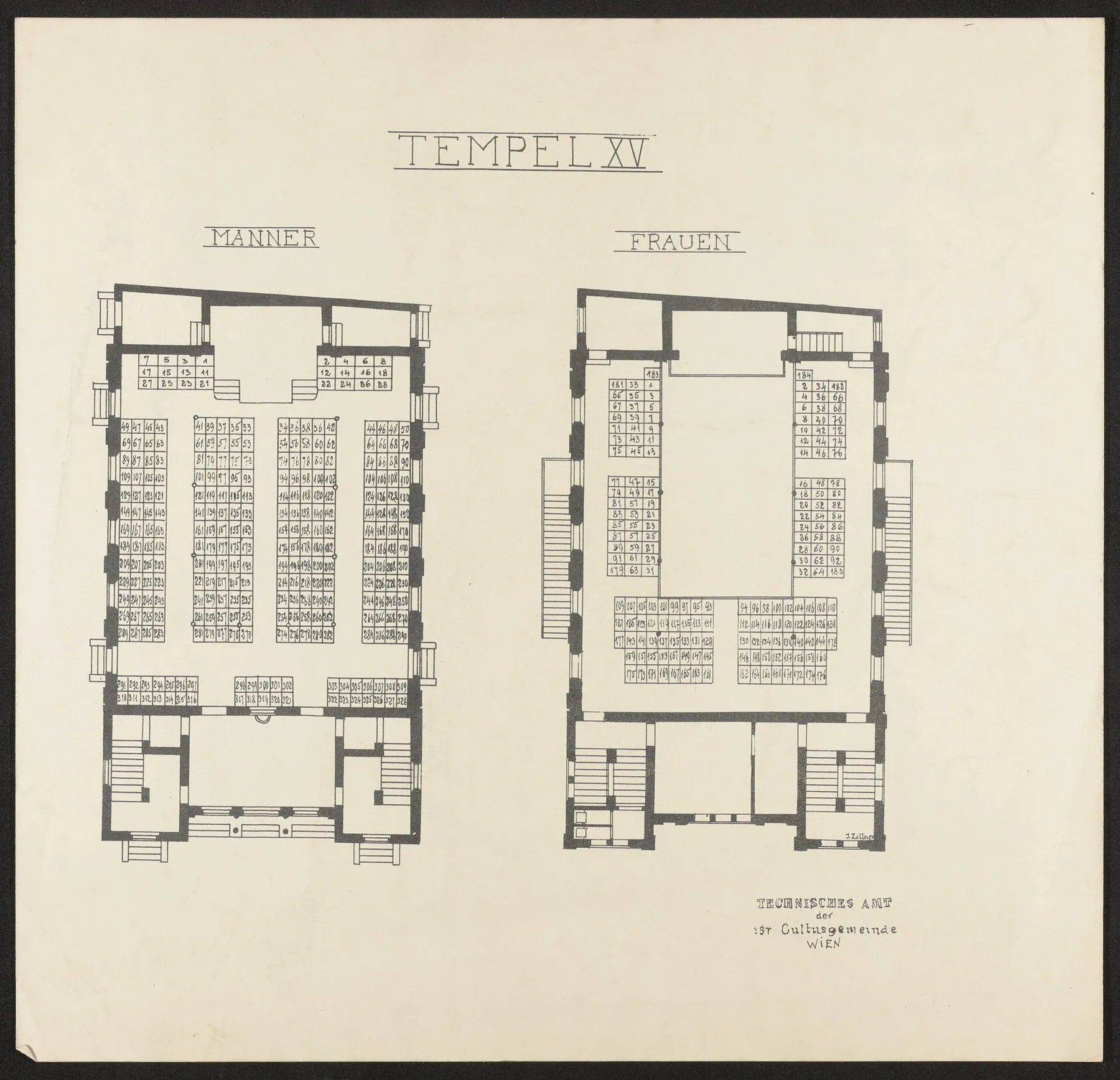
The synagogue in the Turnergasse was built in 1871–1872 by the Israelitische Cultusgemeinde Sechshaus, then an independent Jewish community in the suburbs west of Vienna. It was the third great synagogue in the Vienna area after the Stadttempel and the Leopoldstädter Tempel. The architect Carl König, who had won acclaim for his 1868 design for the new Vienna City Hall, designed a free-standing Neo-Renaissance building with a single octagonal lantern tower; two towers had been planned, but one was dropped so that the synagogue would not look like a church. It opened on 26 September 1872 with a sermon by Rabbi Adolf Abraham Schmiedl and seated 496 men and 333 women. After the suburbs were joined to Vienna in 1892 and the Sechshaus community merged into the Viennese Kultusgemeinde in 1909, the Turnertempel remained the religious, social and cultural centre for the Jews of Meidling, Hietzing, Penzing and Rudolfsheim-Fünfhaus. It was renovated in 1923 and a weekday prayer hall was enlarged. On 10 November 1938 the Nazis looted the synagogue and set it on fire. The ruins were cleared in 1939–1940, and the site is now a memorial park beside a municipal housing block.
Where it stood for 66 years
Historic: Turnergasse 22 / corner of Dingelstedtgasse, 1150 Vienna (Rudolfsheim-Fünfhaus; formerly Sechshaus). Present day: Denkmalpark Turnertempel and municipal housing at Turnergasse 22, Vienna, Austria. Approximate.
Abrir mapa ampliado →La comunidad judía
Jews began to settle in the western suburbs of Sechshaus, Fünfhaus and Rudolfsheim in the mid-nineteenth century, many of them from Moravia, drawn by the growing textile and trading businesses outside the Vienna city walls. They formed the Israelitische Cultusgemeinde Sechshaus, which remained legally independent of the Viennese community until 1909. As the community grew, it decided to build a large synagogue on a site at Turnergasse 22, on the corner of the Dingelstedtgasse. Rabbi Adolf Abraham Schmiedl, the community's rabbi, campaigned passionately for the new building. Beside the synagogue stood a community house with offices, a meeting room and the caretaker's flat. A dense network of associations was based at the address: a burial society founded in 1865, a women's charity founded in 1870, a poor-relief society, a sick-benefit society, a Talmud Torah school association and a trousseau fund for poor brides.
Arquitectura y diseño
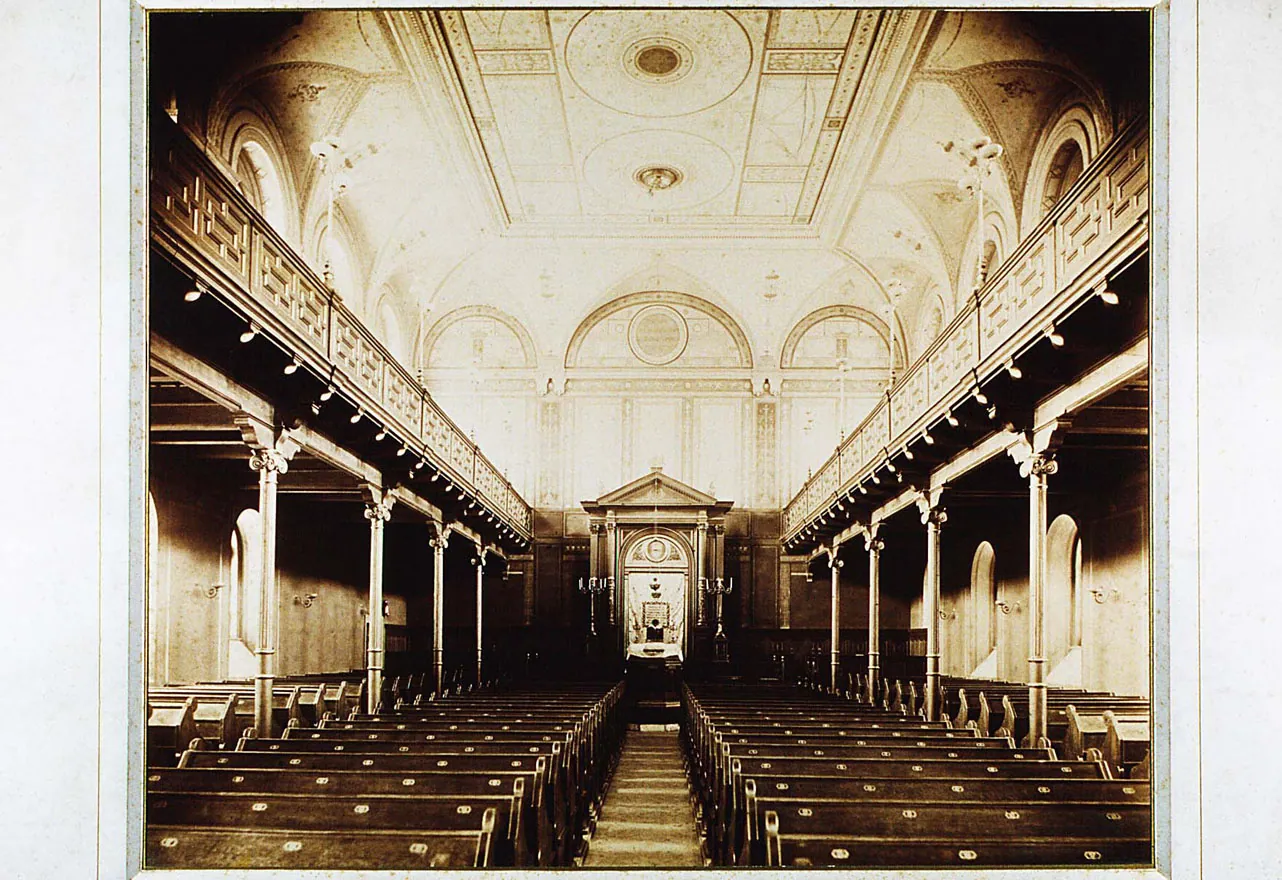
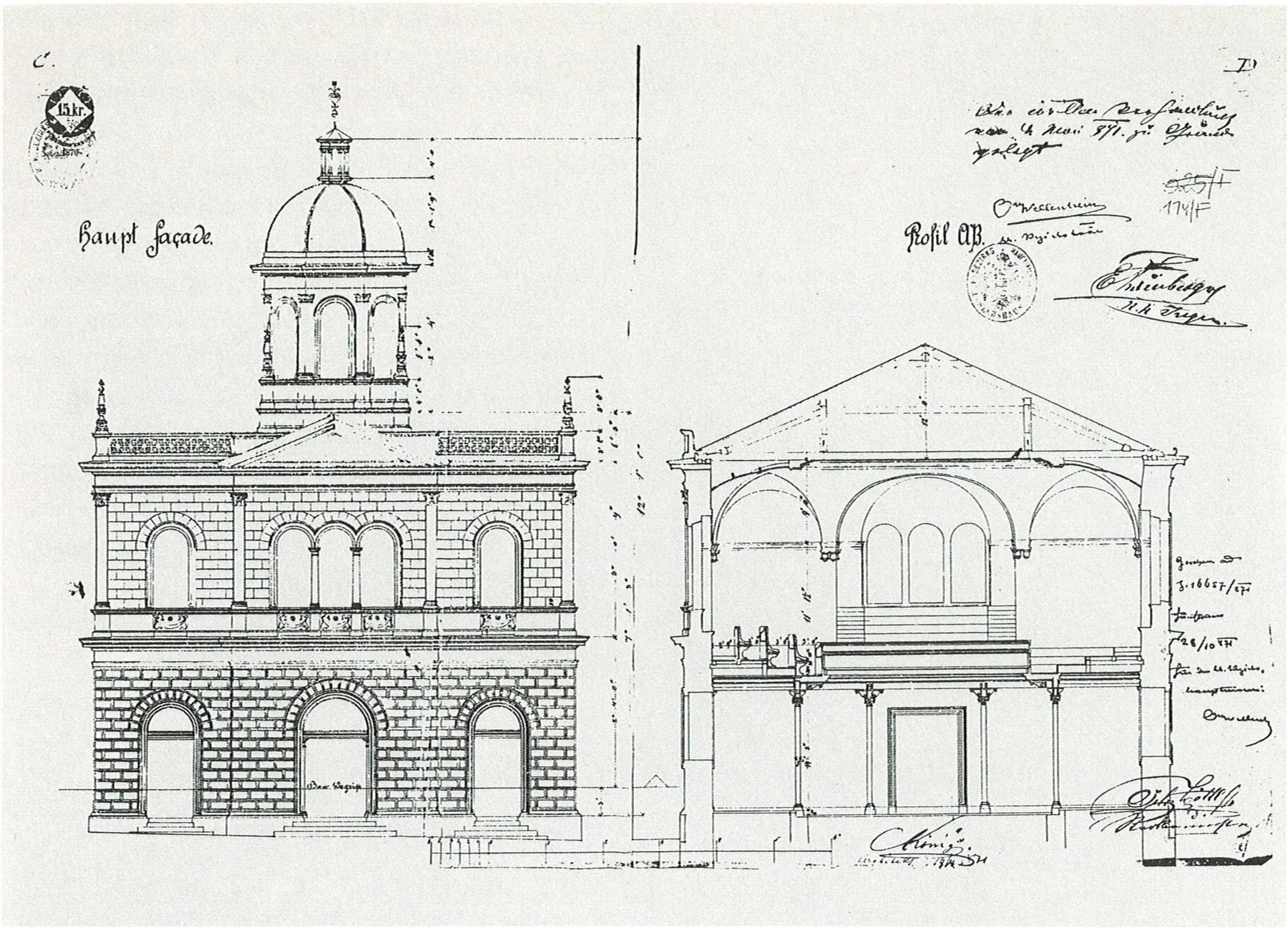
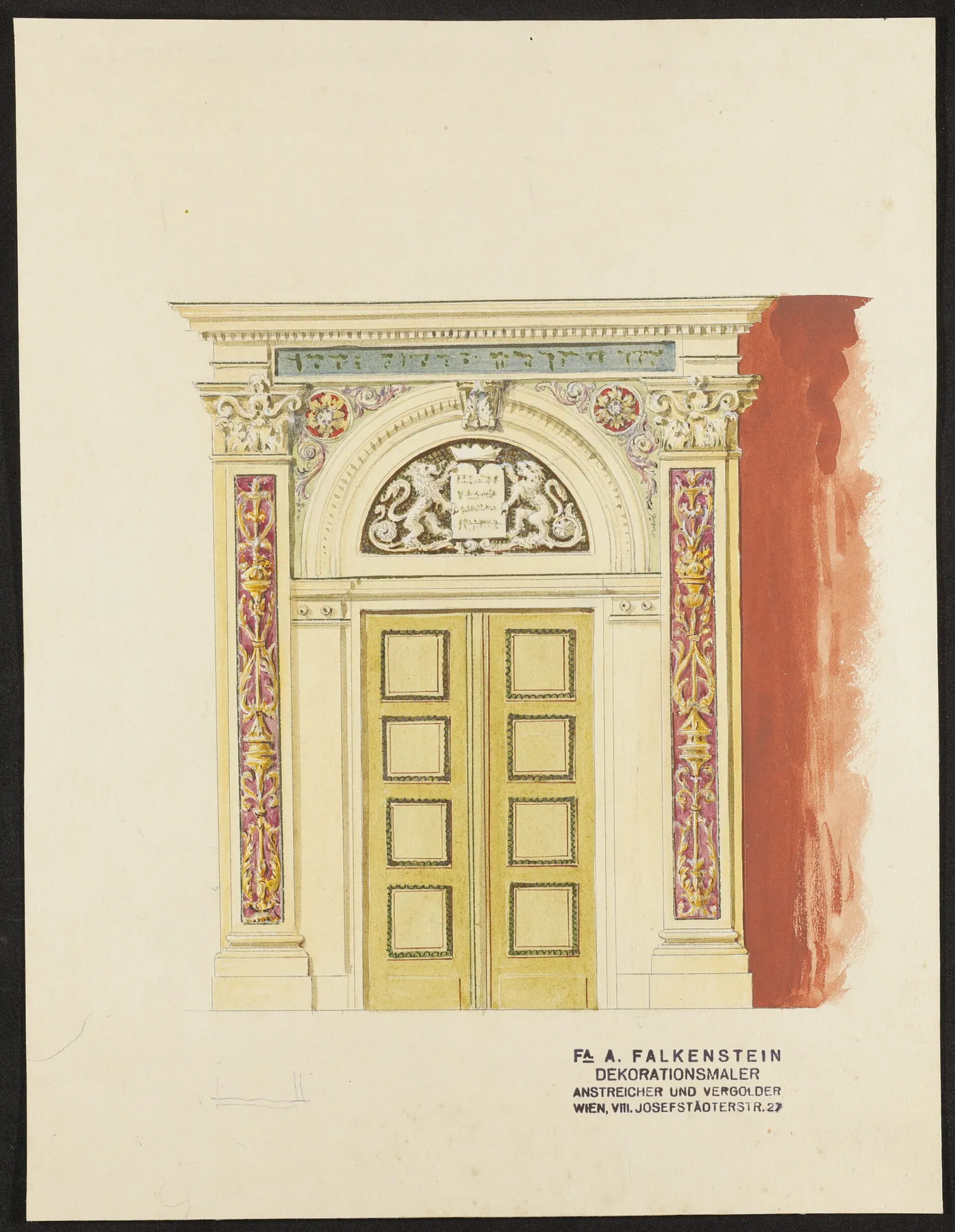
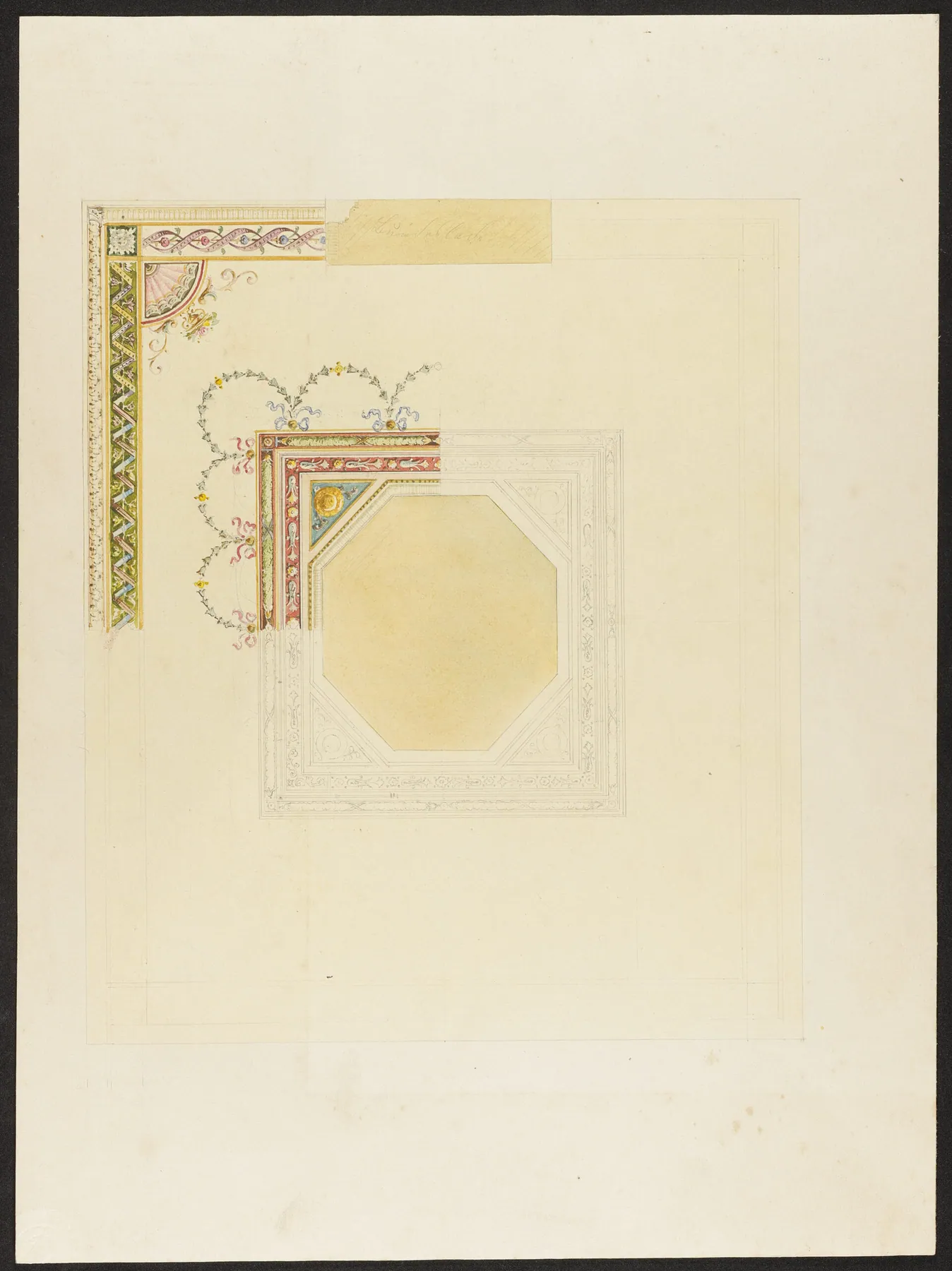
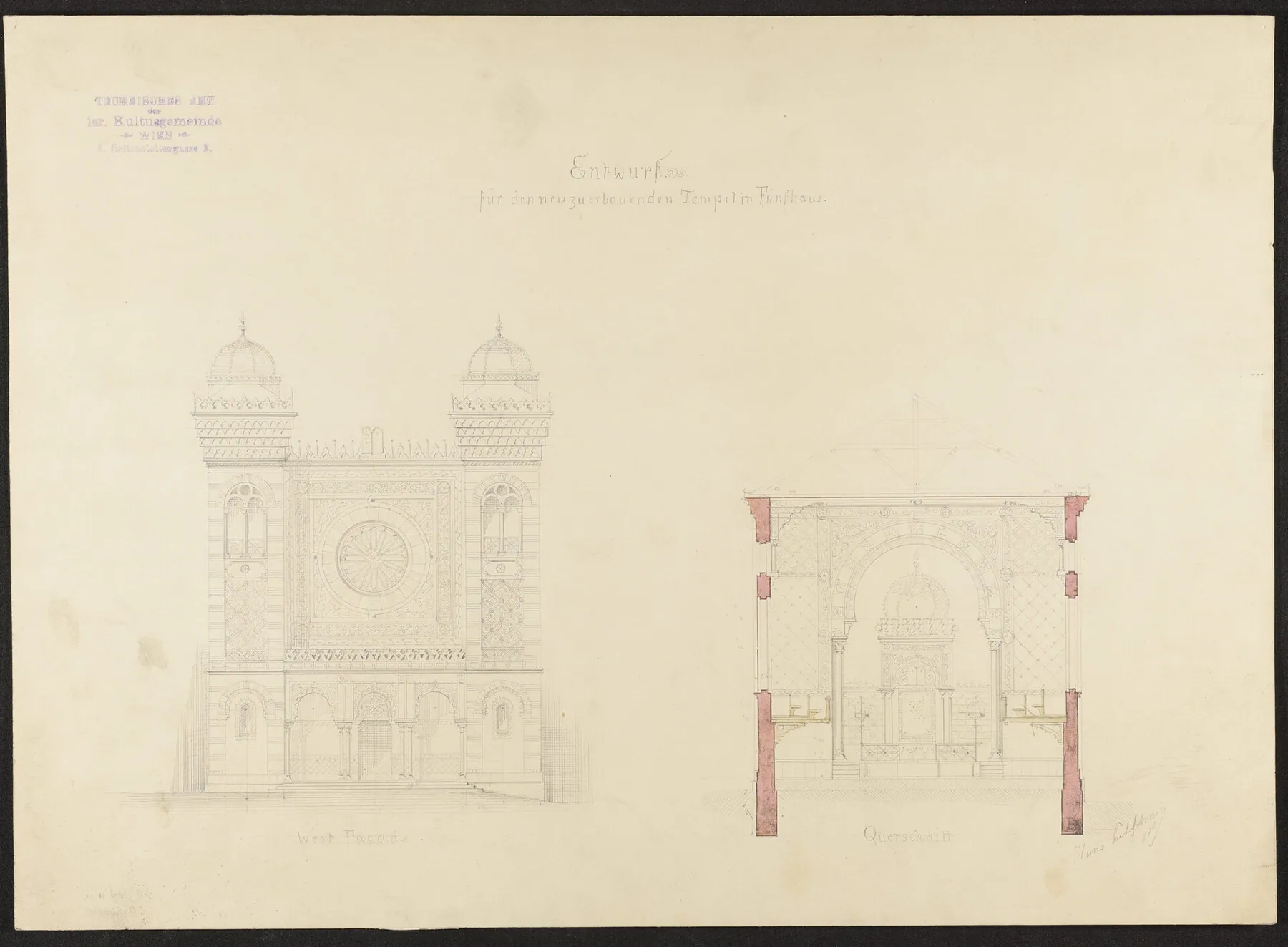
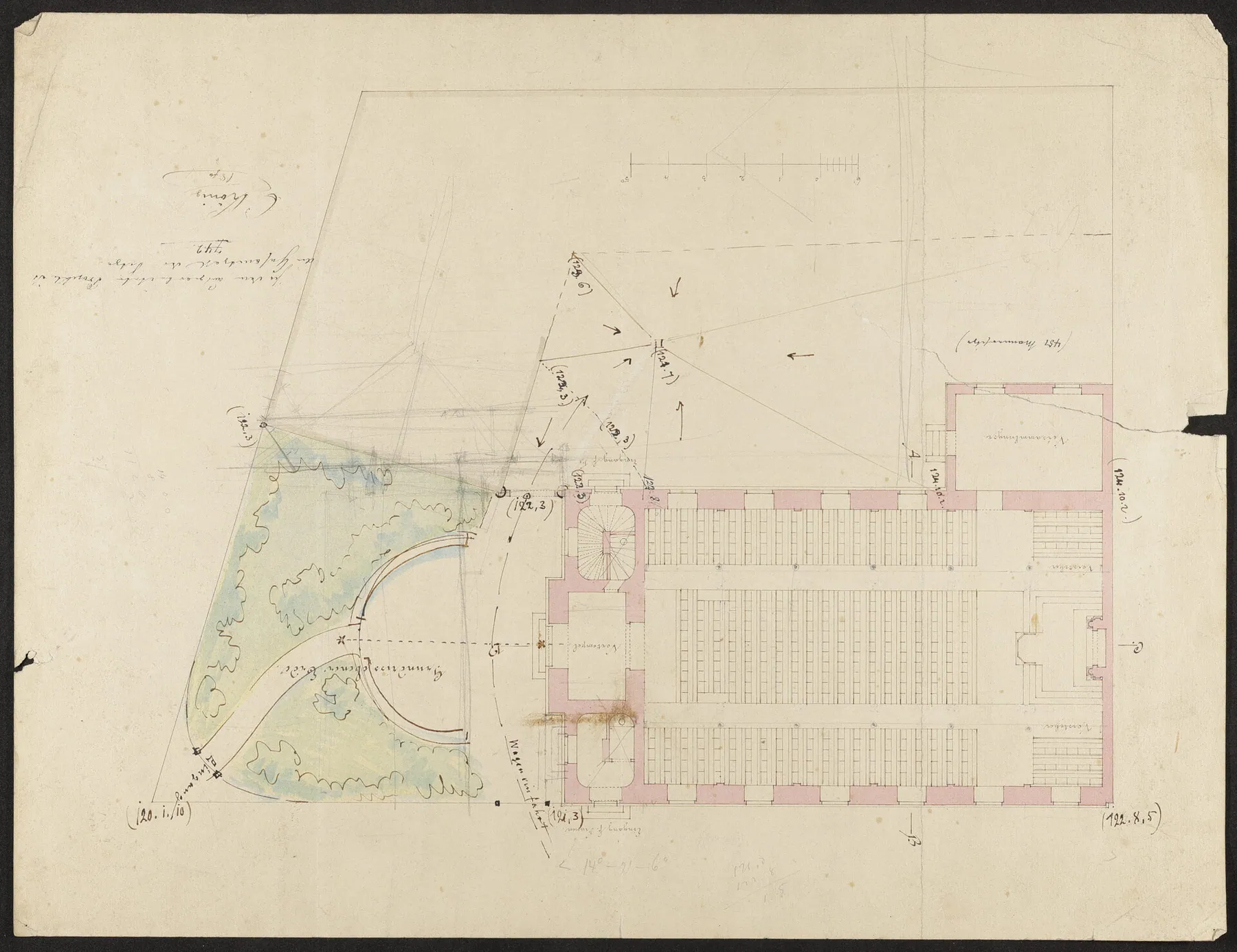
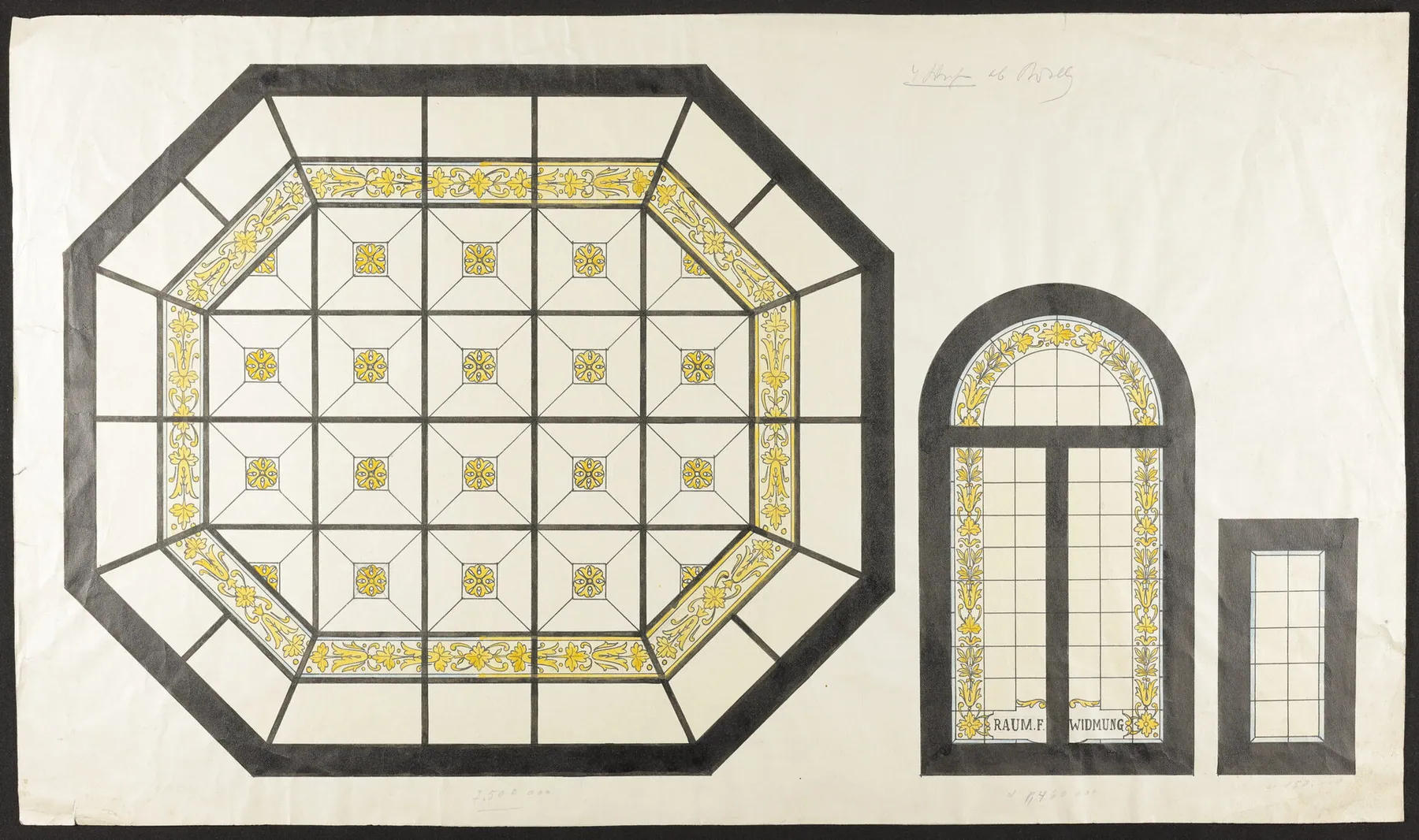
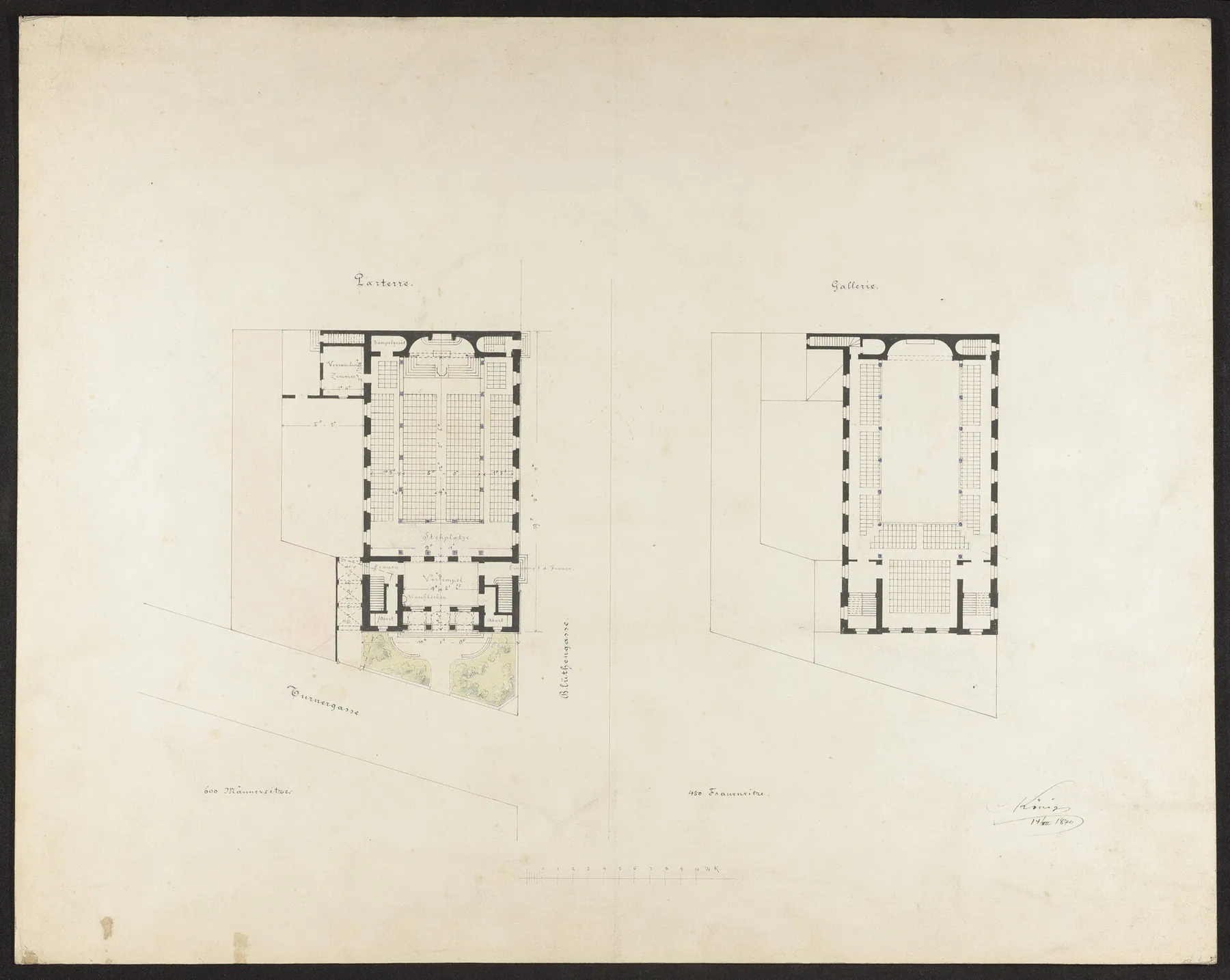
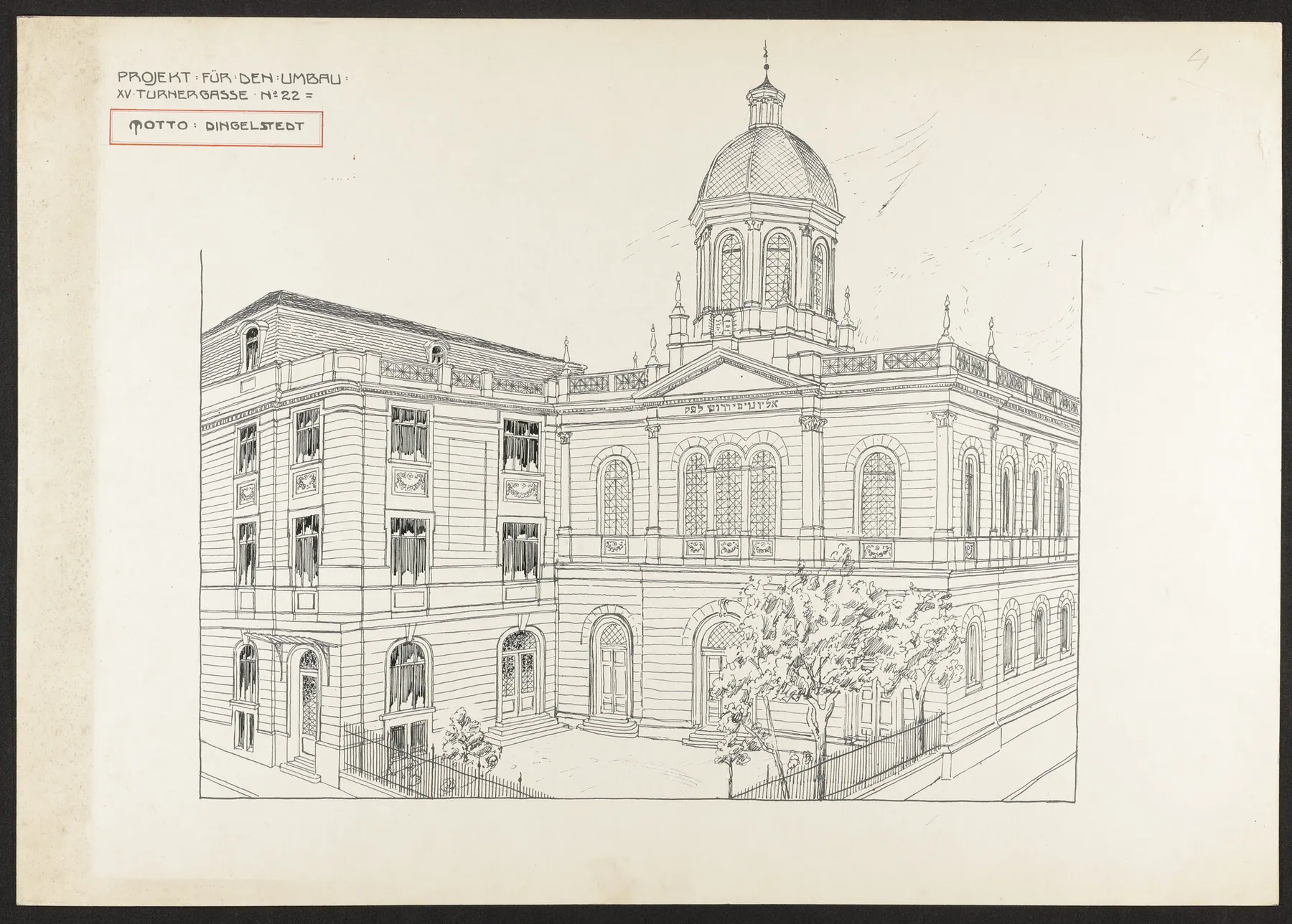
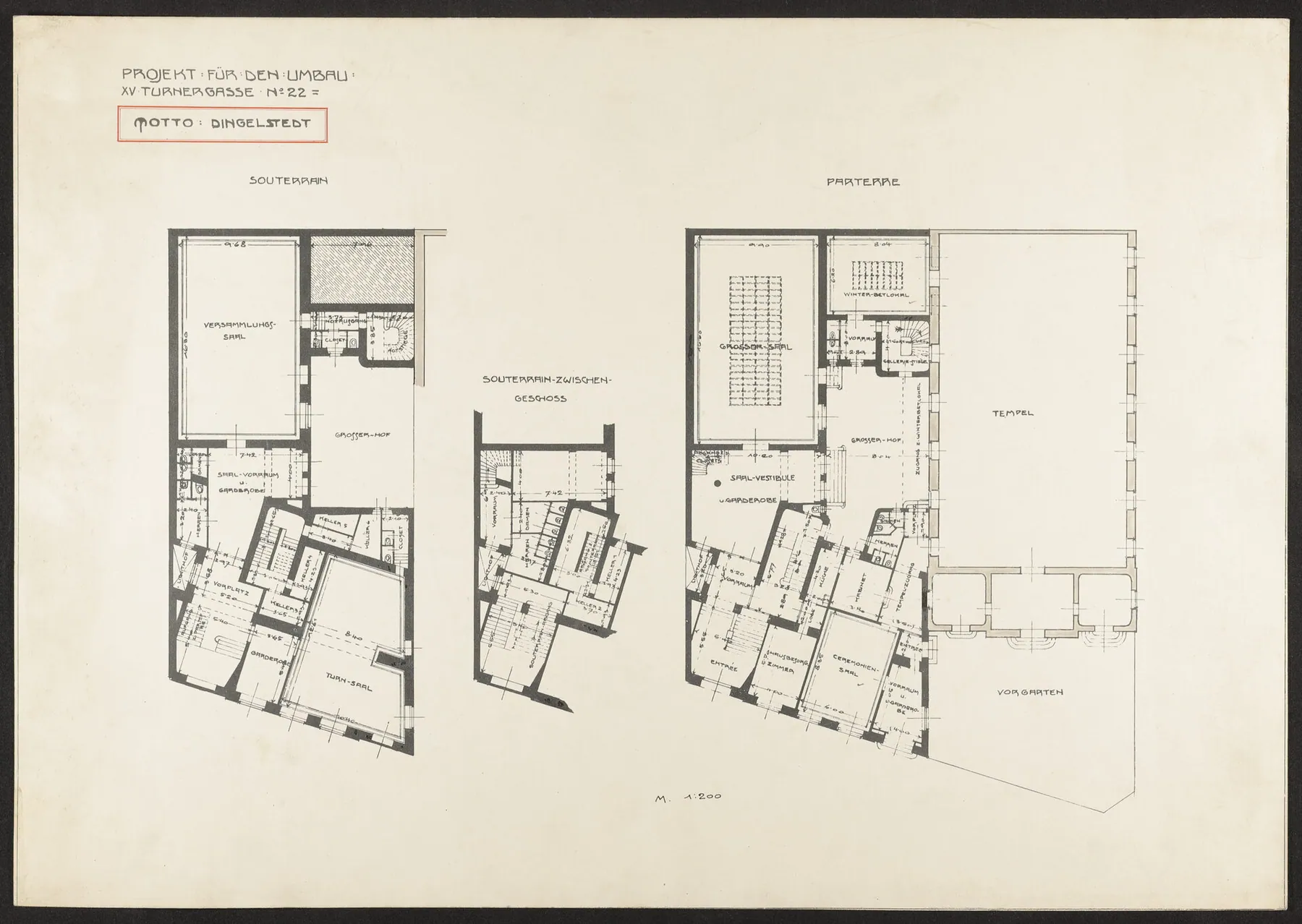
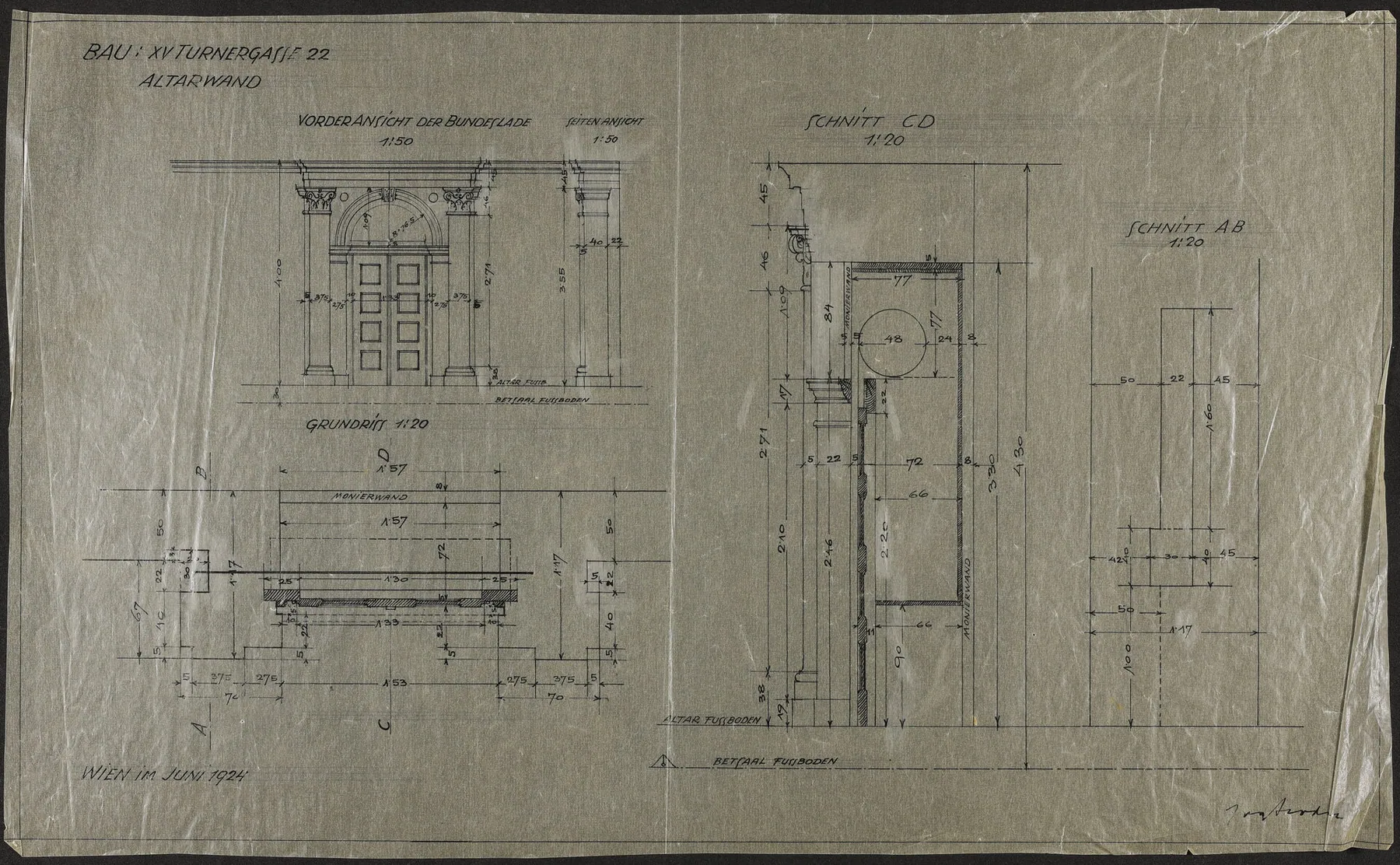
König designed an elongated free-standing building whose narrower west front on the Turnergasse, set behind a small forecourt, was divided into three parts and crowned in the centre by an octagonal tower ending in a lantern. Three round-arched portals led into a vestibule with staircases to the women's galleries. The men's hall had four blocks of seats separated by three aisles, under galleries carried on iron columns and a painted ceiling. The Torah ark, of carved, richly ornamented and gilded wood, took the form of a Roman triumphal arch. An organ and a choir loft stood above the vestibule. Eight windows on each of the south and north sides gave good daylight, and the acoustics were praised as excellent. The Jewish Museum Vienna holds König's original plans of about 1870 and the drawings for the alterations of the 1920s, including designs for the ark wall, doors, windows, lighting and seating.
La vida dentro de la sinagoga
The Turnertempel followed the moderate Viennese rite, with an organ and a choir. Adolf Abraham Schmiedl, a scholar and religious philosopher, was rabbi of the Sechshaus community and gave the opening sermon in 1872. Jonathan Wolf served as rabbi from 1894 to 1902, followed by the folklorist Max Grunwald from 1903 to 1913 and by Israel Taglicht from 1913 to 1932, who later became chief rabbi of Vienna. From December 1936 the rabbi was Hirsch Jakob Zimmels. In 1923 the building was fully renovated, electric light replaced gas, and a courtyard prayer hall for weekdays and winter was enlarged by 128 men's seats. The community house and the synagogue were home to the burial society, women's charity, poor-relief and sick-benefit societies, a Talmud Torah school and a society caring for Jewish residents of the Lainz old people's home.
Destrucción
On 10 November 1938, from about 5 a.m., men in civilian clothes forced their way into the synagogue with tools, smashed its furnishings and books and stole valuables. A tenant of Turnergasse 22 later testified that SA men had gathered fuel, poured it inside the building and at 9.30 a.m. set it alight with hand grenades, and that the loot, including carpets, was loaded onto a lorry outside. The Vienna fire brigade's log records a call-out at 11.40 a.m.: the whole two-storey temple with its dome was burning; the brigade only protected the surrounding houses and left at 7.32 a.m. the next day. In December 1939 the district authority allowed the Kultusgemeinde to clear the dangerous ruins, and the builder Hans Kraus took down the remaining walls in exchange for the salvage.
El destino de la comunidad
In 1939 the Kultusgemeinde ran an emergency soup kitchen for impoverished Jews in the former caretaker's flat beside the ruins. On 28 May 1940 the property was sold under duress to Leopold Hölzl, a haulage contractor and member of the Nazi party, who took over the demolition, built garages on the site and later a petrol station. Rabbi Hirsch Jakob Zimmels escaped to Britain in 1939. The Jews of the western districts who could not emigrate were deported from 1941 and most were murdered. In 1951 a restitution settlement obliged Hölzl to pay the Kultusgemeinde 70,000 schillings in instalments. His heirs sold the property to the City of Vienna in 1973.
El lugar hoy
Nothing of the synagogue survives above ground. After the City of Vienna bought the property in 1973, a municipal housing block was built at Turnergasse 22, and a memorial plaque was placed on it in 1988. In 2011 the former synagogue plot was laid out as the Denkmalpark Turnertempel, a public memorial park whose paving and planting trace the footprint of the building.
Nombres destacados
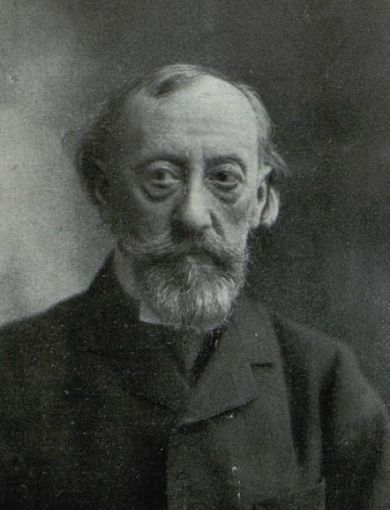
Carl (Karl) König
1841–1915ArchitectCarl König, a Viennese architect and professor who had won acclaim for his 1868 City Hall design, designed the Turnergasse synagogue for the Sechshaus community in 1871–1872. He dropped a planned second tower so that the building would not resemble a church. He later designed the synagogue in Reichenberg (Liberec).
Biografía o fuente →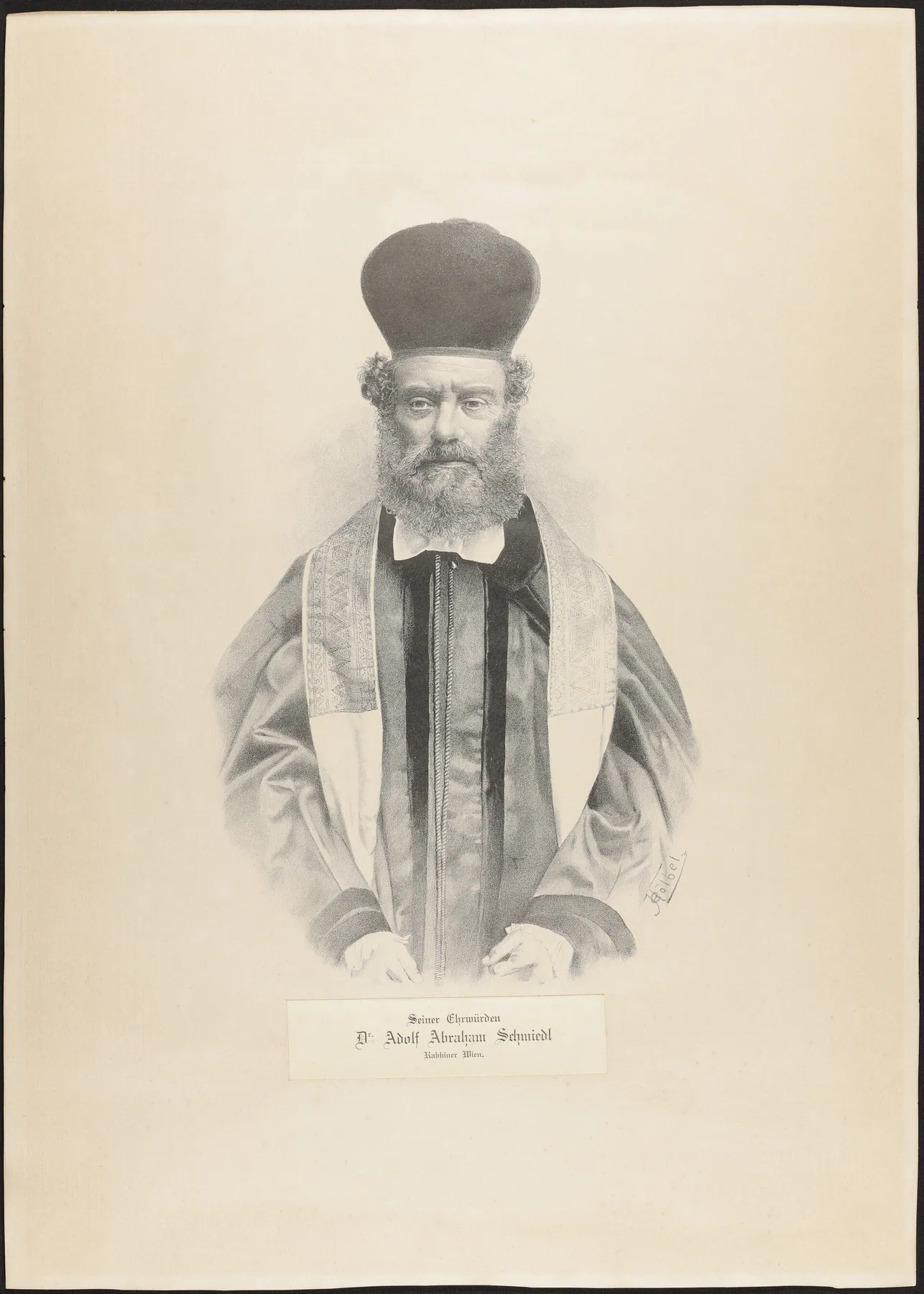
Adolf Abraham Schmiedl
1821–1913Rabbi of SechshausAdolf Abraham Schmiedl, a scholar and religious philosopher, was rabbi of the Israelitische Cultusgemeinde Sechshaus and campaigned passionately for the new synagogue. He gave the festive sermon at its opening on 26 September 1872 and continued as rabbi of the Turnergasse synagogue.
Biografía o fuente →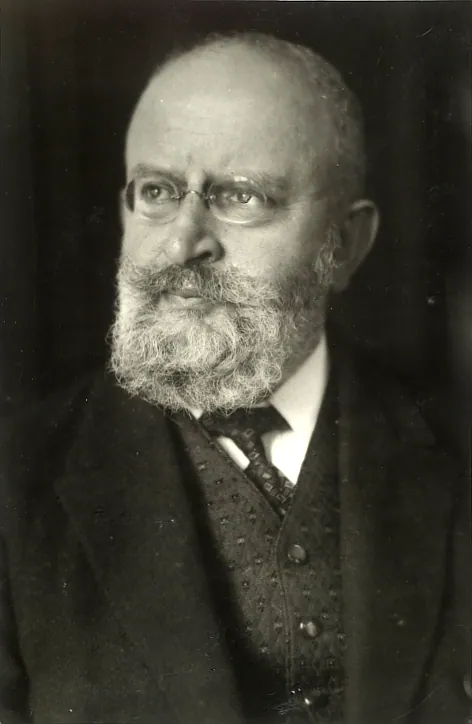
Max Grunwald
1871–1953Rabbi, 1903–1913Max Grunwald, a founder of Jewish folklore studies, was rabbi of the Turnergasse synagogue from 1903 to 1913. He then became preacher at the Leopoldstädter Tempel and served at the Vienna Stadttempel from 1927 to 1930, before emigrating to Palestine in 1938.
Biografía o fuente →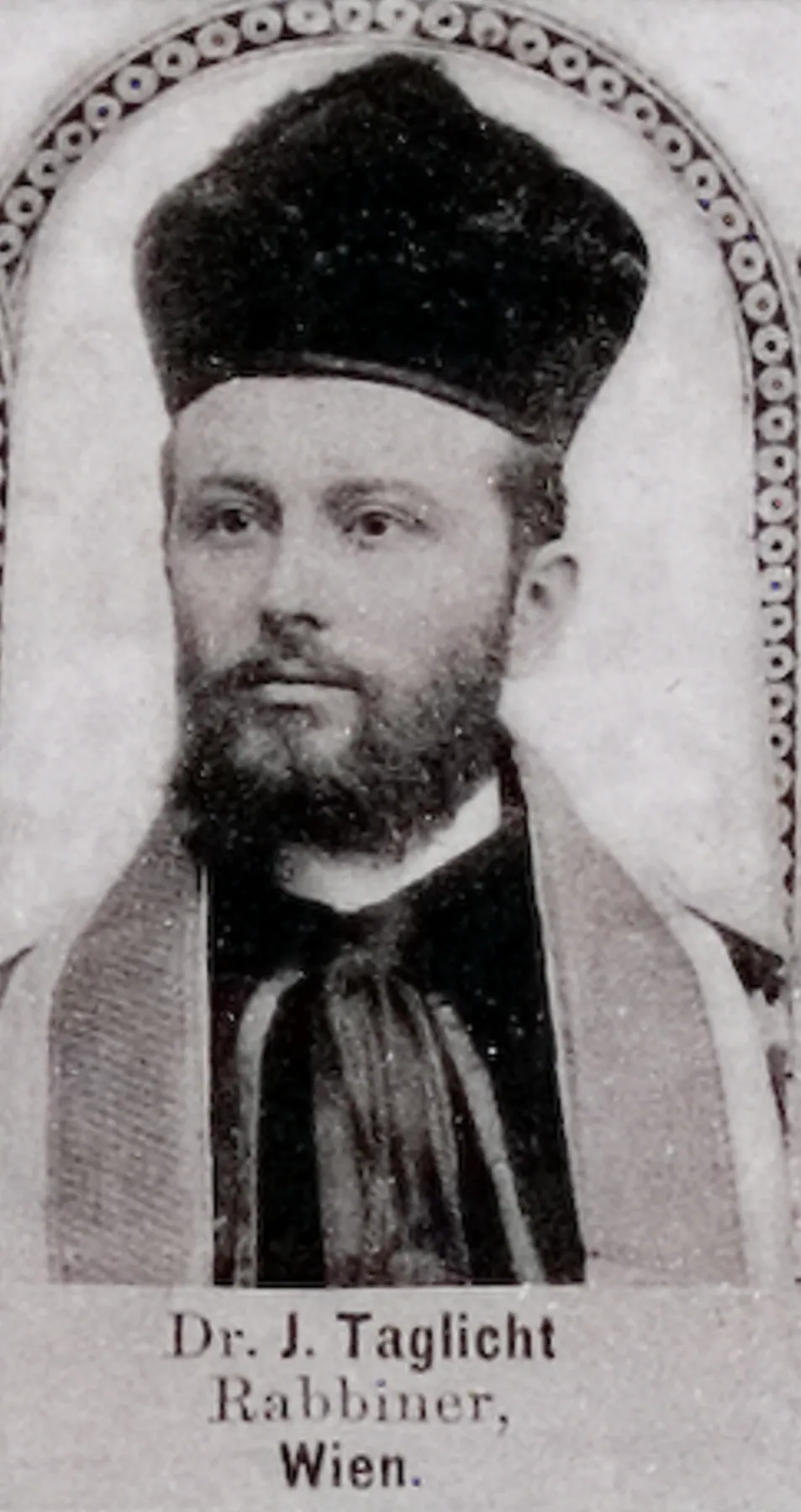
Israel Taglicht
1862–1943Rabbi, 1913–1932Israel Taglicht was rabbi of the Turnertempel from 1913 to 1932 and helped found its trousseau fund for poor brides in 1921. From 1933 he was rabbi at the Leopoldstädter Tempel, and from 1936 to 1938 chief rabbi of Vienna.
Biografía o fuente →Jonathan Wolf
1840–1902Rabbi, 1894–1902Jonathan Wolf served as rabbi of the synagogue at Turnergasse 22 from 1894 until his death in 1902, according to Evelyn Adunka's study of the Turnertempel rabbis as cited by Wien Geschichte Wiki.
Biografía o fuente →Hirsch Jakob Zimmels
1900–1974Rabbi, 1936–1938Hirsch Jakob Zimmels was the last rabbi of the Turnertempel, from the end of December 1936 until its destruction in 1938. He escaped to Britain in 1939, where he became a noted historian of Jewish law and later principal of Jews' College in London.
Biografía o fuente →¿Tiene algo que aportar?
Fotografías, documentos, historias familiares o recuerdos de esta sinagoga y su comunidad ayudan a mantener viva su historia.
- Turnertempel
- 15., Turnergasse 22 - Israelitischer Tempel/Turnertempel, Ansichtskarte
- Planzeichung für die Synagoge in der Turnergasse 22 in Wien XV.: Grundriss mit angrenzenden Straßen
- Category:Synagoge Turnergasse
- Porträt des Rabbiners Adolf Abraham Schmiedl
- Max Grunwald
- Hirsch Jakob Zimmels
- Die zerstörten Synagogen Wiens. Virtuelle Stadtspaziergänge
Share a memory or thought
No comments yet. Be the first to add one.