
Die Geschichte von Türkischer Tempel (Turkish Temple), Zirkusgasse, Vienna
Sephardic Jews, descendants of those expelled from Spain in 1492 who had settled in the Ottoman Empire, traded in Vienna from the early eighteenth century. Their community was founded in 1736 by Diego d'Aguilar and stood under the protection of the Ottoman Empire, whose subjects its members remained. It kept its own prayer house from 1737, and after earlier houses on the Obere Donaustraße and the Taborstraße became too small, it bought a plot at what is now Zirkusgasse 22 in 1860. The synagogue built there opened in 1868 but had serious structural faults and had to be pulled down in 1885.
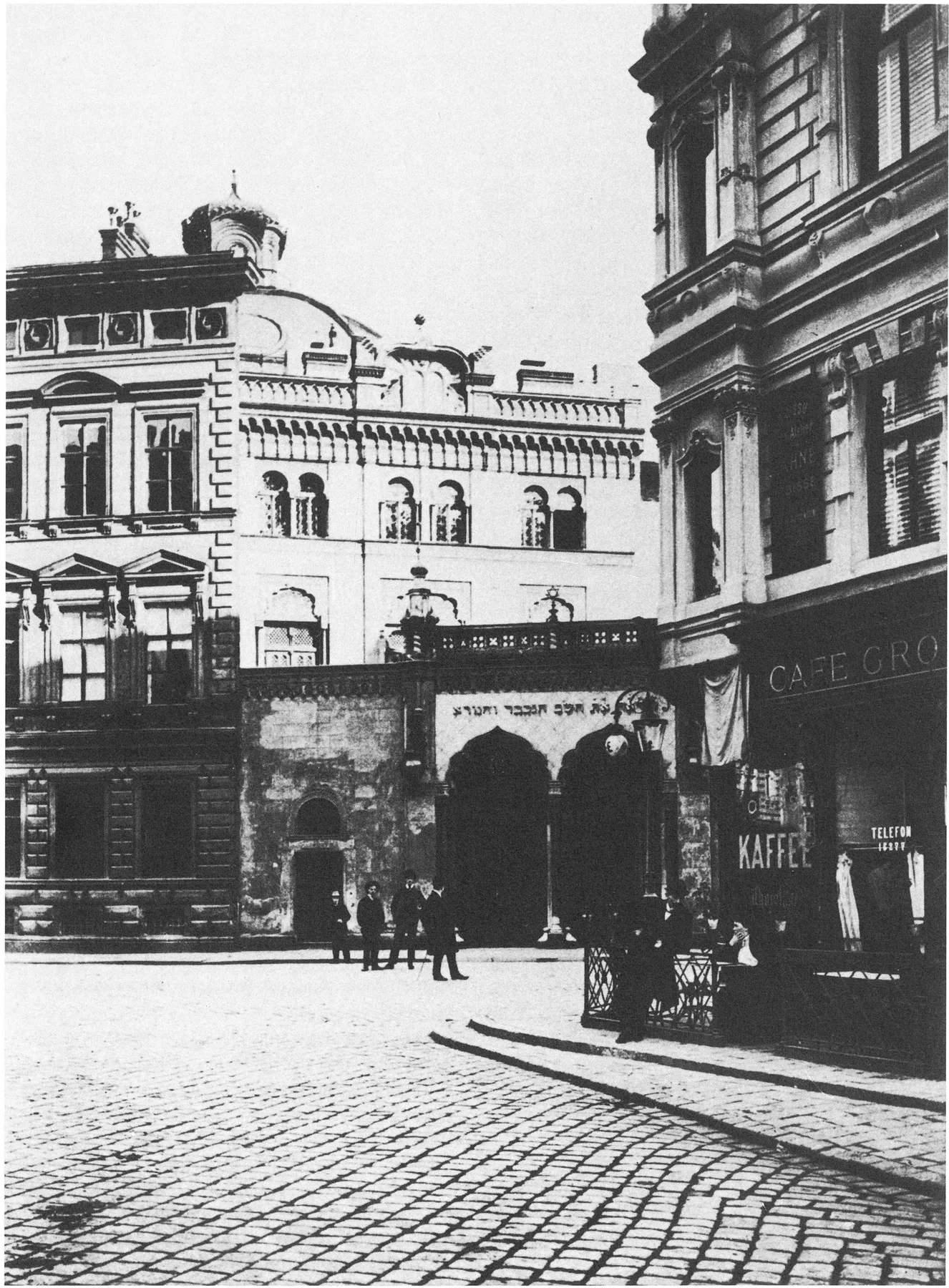
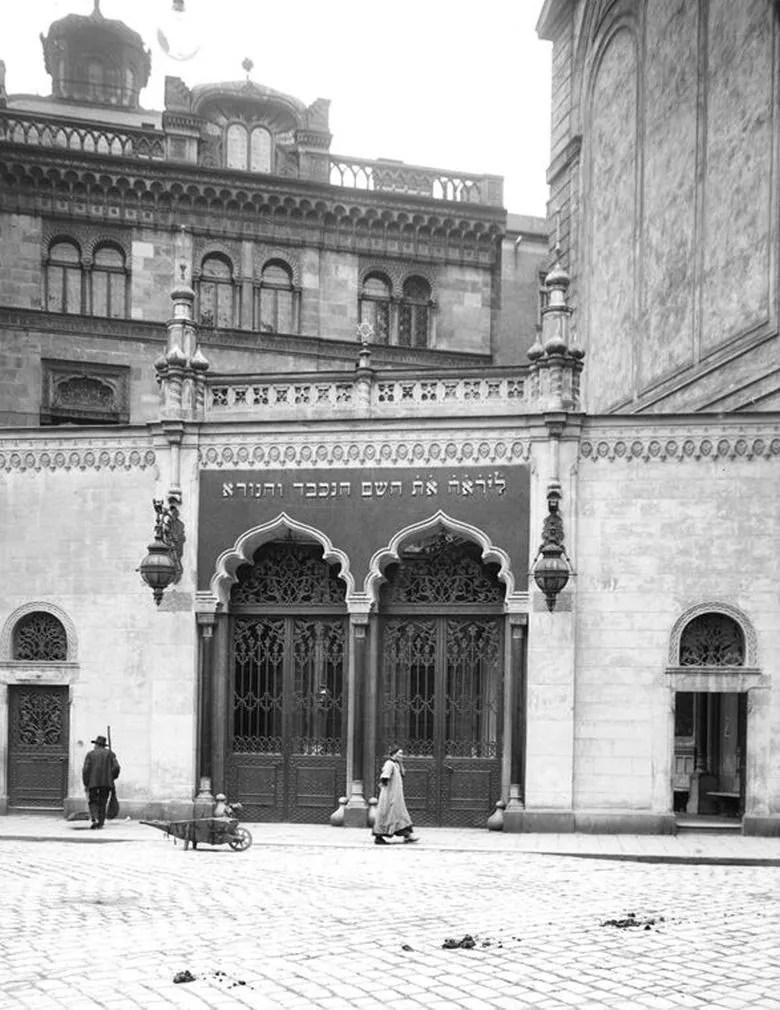
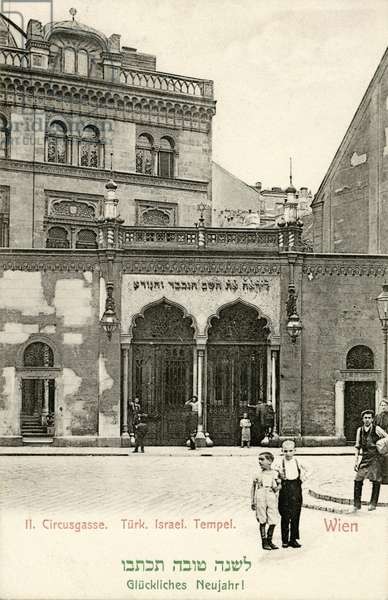
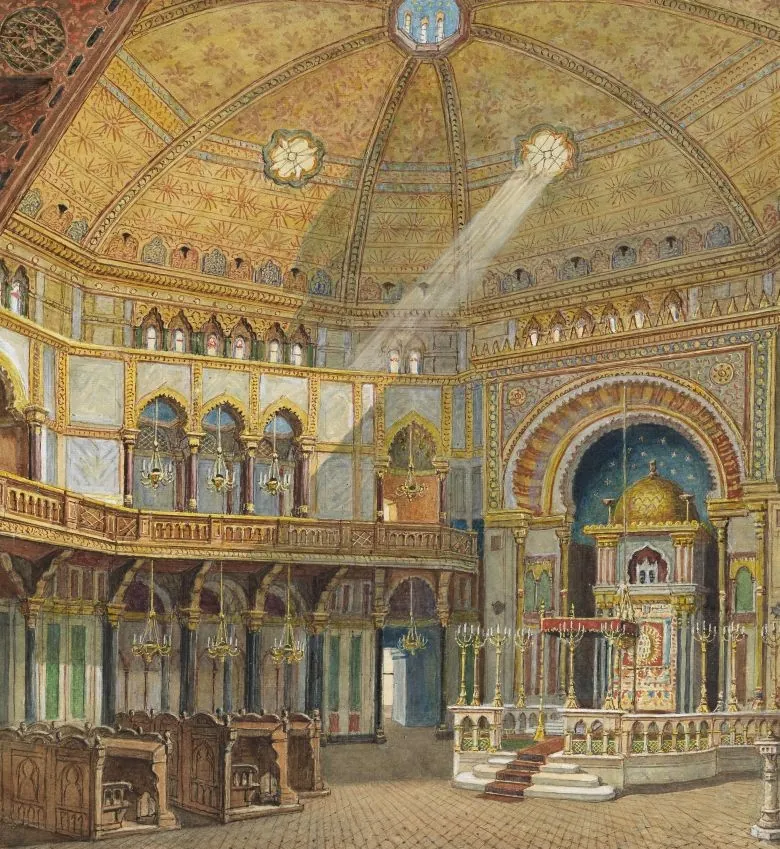
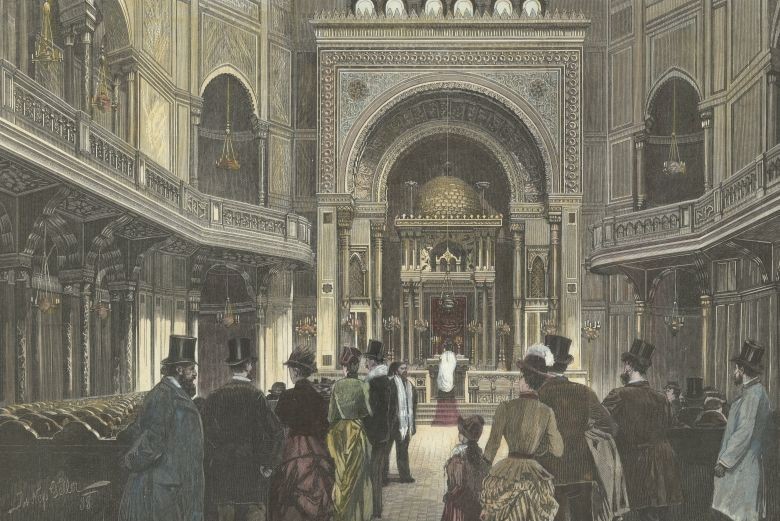
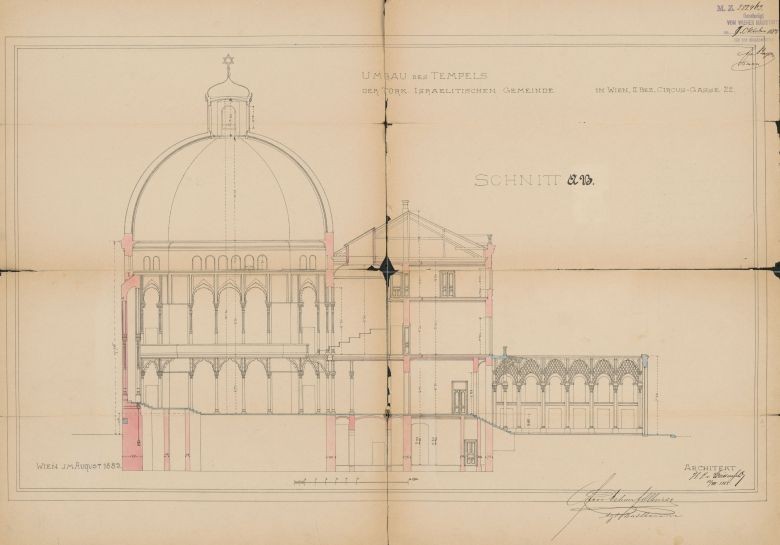
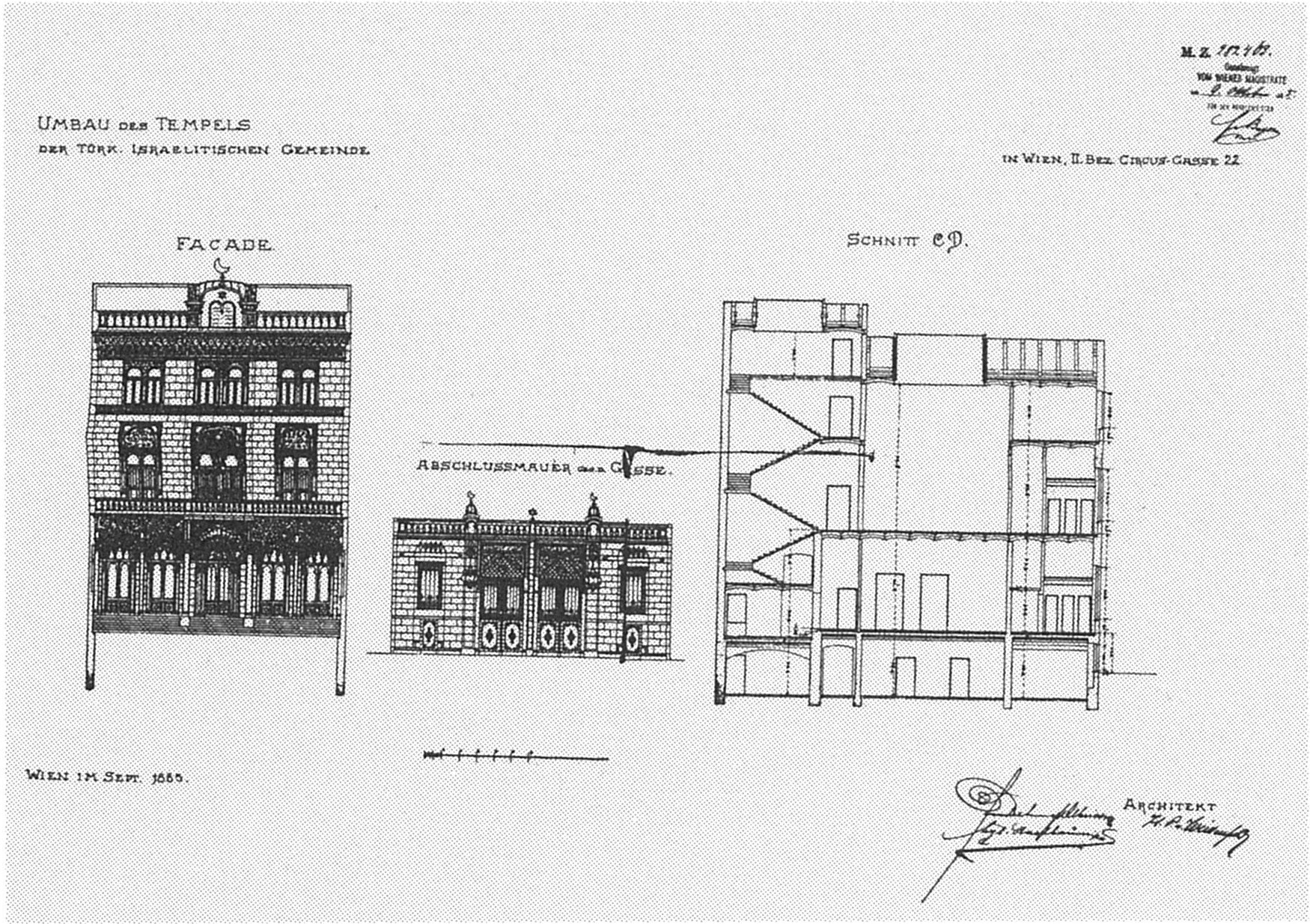
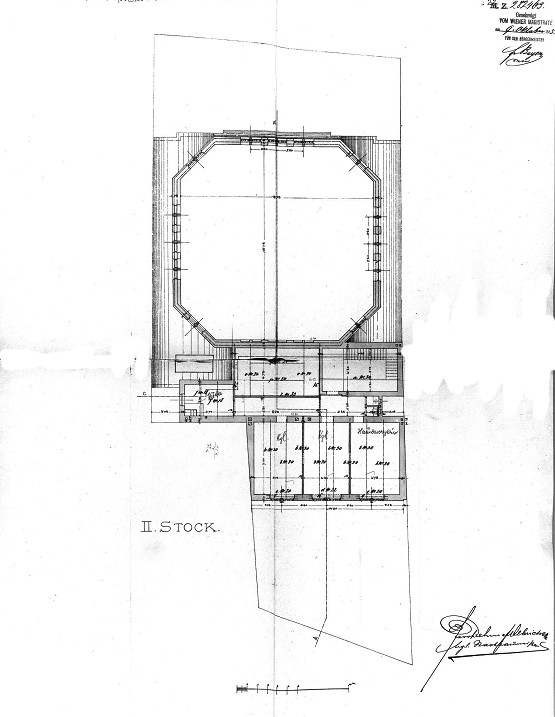
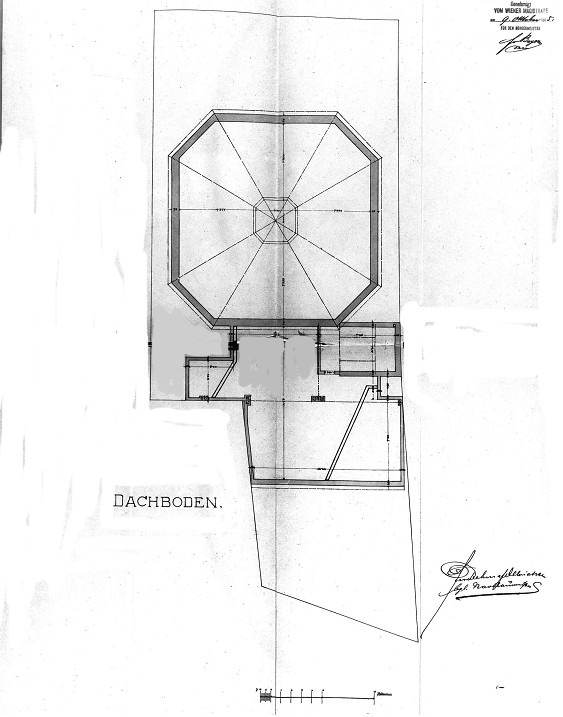
Hugo von Wiedenfeld designed its replacement, and Louis von Giacomelli carried out the building work between 1885 and 1887. The new synagogue, modelled on the Alhambra in Granada, was consecrated on 18 September 1887. Its gilded, marble-clad interior under a 12-metre octagonal dome made it one of the most richly decorated synagogues in Vienna.
The Nazis set the synagogue on fire in the late morning of 10 November 1938. When the fire brigade arrived, a man with a police pass forbade them to put the fire out 'on higher orders'. Firemen only kept it from spreading to the neighbouring houses. The whole interior burned, together with the community's archive and music books. The ruins were demolished from 1939, down to the foundations. Since 1987 a council housing block has stood on the site.
Where it stood for 51 years
Historic: Zirkusgasse 22 (formerly Große Fuhrmanngasse), 1020 Vienna (Leopoldstadt). Present day: council housing block, Zirkusgasse 22, Vienna, Austria.
Größere Karte öffnen →Die jüdische Gemeinde
Vienna's 'Turkish' Jews were Sephardim, descendants of the Jews expelled from Spain, who had settled in the Ottoman Empire and came to Vienna as merchants after the Peace of Passarowitz (1718) and the Treaty of Belgrade (1739). The community was founded in 1736 by the Portuguese-born Diego d'Aguilar. Its oldest surviving document, the 'Puncte' of 1778, has been called the first officially approved constitution of a local Jewish community in Austria; the original burned in the November pogrom. Treaties with the Ottoman government gave the community unusual freedoms, and it saw itself as an elite within Viennese Jewry, keeping up the Judeo-Spanish language and the Sephardic rite. The Israelite Law of 1890 required it to join the Israelitische Kultusgemeinde, but after long negotiations a regulation of 1909 let it keep a Sephardic committee for religious matters, its own rabbi and its own registers, as the Verband der Türkischen Israeliten (Sephardim) zu Wien. Michael Papo, from Sarajevo, was its rabbi until 1918.
Architektur und Gestaltung
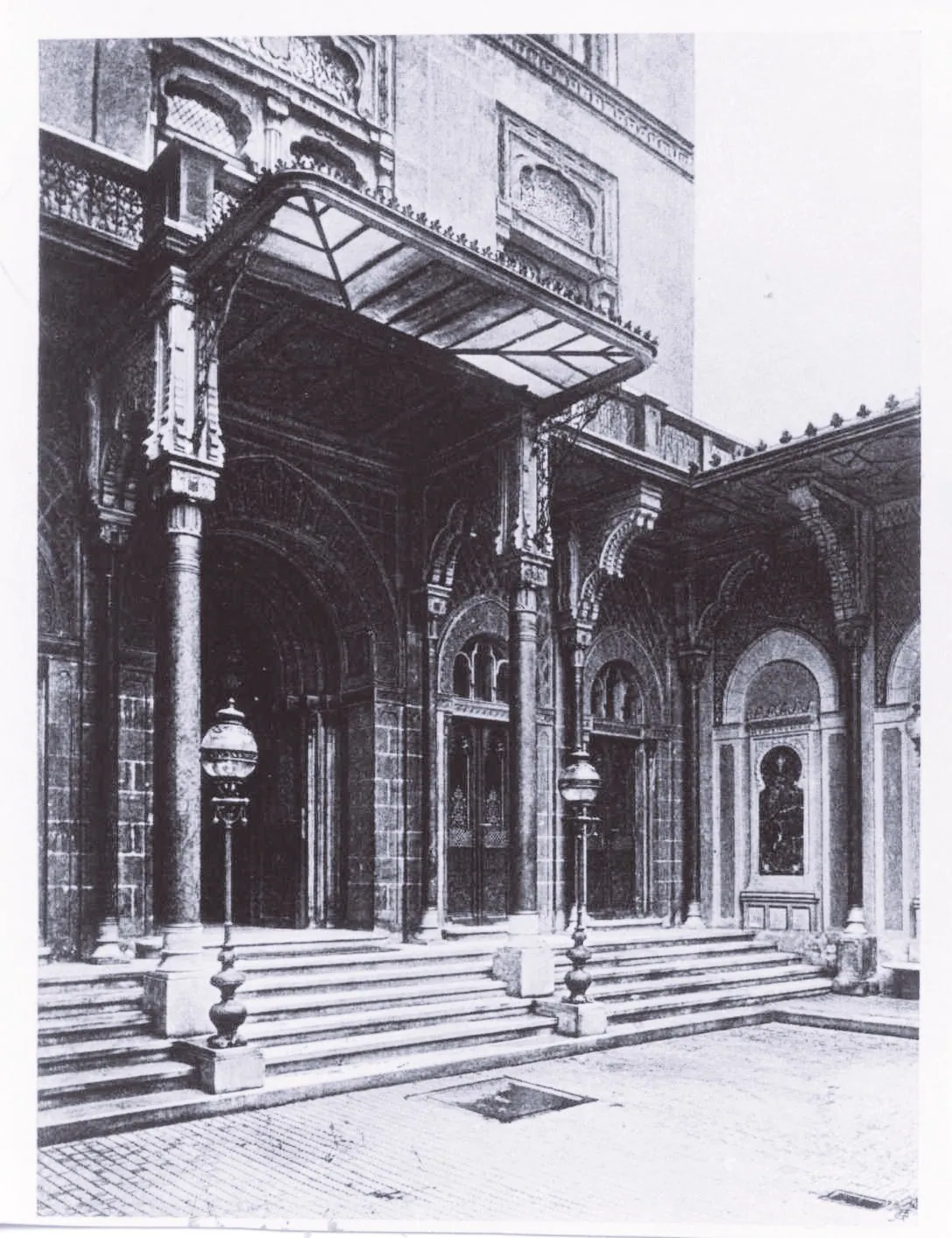
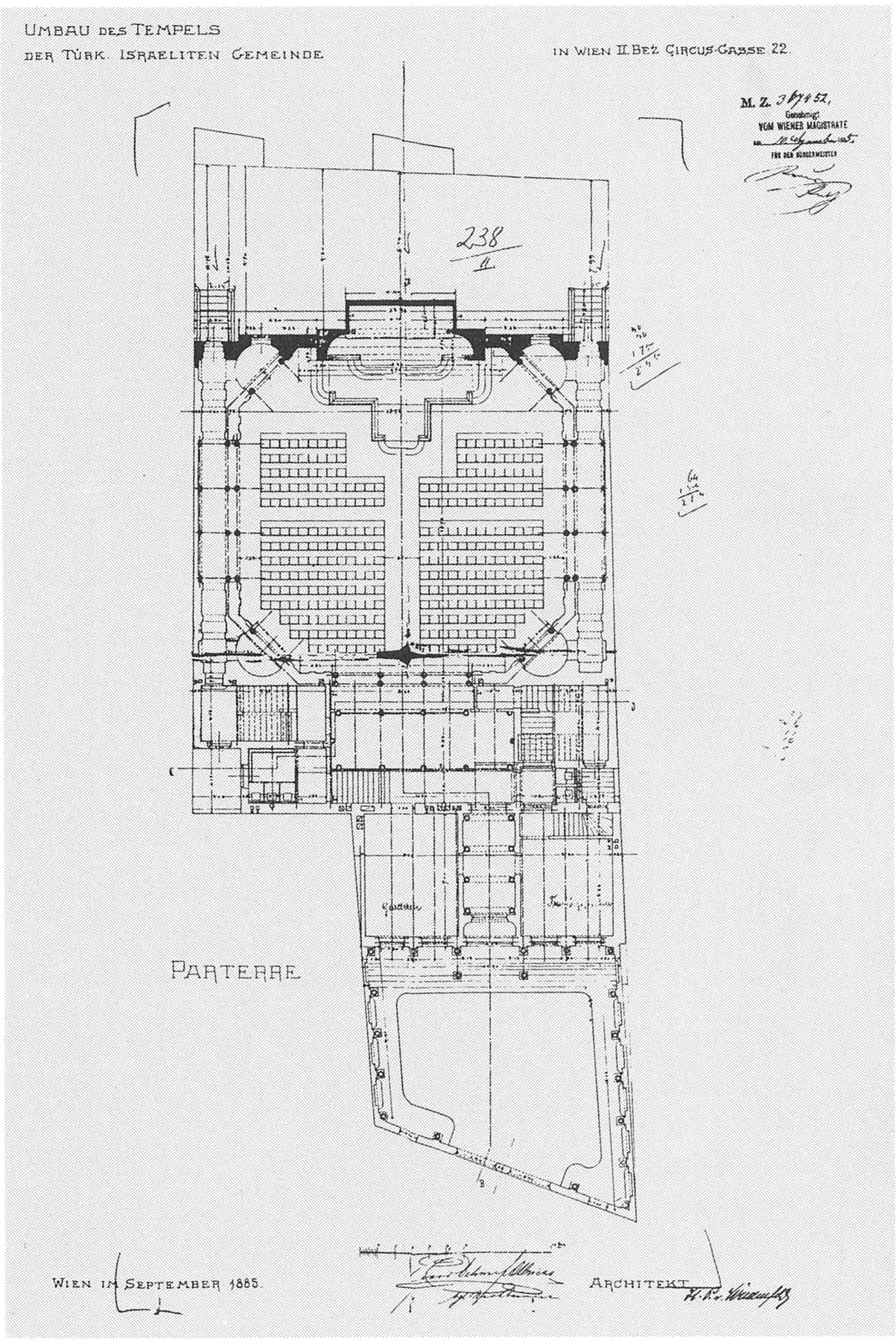
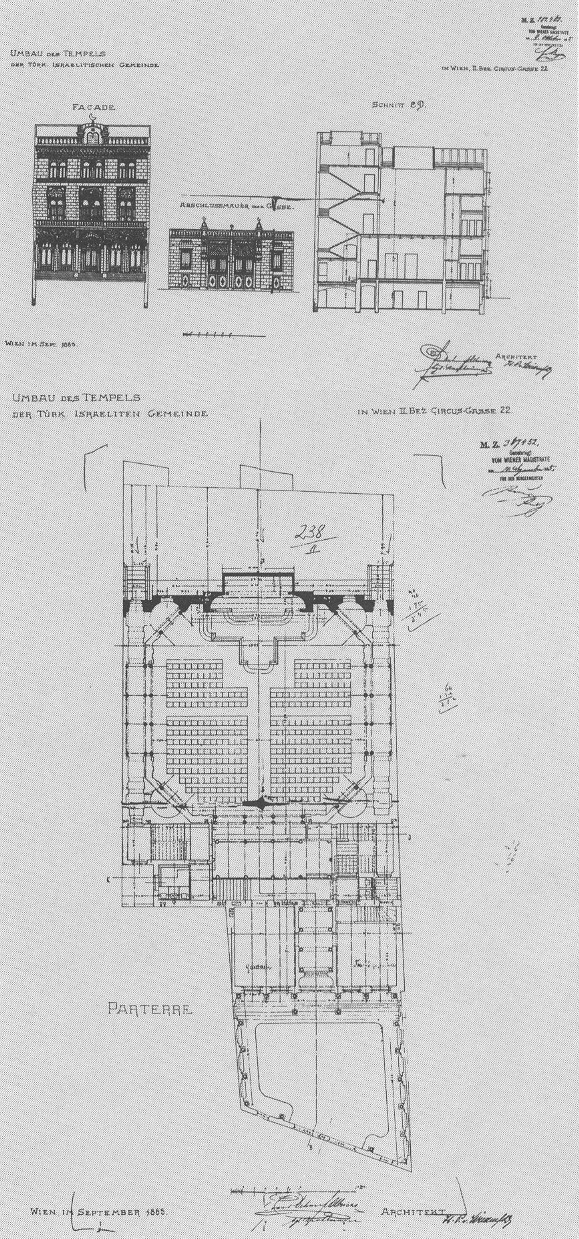
Hugo von Wiedenfeld based the design on the Alhambra. The synagogue stood between apartment houses and was reached through an asymmetrical forecourt with marble arcades, benches and green marble panels, and a stone portal with two large gates under a Hebrew inscription reading 'In honour of the glorious and awesome Name'. A flight of steps led to a vestibule with a wedding room on one side and a cloakroom on the other, and staircases to the women's galleries.
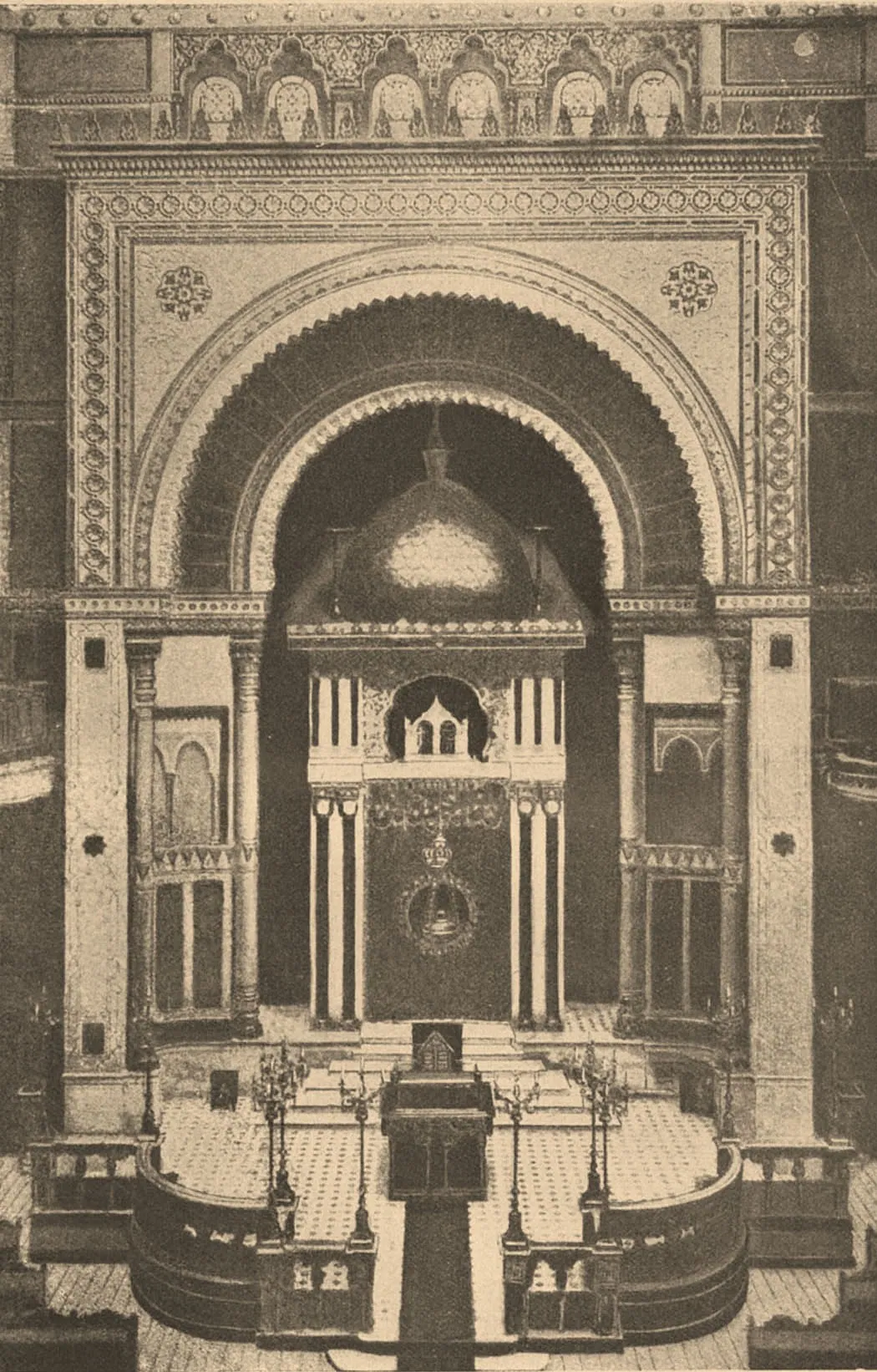
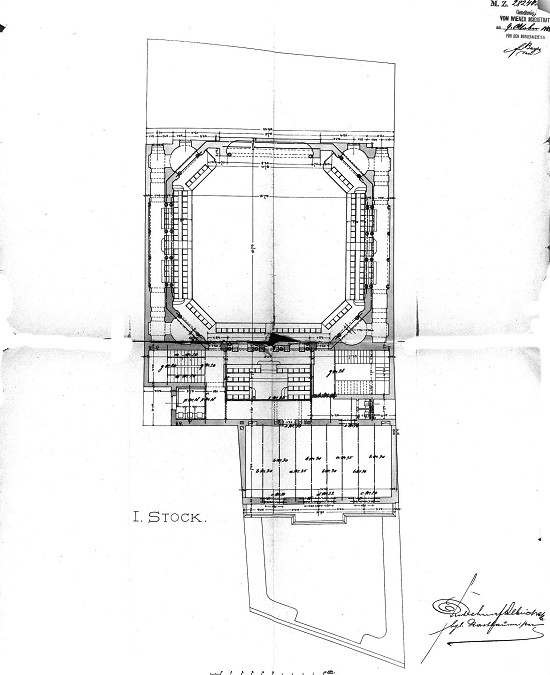
The square prayer hall was covered by a 12-metre octagonal dome with a 4-metre lantern and 26 semicircular clerestory windows, carried on 17-metre walls. The interior was of marble, stucco and gilding, with slender columns, arches and niches. The reading desk stood on a four-step terrace behind a marble balustrade with gilded grilles. The marble Torah ark stood six steps higher in a niche to the east, crowned by a gilded dome and the Tablets of the Law. An organ gallery faced it. The hall seated 314 men, with 500 standing places, and the galleries on three sides held 110 seated and 250 standing women. A heated 'winter temple' with 105 seats was on the first floor, with the office and the secretary's flat above.
Leben in der Synagoge
Services followed the Sephardic rite, and the community kept its Judeo-Spanish language and traditions. After the First World War the chief cantor Isidor Lewit created his own singing style based on Turkish-Sephardic melodies. In the reception room where bridal couples waited for the rabbi hung portraits of Emperor Franz Joseph I and the Ottoman Sultan Abdul Hamid II. After Rabbi Michael Papo left in 1918, the post was barely filled; his son Manfred Papo served only occasionally.
Zerstörung
During the November pogrom the Nazis set the synagogue on fire in the late morning of 10 November 1938. The Vienna fire brigade's log records the call-out at 12.58 and notes that the whole interior and parts of the temple burned. In 1946 fire officer Max Zelniczek testified that he was already inside with a hose when a young man with a police pass ordered that, 'on higher orders', the temple must not be put out. The firemen only protected the surrounding buildings. The archive of the Sephardic community, including important documents and music books, was destroyed. In April 1939 the Stillhaltekommissar gave the demolition to the firm Schuh & Co, ordering all buildings to be removed down to the foundations and the foundation stone searched for documents. The city approved the demolition on 30 June 1939, and in December 1939 the ruins were reported as 'being demolished'.
Das Schicksal der Gemeinde
In April 1939 the Kultusgemeinde asked for the release of 16–18 Torah scrolls with silver ritual objects, the library of the Esperanza society and other property still in the building. On 18 December 1939 the Stillhaltekommissar confiscated the plot, and it passed to the City of Vienna in December 1940 as 'unsaleable'. Vienna's Sephardic community, like the rest of Viennese Jewry, was driven into emigration or deported and murdered. In 1952 the plot was returned to the Kultusgemeinde, which sold it to the City of Vienna in 1972.
Der Ort heute
Nothing of the synagogue survives. The City of Vienna built a council housing block on the site in 1985–1987, designed by architect Eva Weil (Wohnhausanlage Zirkusgasse 22).
Bedeutende Namen
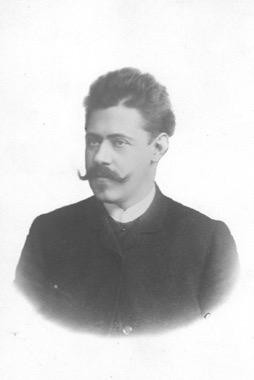
Hugo von Wiedenfeld
1852–1925ArchitectDesigned the Türkischer Tempel on the model of the Alhambra; built 1885–1887.
Biografie oder Quelle →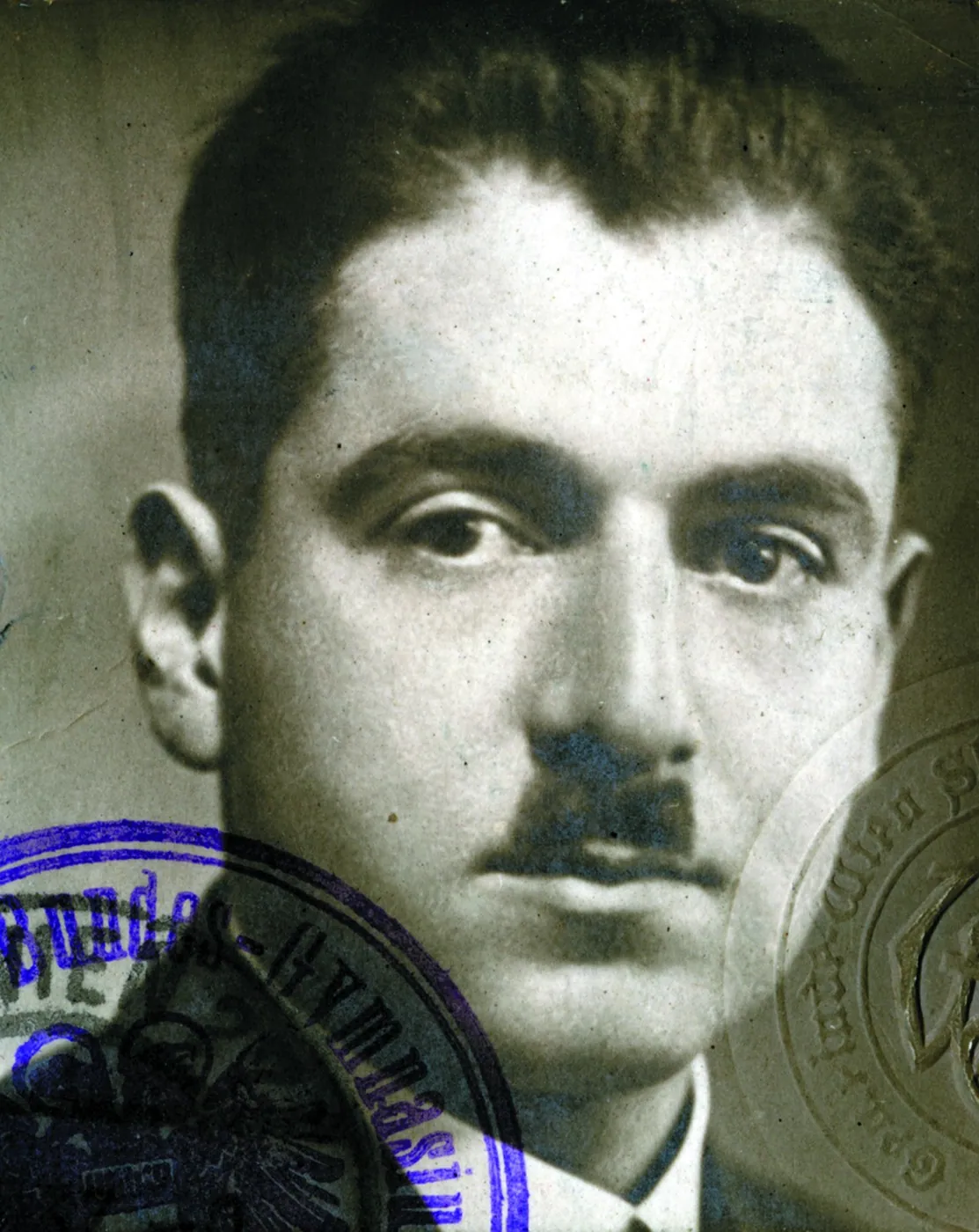
Manfred Papo
1898–1966Rabbi (occasional)Son of Michael Papo. He served as rabbi at the Türkischer Tempel only occasionally after 1918.
Biografie oder Quelle →Louis von Giacomelli
Dates unknownBuilderCarried out Wiedenfeld's design between 1885 and 1887.
Biografie oder Quelle →Diego d'Aguilar
1699–1759Founder of the communityThe Portuguese-born Sephardic financier who founded Vienna's Turkish-Jewish community in 1736.
Biografie oder Quelle →Michael Papo
Dates unknownRabbi, until 1918Rabbi of the synagogue until 1918; he came from Sarajevo.
Biografie oder Quelle →Isidor Lewit
Dates unknownChief cantorChief cantor after the First World War, who created his own singing style based on Turkish-Sephardic melodies.
Biografie oder Quelle →Haben Sie etwas beizutragen?
Fotos, Dokumente, Familiengeschichten oder Erinnerungen an diese Synagoge und ihre Gemeinde halten ihre Geschichte lebendig.
Share a memory or thought
No comments yet. Be the first to add one.