
הסיפור של Vinkovci Synagogue (1923)
Vinkovci, a railway town in eastern Slavonia, had a Jewish community from the 1870s. Its first synagogue of 1880, a small house-like building, became too small, and plans for a new one were made in 1911 and 1914 but were halted by the First World War. Fundraising resumed in 1920, and under the energetic lead of Rabbi Mavro Frankfurter building began in mid-1922 on Aleksandrova ulica in the town centre, today Ulica kralja Zvonimira 18-20. The members paid almost the whole cost of about 4.5 million kronen; the merchant and mill owner Jakob Schlesinger gave the largest single gift. The Vukovar engineer Fran Funtak drew the plans and the engineer Makso Bernath carried out the construction. The building was under roof by spring 1923 and was consecrated on 9 December 1923. Its tripartite front with tall Ionic half-columns and its ribbed octagonal dome, borrowed from the synagogue of neighbouring Vukovar, made it a landmark of the town. It served the community for less than twenty years before it was destroyed during the Second World War, and its plot is now a lawn.
Where it stood for nearly 20 years
Historic: Aleksandrova ulica, Vinkovci (on a corner after the opening of the street now called Dalmatinska). Today: Ulica kralja Zvonimira 18-20, 32100 Vinkovci, an empty grassed plot. Approximate.
פתיחת מפה גדולה ←הקהילה היהודית
Jews are recorded in Vinkovci only from the second half of the nineteenth century: Ignatz Gross opened a shop in 1866, the congregation was organised in the early 1870s (1870 or 1873 according to different sources), the cemetery was laid out in 1870 and the first synagogue was built in 1880. The Jews worked as merchants, tanners and tailors. The community had its own rabbis, among them Solomon Neumann, a Rabbi Schoenfeld and, from 1914, Mavro Frankfurter, who came from Daruvar and taught Jewish religion at the Vinkovci gymnasium until 1941. In the disorder at the end of the First World War deserters robbed Jewish homes and the community organised its own defence. Figures for its size vary: the congregation had about 200 member households around 1920 and 227 by the late 1920s, while population counts give 742 Jews in 1921, 995 in 1925/26, about 1,000 in 1931 and about 630 on the eve of the Second World War, the fall being due mainly to moves to Zagreb. In 1923, the year the new synagogue opened, Vinkovci hosted the first national conference of the rabbis of Yugoslavia.
אדריכלות ועיצוב
Dragan Damjanović, who identified Fran Funtak as the designer from a 1923 Vukovar newspaper, describes the building as a mixture in which classicist forms dominate, combined with round-arched (Rundbogen), Moorish and Art Deco elements; the press of the day called it 'modernised Moorish'. The plan was a longitudinal rectangle divided by columns into three aisles, the central one slightly wider. A vestibule led to two staircases rising to the women's galleries. The bimah stood in the last bay, in front of the Torah ark, with seats for the rabbi, cantor and president in the last bays of the side aisles and a robing room behind. Balconies, roof, columns and arches were of reinforced concrete, Funtak's specialty. The façade was tripartite: a recessed centre between projecting side bays, fluted Ionic half-columns running the full height, paired arched upper windows set in niches, and trapezoidal Art Deco gables over the entrances. A verse of Psalm 118:20 stood over the main door and the Tablets of the Law over the central gable. The ribbed octagonal dome with a Star of David was purely decorative and copied the dome of the Vukovar synagogue. Capacity and dimensions are unknown.
החיים בבית הכנסת
Very little is recorded about worship in the building. The congregation followed the Ashkenazi rite, and the synagogue was laid out for a traditional service, with the bimah placed directly in front of the Torah ark and the rabbi, cantor and community president seated at the eastern end, while women sat in the galleries reached by the two front staircases. No photograph of the interior is known; the plan and elevations published by Damjanović are an ideal reconstruction drawn by the architect Vlasta Ivšić from the memories of Jelka Borovic, a former Vinkovci Jew living in Israel. Rabbi Mavro Frankfurter, who had driven the building campaign, led the congregation in the new synagogue from its consecration in December 1923 until 1941. The congregation's wealthiest benefactor, Jakob Schlesinger, besides his cash gift, paid for four of the windows and for the main doors. Frankfurter's son David became known across Europe in 1936 when he assassinated the Swiss Nazi leader Wilhelm Gustloff in Davos.
הרס
The synagogue survived the first months of the Independent State of Croatia (NDH), proclaimed in April 1941. A photograph published in the newspaper Hrvatski branik in May 1941 shows a Vinkovci rabbi forced into labour with the synagogue still standing behind him. The building was then used as a prison for the Jews of Vinkovci. According to Damjanović, its demolition began with the removal of the copper from the roof and was followed by blasting with explosives and the carting away of the building material; wall stumps 1 to 1.5 metres high survived the war and disappeared in the first postwar years. He does not name who did this or give a date. The English Wikipedia article, citing the Zagreb Jewish community's magazine Ha-Kol (2006), says the synagogue was destroyed in 1941-42 by the regime of the Independent State of Croatia, that is the Ustaše regime. The ESJF cemetery survey tells the story in a different order: Croatian nationalists, meaning the Ustaše, wrecked the building and turned it into a warehouse in 1942, and Nazi German forces burned it at the end of the war. These accounts are given here as told.
גורל הקהילה
In 1941 Nazi German soldiers occupying Vinkovci abused Rabbi Frankfurter. On 7 November 1941 about 64 young Jewish men of Vinkovci were sent to the Ustaše camp at Jasenovac, where most were killed soon after arriving. After Ivan Tolj took over the Vinkovci district office on 1 May 1942, the Ustaše authorities arrested the remaining Jews of the town and district on 3-4 May and interned them in the Hrvatski Sokol building in the Lenije quarter; Tolj reported 380 Jewish men and women interned at one time. Under an Ustaše order of 21 May 1942 a list of 358 people was sent to Jasenovac and Stara Gradiška, where most of them perished. Women were taken to the Đakovo camp and children placed in Vinkovci and elsewhere. A transport of about 1,000 Jews from Srijem and the Bijeljina area left Vinkovci on 19 or 20 August 1942 and reached Auschwitz on 22 August. Rabbi Frankfurter and his wife and the community president Ignjat Lang were murdered at Jasenovac in 1942. A few survived, among them Erwin Miller, who came through Jasenovac. The community did not re-form; the ESJF survey states that no Jews remained in the town after the war.
האתר כיום
According to Damjanović, the plot where the synagogue stood, at today's Ulica kralja Zvonimira 18-20 in the centre of Vinkovci, is an empty parcel laid to grass, with a building of the agricultural-industrial combine (PIK Vinkovci) nearby. No part of the building is known to survive above ground, and no marker on the plot is recorded in the sources read. The Jewish cemetery of Vinkovci, founded in 1870, still exists; it was damaged by shelling in the war of the early 1990s. The first synagogue of 1880, at the corner of Relkovićeva and Frankopanska streets, was demolished after a community decision of June 1928 and is also gone.
שמות בולטים
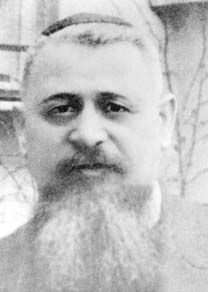
Mavro Frankfurter
1875-1942Rabbi of Vinkovci, 1914-1941Born in Holešov in Moravia, Frankfurter served as rabbi in Daruvar before coming to Vinkovci in 1914, where he became chief rabbi and taught Jewish religion at the gymnasium until 1941. Damjanović credits him with driving the campaign that began construction of the new synagogue in mid-1922, and he led its congregation from the consecration in 1923. He was abused by Nazi German soldiers in 1941 and murdered with his wife by the Ustaše at Jasenovac in 1942. His son David killed the Nazi leader Wilhelm Gustloff in 1936.
ביוגרפיה או מקור ←Fran Funtak
1882-1960Architect (designer) of the synagogueFuntak, a Catholic civil engineer from Vukovar trained in Graz and Budapest, was a leading designer of reinforced-concrete bridges for the firm Josip Banheyer i sin before opening his own office. A 1923 Vukovar newspaper, found by Dragan Damjanović, names him as the author of the detailed plans of the Vinkovci synagogue. He gave it a reinforced-concrete structure and a decorative dome copied from the Vukovar synagogue, and later designed the Ciduk-hadin house in Vukovar (1926).
ביוגרפיה או מקור ←Makso Bernath
UnknownEngineer and builder of the synagogueEarlier literature credited Bernath with the design of the Vinkovci synagogue, and English Wikipedia still lists a B. Bernat as attributed architect. The 1923 Vukovar newspaper read by Damjanović says that Fran Funtak drew the detailed plans while 'ing. Makso Bernath' carried out the construction in 1922-23. Nothing further about his life was found.
ביוגרפיה או מקור ←Jakob Schlesinger
UnknownPrincipal donorSchlesinger, a wealthy Vinkovci merchant and mill owner, made the largest single contribution to the new synagogue: 500,000 kronen of a total cost of about 4.5 million, together with four of its windows and the main doors. The rest of the money was raised almost entirely from the members of the congregation between 1920 and 1923. His later life and fate were not found.
ביוגרפיה או מקור ←Ignjat Lang
died 1942President of the Vinkovci Jewish communityEnglish Wikipedia names Lang as president of the Vinkovci Jewish community at the time of the Second World War. It reports a family recollection that in 1941 the Dominican friar Hijacint Bošković offered to help him and his wife Terezija leave Vinkovci and that he refused. Like Rabbi Frankfurter, he was murdered in the Ustaše camp at Jasenovac.
ביוגרפיה או מקור ←יש לכם משהו לתרום?
תמונות, מסמכים, סיפורי משפחה וזיכרונות מבית הכנסת ומהקהילה שלו עוזרים לשמור על ההיסטוריה שלו בחיים.
- Židovske vjerske građevine vukovarskog inženjera Frana Funtaka
- Vinkovci Synagogue
- Vinkovci Jewish Cemetery (survey)
- Transport upućen u Auschwitz iz Vinkovaca u kolovozu 1942. i sudbina srijemskih i bijeljinskih Židova za vrijeme Drugoga svjetskog rata
- Vinkovci
- Vinkovci (Cemetery Discovery Project town page)
- Mavro Frankfurter
- Fran Funtak
- File:Sinagoga Vinkovci.jpg
- File:Rabbi Mavro Frankfurter.jpg
- Ulica kralja Zvonimira, Vinkovci (OpenStreetMap way 128003225)
Share a memory or thought
No comments yet. Be the first to add one.