
Historia Vinohrady Synagogue, Prague
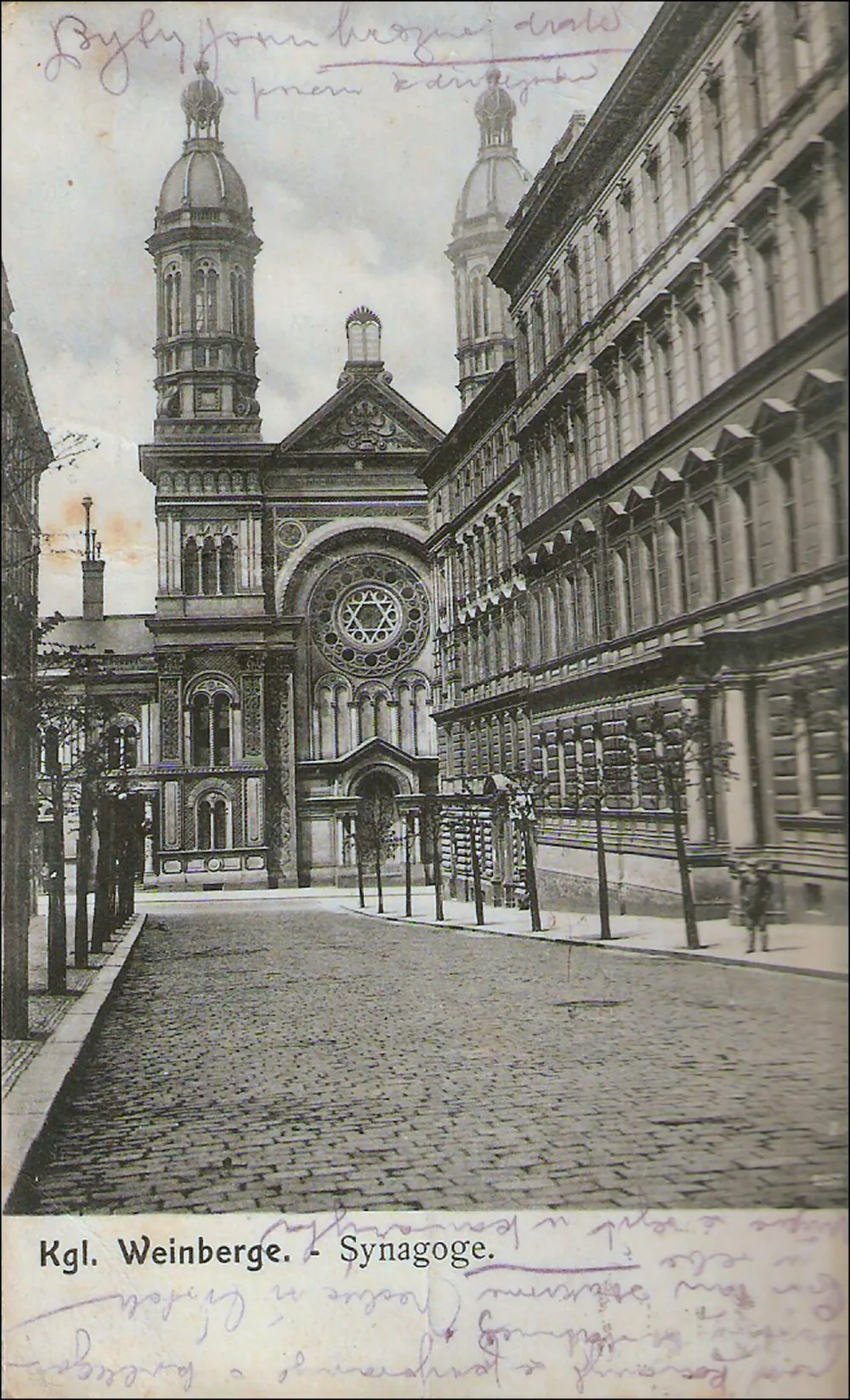
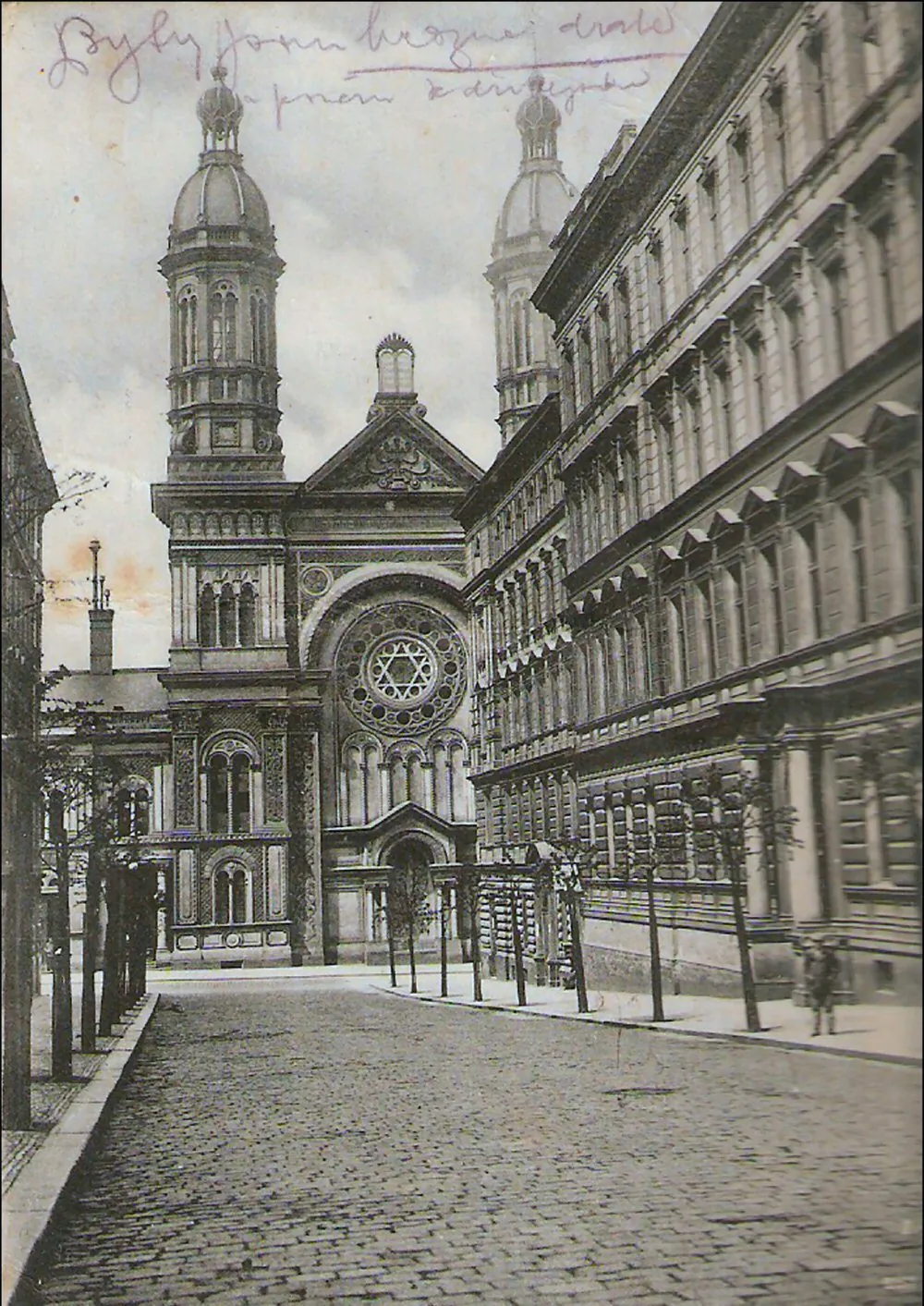
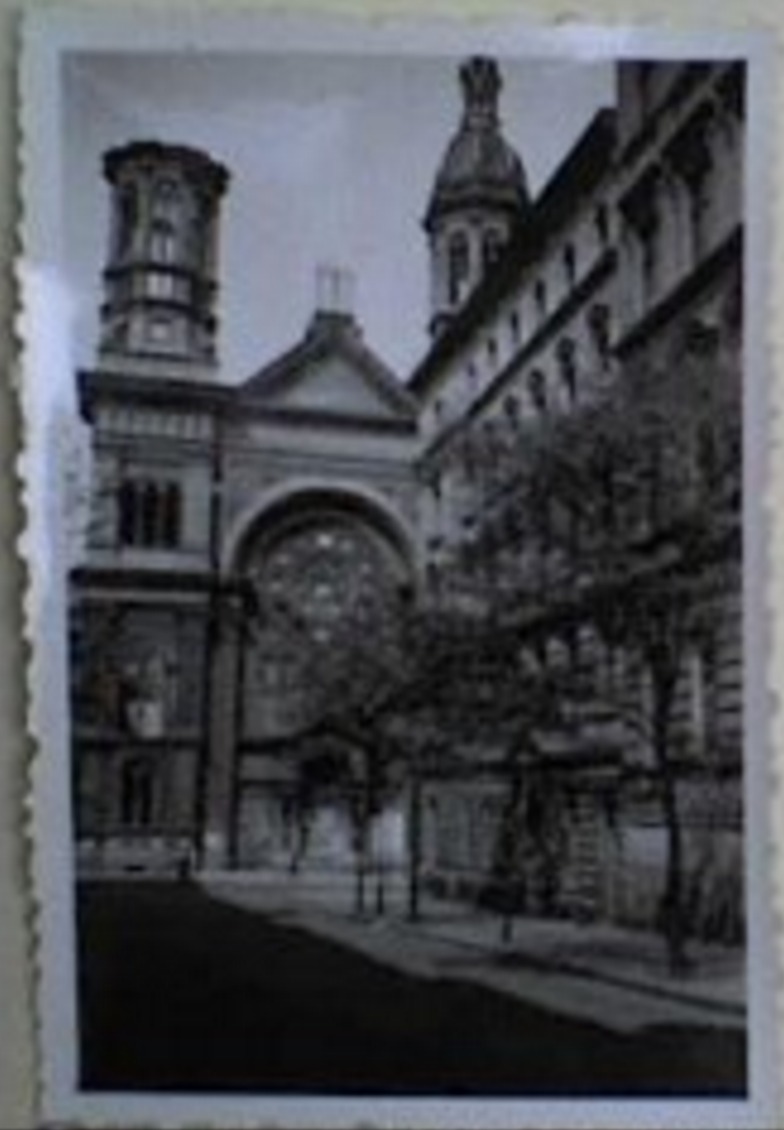
Královské Vinohrady, a fast-growing suburb of Prague in the late nineteenth century, became home to thousands of Jewish families; by the 1890s more than 3,500 Jews lived there. A temple-building society was formed in 1881 and a separate Jewish community in 1893. In 1894 the community commissioned the Viennese architect Wilhelm Stiassny, who was also designing the Jubilee Synagogue in Prague's New Town. Built in 1895–1896, the synagogue opened on the High Holy Days of September 1896 in the presence of many distinguished guests. It was a Neo-Renaissance building with Moorish elements, a three-aisled basilica with wide women's galleries and a great rose window with a Star of David between two tall octagonal towers crowned with onion domes. With more than 2,000 seats it was the largest synagogue in Prague and among the largest in the world. It followed the Reform rite, with an organ and choir. Under the Nazi occupation it became a warehouse for furniture confiscated from deported Jews. It was hit during the Allied air raid on Prague on 14 February 1945 and, despite protests by the Jewish community, the communist authorities had it blown up in 1951. A school now stands on the site.
Where it stood for 49 years
Historic: Sázavská street, Königliche Weinberge. Present day: Sázavská primary school, Sázavská street, Prague 2 – Vinohrady, Czech Republic. Approximate.
Otwórz większą mapę →Społeczność żydowska
As a new, modern and rapidly growing town, Královské Vinohrady attracted many Jewish families in the second half of the nineteenth century. By the 1890s more than 3,500 Jews lived there, and the number rose sharply. In 1921 the Vinohrady Jewish community had 5,732 registered members, one of the largest in Czechoslovakia, but many more Jews lived in the district without being registered: non-practising, baptised or from mixed marriages. The Jews of Vinohrady were highly assimilated into Czech society, typical of the interwar period. Estimates suggest that up to 30,000 Jews lived in Vinohrady before the Second World War, about half of the Jewish population of Prague. The temple-building society was founded in 1881 and the independent Israelite Religious Community of Königliche Weinberge in 1893.
Architektura i projekt
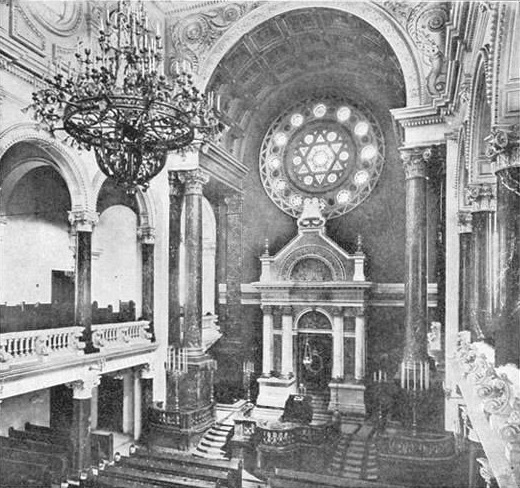
Wilhelm Stiassny designed the synagogue in the Neo-Renaissance style with Moorish elements. It was a three-aisled building of basilica type, with wide women's galleries on columned arcades and an outer walkway running round the whole building. The main front on Sázavská street was dominated by a huge rose window with a Star of David at its centre, the tablets of the Ten Commandments at the top of the gable and a false portico. Above it rose two tall octagonal towers crowned with onion domes and lanterns. The real entrances led through passages in the side buildings, the rabbi's house and the Jewish school, into the walkway. Inside, multicoloured marble and stained-glass windows with Old Testament scenes decorated the hall, and the carved wooden seats were arranged in sections in the main nave. It cost 800,000 gulden and was comparable in size to the nearby church of St Ludmila and to the Great Synagogue of Plzeň.
Życie w synagodze
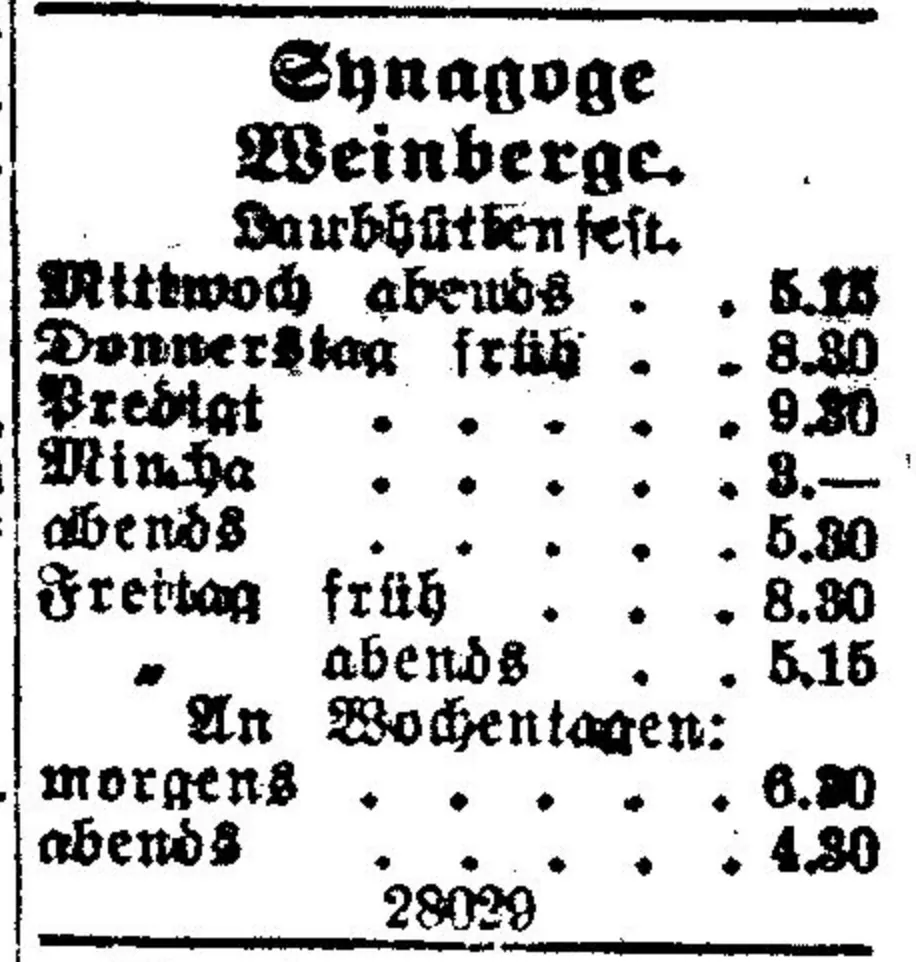
The synagogue was opened on the High Holy Days of the year 5657, in September 1896. The dedication address was given by Heřman Kohn, rabbi of Hradec Králové, and the Vinohrady rabbi Gustav Weiner published prayers for the occasion which he had translated into Czech. The temple followed the Reform rite, with an organ and a choir. Dr Gustav Weiner served as its rabbi and was also a teacher of religion and a translator who published a Czech Haggadah. The synagogue's shammes, or caretaker, was Eduard Wohryzek, father of Julie Wohryzek, the fiancée of Franz Kafka. A printed calendar of prayer times from the synagogue for 1916 survives. The building served as a synagogue and community centre until the German occupation.
Zniszczenie
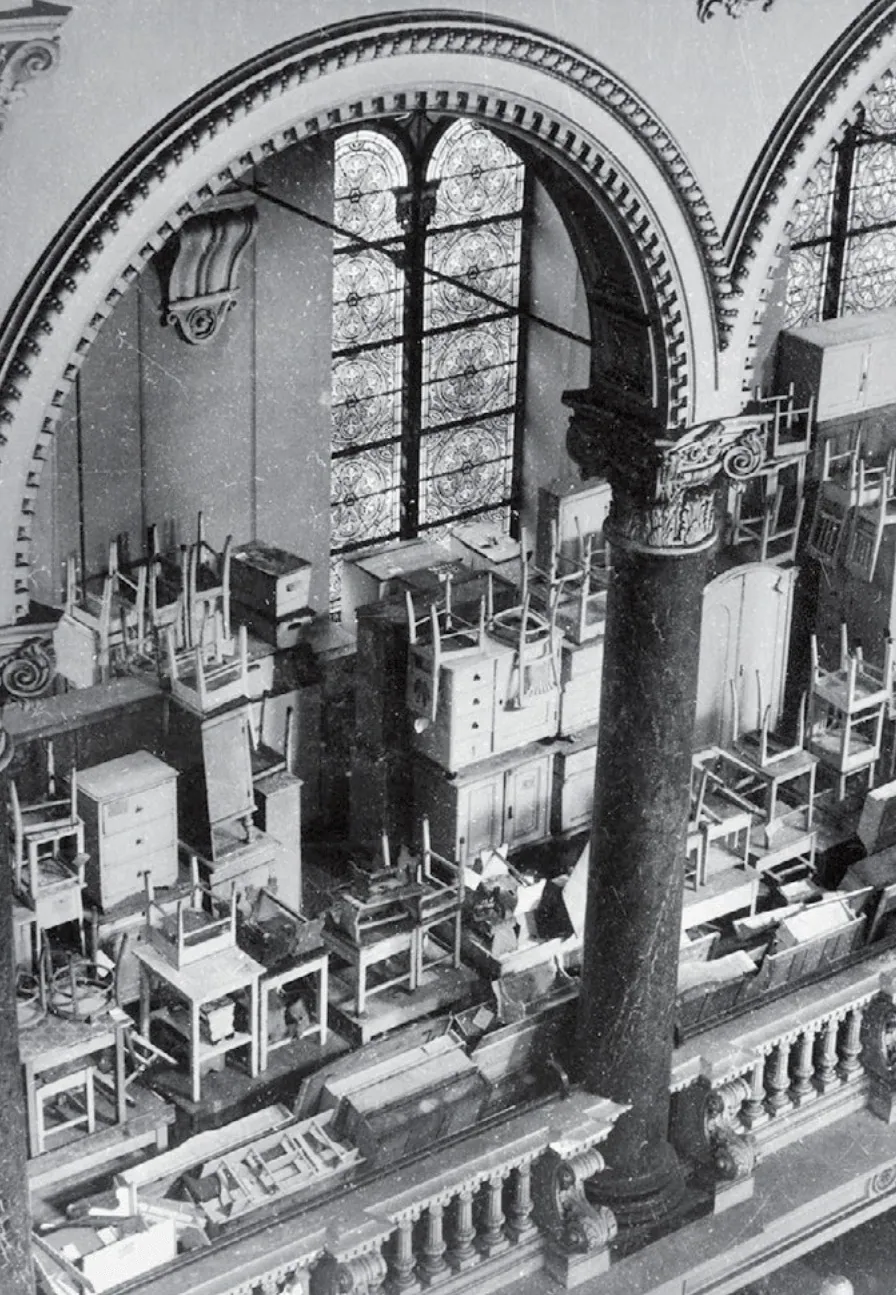
After the German occupation of March 1939 the synagogue, like many other Jewish buildings in Prague, was closed and turned into a warehouse, where furniture confiscated from deported Jews was stored; a photograph of it in this use appears in the Nazi Trust Office's report of 1944. During the Allied air raid on Prague on 14 February 1945 the synagogue was hit. The German occupiers prevented the fire that followed from being put out, which greatly increased the damage. The building was not damaged beyond repair and could have been restored, for example as an orphanage or a Sokol hall, but the communist regime had no interest in preserving it. Despite protests from representatives of the Jewish community, it was blown up in 1951.
Los społeczności
The Jews of Vinohrady shared the fate of the Jews of Prague. After the German occupation in March 1939 they were stripped of their rights and property, and their homes and furniture were confiscated; the synagogue itself became a store for their belongings. From October 1941 they were deported, first to Łódź and then mainly to Terezín, and from there to the ghettos and extermination camps in the east, where most of them were murdered. Of the tens of thousands of Jews who had lived in Vinohrady before the war, only a small number survived. The Vinohrady community was not re-established as a separate congregation after the war.
Miejsce dzisiaj
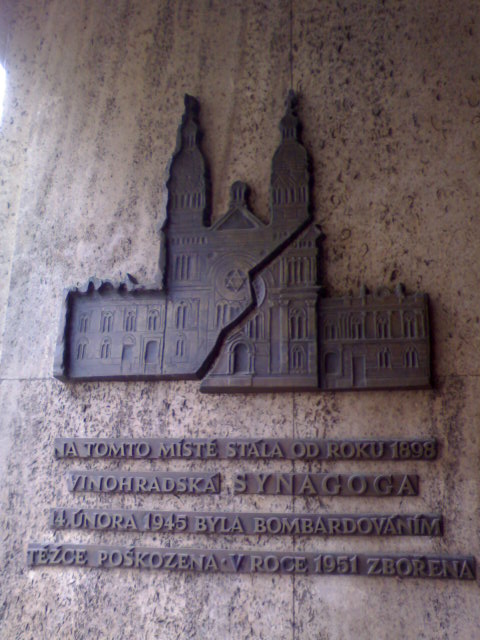
Nothing of the synagogue survives. Its site on Sázavská street in Vinohrady, Prague 2, is now occupied by the Sázavská primary school, which opened on 1 September 1961. Since 1995 a memorial plaque has been fixed to the left pillar of the school entrance. Only a few fragments of the vast building are thought to survive: some original floor tiles in a private collection, door handles and fittings removed before the demolition, and a few prayer books, photographs, newspaper cuttings and the memories of Holocaust survivors.
Ważne postacie
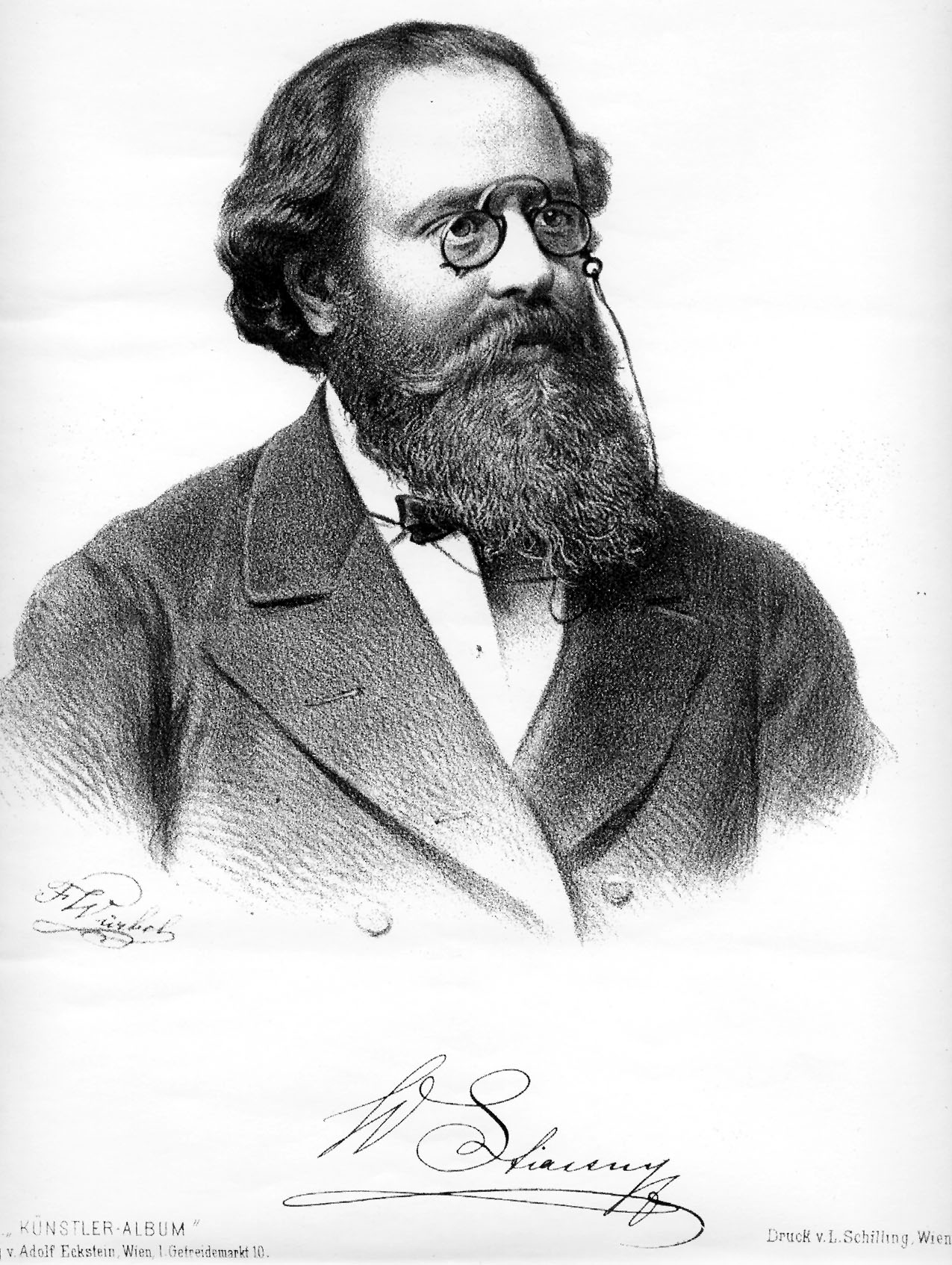
Wilhelm Stiassny
1842–1910ArchitectThe Viennese architect Wilhelm Stiassny, one of the leading synagogue designers of the Habsburg empire, was commissioned by the Vinohrady community in 1894. At the same time he was designing Prague's Jubilee Synagogue. His Vinohrady temple, with its great rose window and twin domed towers, was one of the largest synagogues in the world.
Biografia lub źródło →Gustav Weiner
19th–20th centuryRabbi of VinohradyDr Gustav Weiner was rabbi of the Vinohrady synagogue. For its opening in September 1896 he published prayers that he had translated into Czech, and he later published a Czech Haggadah. He also taught religion, serving a community that was highly assimilated into Czech society and followed the Reform rite with organ and choir.
Biografia lub źródło →Eduard Wohryzek
19th–20th centuryShammes (caretaker) of the synagogueEduard Wohryzek served as the shammes, the caretaker, of the Vinohrady synagogue. He was the father of Julie Wohryzek, who in 1919 became engaged to the writer Franz Kafka. The family's link to the synagogue ties this lost building to one of the best-known episodes in the life of Prague's most famous Jewish writer.
Biografia lub źródło →Czy masz coś do przekazania?
Zdjęcia, dokumenty, historie rodzinne lub wspomnienia o tej synagodze i jej społeczności pomagają zachować jej historię.
Share a memory or thought
No comments yet. Be the first to add one.