
The story of Wooden Synagogue of Wołpa
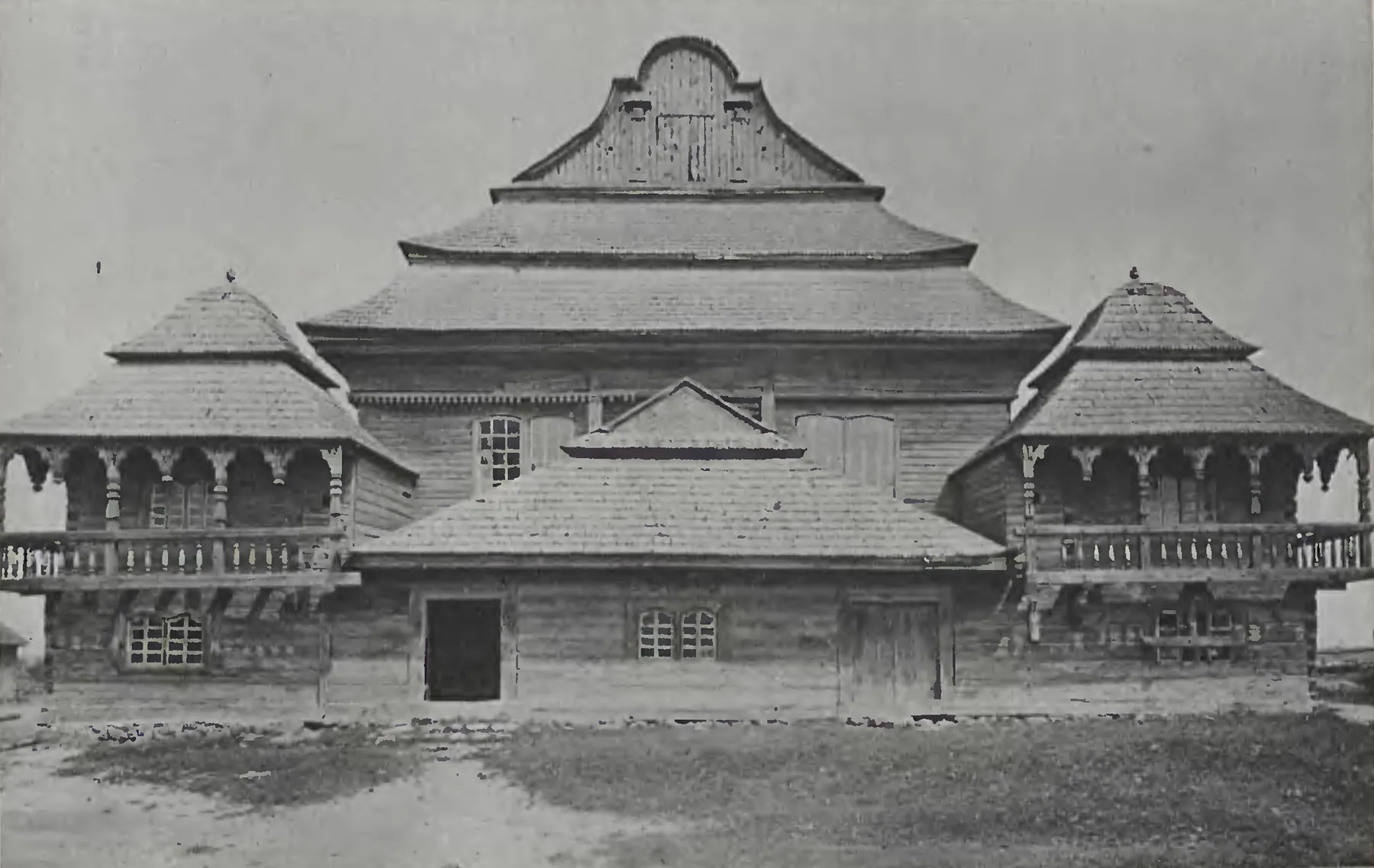
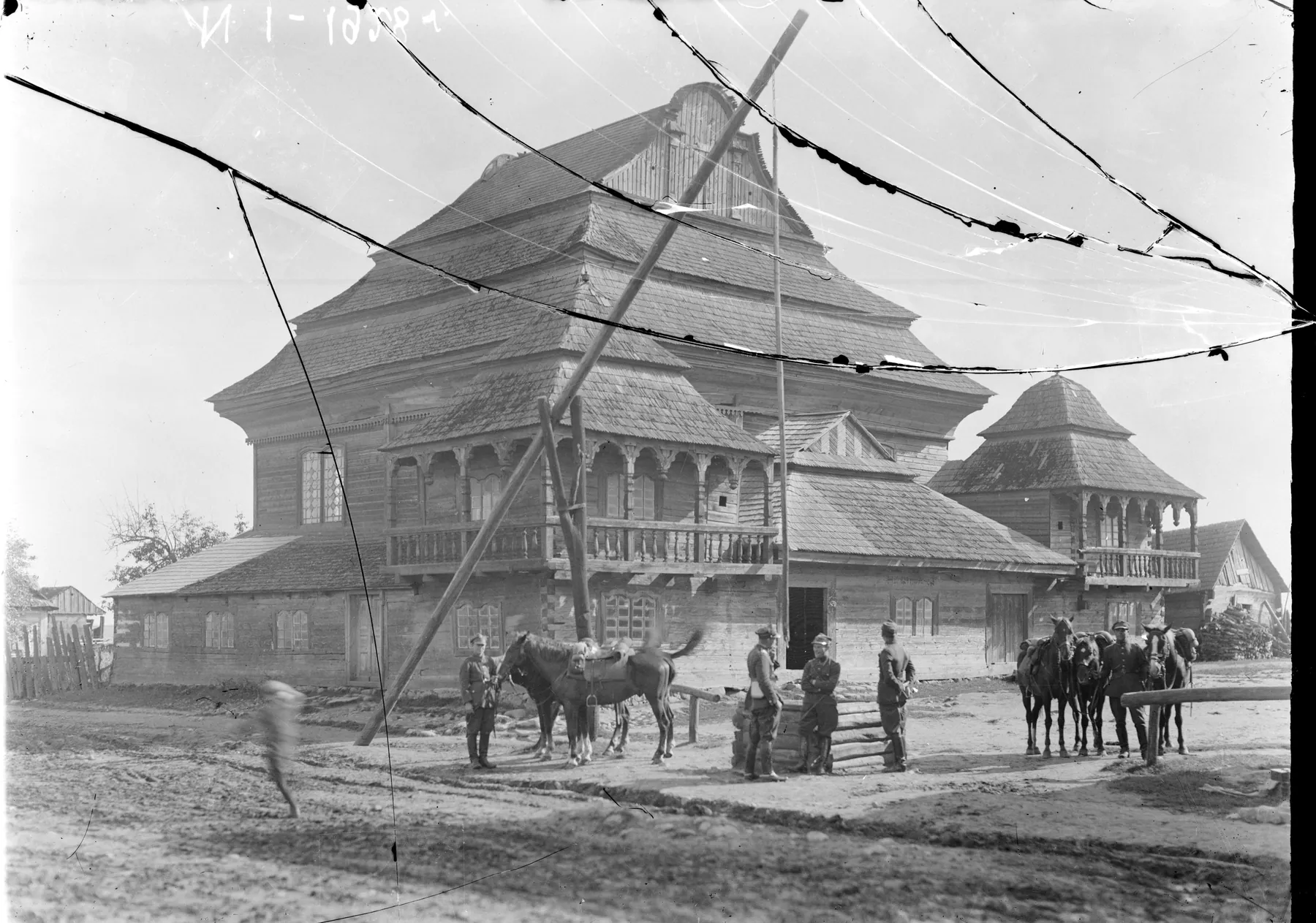
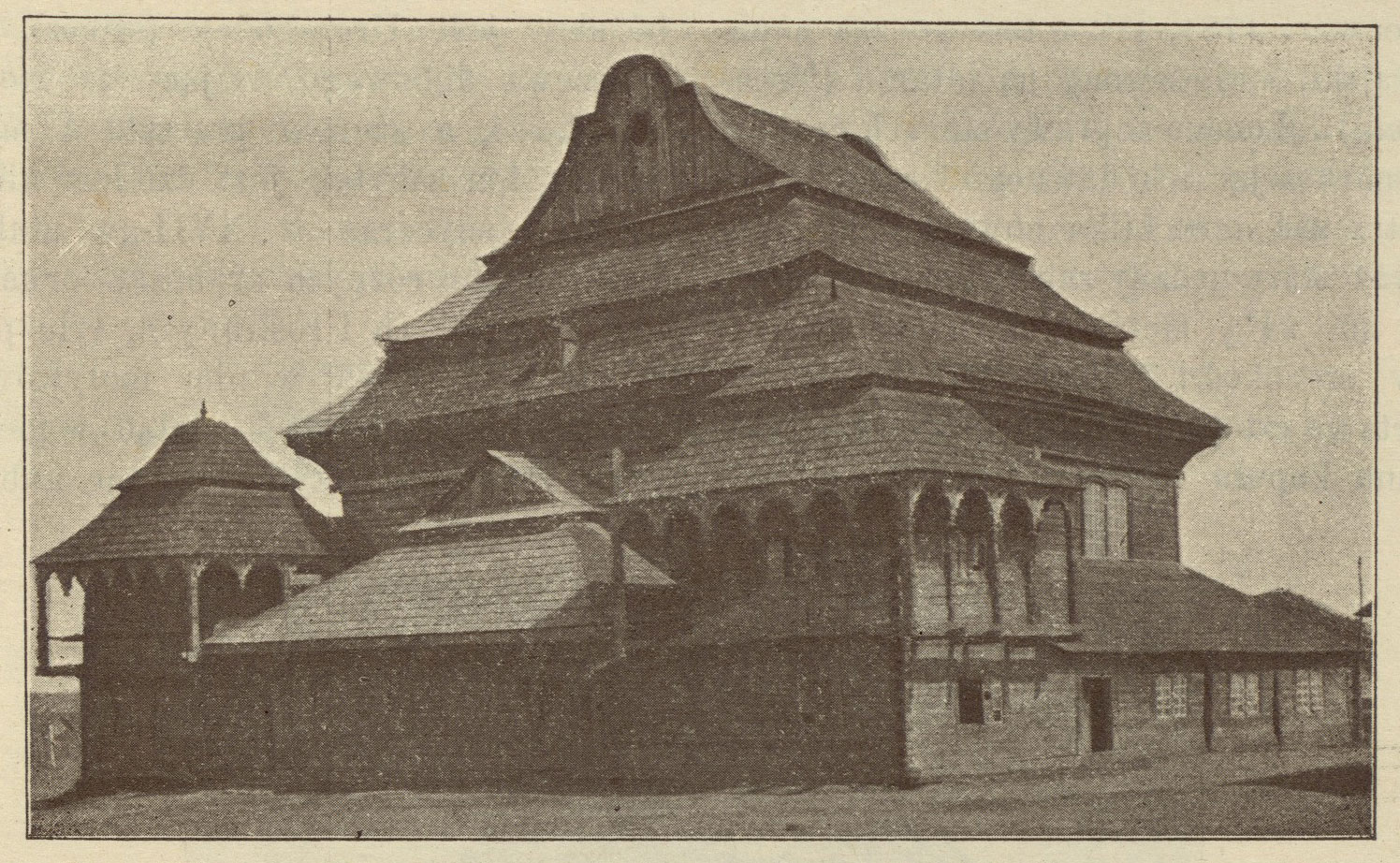
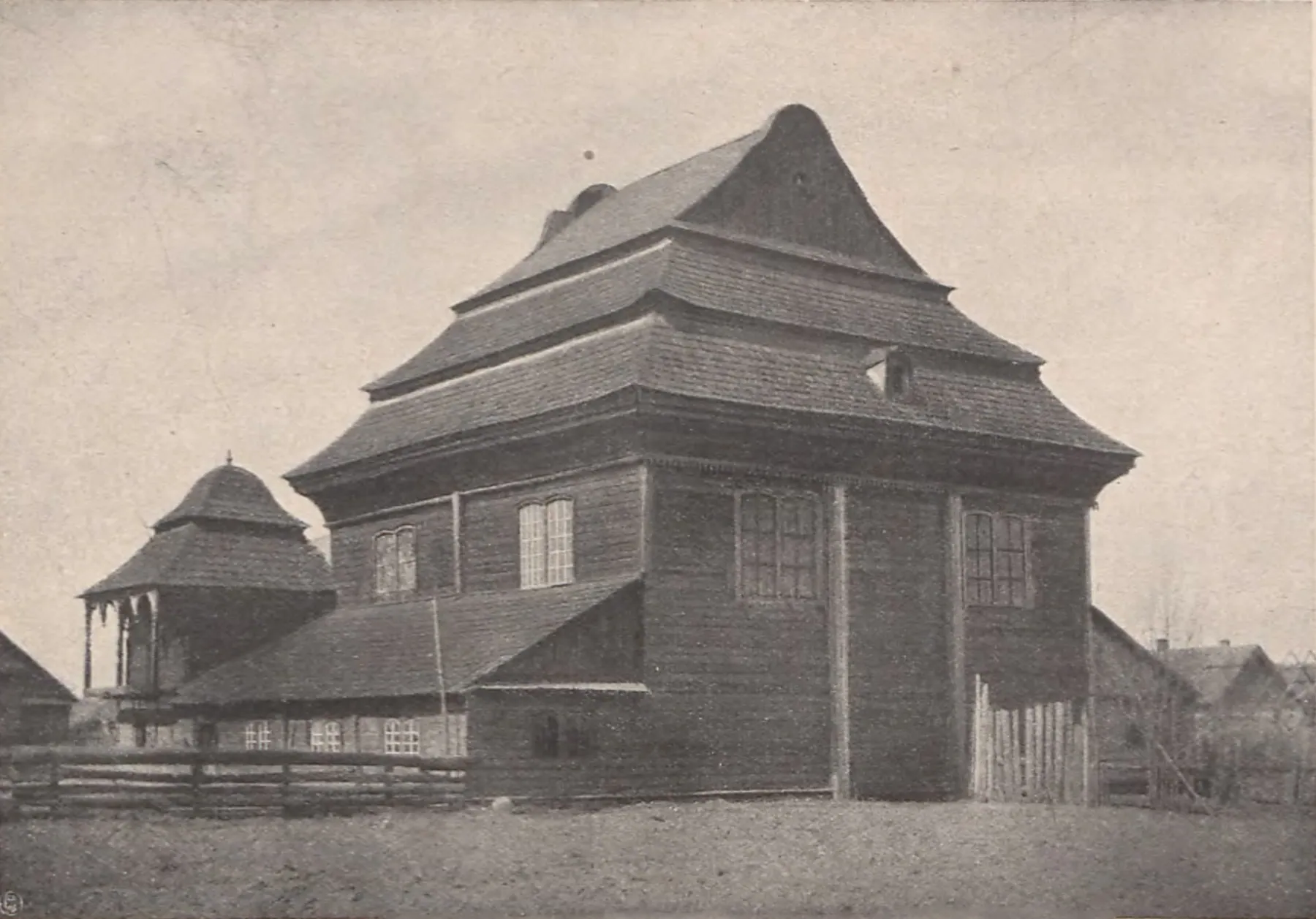
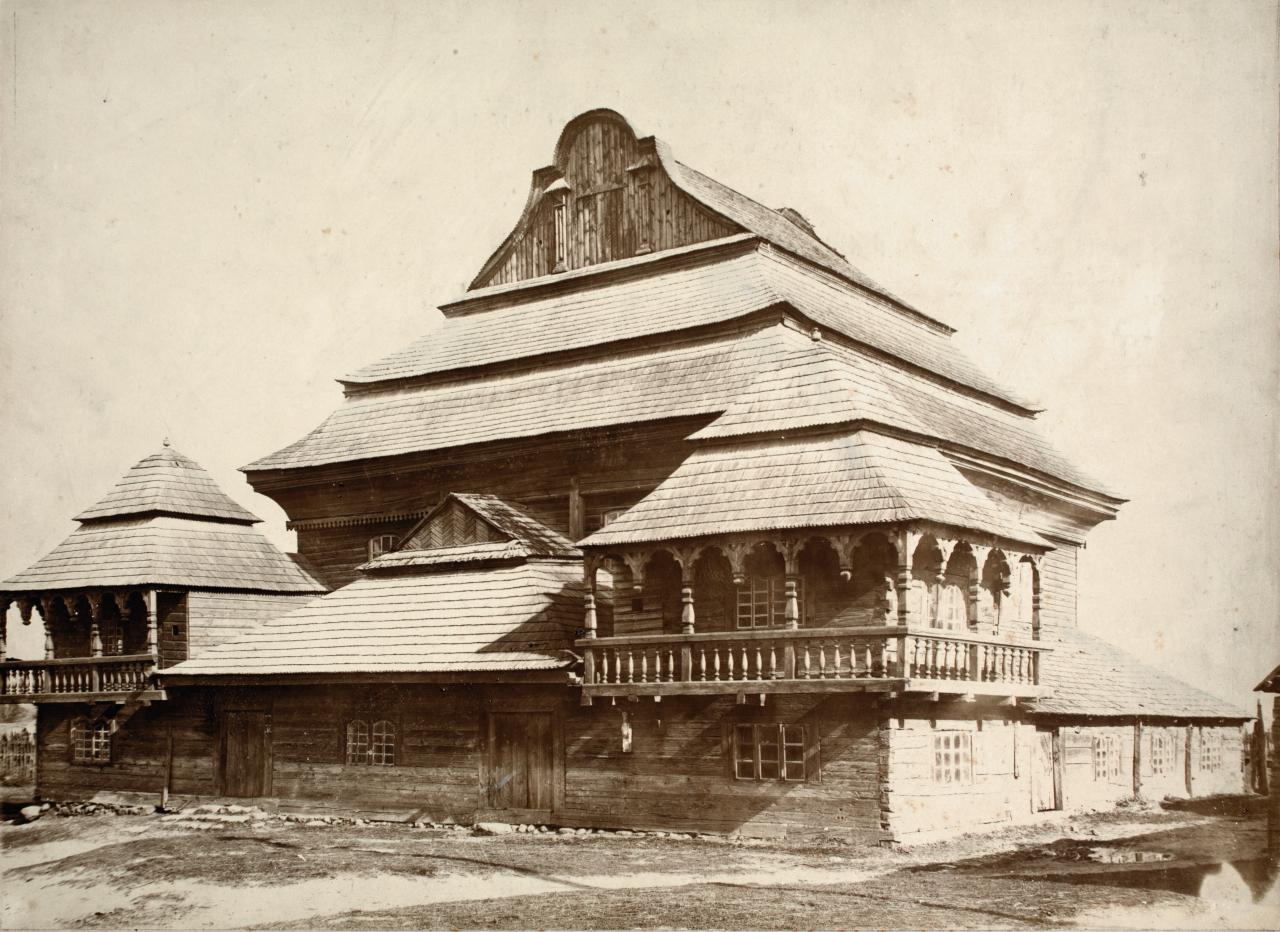
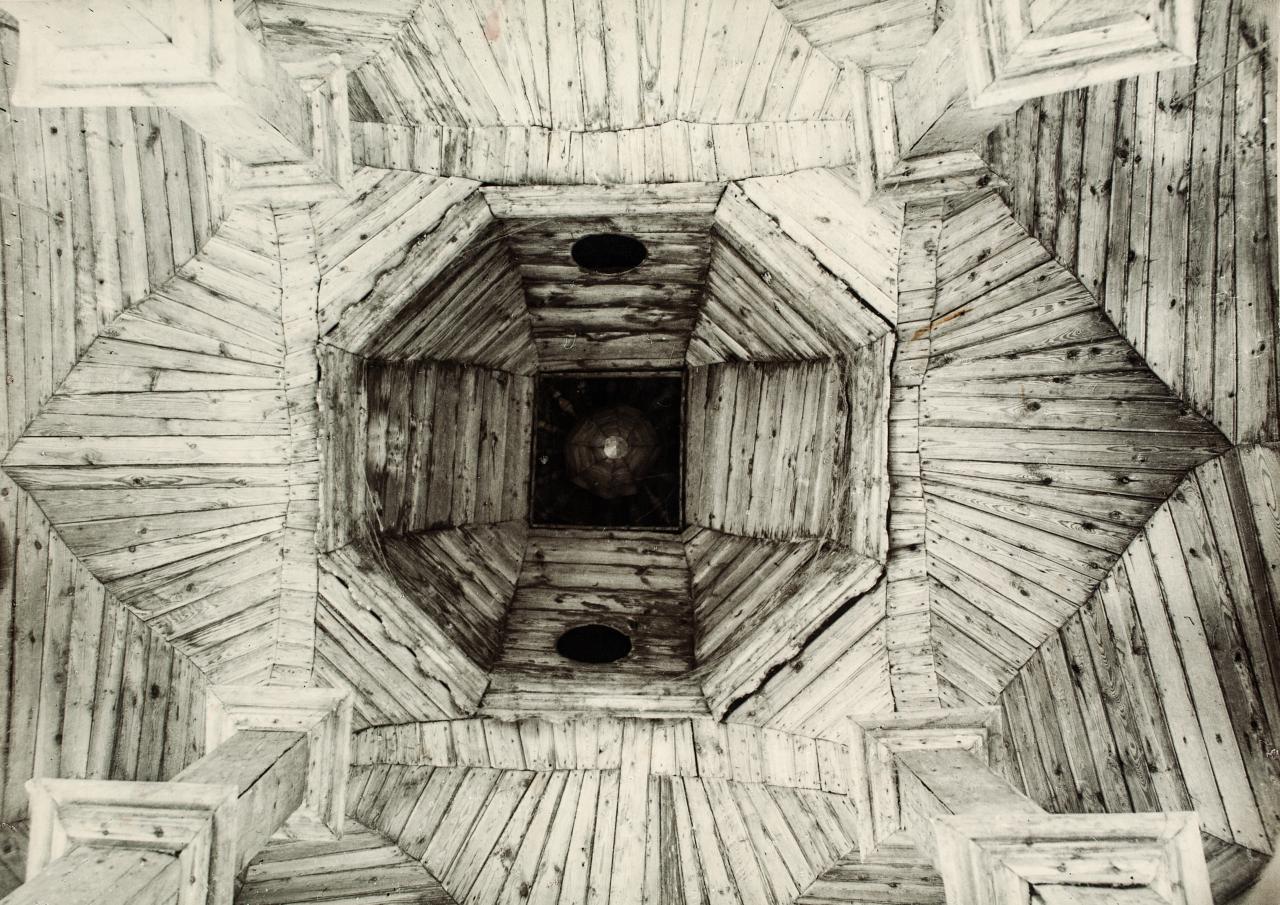
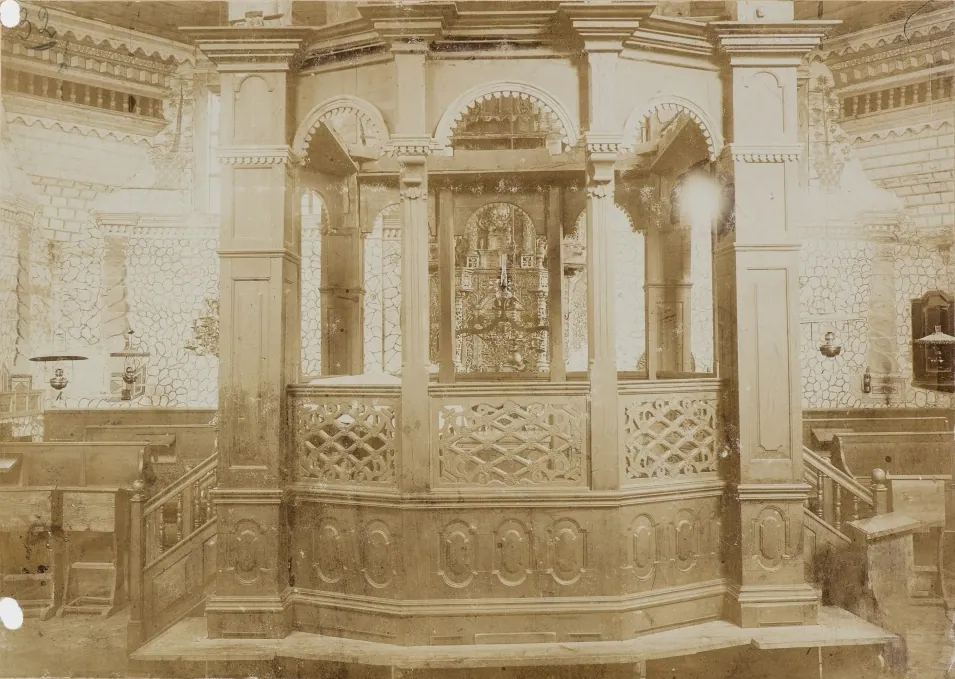
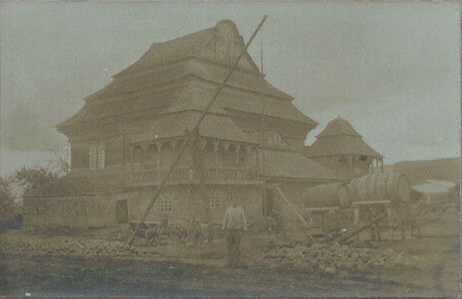
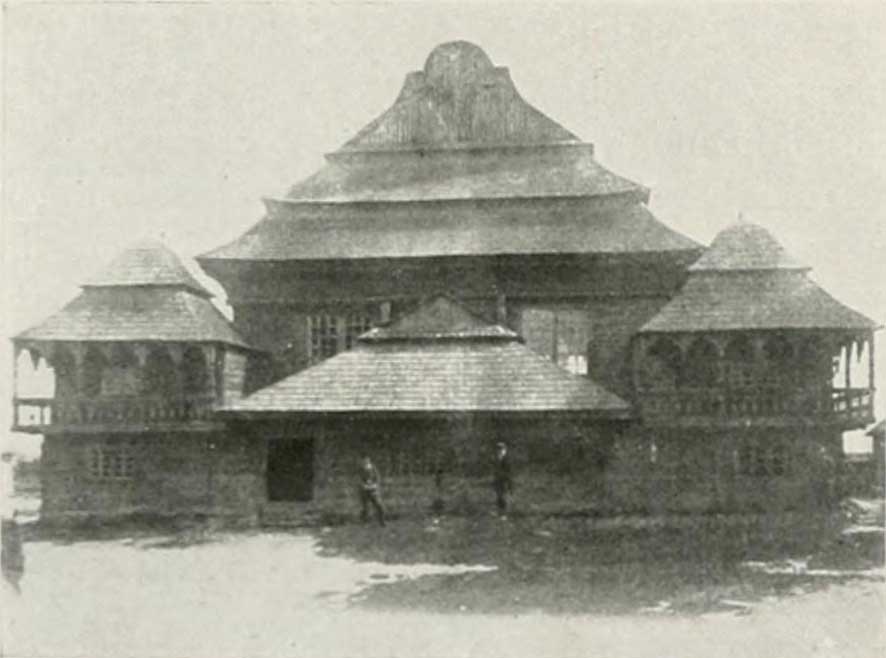
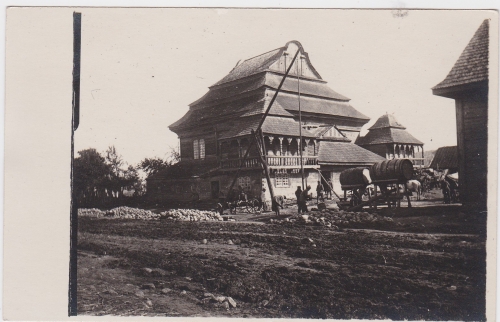
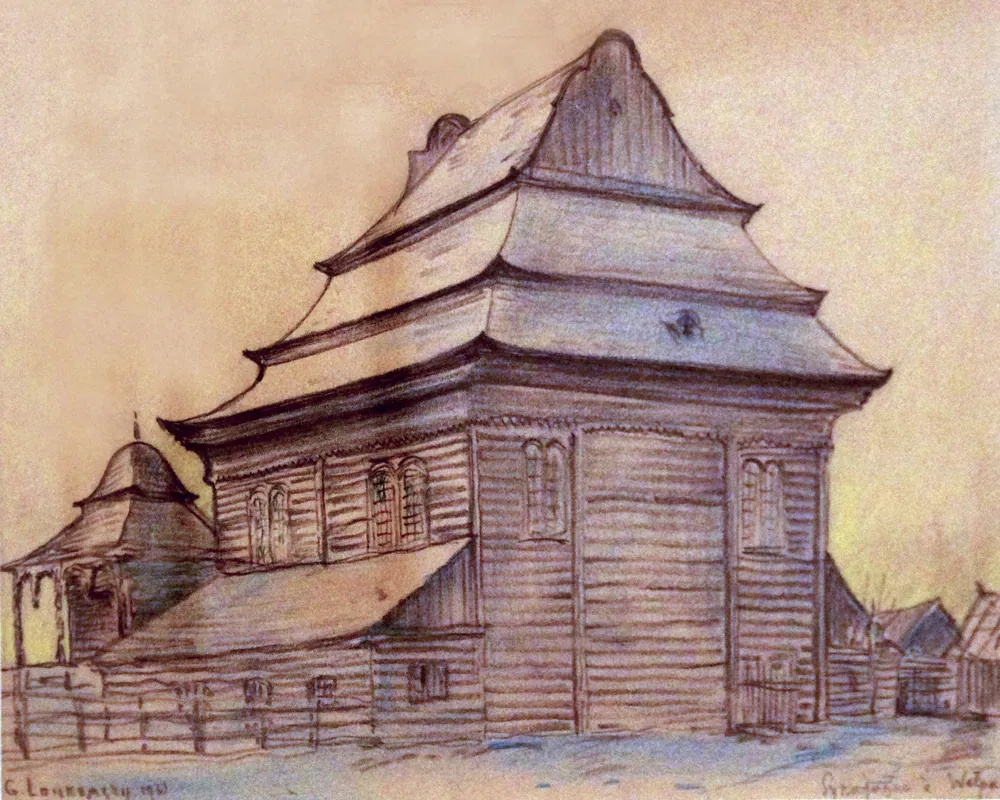
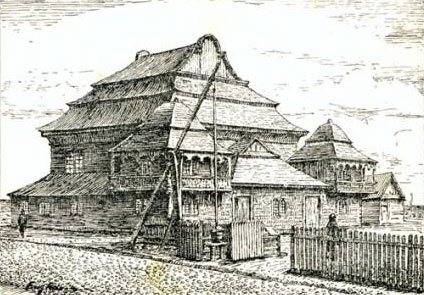
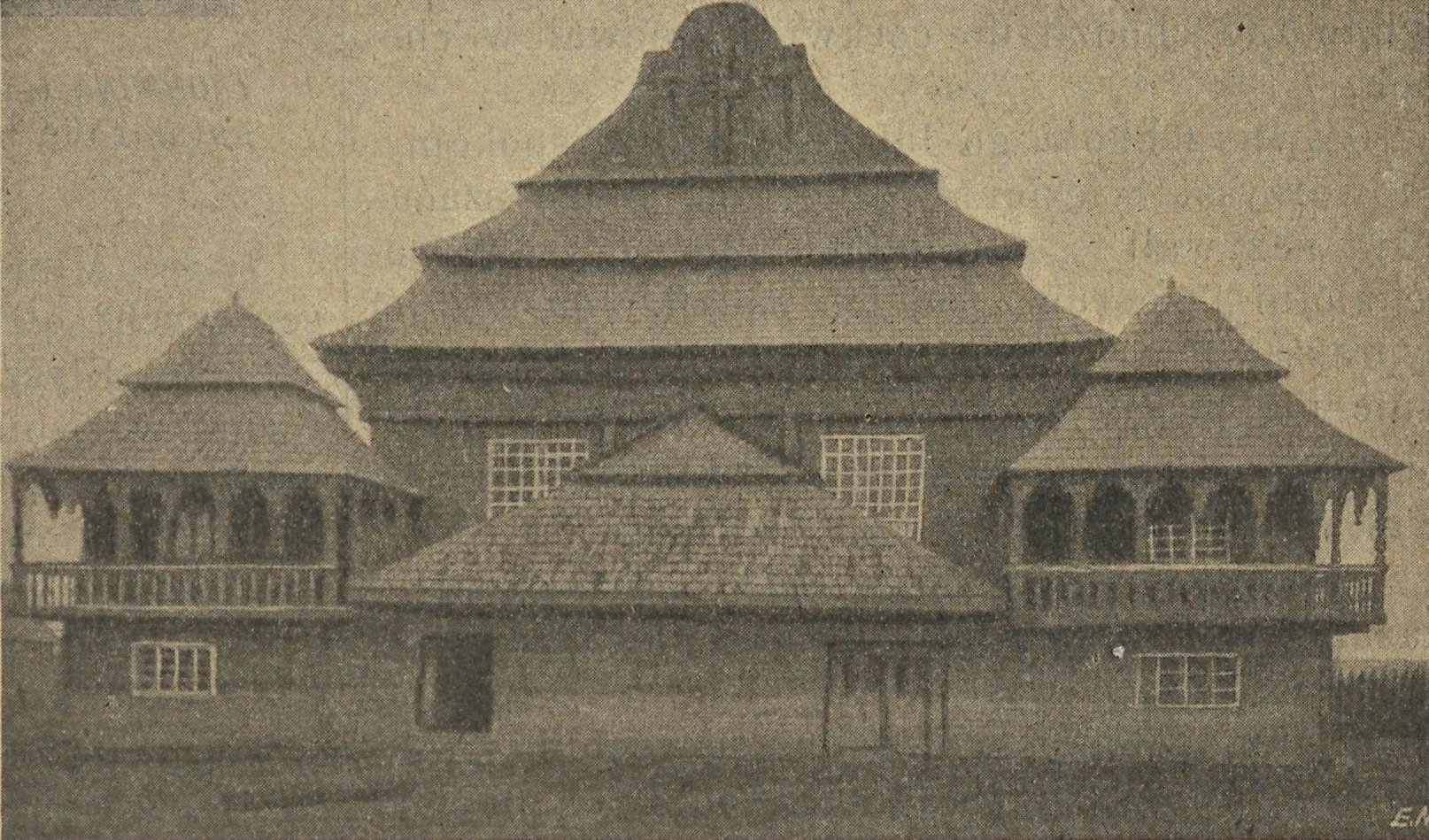
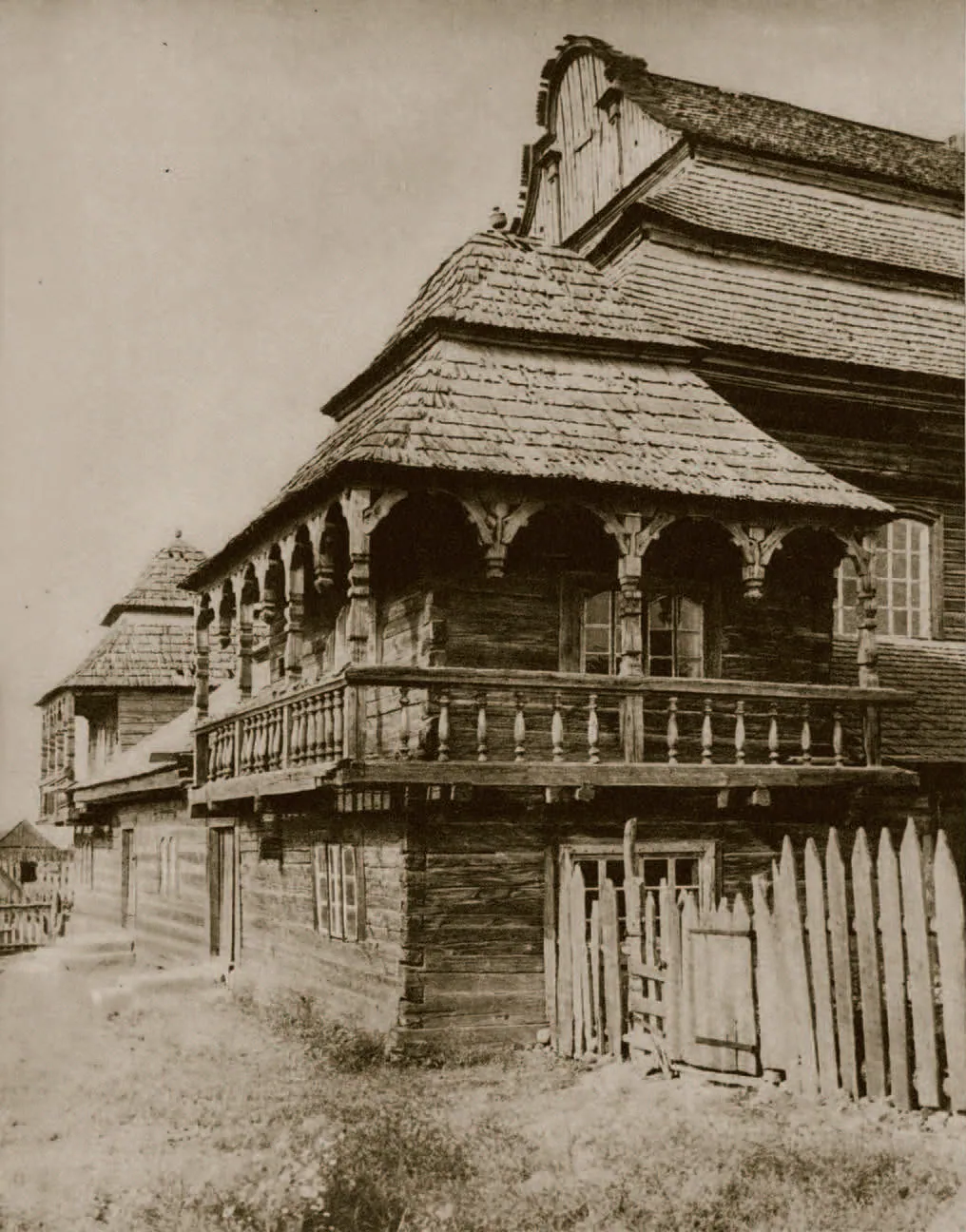
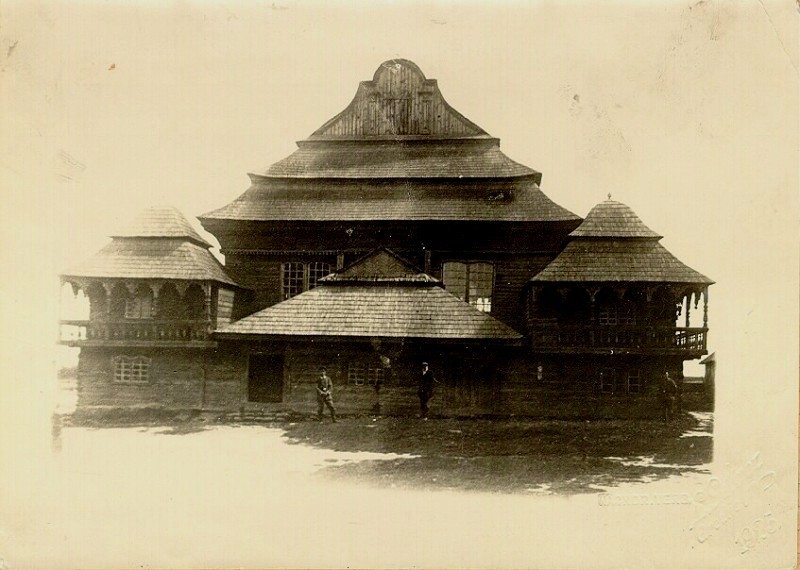
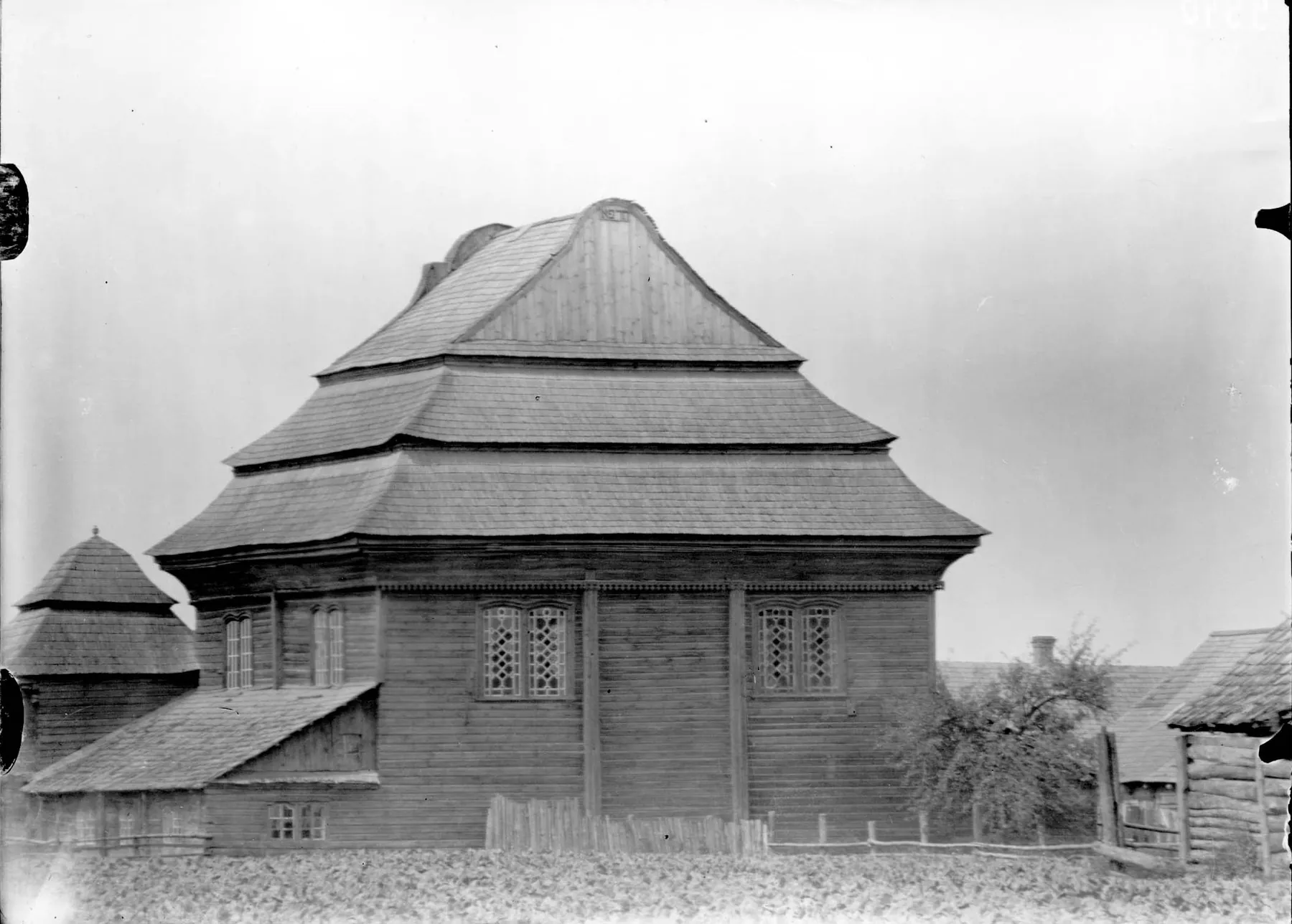
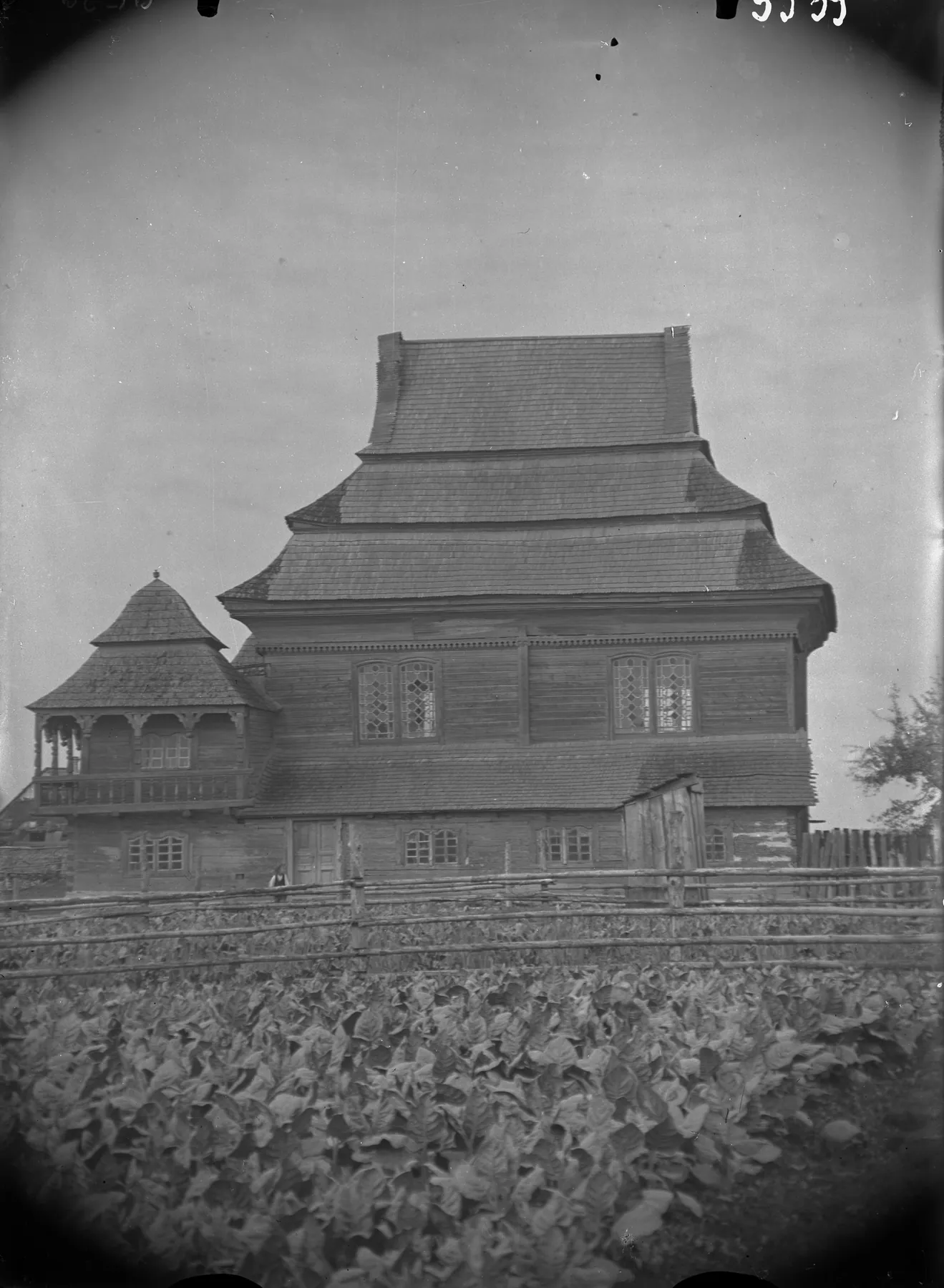
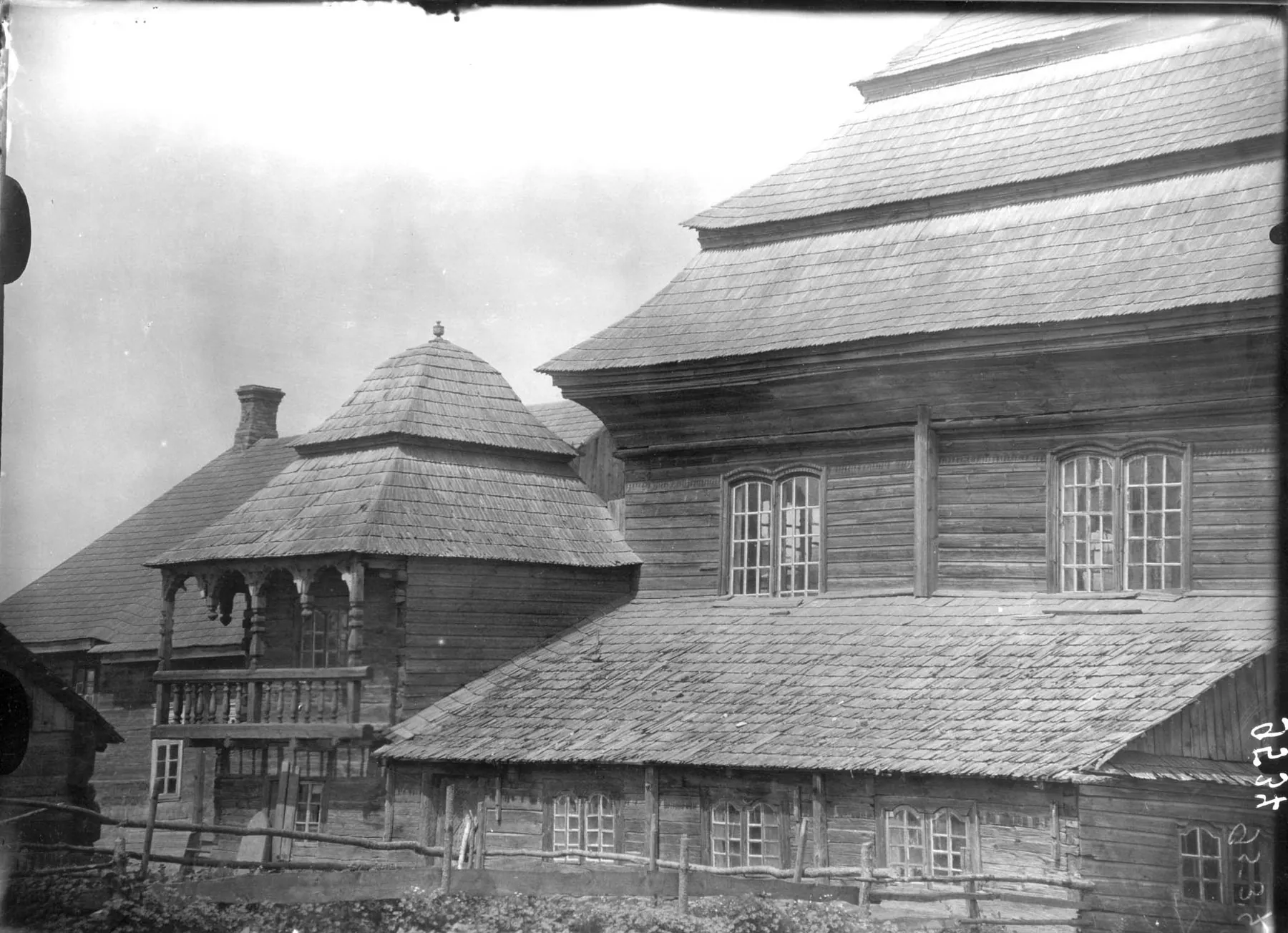
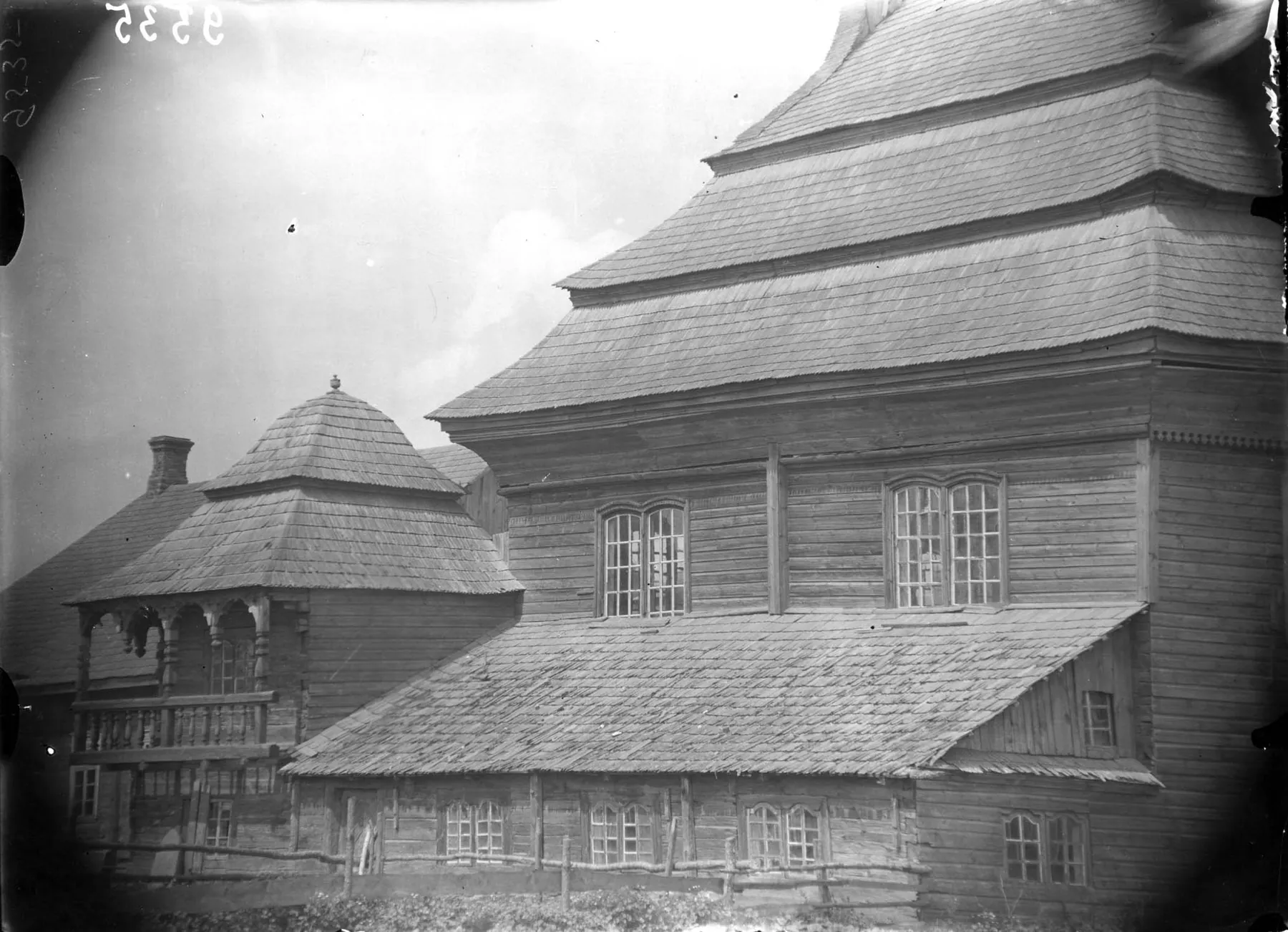
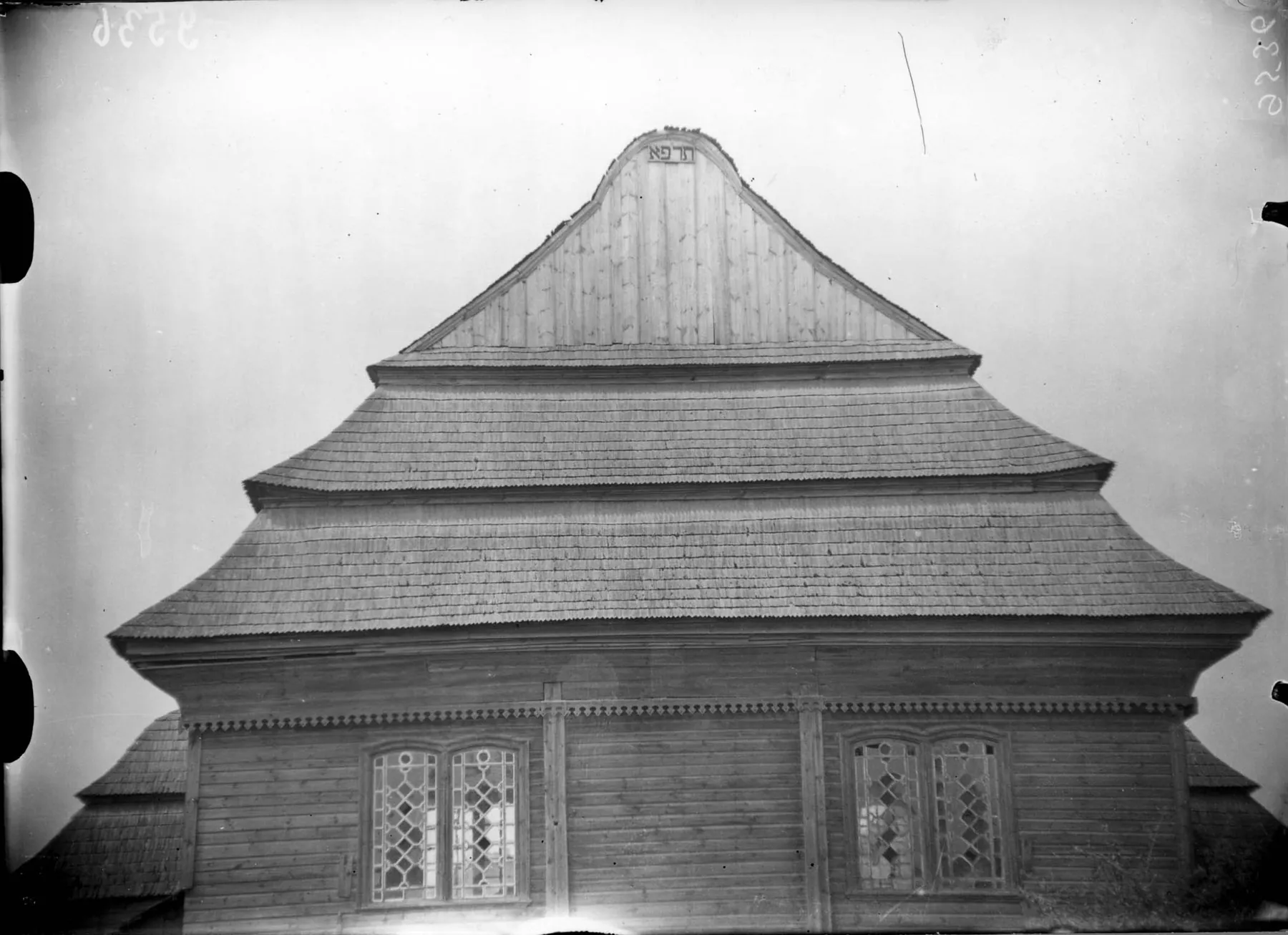
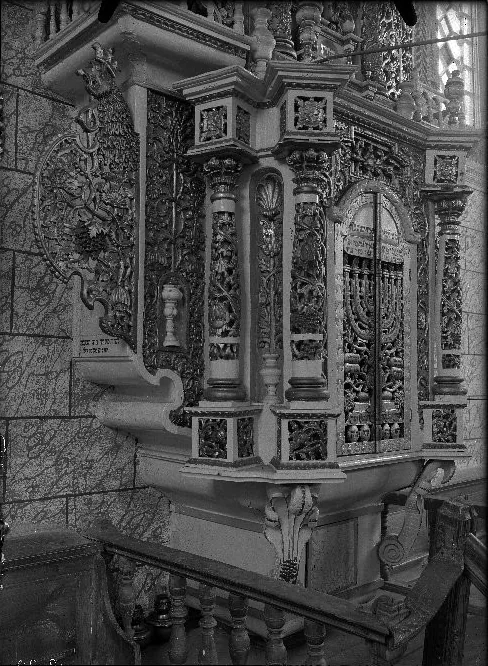
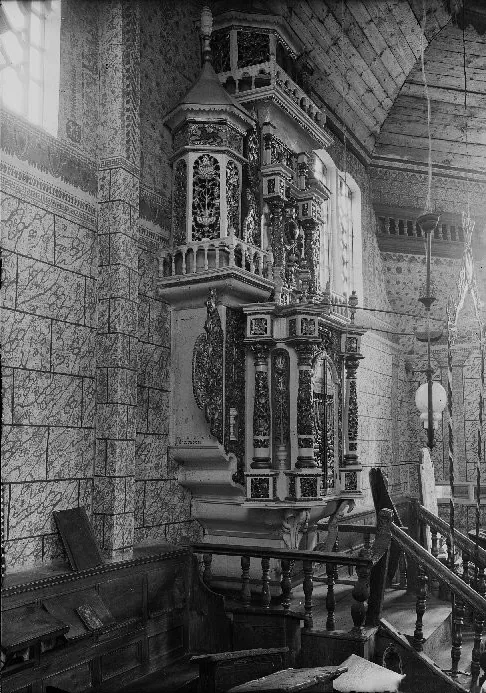
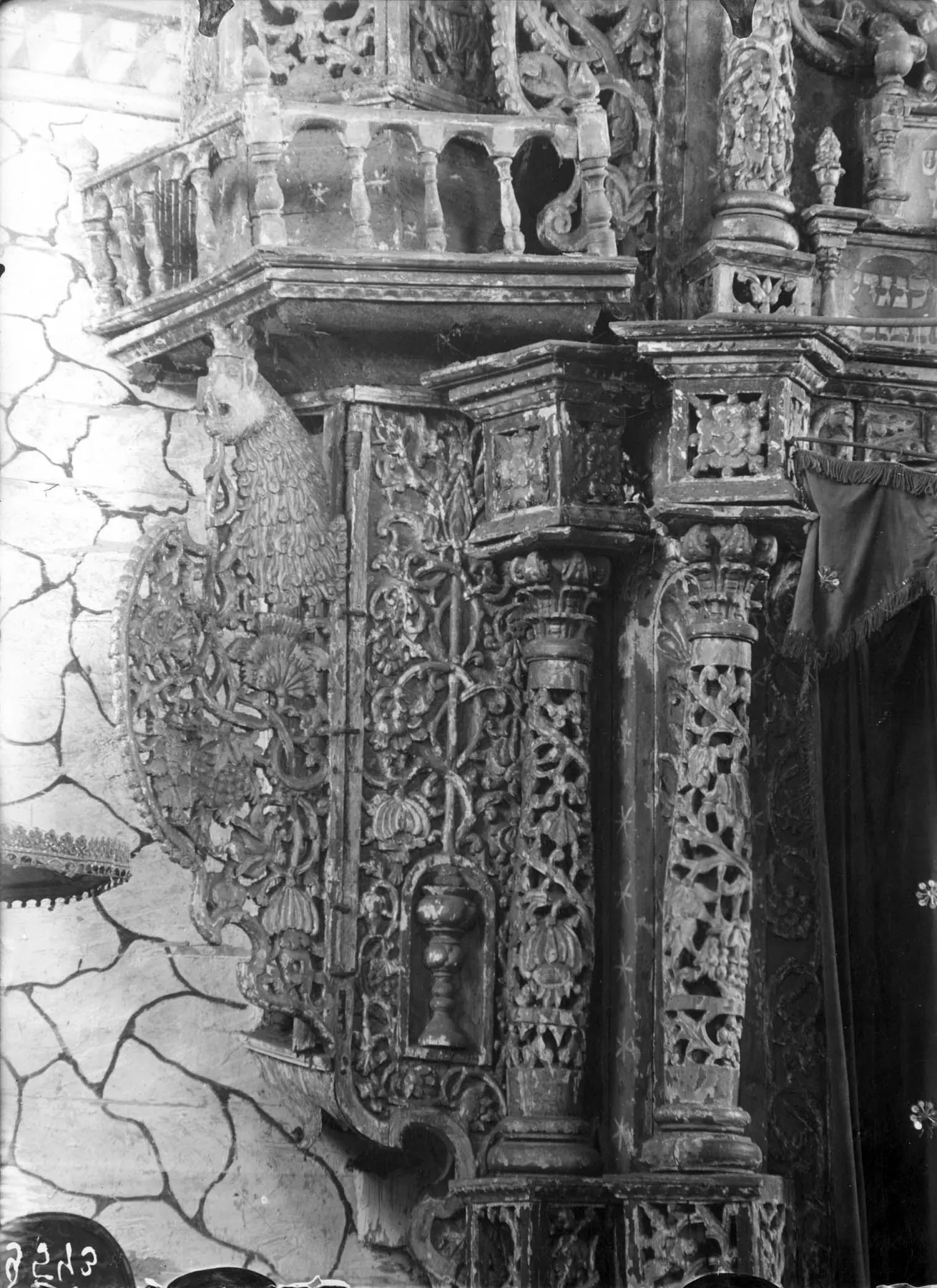
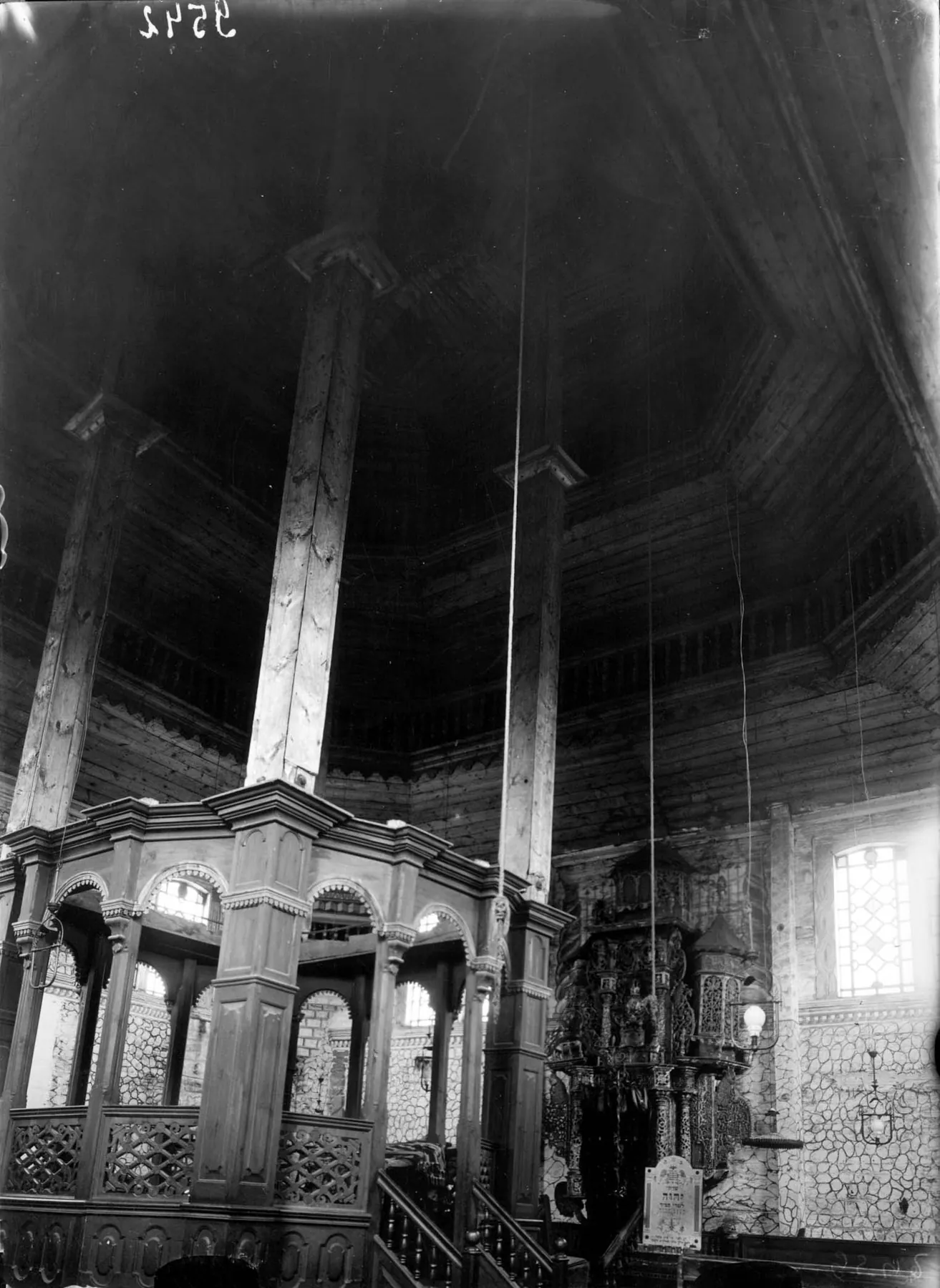
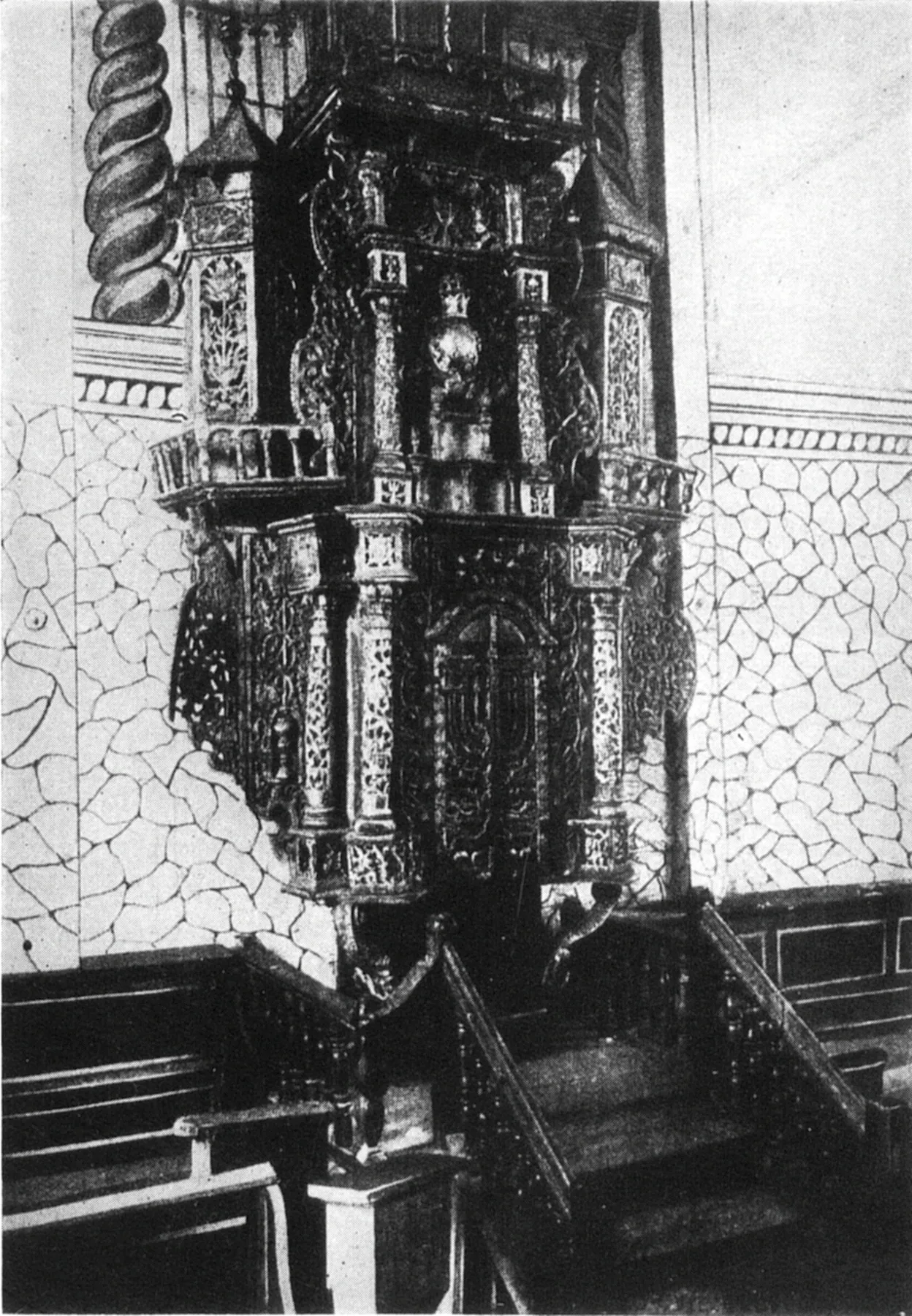
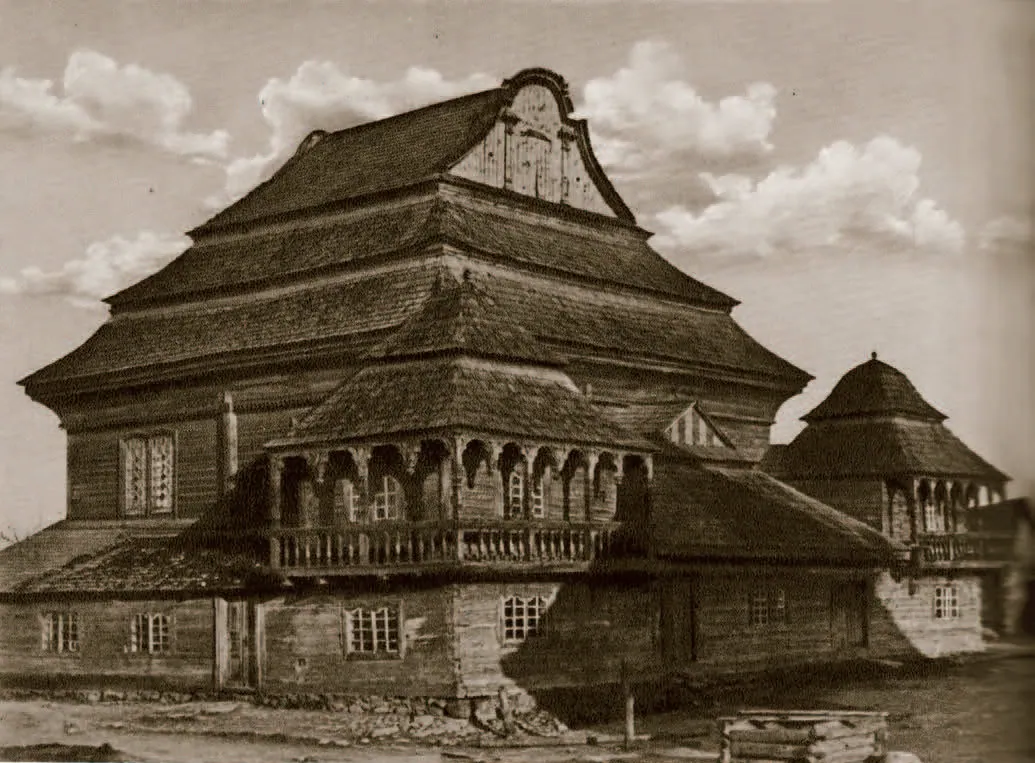
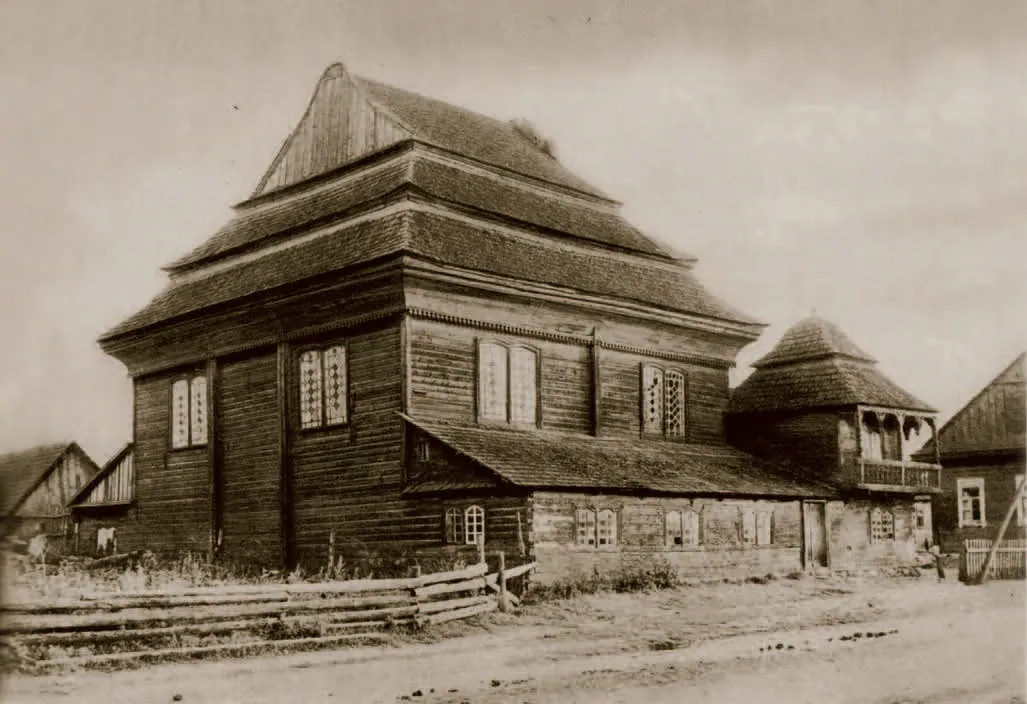
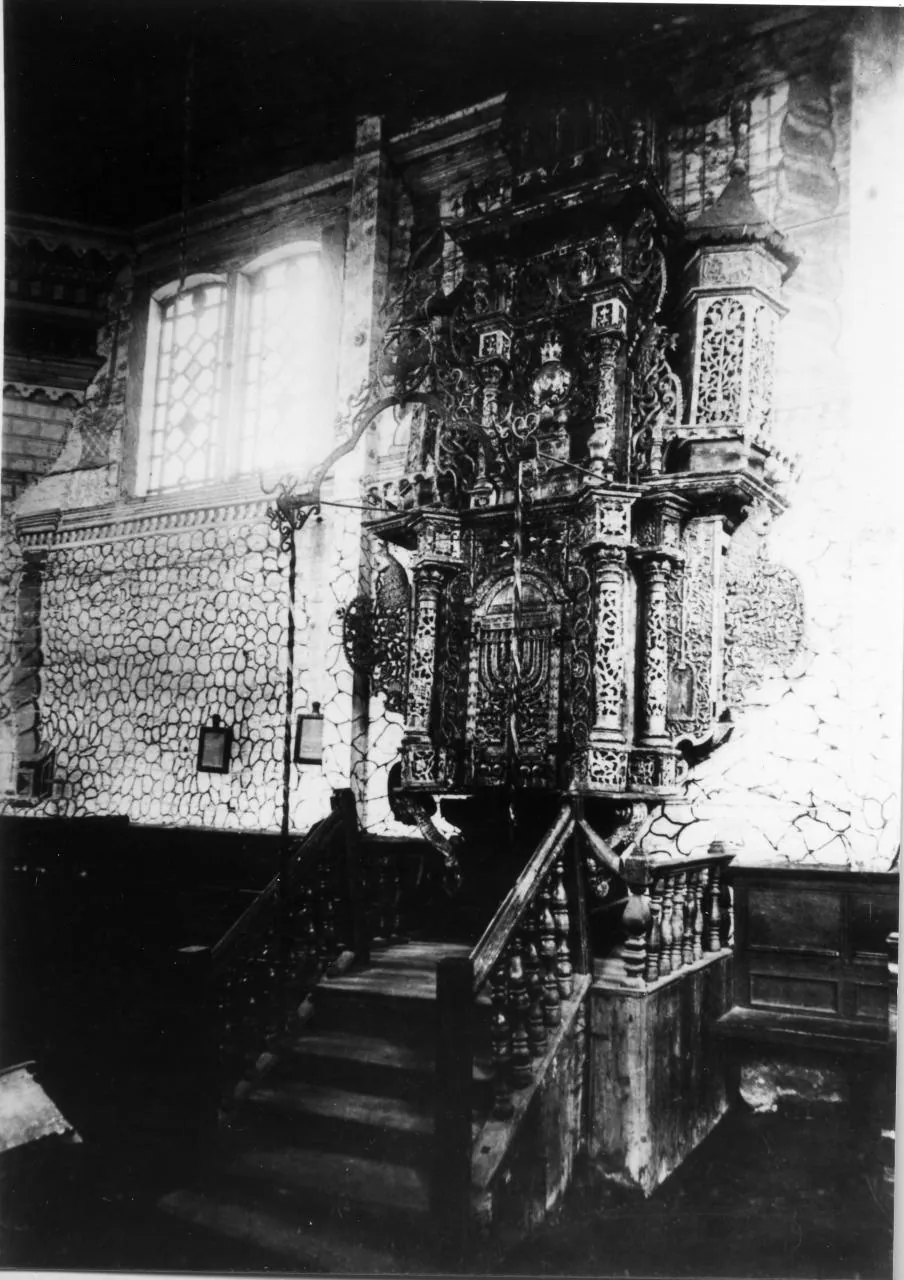
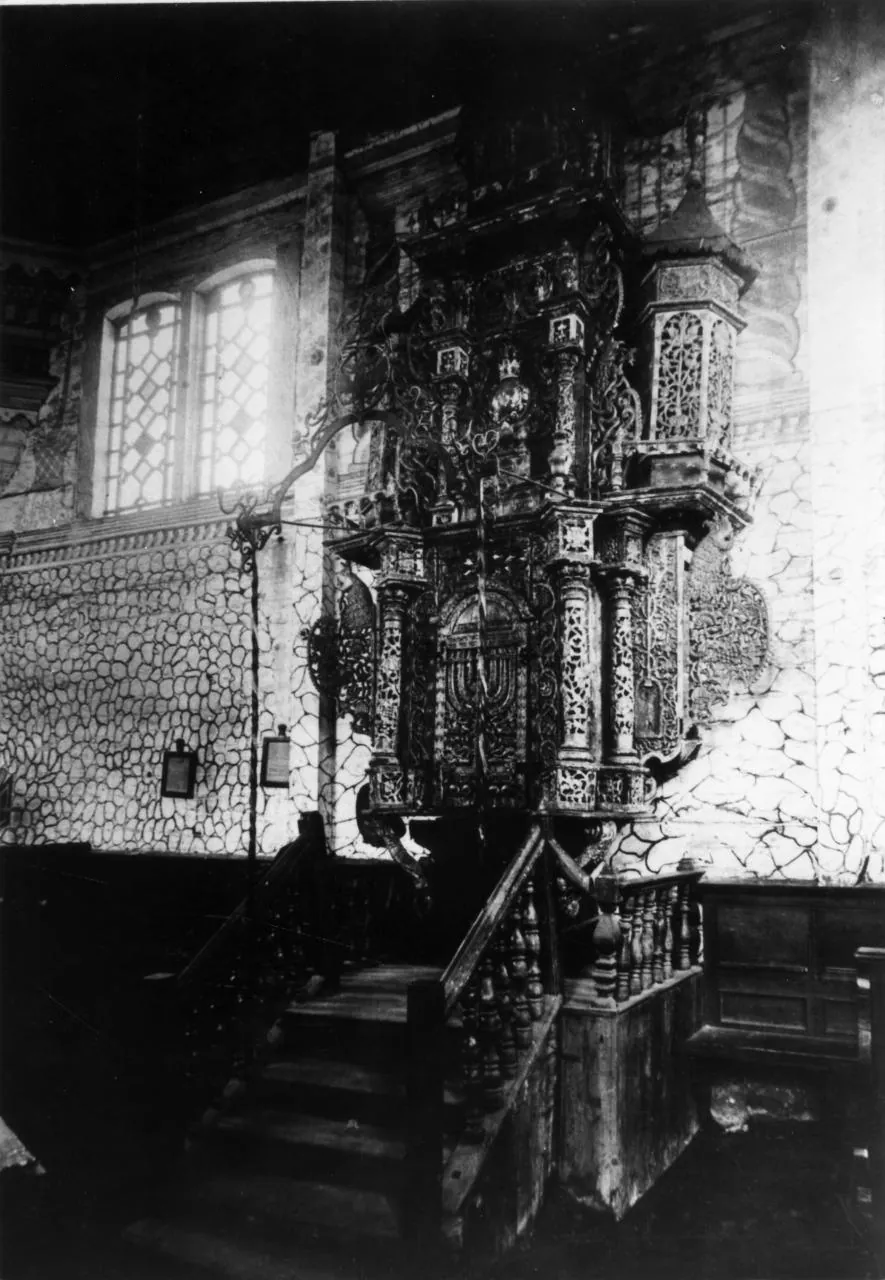
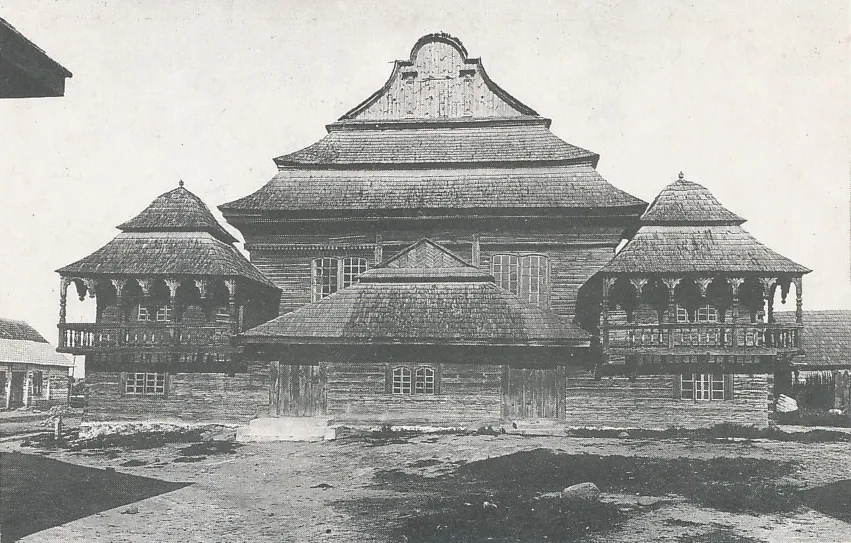
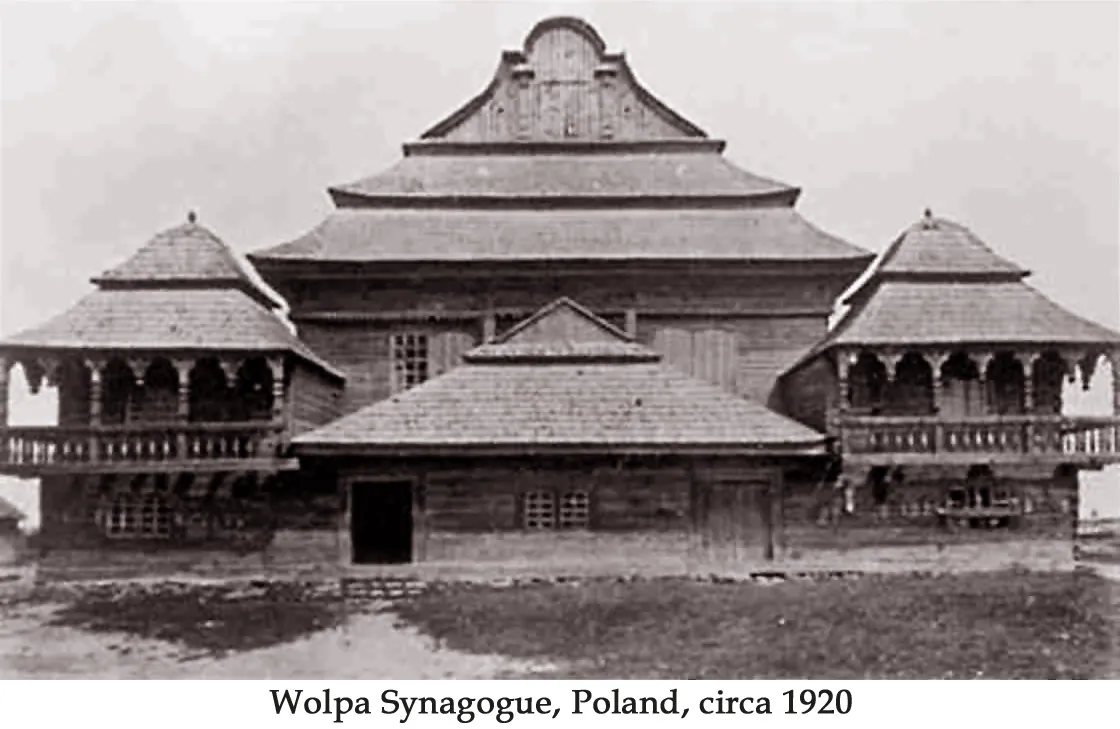
Wołpa (Voŭpa), a small town in the Grodno region of today's western Belarus, had one of the most admired wooden synagogues ever built. Tradition and some early scholars date it to about 1643, while others place it in the first half of the eighteenth century. The building stood in the eastern part of the town. Its square hall of about 13 by 12.8 metres rose under a three-tiered roof to a wooden vault some 14 metres high. The vault was carried partly by four massive carved columns that framed the central bimah. Two symmetrical galleried wings and corner pavilions flanked the hall. Inside, a star-spangled blue vault, trompe-l'oeil wall paintings and a multi-storey carved Torah ark with columns, menorahs and an eagle made it famous among art historians. The building was studied and photographed from the 1890s by Mathias Bersohn, Zygmunt Gloger, Alois Breyer, Szymon Zajczyk and the Institute of Art in Warsaw, renovated in the 1920s, and listed as a Polish historic monument in 1929. Memorial sources say it was wrecked in the German bombardment of 25 June 1941, and Piechotka dates its final burning by the Germans to November 1942. It inspired the design of the Yiddish Book Center in Amherst, Massachusetts, and a replica was built in Biłgoraj, Poland, in 2015.
Where it stood for nearly 300 years
Historic: Wołpa, Wołkowysk district, Białystok province (interwar Poland); eastern part of the town. Present day: Voŭpa, Vawkavysk District, Grodno Region, Belarus. Approximate.
Open larger map →The Jewish community
Jewish settlement in Wołpa was encouraged in the sixteenth century by the town's owners, who wanted Jewish merchants and craftsmen to develop its trade. The synagogue, built in the seventeenth or early eighteenth century, reflected a prosperous community. In the nineteenth century Wołpa belonged to the Grodno district of the Russian Empire. In 1887 the town had about 2,027 inhabitants, around half of them Jews. Between the wars it lay in north-eastern Poland, and about 1,100 Jews lived there. Tobacco growing was the mainstay of the local economy until a Polish state monopoly impoverished many families. The community nonetheless kept a four-grade Hebrew school and a Hebrew library of more than three thousand volumes. It also produced teachers, doctors and other professionals who left for the wider world.
Architecture and design
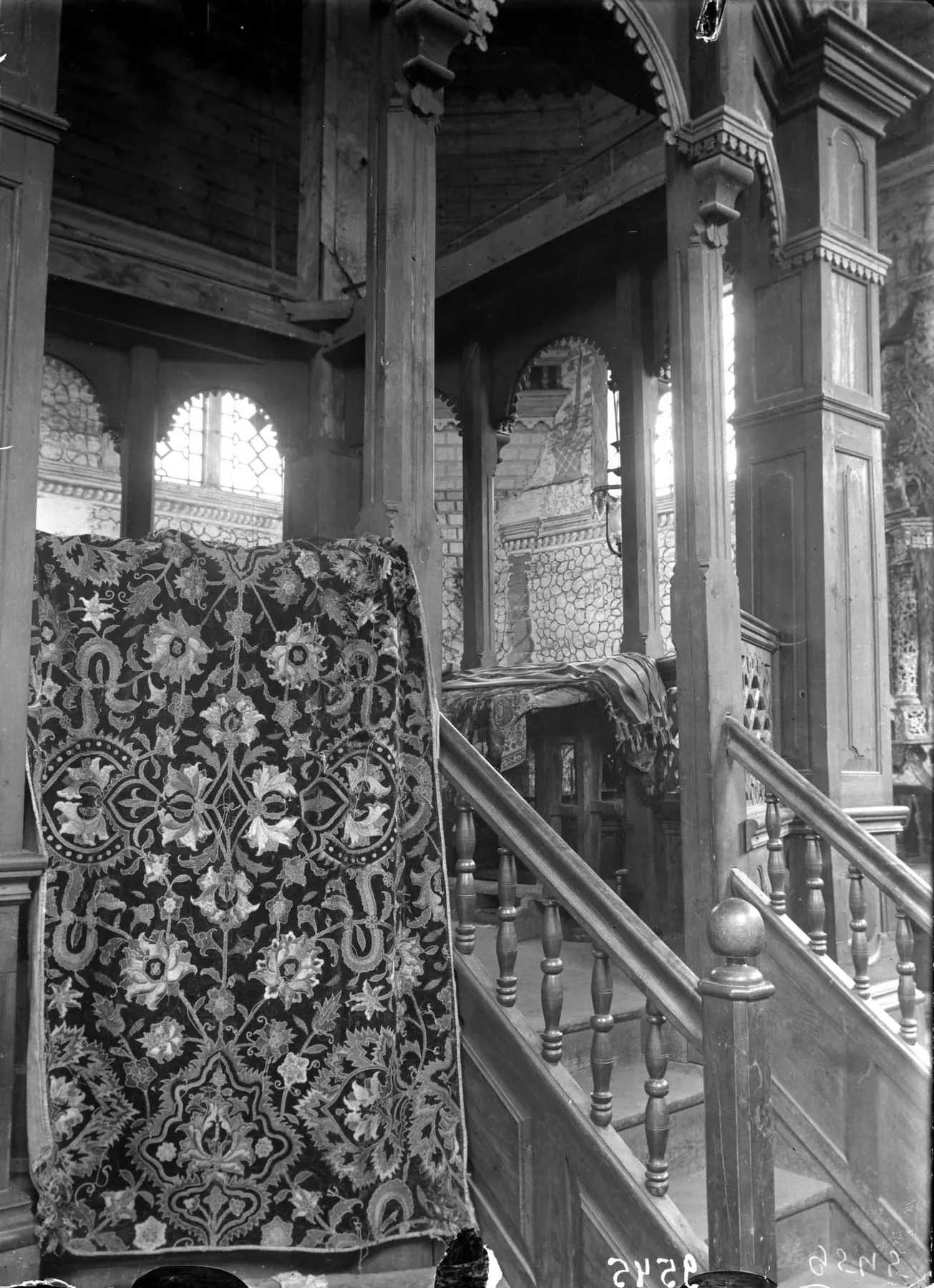
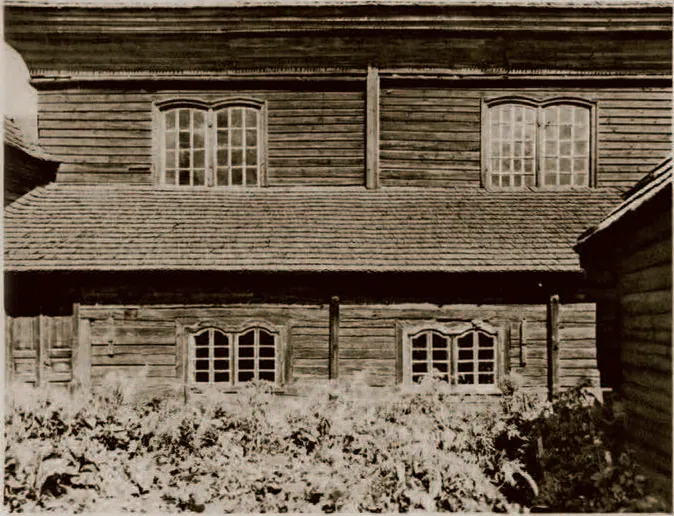
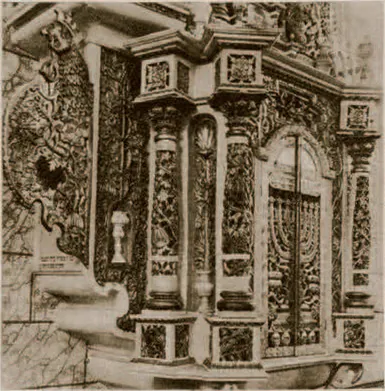
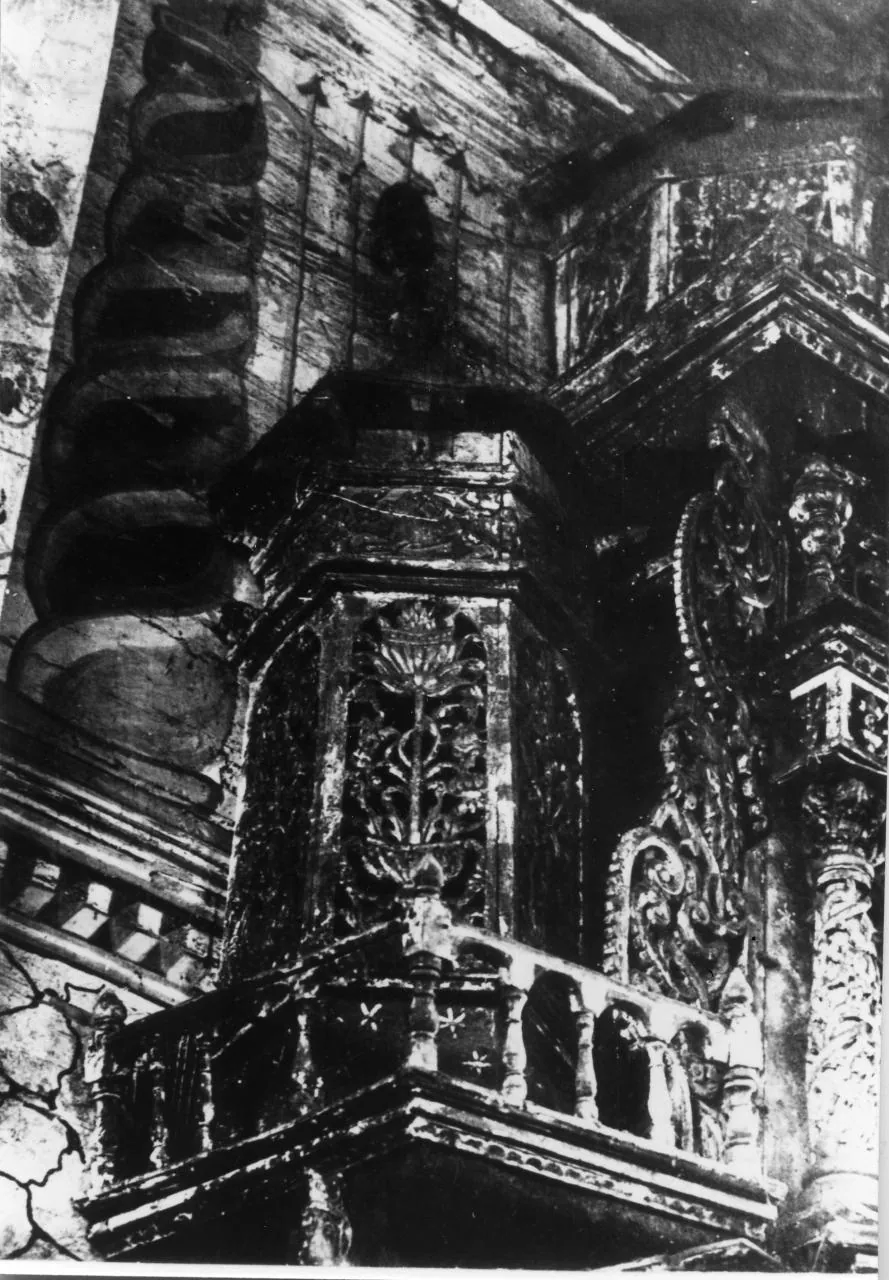
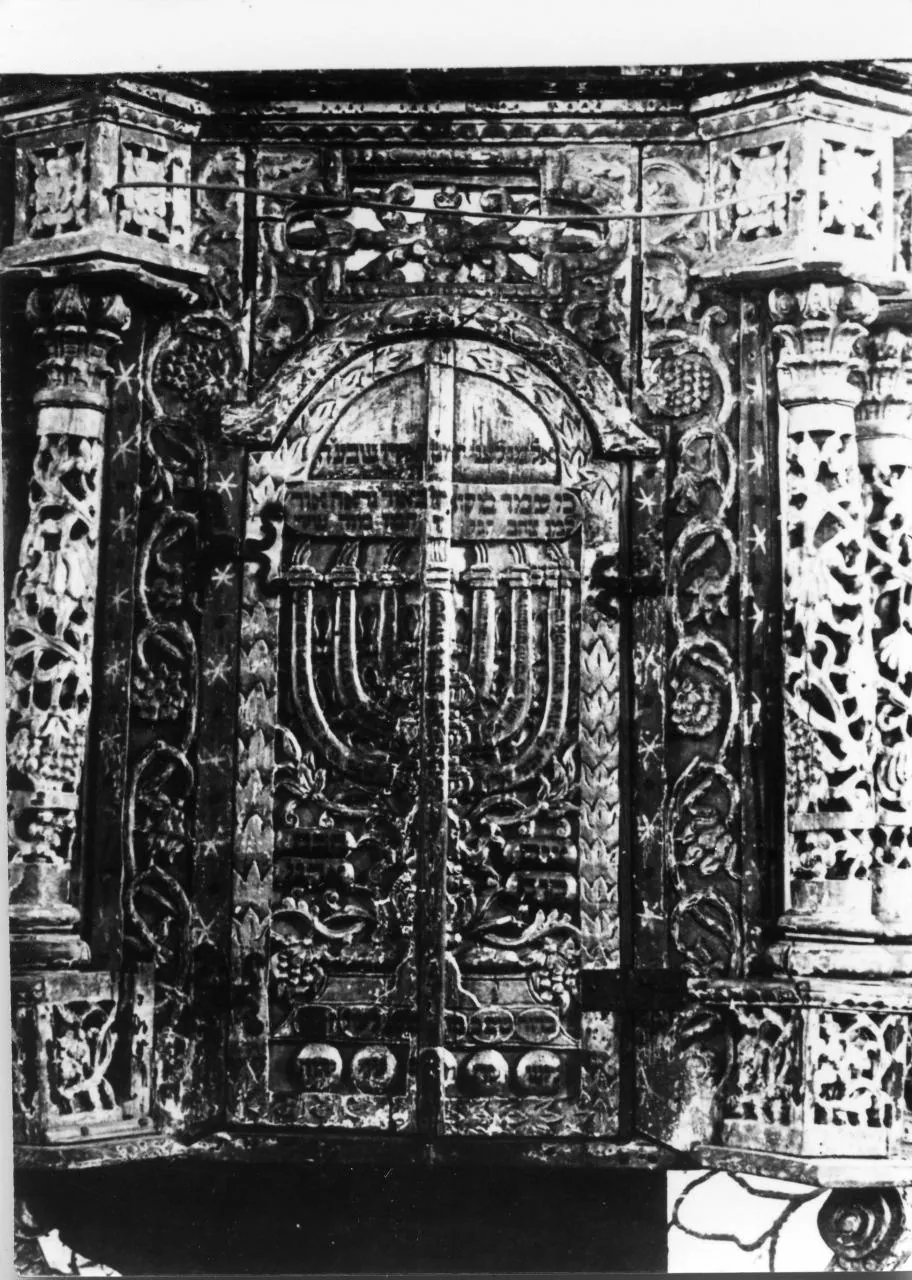
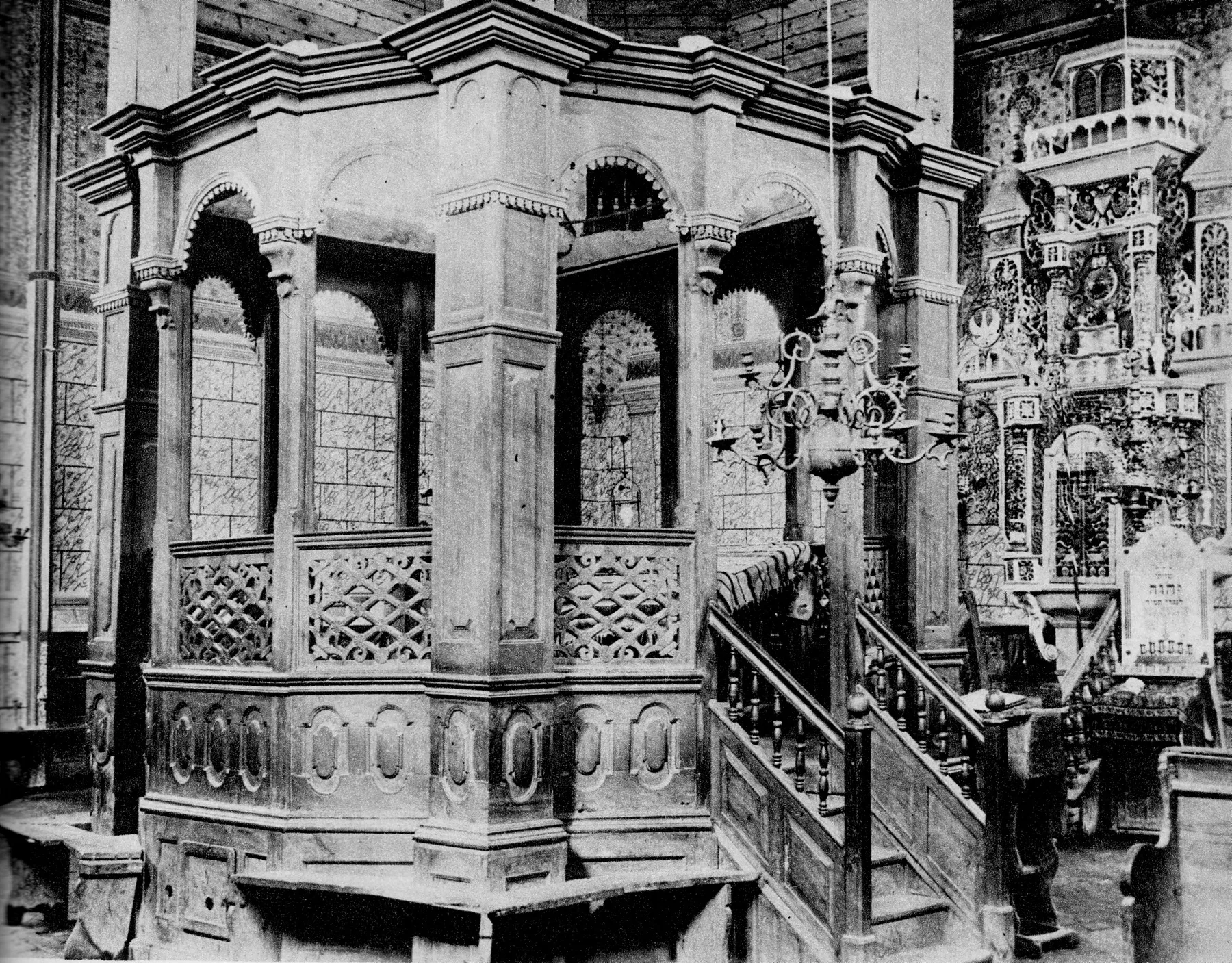
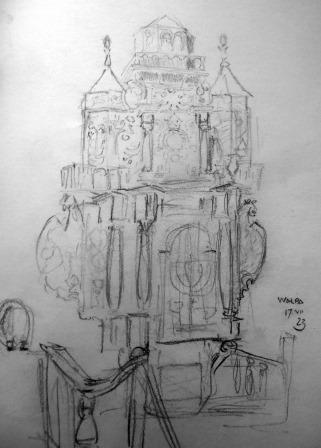
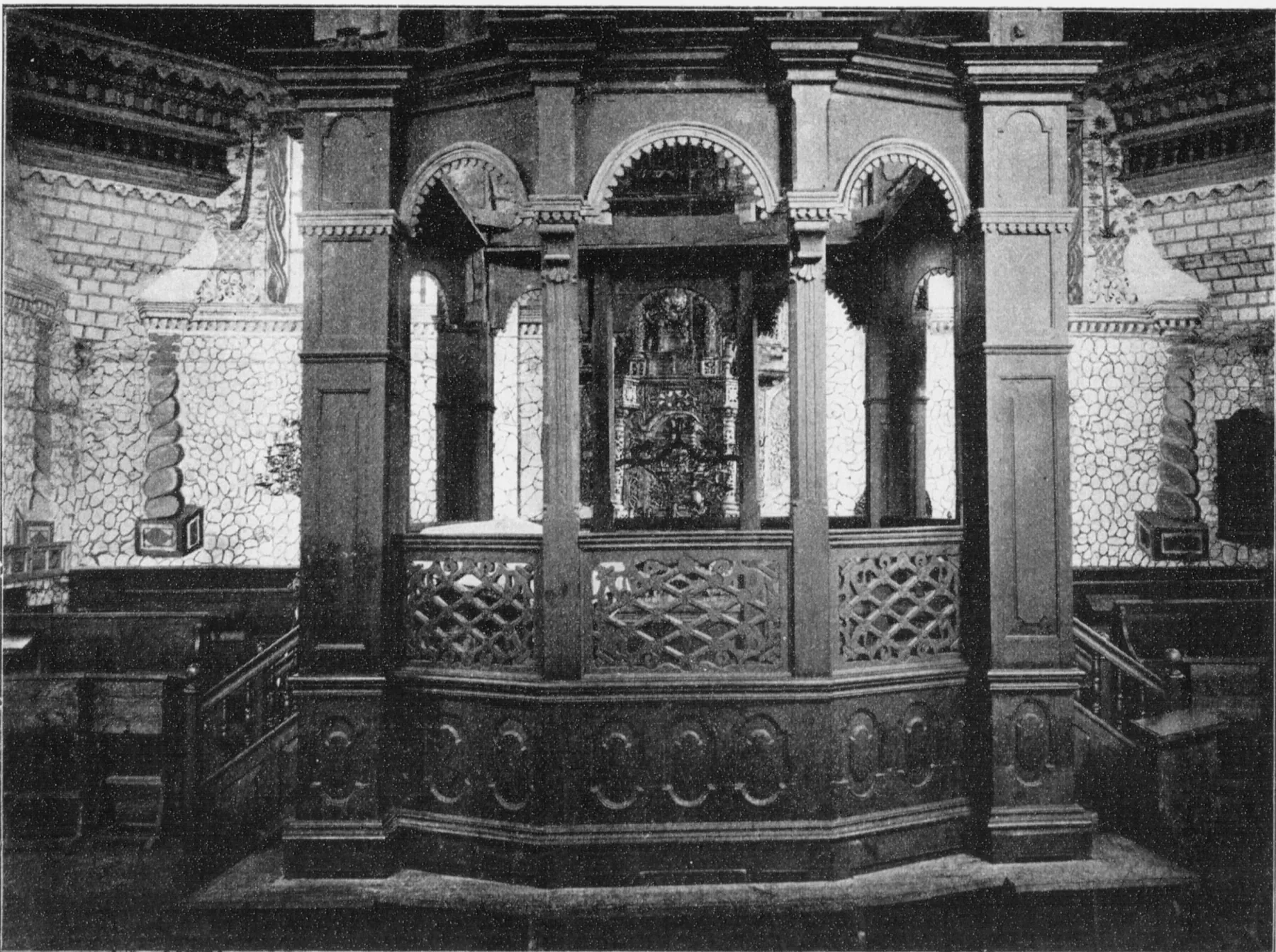
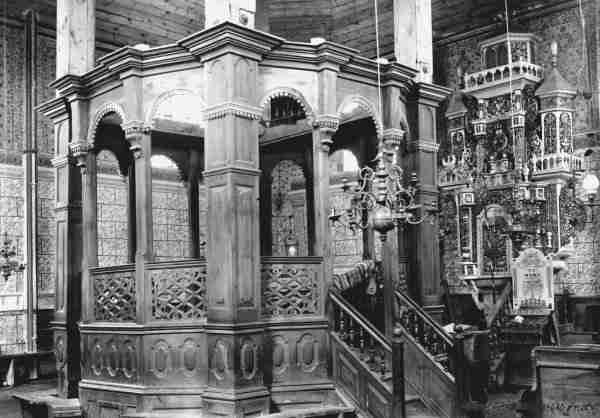
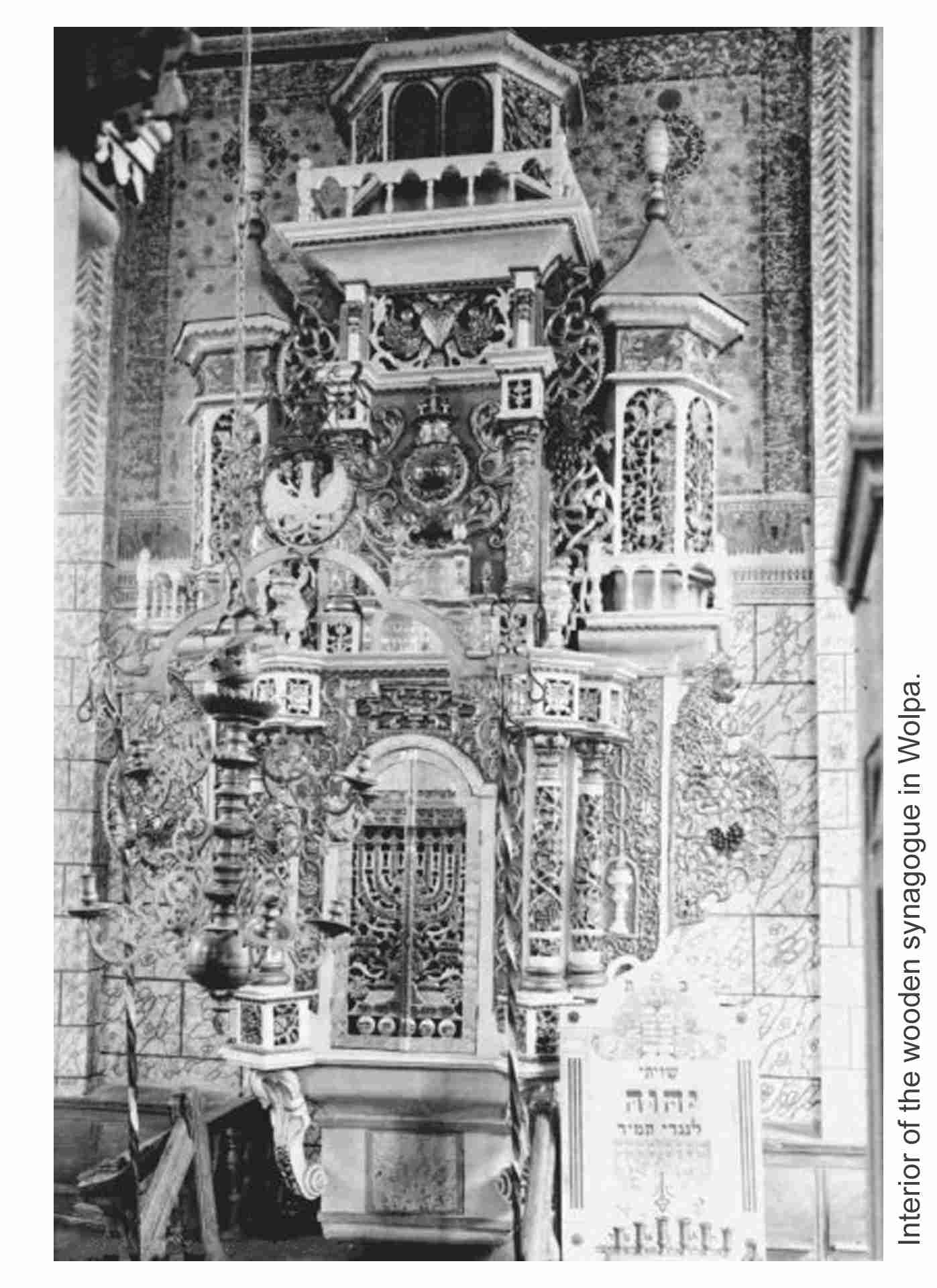
The synagogue was a log building on a nearly square plan, about 13 by 12.8 metres, with walls about 7.2 metres high. Above them rose a steep three-tiered roof with galleried eaves and carved gable ends. Inside, a wooden vault in three tiers reached about 14 metres, supported by roof trusses and by four massive carved columns standing at the corners of the bimah. An octagonal cupola crowned the centre. The bimah was an elaborately carved pavilion with arcades and balustrades. The Torah ark, about 36 feet high according to the Volkovysk memorial book, was a multi-tiered carved composition with twisted columns, menorahs, the Tablets of the Law and an eagle. The vault was painted deep blue with gold stars and the walls carried trompe-l'oeil masonry and prayer texts. Two symmetrical wings with open galleries and four corner pavilions held the vestibule and women's sections. Scholars have called it the masterpiece of the type.
Life inside the synagogue
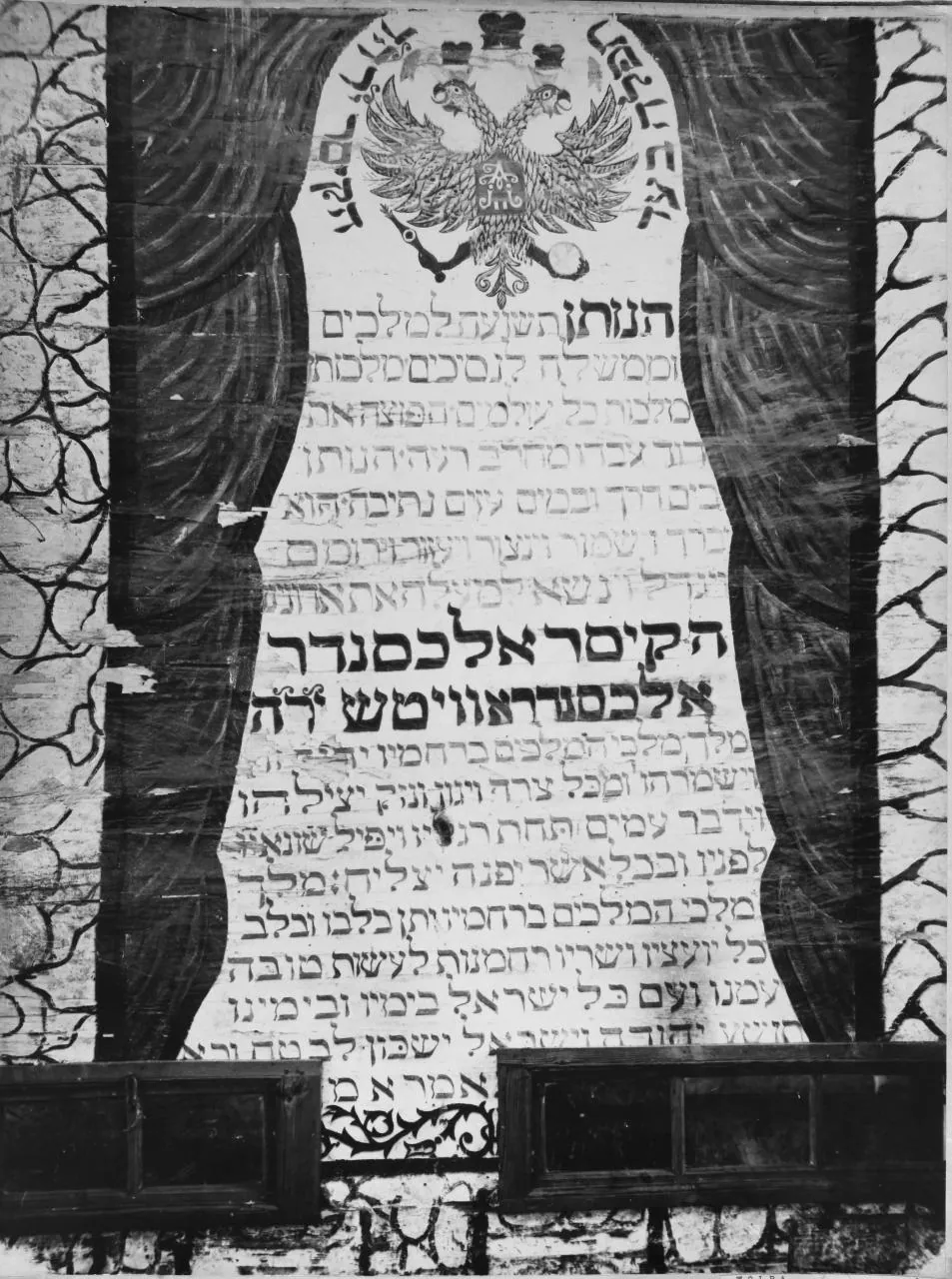
For generations the great synagogue was the centre of Jewish life in Wołpa and a source of local pride; the Volkovysk memorial book recalls that it had withstood every fire for over three hundred years. Its walls carried painted prayers, among them the prayer for the ruler, Ha-noten teshuah, photographed by Alois Breyer before 1914. In Hasidic tradition a rabbi of Wołpa was remembered as a disciple of the Maggid of Mezeritch. In the interwar years the community's rabbi was Mordechai Segal, known as the Volp Rabbi. Alongside worship, the community ran its Hebrew school and library, and Zionist youth prepared for emigration to the Land of Israel. The building was also a destination for scholars and tourists: Polish guidebooks and art-history surveys of the 1920s and 1930s reproduced its photographs, and it was placed on the register of historic monuments in 1929.
Destruction
German forces invaded the Soviet-held region on 22 June 1941. According to the Volpa KehilaLinks history and the Volkovysk memorial book, the German attack on Wołpa on 25 June 1941 began with the bombing of the town. Most Jewish houses and the wooden synagogue went up in flames, and the memorial book says the synagogue was reduced to rubble. Maria and Kazimierz Piechotka, in their standard study of wooden synagogues, date the synagogue's final burning by the Germans to November 1942, when the Jews of Wołpa were deported. Other accounts simply say it was destroyed by the Nazis during the war. Whichever date is correct, the building was destroyed by Nazi German forces during the invasion and occupation of 1941–1942, and nothing of it survives.
The community’s fate
Under Nazi German occupation the Jews of Wołpa suffered violence and forced labour. On 2 November 1942 all Jews were ordered to assemble with their belongings in the town centre, on the church square. Sixty-six old and sick people who could not join the assembly were rounded up, tortured and shot, and buried in a mass grave. Among them was their leader, Rabbi Mordechai Segal, whose beard the Germans tore out. The rest were marched to Volkovysk and held in the bunkers of the transit camp there with thousands of other Jews from the region. Most were then deported to Treblinka and murdered in the gas chambers. About 900 Jews from Wołpa were killed. Only about eleven survived, among them Itzhak Vodovoz, who escaped, fought with the Soviet partisans and later settled in Israel.
The site today
Nothing of the synagogue survives in Voŭpa, now a village in the Vawkavysk district of Belarus. The synagogue stood in the eastern part of the town, but its exact plot has not been confirmed in the sources consulted. The building's appearance is preserved in a large body of photographs made between about 1900 and 1939, and in measured drawings. In 1997 the Yiddish Book Center in Amherst, Massachusetts, modelled its building on photographs of the Wołpa synagogue. In 2015 a full-size replica was built in Biłgoraj, Poland. In 2024 the Belarusian-Jewish Cultural Heritage Center released a virtual reconstruction of its interior.
Notable names
Mordechai Segal
d. 2 November 1942Rabbi of Wołpa (the "Volp Rabbi")Mordechai Segal was rabbi of Wołpa in the interwar years and the religious leader of the community that worshipped in its famous wooden synagogue. When the Jews were assembled for deportation on 2 November 1942, he was among the sixty-six old and sick people the Germans seized; they tortured him, tearing out his beard, and murdered him, burying the victims in a mass grave.
Biography or source →Do you have something to contribute?
Photographs, documents, family stories or memories of this synagogue and its community help keep its history alive.
Share a memory or thought
No comments yet. Be the first to add one.