
Historia Levy Synagogue, Worms
Worms had one of the oldest Jewish communities in Germany, and its medieval synagogue on the Judengasse was among the most famous in Europe. In the mid-nineteenth century the community split between a conservative wing and a progressive wing that wanted to adapt worship to modern German life. When progressive rabbis took over from Rabbi Jakob Bamberger in the 1860s, the conservatives answered by building a synagogue of their own. The merchant and banker Leopold Levy donated the site, a grain warehouse at Judengasse 29 directly opposite the old synagogue, and paid for the building. Work began in 1870–1871, and the synagogue was consecrated in 1875. It did not create a separate congregation: it served as a second house of prayer and the community's weekday synagogue. During the November pogrom of 1938 Nazis wrecked the interior, but did not set it on fire because it stood in a row of houses. An air raid on 21 February 1945 damaged it, and in 1947 the ruin, still standing to the gable, was pulled down.
Where it stood for 72 years
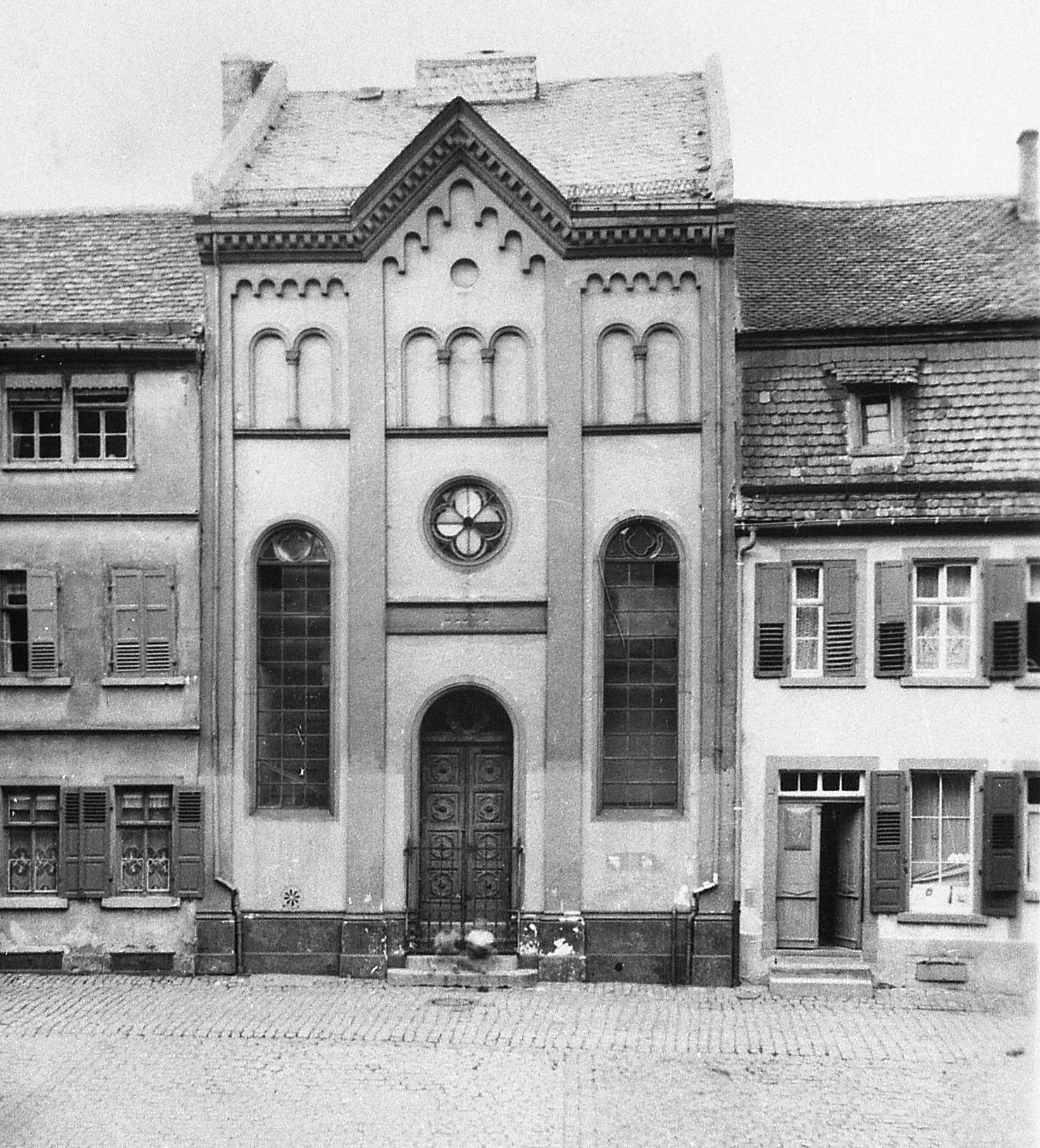
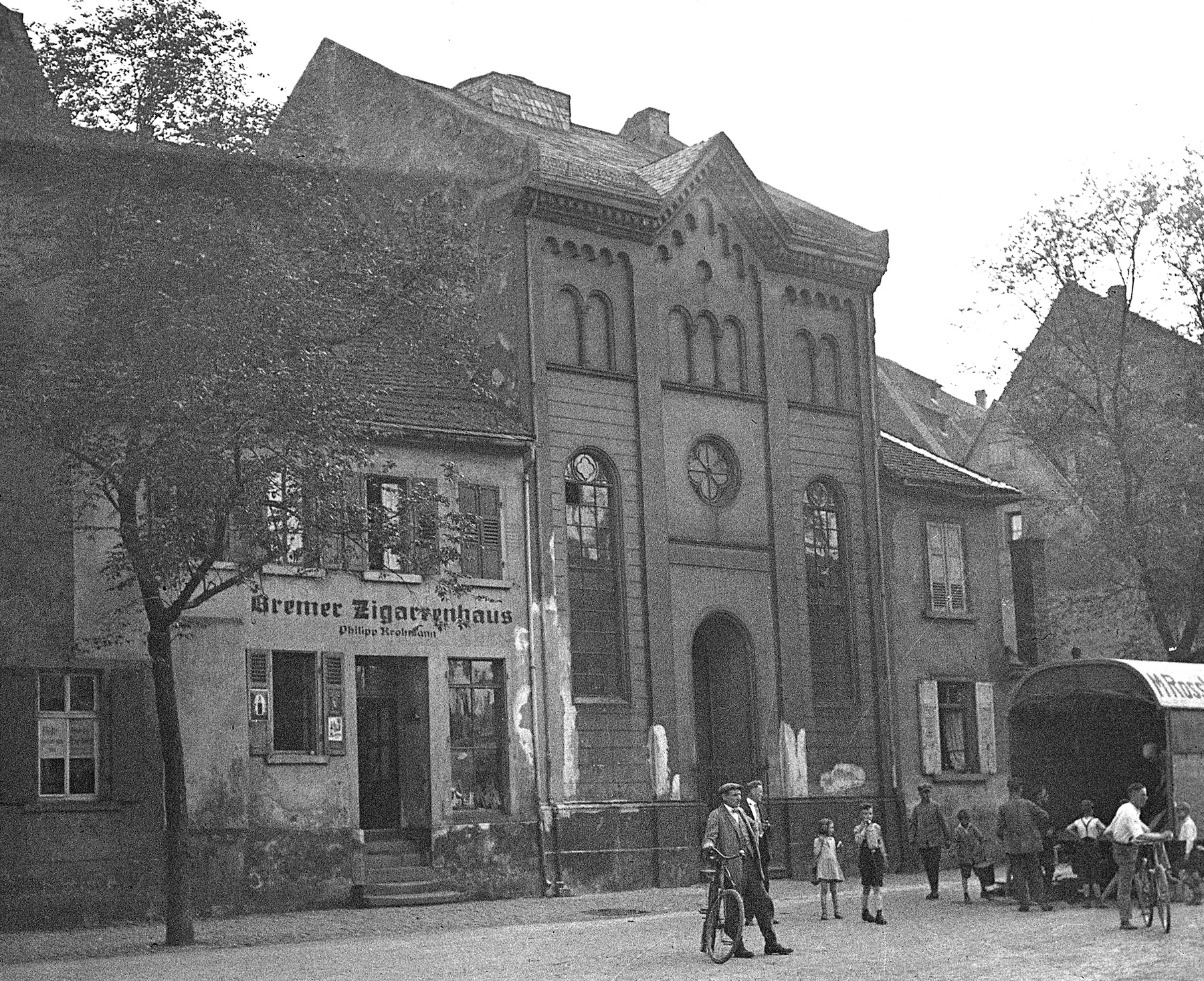
Historic: Judengasse 29, Worms. Present day: residential building at Judengasse 29, opposite the Old Synagogue (Rashi Synagogue), Worms, Germany.
Otwórz większą mapę →Społeczność żydowska
Worms had one of the oldest and most celebrated Jewish communities north of the Alps, home to the medieval synagogue, ritual bath and cemetery that made the city part of the SchUM communities. From 1824 to 1864 the conservative Jakob (Koppel) Bamberger was rabbi, but a strong progressive faction in the community pushed through modernisation: in the 1840s the partition between the men's and women's synagogues and the Gothic bimah in the old synagogue were removed. After Bamberger left, the progressives elected reforming rabbis, Markus Jastrow (1864–1866) and Alexander Stein (1867–1910). Stein introduced a reformed rite with an organ in 1877. The community numbered about 1,300 around 1905 and 1,016 in June 1933.
Architektura i projekt
The synagogue was built from 1870–1871 on the north side of the Judengasse, directly facing the main entrance of the old synagogue. It was slotted seamlessly into the existing row of houses and designed in the Romanesque Revival style, reusing designs drawn up in the 1860s for rebuilding the old synagogue. Its front and rear façades were almost identical, so the building had a second entrance from the Graben as well as from the Judengasse. This broke with the tradition that the community's central buildings could be reached only from the Judengasse. Each façade was divided into three strongly vertical bays framed by pilasters, with a simple portal in the middle bay and a rose window above it. Inside, the building's great height was used for a gallery running around all sides. In keeping with its conservative purpose, no organ was installed and the furnishings were kept austere.
Życie w synagodze
The Levy Synagogue was built as a protest. When Rabbi Alexander Stein brought in the organ and the reformed rite, the conservative members refused to follow, and Leopold Levy gave them a building of their own. It did not found a separate congregation but became the community's second house of prayer and its weekday synagogue, replacing the far too small Claus synagogue, originally the private synagogue of the Sinsheimer family. Over time it became a home for several of the community's religious currents; a group of Polish Orthodox Jews kept a separate prayer room in the house Zur Kante at Judengasse 18. A memorial plaque says the synagogue was meant to serve the unity of the community.
Zniszczenie
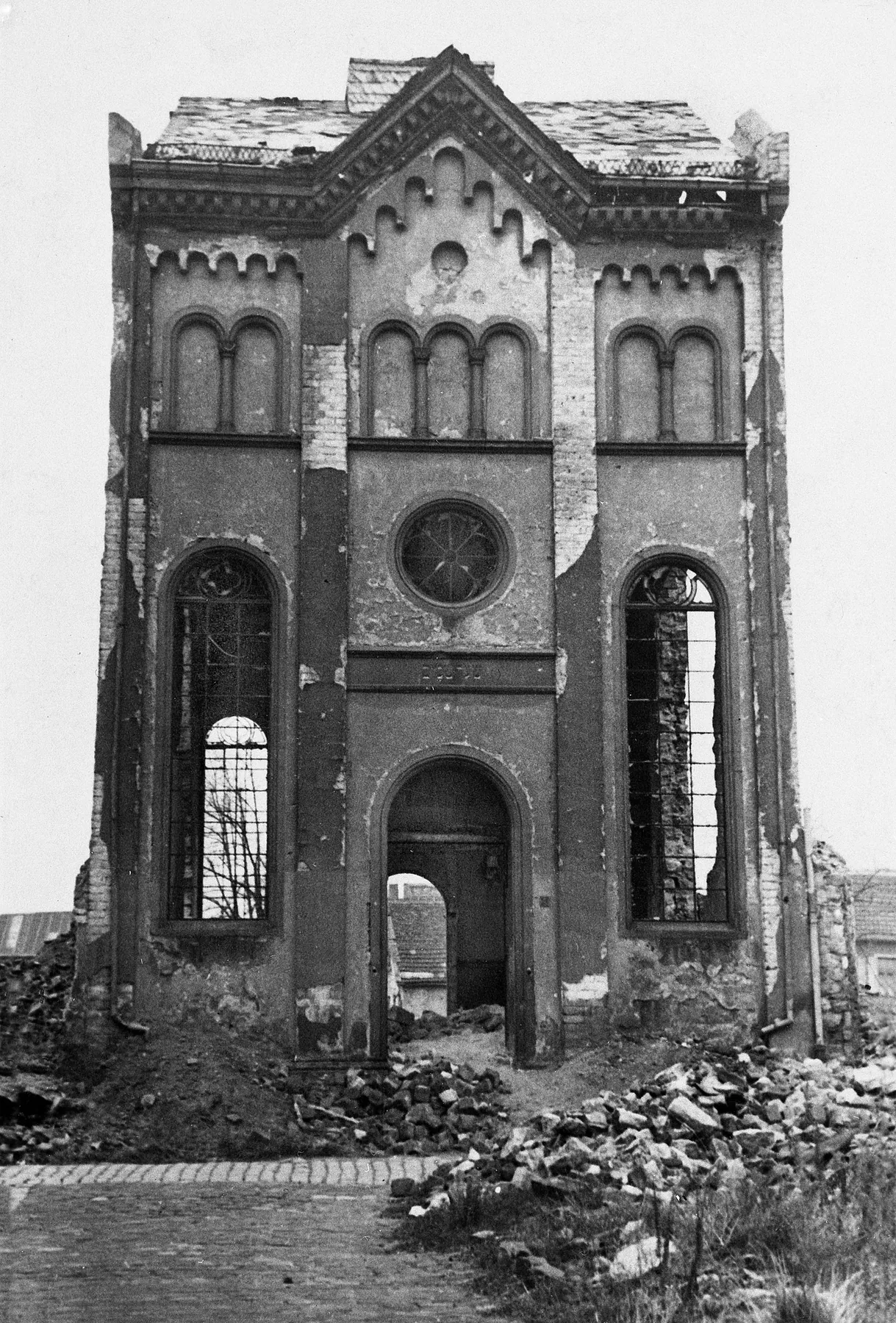
During the November pogrom of 1938 Nazis attacked both synagogues on the Judengasse. The medieval synagogue opposite was set on fire and burned out. The Levy Synagogue was desecrated and its interior wrecked, but it was not set alight, because a fire would inevitably have spread to the houses on either side. It stood damaged and unused through the war. On 21 February 1945 it was hit in an Allied air raid. After the war there was no Jewish community left in Worms, the effort to rebuild concentrated on the medieval synagogue, and nineteenth-century buildings were little valued. In January 1947 the city archivist Friedrich Maria Illert told the French military government it was of no architectural value, and the ruin, still standing to the gable, was demolished.
Los społeczności
Between 1933 and 1938 more than half the Jews of Worms left the city. The community fell from 1,016 in June 1933 to 530 in autumn 1937 and 425 by December 1938. After the November pogrom more than 80 Worms Jews were arrested and sent to prisons and concentration camps. By May 1939 only 313 remained. About 140 Jews from Worms were deported between 1942 and 1944, one transport going to Lublin and another to Theresienstadt. At the end of the war only about ten Jews were said to be living in the city, and no community was re-established. Most of those deported were murdered.
Miejsce dzisiaj
Nothing of the Levy Synagogue survives. Its plot at Judengasse 29 is now occupied by a residential building. Two memorial plaques, donated in 1990, recall the synagogue and the Levy family; one reads that it stood from 1875 to 1947, the other describes its consecration, desecration by Nazis, bomb damage and demolition. Directly opposite, the medieval synagogue was rebuilt on its old foundations and reconsecrated on 3 December 1961, and it is now part of the SchUM UNESCO World Heritage site.
Ważne postacie
Leopold Levy
19th centuryDonorLeopold Levy was a Worms merchant and banker who owned a grain warehouse at Judengasse 29, opposite the old synagogue. When the community's reformers gained the upper hand, he donated the plot and paid for a new synagogue for its conservative members. Consecrated in 1875, it was named the Levy Synagogue after him.
Biografia lub źródło →Alexander Stein
died 1910RabbiAlexander Stein was the progressive rabbi of Worms from 1867 to 1910. In 1877 he introduced a reformed rite with an organ in the old synagogue. Opposition from conservative members to this course is what led to the building of the Levy Synagogue across the street, as a separate place of worship without an organ.
Biografia lub źródło →Czy masz coś do przekazania?
Zdjęcia, dokumenty, historie rodzinne lub wspomnienia o tej synagodze i jej społeczności pomagają zachować jej historię.
Share a memory or thought
No comments yet. Be the first to add one.