

Historia Old Synagogue of Worms (Rashi Shul)
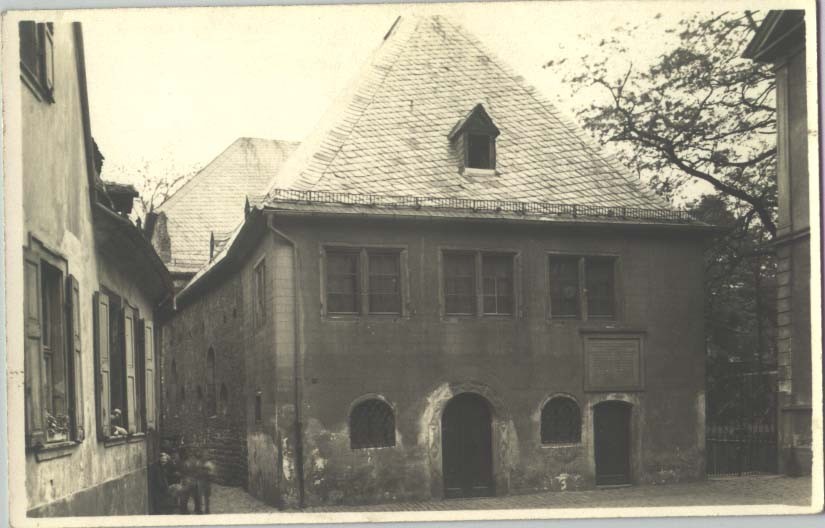
Worms, on the Rhine, was one of the three SchUM communities, with Speyer and Mainz, that shaped medieval Ashkenazi Judaism, and its synagogue was the oldest documented in Germany. A first building is recorded about 1034, given by Jakob ben David and his wife Rahel, whose donor inscription survived. It was damaged in the Crusade pogroms of 1096 and 1146, and in 1174/75 a new Romanesque hall was built by the workshop of Worms cathedral. A ritual bath followed in 1185/86, a women's synagogue in 1212/13, and in 1623/24 a western annex, the house of study later called the Rashi yeshiva or Rashi chapel after the great commentator, who by tradition taught at Worms.
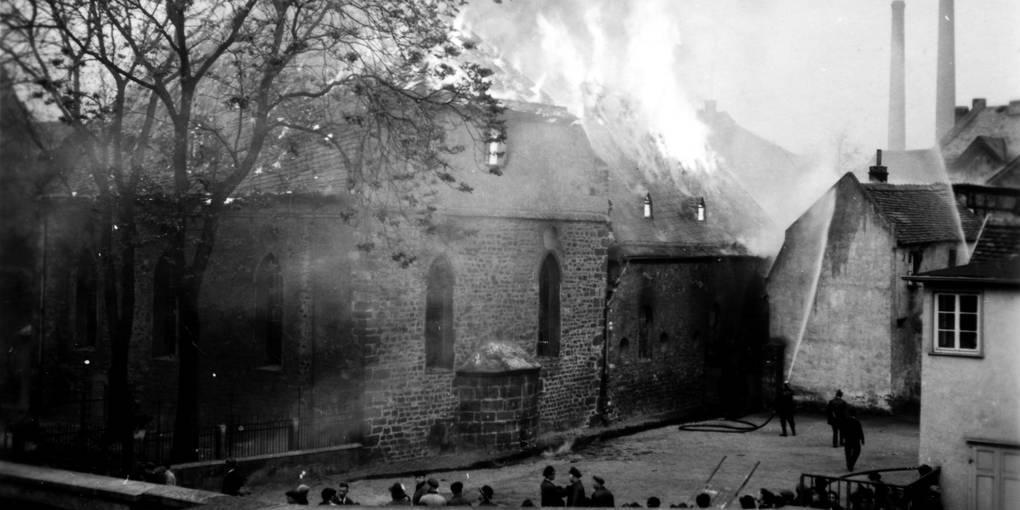
The building was wrecked again in 1349, in the pogrom of 1615 and in the French burning of the city in 1689, and each time restored, so that by the twentieth century it combined Romanesque, Gothic, Renaissance, Baroque and nineteenth-century work. In 1934 the community marked its 900th anniversary. On 10 November 1938 Nazi arsonists, named in the sources as the SA and the Gestapo, set it on fire; it burned out, and the walls were brought down with hydraulic presses by early 1941, while the Rashi yeshiva was blown up in 1942. The synagogue that stands on the site today was rebuilt in 1959-61 in the old form, reusing surviving stones and carved parts, and was rededicated on 3 December 1961.
Where it stood
Historic: Judengasse, Jewish quarter of Worms. Today: Synagogenplatz, Hintere Judengasse 4, 67547 Worms (exact; the rebuilt synagogue stands on the original foundations).
Otwórz większą mapę →Społeczność żydowska
Jews are recorded in Worms from the eleventh century, and the town, known in Hebrew as Warmaisa, became with Speyer and Mainz one of the SchUM communities whose scholars and rulings shaped Ashkenazi Jewry; the synagogue, the ritual bath and the Heiliger Sand cemetery were listed together as a UNESCO World Heritage site in July 2021. The community suffered repeatedly: in the Crusade massacres of 1096 and 1146, in the Black Death persecution of 1349 and in the expulsion and pogrom of 1615, each of which damaged the synagogue. In 1689 French troops burned Worms and used the building as a stable; it returned to worship after the Peace of Ryswick in 1697. In the nineteenth century the congregation divided between reformers and traditionalists: in 1863 a costly enlargement, which critics said was meant to make room for an organ, was abandoned, and in 1868 the installation of a small harmonium beside the ark drew protests from orthodox members. The total size of the community before 1933 was not given in the sources read; by 1937 about half of it had left Worms.
Architektura i projekt
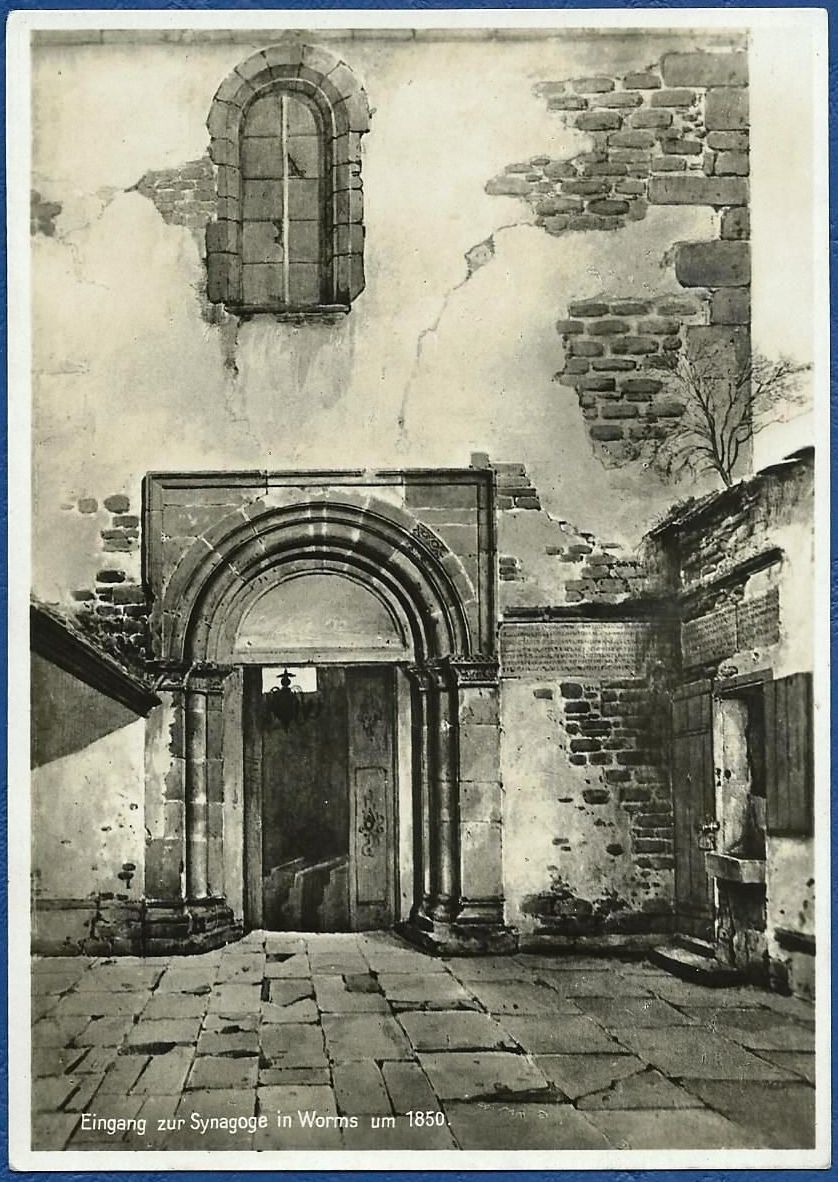
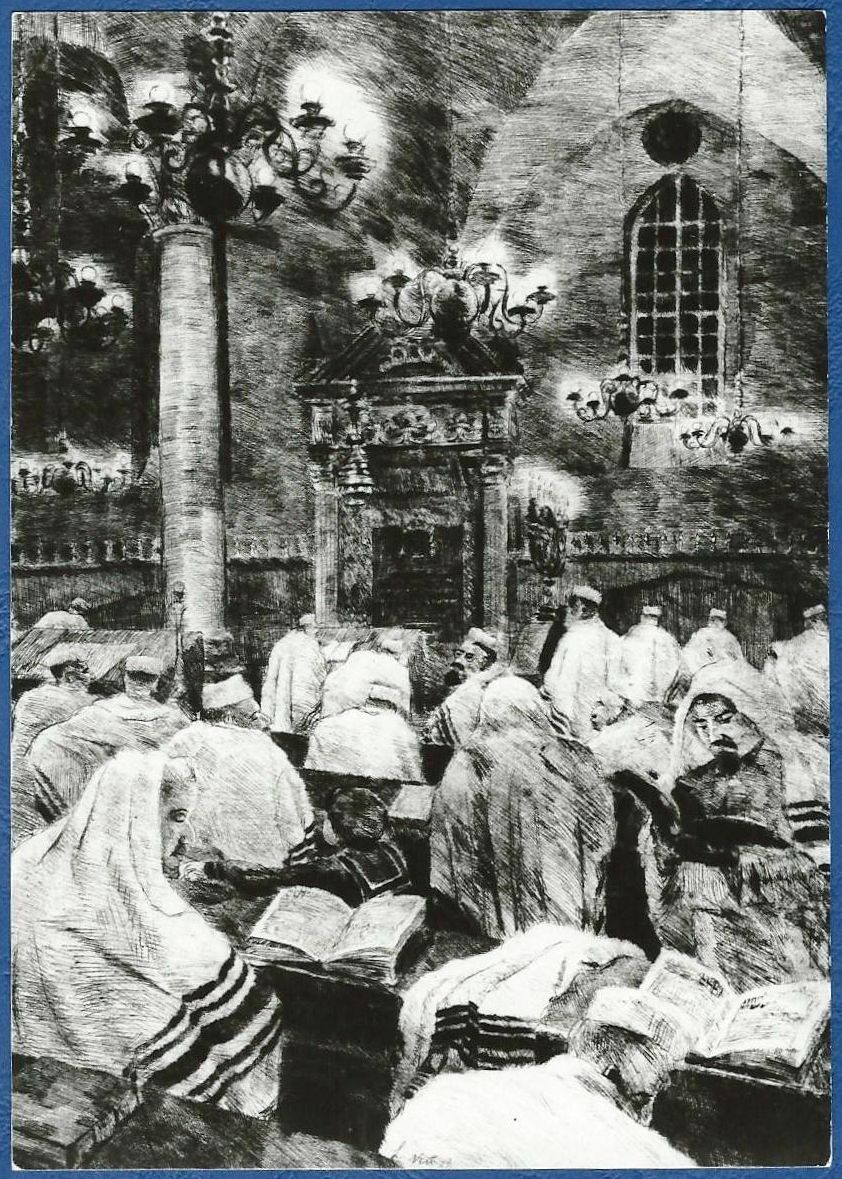
The complex consisted of three parts. The men's synagogue of 1174/75 was a rectangular, east-facing hall divided into two aisles by two Romanesque columns with richly carved capitals, carrying the vaulting; the bima stood between the columns, and the Torah ark on the east wall had Renaissance elements reworked in Baroque style in 1704/05. The main entrance, in the north-west corner, had a round-arched Romanesque portal. After the destruction of 1349 the hall was rebuilt about 1355 with Gothic windows and vaulting. The women's synagogue of 1212/13, donated by Me'ir bar Yo'el ha-Kohen and his wife Jehudit, was a lower rectangular hall with one central column, described as the earliest single-pillar hall of its kind; it was joined to the men's hall, and in 1842 the dividing wall was replaced by two neo-Gothic pointed arches. The Rashi yeshiva of 1623/24 was a rectangular room with a semicircular apse, a stone bench round the walls, two groin vaults and a Renaissance north portal. The architect of the reconstruction and the seating capacity are unknown.
Życie w synagodze
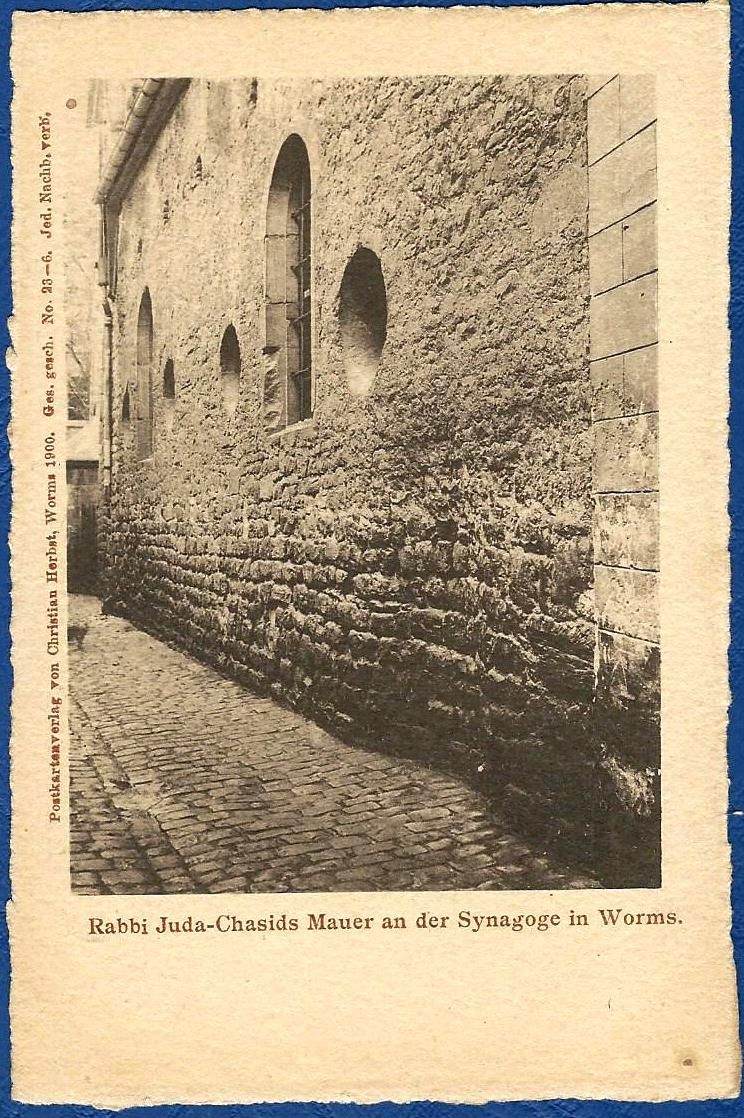
The synagogue was the place of worship of the Worms community for some nine centuries and was treated as a relic of its past. A Torah scroll in the ark was said to have been written by Rabbi Meir of Rothenburg during his imprisonment, and the 'Chasid's wall' beside the building was linked by legend to Rabbi Judah the Pious. The annex known as the Rashi chapel was revered as the place where Rashi had taught, although that tie rests on tradition. In 1853 a committee led by Rabbi J. Bamberger began collecting money to restore the Rashi chapel; work started in 1855, helped by a donation from London. Disputes over modernising the service marked the nineteenth century, from the abandoned enlargement of 1863 to the harmonium of 1868. In 1891 a new stone was set on the outside of the building bearing the old inscriptions as copied in 1559. In 1934 the community celebrated the synagogue's 900th anniversary, four years before its destruction.
Zniszczenie
The synagogue was destroyed in the Nazi November pogrom of 1938. At about 5.45 a.m. on 10 November the community head, Bernhard Spieß, telephoned Rabbi Helmut Frank to say that the synagogue was burning. Frank, the attendant Martin Weiß and three older boys tried to rescue its valuables; the fire brigade refused to fight the flames, and the police arrested the Jews at about 7.45 a.m. rather than the arsonists. A local newspaper account names the SA as the arsonists and says the rabbi and pupils first put the fire out. At about 9.30 a.m. Gestapo men returned to set the building alight again and seize the community records; the teacher Herta Mansbacher placed herself between them and the synagogue but could not stop them, and it burned out. No individual Nazi is named in the sources read. The burnt walls were pulled down with hydraulic presses until late 1940 or early 1941, and the Rashi yeshiva was blown up in 1942; who ordered this is not stated. The city archivist Friedrich Maria Illert saved the Worms Mahzor and the community archive.
Los społeczności
On the night of the pogrom gangs taking part in the Nazi pogrom also smashed Jewish shops and homes in Worms, threw belongings from windows and beat Jewish residents; Wilhelm Gutmann was injured so badly that he had to be taken to hospital. Eighty-six Jews of Worms were sent to Buchenwald concentration camp, where at least one, a furniture manufacturer who had fought in the First World War, died. The victims were made to pay for the damage, their businesses were closed and much of their property was seized. Many Jews emigrated; about half of the community had already left by 1937. On 20 March 1942 the last group of Worms Jews was deported by train to the Piaski ghetto in occupied Poland, where they were murdered; the total number of Worms Jews killed is not given in the sources read. After 1945 no independent community was re-formed in Worms, and the rebuilt synagogue belongs today to the Jewish Community of Mainz.
Miejsce dzisiaj
The synagogue stands again on the Synagogenplatz, Hintere Judengasse 4, but the present building is a reconstruction of 1959-61, not the medieval original. Clearing of the ruins and archaeological investigation took place in 1956-57, the foundation stone was laid in 1959, and the synagogue was rededicated on 3 December 1961. It was rebuilt in its traditional form on the old foundations, reusing as many salvaged stones and carved parts as possible; no source read gives the proportion of original fabric. The hipped roof is new and the nineteenth-century gallery was not restored. The building is owned by the Jewish Community of Mainz, is used for services and concerts, and since 2021 forms part of the SchUM World Heritage site; an inscription on the site records the rebuilding.
Ważne postacie
Herta Mansbacher
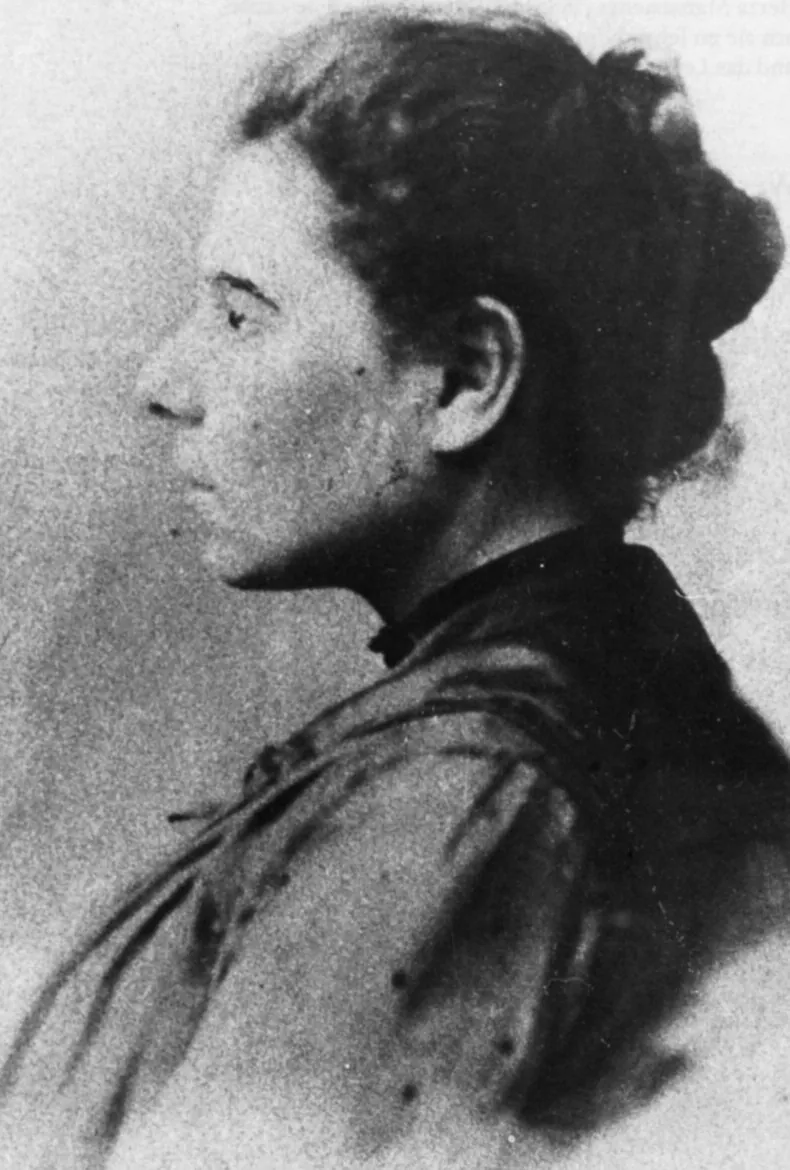
1885-1942Teacher and acting head of the Jewish school in WormsBorn in Darmstadt in 1885, Mansbacher taught in Worms schools from 1906 until her dismissal in 1935, then at the Jewish school, which she led from 1936. On 10 November 1938, after the rabbi had been arrested, she stayed at the burning synagogue trying to save its Torah scrolls, and when Gestapo men returned to relight it she placed herself between them and the building. She was deported from Worms in March 1942 and murdered.
Biografia lub źródło →Jakob ben David and Rahel
11th centuryDonors of the first synagogue, c. 1034Jakob ben David and his wife Rahel paid for the first documented synagogue of Worms, built about 1034. Their gift was recorded in a donor inscription; a twelfth-century version of it was placed beside the entrance of the men's synagogue, and a copy was salvaged from the ruins after 1938. An 1891 description of the building also names Mar Jakob as its builder. Nothing else is known of them.
Biografia lub źródło →Me'ir bar Yo'el ha-Kohen and Jehudit
13th centuryDonors of the women's synagogue, 1212/13An inscription dated 1213 records that Rabbi Me'ir, son of Joel, and his wife Jehudit built the women's synagogue joined to the main hall. Their building, a low hall with a single central column, is described as the earliest single-pillar hall of its kind. It served the women of the congregation until 1938 and was reconstructed in 1959-61.
Biografia lub źródło →David Oppenheim
17th centuryDonor of the Rashi yeshiva, 1623/24According to the German Wikipedia article, the western annex of the synagogue, the house of study later known as the Rashi yeshiva or Rashi chapel, was donated by David Oppenheim in 1623/24, after the pogrom of 1615. The room, with its apse and stone bench, was burned in 1938 and blown up in 1942. He is not the later Prague chief rabbi of the same name.
Biografia lub źródło →J. Bamberger
UnknownRabbi in Worms, led the Rashi chapel restoration committee, 1853A rabbi named J. Bamberger headed the committee that from 1853 collected money to restore the Rashi chapel beside the synagogue. Building work began in 1855, and a donation from London arrived shortly before it was finished. His first name and dates are not given in the source read.
Biografia lub źródło →Bernhard Spieß
UnknownHead (Gemeindevorsteher) of the Worms Jewish community in 1938As head of the community, Spieß raised the alarm at about 5.45 a.m. on 10 November 1938, telephoning Rabbi Helmut Frank to tell him that the synagogue was on fire. The account, gathered from witnesses, is given in Henry Hüttenbach's biography of Herta Mansbacher, published by the Worms city archive. Nothing further about him was found in this research.
Biografia lub źródło →Helmut (Helmuth) Frank
UnknownRabbi of Worms in 1938Frank, a 27-year-old rabbi recently out of the Berlin seminary, served Worms in 1938. On 9 November he declined to remove the Torah scrolls from the synagogue. Called at 5.45 a.m. on 10 November when it was set on fire, he tried with the attendant Martin Weiß and three boys to save its valuables, and according to a newspaper account put out the first fire with pupils. He was arrested that morning and held in Dachau and Buchenwald.
Biografia lub źródło →Czy masz coś do przekazania?
Zdjęcia, dokumenty, historie rodzinne lub wspomnienia o tej synagodze i jej społeczności pomagają zachować jej historię.
- Worms (Rheinland-Pfalz): Jüdische Geschichte / Synagoge
- Synagoge Worms
- Worms Synagogue
- Synagoge und Mikwe: UNESCO-Welterbestätten
- Der 9. November 1938: Die furchtbare Nacht der Gewalt
- Remembering Kristallnacht: an elegy for young Heinz Gutmann and the Jews of Worms, Germany
- 920-Year-Old Rashi Synagogue in Worms Unlikely to Be Rebuilt
- Aufgebaut aus Ruinen
- Zeugnisse jüdischen Lebens in Worms (reading sample)
- Herta Mansbacher: Porträt einer jüdischen Lehrerin, Heldin und Märtyrerin (1885-1942) (Der Wormsgau, Beiheft 27)
- Wormsi zsinagóga (postcard K663)
Share a memory or thought
No comments yet. Be the first to add one.