
Die Geschichte von Wooden Synagogue of Zabłudów
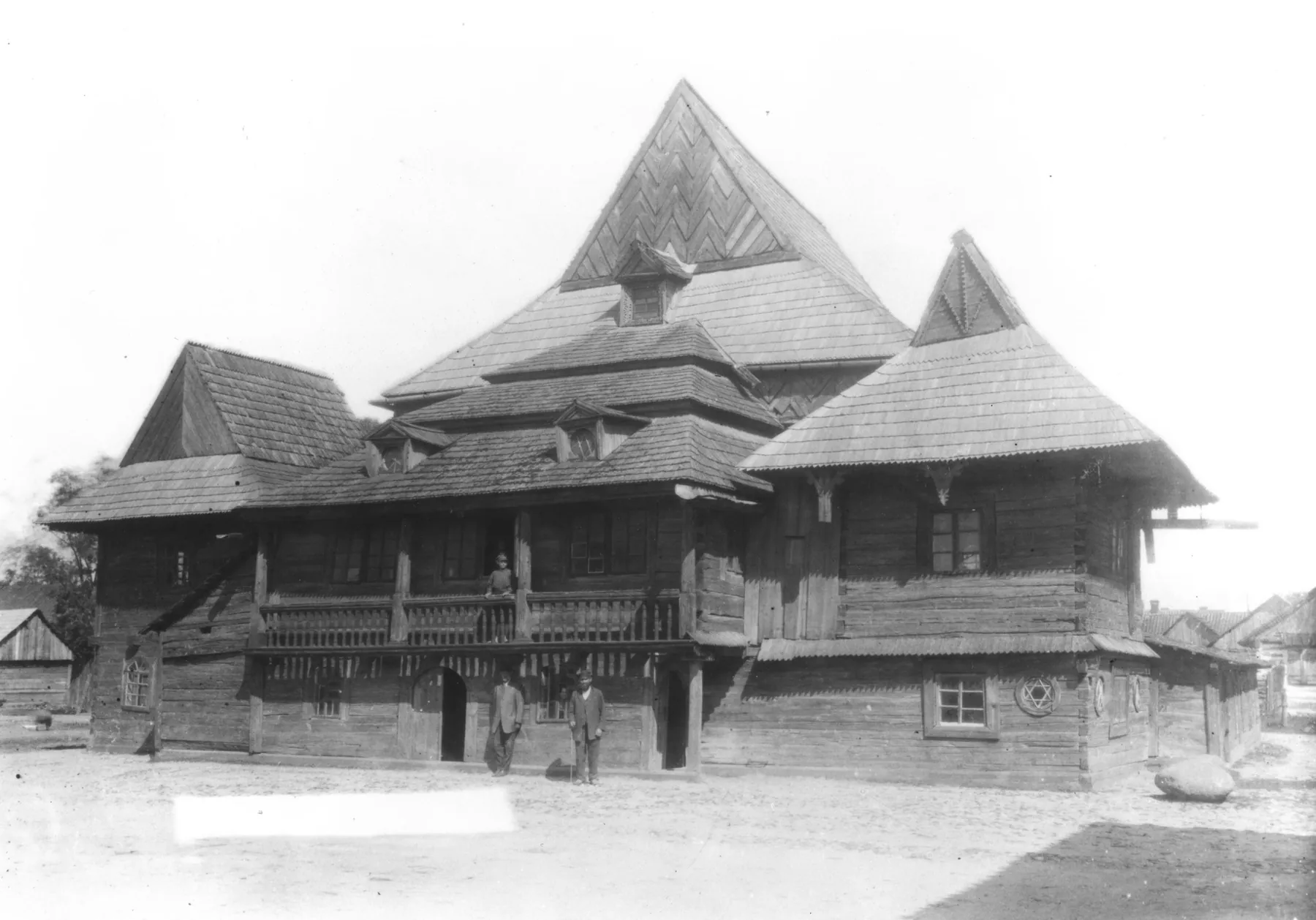
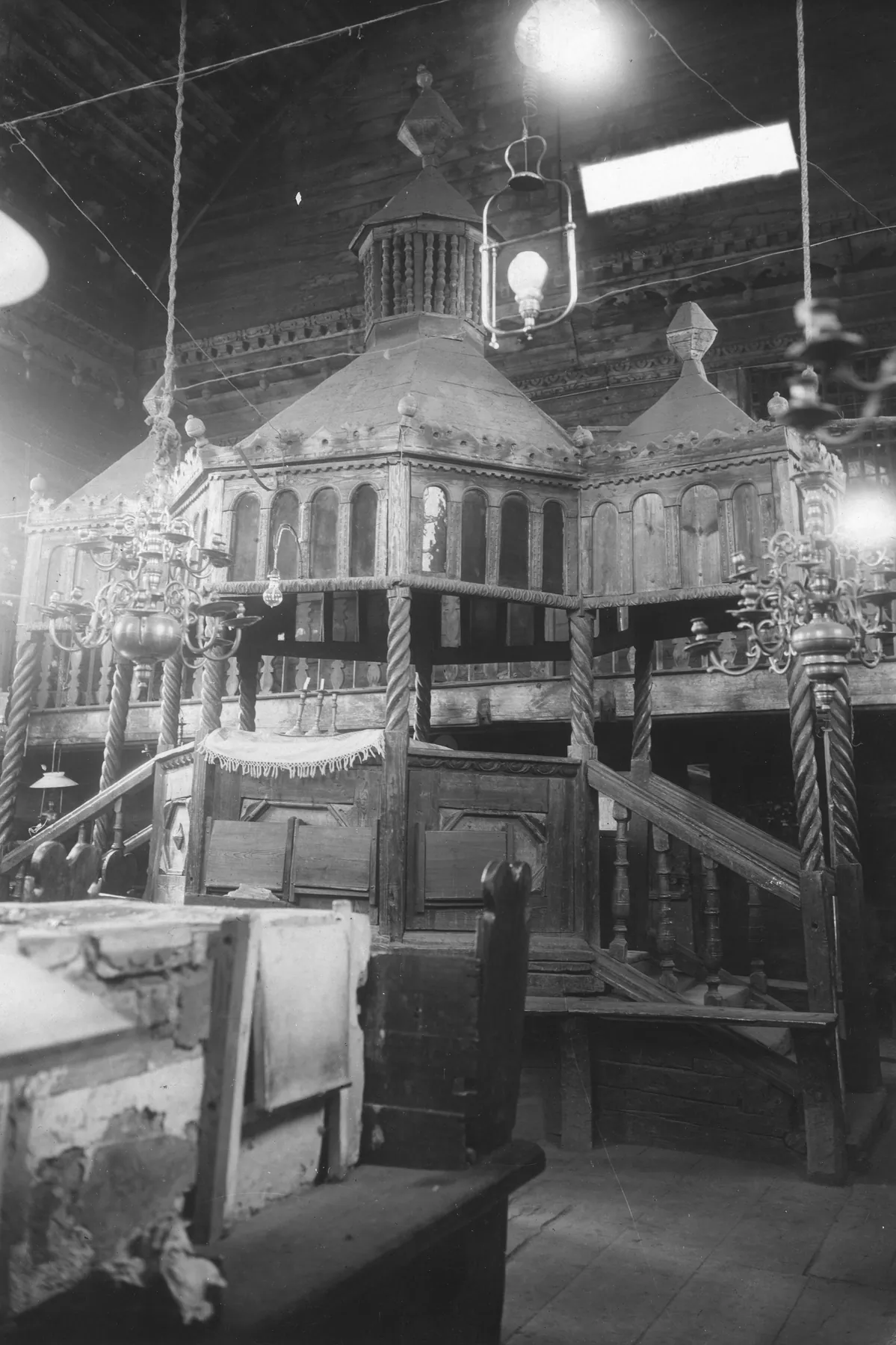
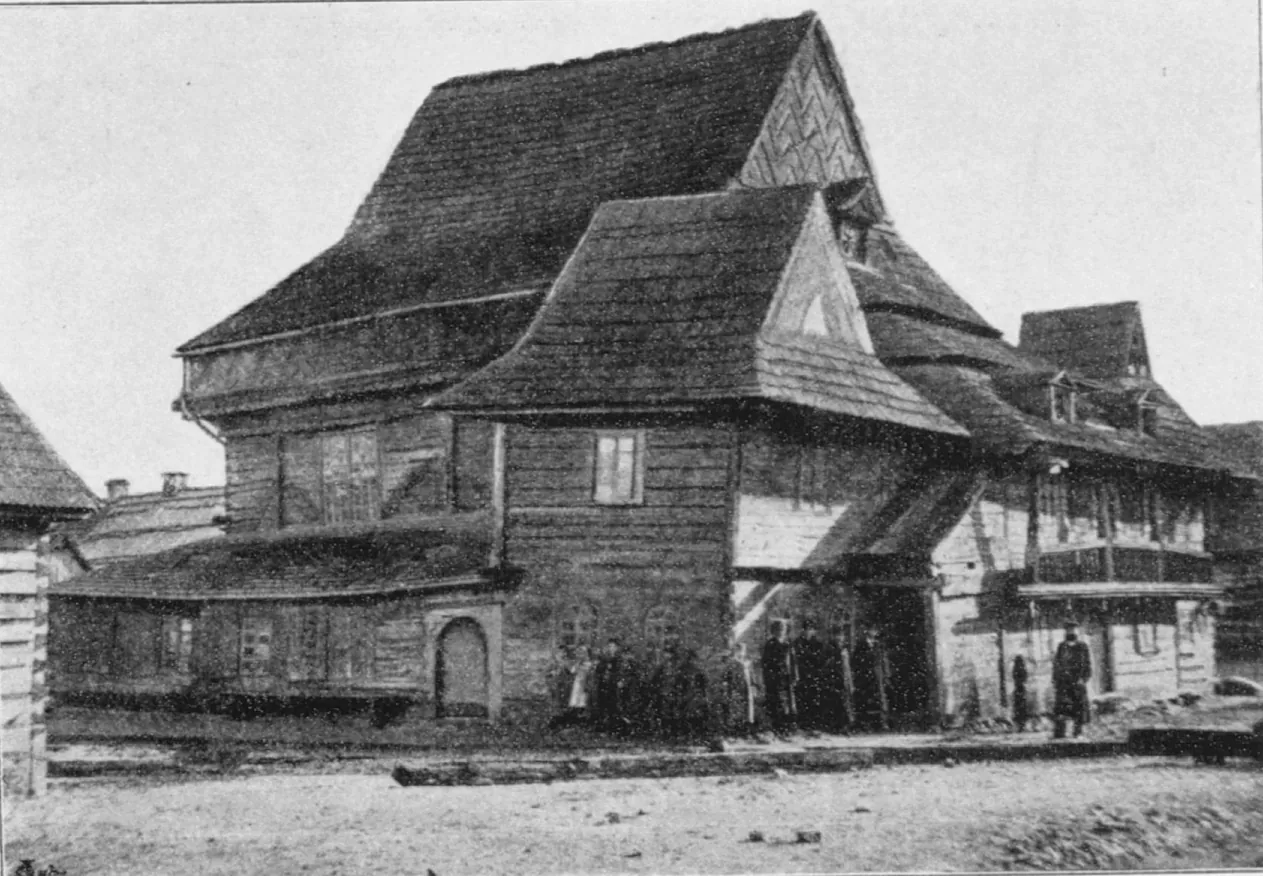
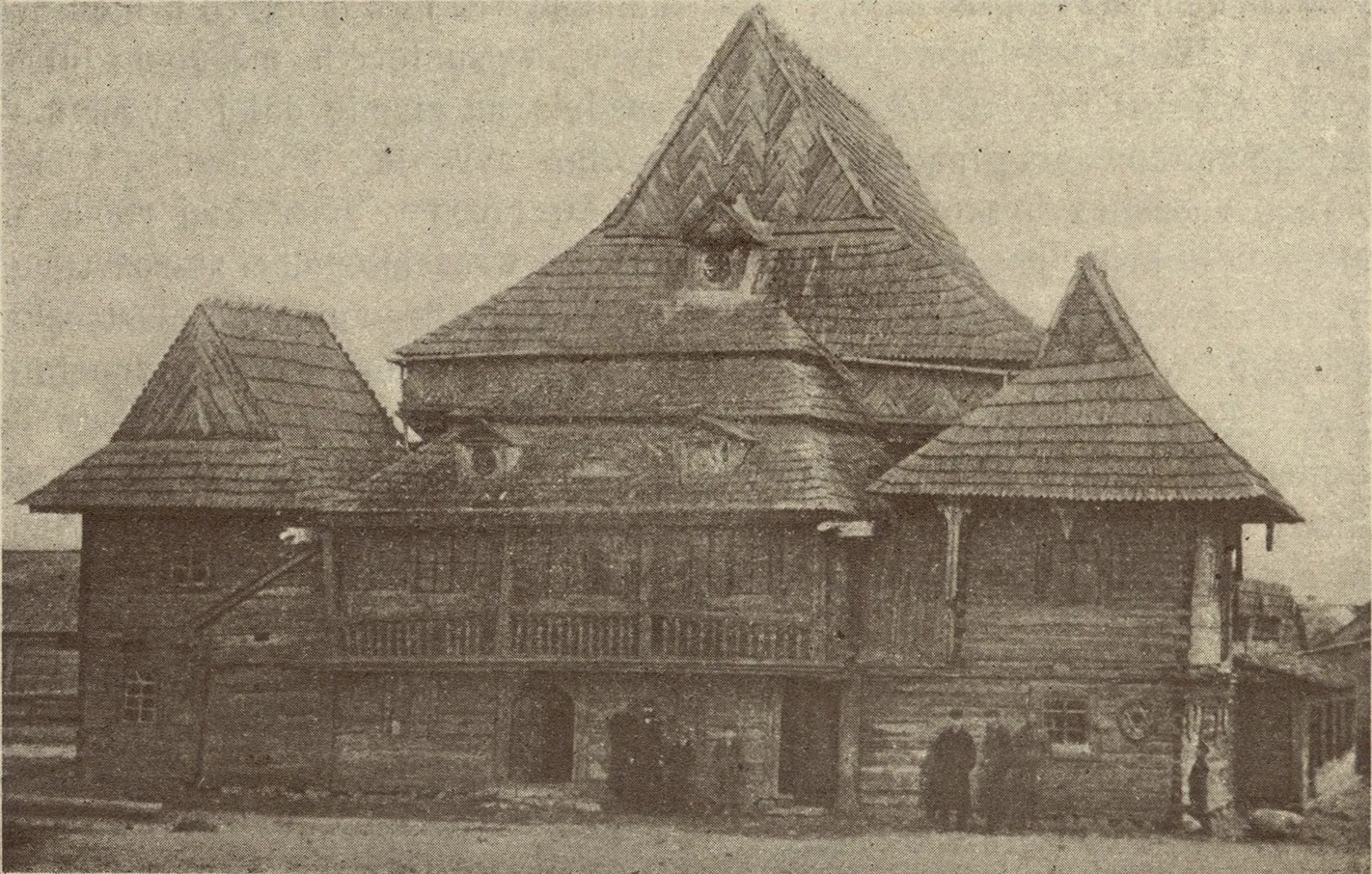
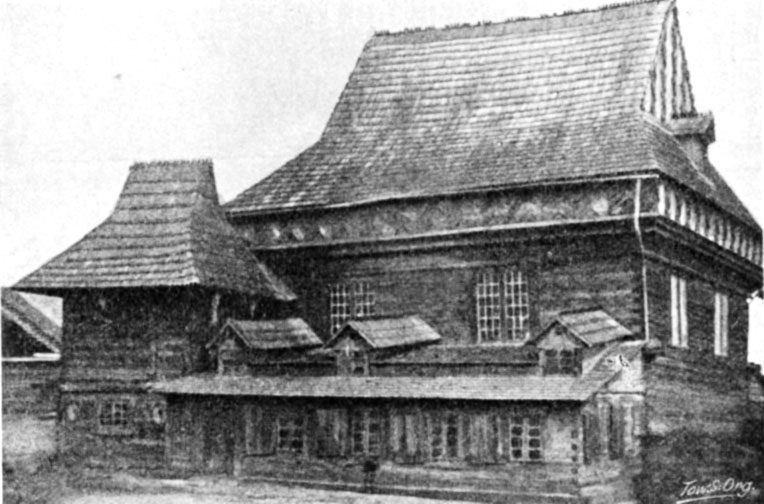
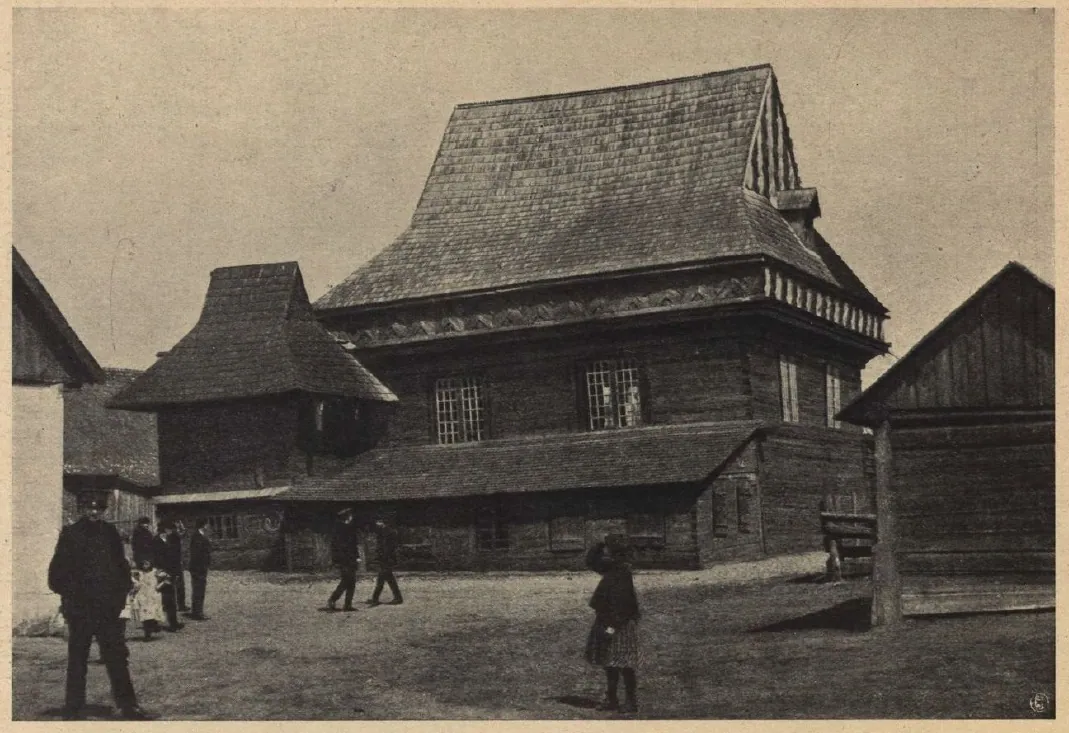
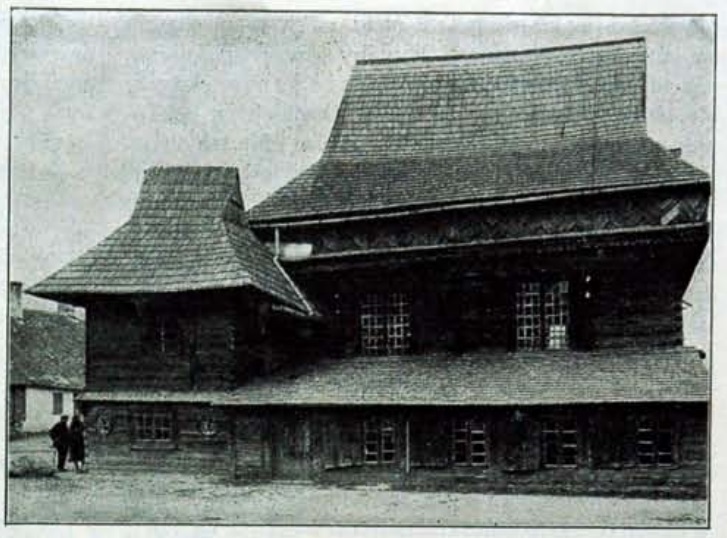
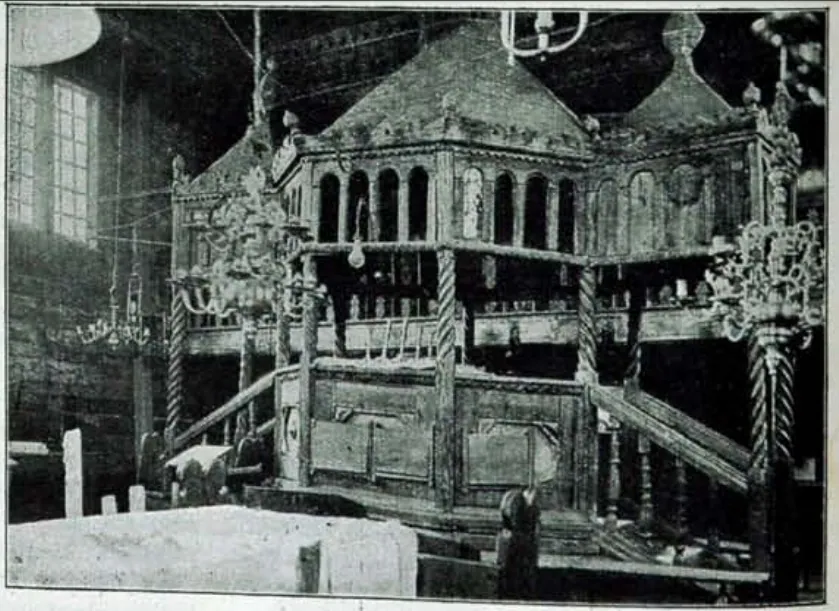
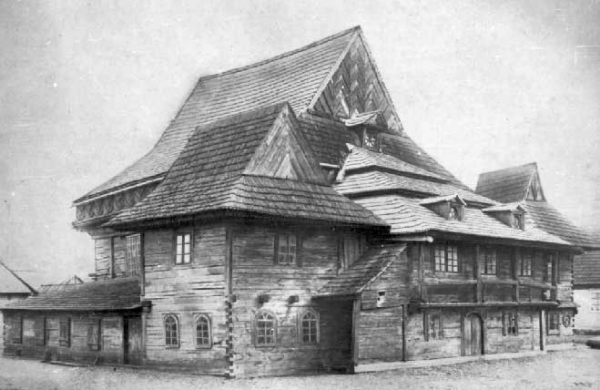
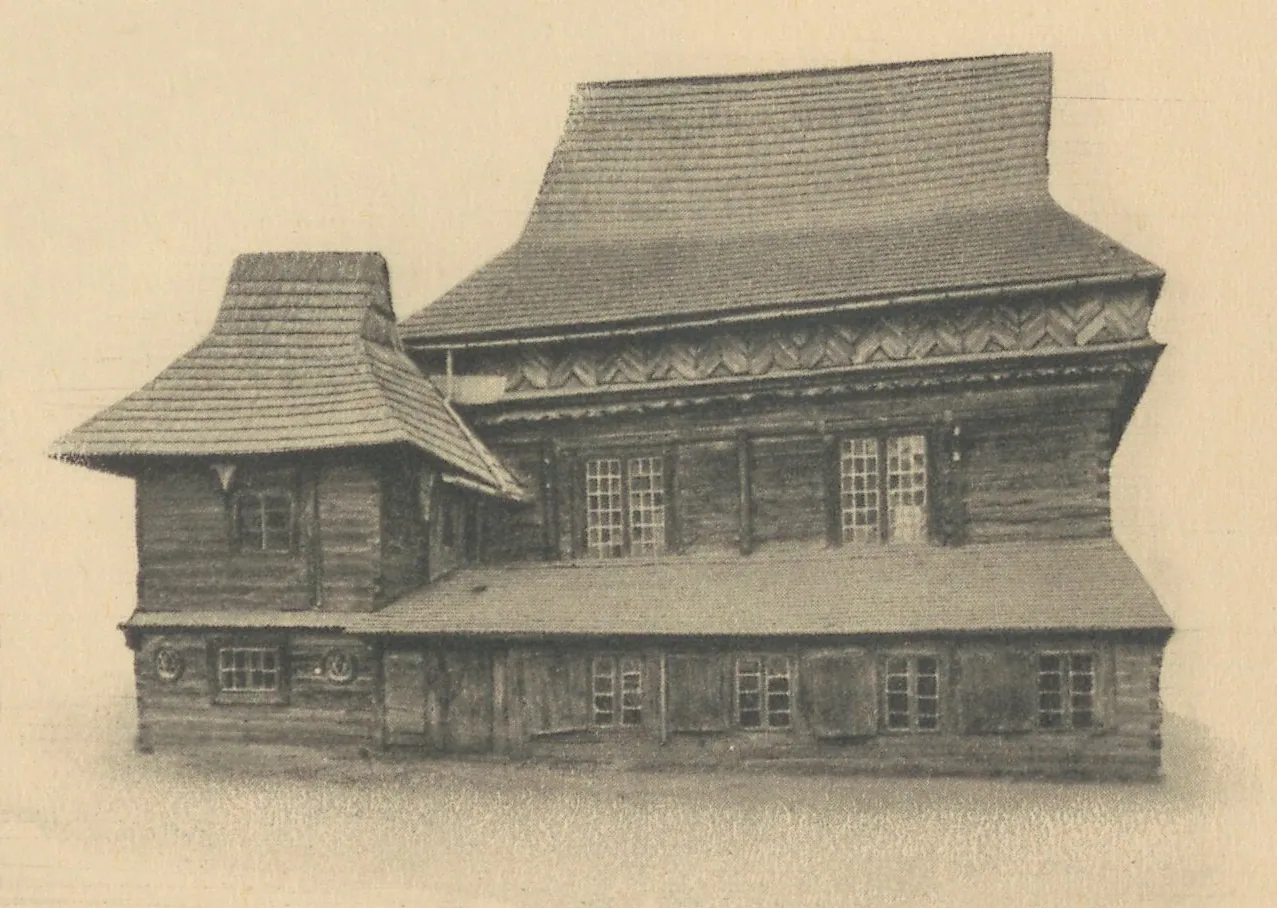
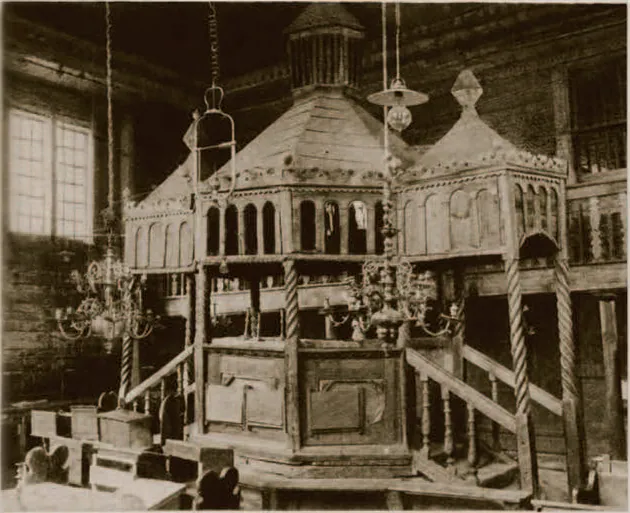
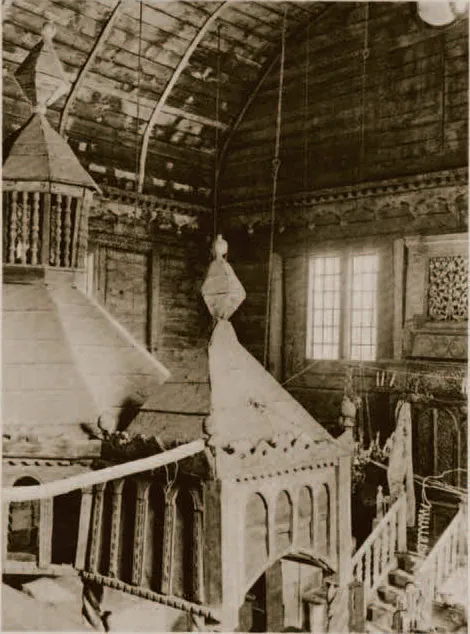
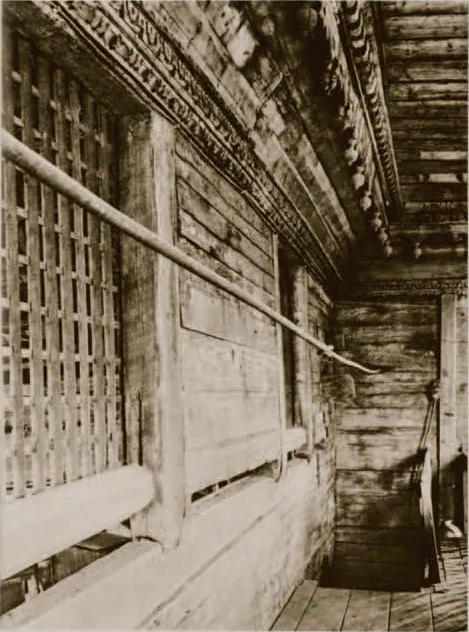
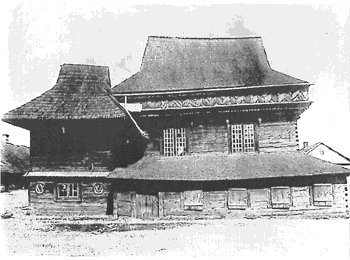
The wooden synagogue of Zabłudów, a small town about 20 kilometres south-east of Białystok, was one of the oldest wooden synagogues in the lands of the former Polish–Lithuanian Commonwealth. The town belonged to the Radziwiłł family. Prince Krzysztof Radziwiłł authorised the Jewish community to build a synagogue in the later 1630s, and the building is dated to about 1640. A women's section was added in 1646. Over the next three centuries the building grew. An enlarged vestibule, upper women's galleries, corner pavilions and several changes of roof gave it its famous stepped silhouette of steep, overlapping shingle roofs. Inside, an octagonal carved bimah under a domed canopy stood in a tall barrel-vaulted hall. Art historians and photographers documented it from the 1890s onward, including Mathias Bersohn, Zygmunt Gloger and Szymon Zajczyk, and students of the Warsaw Polytechnic measured it in 1923. It survived the First World War. It did not survive the first days of Operation Barbarossa: at the end of June 1941 German soldiers entering the town doused it with petrol and burned it. The site is now occupied by other buildings near the town's fire station.
Where it stood for nearly 310 years
Historic: synagogue courtyard between ul. Białostocka and ul. Surażska (formerly Suraska), Zabłudów. Present day: next to the fire station at ul. Białostocka 15, Zabłudów. Approximate.
Größere Karte öffnen →Die jüdische Gemeinde
Jews settled in Zabłudów in the late sixteenth century, after the town came under the Radziwiłł princes. The Radziwiłłs granted them a privilege to buy plots and build houses. The community grew with the town, which received Magdeburg rights in 1695. Jews worked in trade and crafts and formed tradesmen's guilds. Zabłudów had 831 Jews in 1764. After a sharp drop around 1799, the community recovered to 922 in 1807 and reached some 2,600 by the end of the nineteenth century. It numbered 1,817 in 1921 and 1,952 in 1931. The old cemetery was founded in 1635, at about the same time as the synagogue. The privilege to build the synagogue itself is recorded as granted by Krzysztof Radziwiłł, variously dated 1635 or 1638. A great beit midrash was built beside the old synagogue in 1894 with charitable donations, forming a synagogue courtyard in the town centre.
Architektur und Gestaltung
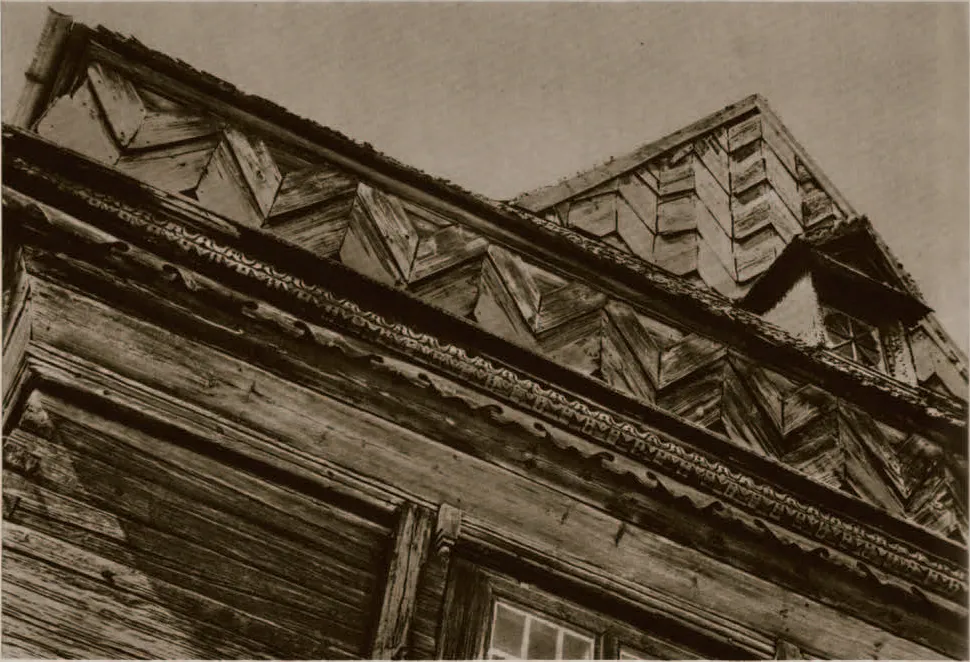
The synagogue was a log building of larch, with details in oak and pine. Its core was a nearly square prayer hall of about 11.3 by 11.7 metres with walls 6.5 metres high, covered by a wooden barrel vault rising to about 9.75 metres. There were originally two paired windows in each wall. Over time a two-storey block of vestibule and women's galleries and low corner pavilions were built around the hall. These gave the exterior its cascade of steep shingled roofs, broken into tiers and trimmed with carved zig-zag friezes under the eaves. The overall height reached about 18 metres. Inside, the bimah was an octagonal wooden pavilion with twisted columns, openwork arcades and a small dome, reached by two stairways with porches. The Torah ark rose in two levels. Walls carried painted decoration and prayer texts, and the community kept precious ritual silver, including a Torah shield of 1652.
Leben in der Synagoge
For three centuries the old synagogue was the heart of Jewish Zabłudów. Its walls were decorated with paintings and verses of prayer, and it held valuable ritual objects, among them a silver Torah shield of 1652 and embroidered curtains. A 1925 description notes that the names of the craftsmen from Brest and Pinsk who built it were cut into its timbers with chisel and axe. The rabbinate of Zabłudów was held by learned rabbis from the early eighteenth century onward. In the early twentieth century the tzaddik Abraham Akiva Sobotnik led the community and founded its Talmud Torah; his ohel stands in the new cemetery. In the 1930s Rabbi Yochanan Mirsky, the last rabbi, pressed for modern religious education. Interwar Zabłudów also had the Tachkemoni Hebrew school, the Beis Yitzchak Orthodox school, charities such as Linat Tzedek and Ezrat Nashim, and a library.
Zerstörung
German forces bombed Zabłudów on 24 June 1941, two days after the invasion of the Soviet Union, and occupied the town soon afterwards. The Pinkas Hakehillot entry dates the burning to 27 June 1941. A local archive gives 24 June, based on survivor testimony. Both accounts agree that Nazi German soldiers set the old synagogue on fire. They poured petrol around the building and ignited it, and survivor Finia Korowski recalled that the old timbers at first resisted the flames. The fire also destroyed one beit midrash and nearby Jewish homes. The synagogue burned to the ground, and nothing of its fabric survived. The Nazi German occupiers thus destroyed, in the opening week of their occupation, one of the oldest and most important wooden synagogues of Poland.
Das Schicksal der Gemeinde
Under Nazi German occupation, soldiers dragged Rabbi Yochanan Mirsky from his house and beat him in the street. In January 1942 a ghetto was set up in Zabłudów, run through a Judenrat headed by Jumon Wysocki; hunger and epidemics caused many deaths. In March 1942 many Jews were sent to the ghetto in Prużana. At dawn on 2–3 November 1942 SS and Gestapo men surrounded the ghetto, and the Jews were taken in wagons under guard to the Białystok area. On 21 November 1942 they were deported by cattle car to the Treblinka death camp and murdered there. Rabbi Mirsky perished in the Holocaust. A few young people escaped and survived with farmers. Others survived because they had spent the war in the Soviet Union, and one deportee survived a death march. No Jewish community was re-established in Zabłudów.
Der Ort heute
Nothing remains of the wooden synagogue. It stood in the town centre between Białostocka and Surażska streets, near the present fire station (OSP Zabłudów, Białostocka 15), in an area now built over. The synagogue lives on through photographs, the 1923 Warsaw Polytechnic measured drawings and scholarly study. In 2004 students at the University of Wisconsin–Milwaukee, working with Handshouse Studio, built a replica of the synagogue as a study project. Of Jewish Zabłudów, the fenced new Jewish cemetery with the ohel of Rabbi Sobotnik survives to the west of the town. The old cemetery, founded in 1635, has been destroyed.
Bedeutende Namen
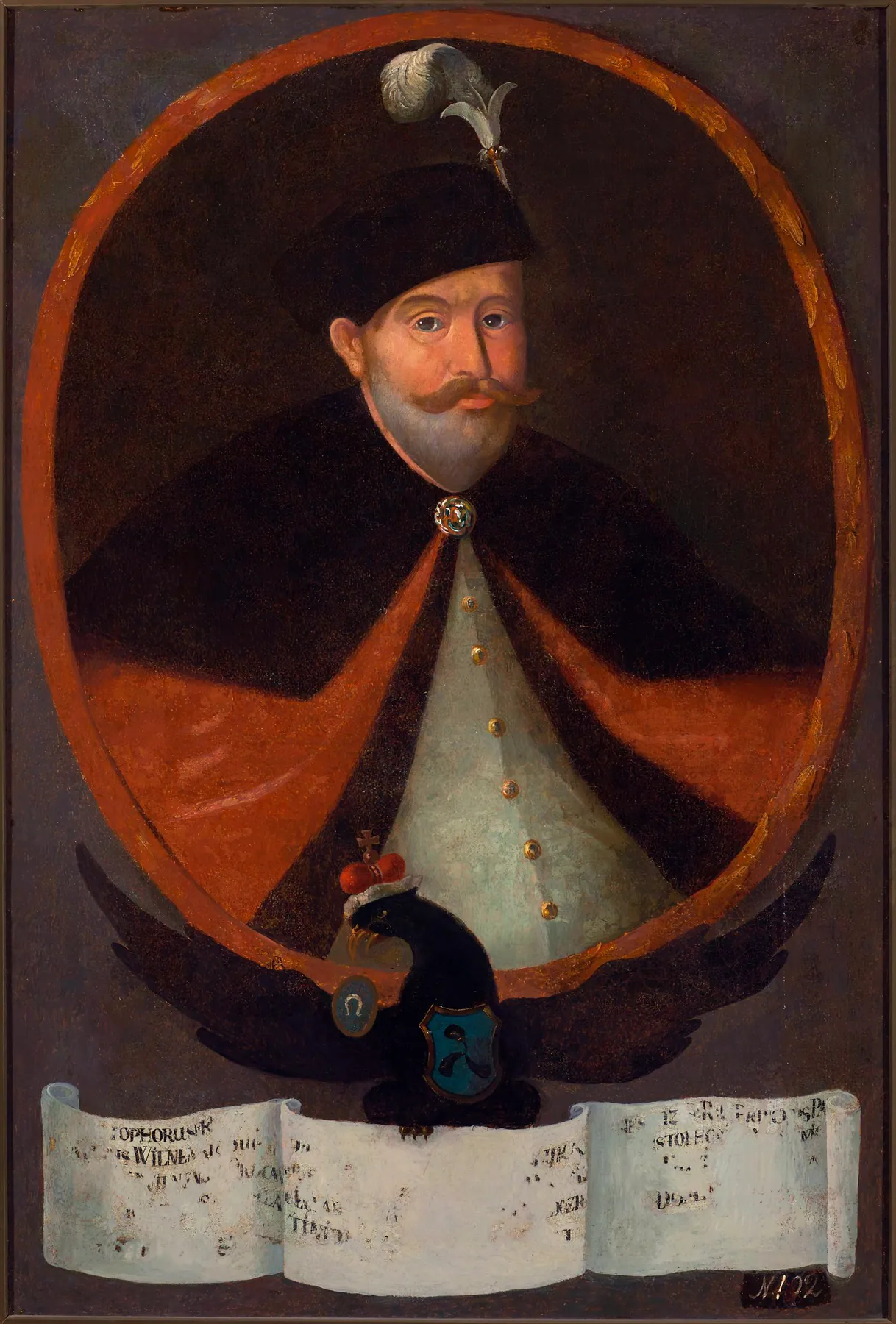
Krzysztof Radziwiłł
1585–1640Lord of Zabłudów; granted the building privilegePrince Krzysztof Radziwiłł, Grand Hetman of Lithuania, owned Zabłudów as head of the Calvinist Birże branch of the Radziwiłł family. Local and scholarly sources record that he granted the town's Jews permission to build their synagogue in the later 1630s (1635 or 1638), which led to the construction of the wooden synagogue around 1640. His privilege is the founding document of the building.
Biografie oder Quelle →Abraham Akiva Sobotnik
d. 1925Rabbi and tzaddik of ZabłudówAbraham Akiva Sobotnik led the Jewish community of Zabłudów as its rabbi and revered tzaddik in the early twentieth century, serving from about 1904 to 1924. The Pinkas Hakehillot records that he established the town's Talmud Torah. The old wooden synagogue was then the community's main house of prayer. After his death he was buried in a concrete ohel in the new Jewish cemetery, which still stands.
Biografie oder Quelle →Yochanan Mirsky
d. in the HolocaustLast rabbi of ZabłudówYochanan Mirsky was the last rabbi of Zabłudów, serving in the 1930s, when the old wooden synagogue was still the community's pride. Memoirs credit him with reforming religious education in the town. When the Germans occupied Zabłudów in June 1941 and burned the synagogue, soldiers dragged him from his house and beat him in the street. He perished with his community in the Holocaust.
Biografie oder Quelle →Haben Sie etwas beizutragen?
Fotos, Dokumente, Familiengeschichten oder Erinnerungen an diese Synagoge und ihre Gemeinde halten ihre Geschichte lebendig.
- Zabłudów Synagogue
- Pinkas Hakehillot Polin: Zabłudów
- Synagoga i społeczność żydowska
- Synagogue in Zabłudow (Michael Lifshitz, 1925)
- Lost Wooden Synagogue of Zabłudów
- Zabłudaŭskaja synagoga (1918-39) — NAC 1-U-7955-1
- Zabłudów - synagoga drewniana (Szymon Zajczyk, 1929)
- OpenStreetMap way 263420444: OSP Zabłudów, Białostocka 15
- Krzysztof Radziwiłł (1585–1640)
- Zabludow Synagogue Project
Share a memory or thought
No comments yet. Be the first to add one.