

Die Geschichte von Zagreb Synagogue
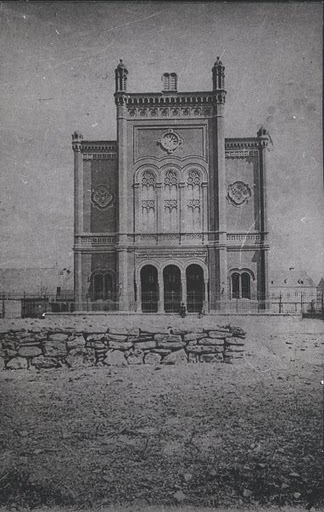
The synagogue stood on Maria Valeria Street, now Praška ulica, about 80 metres south of Ban Jelačić Square in the heart of Zagreb, set back from the street line behind a forecourt. Zagreb's Jewish community resolved to build it in 1855; construction began in 1866 to designs by the Vienna-born architect Franjo Klein, who modelled it on Ludwig Förster's Leopoldstadt Temple in Vienna, and it was consecrated on 27 September 1867. It was the first purpose-built synagogue in the city and, for three-quarters of a century, the most prominent Jewish building in Croatia. Its three-bay façade, with a triple-arched entrance, a tall triforium and stair bays with quatrefoil rosettes, rose to 24 metres. Slightly damaged in the 1880 earthquake, it was repaired in 1881, enlarged inside in 1921 and given central heating in 1933. Its organ and progressive rite made it the house of the community's Neolog majority. After the Independent State of Croatia was proclaimed in April 1941, the Ustaše authorities moved against Zagreb's Jews. On the orders of the Ustaše mayor Ivan Werner, demolition began on 10 October 1941 and was completed in April 1942. Its destruction was photographed and filmed for propaganda and shown at an antisemitic exhibition. The Torah scrolls had been rescued the night before work began. The site later held a department store and is now a car park.
Where it stood for 75 years
Historic: Marije Valerije ulica (Maria Valeria Street), Zagreb. Today: Praška ulica, about 80 m south of Ban Jelačić Square, Zagreb (car park; plaque at Praška 7).
Größere Karte öffnen →Die jüdische Gemeinde
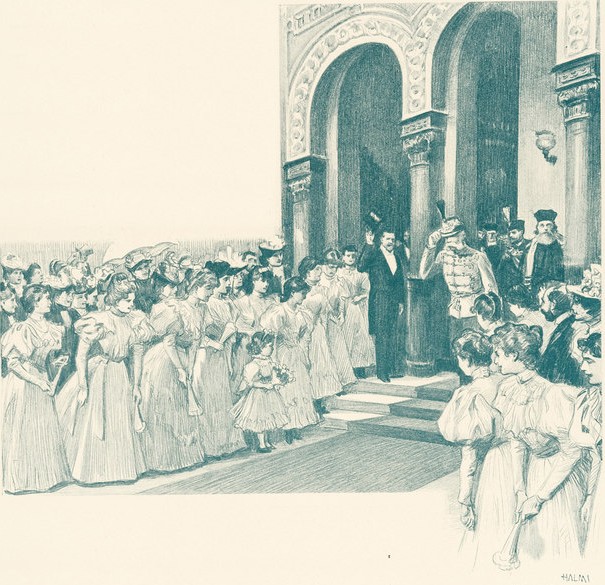
Jews were allowed to settle in Zagreb in the late eighteenth century, and a community was founded in 1806; it had a rabbi by 1809 and a cemetery from 1811. Most early members came from Hungary, Bohemia and Moravia, and the community grew rapidly with the city's development in the nineteenth century, from about 700 members in 1855 to 1,285 in 1887, 3,237 in 1900 and 5,970 in 1921. The new synagogue of 1867 reflected the community's emancipation and integration: in 1885 Rabbi Hosea Jacobi gave the first sermon in Croatian, and in 1908 Emperor Franz Joseph visited the synagogue. Because the main synagogue had an organ and a reformed liturgy, a small Orthodox minority worshipped separately. By the 1930s Zagreb was the largest Jewish community in Croatia.
Architektur und Gestaltung
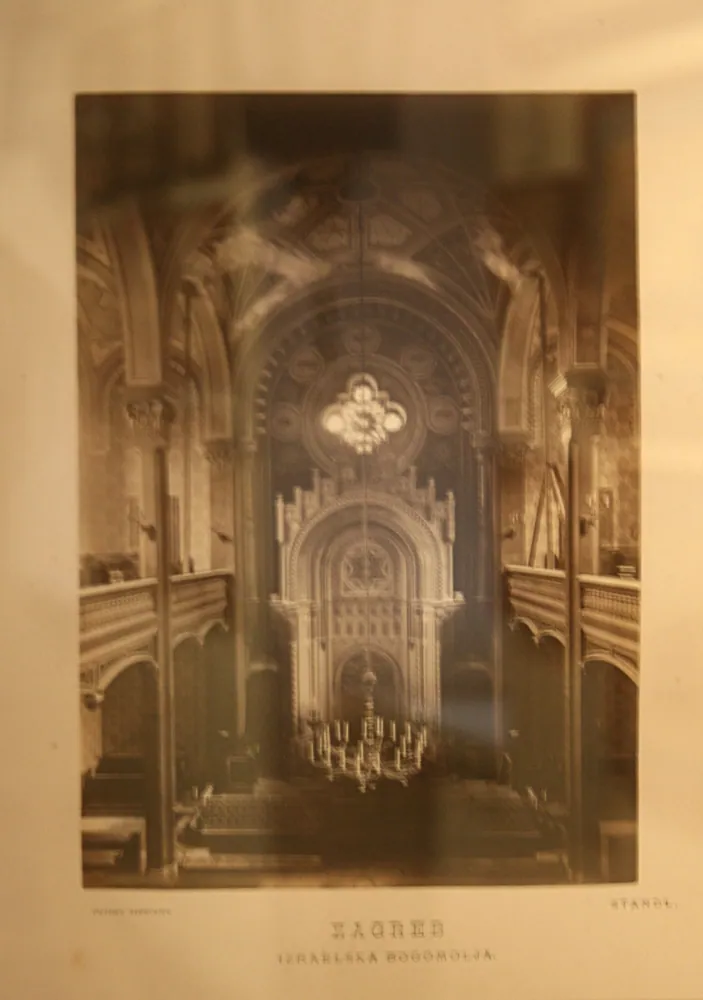
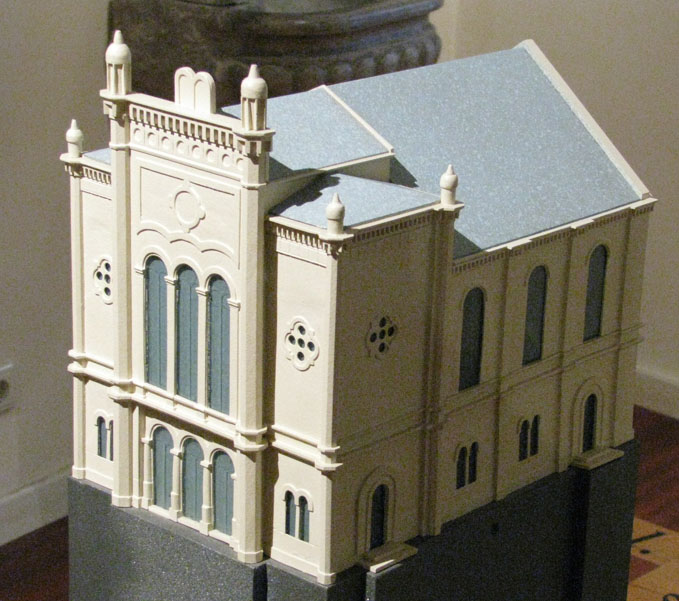
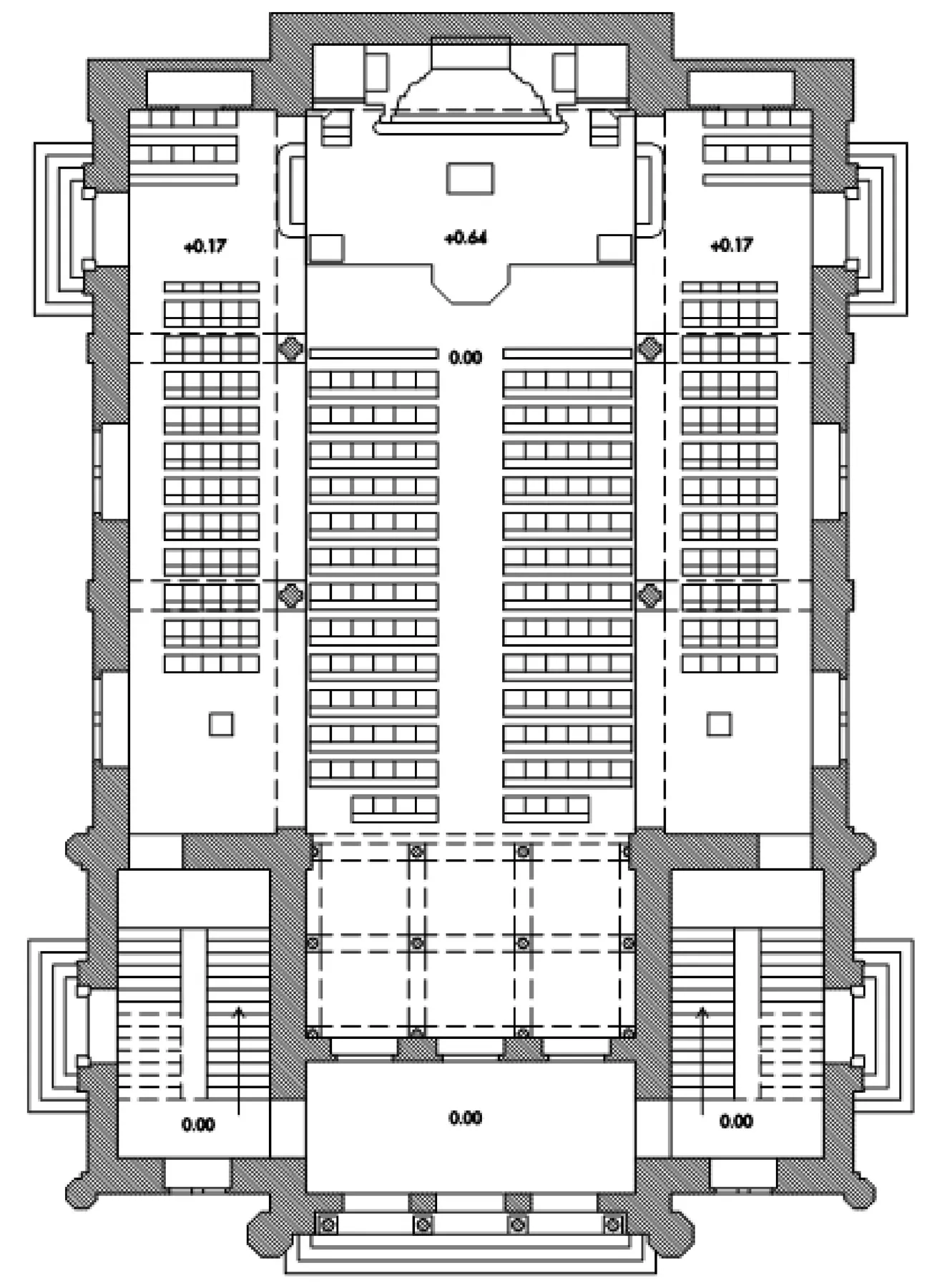
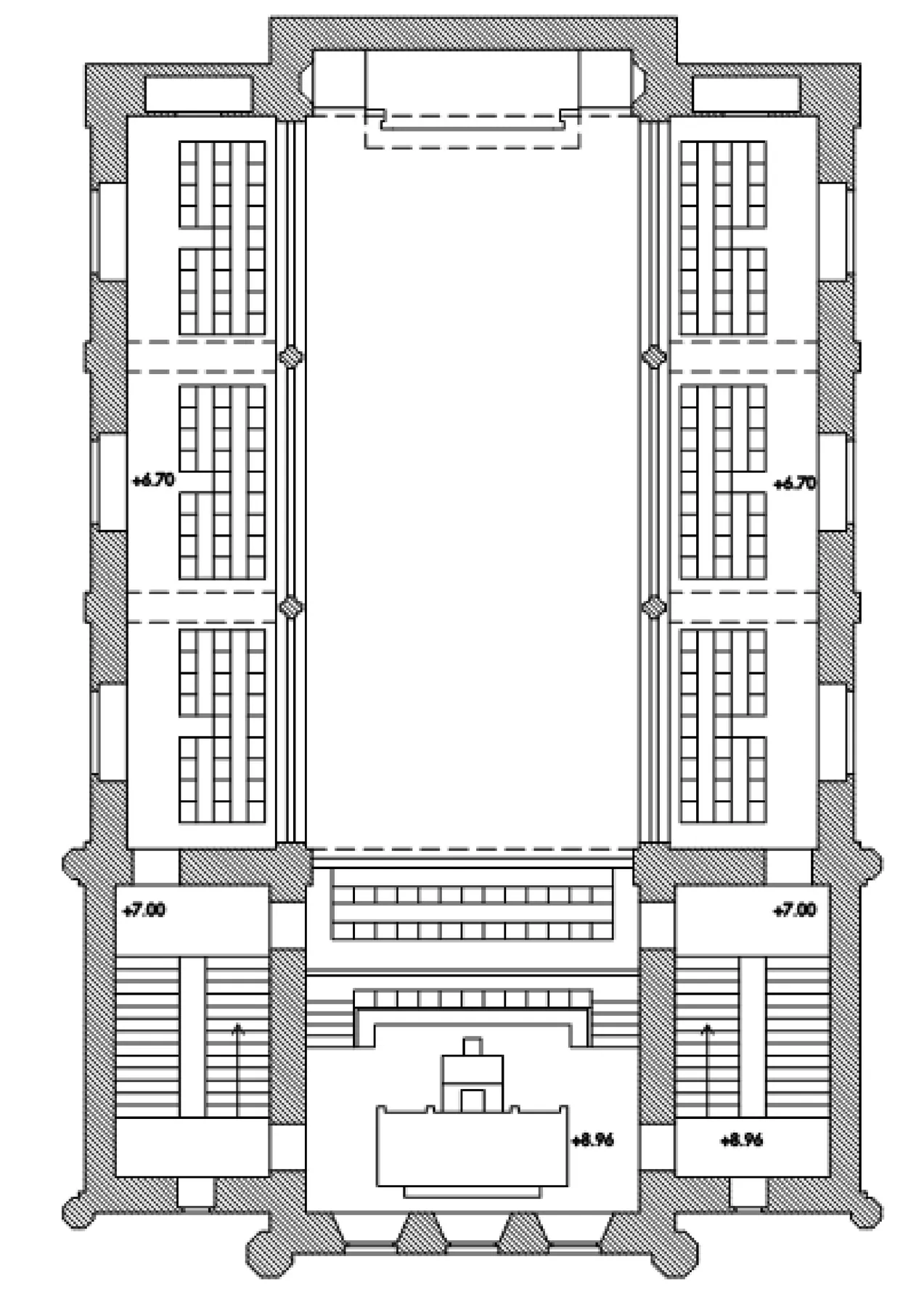
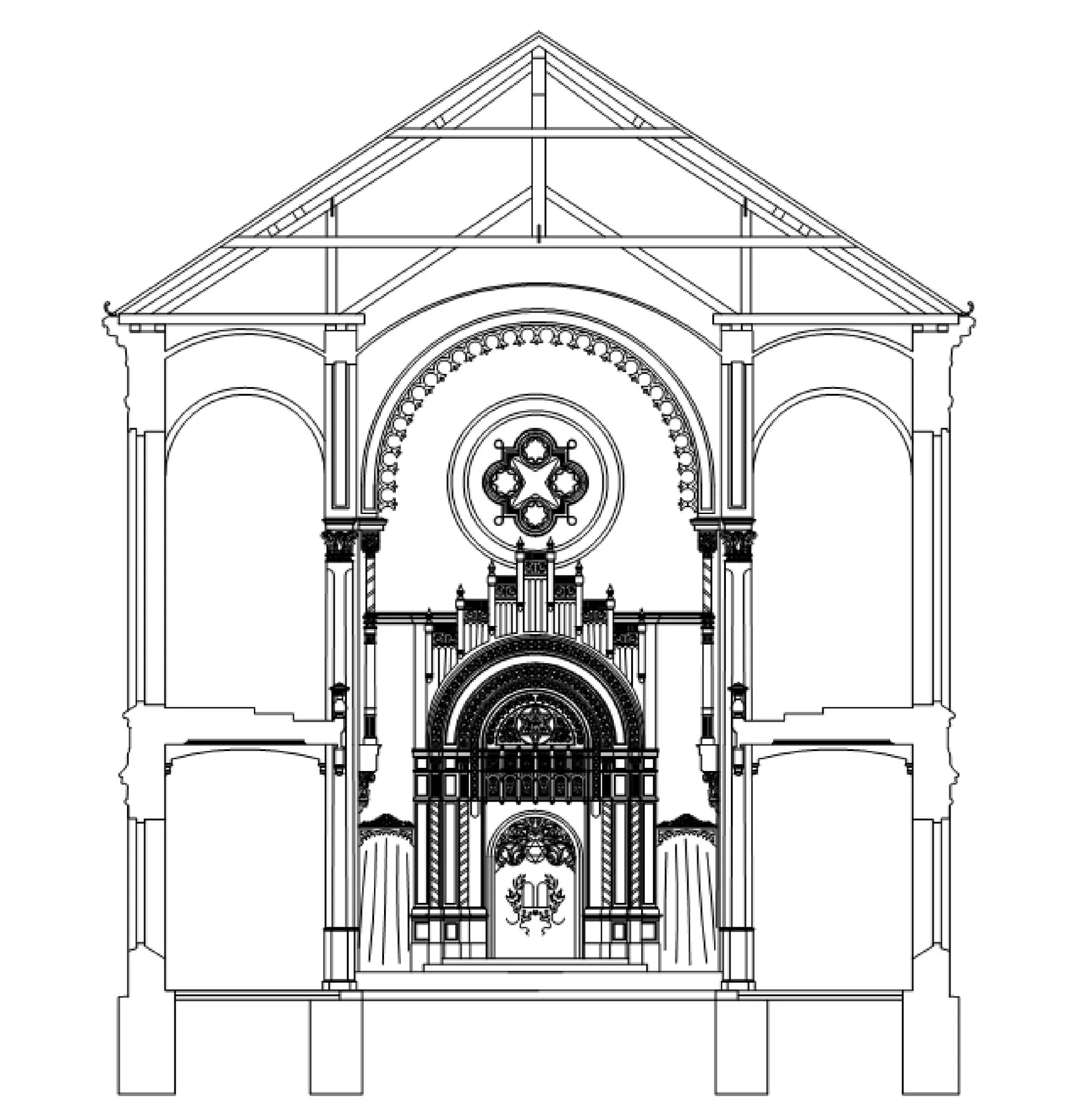
Franjo Klein based his design on the Leopoldstadt Temple in Vienna by Ludwig Förster, although Croatian scholars note that Förster's oriental motifs were largely not adopted. The building was in the round-arched Rundbogenstil, usually described as Moorish Revival, and faced west. It measured about 30 by 19.7 metres and rose to 24 metres. The interior had three naves, the central one wider and higher, without a basilican clerestory. The façade had a three-arched entrance with paired windows below, a tall triforium above, and stair bays with quatrefoil rosettes on either side. Inside there were 488 seats at first, increased to 708 in 1921; a 1931 plan for 944 seats was abandoned. The synagogue had an organ. A computer reconstruction of 2010 and a model in the Zagreb City Museum record its form.
Leben in der Synagoge
Hosea Jacobi, chief rabbi from 1867, preached the first Croatian-language sermon in the synagogue in 1885 and received Emperor Franz Joseph there in 1908. Gavro Schwarz served as chief rabbi from 1927 until his death in 1942, and Miroslav Šalom Freiberger, rabbi from 1937, succeeded him as head of the community during the Holocaust. Chief cantor Bernard Grüner led the singing. The synagogue's organ and progressive rite made it the spiritual home of Zagreb's Neolog majority, and it served as the centre of the community's religious, cultural and civic life until 1941.
Zerstörung
The Independent State of Croatia was proclaimed on 10 April 1941 under the Ustaše regime. In October 1941 the Ustaše mayor of Zagreb, Ivan Werner, issued a decree ordering the demolition of the synagogue. Warned by Leonardo Grivičić, chief cantor Grüner and community members saved the eight Torah scrolls on the night of 9–10 October. Demolition began on 10 October 1941 and continued until April 1942. The work was photographed for propaganda, and images were shown at the Ustaše antisemitic exhibition in Zagreb and other cities; 41 seconds of film of the demolition survive. Fragments were saved: the wash basin and two memorial tablets are in the Zagreb City Museum, and column fragments rescued by Ivo Kraus are held by the Jewish Community.
Das Schicksal der Gemeinde
Arrests of Zagreb's Jews by the Ustaše began in the spring of 1941, soon after the Independent State of Croatia was proclaimed. They were stripped of property and rights, and most were sent to Ustaše concentration camps, above all the Jasenovac complex and Stara Gradiška, where the great majority were murdered. Others were deported to Auschwitz; Rabbi Freiberger, who had tried to protect the remnant of the community, was deported with the last transport from Zagreb on 3 May 1943 and murdered there. Chief Rabbi Gavro Schwarz died in Zagreb in December 1942. Yad Vashem estimates that only about one in five Croatian Jews survived the Holocaust, many of them by fleeing to the Italian-occupied coast or joining the Partisans.
Der Ort heute
After the war the site held a volleyball court and, from 1959, a prefabricated department store, which burned on 31 December 1980. The plot was returned to the Jewish Community of Zagreb on 31 December 1999 and is now a car park; plans to rebuild the synagogue have not been realised. A memorial plaque at Praška 7, unveiled in 1986, recalls the synagogue. Its surviving fragments are in the Zagreb City Museum and the Jewish Community of Zagreb, which worships today in a synagogue on Palmotićeva Street.
Bedeutende Namen
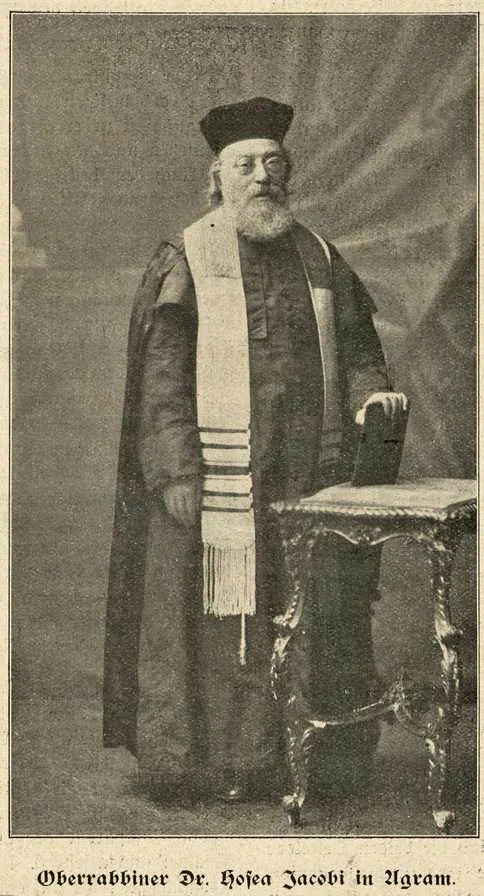
Hosea Jacobi
1841–1924/1925Chief Rabbi of Zagreb from 1867Hosea Jacobi became chief rabbi of Zagreb in the year the synagogue was consecrated. In 1885 he gave the first Croatian-language sermon in the synagogue, and in 1908 he received Emperor Franz Joseph there.
Biografie oder Quelle →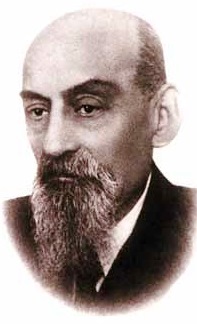
Gavro Schwarz
1872–1942Chief Rabbi of Zagreb, 1927–1942Gavro Schwarz was chief rabbi of Zagreb from 1927 and led the community from the synagogue until its demolition by the Ustaše in 1941–42. He died in Zagreb on 7 December 1942.
Biografie oder Quelle →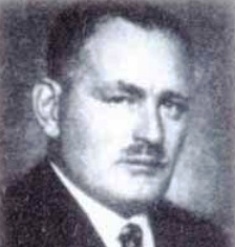
Ivan Werner
1887–1944Ustaše mayor of ZagrebIvan Werner, the Ustaše mayor of Zagreb, ordered the demolition of the synagogue by decree in October 1941. Work began on 10 October 1941 and was completed in April 1942.
Biografie oder Quelle →Franjo Klein
1828–1889ArchitectThe Vienna-born architect Franjo Klein designed the Zagreb Synagogue, built in 1866–67 on the model of Ludwig Förster's Leopoldstadt Temple in Vienna. It was the first purpose-built synagogue in Zagreb.
Biografie oder Quelle →Miroslav Šalom Freiberger
1903–1943Rabbi of Zagreb from 1937; chief rabbi from 1941/42Miroslav Šalom Freiberger served as rabbi in Zagreb from 1937 and led the community after the synagogue was demolished. He was deported with the last transport from Zagreb on 3 May 1943 and murdered at Auschwitz.
Biografie oder Quelle →Bernard Grüner
1888–1955Chief cantorBernard Grüner was chief cantor of the Zagreb Synagogue. Warned of the coming demolition, he and other community members rescued the synagogue's eight Torah scrolls on the night of 9–10 October 1941.
Biografie oder Quelle →Haben Sie etwas beizutragen?
Fotos, Dokumente, Familiengeschichten oder Erinnerungen an diese Synagoge und ihre Gemeinde halten ihre Geschichte lebendig.
Share a memory or thought
No comments yet. Be the first to add one.