
Historia Zsámbék Synagogue
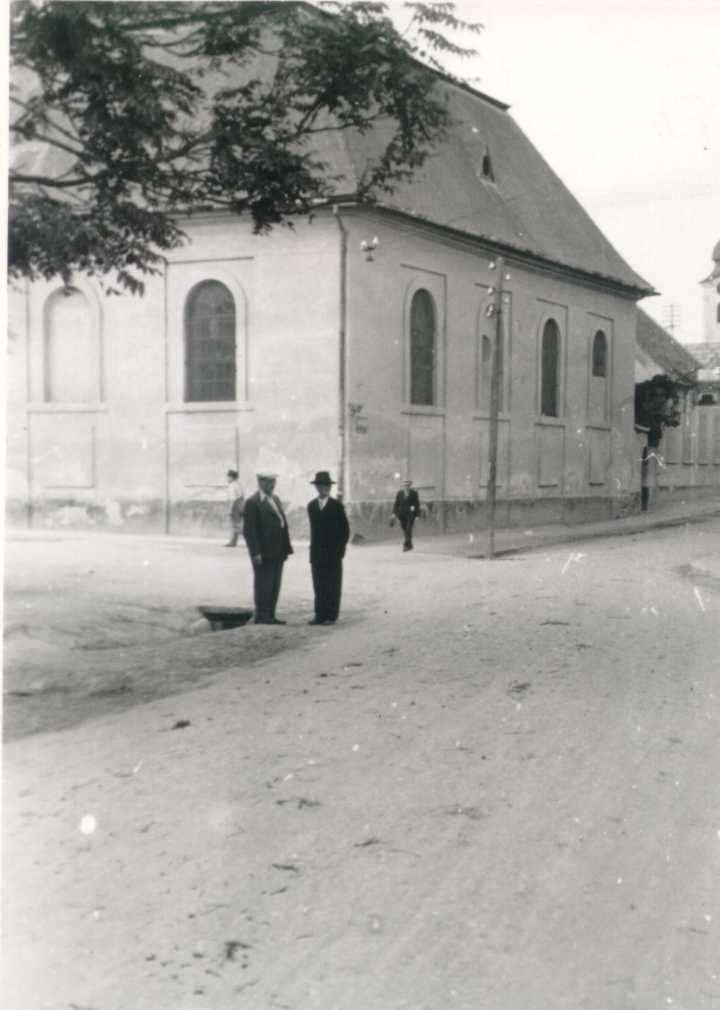
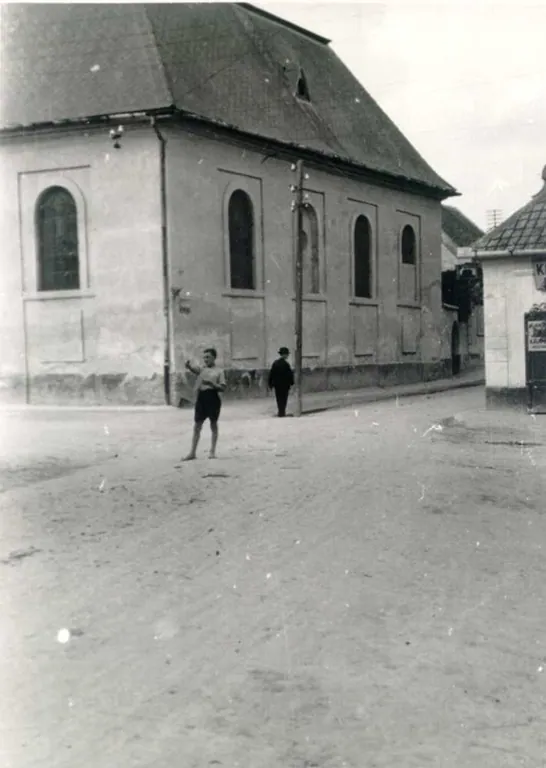
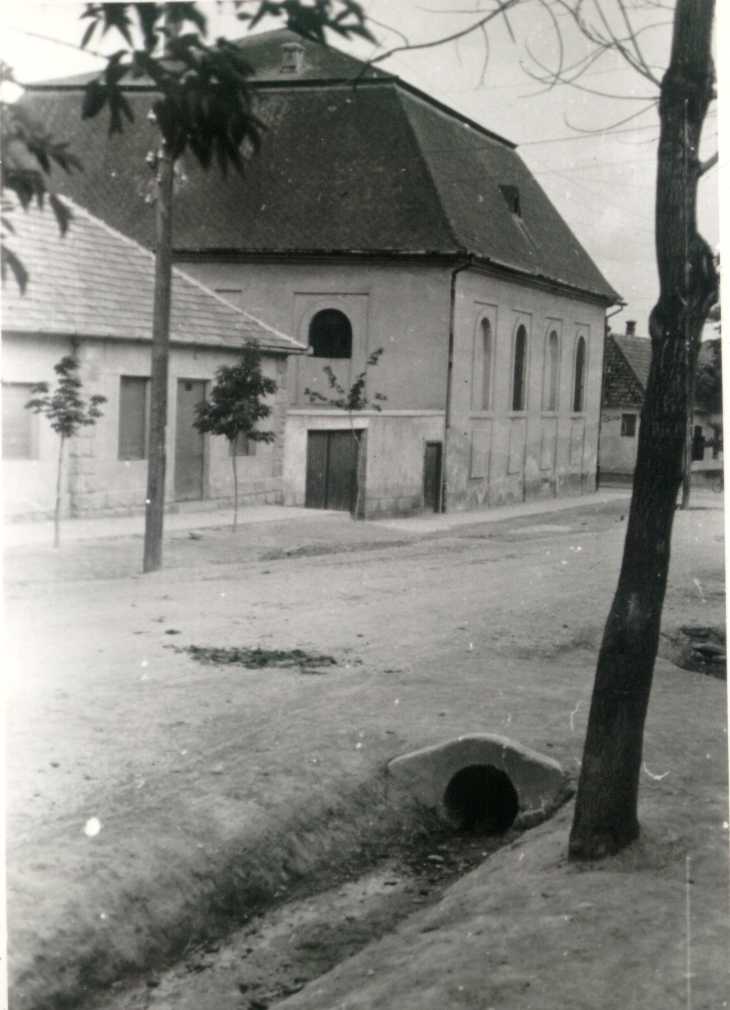
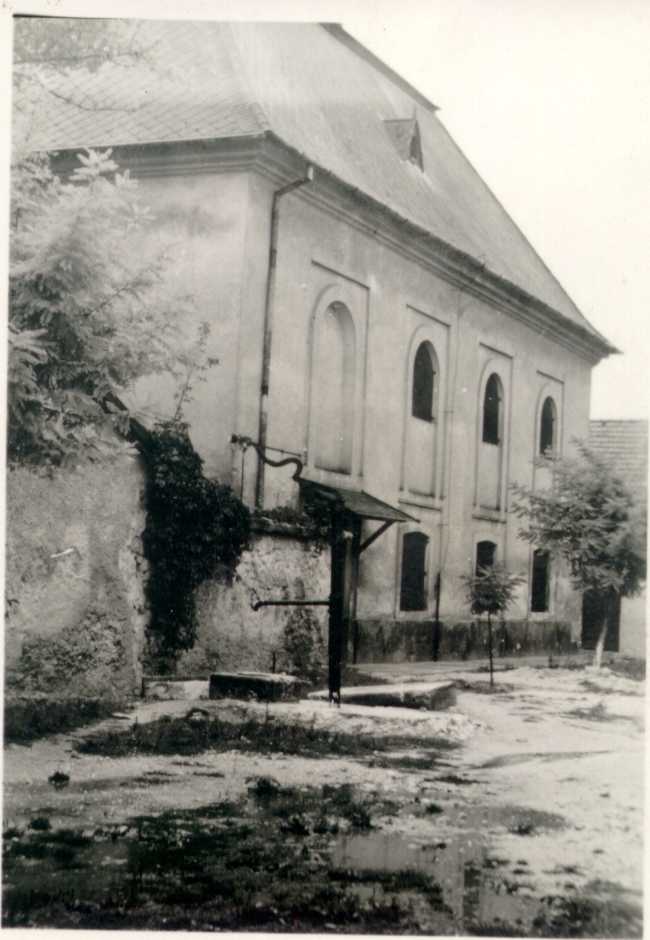
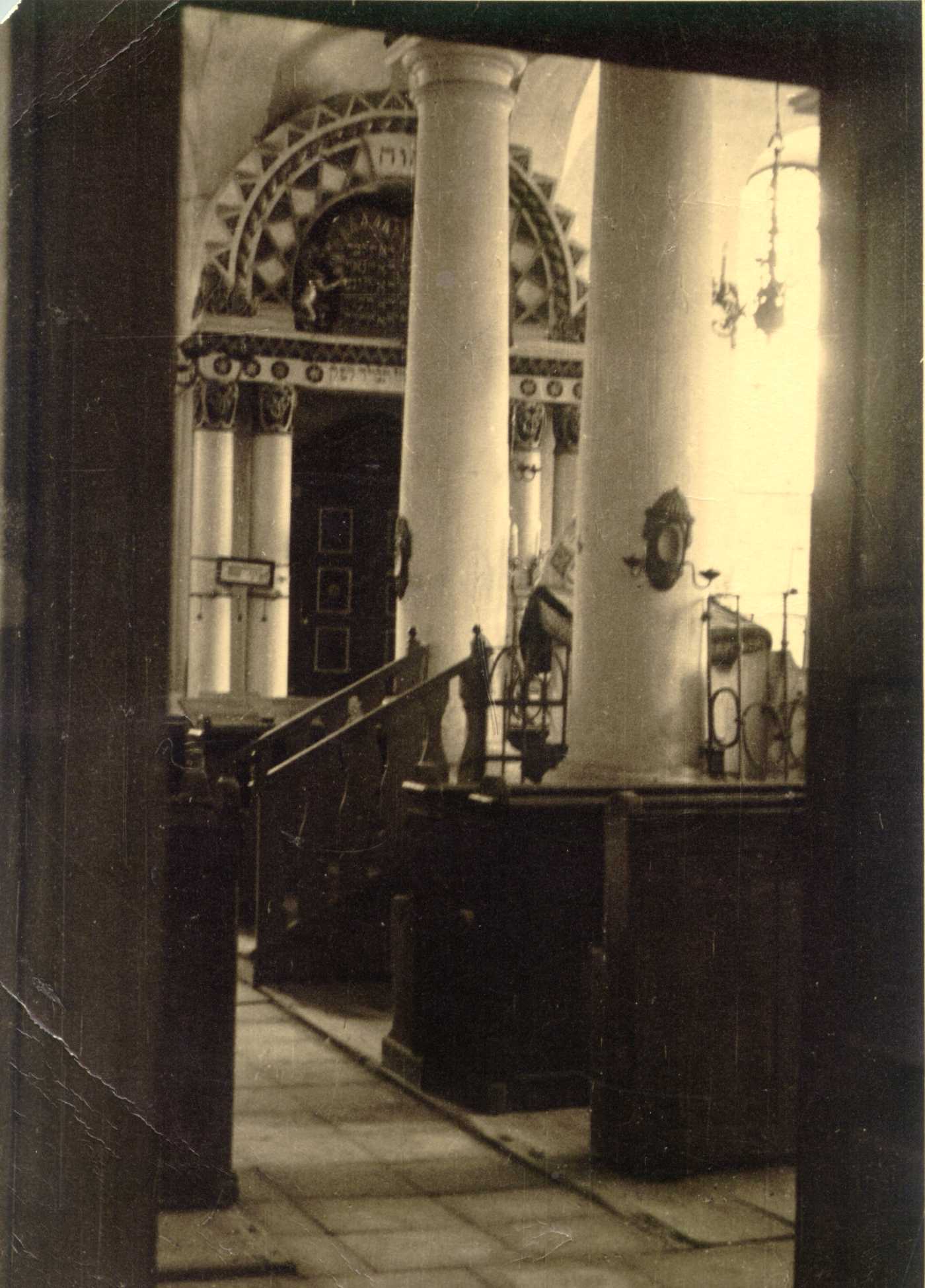
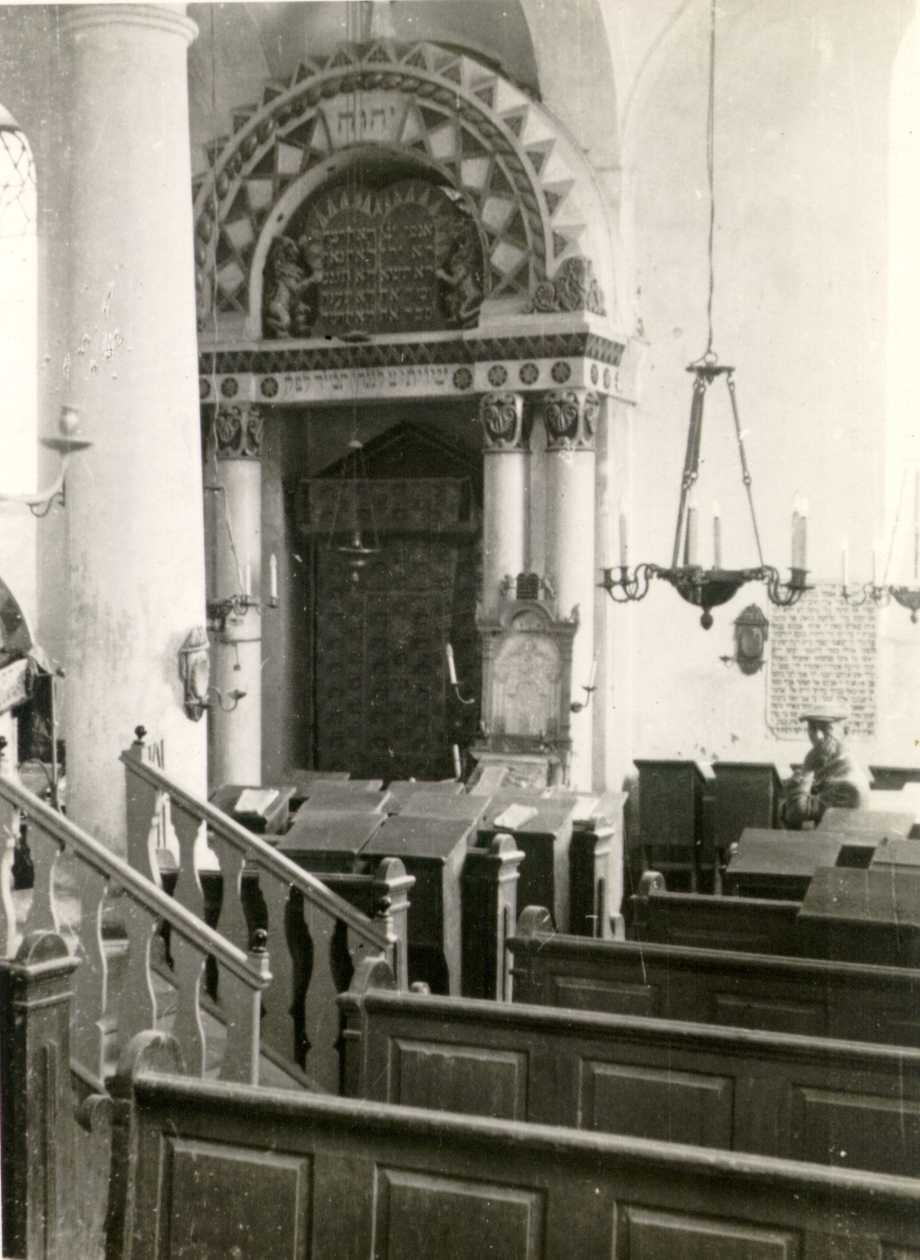
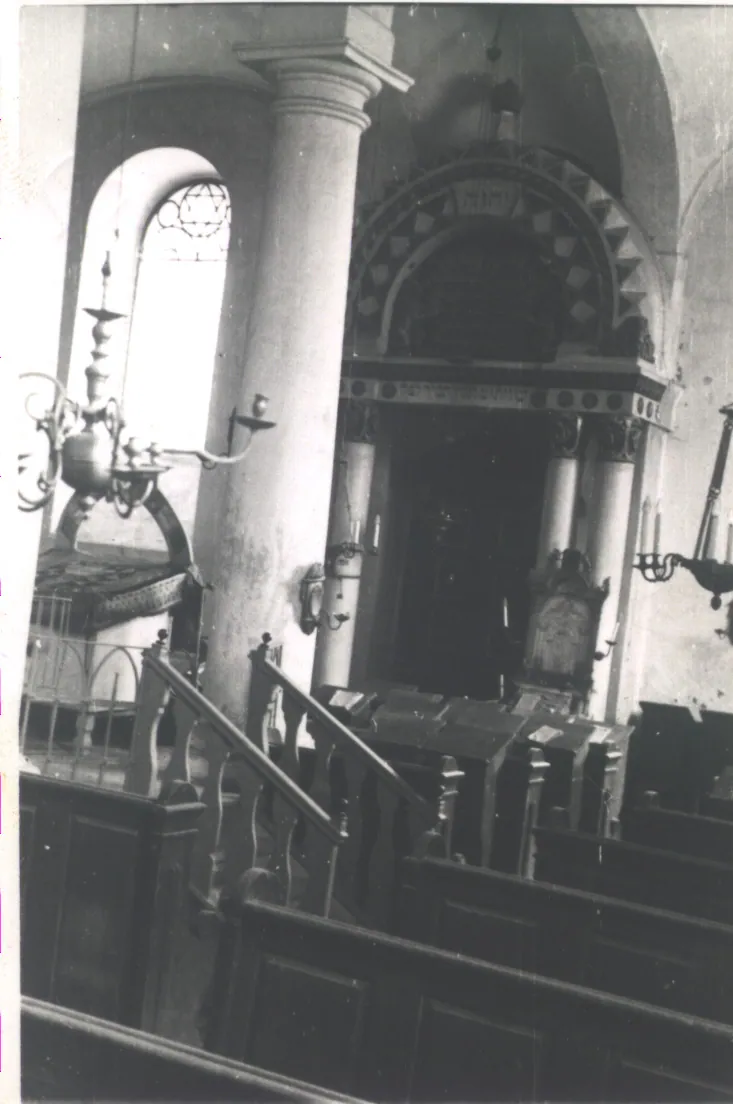
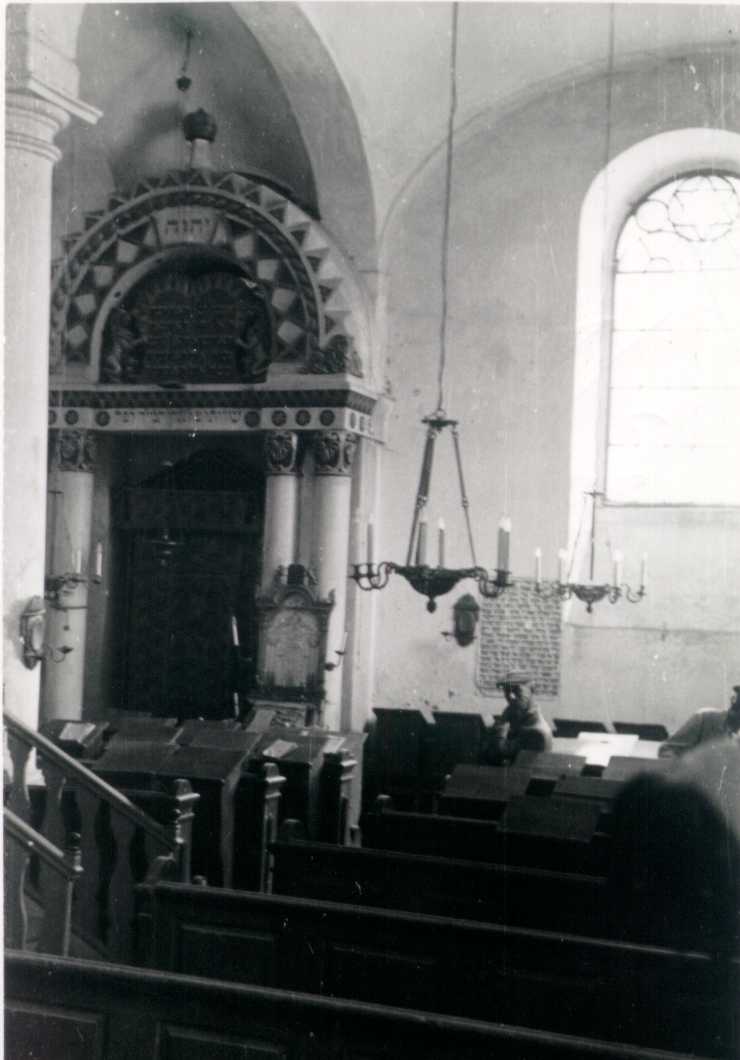
Zsámbék, a market town of the Zichy estate west of Buda, had Jewish residents as early as 1702, and a lasting community settled there in 1727, in the same years as the better-known one at Óbuda. A mud-brick prayer house stood by 1732. In 1810 the community built a large masonry synagogue at a corner of the main square: a nine-bay hall whose vaults rested on four columns around a central bimah, the plan also used at Mád and Bonyhád. Rudolf Klein remarks that so small a building could have been vaulted without internal supports, and that the four-pillar scheme was chosen for its traditional, mystical meaning. From the later nineteenth century the congregation shrank as families moved away. When staff of the Hungarian Jewish Museum visited in summer 1943 the building was still fully furnished, although only three Jewish families remained. Returning on 23 July 1947 they found a roofless, plundered shell and no Jews in the village. They removed what could be saved and urged that the building be kept as a historic monument, if necessary by passing it to the local Reformed congregation. Nothing came of this and the ruin was pulled down. Nineteen photographs in the Hungarian Jewish Museum and Archives record it before and after.
Where it stood for nearly 140 years
Historic: a corner of the main square (főtér) of Zsámbék, Pest-Pilis-Solt-Kiskun county; no street number found. Today: probably the site of the Coop ABC, Akadémia utca 1 (beside Zichy Miklós tér), 2072 Zsámbék, Hungary.
Otwórz większą mapę →Społeczność żydowska
Zsámbék was the seat of the Zichy family's Óbuda estate. A steward's letter of 1702 already mentions a Jewish leaseholder there, but those first settlers left, and the families counted in 1727 had all arrived that year: one survey lists 25 Jewish men, another 15 households, with Jacobus Isak as Jewish judge. A contract with the landowner Zsuzsanna Bercsényi, in force from 1 January 1732 and referring to an earlier one, confirmed the sites of the synagogue and cemetery, fixed protection money at four florins per family, gave the Jews the sole right to keep shops in the town and allowed a Sabbath boundary cord. By 1770 the community employed a rabbi, a ritual slaughterer who also taught, a beadle and a sick-nurse; most members were small traders and pedlars. Community records from about 1770 to 1850 survive in the Hungarian Jewish Archives. It was this long-established community that built the new synagogue in 1810. There were 425 Jews in 1880 and 222 in 1910; by 1929 only 80 people in 22 families remained.
Architektura i projekt
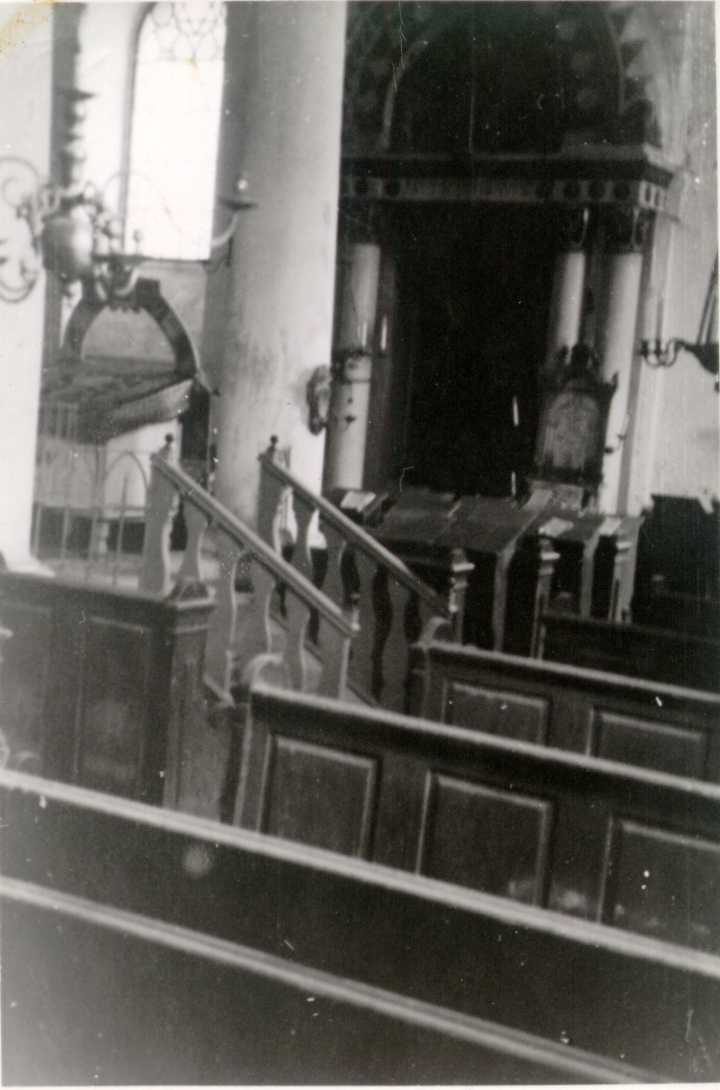
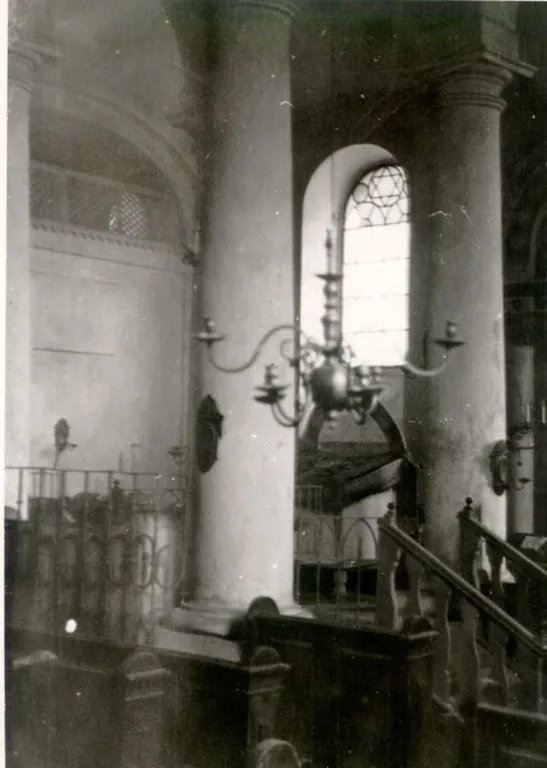
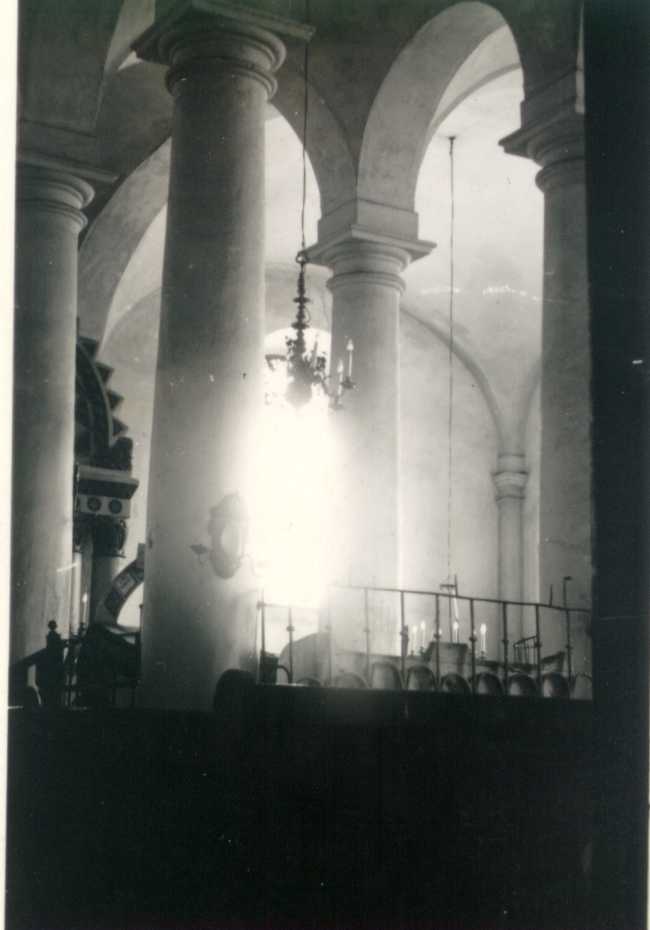
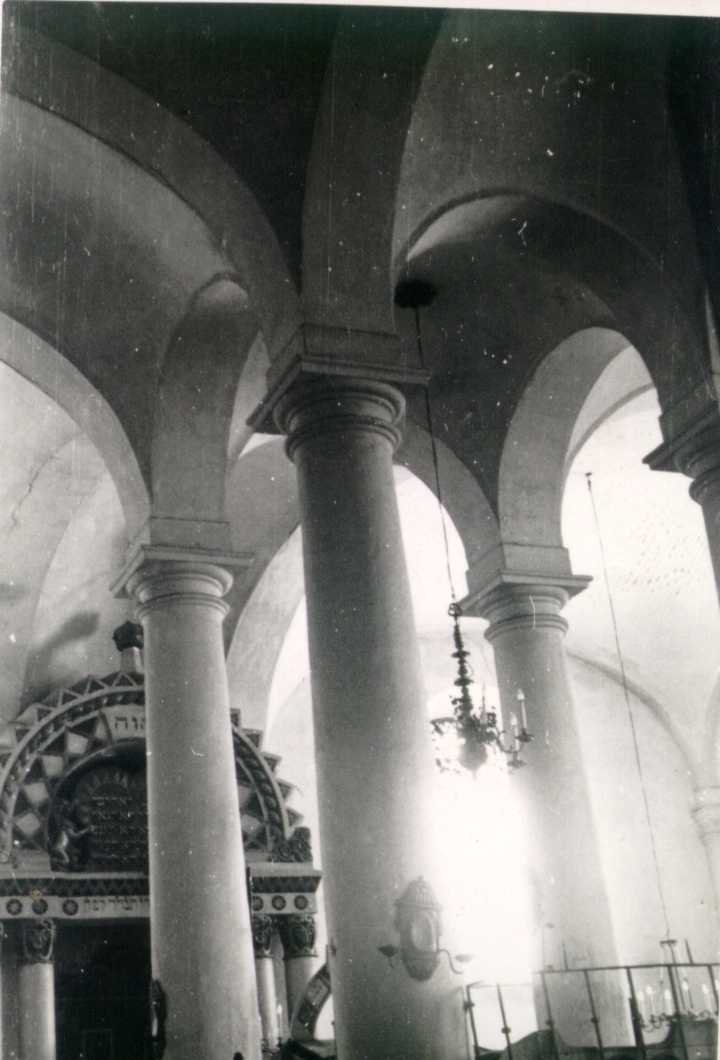
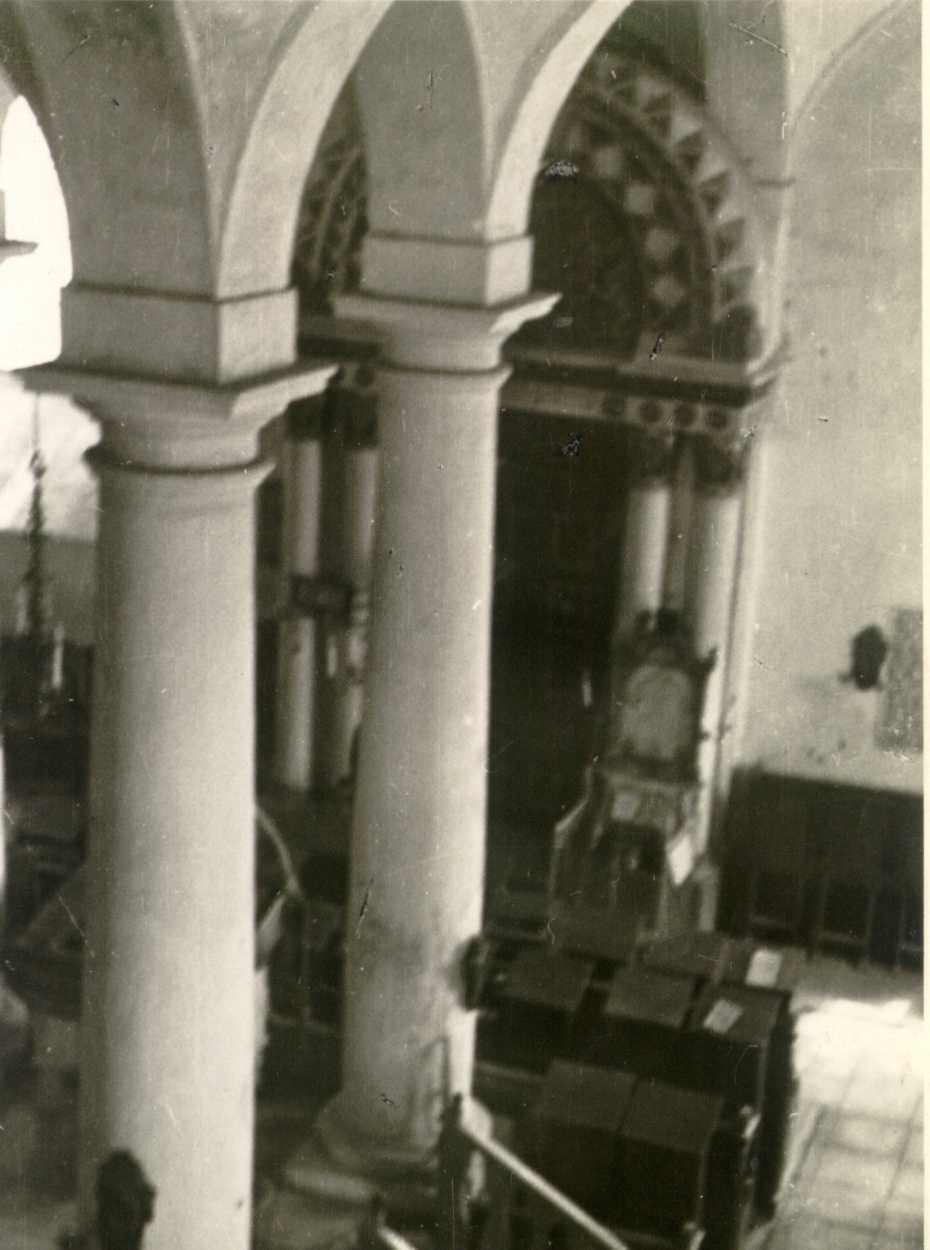
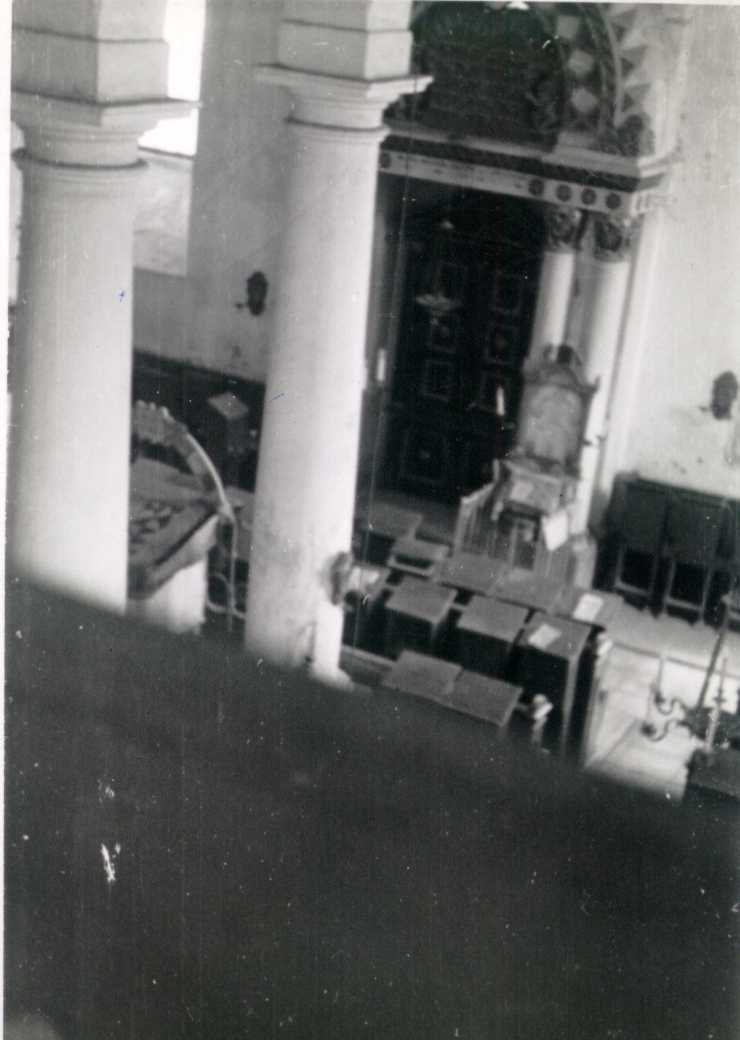
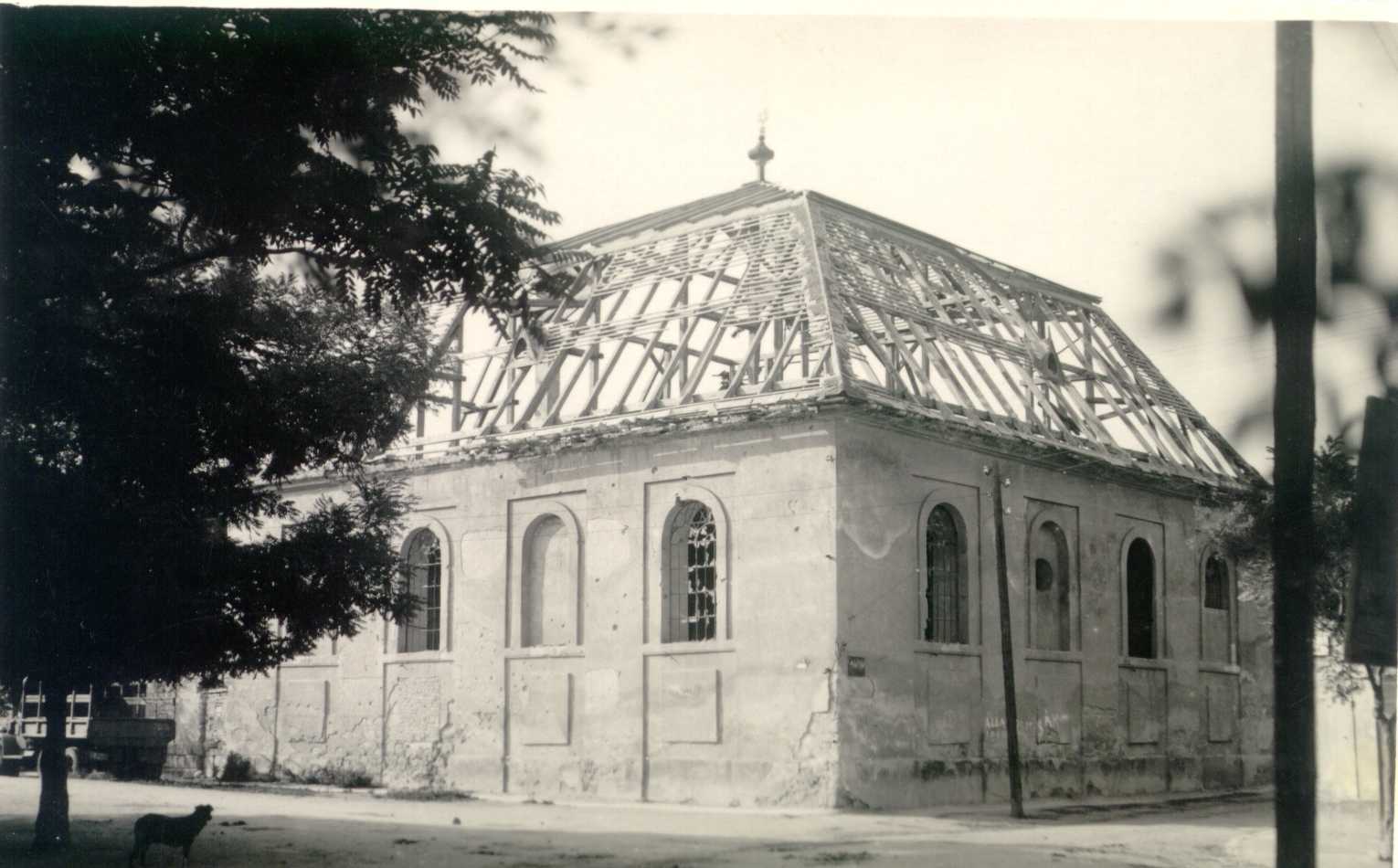
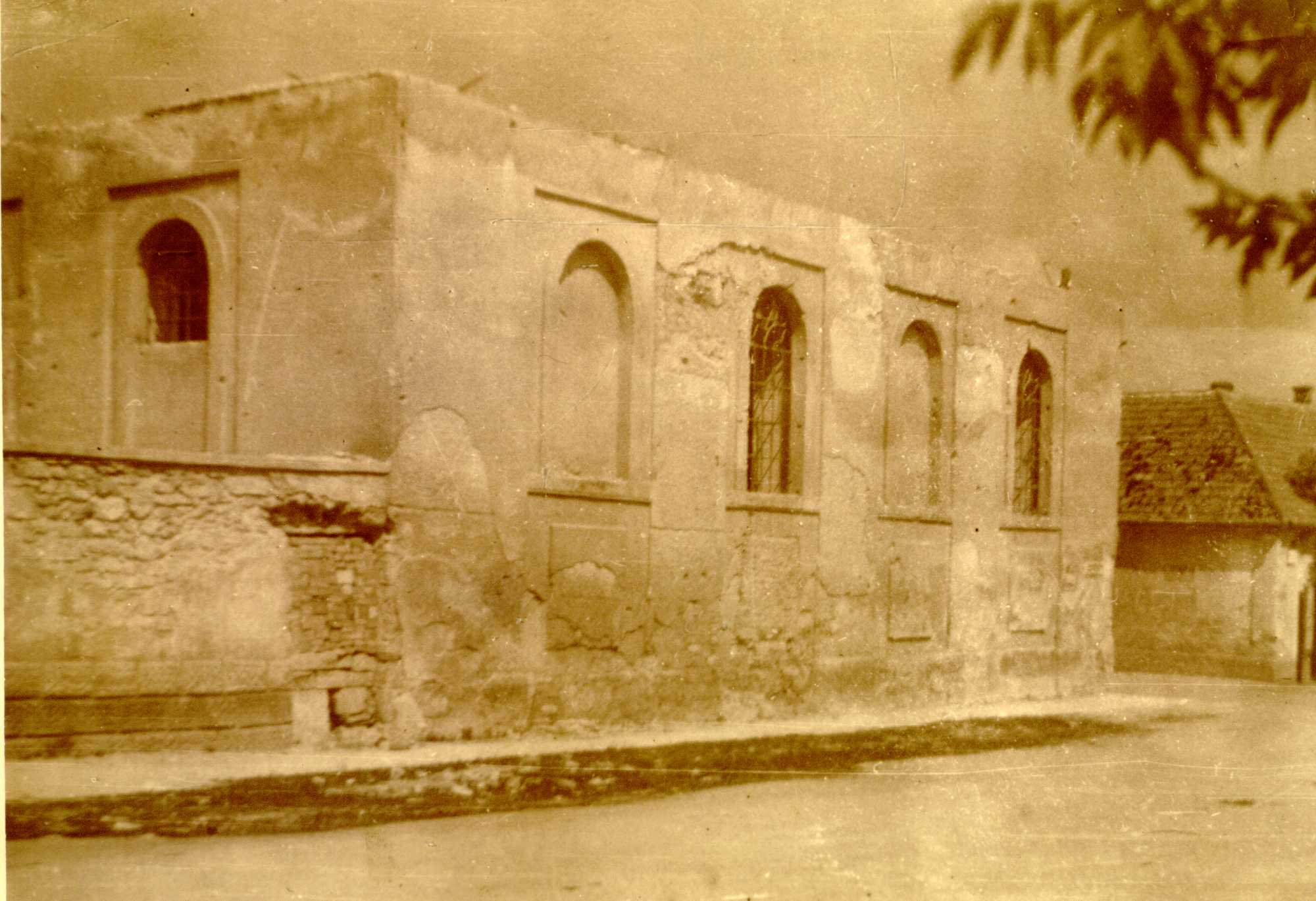
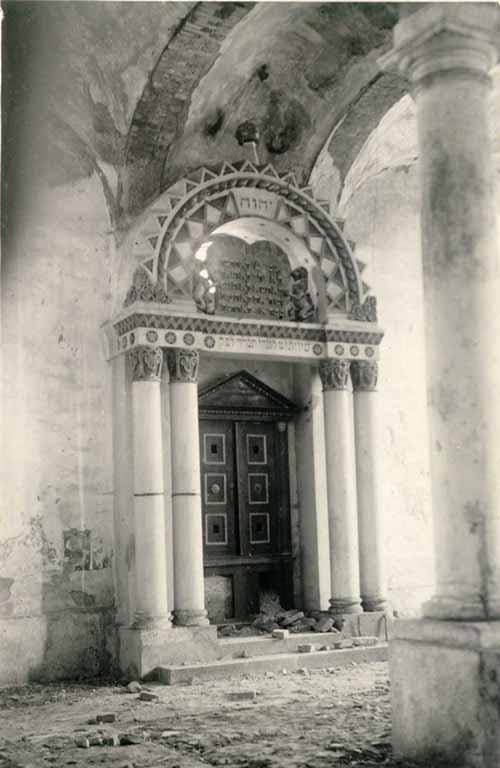
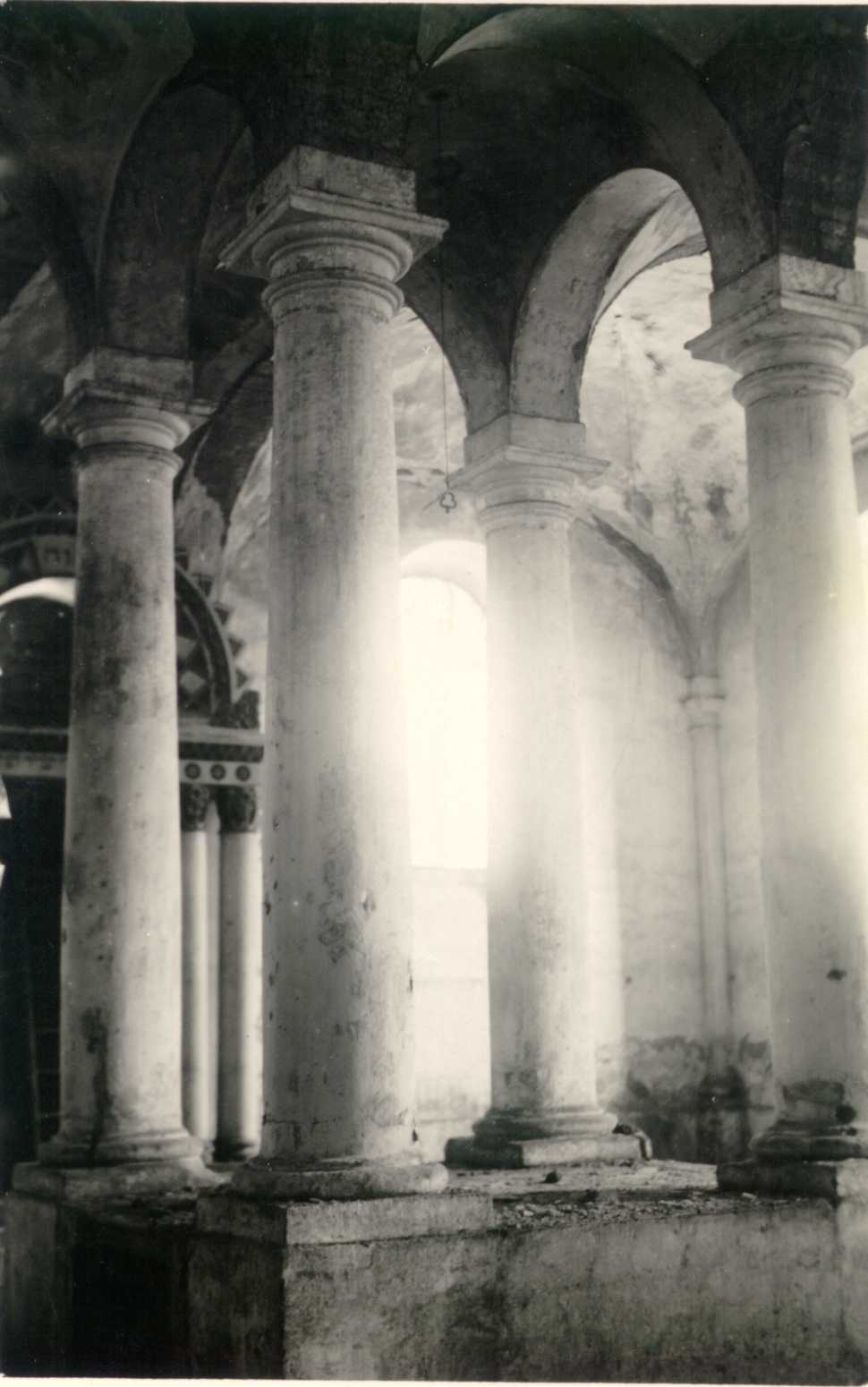
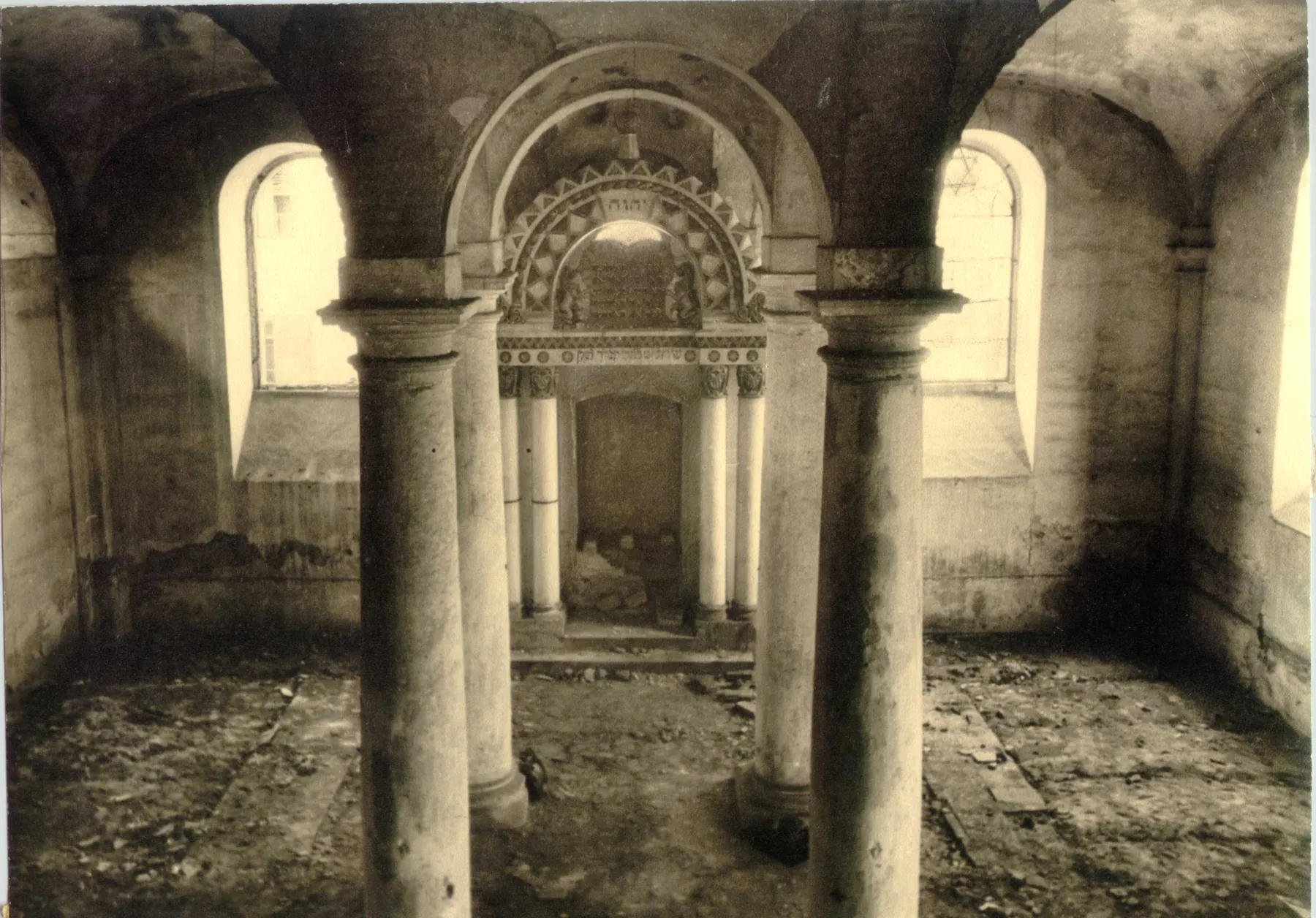
Photographs show a plain, cubic, rendered building under a tall mansard roof with small dormers and a metal finial. The walls were divided into recessed panels holding round-arched windows and blind niches, so that from the street, as Rudolf Klein notes, it could pass for a burgher's house. On the east wall one blind niche contained a small round window above the ark, and a half-open window at the north end marked the northern arm of the L-shaped women's gallery. Inside, four tall columns with simple moulded capitals carried nine vaulted bays; the bimah, enclosed by a wrought-iron railing and reached by wooden steps, stood between them under the central vault. The carved stone ark, which the museum's staff dated to the 1840s, had paired columns with foliate capitals, a frieze with a Hebrew inscription and an arched top framed by a zigzag sunburst, with two lions flanking the Tablets of the Law. Brass chandeliers and wall sconces hung above panelled pews with reading desks, and the window heads carried Star of David tracery. A copper and limestone washbasin stood in the vestibule.
Życie w synagodze
The community described itself in 1929 as status quo ante, although before and after the First World War it dealt with the National Israelite Office through that body's sixth district. Beside the synagogue, on one large plot, stood the school, founded in 1878, and the rabbi's house. There were also a burial society (Chevra Kadisha), a women's association and, earlier, a godparents' society that had a silk brocade circumcision cover made in 1838. In 1805 the rabbi of Zsámbék sat with the rabbis of Óbuda and Aszód on the rabbinical court that tried the reformer Aaron Chorin. In May 1896, for Hungary's millennium, Rabbi Joachim Fleischmann preached a patriotic sermon at a festive service that ended with the national anthem, while members hung flags on their houses and closed their shops. Fleischmann died in 1908. Aladár Pollák is recorded as rabbi from 1913; in 1920 the rabbinate and the school both lapsed as membership fell. In 1929 the president was Miksa Weisz and the annual budget 3,500 pengő.
Zniszczenie
The synagogue was still intact and furnished in summer 1943. According to Rudolf Klein it was hit by a bomb in 1945 and never repaired; whose bomb it was is not recorded, and gravestones in the Jewish cemetery also bore shell damage. With no Jews left in the village the building was plundered. When Ernő Naményi and Fülöp Grünwald of the Hungarian Jewish Museum inspected it on 23 July 1947 the walls stood but the roof was gone, the floor had been torn up and everything movable had been taken; a photograph shows the roof stripped to its timbers. The property was then held by the Government Commission for Abandoned Property. The two men removed the ark cabinet and the vestibule washbasin and warned that further vandalism was likely. Klein dates the demolition to 1947, yet a museum letter of September 1948 still speaks of the Zsámbék synagogue as lying in ruins. The shell was demolished by the Communists soon afterwards, in what Klein calls the building of socialism; the exact year, and which local body ordered it, are Unknown.
Los społeczności
By the time of the Nazi German occupation the community had almost died out through migration: the museum's visitors in 1943 counted three Jewish families, and another museum account speaks of four Jewish men. In 1944 Zsámbék lay in Pest-Pilis-Solt-Kiskun county, where a county decree of 12 May ordered the Jews of every district into collection points; those of the Buda-environs district, the former Bia district to which Zsámbék belonged, were assigned to Budafok. Hungarian gendarmes moved the county's Jews to the brickyards at Budakalász and Monor at the end of June, and they were deported to Auschwitz on 6–8 July 1944. The individual fate of the Zsámbék families is Unknown in the sources consulted. In July 1947 the museum's delegation reported that no Jew lived in the village, that the synagogue, school and rabbi's house lay ownerless, and that gravestones were being toppled. The congregation was never re-formed. Its archive, Torah curtains, the washbasin and other objects are kept by the Hungarian Jewish Museum and Archives in Budapest.
Miejsce dzisiaj
Nothing of the synagogue survives above ground. A 1989 newspaper report on local conservationists says that the building was pulled down quite senselessly and that an ABC grocery shop was built in its place. The shop that best fits the 1947 description of a corner of the main square is the Coop ABC at Akadémia utca 1, beside Zichy Miklós tér and close to the Zichy castle; this identification is an inference and has not been confirmed from a cadastral map. No memorial to the synagogue was found. The Jewish cemetery survives in a neglected state: volunteers cleared it in 2012 and identified about ten graves and fragments.
Ważne postacie
Joachim Fleischmann
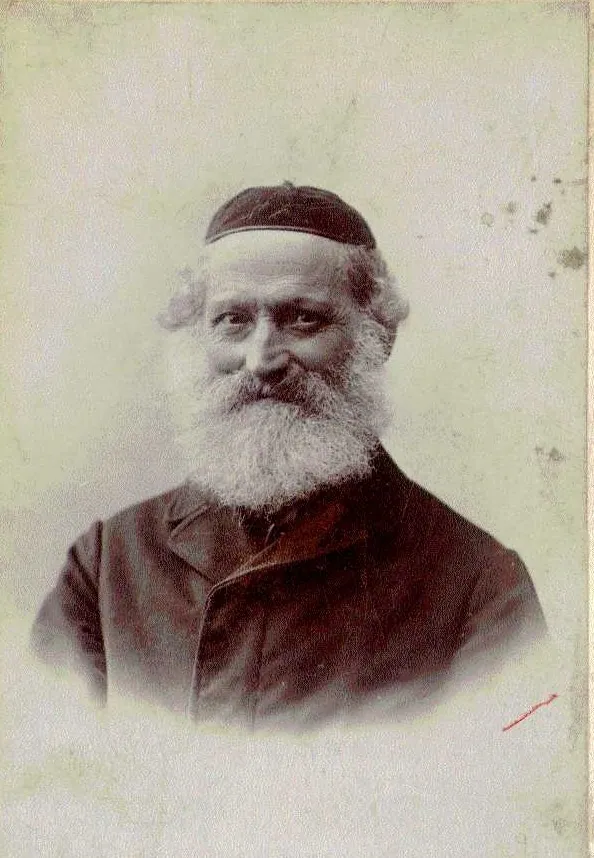
died 1908Rabbi of ZsámbékFleischmann served the Zsámbék congregation as its rabbi in the late nineteenth century and is styled chief rabbi of Zsámbék in the records of the Hungarian Jewish Museum. In May 1896 he led the community's festive service for the Hungarian millennium in the synagogue and gave a patriotic sermon, reported in the local paper Buda és vidéke. The National Israelite Office still listed him in 1905, and he died in 1908.
Biografia lub źródło →Aladár Pollák
UnknownLast rabbi of ZsámbékPollák appears as rabbi of Zsámbék in the registers of the National Israelite Office from January 1913, when he reported on rabbis' seniority supplements, and through the First World War. The community's rabbinate lapsed in 1920 as membership dwindled, and by August 1921 the registers call him the former rabbi of Zsámbék. No rabbi was appointed after him, so he was the last to officiate regularly in the synagogue.
Biografia lub źródło →Miksa Weisz
UnknownPresident of the Zsámbék Jewish community, 1929Weisz is named by the Magyar Zsidó Lexikon as president of the Zsámbék status quo community in 1929, when it had 80 members in 22 families and a budget of 3,500 pengő. He led it with vice-presidents Samu Haas and Simon Fleischmann, treasurer Vilmos Gárdonyi and warden Henrik Basch, keeping the synagogue, burial society and women's association going after the rabbinate and school had closed.
Biografia lub źródło →Jacobus Isak
UnknownJewish judge of Zsámbék, 1727Isak is recorded as the Jewish judge, the elected head of the community, in the survey drawn up in June 1727 for the Zichy inheritance suit, the year in which the Jewish families settled at Zsámbék. He therefore stands at the head of the congregation whose first contract with the landowner secured the sites of the synagogue and cemetery, on which the 1810 building later rose.
Biografia lub źródło →Czy masz coś do przekazania?
Zdjęcia, dokumenty, historie rodzinne lub wspomnienia o tej synagodze i jej społeczności pomagają zachować jej historię.
- Letter of the Hungarian Jewish Museum to the National Office of Hungarian Israelites on the Zsámbék synagogue, 24 July 1947 (source 14), in: Zsidó közösségek öröksége, Magyar Zsidó Levéltári Füzetek 7 (2010), pp. 88–89
- Bevezető: Források a magyar zsidó kulturális örökségről 1945–1960, in: Zsidó közösségek öröksége (2010), pp. 17, 20–21
- Draft letter of the Hungarian Jewish Museum to the National Committee of Monuments, 14 September 1948 (source 10), in: Zsidó közösségek öröksége (2010), p. 82
- Zsámbéki zsinagóga (record with description taken from synagogues.hu)
- Zsámbék, in: Magyar Zsidó Lexikon (1929), p. 979
- Az óbudai uradalom zsidósága a 18. században, Századok 126 (1992), pp. 5–7, 16–17, 25
- 75 Documents of the Jewish community of Zsámbék (100 years – 100 objects)
- Magyarország 'kegyúri zsinagógái', Newyorki Figyelő, 19 January 1989, p. 5
- A fészekrablók valutáért adják, Pest Megyei Hírlap, 5 September 1989, p. 5
- A zsámbéki ünnep, Buda és vidéke, 10 May 1896
- Fleischmann Joachim fényképe, inv. F66.299
- Register of the National Israelite Office, 1911–1914, entry 32601 (24 January 1913)
- Register of the National Israelite Office, 1919–1922, entries 45001 (13 October 1920) and 45831 (30 August 1921)
- Zsámbéki zsinagóga bontása, inv. F70.478.1 (one of nineteen photographs of the synagogue, items 26967–26985)
- Zsinagógai kézmosó, inv. 64.1140.1-2
- Brit milá takaró, inv. 64.1540
- Zsámbék, JewishGen Cemetery Discovery Project
- A népirtás politikája: a holokauszt Magyarországon, vol. 2, pp. 737–741
- Egység, no. 74 (December 2012): report on the clearing of the Zsámbék Jewish cemetery
- Egység, no. 111 (October 2018): article on Aaron Chorin and Rabbi Moses Münz
- Magyarországi zsinagógák listája
- OpenStreetMap node 3008314717: Coop ABC, Akadémia utca 1, Zsámbék
Share a memory or thought
No comments yet. Be the first to add one.