
El catálogo
Edificios destruidos, historias vivas. Este archivo crecerá a medida que la investigación se complete y verifique.
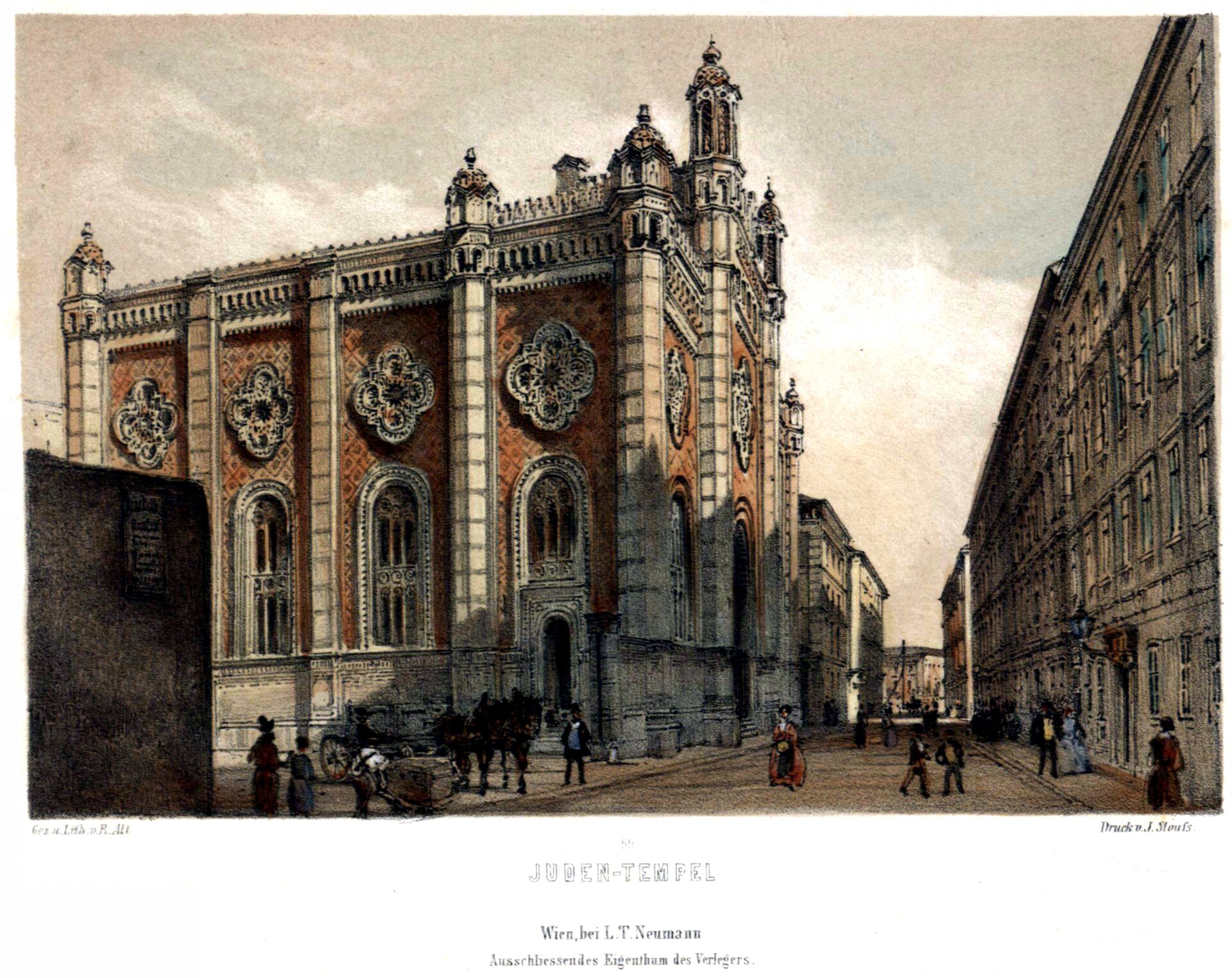
Leopoldstädter Tempel
A monumental synagogue that made Jewish presence visible in the heart of nineteenth-century Vienna.
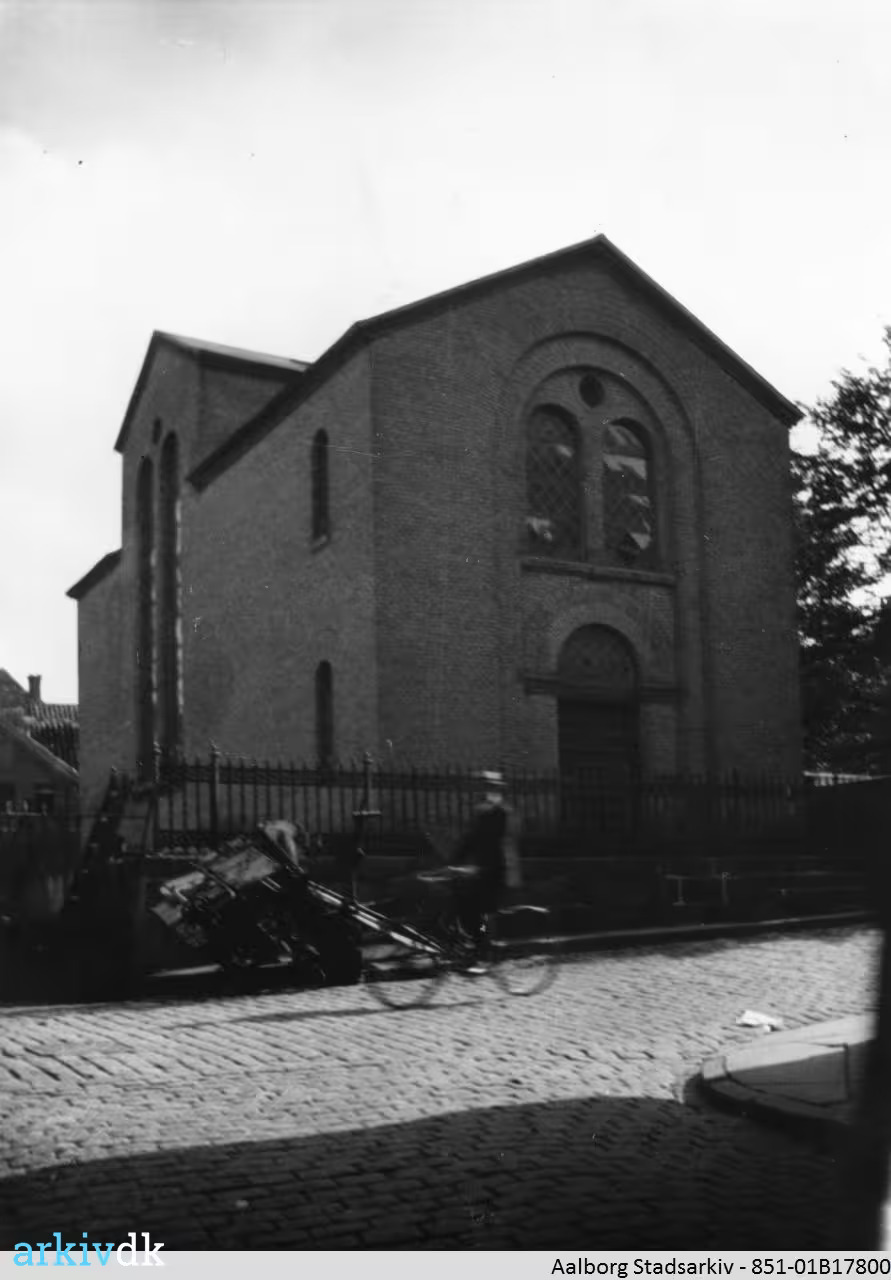
Aalborg Synagogue
Aalborg's synagogue, a gabled brick hall built in 1854 on Gråbrødregade, served a small provincial congregation until services ended in the 1880s. Given to the city in 1924, it housed the municipal archives until 19 March 1945, when a gang of Danish Nazi collaborators wrecked it with explosives and fire in a so-called schalburgtage.
Ada Synagogue
The synagogue of Ada, a town on the Bačka bank of the Tisza, was completed in 1896 for an Orthodox community that had lived there since the eighteenth century. Damaged in the Second World War, when most of Ada's Jews were murdered, it was repaired by survivors and demolished under Communist rule, most sources say in 1973.

Adas Israel Synagogue, Dunajská Streda
The Adas Israel synagogue was built in 1927 by Orthodox members who broke away from the main Jewish community of Dunajská Streda (Dunaszerdahely) after a dispute over the chief rabbinate. Its congregation was deported to Auschwitz in 1944. Briefly renovated and reused after the war, the building was demolished in the early 1950s under Communist rule.
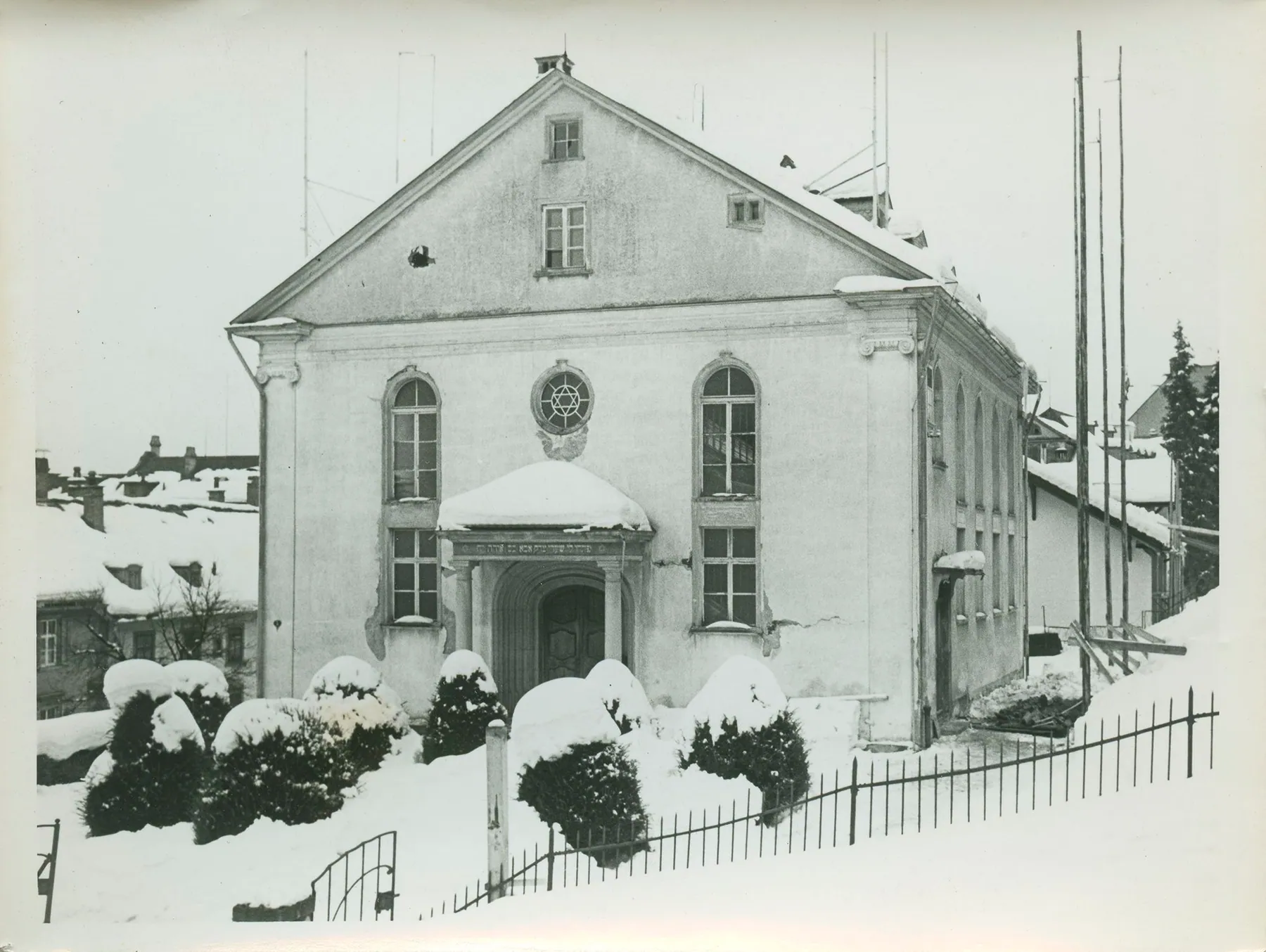
Adass Jisroel Synagogue, St. Gallen
The synagogue of Adass Jisroel, the Orthodox congregation of East European Jews in St. Gallen, was a former factory building at Kapellenstrasse 3 converted by the architect Anton Aberle and consecrated on 11 February 1919. It was given up when the city's two Jewish communities merged in 1952 and demolished in 1952 or 1953.
Adath Ieshurim Synagogue, Bucharest
The Adath Ieshurim synagogue was an Orthodox house of prayer built in 1915 in Bucharest's old Jewish quarter, beside the much older Carpenters' Temple. Both buildings were pulled down in 1984, during the Communist regime's systematization of central Bucharest after the 1977 earthquake. No photograph, address or name of a rabbi has been found.
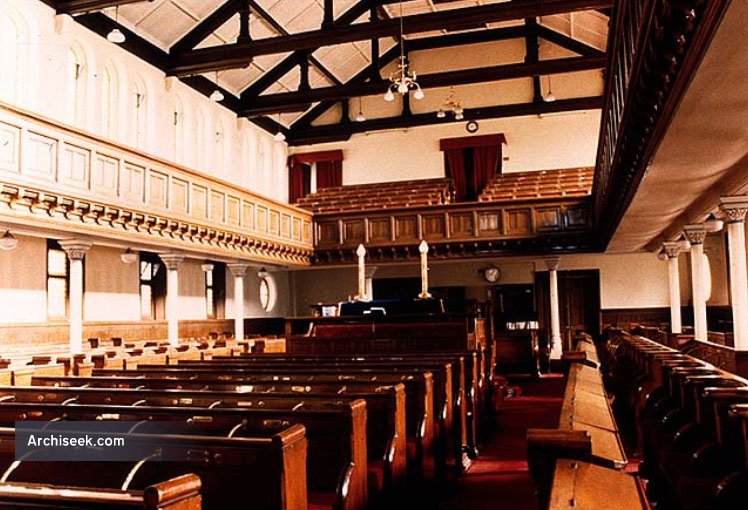
Adelaide Road Synagogue, Dublin
Ireland's first purpose-built synagogue, designed by J. J. O'Callaghan and consecrated by Chief Rabbi Hermann Adler in 1892, served the Dublin Hebrew Congregation for 107 years. After the shrinking congregation merged with Terenure in 1999 it was sold, and everything behind the polychrome brick street front was demolished for an office development.
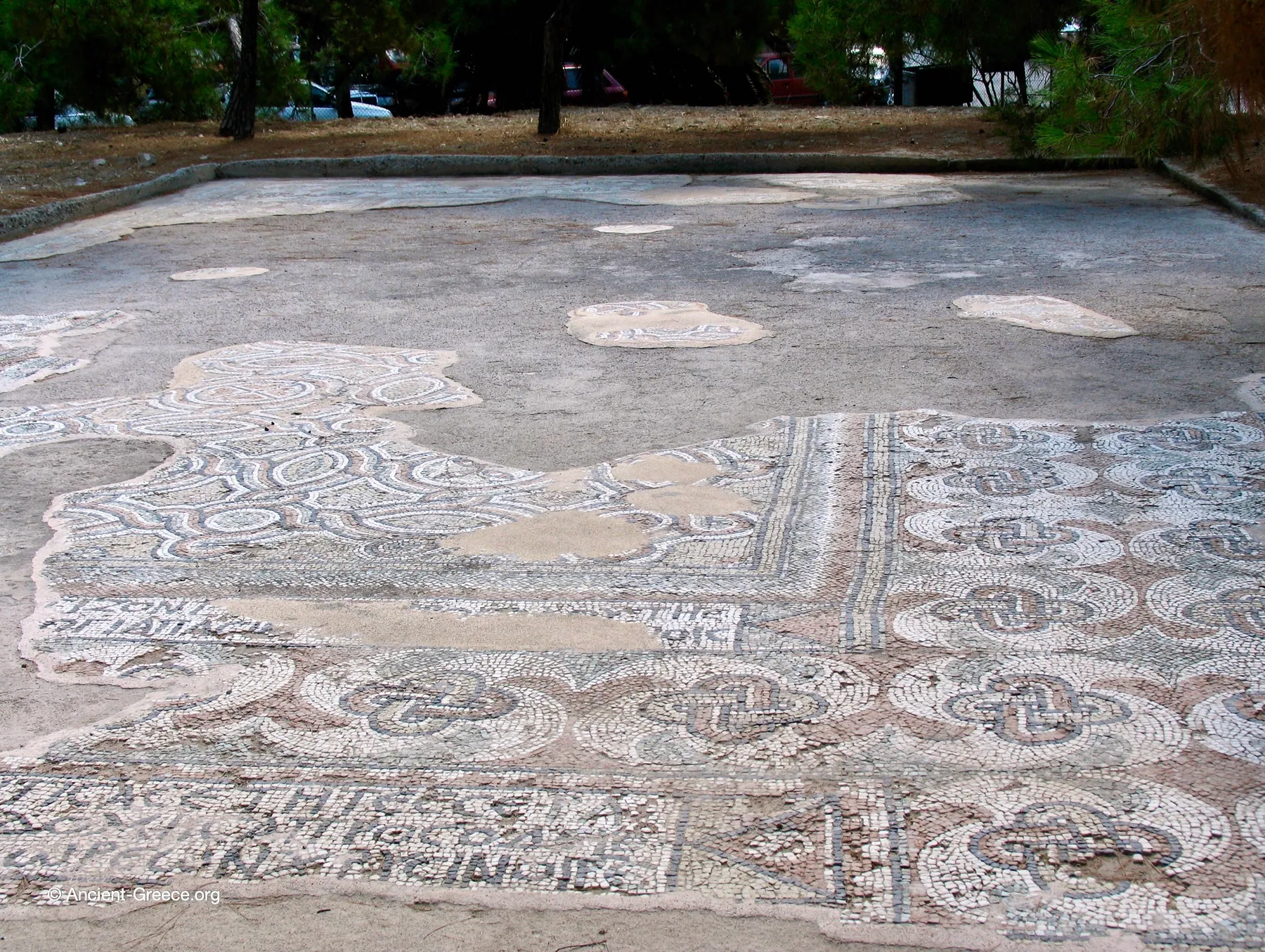
Aegina Synagogue
A fourth-century synagogue beside the ancient harbour of Aegina, built by the archisynagogos Theodoros and floored with a geometric mosaic bearing two Greek donor inscriptions. It went out of use around the seventh century. Only the mosaic survives: lifted in the 1960s, it was relaid in the open at the Kolona archaeological site.

Agoedas Achiem Synagogue, Kipstraat, Rotterdam
The synagogue of Agoedas Achiem, a congregation of Jews from the Russian Empire, occupied the gutted upper floor of the former Frascati building at Kipstraat 76 in central Rotterdam from 1928. It held 180 worshippers and an ark given by Abraham Tuschinski. Nazi German bombing destroyed it on 14 May 1940.
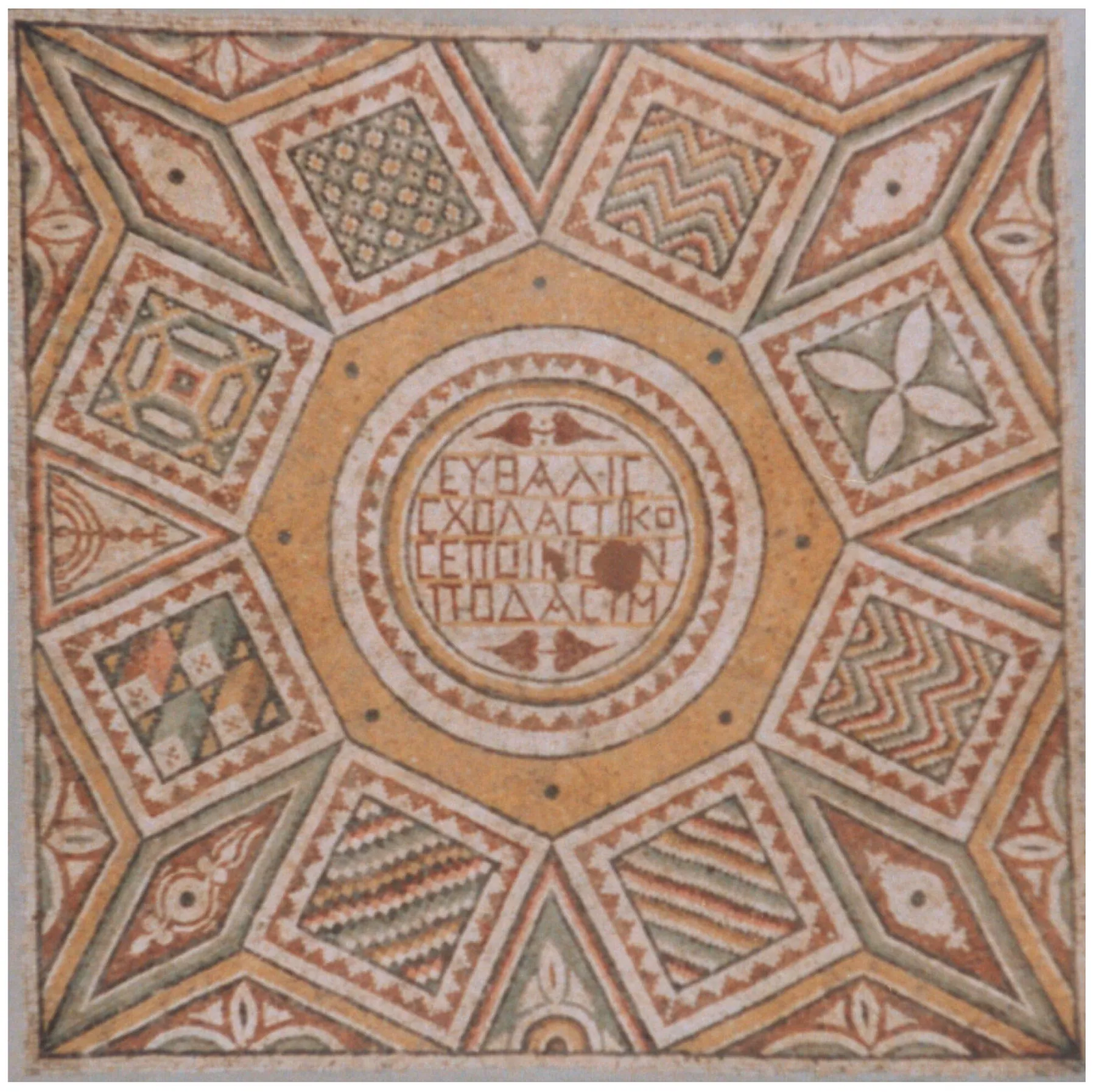
Apamea Synagogue
The synagogue of Apamea on the Orontes, uncovered by Belgian excavators in 1934, is known for its mosaic floor of about 120 square metres, laid in 392 CE and carrying twenty Greek donor inscriptions. Within a generation it was abandoned and the Atrium Church was built over it. Only the excavated floor and panels in museums survive.
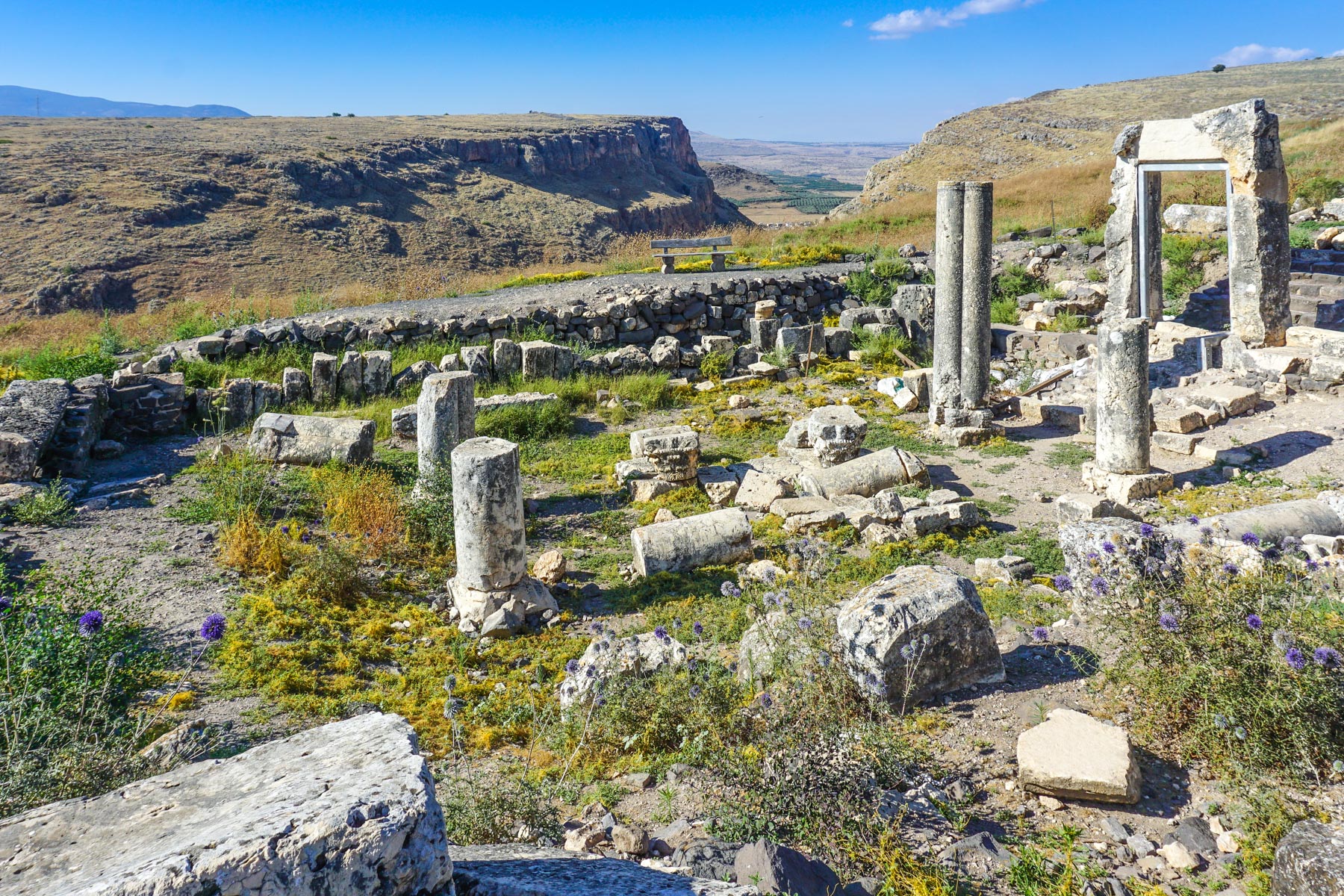
Arbel Synagogue
The synagogue of ancient Arbel, west of the Sea of Galilee, was a two-storey limestone basilica of the fourth century CE, remodelled in the sixth century and probably destroyed by fire in the mid-eighth century, possibly in the earthquake of 749. Today a partly re-erected ruin stands: the monolithic east doorway, several columns, benches and the ark niche.
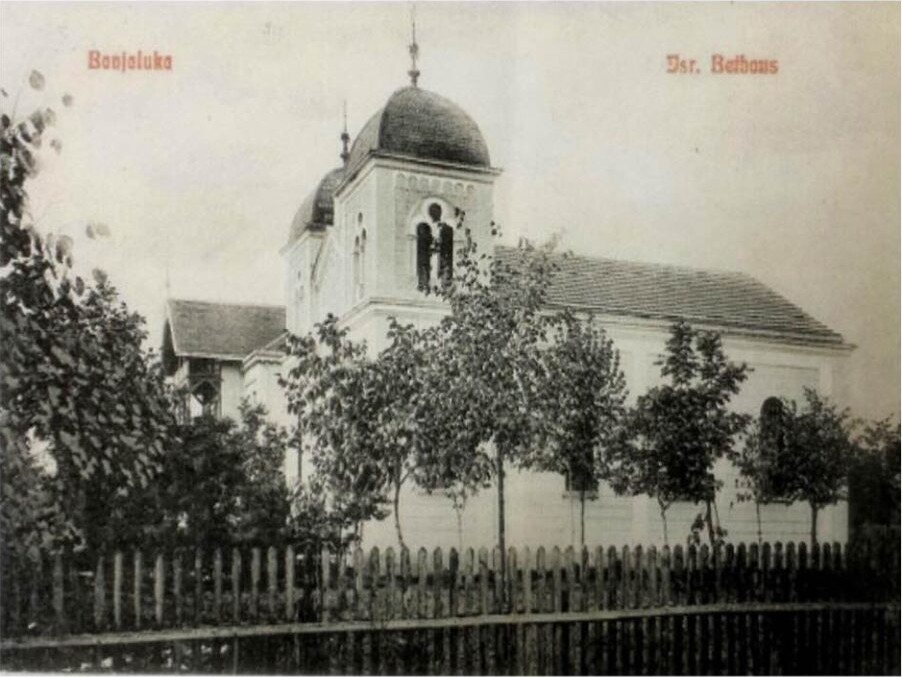
Ashkenazi Synagogue of Banja Luka
The Ashkenazi synagogue of Banja Luka was built between 1900 and 1902 on the Carski drum, today Mladena Stojanovića street, by the congregation of Central European Jews who came with Austro-Hungarian rule. Remembered as a building of exceptional beauty, it served until the Second World War, when it was demolished.
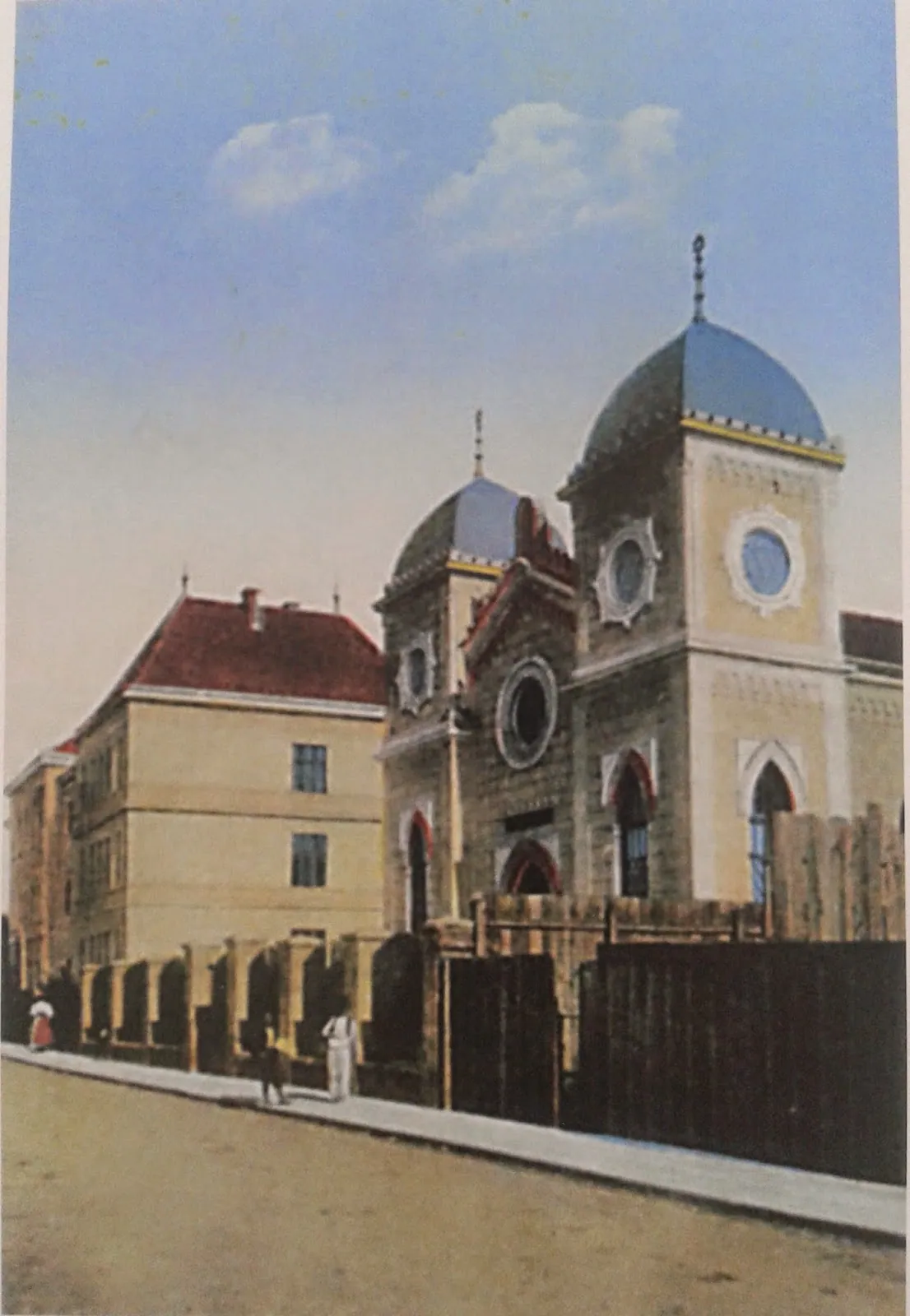
Ashkenazi Synagogue of Tuzla (the 'Templ')
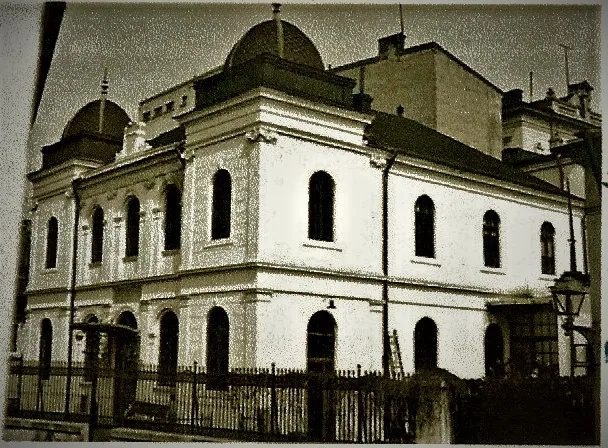
The 'Templ', the synagogue of Tuzla's Ashkenazi community, stood in Klosterska ulica beside the convent school of the Queen of the Holy Rosary. Built in the first years of the twentieth century with twin domed towers, it was wrecked, burned and razed during the Second World War; the date and the perpetrators differ between sources.
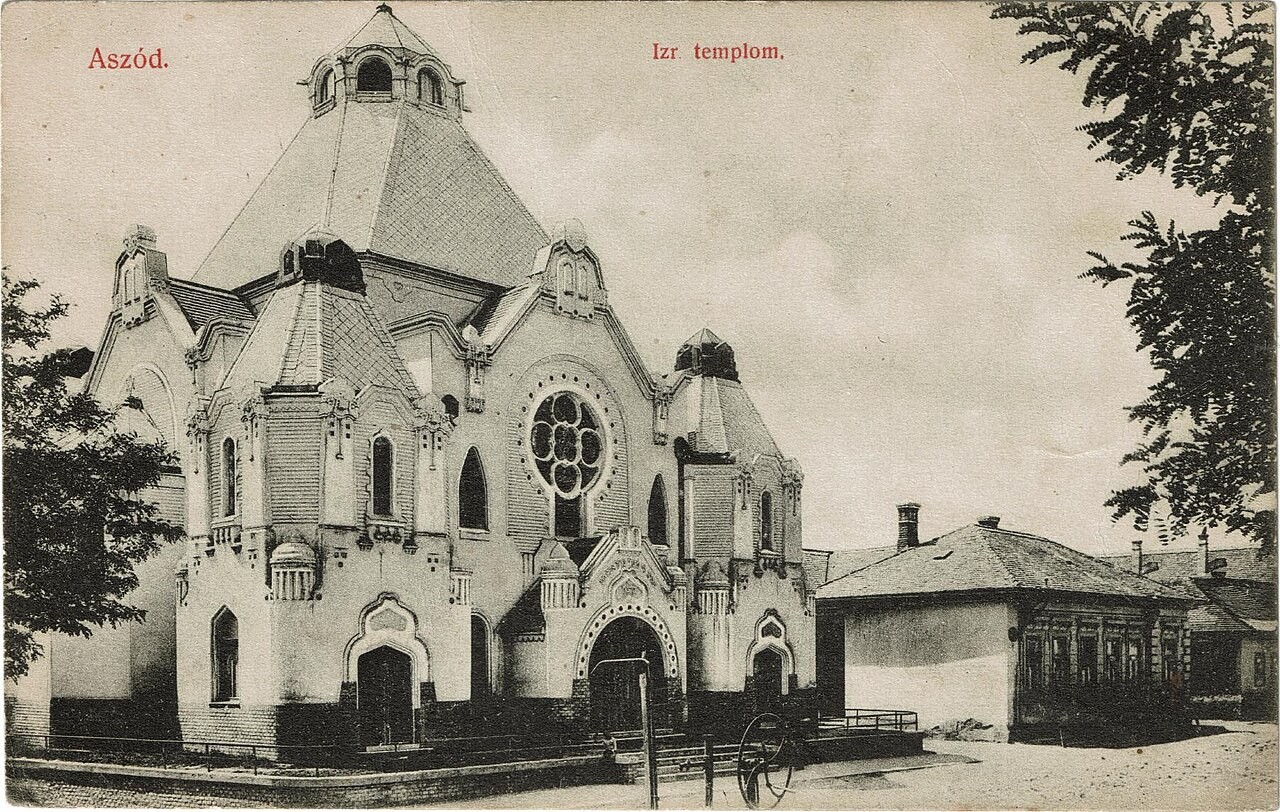
Aszód Synagogue
The Aszód Synagogue, built in 1907–08 to designs by the Budapest architect Miklós Román, was a domed Hungarian Secessionist landmark on the town's old Jewish Street. Its congregation was deported in July 1944. War-damaged and abandoned, it was demolished by the Communists in 1950, and nothing of it remains.
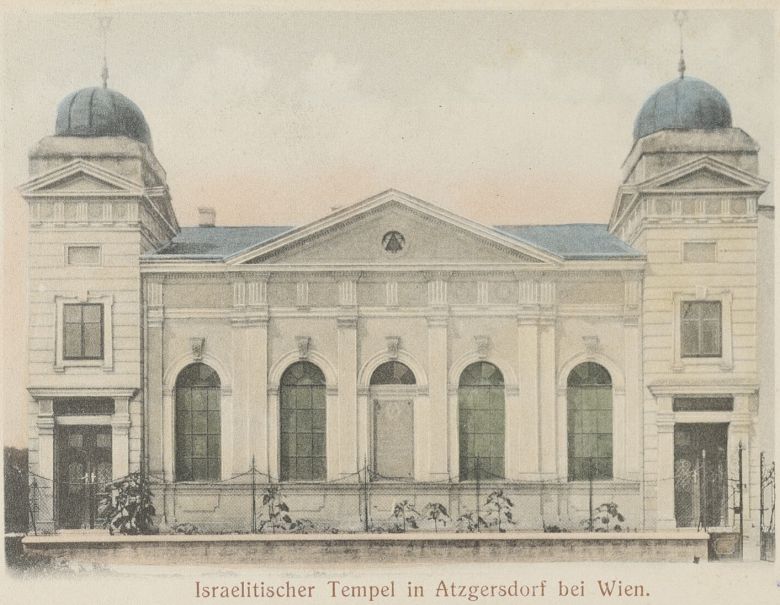
Atzgersdorf Synagogue, Vienna
The Atzgersdorf synagogue, built in 1900 to plans by Richard Esriel at Karlsgasse 390 (today Dirmhirngasse 112), served the Jews of Atzgersdorf and Liesing on the southern edge of Vienna. Local Nazis, the SS and a builder looted it, blew it up and set it on fire on 10 November 1938; the ruin was cleared by 1939.
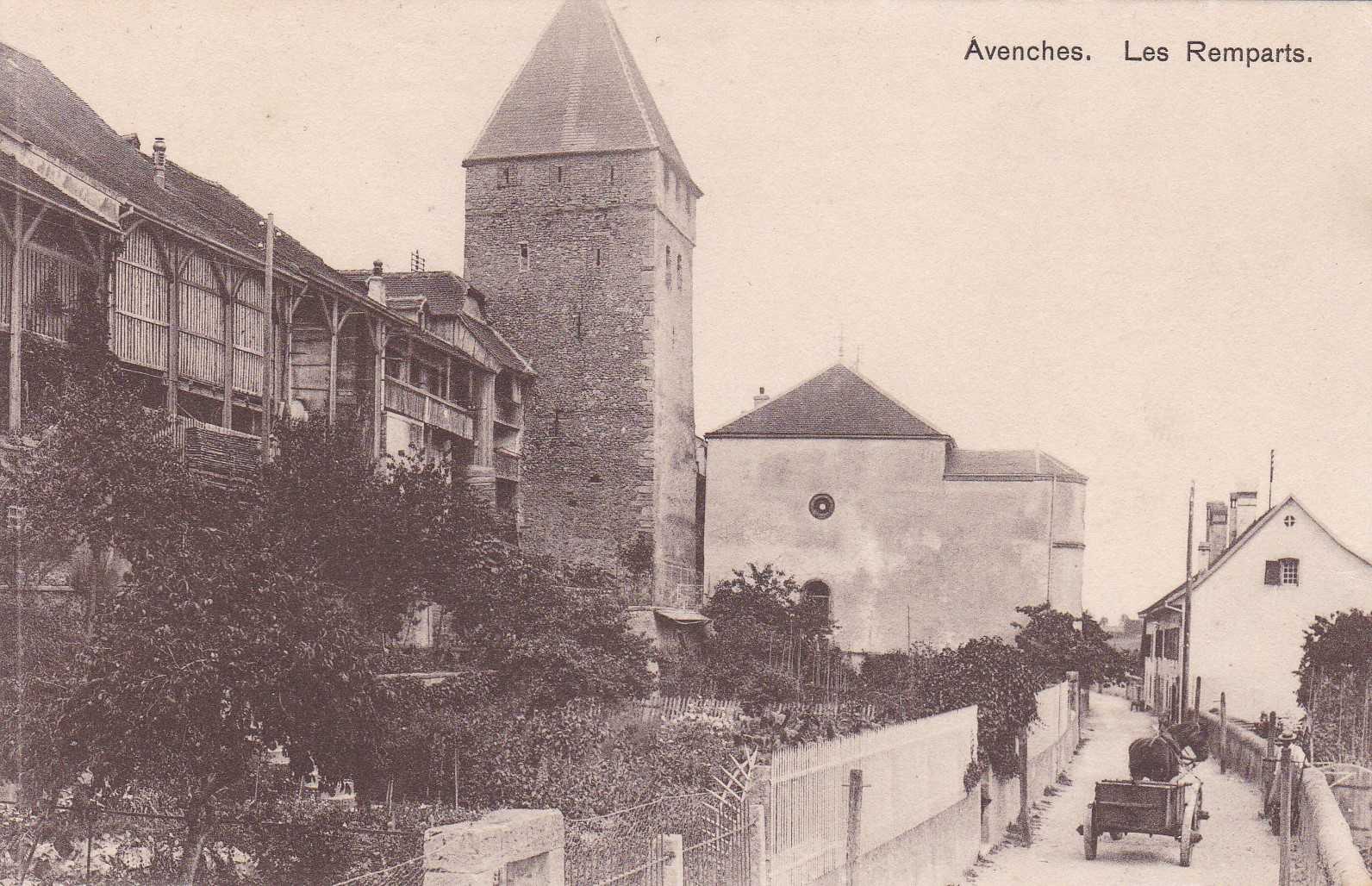
Avenches Synagogue
The synagogue of Avenches in canton Vaud, one of the first in modern Switzerland, was a house outside the town walls bought in 1863 and rebuilt as a 120-seat synagogue, consecrated in 1865. As the horse-dealing Jewish families left for the cities it fell out of use in the 1930s, and it was demolished at the end of 1957.
Balmazújváros Synagogue
Balmazújváros, a market town in Hajdú-Bihar county, had a synagogue built in 1850 for a Jewish community that grew from 44 people in 1840 to about 400 by 1920. The congregation was Orthodox and had 340 members in 1944. The building was gone by the 1980s; when and by whom it was demolished is unknown.
Banská Bystrica Synagogue
The Neolog synagogue of Banská Bystrica, on today's Ulica Janka Kráľa, was built in the second half of the nineteenth century for a community allowed into the mining town only after 1858. Its congregation was almost wiped out in the Holocaust; the war-damaged building served the Communist state as a store until the state demolished it in 1982.
Barca Synagogue (Košice-Barca)
The synagogue of Bárca, now the Košice-Barca borough, served a small rural Jewish community founded in the late eighteenth century. Its Jews were deported to Auschwitz in May 1944. Badly decayed after the war, the building was sold to the Czechoslovak state, which cleared the site and built an airport telecommunications building there.
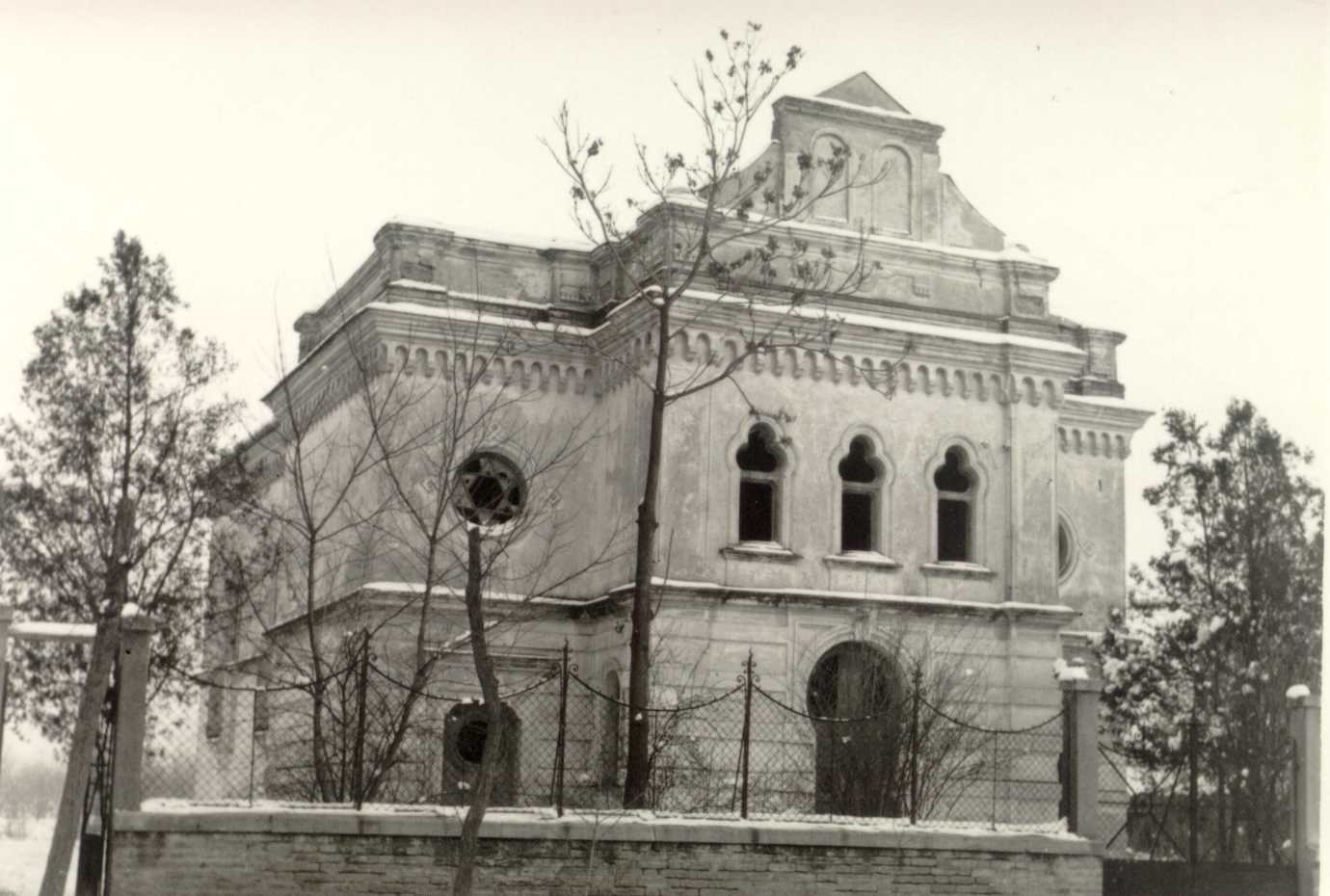
Battonya Synagogue
The synagogue of Battonya, a market town on Hungary's south-eastern border, was built in 1896 for a small Neolog congregation. Its members were deported in 1944. Photographed derelict but intact in 1958, it was pulled down soon afterwards by a private demolition contractor who had bought it from Jewish community leaders.
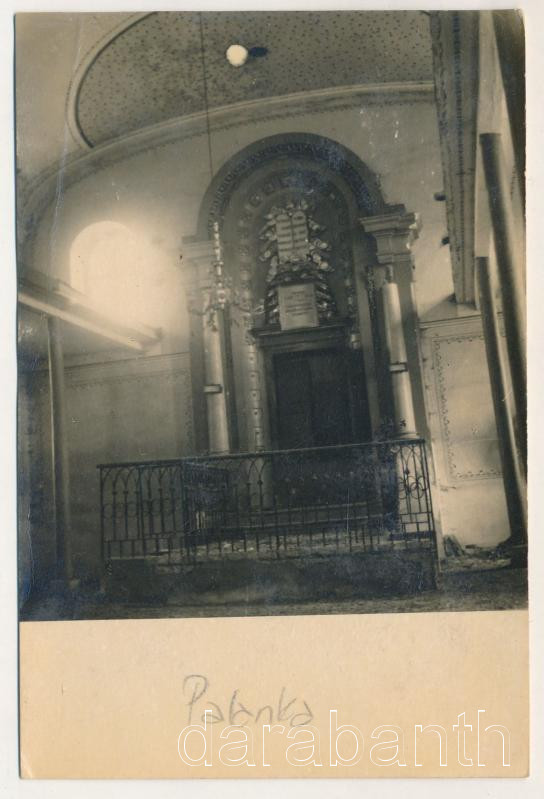
Bačka Palanka Synagogue
Bačka Palanka's synagogue was completed in 1806 or 1807 on the street now called Žarka Zrenjanina, for a Jewish community settled in the town since 1771. Its congregation was destroyed in the Holocaust, and the building was demolished in 1956; who demolished it is not recorded.
Bačka Topola Synagogue
The synagogue of Bačka Topola (Hungarian Topolya), in northern Bačka, was built in 1863 for a Jewish community dating from about 1770. It stood beside the community's rabbinate, which survives as the town library. Its congregation was deported in 1944, and the building was gone by 1950; who pulled it down is not recorded.
Beckov Synagogue
The synagogue of Beckov served an Orthodox community founded by refugees from Moravia in the late seventeenth century, which numbered 348 people in 1828 and 53 by 1940. The congregation was deported in 1942. After the war the synagogue was found destroyed; when, how and by whom is not recorded.
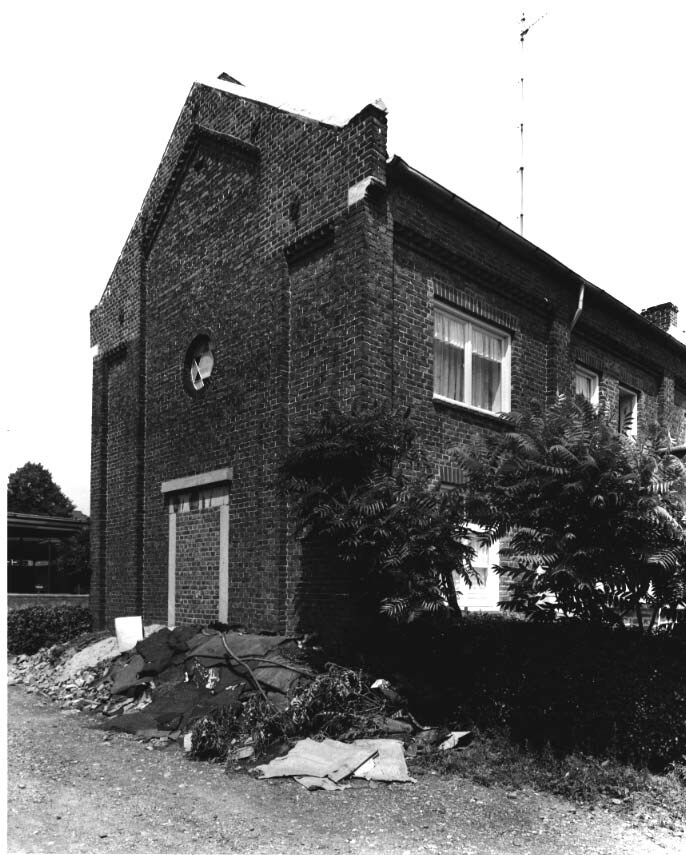
Beek Synagogue
Beek's synagogue, a plain brick hall on the Molenstraat, was inaugurated in August 1866 for a small Limburg congregation. Regular services ended around 1900. Found after the liberation with its furnishings destroyed, it was sold to the municipality in 1954, turned into a house, and later demolished; a plaque now marks its site.
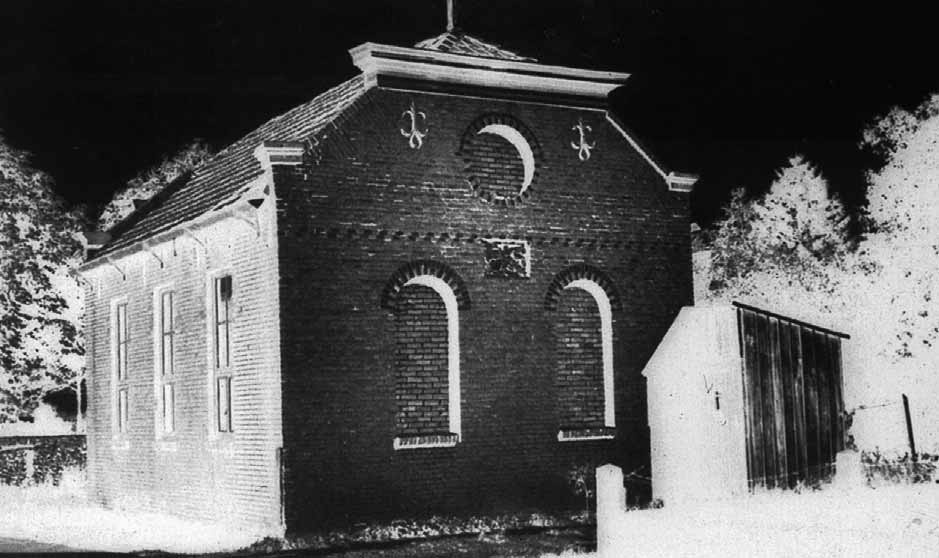
Beilen Synagogue
Beilen's small brick synagogue on the Schoolstraat was consecrated in 1885 for a Drenthe village congregation of about sixty people. Nazi German occupiers looted it and used it as a garage after its members were deported, most of them to their deaths. The municipality acquired the building in 1951, and it was demolished in 1952.

Beit She'arim Synagogue
The synagogue of Beit She'arim, the Galilean town where Rabbi Judah the Prince lived, was a 35 by 15 metre columned hall facing Jerusalem. Its excavators found it burned with the town in the mid-4th century and linked this to the Gallus revolt of 351/352 CE; some scholars favour the 363 earthquake. Only its ashlar foundations survive.
Beltinci Synagogue
Built in 1859 or about 1860, when the Jews of Beltinci left the Lendava community to found their own, this synagogue served one of the largest Jewish settlements in present-day Slovenia. After the community dwindled it fell into ruin, and it was pulled down around 1938 after the municipality demanded its removal. The last Jews were deported in 1944.

Benešov Synagogue
Benešov's synagogue, a plain Classicist hall dated to 1845 and enlarged in the 1880s, served one of the larger Jewish communities of central Bohemia and a centre of the Czech-Jewish movement. Most of its congregation was murdered in 1942. Used afterwards by the Hussite Church, it was demolished under the Communist regime in 1975.
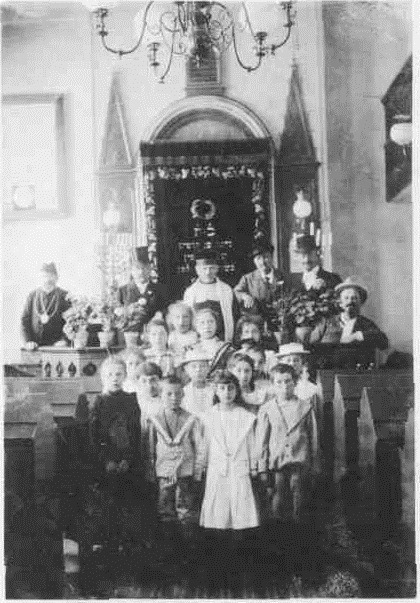
Bern Synagogue on the Anatomiegasse
From 1855 until about 1905 Bern's Jews worshipped in a converted row house on the Innerer Bollwerk, later the Anatomiegasse and today the Genfergasse, once the meeting hall of the Evangelische Gesellschaft. It was consecrated with organ and choir. The congregation sold it for demolition when the Swiss Confederation cleared the row for its new main post office.
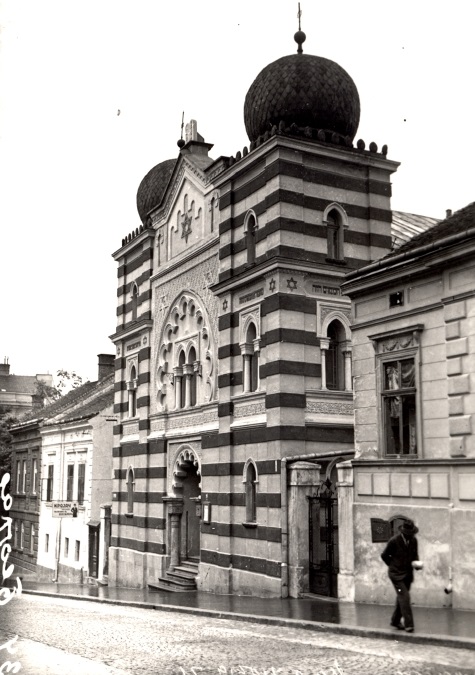
Bet Israel Synagogue, Belgrade
Bet Israel, the main Sephardi synagogue of Belgrade, was consecrated in 1908 in the presence of King Petar I on Cara Uroša Street in the old Jewish quarter of Dorćol. A banded Moorish Revival building by Milan Kapetanović, it was destroyed by retreating Nazi German forces in October 1944 and never rebuilt.
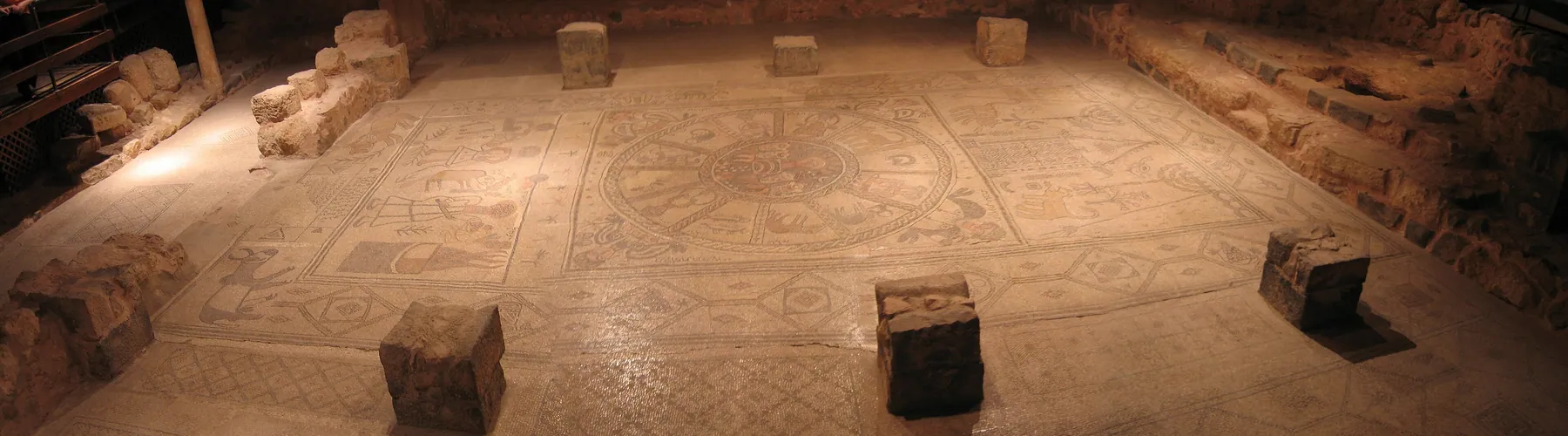
Beth Alpha Synagogue
The Beth Alpha synagogue served a Jewish farming village at the foot of Mount Gilboa. Its mosaic floor, laid under an emperor Justin by the craftsmen Marianos and his son Hanina, shows the Binding of Isaac, a zodiac and the Torah ark. An earthquake brought the building down; the floor survives in a national park.
Beth El Synagogue, Kavala
Beth El, the main synagogue of Kavala's Jewish community, was built in 1885 on Pavlou Mela Street, in the Jewish quarter that grew up around the city's tobacco warehouses. During the Bulgarian occupation of 1941–44 the Bulgarian occupiers wrecked it and used it as a stable. The ruin stood until 1968, when an apartment block replaced it.

Beth Saul Synagogue, Thessaloniki
Beth Saul was a richly appointed synagogue in the garden suburb of Las Campañas (Exohes) in Salonica, completed in 1898 with money from Fakima Modiano in memory of her husband, the banker Saul Modiano. After the fire of 1917 it became the community's main synagogue. Nazi German forces blew it up in 1943.
Beth Shean North Synagogue (possibly Samaritan)
A basalt basilica with an apse on Tel Mastaba, north of Byzantine Beth Shean (Scythopolis), excavated by Nehemiah Tzori in the 1960s. Used in three phases until the early seventh century CE, it had mosaic floors signed by Marianos and his son Hanina and a blessing in Samaritan letters, so it may have been Samaritan rather than Jewish.
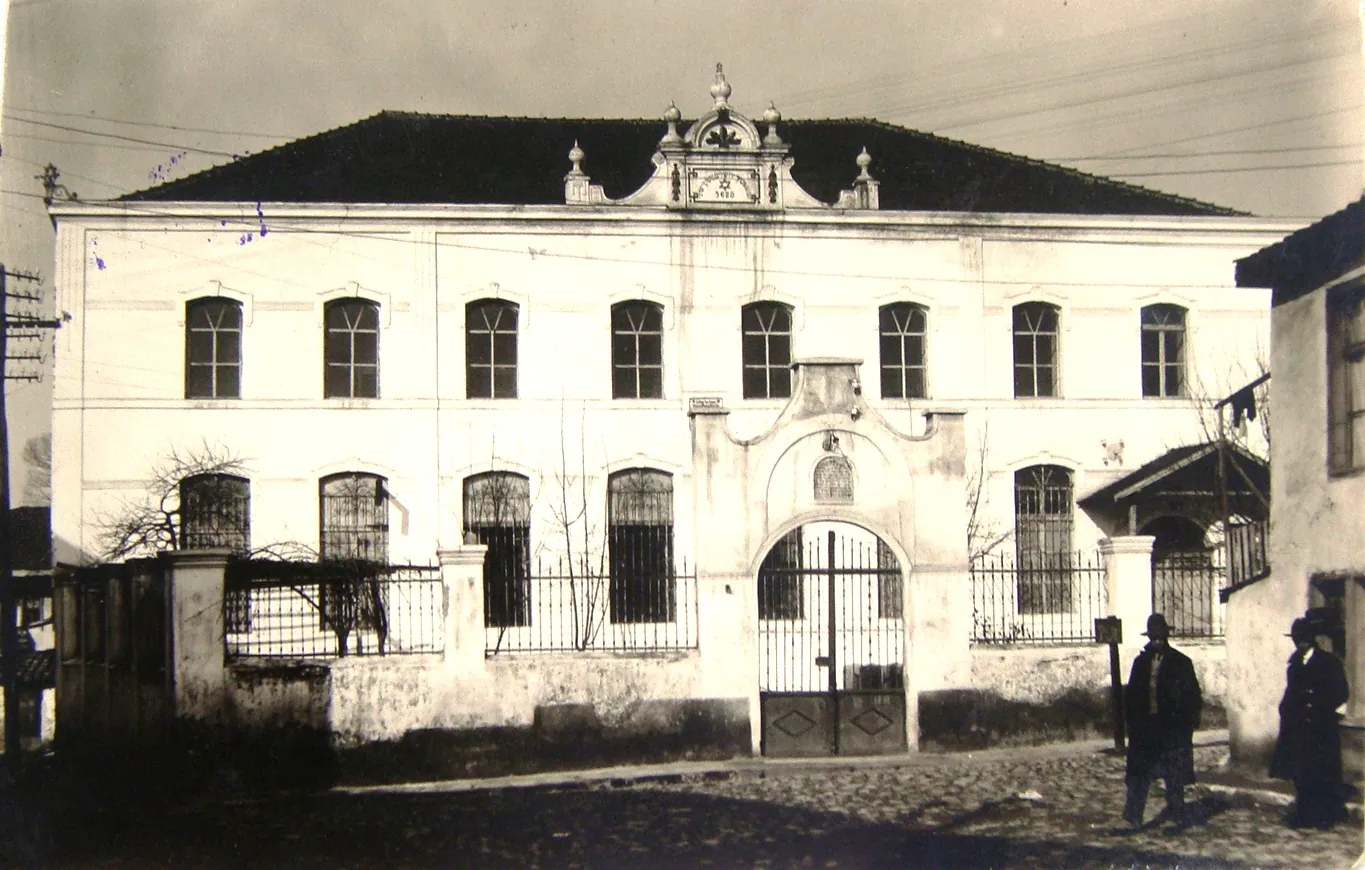
Beth Yaakov Synagogue, Skopje
Beth Yaakov was the main synagogue of Skopje's Jewish quarter, with records from 1749, and the only Jewish house of worship in the city reported to have survived the Second World War, after the Bulgarian authorities deported Skopje's Jews to Treblinka in 1943. It was destroyed in the earthquake of 26 July 1963.
Betlanovce Synagogue
A synagogue in the Spiš village of Betlanovce, Hungarian Betlenfalva, is recorded only in a Slovak register of vanished monuments, with a location pin near the village centre. Its date, appearance and fate are unknown. The village's Jewish cemetery, with gravestones dated 1885 to 1927, survives untended behind the general cemetery.
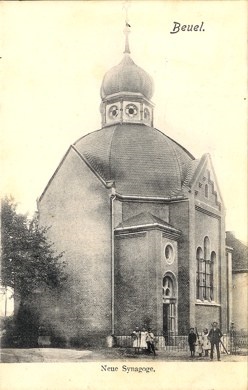
Beuel Synagogue
Beuel’s 1903 synagogue crowned a long-established Jewish community with a distinctive domed sanctuary. Local SA and SS men burned it on 10 November 1938; recovered bricks now form part of the memorial on its site.
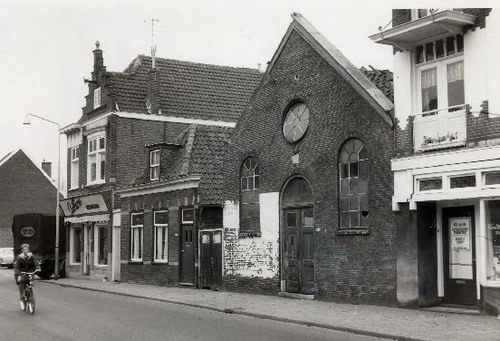
Beverwijk Synagogue
The synagogue on the Breestraat in Beverwijk, a small brick hall with a pointed gable and a round window, was opened in 1864 with help from the town. Its interior was wrecked by the Nazis in 1941, most of the congregation was murdered in the Holocaust, and after the war the building was sold and demolished.
Bečej Synagogue
The synagogue of Bečej (Stari Bečej, Hungarian Óbecse), a town on the Tisza in South Bačka, was completed in 1883. Its community suffered the Hungarian occupation forces' raid of January 1942, in which about 110 local Jews were killed. The building survived the war and was demolished in 1962 by the Communist authorities.

Bečov nad Teplou Synagogue
The Baroque synagogue of Bečov nad Teplou (Petschau), built in 1688 in the walled Jewish street west of the town square, was rebuilt after the town fire of 1760 and gutted by fire in 1904. Abandoned by a dwindling congregation, its above-ground walls were pulled down in July 1932; its massive terrace and cellars survive.
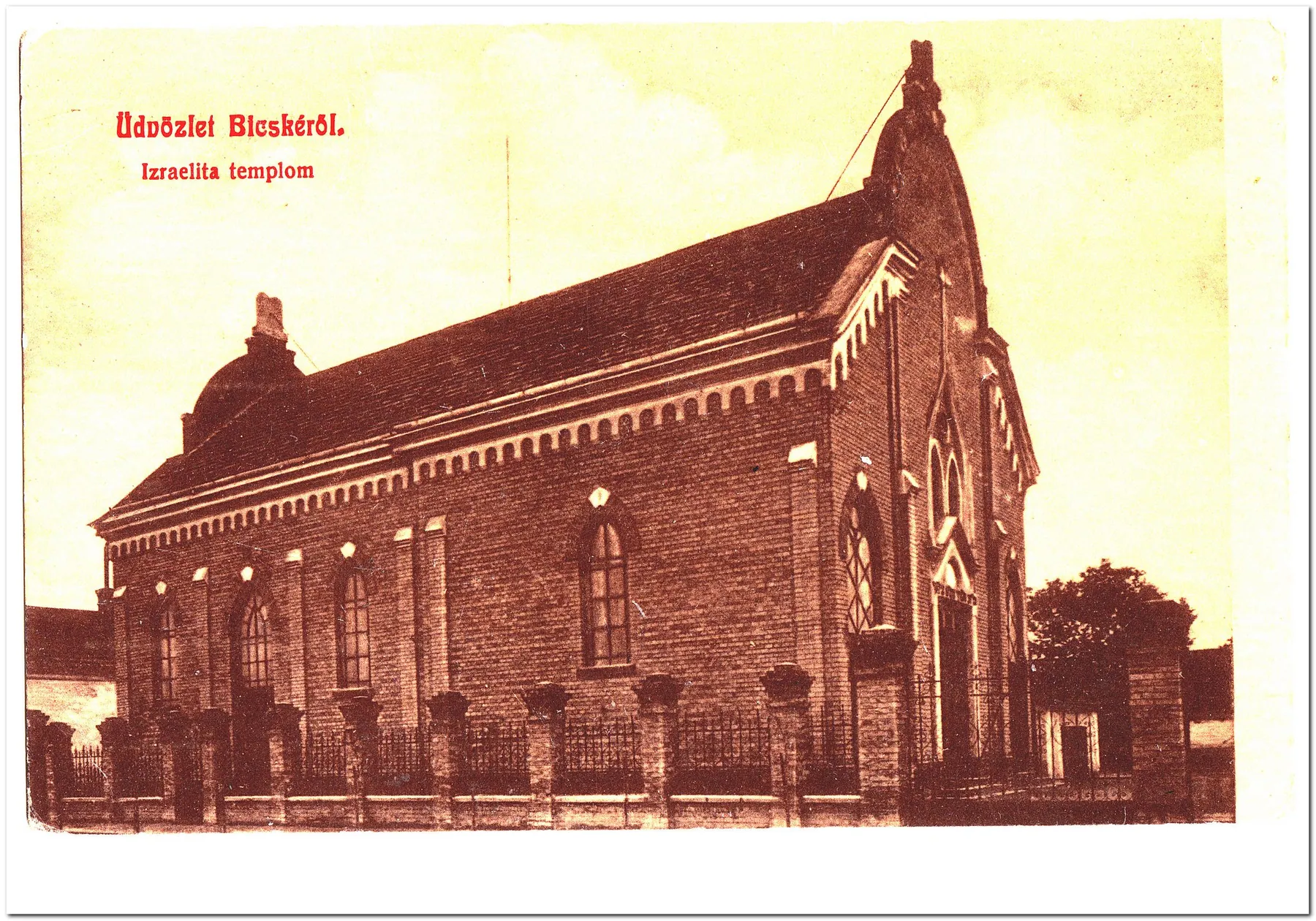
Bicske Synagogue
Bicske's synagogue, a brick hall with pointed-arch windows and a tall curved gable, was built in 1906 on Kastély utca, now Ady Endre utca. Its congregation was deported through Komárom to Auschwitz in June 1944. Photographed derelict in 1949, it was demolished under Communist rule; the year and the demolisher are unknown.

Bihać Synagogue
The Bihać Synagogue, built and consecrated in 1906 on Gajevo šetalište (today Bedem street) in the centre of the town, served the small Sephardi-led Jewish community of north-western Bosnia. The Ustaše looted it in 1941 after expelling the town's Jews; it became an ammunition store in 1942 and was destroyed during the war.
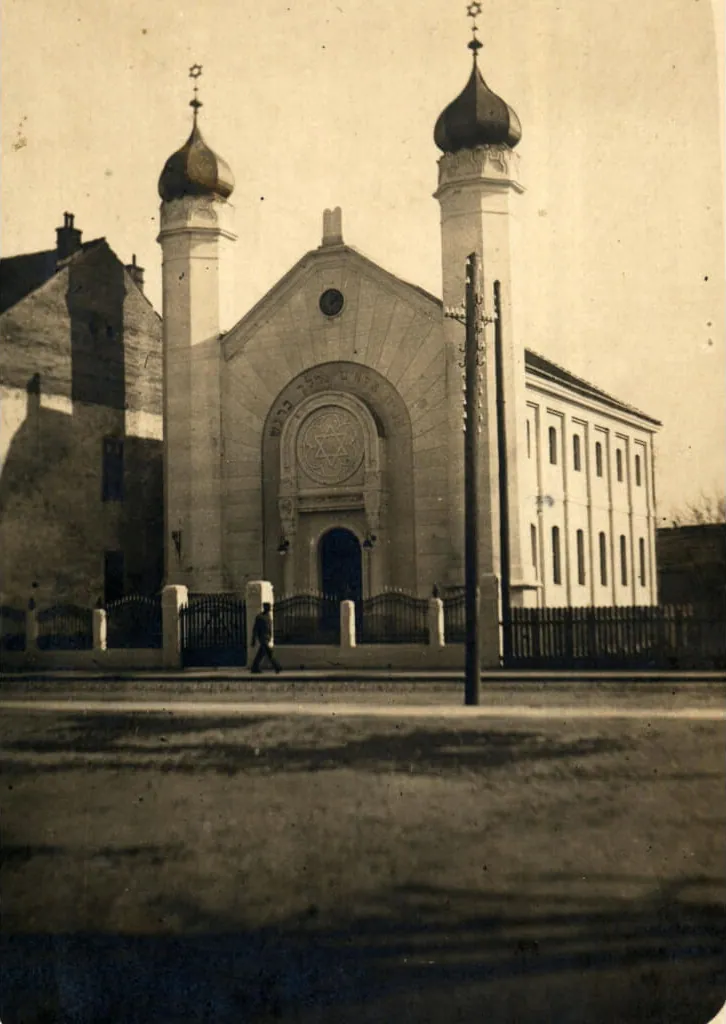
Bijeljina Synagogue
Bijeljina's only synagogue, a twin-towered building with onion domes, was built around 1900 for the town's Sephardi and Ashkenazi Jews together. From 1941 it was looted, wrecked and used as a stable, and most of its congregation was murdered. After the war the ruin was pulled down, according to one local writer by the Communist authorities.
Bleizer (Blinzer) Synagogue, Galați
The Bleizer, or Blinzer, Synagogue was a small neighbourhood prayer house at 1 Războieni Street, the former Israelite Street, on the hill of Galați. Founded by Srul Blinzer in 1847 and rebuilt in 1922, it served about 90 members in 1931. When and by whom it was pulled down is unknown.
Blokzijl Synagogue
The synagogue of Blokzijl occupied a building on the Zuiderstraat that the small Jewish community acquired in 1828, combining prayer hall, school, meeting room and ritual bath. As the community dwindled the building fell into disrepair; it was sold in 1925 and demolished in 1926. The last Jews of Blokzijl were murdered in the Holocaust.
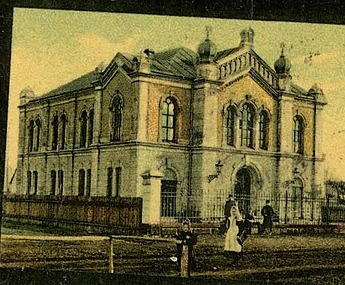
Bohumín Synagogue
The synagogue of Nový Bohumín (German Neu-Oderberg), a twin-towered temple by the Viennese architect Jakob Gartner, served the Jews of this Silesian railway junction from the early 1900s. After the Nazi German occupation in 1939 it was set on fire and its remains cleared by spring 1940; few of its congregation survived.
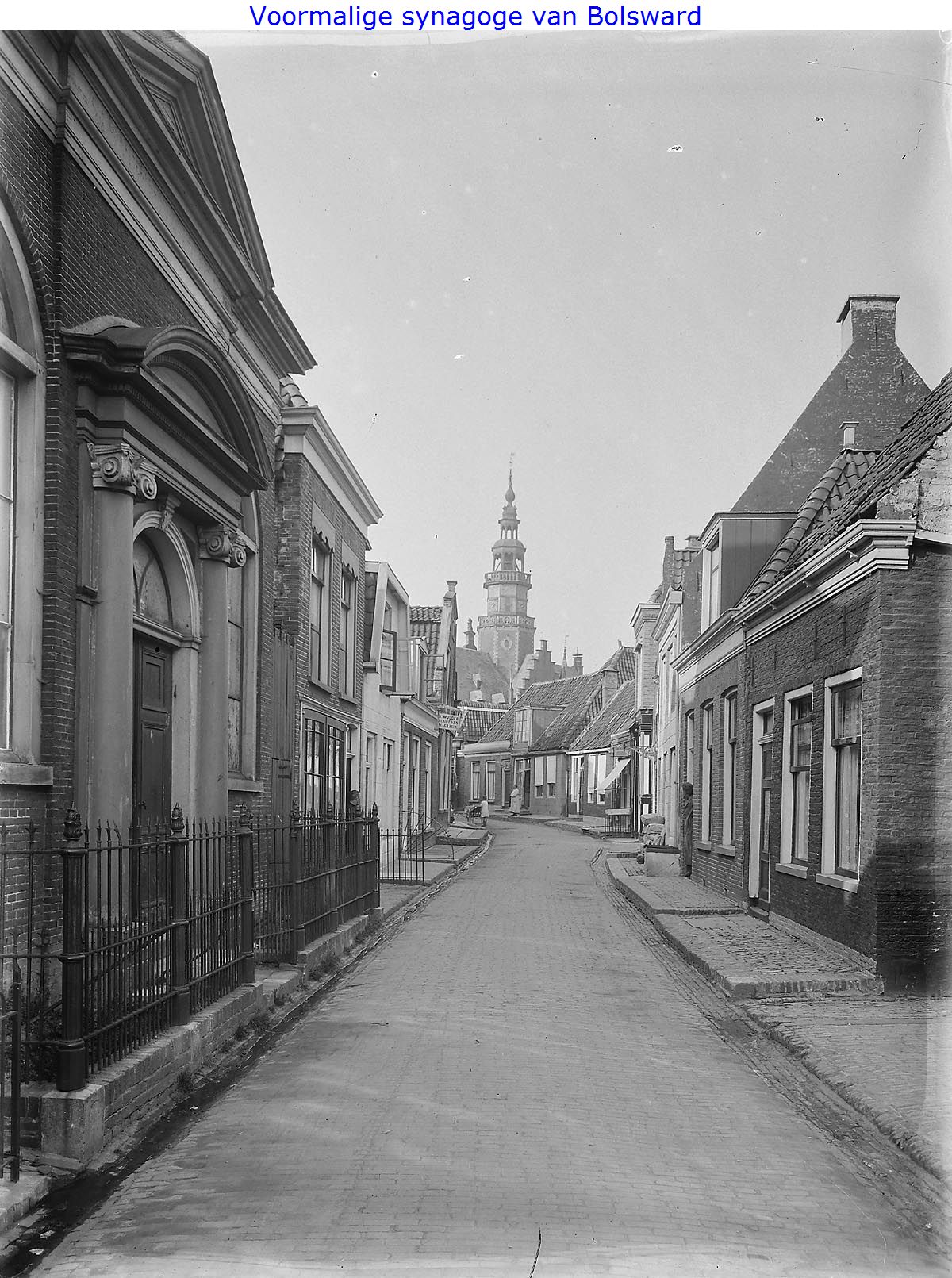
Bolsward Synagogue
Bolsward's synagogue, dedicated in 1840 on the Kleine Kerkstraat on the site of an older prayer house, had a classical doorway with columns and a pediment behind an iron railing. The small Frisian congregation dissolved in 1911 and the building was sold. Its front was demolished in 1941, and the remainder was pulled down around 1991-1993.
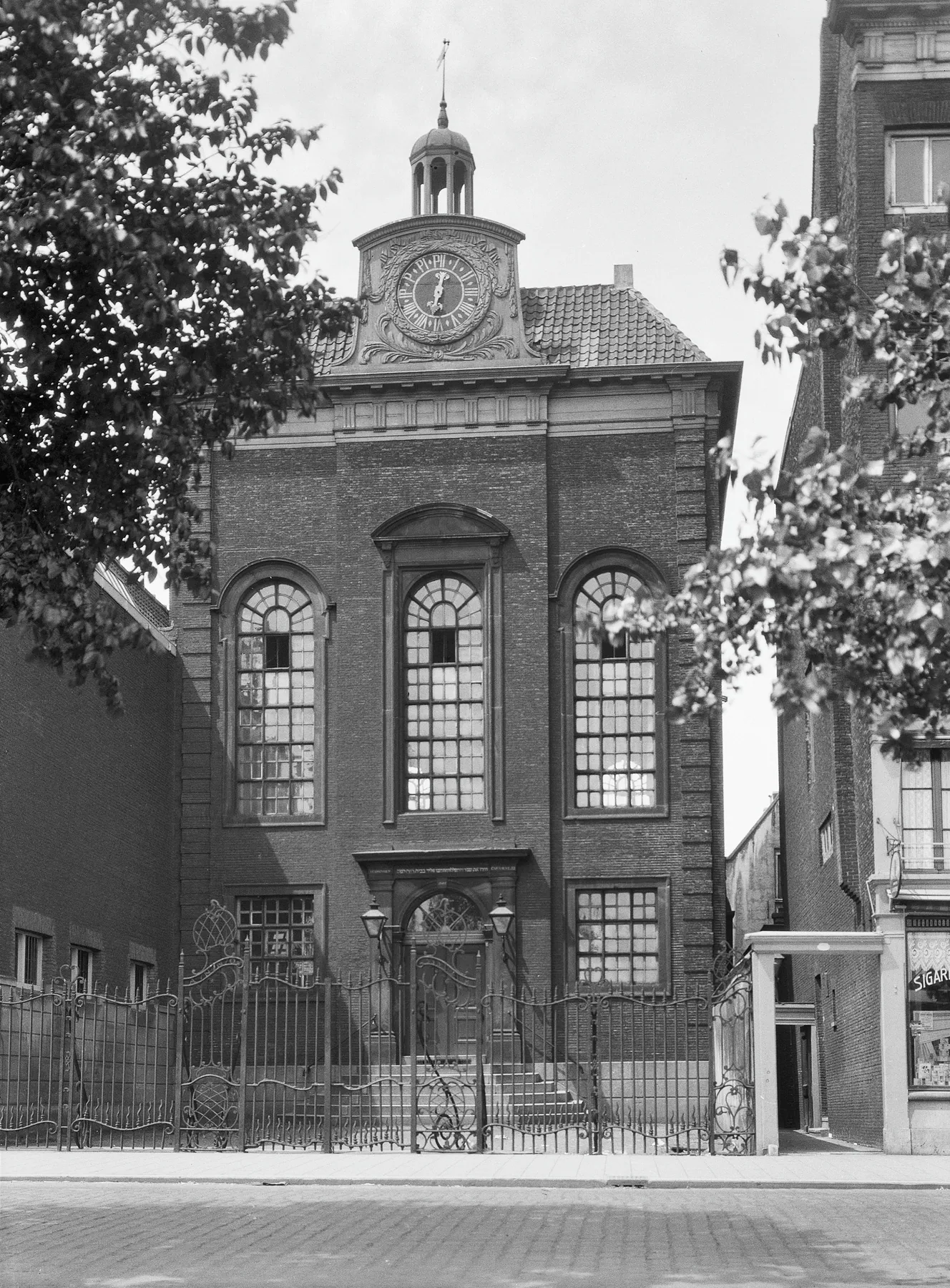
Boompjes Synagogue, Rotterdam
Rotterdam's Boompjes Synagogue, a brick building with a clock-crowned facade on the Maas embankment, was consecrated on 8 July 1725 and long counted among the most beautiful synagogues in Europe. It was destroyed in May 1940 in the fighting for Rotterdam and the Nazi bombing of the city on 14 May.
Borger Synagogue
The synagogue on the Koesteeg in Borger, a village in south-east Drenthe, was consecrated in 1887 for a small rural congregation that was independent only from 1888 to 1925. Already dilapidated, it was sold in 1915 and was demolished in 1960; who pulled it down is not recorded.
Borsec Wooden Synagogue
Borsec (Hungarian Borszék), a mineral-water resort in the Eastern Carpathians, had a wooden synagogue that was destroyed in 1914. No source found says how it was lost or when it was built. The community put up a new synagogue in its place in 1922, whose own later fate is unknown.
Borský Svätý Jur Synagogue
The synagogue of Borský Svätý Jur, a farming village in the Záhorie lowland of western Slovakia, stood on the plot of house no. 375. It was probably completed in 1897 and served a small rural Jewish community that had about 200 members in the mid-nineteenth century. The building was demolished in 1947.
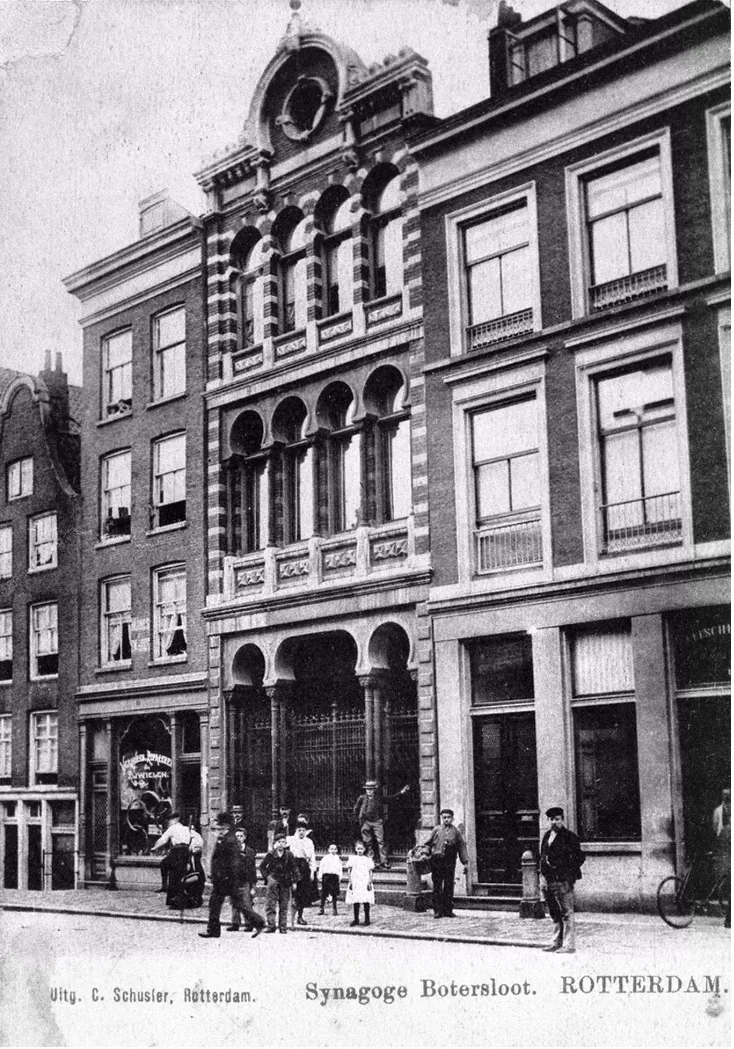
Botersloot Synagogue, Rotterdam
The Botersloot Synagogue, opened in 1891 in Rotterdam's old centre and enlarged in 1938–39 to become the community's main synagogue, housed the rabbinate and archive. It was wrecked in the Nazi bombing of Rotterdam on 14 May 1940; its repairable ruin was later demolished, and the community it served was almost wiped out in the Holocaust.

Bova Marina Synagogue
A late Roman synagogue stood at San Pasquale, on the Ionian coast at Bova Marina, from the 4th century CE and was rebuilt with an apse in the 6th. Its mosaic floor shows a menorah with a shofar, palm branch and citron. Around 600 CE the settlement burned and was abandoned; no source names who was responsible.

Boxmeer Synagogue
The synagogue of Boxmeer, a small rendered hall in the street then called Manenbiest, was taken into use in 1865 by a village congregation that had become independent in 1858. Its Jews were deported in November 1942 and none returned. The building was damaged in acts of war and demolished in 1944.
Bošáca Synagogue
Bošáca, a large Slovak village in the White Carpathian foothills north of Nové Mesto nad Váhom, had a synagogue by 1851 and close to 300 Jewish residents in the mid-nineteenth century. Its loss is known only from a single unreferenced list entry; when and by whom it was destroyed is unknown.
Brezovica nad Torysou Wooden Synagogue
The synagogue of Brezovica, a market township in the Torysa valley, was a timber building of about 1870 and is described as the last wooden synagogue still standing in Slovakia when the engineer Eugen Bárkány recorded it in the 1960s. Its congregation was deported in 1942; the building was later demolished, and who pulled it down is not recorded.
Brezová pod Bradlom Synagogue
The synagogue of Brezová pod Bradlom (Hungarian Berezó, German Birkenhain), a market town in western Slovakia, is recorded as built in 1800. It served a Jewish community whose cemetery holds gravestones from 1834 to 1942. The building was cleared away in about the 1980s, under Communist rule; who demolished it is not recorded.
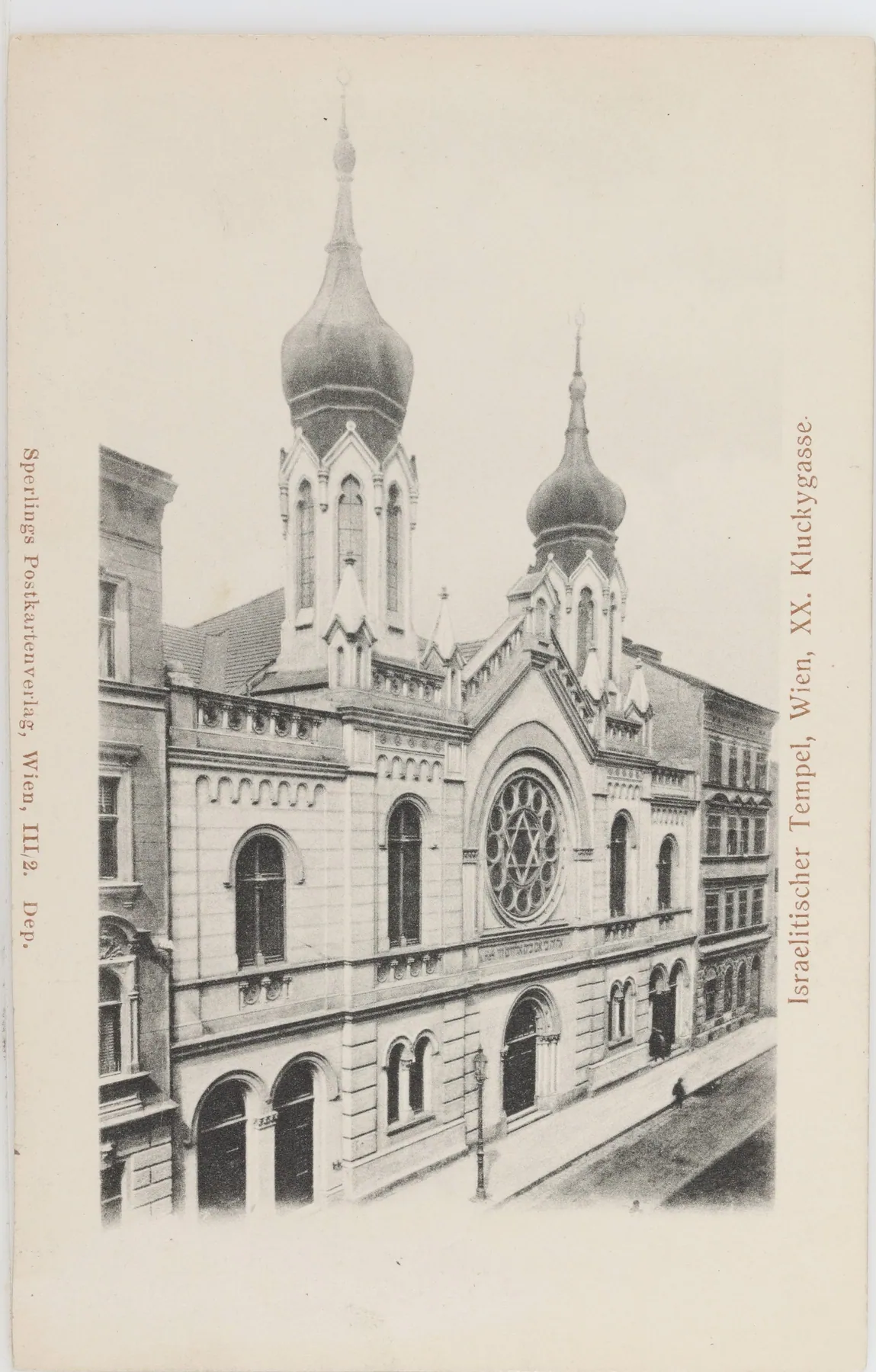
Brigittenauer Tempel (Kluckygasse Synagogue), Vienna
The Brigittenauer Tempel was a twin-towered association synagogue at Kluckygasse 11 in Vienna's working-class 20th district. Designed by Jakob Gartner and consecrated on 20 September 1900, it seated about 600 worshippers until the Nazis set it on fire during the November pogrom on 10 November 1938.
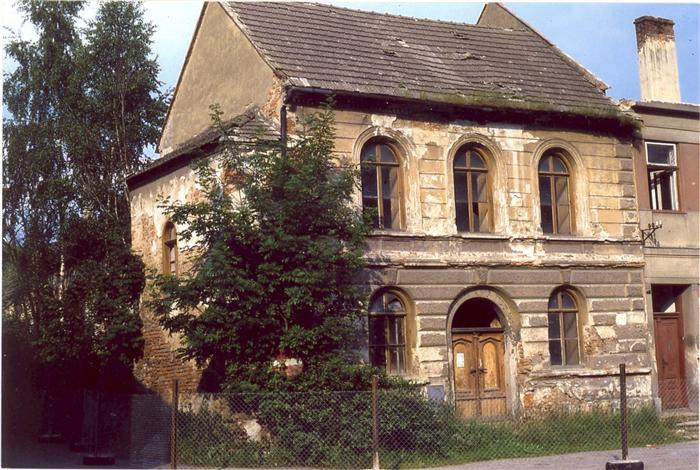
Brtnice Synagogue
The synagogue of Brtnice (Pirnitz), in the Jewish quarter north of the square, dated from the seventeenth century and was enlarged in the 1880s. Emptied after the Nazi occupation, when its stone Ten Commandments tablets were destroyed, it served as a store and was demolished with the rest of the quarter in 1988 for a department store.

Brummen Synagogue
The synagogue of Brummen, a small brick building on the corner of Tuinstraat and Primulastraat, was consecrated in August 1889 for a village congregation of about forty people. It fell out of use early in the twentieth century, was sold after 1916, later served as a public bathhouse and was demolished in 1962.
Brčko Synagogue
The synagogue of Brčko, a Sava river town in northern Bosnia, was built in 1881 for a small Sephardic community. On 20 May 1941 Nazi German soldiers set it on fire after showing an antisemitic film, and it burned to the ground. The town's Jews were murdered by the Ustaše that December.
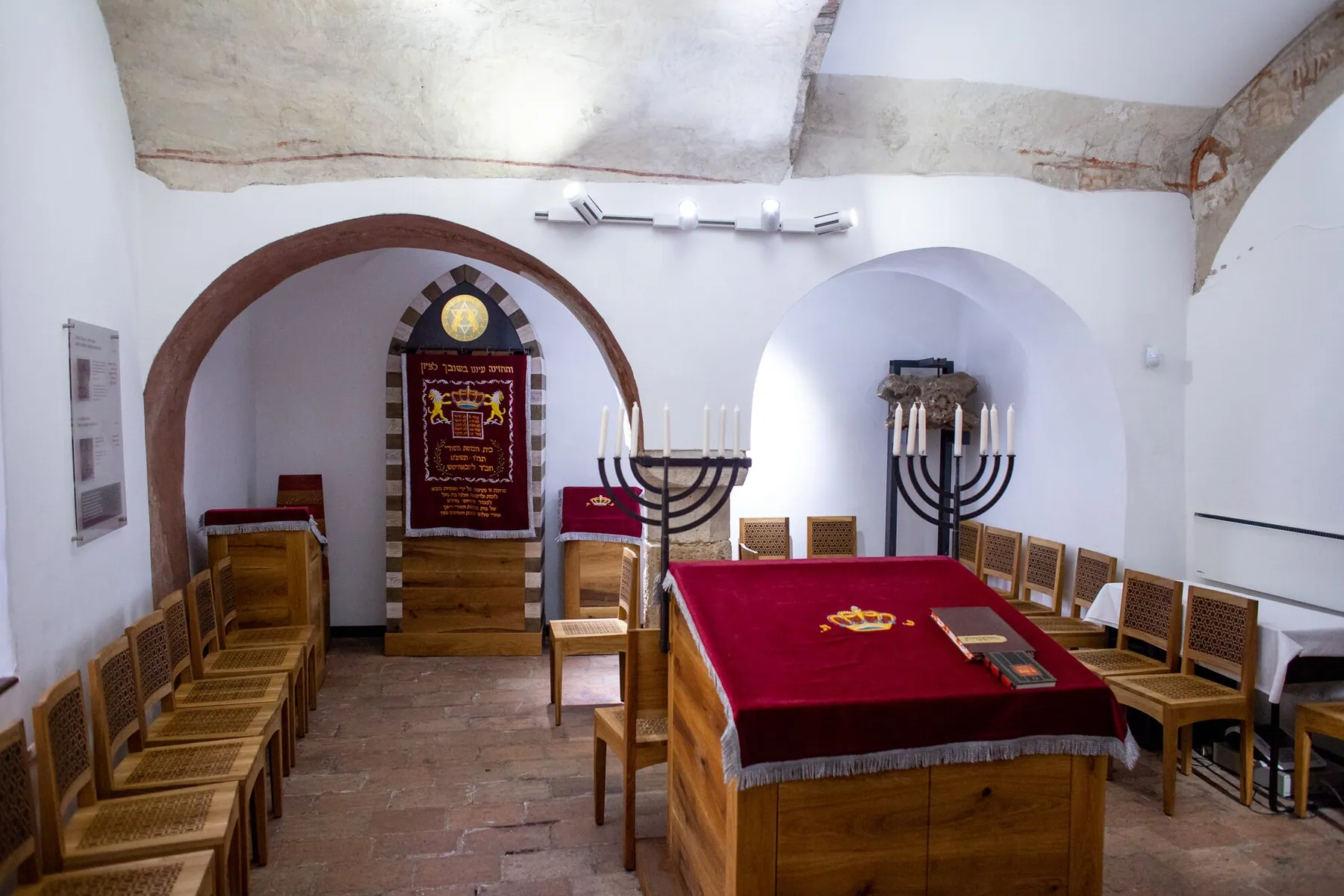
Buda Small Synagogue (Medieval Jewish Prayer House), Budapest
A small vaulted prayer room on the ground floor of a medieval house at Táncsics Mihály utca 26 in Buda Castle, used by Buda's Jews until the community was destroyed in the siege of 1686. Rediscovered during postwar restoration in 1964, the original Gothic room, reconstructed, is now a museum and again a working synagogue.

Buda Synagogue on Öntőház Street, Budapest
The Neolog main synagogue of the Buda Jewish community, built in 1865–66 to Ignác Knabe's Moorish design below Castle Hill. Its interior was gutted by fire in 1942, the building was wrecked in the fighting of the Siege of Budapest in 1944–45, and the ruin was pulled down by the authorities after the war.
Budafok Synagogue, Budapest
Budafok, now part of Budapest's District XXII, had a synagogue that Anikó Gazda's survey of 1980-87 recorded as demolished, together with a second, smaller house of prayer. Its construction date, appearance, address and the date and circumstances of its demolition are unknown.
Butchers' Synagogue, Mikulov
The Butchers' Synagogue, the Kazowim-Schul, was one of about a dozen synagogues of Nikolsburg, the seat of the Moravian chief rabbis. Built of stone around 1750 in the Jewish gardens by the former Spa Square, it fell out of use as the community shrank and was pulled down before 1872 after years without maintenance.
Buteni Synagogue
Buteni, a market village in Arad county, had a Hungarian-speaking Jewish community that built a first synagogue in 1863 and later a second, larger one. With almost no Jews left after the war, the second synagogue was sold and demolished, on an order of the Jewish Federation according to one witness; the date is disputed.

Bzenec Synagogue
Bzenec's twin-towered synagogue, begun in 1863 to plans attributed to Ludwig Förster, served one of Moravia's oldest Jewish communities. Local Nazis wrecked it in June 1941 and it was closed that October; its congregation was deported in 1943. Damaged in a failed conversion into a culture house in 1957, it was demolished around 1960.
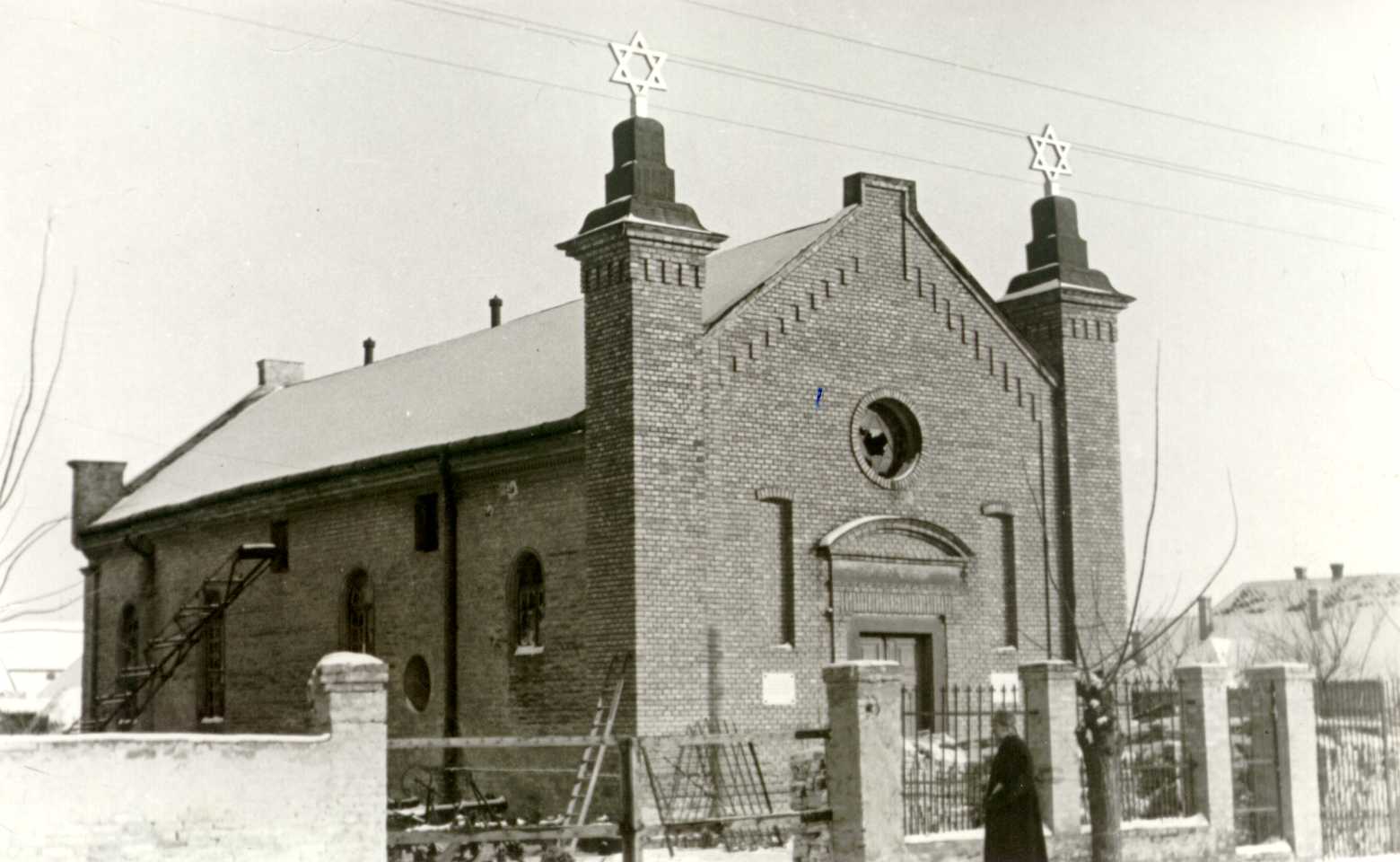
Bácsalmás Synagogue
Bácsalmás's brick synagogue, built in 1888 for a small status quo ante congregation, had twin turrets topped with Stars of David. In June 1944 the streets around it became a ghetto and collection camp. The emptied building was sold and dismantled around 1958-59, and its bricks were carted to Mélykút to build a Catholic church.
Bátaszék Synagogue
Bátaszék's only synagogue was built in 1862 from the voluntary donations of a small congregation founded in 1851. After the town's Jews were deported in 1944 only about twenty people returned. The empty building was demolished in 1949, in the first years of Communist rule; who pulled it down is not recorded.
Băcești Synagogue
The synagogue of Băcești, a small market town in Vaslui County in Romanian Moldavia, served a Jewish community of several hundred people in the early twentieth century. According to I. Kara's list of interwar Romanian synagogues, it was set on fire by retreating Nazi German troops in 1944. No photograph or description of it was found.
Cahal Cicu Synagogue (Spanish Small Temple), Bucharest
The Cahal Cicu, or Spanish Small Temple, was a brick synagogue of the Sephardic rite completed in 1846 at 37 Banu Mărăcine Street, Bucharest. Legionnaires (Iron Guard) devastated it in 1941; it was rebuilt after the war and repaired after the 1977 earthquake, and the Communist authorities demolished it in 1986 for Union Boulevard.
Cahane Synagogue, Iași
The Cahane (Kahane) Synagogue stood on Ștefan cel Mare Boulevard in central Iași, once one of Europe's great Jewish cities. Remembered as a large synagogue with a big courtyard where weddings were held, it outlived most of the town's prayer houses but was demolished under Communist rule during urban systematization; apartment blocks replaced it.
Callinicum Synagogue
The synagogue of Callinicum, a Roman town on the Euphrates at present-day Raqqa, is known only from texts. In 388 CE Christians incited by the local bishop burned it. Emperor Theodosius I ordered the bishop to rebuild it, but Ambrose of Milan pressed him until the order was withdrawn. No remains have been identified.
Capernaum Synagogue (White Synagogue)
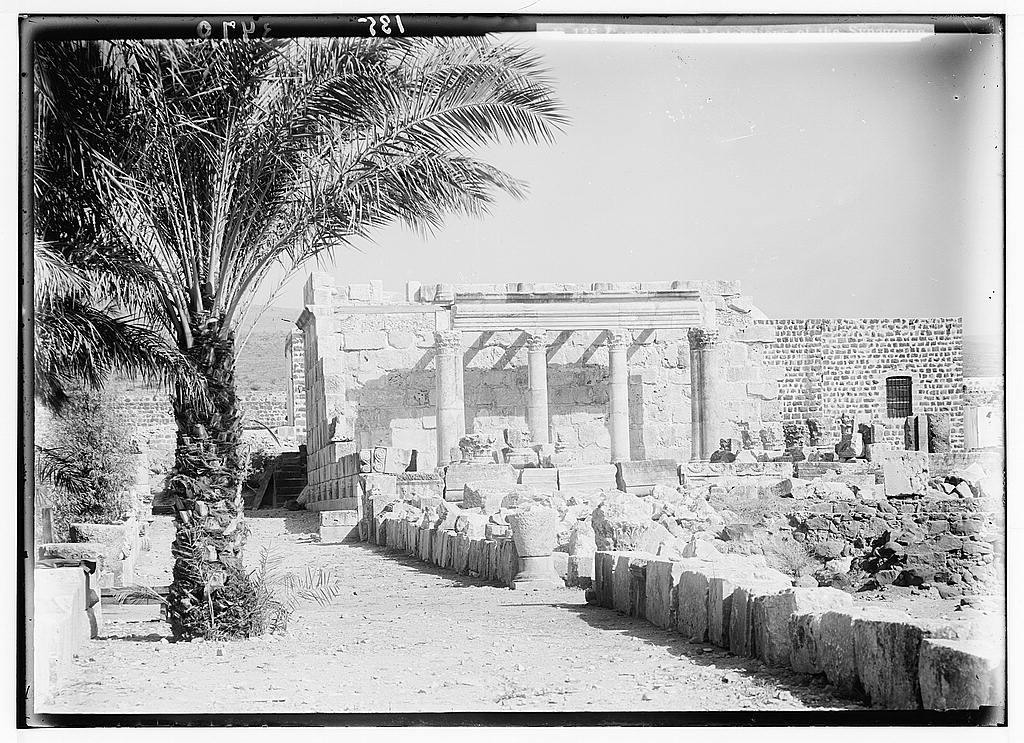
The White Synagogue of Capernaum, on the north shore of the Sea of Galilee, is a limestone basilica built over basalt remains of an earlier building. Scholars date it anywhere from the 2nd to the 6th century CE. It was ruined, probably in the 7th century, and Franciscans partly re-erected its walls and colonnade from 1926 onward.
Carei Orthodox Synagogue
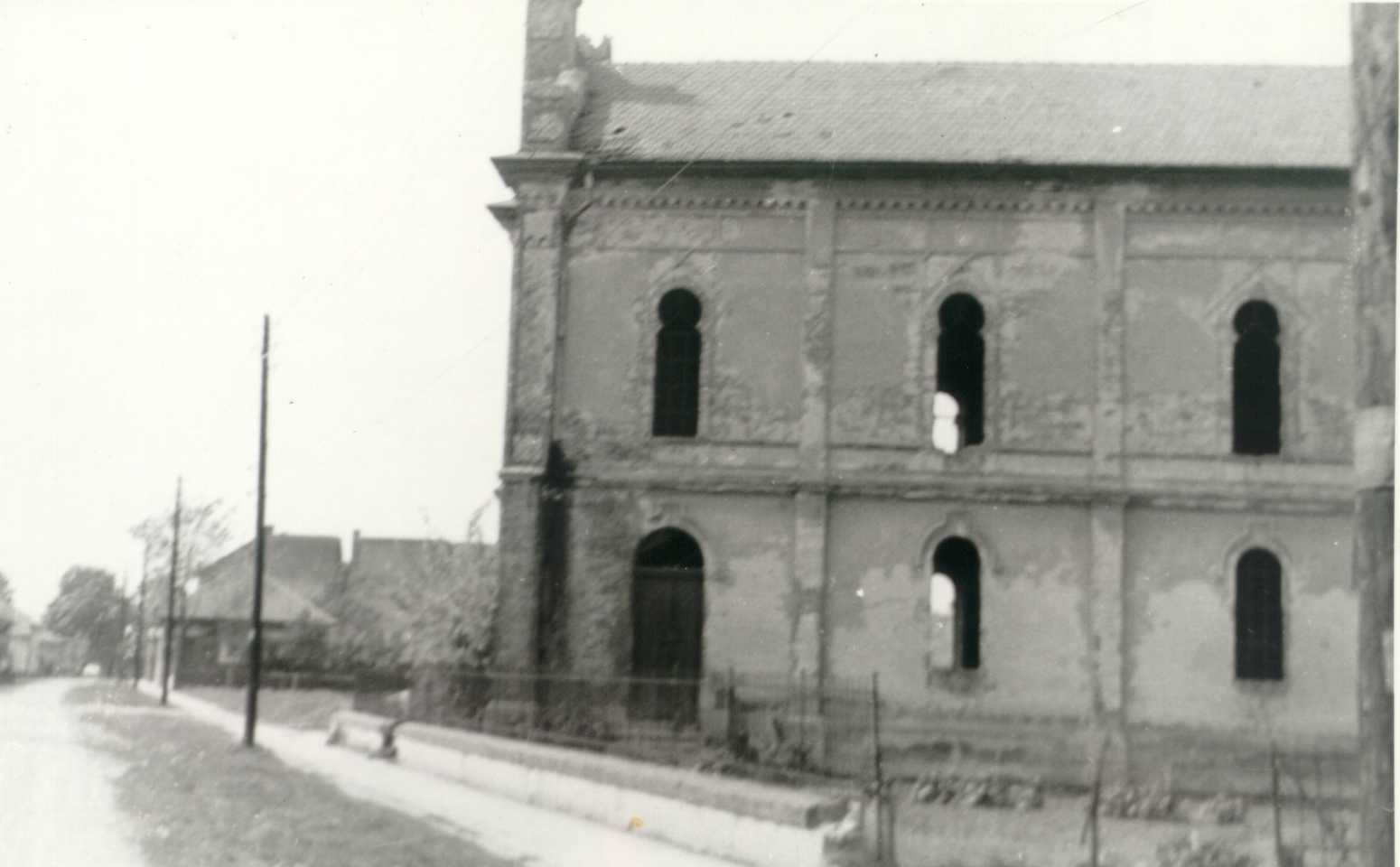
Carei, the Hungarian Nagykároly, had a second, Orthodox synagogue close to its 1866 main synagogue, which still stands. A photograph in the Hungarian Jewish Museum and Archives shows it as a burnt-out shell with horseshoe-arched windows. It was later demolished; when, and by whom, is not recorded in the sources found.
Carpenters' Temple, Bucharest
The Carpenters' Temple (Templul Tâmplarilor) was a guild synagogue of Bucharest's Jewish craftsmen, built in 1842 and rebuilt in 1895. Iron Guard Legionnaires vandalised it during their January 1941 rebellion. It was demolished in 1984, during Nicolae Ceaușescu's Communist-era rebuilding of central Bucharest, together with the neighbouring Adath Ieșurim synagogue.
Cece Synagogue
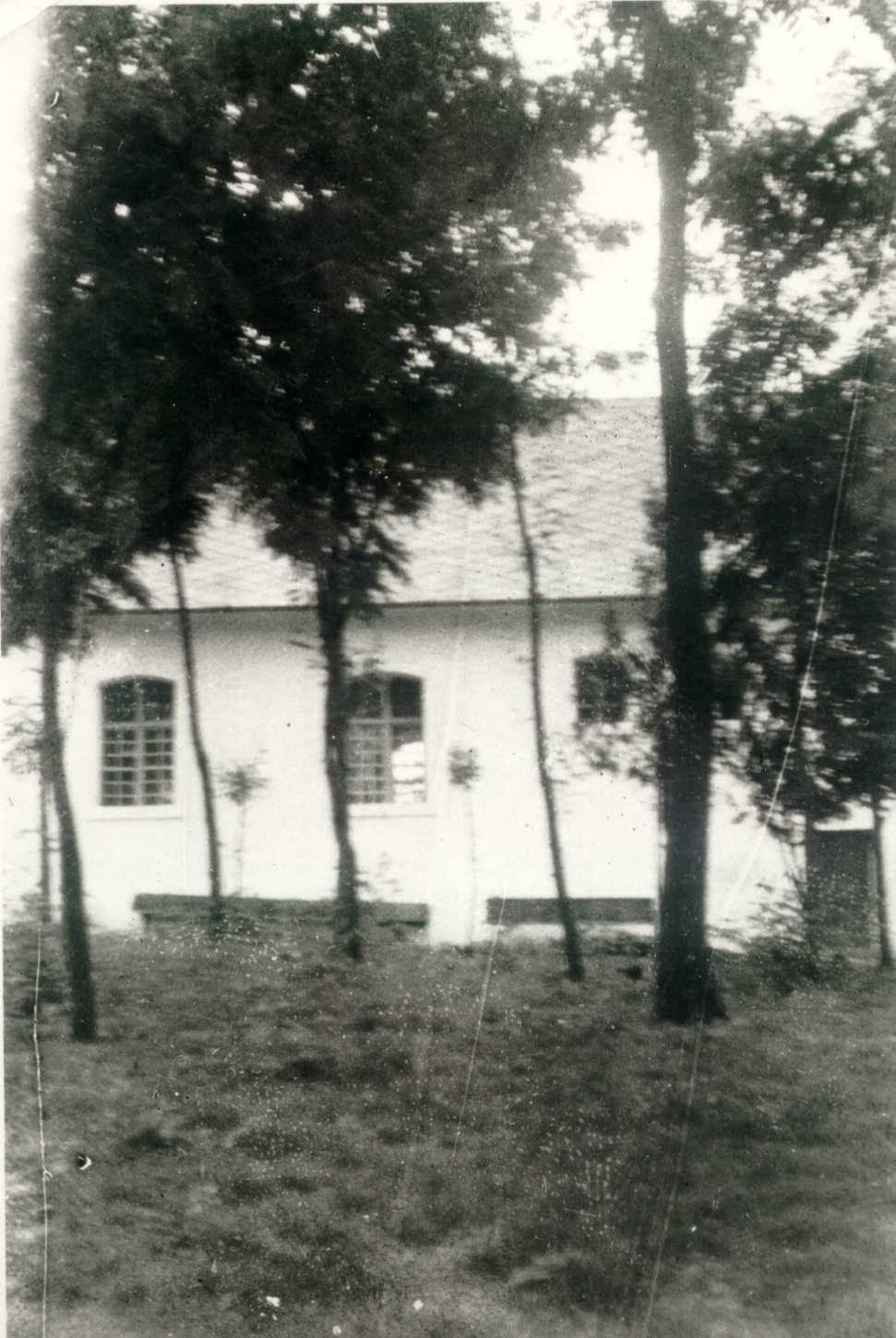
Cece's synagogue, built in the late eighteenth century, served a small Orthodox village community in southern Fejér county. Left empty after the deportations of 1944, it was a fruit-crate store by 1955 and was photographed still standing in 1958. It was demolished under Communist rule by the 1980s; who pulled it down is not recorded.
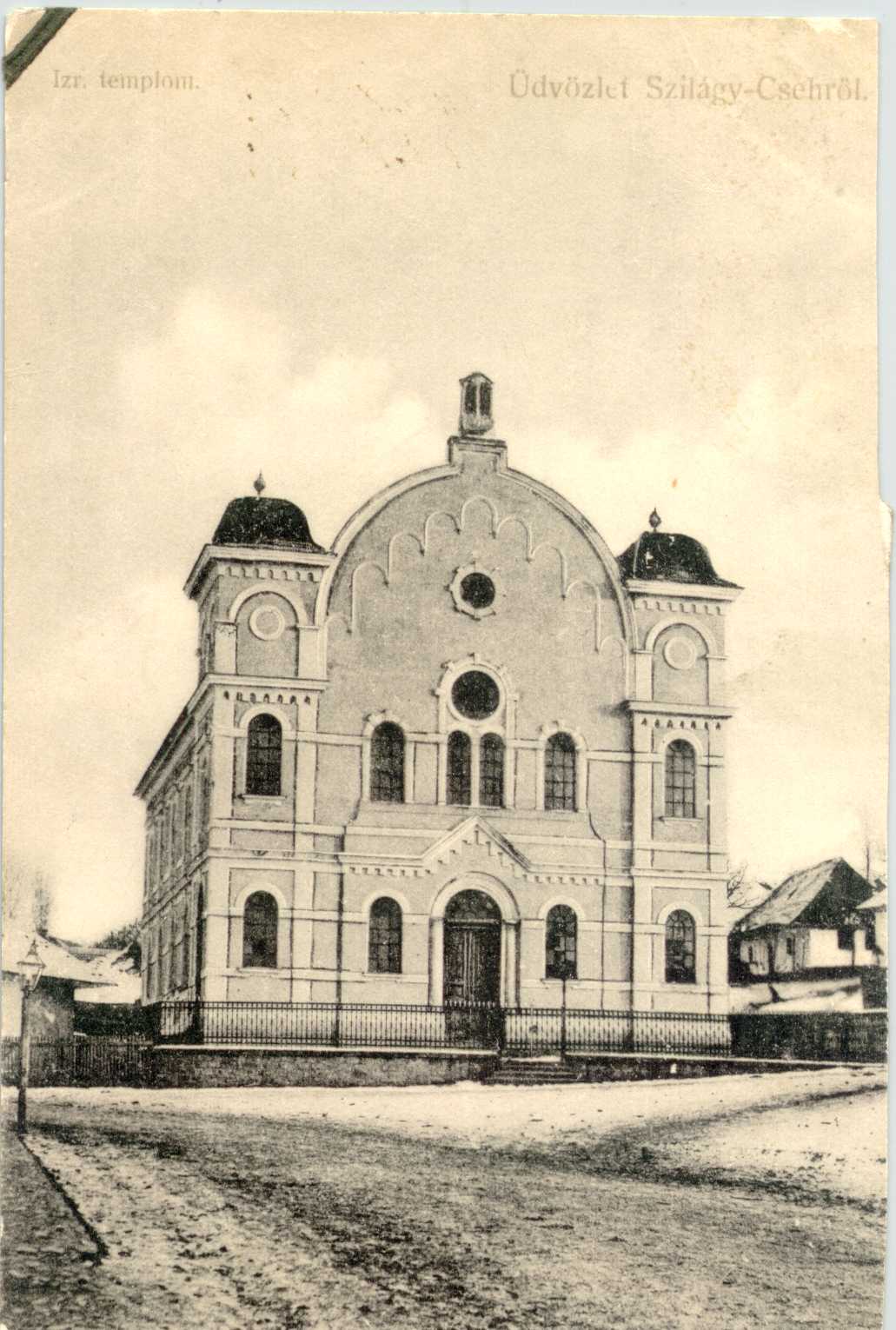
Cehu Silvaniei Synagogue
Cehu Silvaniei's synagogue, a twin-towered building dedicated in 1901 on land given by Baron Bornemissza, served the town's Orthodox community of some 550 people until its deportation in 1944. After the war it was used as a warehouse, handed to the Communist Party and demolished, and a party house was built in its place.
Celldömölk Orthodox Synagogue
The small Orthodox synagogue of Celldömölk was built around 1908 and consecrated in 1911 by traditional Jews who had left the town's Neolog congregation in 1902. Its worshippers were deported in 1944. By the 1955 survey of Transdanubian synagogues the building had been bulldozed; who removed it, and when, is not recorded.
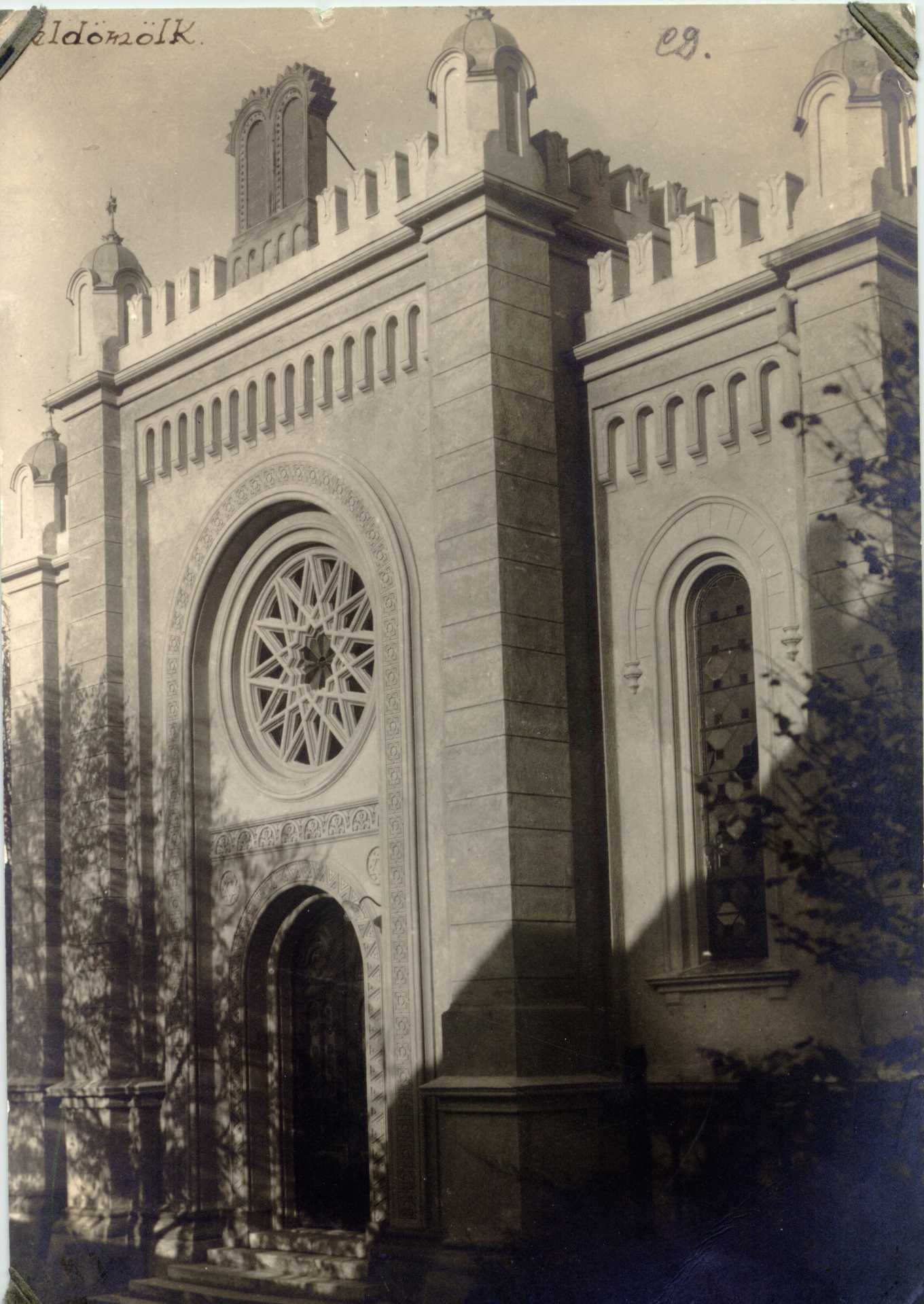
Celldömölk Synagogue
The Neolog synagogue of Celldömölk (formerly Kiscell), designed by the Viennese architect Ludwig Schöne and consecrated on 31 March 1882, was a turreted Moorish Revival hall modelled on his Szombathely synagogue. Emptied by the 1944 deportations, it was reportedly used as an ammunition store and blown up by Nazi German troops around 1945; its remains were gone by 1955.
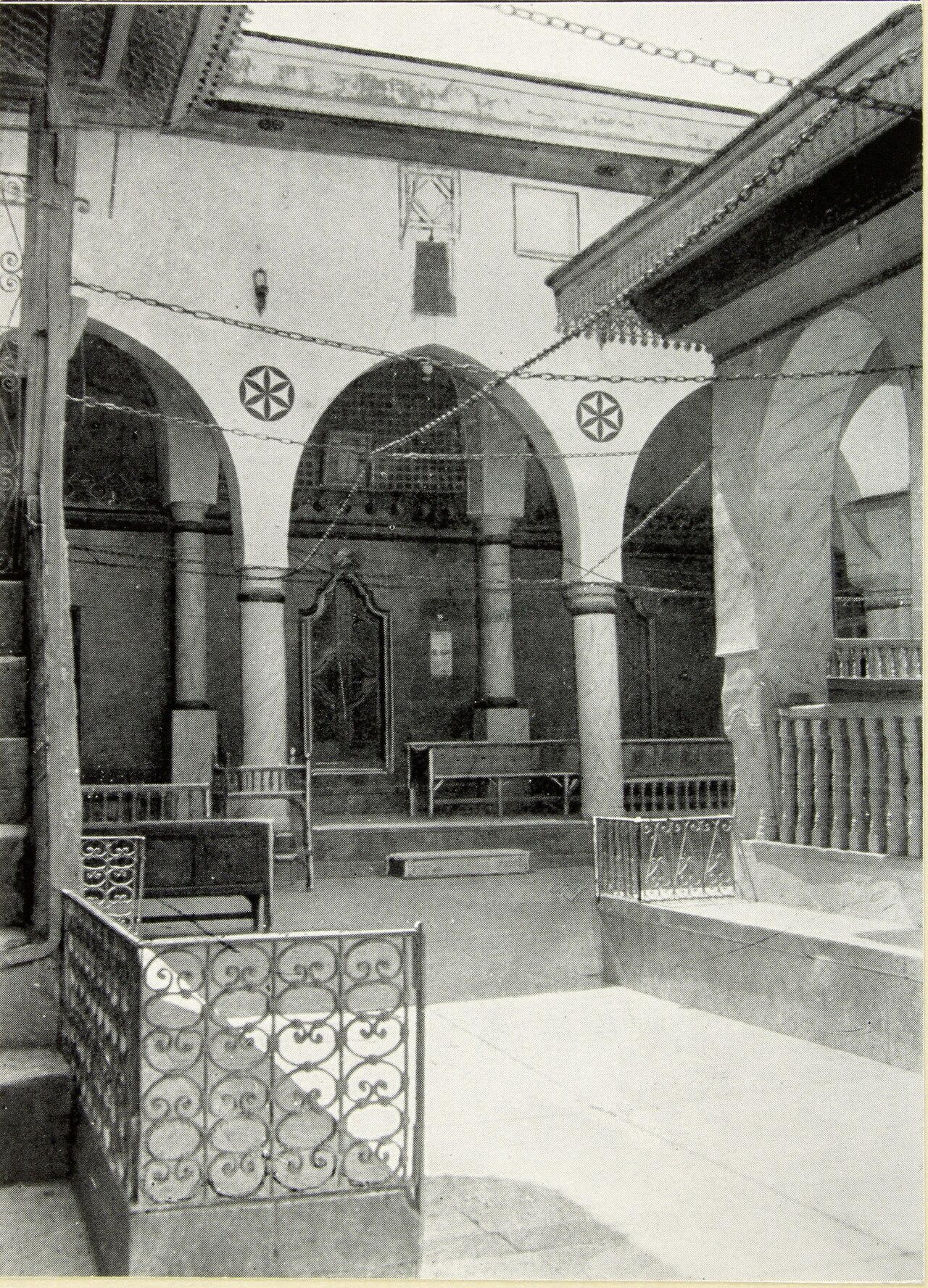
Central Synagogue of Aleppo
Aleppo's Central Synagogue, whose oldest wing may date to the 5th or 6th century CE, kept the Aleppo Codex for centuries. Arab rioters set it on fire on 1 December 1947 after the UN partition vote. Its walls survived; it was rebuilt in 1992, damaged again in the civil war, and still stands, empty.
Chabad Bet Midrash, Piatra Neamț
The Chabad Bet Midrash was one of about twenty Jewish prayer houses in Piatra Neamț, a Moldavian town where Jews were half the population in 1907. Built in 1844, it kept a religious library. The community's president says all the town's synagogues except the Baal Shem Tov synagogue were pulled down by the Communists in the 1960s and 1970s.
Chalkoprateia Synagogue, Constantinople (Istanbul)
A synagogue of the Jews of the Chalkoprateia, the copper market quarter just west of Hagia Sophia in Constantinople, is said to have been taken when Theodosius II expelled the Jews in the fifth century, and replaced by the Church of the Theotokos. The accounts are late and possibly legendary; nothing of the synagogue is known to survive.
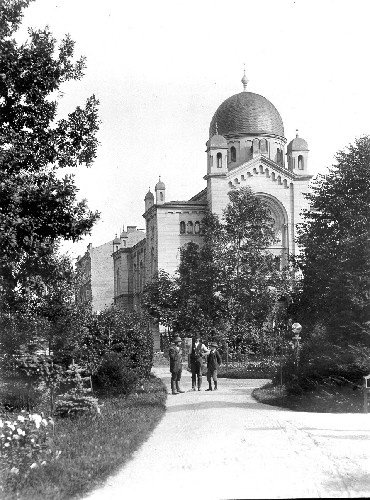
Cheb (Eger) Synagogue
Neo-Romanesque synagogue with a tall Byzantine-style dome, built in 1892–93 for the revived Jewish community of Cheb (German: Eger) in West Bohemia. Nazis set it on fire during the November 1938 pogrom, weeks after the Sudetenland's annexation, and the city cleared the ruins by early 1939. A prefabricated apartment block and a 2004 plaque now mark the site.
Chișineu-Criș Synagogue
The synagogue of Chișineu-Criș (Kisjenő), a market town in Arad county, is dated 1889 in I. Kara's list of Romanian synagogues. According to a single witness, the judge Andrei Popper, it was demolished soon after the war on the order of the Jewish Federation in Bucharest, because few or no Jews remained.
Chlistov Synagogue
The synagogue of Chlistov, a small village about ten kilometres southeast of Klatovy in western Bohemia, was built in 1834 for a rural Jewish community settled there since the early nineteenth century. Little used after the First World War as Jews moved away, it decayed and was demolished in the mid-1960s, under Communist rule.
Chodová Planá Synagogue
The Baroque synagogue of Chodová Planá (Kuttenplan), built in the mid-eighteenth century to replace an older one recorded in 1645, served a West Bohemian rural community that dwindled to a handful of Jews by the 1930s. Used as a stable during the Second World War, it was demolished after 1960; who pulled it down is not recorded.
Choral Temple of Galați
The Choral Temple of Galați, on Cuza Vodă Street, was the progressive synagogue of this Danube port, with a cantor, a choir and an organ. Planned from 1863 and long blocked by the town council, it opened in August 1885 with Moses Gaster as speaker. The earthquake of 9-10 November 1940 brought it down, and it was never rebuilt.
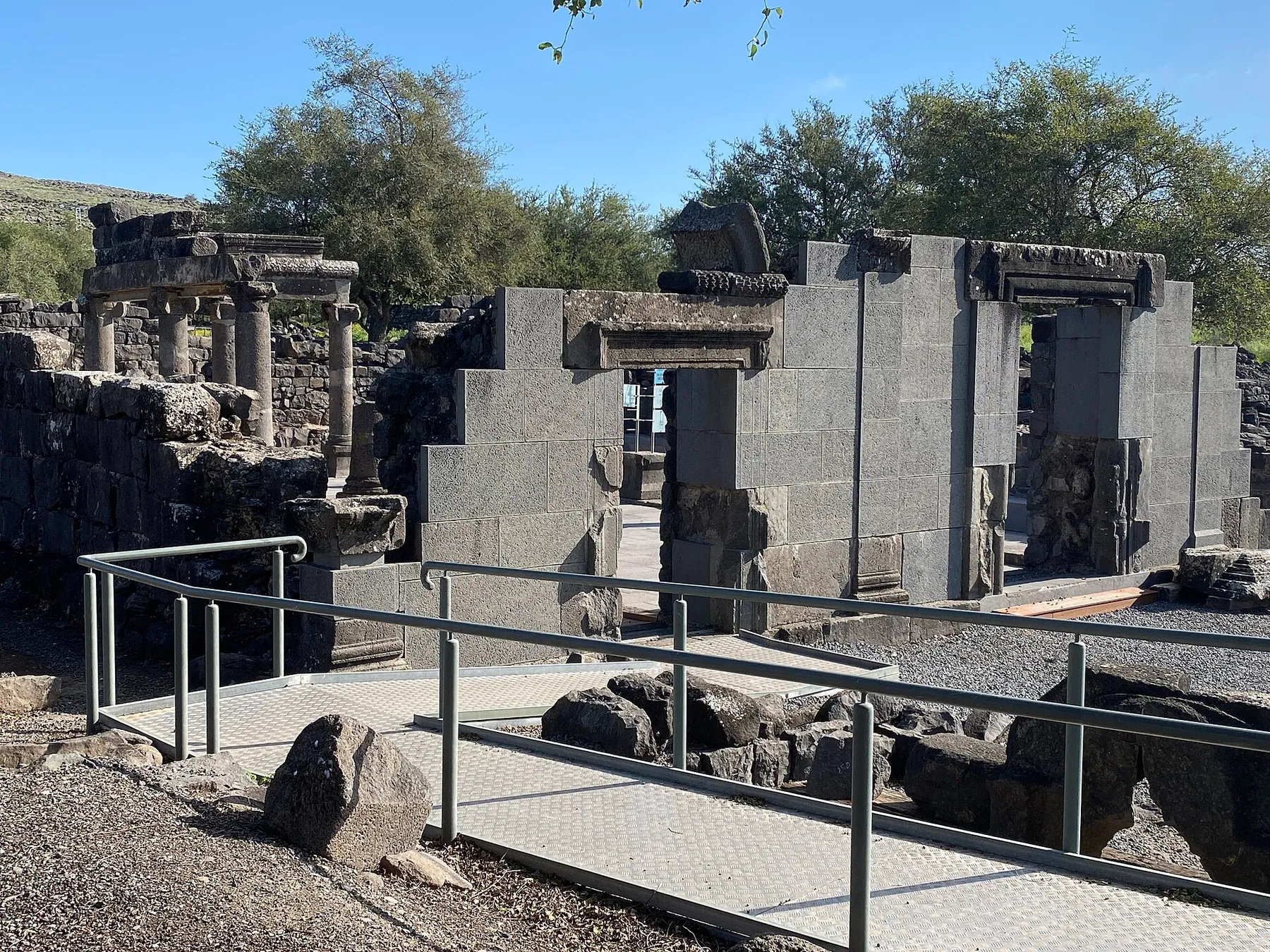
Chorazin Synagogue
The synagogue of ancient Chorazin, north of the Sea of Galilee, is a richly carved black basalt hall of the late 3rd or early 4th century CE. An earthquake damaged it in the 4th or early 5th century; it was restored and used into the 8th century. Partly reconstructed walls, columns and doorways stand today, of unrecorded originality.
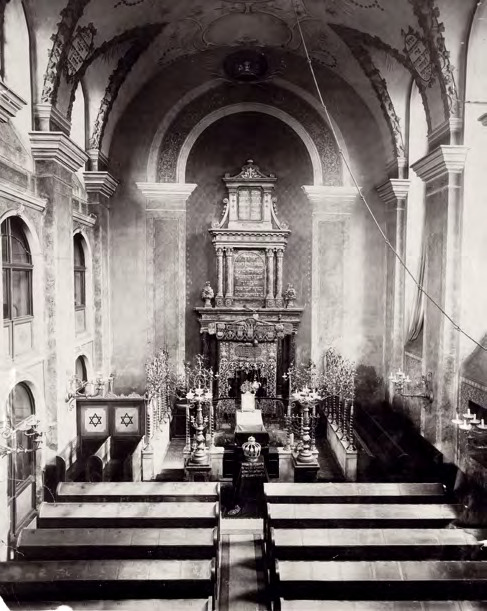
Cikán Synagogue, Prague
The Cikán Synagogue on the northern edge of the Prague ghetto was founded shortly before 1613 by Salomon Salkind, called Cikán, and his wife Golde. Its vaulted hall with colossal pilasters and a three-tier Torah ark was among the grandest of its age. It was demolished in 1906 during the asanace slum clearance of Josefov.
Community Synagogue of Český Těšín
The community synagogue of Český Těšín, a modern building opened in 1933, was the main house of prayer of the Jews on the western bank of the Olza. It served for only six years: it was burned and destroyed in September 1939, in the first weeks of the Nazi German occupation, and the congregation was later deported and murdered.
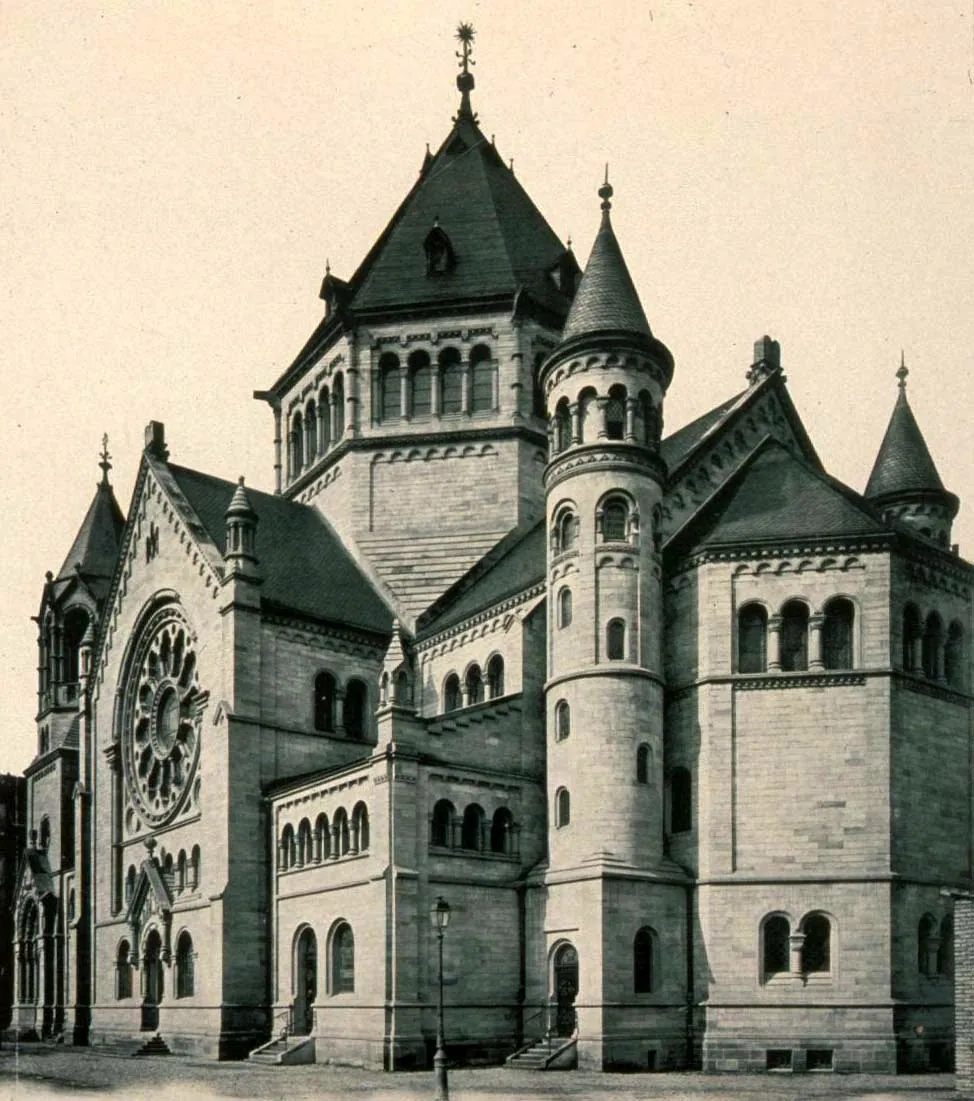
Consistorial Synagogue, Quai Kléber, Strasbourg
The Consistorial Synagogue on the Quai Kléber, a domed neo-Romanesque building by Ludwig Levy inaugurated on 8 September 1898, was the great synagogue of Strasbourg and of Alsace. After the Nazi annexation of Alsace it was looted and burned by Hitler Youth in September 1940, and its ruin was razed in 1941. The site remains a memorial square.

Csabrendek Synagogue
Built in 1782 for one of the largest Jewish communities of historic Zala county, the Csabrendek synagogue was a vaulted, painted hall fronted by an arcaded upper loggia. It was photographed derelict in 1949 and was demolished under Communist rule by the 1980s; nobody recorded when or by whom.
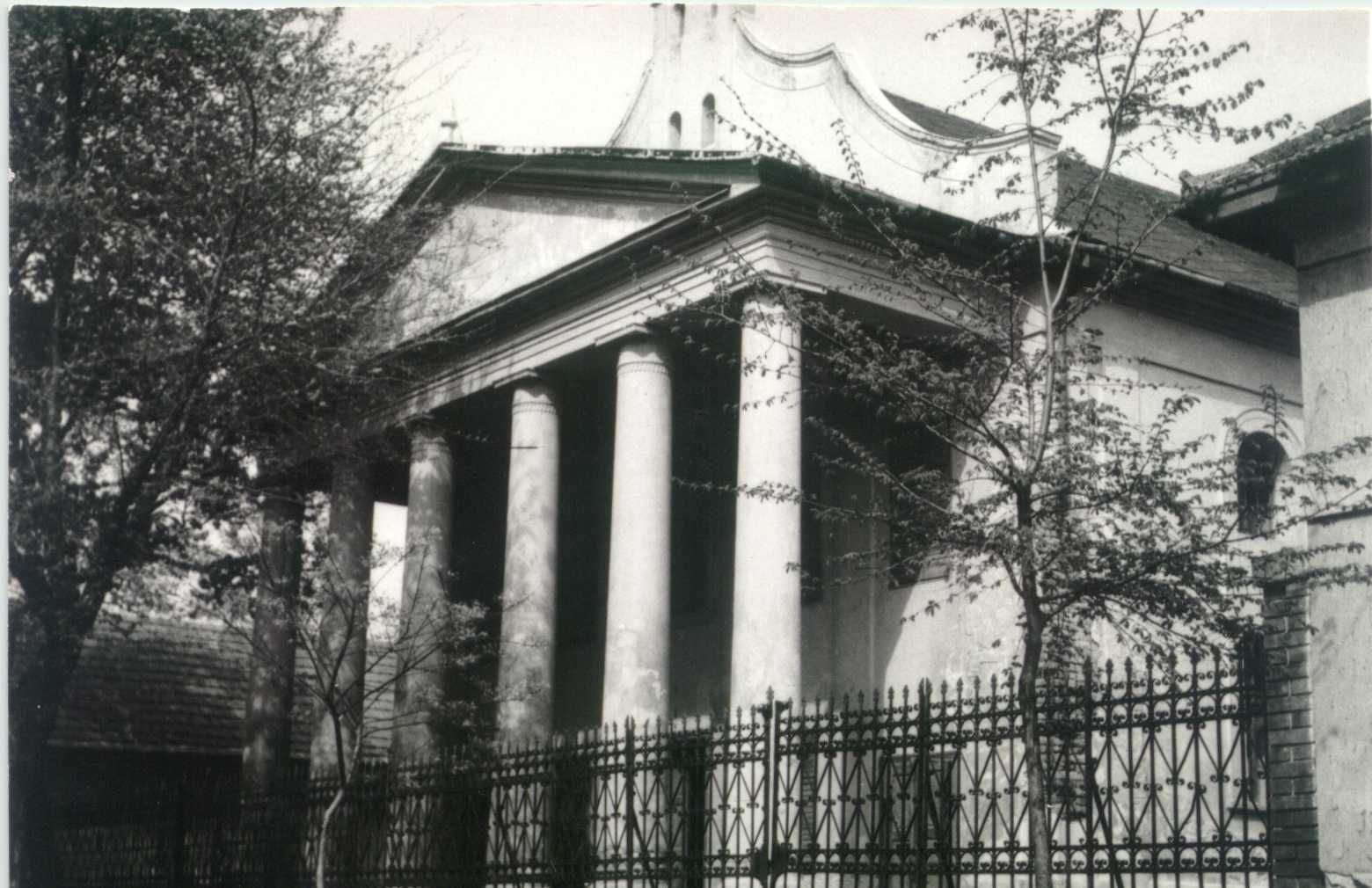
Csongrád Synagogue
The Csongrád Synagogue, a late Neoclassical temple with a six-column portico, was built by the town's Jewish community in 1852–54. Its congregation was deported to Auschwitz in June 1944. Left empty after the war, sold and used as a granary, it was demolished in 1969 under Communist rule; only its wrought-iron fence survives.
Csurgó Synagogue
Csurgó's synagogue was built in 1840 on the main square of this small market town in Somogy county and served a congregation led by a succession of scholarly rabbis. Its community was deported in 1944. The building was demolished by the Communists in the early 1950s and its stones were reused for a sports-ground grandstand.
Csók utca Synagogue, Debrecen
A synagogue at Csók utca 6-8 in Debrecen, one of several houses of worship that served the city's large Jewish community alongside its main synagogues. Anikó Gazda's survey of the 1980s recorded it as demolished. Its builders, congregation, appearance and date of loss are unknown, and no other source describing it has been found.
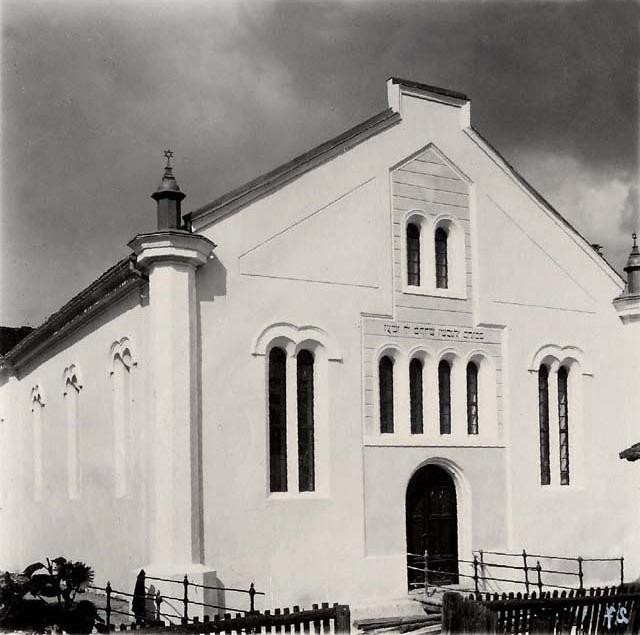
Dambořice Synagogue
Dambořice's synagogue stood in the middle of the Jewish quarter on the east bank of the Salajka brook. Rebuilt after the fire of 1824 in a late Empire style and lavishly restored in 1868, it served a community of almost 500 at its peak. Locked and unused under Nazi occupation, it was demolished in 1948.
Davle Synagogue
Davle's small synagogue, in a market town on the Vltava south of Prague, was a house that the local Jews bought and converted in about 1880. Its congregation belonged to the Zbraslav Jewish community, and most of its members were murdered in the Holocaust. The building was demolished in 1960 under Communist rule; the site is now a small park.
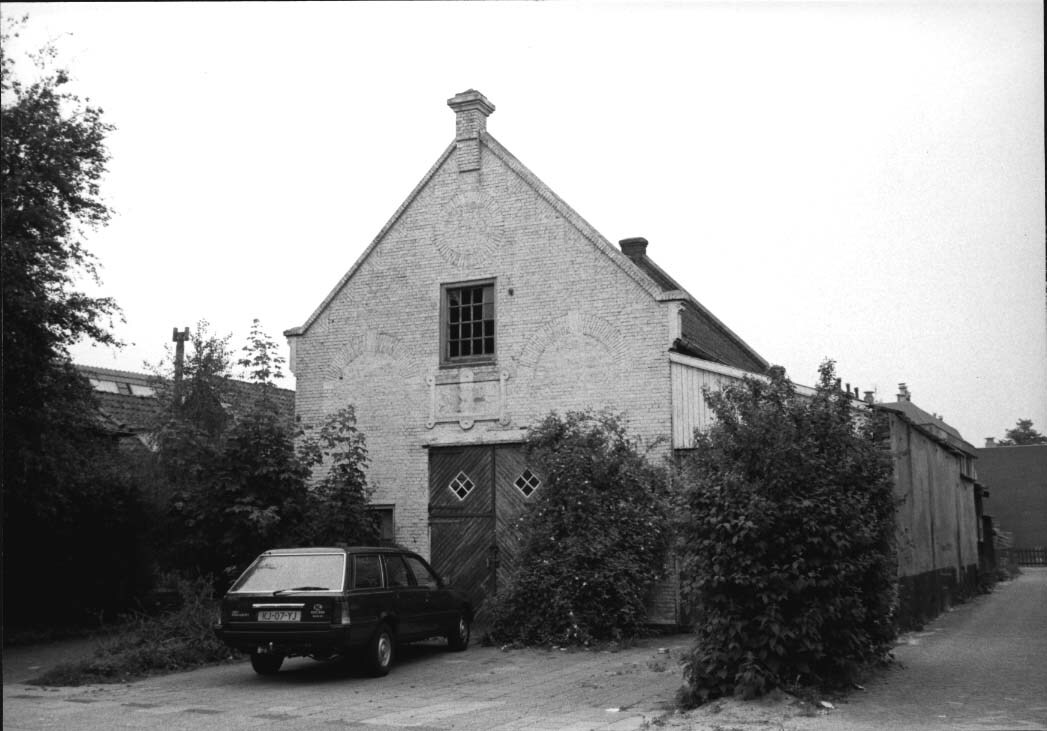
Dedemsvaart Synagogue
The synagogue on the Markt in Dedemsvaart, a small brick hall consecrated in September 1886, served a village congregation of a few dozen people until the Nazi occupation, when almost all its members were murdered. Used afterwards as a workshop, it was sold to a private owner in 1987 and demolished in 1988.
Delden Synagogue
Delden's synagogue, built in 1760, served a small Jewish community in the Twente town of Delden, near the German border, for almost two centuries. Most of its members were murdered in the Holocaust. Soon after the war the building was sold, used for a time as a storehouse and later pulled down; only a facade stone survives.

Delos Synagogue
Building GD 80 on the east shore of Delos, excavated by André Plassart in 1912 and 1913, is widely regarded as the oldest known diaspora synagogue, though some scholars deny it was one. Built in the second century BCE, it was abandoned around 200 CE and survives as low walls, marble benches and a throne.
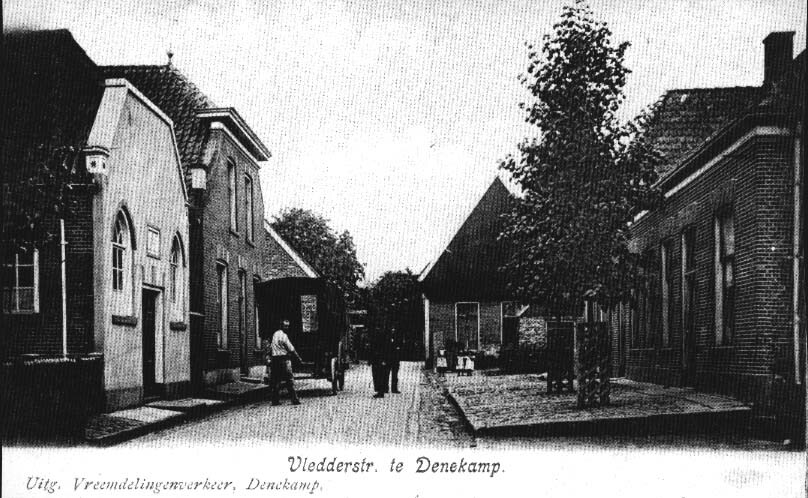
Denekamp Synagogue
The synagogue on the Vledderstraat in Denekamp, in the Twente region of Overijssel, was built in 1913 when the small local Jewish community became independent. Almost all of its members were murdered during the Nazi occupation, and the building was demolished after the war; its Hebrew gable inscription survives on a nearby chapel.
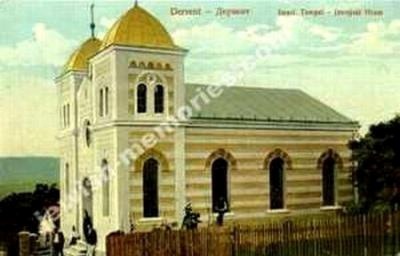
Derventa Synagogue
The Derventa Synagogue, known locally as the "Templ", was a Moorish Revival building completed in 1911 for the small Sephardi and Ashkenazi community of this town in northern Bosnia. The Ustaše heavily damaged it in 1941 and deported Derventa's Jews; the ruined building collapsed around 1950 and houses now cover the site.
Deutschkreutz Synagogue
Deutschkreutz, the Zelem of Burgenland's Seven Communities, replaced its synagogue of 1747 with a larger classicist building in 1834-35 in the village centre. Its Orthodox congregation, known for its yeshiva, was driven out in spring 1938. On 16 February 1941 the Nazis blew the empty synagogue up, and a flying brick killed a 17-year-old onlooker.
Didam Synagogue
Didam's synagogue was a small prayer room set up in 1770 in a house on the Weemstraat, today the Hoofdstraat, for a village Jewish community of about thirty people. The building was pulled down in 1900, long before the Second World War; who demolished it is not recorded. A memorial stone marks the spot.
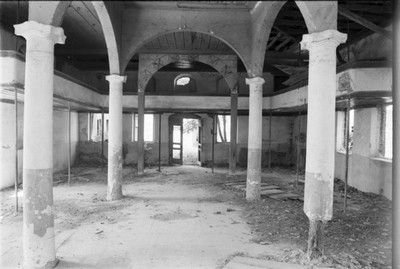
Didymoteicho Synagogue
The synagogue of Didymoteicho, built in 1862 on today's Katsantoni Street and renovated in 1924, served one of the oldest Jewish communities in Thrace. In May 1943 Nazi German forces arrested the town's Jews there and deported them. The empty building survived the war but was demolished in 1984.
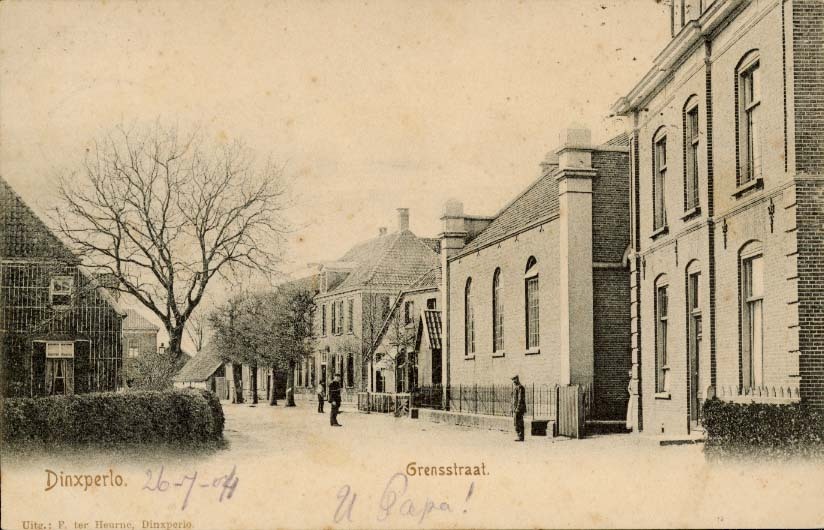
Dinxperlo Synagogue
The synagogue of Dinxperlo, a small Jewish community on the German border in the Achterhoek, was consecrated on 17 February 1889 and marked its fiftieth anniversary in March 1939. Most of the town's Jews were deported in 1942 and 1943. The building, damaged during the war, was demolished after it; when and by whom is not recorded.
Diószeg Synagogue, Sládkovičovo
The synagogue of Diószeg, today Sládkovičovo in the Galanta district, served a small Orthodox community from the nineteenth century until the 1944 deportations. Sources disagree on its end: a witness says Allied bombs aimed at the sugar factory wrecked it, with a house on the site by 1947; an encyclopedia says the town demolished it in the early 1970s.
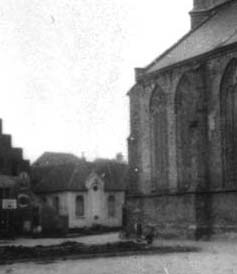
Doesburg Synagogue
Doesburg's synagogue, built in 1898 beside the Martinikerk near the market square, served a small Gelderland congregation. Members of the NSB looted it during the occupation, and it was largely wrecked in April 1945 when Nazi German forces blew up the neighbouring church tower. The deported congregation never returned, and the ruin was demolished in 1951 or 1953.

Doetinchem Synagogue (Waterstraat)
Doetinchem's Neoclassical synagogue on the Waterstraat was consecrated on 1 March 1878 and served the town's Jewish congregation, about 190 strong at its height, until the occupation. Most of its members were deported and murdered in 1941-1943. British aircraft bombed the building on 21 March 1945, and its remains burned during the fighting of 2 April 1945.
Dolní Bolíkov Synagogue
The synagogue of Dolní Bolíkov (German Wölking), a village near Dačice on the historic Moravian side of the border with Bohemia, served a rural Jewish community founded by refugees from Vienna around 1670. After the dwindling community was dissolved in 1891, it sold the dilapidated building in 1898 to a local farmer, Jan Novák, who pulled it down.
Dolný Štál Synagogue
The synagogue of Dolný Štál (Hungarian Alistál), in the Rye Island village centre, served an Orthodox community of about 400 people from eight villages. In May 1944 Hungarian police confined 130 Jews inside it before deportation. According to Pinkas Hakehillot, Nazi German forces destroyed it during the war; no second source confirms this.
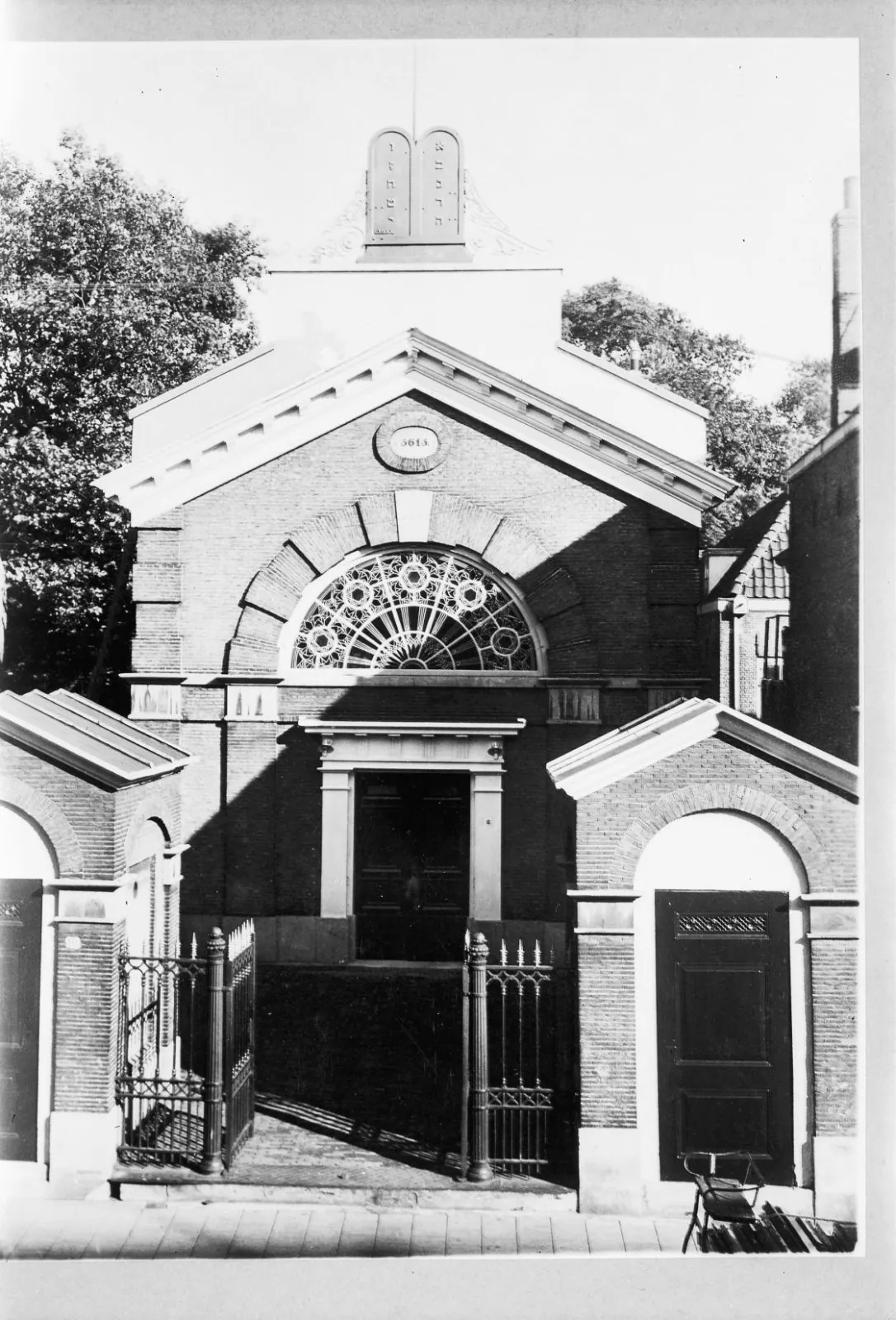
Dordrecht Synagogue
Dordrecht's Jewish congregation worshipped from 1739 in the former Mariaborn convent and from 1856 in a community centre on the Varkenmarkt with synagogue and school. Nazi occupiers looted the interior; its wooden furnishings were burned as fuel in the Hunger Winter. Most members were murdered. The ruined building was sold in 1947 and demolished in 1965.
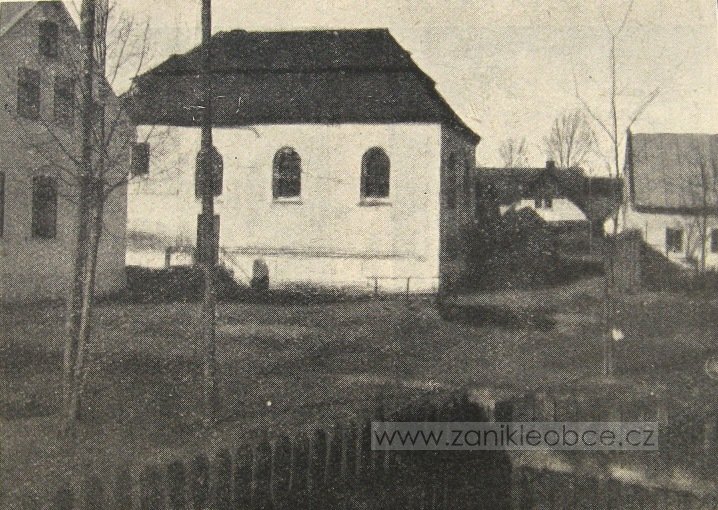
Drmoul Synagogue
The synagogue of Drmoul (Dürrmaul), a village beside Mariánské Lázně in western Bohemia, was a plain vaulted hall built in 1800-1801 in the middle of the village green, next to the Jewish community house. The Nazis set it on fire on 10 November 1938, weeks after the annexation of the Sudetenland; its burned remains were later cleared.
Druten Synagogue
The synagogue on the Nieuwstraat in Druten, a small town in the Land van Maas en Waal, was dedicated in 1860 by a Jewish community founded in 1859. It celebrated its 25th anniversary in 1885, closed in 1906 after the dwindling congregation merged with Nijmegen, was put to other use and was demolished in 1977.
Dubník Synagogue
Dubník, the Hungarian Csúz, a village east of Nové Zámky, once had a small Jewish community whose cemetery still survives. Its synagogue is known only from one unreferenced entry in a public list of synagogues in Slovakia, which says it was destroyed but gives no dates; nothing else about the building has been found.

Dunaföldvár Synagogue
The Neolog synagogue of Dunaföldvár, a classicising building of 1854 on Kossuth Lajos utca, served a Danube market-town congregation for ninety years. It stood gutted in 1944, after Hungarian authorities under Nazi German occupation ghettoised and deported its members, and was later cleared away; who demolished it, and when, is not recorded.
Dunaharaszti Synagogue
Dunaharaszti, a Danube town just south of Budapest, had a synagogue built in 1888 by Gyula Lederer and remodelled by its congregation in 1924. Its worshippers were lost in the Holocaust, and the synagogue was blown up at the end of the Second World War; who destroyed it is not recorded. A restaurant now stands on the site.

Dunapataj Synagogue
The synagogue of Dunapataj, a large village near the Danube in Bács-Kiskun county, was built in 1879 from the donations of its Jewish residents. Its congregation was deported in 1944. The emptied building was sold for its materials and pulled down by a private demolition contractor in 1957 or 1958.
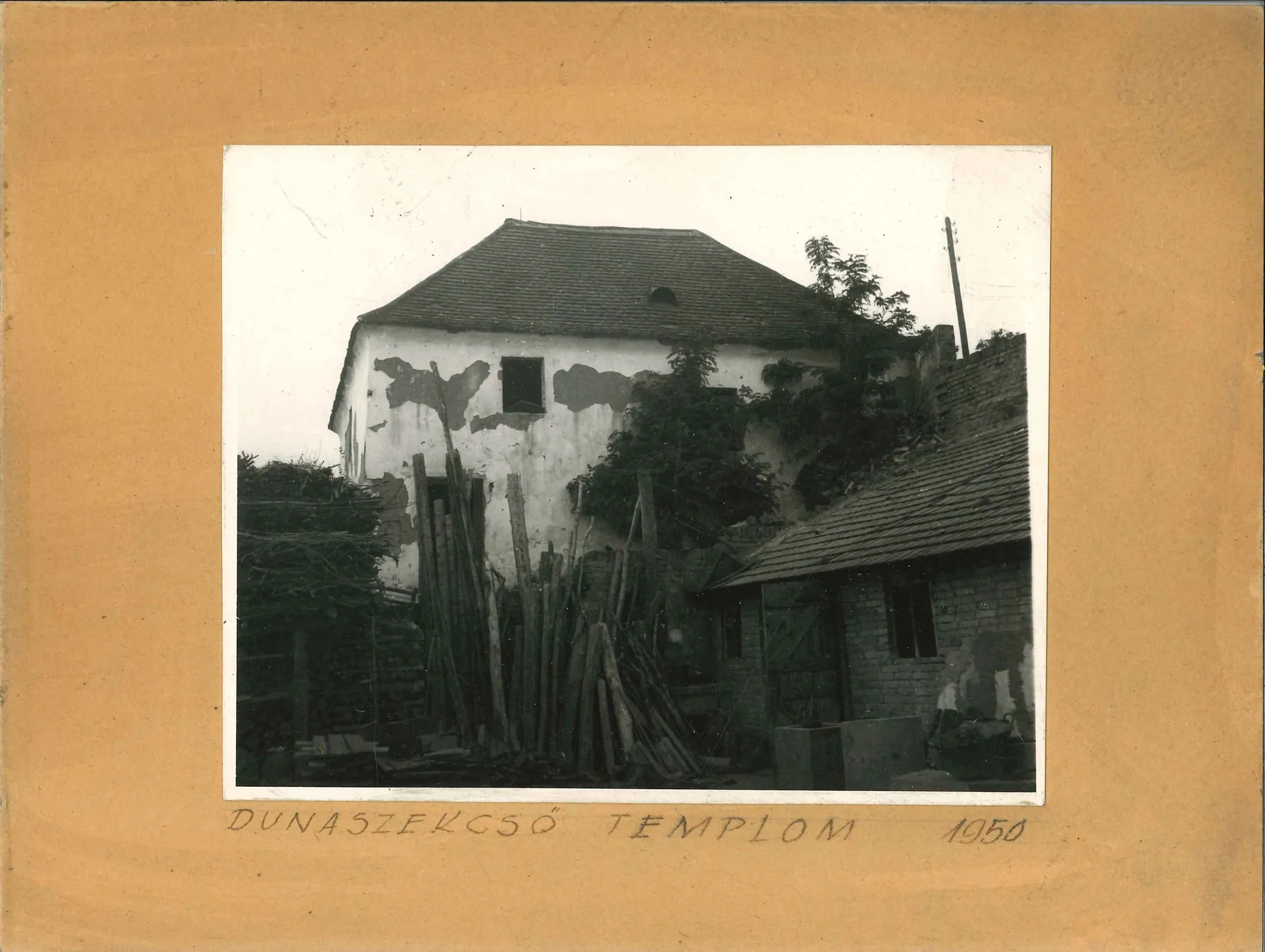
Dunaszekcső Synagogue
Dunaszekcső's synagogue served a small Neolog Jewish community of tradespeople in a Danube village south of Mohács. A 1950 archive photograph shows it standing derelict, with peeling render and a high tiled roof. Its congregation was deported in 1944, and the building was pulled down before 1987; who demolished it is not recorded.
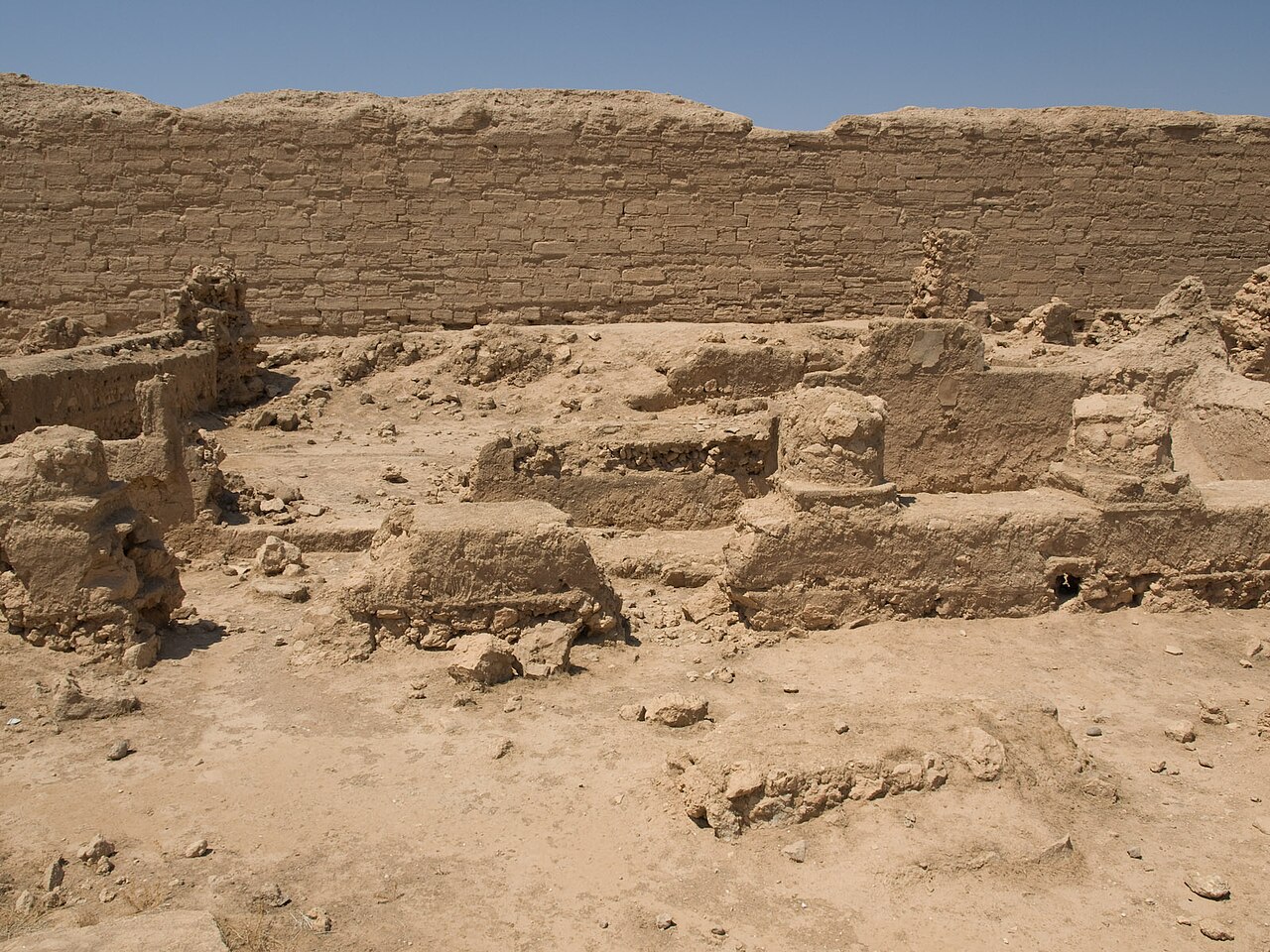
Dura-Europos Synagogue
The synagogue of Dura-Europos, a remodelled house against the city wall, was rebuilt and painted with biblical scenes in 244/245 CE. About 256 CE the Roman garrison buried it in a siege rampart before the Sasanian army took the city. Excavated in 1932-33, its paintings are in Damascus; only low, looted walls remained on site.
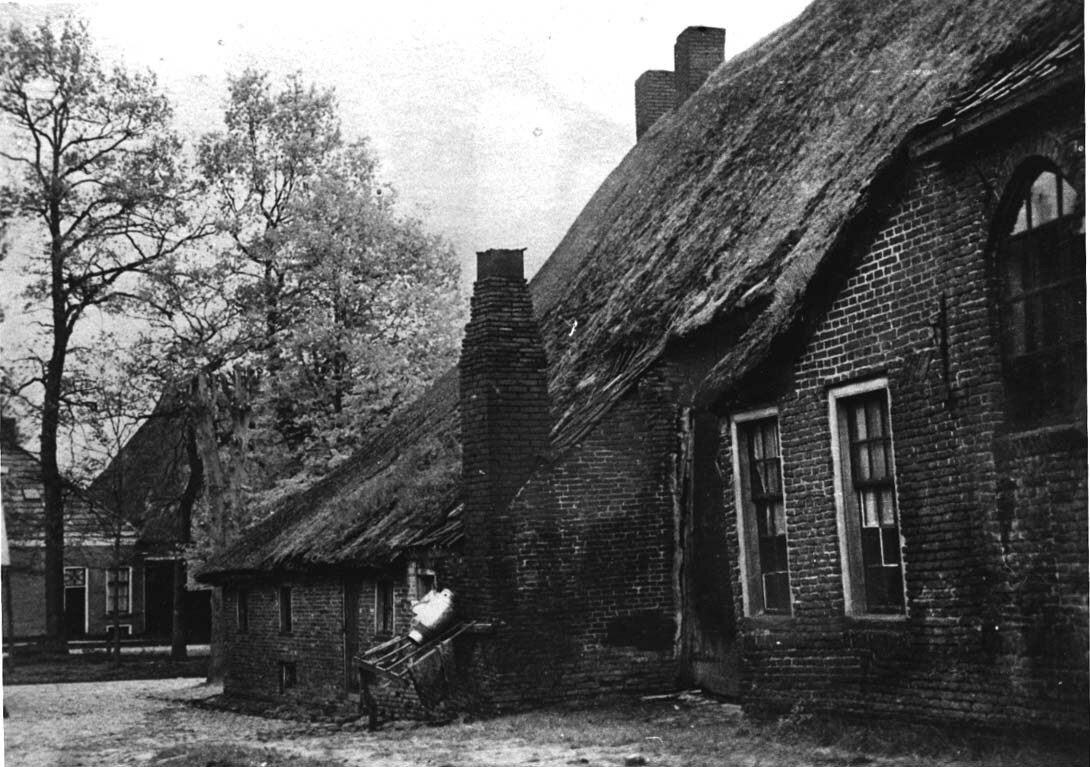
Dwingeloo Synagogue
The synagogue of Dwingeloo, a village in Drenthe, was not purpose-built: from 1835 the small congregation worshipped in a thatched brick building that also housed a smithy. Renovated in 1846, it was destroyed by fire in 1923 and never replaced. Only its ark curtain survived, later stolen during the Nazi German occupation and recovered in 2004.
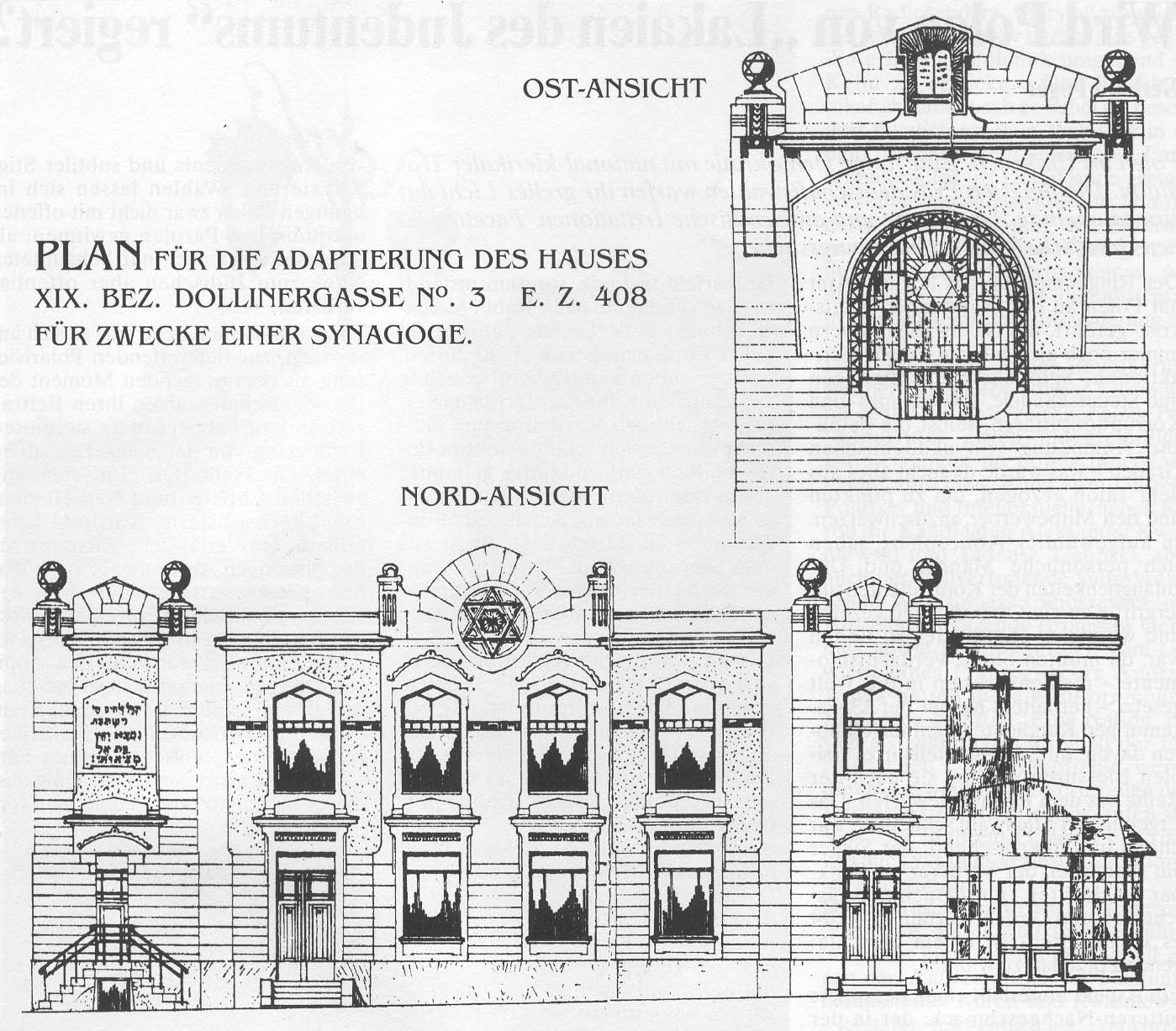
Döbling Synagogue (Dollinergasse, Vienna)
The Döbling synagogue at Dollinergasse 3 was a free-standing house of 1897 that Julius Wohlmuth converted in 1907 into a Jugendstil synagogue for the district's Temple Association. Nazis wrecked its interior on 10 November 1938, the building was sold, stripped and used as a food factory, and it was demolished in 1995.
Early Synagogue of Brăila
The first synagogue of Brăila belonged to a small, mostly Sephardic community that settled in the Ottoman-ruled Danube port from the fifteenth century. Pinkas Hakehillot says it and the Jewish cemetery were destroyed in 1819 by Russian bombardment, a date that matches no known Russian siege; the sieges were in 1809 and 1828.
Ebenfurth Synagogue
The synagogue of Ebenfurth in Lower Austria served a seventeenth-century Jewish community living in a quarter by the town wall until its expulsion in 1670-71. The small vaulted building survived as a dwelling for more than three centuries and was demolished in 1994; only its stone door surround was saved.
Edelény Synagogue
Edelény, a market town on the Bódva in Borsod county, had a synagogue dated to about 1900 serving a Jewish community that made up about one in twelve of its people. The community was deported in 1944. The building was found demolished in a survey of 1980-87; when and by whom it was pulled down is unknown.
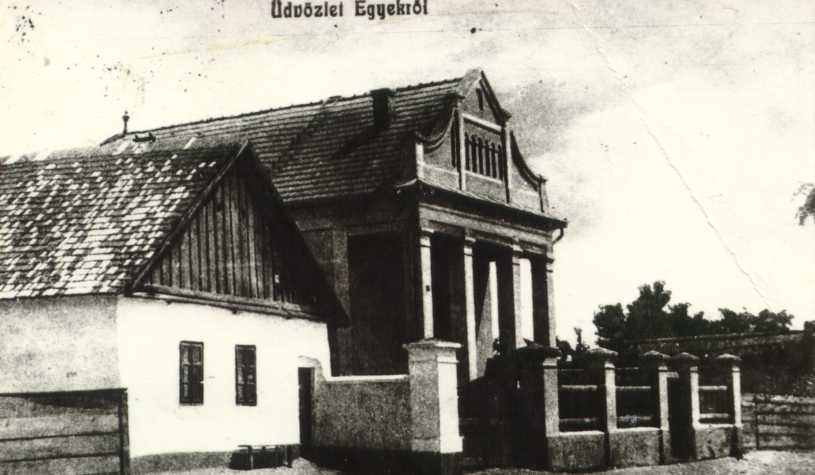
Egyek Synagogue
The synagogue of Egyek, a village in historic Hajdú county in eastern Hungary, was built in 1905 for a small Orthodox community of about 140 people. Its congregation was deported in 1944. The building was later pulled down; the date and the people responsible are not recorded.
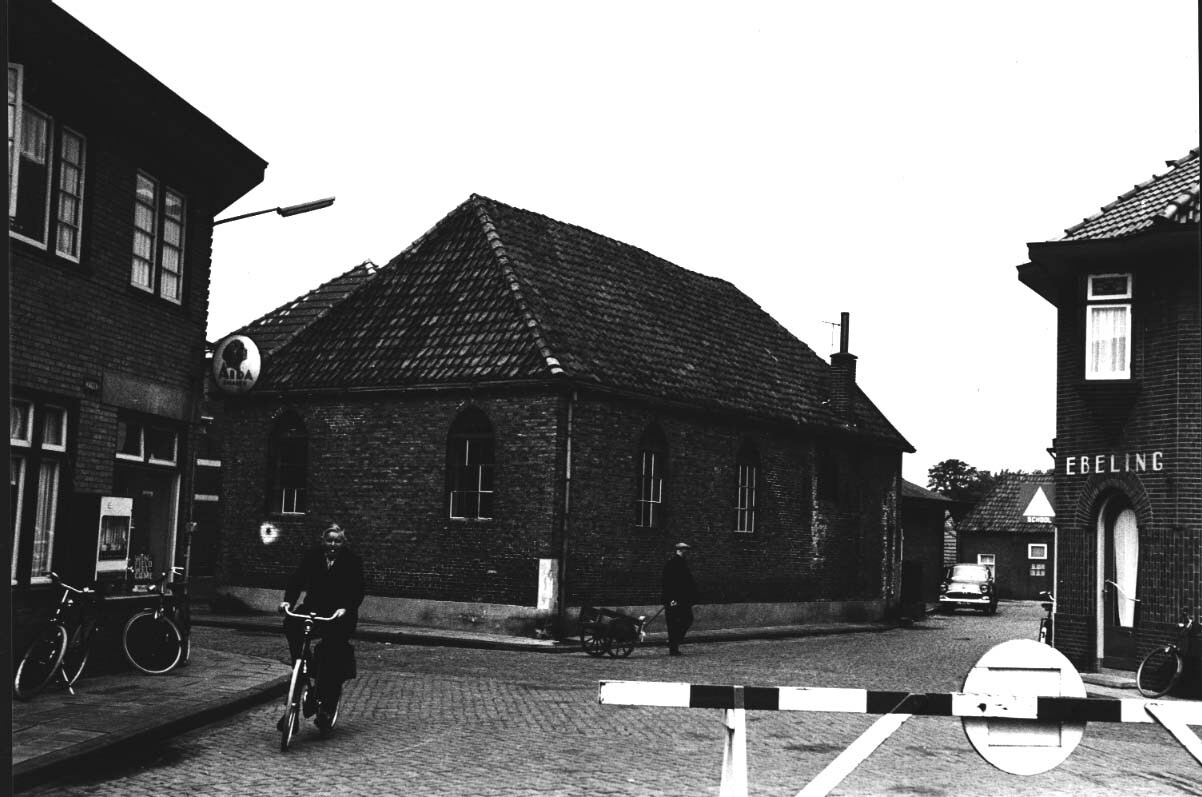
Eibergen Synagogue
Eibergen's synagogue on the Kleine Hagen, a plain brick hall inaugurated in August 1848, served a small Jewish congregation in the Achterhoek for almost a century. Nazi German occupiers desecrated it and its interior was lost; half of the village's Jews were murdered. Sold after the war, the empty building was demolished in 1961.
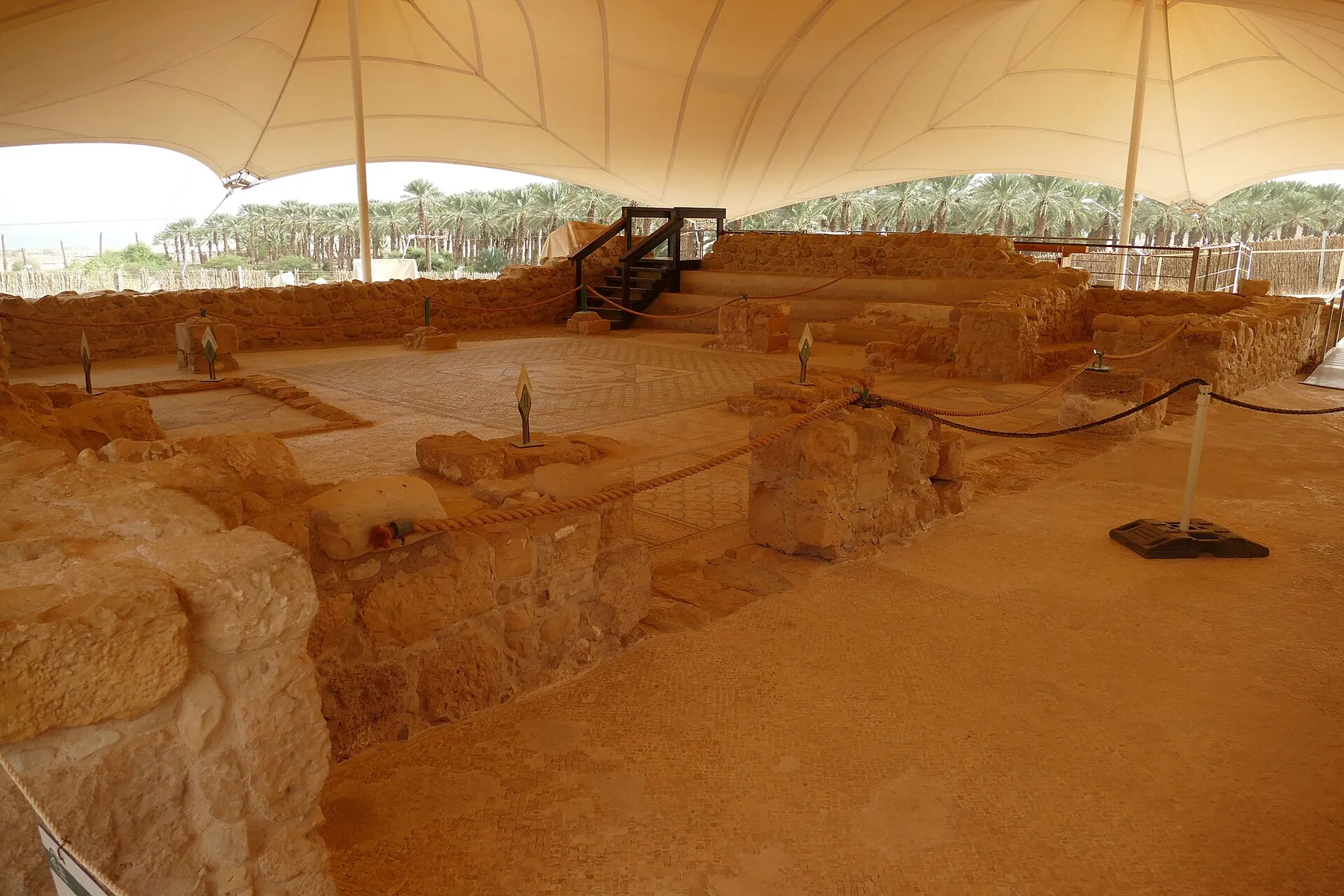
Ein Gedi Synagogue
The synagogue of the Jewish village of Ein Gedi, on the western shore of the Dead Sea, was built in the third or early fourth century CE and later given coloured mosaics and a long Hebrew and Aramaic inscription. It burned with the whole village around 530 or 600 CE; a charred Leviticus scroll lay in its ark.
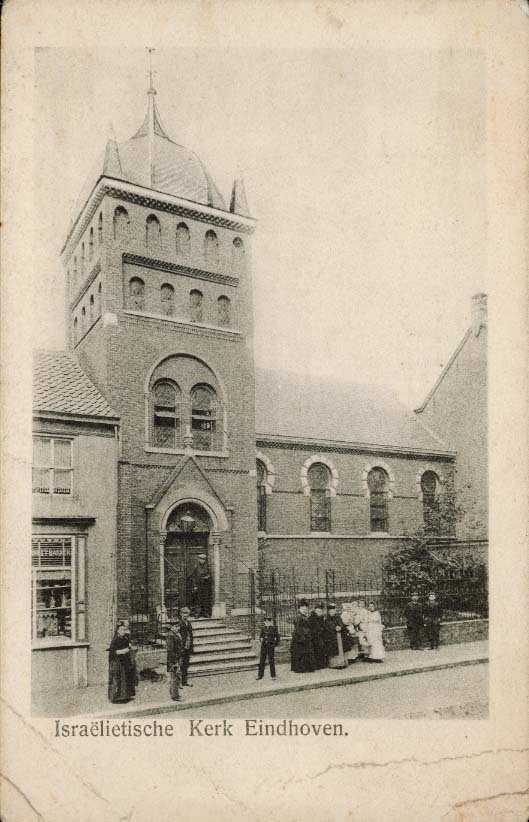
Eindhoven Synagogue (Kerkstraat)
The synagogue on Eindhoven's Kerkstraat stood beside the Catharinakerk. A larger building replaced the first house synagogue in 1810 with help from King Louis Napoleon, and a new synagogue followed in 1866. Looted under the Nazi occupation and hit by a German bombing raid in September 1944, it was restored, reopened in 1947 and demolished in 1959.

Eisenstadt Community Synagogue
The community synagogue of Unterberg-Eisenstadt, designed by the Esterházy court architect Charles Moreau, was begun in 1832 and finished in 1834. Nazi SA men and a mob wrecked its interior in November 1938, after the community had been expelled. The empty shell was sold in 1951 and demolished for a trade-union building.
Elbasan Synagogue (former)
A large building in Elbasan, central Albania, was remembered as the town's former synagogue: under Ottoman rule it served as an inn, and a Star of David was said to be visible high on its walls in 1934. Its fate is poorly documented; one web page says it was destroyed in the Second World War.
Elche Synagogue (L'Alcúdia, Ilici)
A Late Roman hall at L'Alcúdia, the site of ancient Ilici outside Elche, whose mosaic floor carries Greek inscriptions read since 1905 as Jewish. Whether it was a synagogue, a church, or a synagogue later turned into a church is disputed. Only excavated foundations remain; when and how its use ended is unknown.
Enschede Synagogue (Achterstraat)
The first purpose-built synagogue of Enschede's Jewish community stood on the Achterstraat. Opened in 1834 by Chief Rabbi A.I. Herzveld and paid for partly by non-Jewish townspeople, it served a congregation of about 110 people until 7 May 1862, when the great town fire destroyed it with most of Enschede.
Enschede Synagogue (Stadsgravenstraat)
Enschede's second purpose-built synagogue was consecrated on the Stadsgravenstraat in 1865, three years after the town fire of 1862 destroyed its predecessor. It served the growing congregation until 1928, when the Torah scrolls were carried to the new Prinsenstraat synagogue. The old building was later pulled down; when and by whom is not recorded.
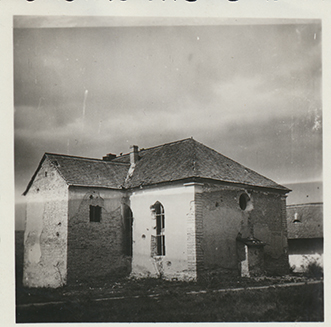
Enying Synagogue
The synagogue of Enying, a market town east of Lake Balaton, was built in 1870 by a newly independent Neolog congregation. Emptied by the deportations of 1944, it was photographed after the war as a roofed but gutted ruin and was later demolished; neither the year nor those responsible are recorded.
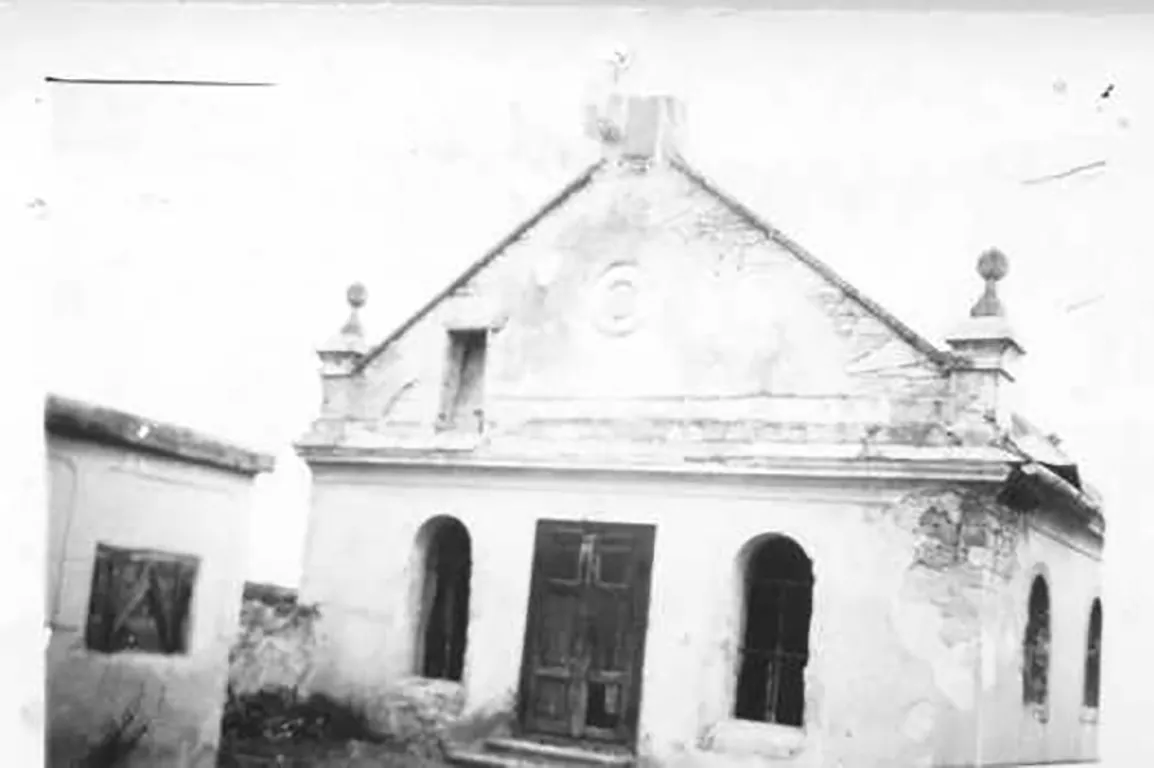
Erdőbénye Synagogue
Erdőbénye's Orthodox synagogue stood on Hunyadi Street in a wine village of the Tokaj-Hegyalja region. Built around 1840 in Neoclassical style, it burned in 1903 and was rebuilt with donations. Its congregation was deported to Auschwitz in 1944. The derelict building was pulled down under Communist rule in the 1980s; who demolished it is not recorded.
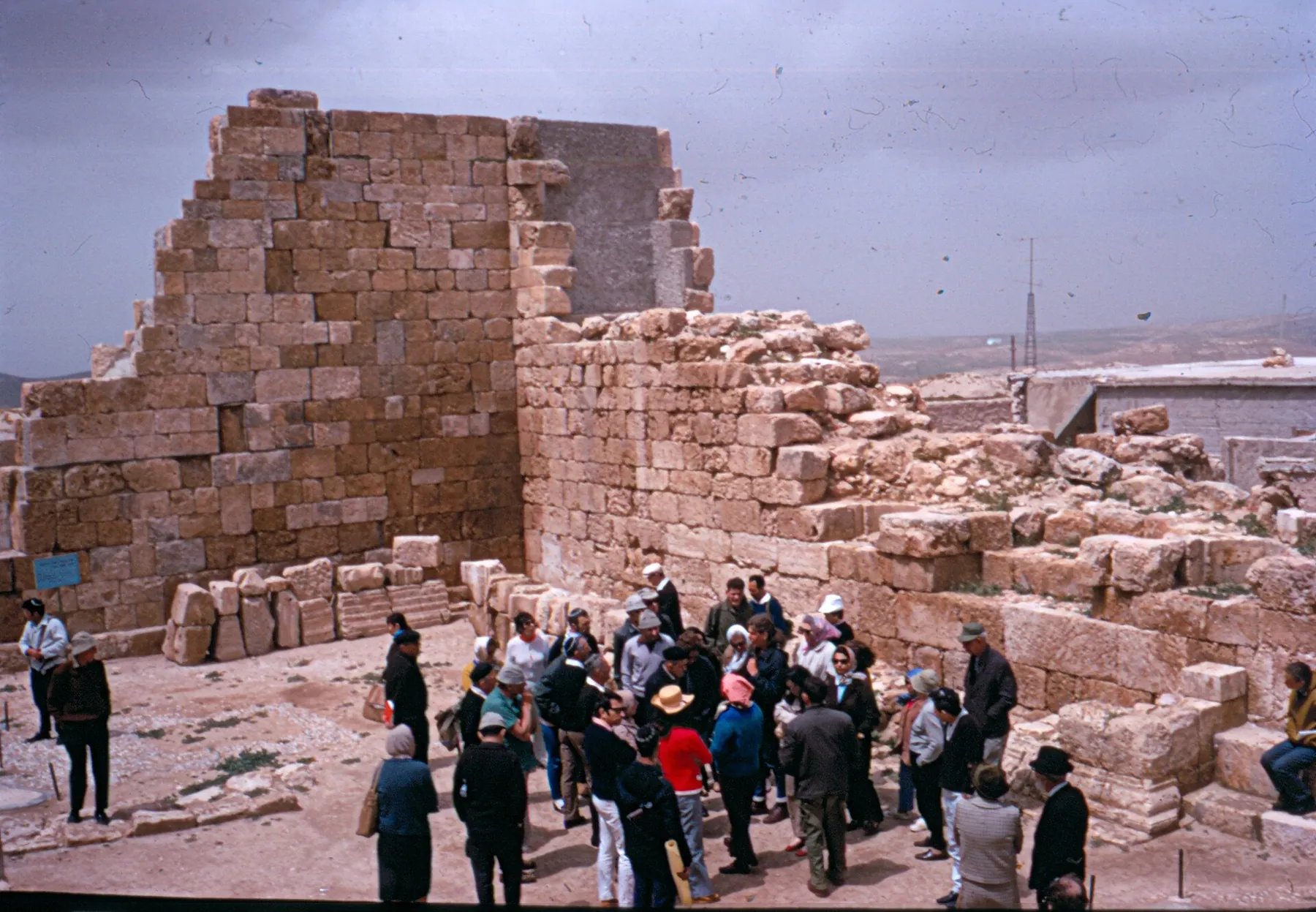
Eshtemoa Synagogue
The Eshtemoa Synagogue is a rare broadhouse synagogue of the Roman or Byzantine period in the south Hebron Hills, with its Torah niches set in the long north wall. It went out of Jewish use at an unknown date and became a mosque. Its western wall still stands about 8.5 metres high; the other walls survive lower.
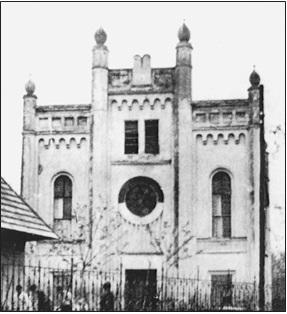
Fadd Synagogue
Fadd's synagogue was a small building in a simplified Moorish style, with four turret-like pilasters and a round window over the door, probably built around 1900 for a village community of just over a hundred Jews. It was demolished at an unrecorded date by the 1980s, and nobody is named as responsible.
Falkušovce Synagogue
The synagogue of Falkušovce, a small Zemplín village near Michalovce, served a rural Jewish community whose cemetery holds stones dated 1899 to 1940. After the Holocaust it stood unused, and in June 1947 the national Jewish body reported that villagers were taking the isolated building apart. Nothing of it is recorded today.

Fasanenstrasse Synagogue
The great liberal synagogue of Berlin-Charlottenburg, designed by Ehrenfried Hessel and dedicated in 1912. Crowned by three domes and seating about 1,720, it was where Leo Baeck preached. The Nazis set it on fire during the November pogrom of 9–10 November 1938; the ruins were cleared in 1957–58.
First Sephardic Synagogue of Banja Luka
The first synagogue of Banja Luka's Sephardic Jews was a wooden building put up in 1870 on the left bank of the Crkvena river, where the city market stands today. According to the town's Jewish community it was burned to the ground eight years later by the Austro-Hungarians, in the year they occupied Bosnia.
First Synagogue of Holešov
Holešov's first synagogue, a wooden building that served the Jewish community from its beginnings in the late fifteenth or early sixteenth century, was destroyed in a great fire in the town, dated by most sources to 1560. The fire also consumed the community's archive. The surviving Šach synagogue was built to replace it.

First Synagogue of Luxembourg City
Luxembourg City's first modern synagogue opened in 1823 in a building on the rue du Séminaire, beside the Hôtel de Bourgogne, and served the community for about seventy years. Too small after 1870, it was replaced in 1894, sold in 1895 and later disappeared when the Sainte-Sophie girls' boarding school expanded.
First Synagogue of Osoblaha (1570)
The first documented synagogue of Osoblaha (Hotzenplotz), a Moravian enclave inside Silesia, was built in 1570 for a community of about 130 families that had grown as a refuge for Jews barred from Silesian towns. It burned down in 1625 and was replaced on the same site by a similar building.
First Synagogue of Ploiești
The first synagogue of Ploiești, in Wallachia, was built at the beginning of the 18th century near the Jews' first cemetery at the edge of the town. Pinkas Hakehillot Romania says the synagogue and cemetery were destroyed by order of the ruling prince, whom it names inconsistently, and the Jews then moved their quarter away from the town.
First Synagogue of Sečovce
The first synagogue of Sečovce, consecrated in 1873 for the town's Orthodox community, stood on today's Hodvábna Street beside the Trnávka stream, with a ritual bath, a classroom and the rabbi's flat. It burnt down twice; after the second fire, recorded in 1904, the community built a new synagogue on another site.
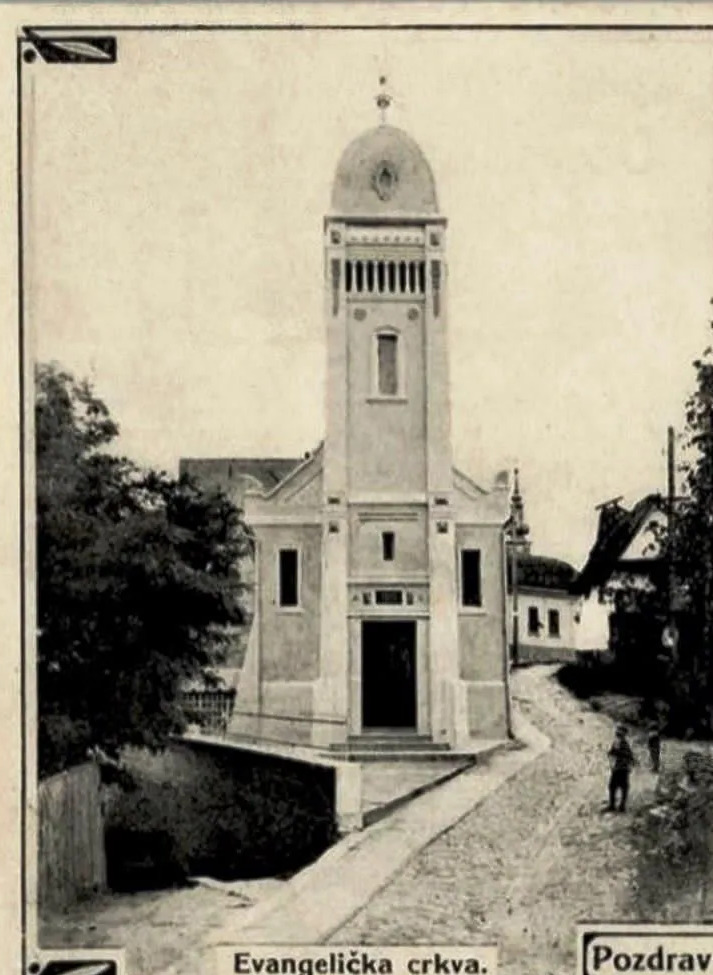
First Synagogue of Vukovar
Built in 1845 on Gajeva ulica in Stari Vukovar, this small classicist hall with Egyptian touches is held to be the first purpose-built synagogue in Civil Croatia. Replaced in 1889, it was sold to the Hungarian Calvinists, given a concrete bell tower in 1910, and demolished in the late 1960s after the 1965 Danube flood.
First Wooden Synagogue of Loštice
The first synagogue of Loštice in central Moravia was a log-built wooden house of prayer, probably raised around the middle of the sixteenth century in the original Jewish quarter beside the parish church. It was destroyed during the Thirty Years' War, most likely burned during the Swedish invasion, and a second wooden synagogue replaced it in 1651.
Fiľakovo Synagogue
The synagogue of Fiľakovo (Hungarian Fülek), in southern Slovakia, was built in 1873-74 to plans by Adolf Áron Büchler for a community founded in 1820. Its congregation was deported in 1944. Nationalised after the war and used as a grain store, it was demolished under Communist rule in the late 1960s.

Floridsdorf Synagogue, Vienna
The Floridsdorf synagogue in Vienna's 21st district, built in 1875-77 between Holzmeistergasse and Schindlergasse (today Freytaggasse), was a modest brick hall for about 390 worshippers. Local Nazi party groups seized it in spring 1938, so it escaped the November Pogrom. It was forcibly sold in 1941 and disappeared after the war; when, and by whom, is not recorded.
Fourth Synagogue of Novi Sad (1826)
The fourth synagogue of Novi Sad, built in 1826 on today's Jevrejska Street, served a fast-growing Jewish community until 12 June 1849, when the Hungarian revolutionary garrison of Petrovaradin fortress shelled the town and wrecked it. Repaired in the 1850s, it was replaced from 1905 by Lipót Baumhorn's synagogue on the same site.
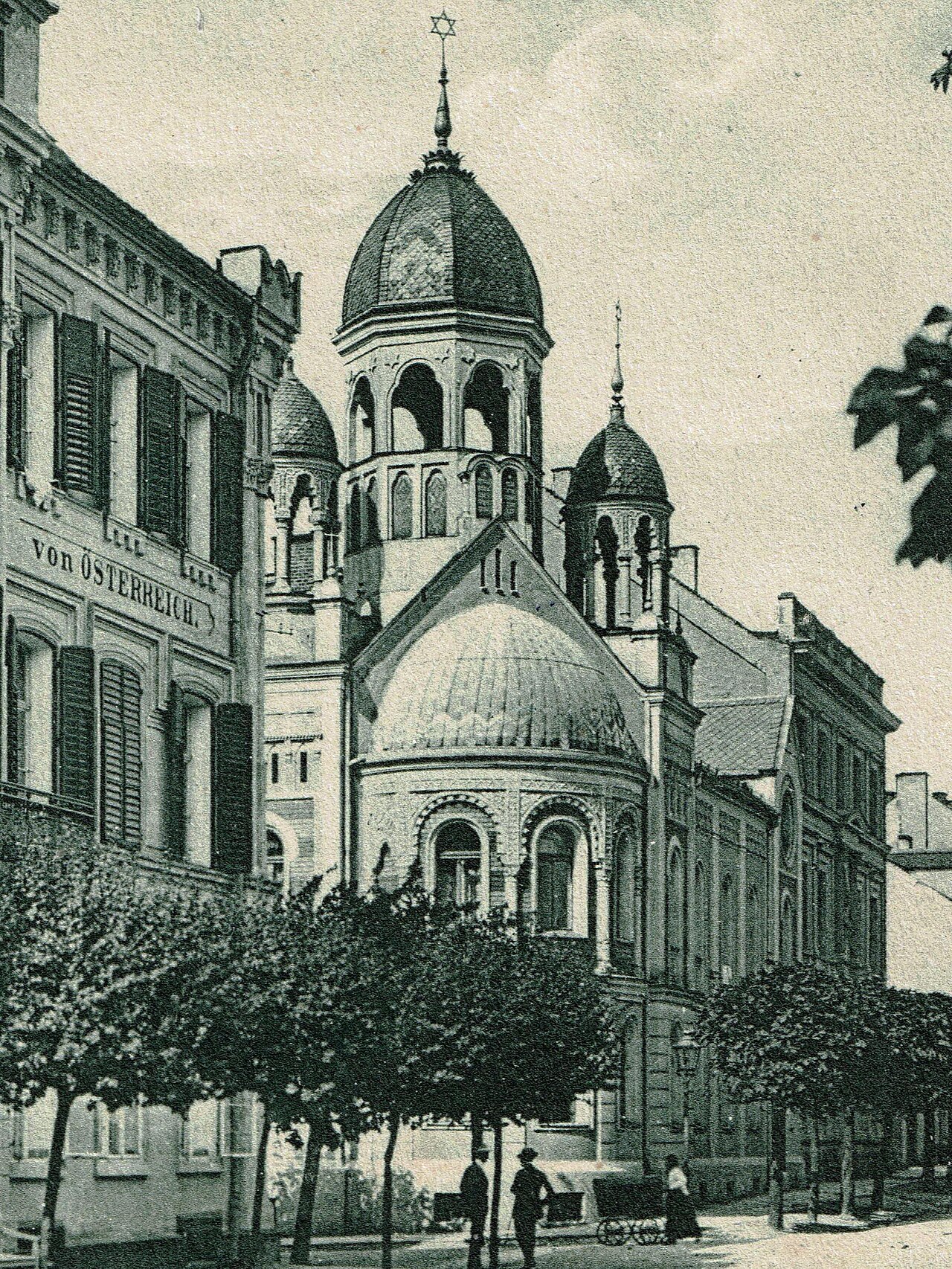
Františkovy Lázně Synagogue
The synagogue of the Bohemian spa town of Františkovy Lázně (Franzensbad), a domed, twin-towered building in oriental style completed in the mid-1870s, served a small resident congregation and many Jewish spa guests. Nazis set it on fire in the November pogrom of 1938, and its ruin was cleared by 1944.
Fraterna Temple, Bucharest
The Fraterna Temple was a synagogue on Mămulari Street in the old Jewish quarter of Bucharest, built in 1863 as the house of prayer of the Jewish tailors' guild. Damaged in a great earthquake, it was pulled down in 1986 under the Communist regime; no source found names who ordered the demolition.

Frauenkirchen Synagogue
The synagogue of Frauenkirchen, one of the Seven Communities of Burgenland, was a plain two-storey Biedermeier hall with round-arched upper windows in the town's Jewish quarter. After the Nazi takeover of 1938 its congregation was driven out, and in January 1939 the empty building was torn down.
Fredericia Synagogue (Riddergade)
The synagogue in Riddergade served Fredericia's Jewish community, the first in Denmark, from 1719. Rebuilt in 1753, renewed in 1812-14 and again in 1865 after the bombardment of 1864, it held its last service in 1902 as the community dwindled away, and was sold for demolition and pulled down in 1916.
Fruegade Synagogue, Nakskov
Nakskov's first synagogue was fitted out by 1714 in rented rooms in a house on the corner of Fruegade and Søndergade, later bought by Nathan Elsass and sold to the congregation. Often called the first synagogue in Denmark, it served about 130 years until, badly decayed, it was torn down around 1845.
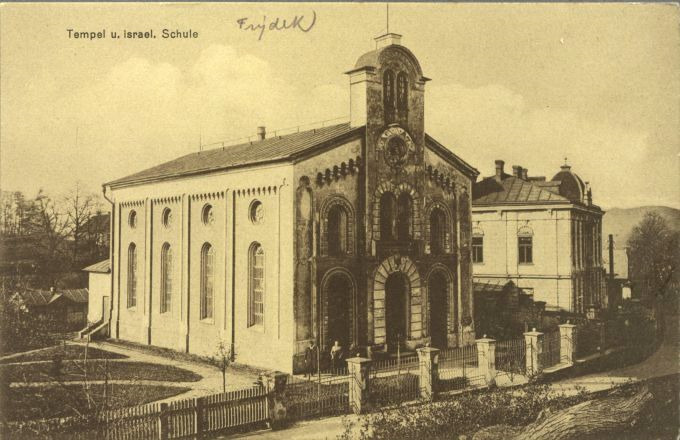
Frýdek Synagogue (Frýdek-Místek)
The synagogue of Frýdek, built in 1864-65 to plans by Ambrož Zapletal on today's Revoluční street, served the joint Jewish community of Frýdek and Místek. Three months after the Nazi German occupation it was gutted by fire in June 1939, and its ruin was cleared about a year later. The congregation perished in the Holocaust.
Fülöpszállás Synagogue
Fülöpszállás, an old Kiskun village in Bács-Kiskun county, had a small synagogue built around 1880 according to Anikó Gazda's survey of Hungarian synagogues. Gazda found it demolished when she surveyed the site between 1980 and 1987. When and by whom it was pulled down, and what it looked like, are unknown.
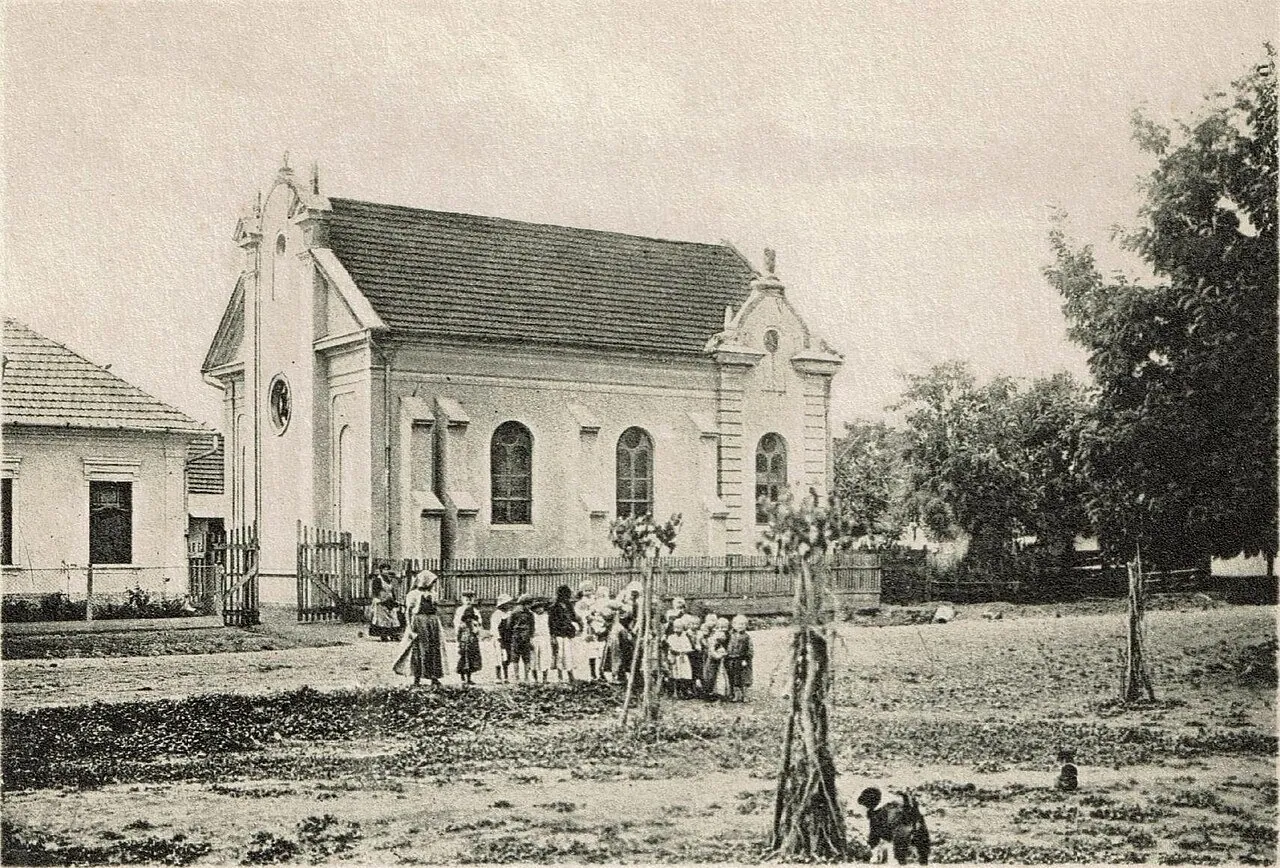
Füzesabony Synagogue
The Orthodox synagogue of Füzesabony, a railway-junction town in Heves county, was built shortly before the First World War, in 1910 or 1912. Its congregation was deported to Auschwitz in June 1944. Photographed as a gutted shell after 1945, the building was demolished in the early 1950s under Communist rule.
Gajary Synagogue
Gajary, a large village in the Záhorie lowland near the Morava river, had a Jewish community of 180 people in the mid-nineteenth century. Its synagogue, dated to the second half of that century, was demolished in the first years after the Second World War; who pulled it down is not recorded, and no photograph of it has been found.
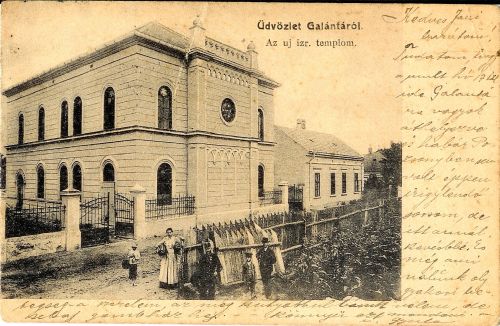
Galanta Synagogue
Galanta's new synagogue on Új utca, today Štúrova, was dedicated in 1899: a large classical-style building of 16 by 22 metres attributed to the architect Dezső Milch. Its congregation was deported in June 1944. Survivors restored it after the war, and it served them until it was demolished under Communist rule in the 1970s, probably in 1976.
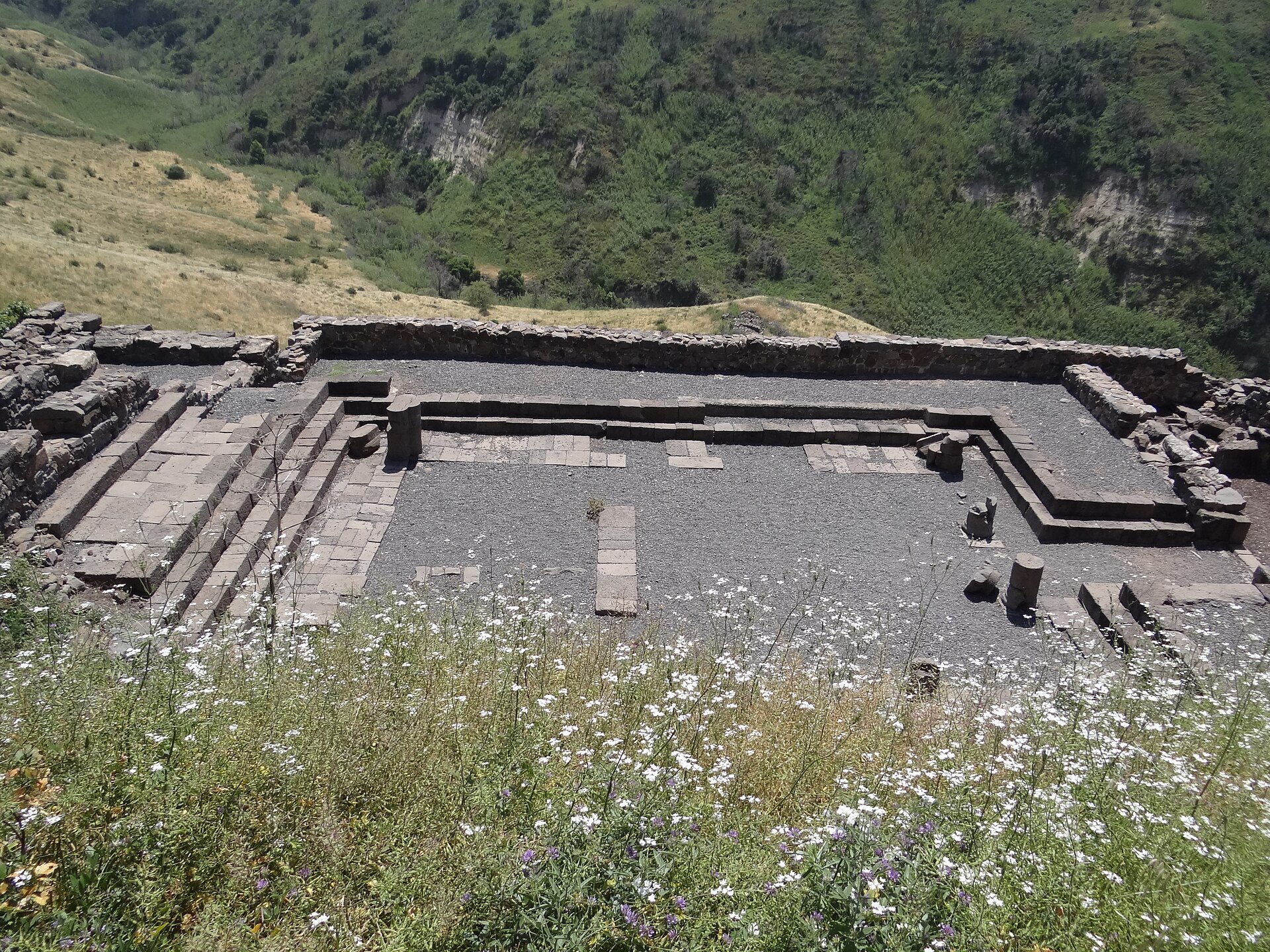
Gamla Synagogue
Gamla's synagogue was a basalt hall ringed by stepped benches and columns, built against the eastern wall of a Jewish hill town in the Golan around the turn of the era. It is among the oldest synagogues known. The Roman army stormed Gamla in 67 CE, and the town was never resettled.
Gaster Temple, Bucharest
The Gaster Temple was a small synagogue on Sticlari Street in Bucharest, built in 1858 by the Gaster family and rebuilt in 1903. Damaged by earthquakes, it was demolished in 1987 during the Communist regime's systematization of central Bucharest, which swept away most of the city's old Jewish quarters.
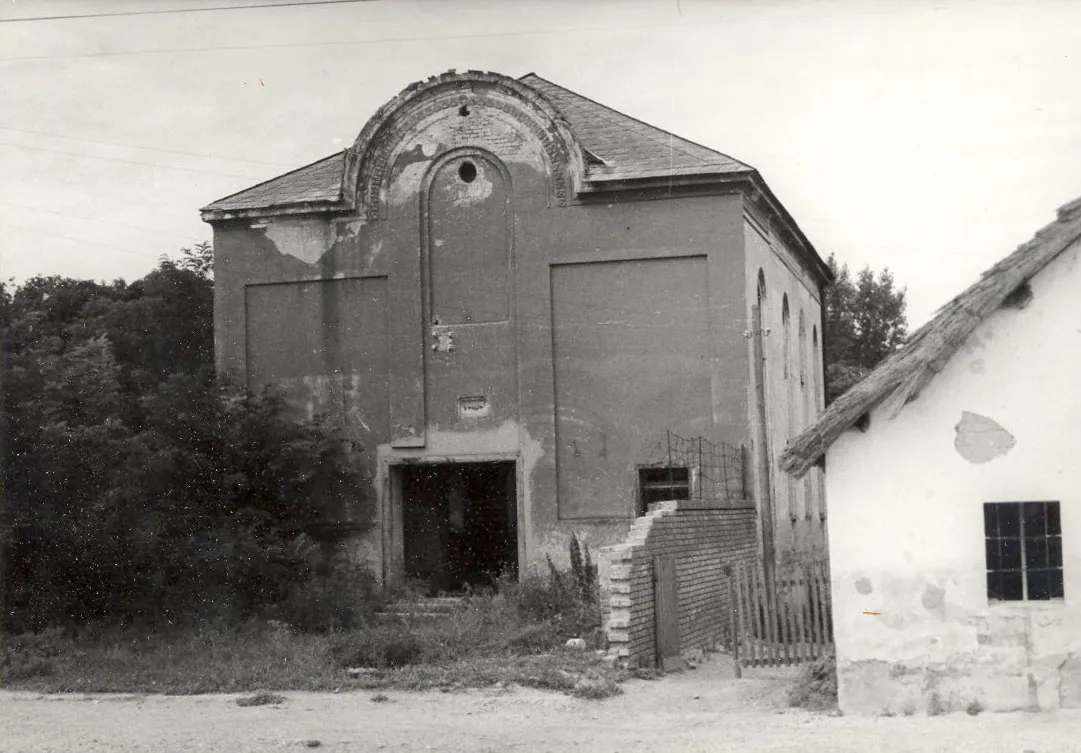
Gattendorf Synagogue
Gattendorf's synagogue, a plain brick hall with a curved front gable, was built in 1862 by the Kittsee master builder Martin Köstler for a small village congregation in northern Burgenland. Its last Jewish families were driven out in 1938. Badly damaged that year, it later served as a barn and machine hall and was demolished in 1996.

Gaza Maiumas Synagogue
The synagogue of Gaza Maiumas stood on the seashore of ancient Gaza's port. Its mosaic floor, dated by a Greek inscription to 508-509 CE, showed King David playing the lyre. Excavators found that the building was burned, probably in the first half of the seventh century. The mosaics were later lifted and taken to museums.
Gelnica Synagogue
The synagogue of Gelnica, an old German mining town in the Spiš region of eastern Slovakia, was built at the beginning of the twentieth century. It burned and was pulled down in 1939, in the first year of the Slovak State. A published list attributes the destruction to the town's local German population.

Gennep Synagogue
Gennep's small synagogue stood on the Kerkstraat, now the Torenstraat, in a building the congregation bought in 1864 and consecrated in 1874. Most of the town's Jews were murdered in the Holocaust. In the war the building was badly damaged by a bomb and then set on fire by local Dutch people; it was never restored and was later cleared.
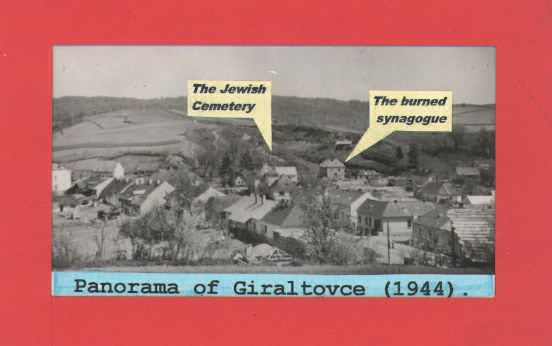
Giraltovce Synagogue
The synagogue of Giraltovce, a small town in the Šariš region of north-eastern Slovakia, was built around 1900 for a mainly Orthodox community. Its congregation was deported in 1942. A 1944 view of the town marks the building as burned, and it was gone soon after the war.
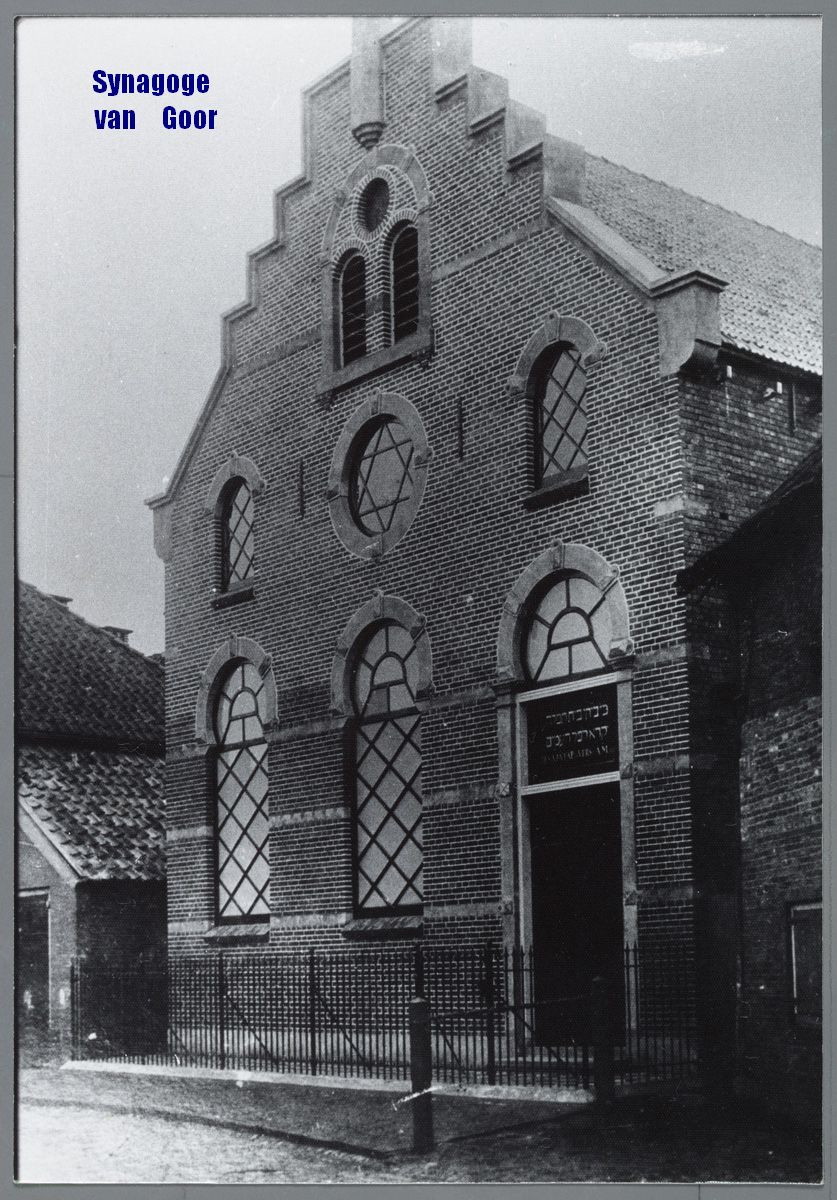
Goor Synagogue (1902)
Goor's synagogue of 1902, a brick hall with a stepped gable on the Schoolstraat (formerly Malmberg), replaced an older prayer house on the same street. The Nazi occupiers stripped it, a bombing in spring 1945 badly damaged it, and after the war the dwindling congregation sold it; it was then pulled down.
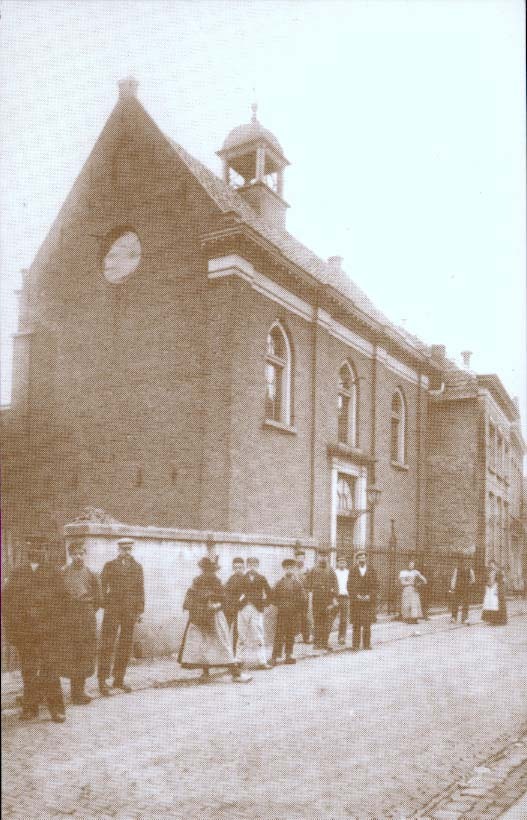
Gorinchem Synagogue (Kweckelstraat)
Gorinchem's synagogue on the Kweckelstraat opened in May 1842 and served the town's Jewish community for a century. Nazi German occupiers and Dutch Nazis (NSB members) wrecked its interior in January 1941, and about seventy of the town's Jews were murdered. Restored after the war, it was sold and demolished in 1958.
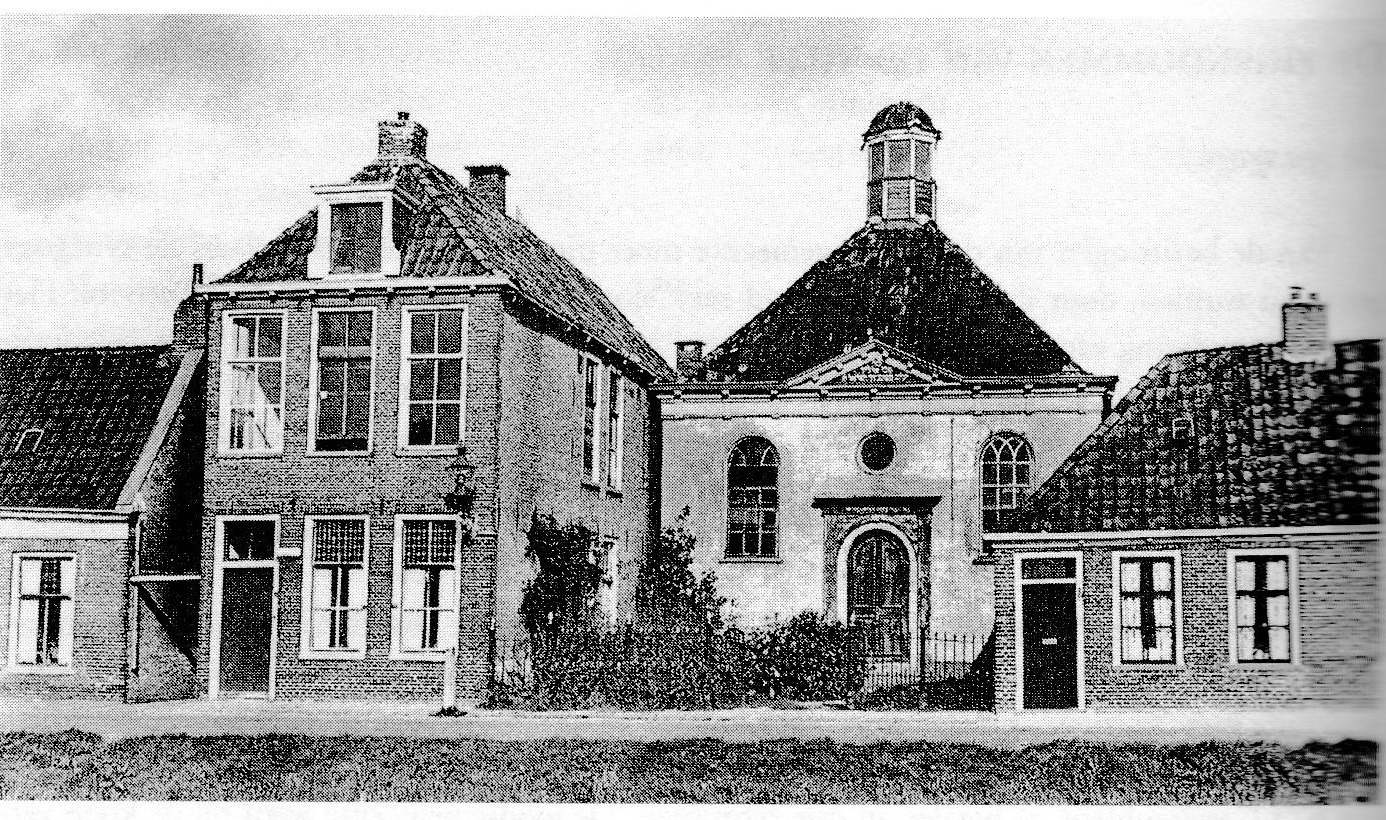
Gorredijk Synagogue
The synagogue on the Langewal in Gorredijk, Friesland, was consecrated on 4 April 1807 and served as the regional synagogue of south-east Friesland. Its last service was held in 1937, and nearly all its members were murdered in the Holocaust. It survived the war but decayed and was demolished in 1953; its ark, bima and benches went to Leeuwarden.
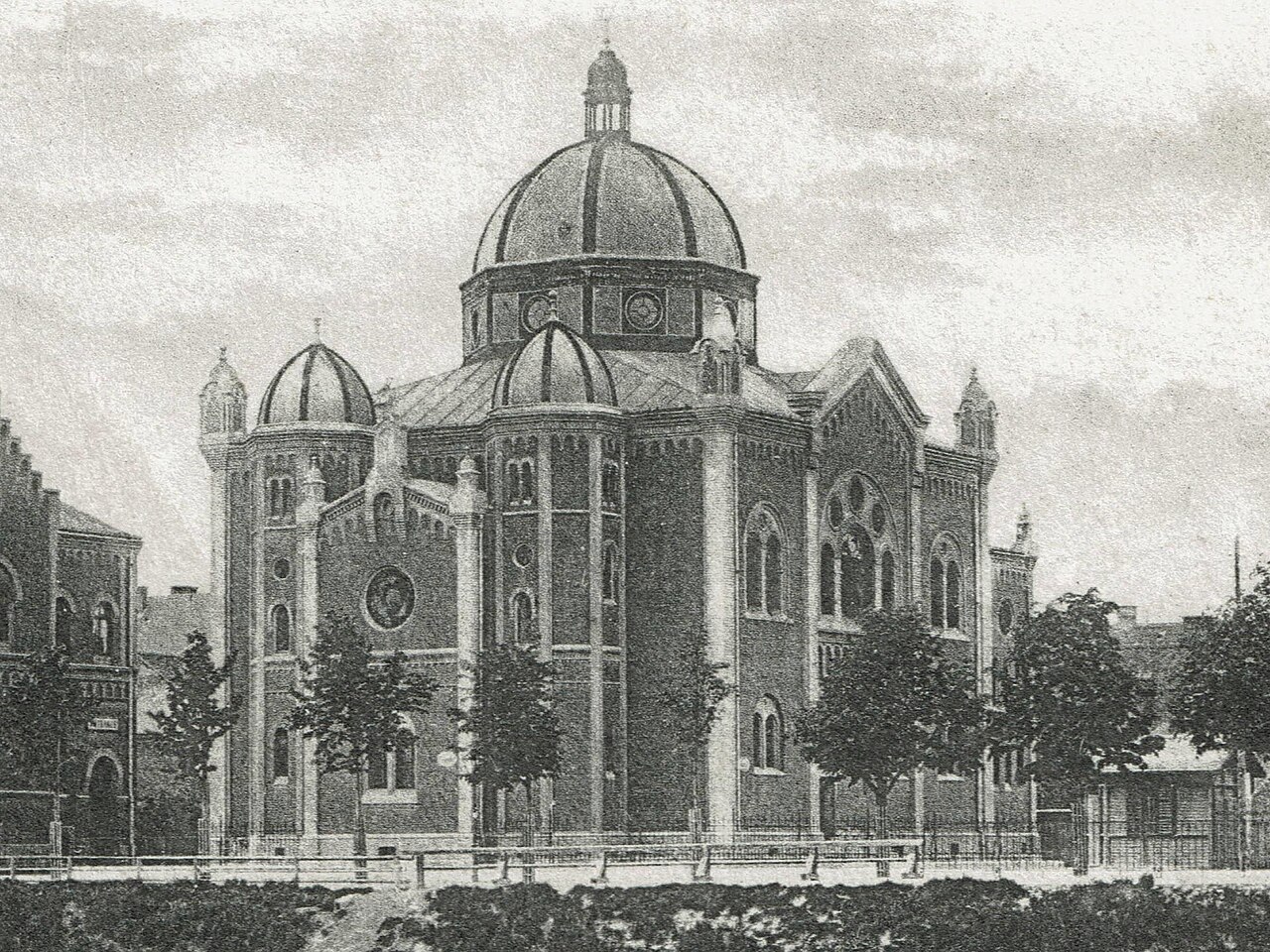
Graz Synagogue
The Graz synagogue on the Grieskai, a domed brick building by the Viennese architect Maximilian Katscher, was consecrated on 14 September 1892 for the Jewish community of Styria's capital. Nazis set it on fire in the November Pogrom of 1938; the ruins were blown up and cleared, and a new synagogue opened on its foundations in 2000.
Great Bet Hamidrash of Piatra Neamț
The Great Bet Hamidrash of Piatra Neamț was a wooden house of study and prayer founded in 1831. It burned in 1848, and its rebuilding was opposed by a nearby church and needed a permit from the Prince's office. In 1859 the municipality of Piatra Neamț destroyed it. It is not the surviving wooden Baal Shem Tov synagogue.
Great Choral Synagogue of Daugavpils
Daugavpils's Great Choral Synagogue on Saules iela, begun in 1864 and finally opened in 1894, was the largest and most beautiful of the roughly 45 synagogues and prayer houses of Dvinsk, one of the great Jewish cities of the Russian Empire. The Nazis destroyed it in July 1941, within weeks of occupying the city.

Great Choral Synagogue of Liepāja
Liepāja's Great Choral Synagogue, built in 1870–1873 on the Peter Market and modelled on Berlin's New Synagogue, was the most important of the port city's twelve synagogues. After Nazi Germany captured Liepāja in June 1941, the occupiers had Jewish forced labourers tear it down by hand in July 1941.
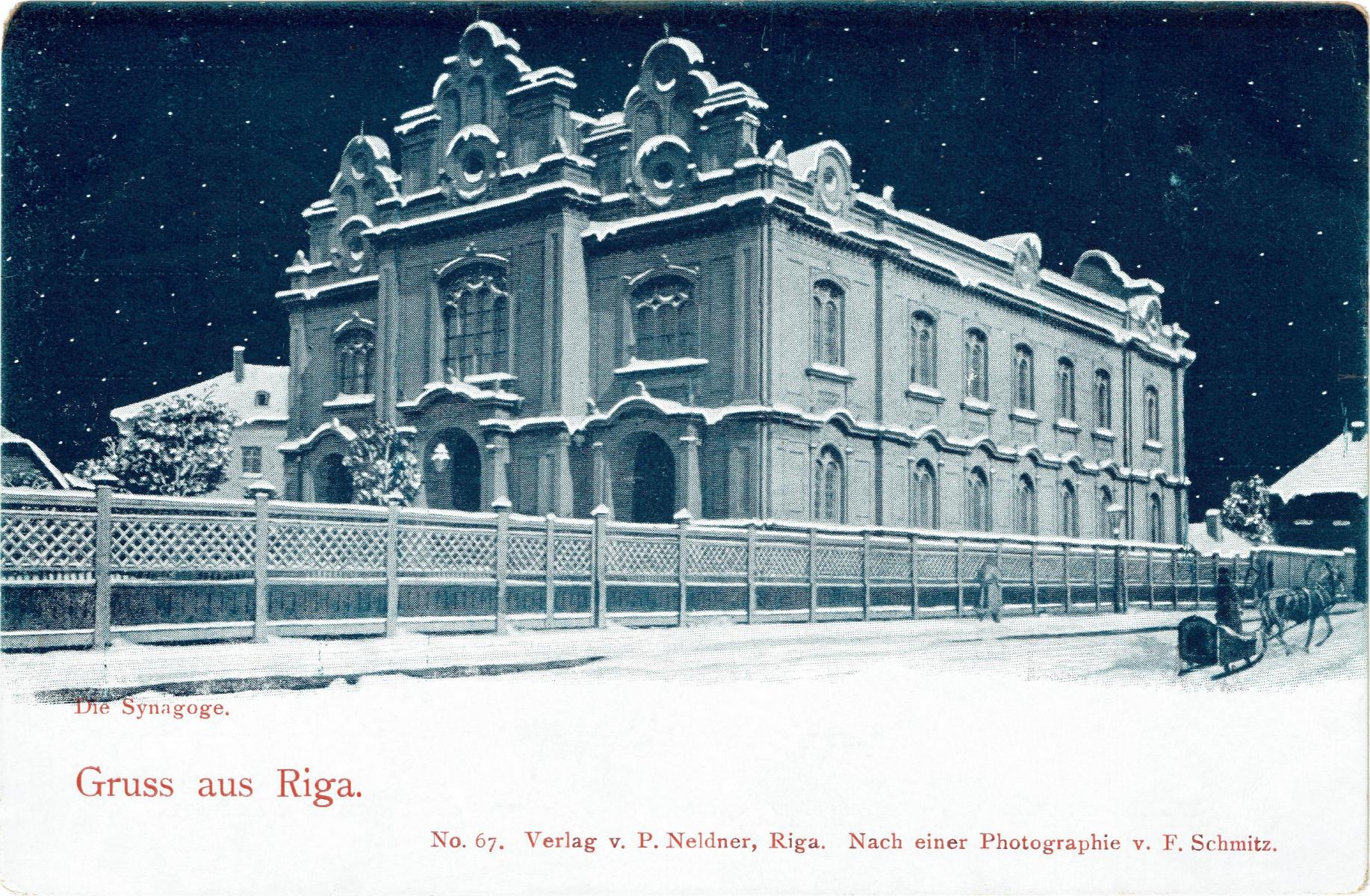
Great Choral Synagogue of Riga
Riga's largest synagogue, designed by Livonian governorate architect Paul von Hardenack and completed in 1871 on Gogol Street, was famous for its cantors and choir. On 4 July 1941, days after German troops entered Riga, Latvian Nazi collaborators of the Arājs Kommando set it on fire under German supervision.
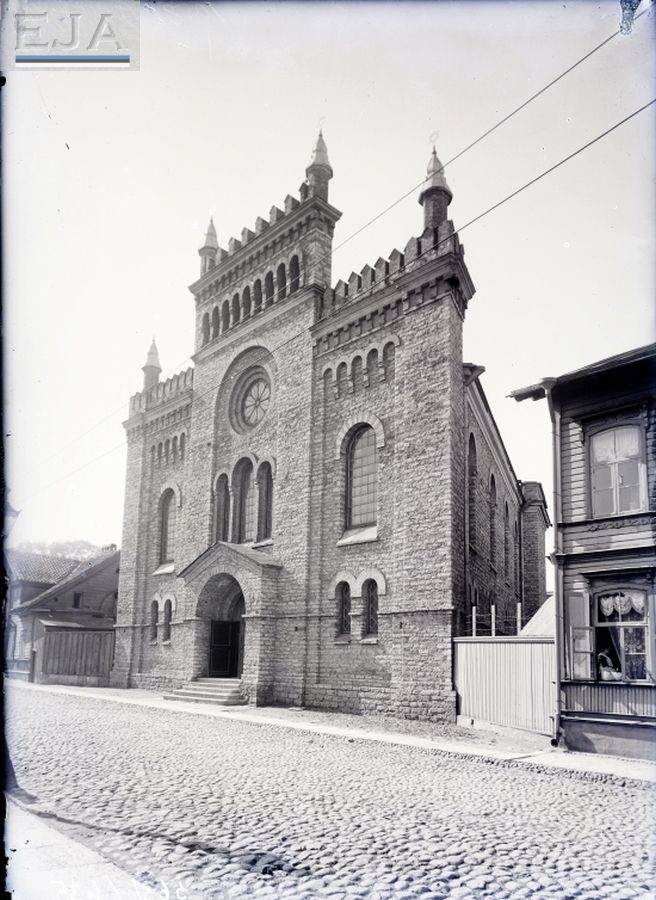
Great Choral Synagogue of Tallinn
Tallinn's Great Choral Synagogue, designed by Nikolai Thamm Sr. and consecrated in 1885 on the corner of Maakri Street, was the only synagogue building in the city until 1944. The German occupiers made it a warehouse; it burned in the Soviet air raid of 9 March 1944, and its ruins were cleared in 1947.

Great Community Synagogue, Leipzig
Leipzig's main community synagogue, designed by Otto Simonson, a pupil of Gottfried Semper, and dedicated by Adolf Jellinek in 1855. An early Moorish Revival synagogue with about 1,600 seats, it served one of Germany's largest Jewish communities until the Nazis burned it on 9–10 November 1938.
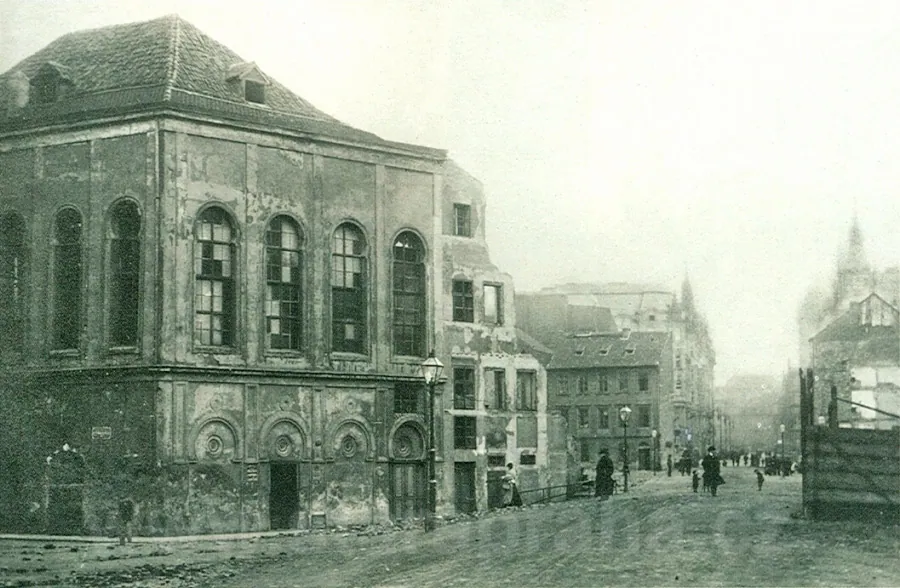
Great Court Synagogue, Prague
The Great Court Synagogue was built after 1627 by the court financier Jacob Bassevi on the northern edge of Prague's Jewish Town. Burned in 1689 and 1754 and rebuilt each time, it was given a Moorish-style facade in 1883 and was pulled down in the asanace slum clearance of Josefov at the start of the twentieth century.
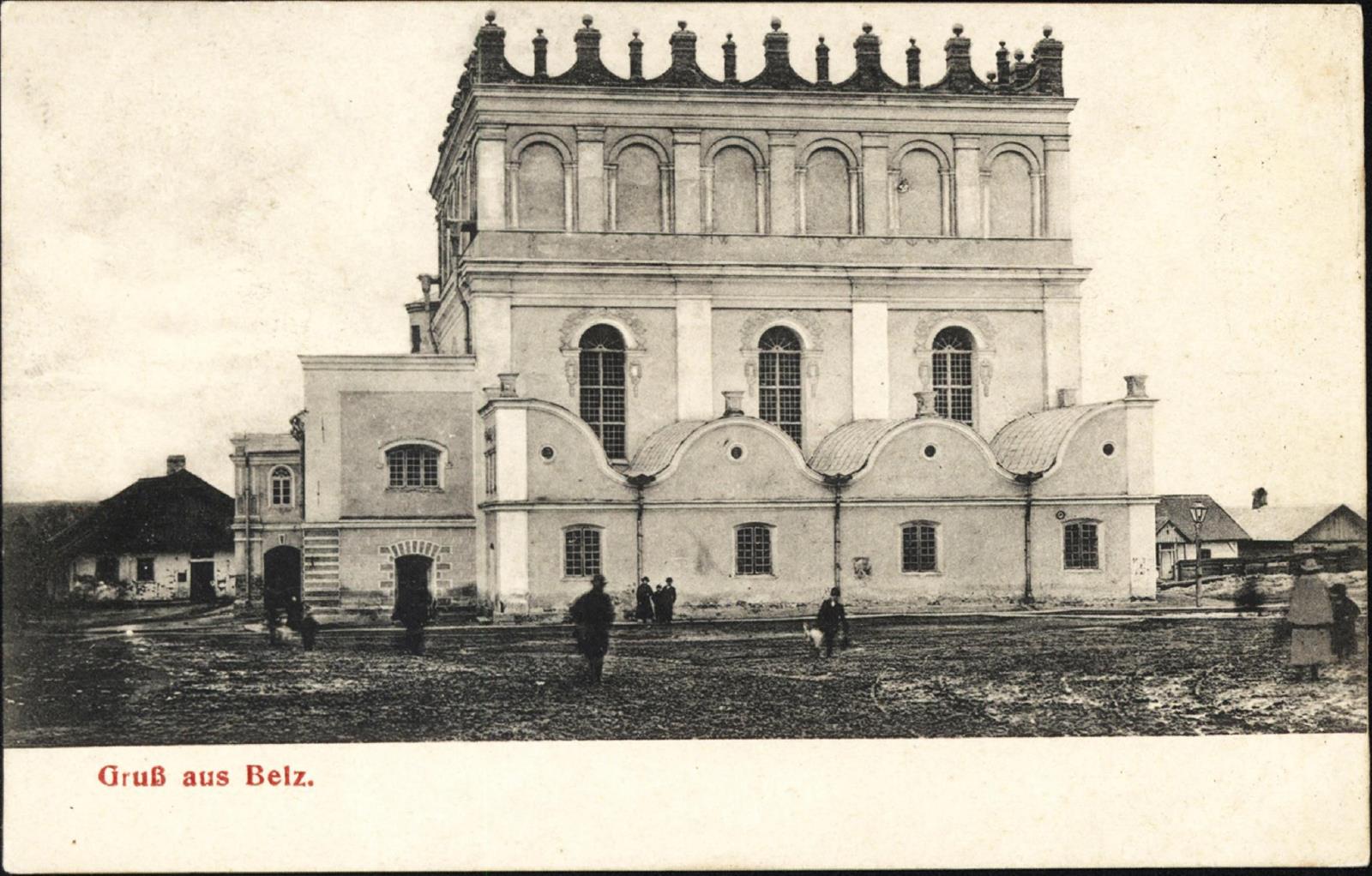
Great Hasidic Synagogue in Belz
The great synagogue of the Belz Hasidic court was a landmark of eastern Galicia; German occupiers burned and blasted it in 1942, and Soviet authorities later cleared its ruins.
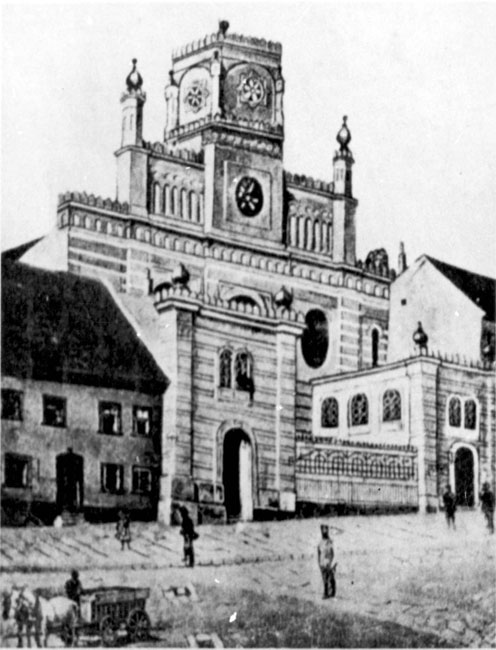
Great Orthodox Synagogue of Bratislava (Zámocká Street)
The great synagogue of Bratislava's Orthodox Jews stood on Zámocká Street below the castle. Designed by Ignaz Feigler the Younger and finished in 1863, it seated over a thousand worshippers. It was wrecked by the Nazis in 1938, stood ruined through the war and the murder of most of the city's Jews, and was demolished in 1961.
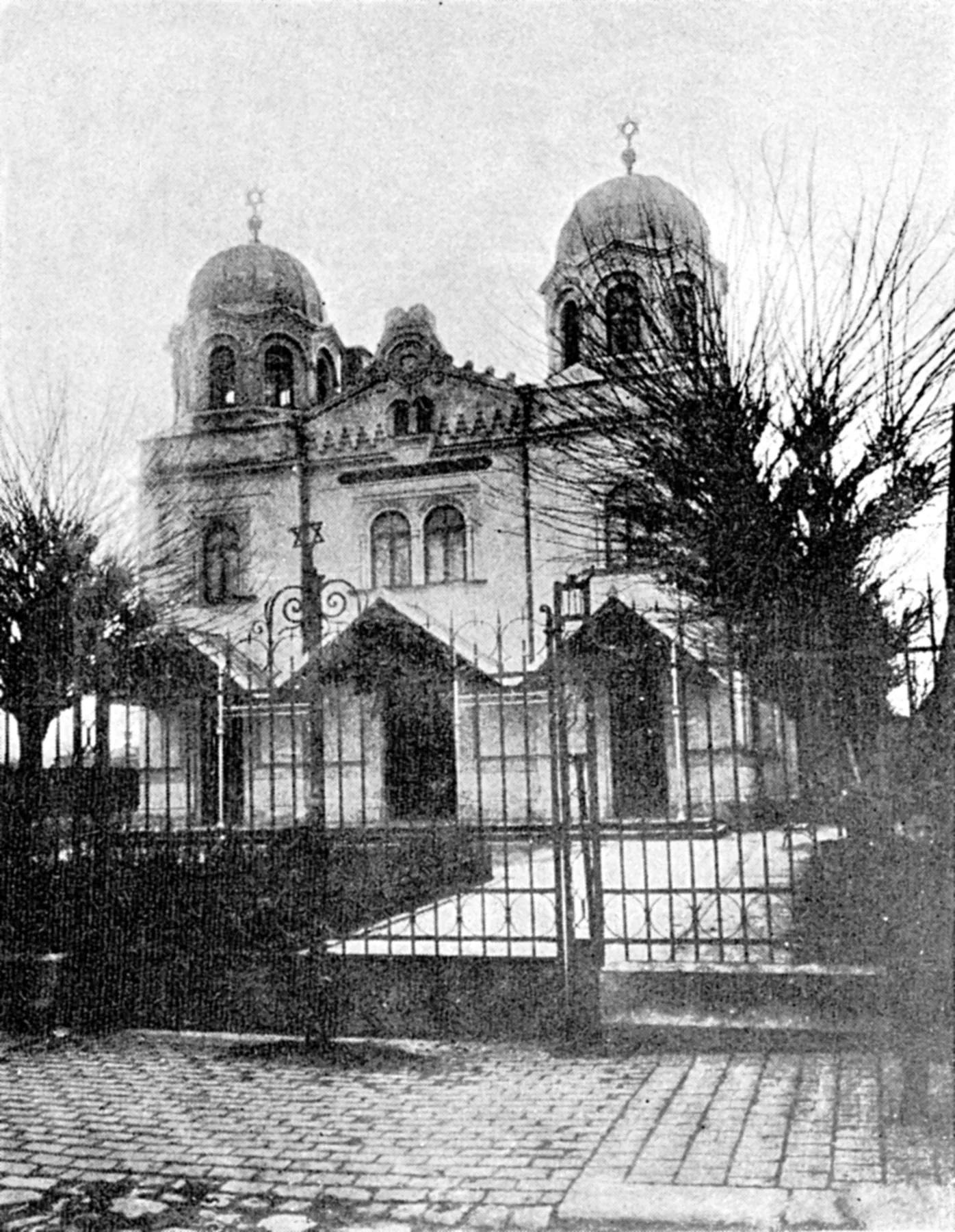
Great Spanish Temple (Cahal Grande), Bucharest
The Cahal Grande on Negru Vodă Street was the main synagogue of Bucharest's Sephardic Jews, founded around 1818 and rebuilt in the nineteenth century. Legionnaires (Iron Guard) burned it completely in the January 1941 pogrom. Its ruins were cleared by the Communist authorities in the mid-1980s for Ceaușescu's Union Boulevard.

Great Synagogue (Adas Yeshurun)
A Moorish-style synagogue consecrated in 1882 for the Jewish community of Kežmarok in the Spiš region of northern Slovakia. It seated about 500 worshippers and served the town until the Holocaust. After the war it stood empty as a storehouse, and the communist authorities demolished it around 1961 to build the road to Levoča.
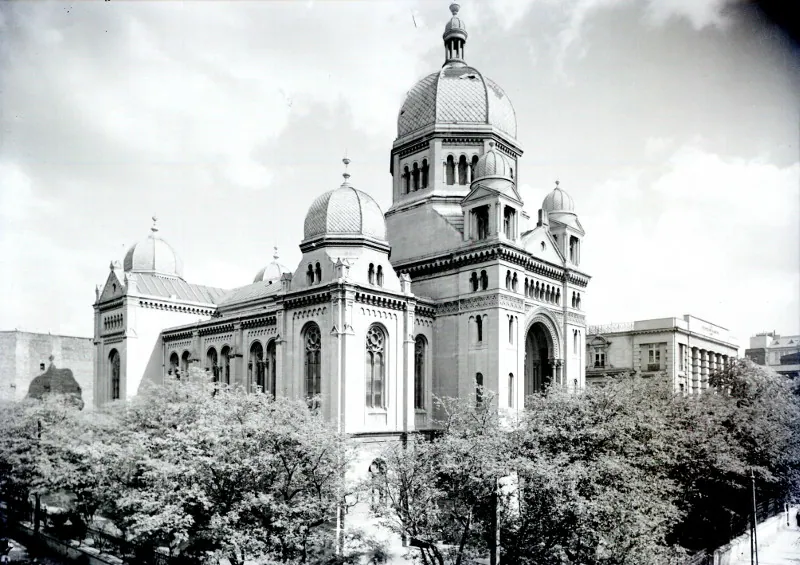
Great Synagogue in Łódź
Built for Łódź’s progressive Jewish congregation, this domed landmark opened in 1887 and was burned by German occupiers in November 1939.
Great Synagogue of Alexandria
The great synagogue of Roman Alexandria, remembered in rabbinic texts as the 'double colonnade' (diplostoon), was a basilica-like hall with a colonnade within a colonnade, seventy-one golden chairs and a central wooden platform. It was lost in the Jewish revolt of 115–117 CE; the Jerusalem Talmud names Trajan as its destroyer. Nothing of it is known to survive.
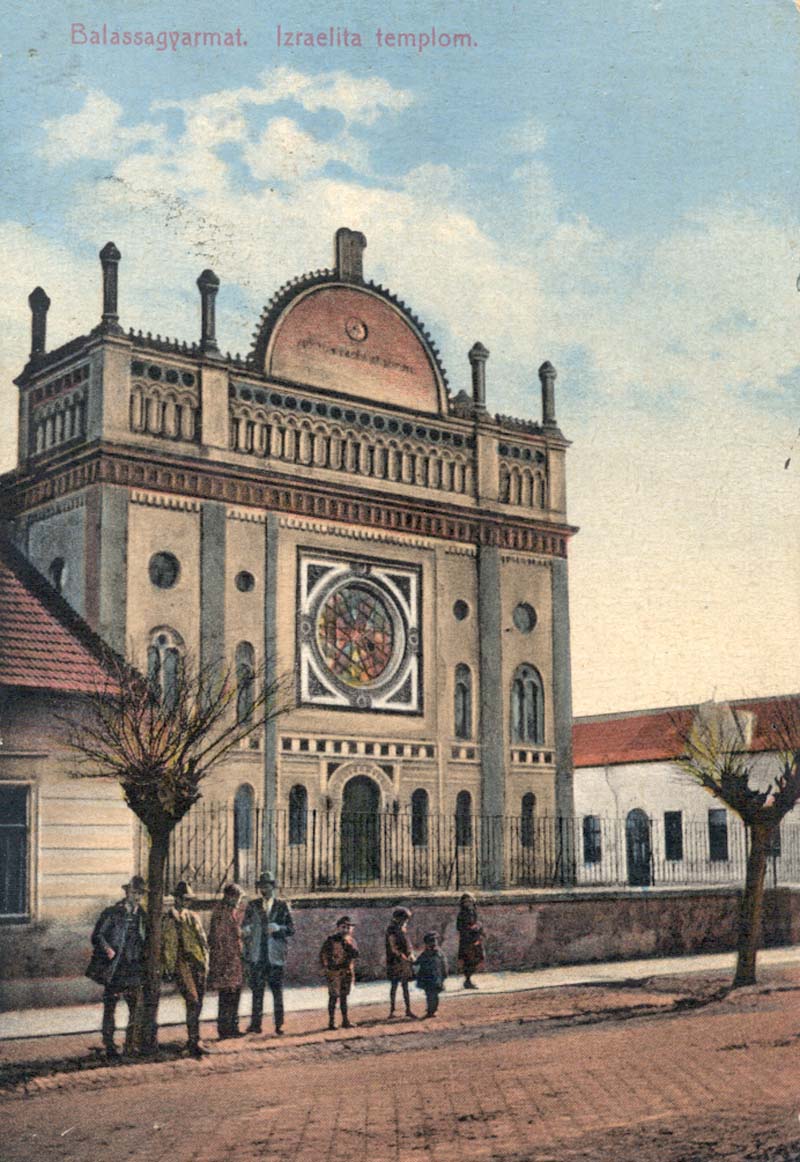
Great Synagogue of Balassagyarmat
Balassagyarmat’s great Orthodox synagogue was a landmark of the town’s Jewish life. Nazi forces used it for ammunition and blew it up as they retreated in December 1944.
Great Synagogue of Briceni
The Great Synagogue of Briceni, a tall stone shul traditionally dated to 1826, stood in the market centre of this almost wholly Jewish town in northern Bessarabia. Its dome was painted as a night sky with zodiac signs. It survived the war, but the Soviet authorities had it bulldozed after 1945.
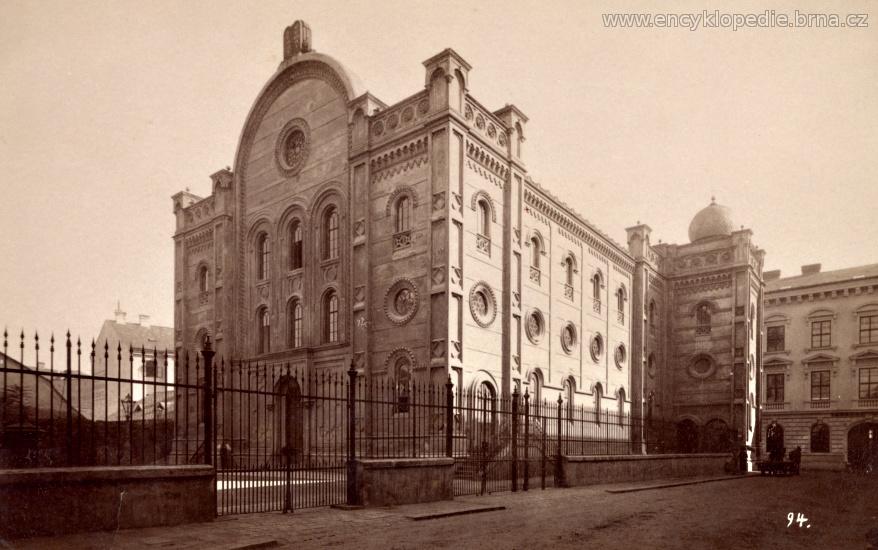
Great Synagogue of Brno
Brno's Great Synagogue, a three-storey Neo-Romanesque temple by the Viennese architects Romano and Schwendenwein, was consecrated in 1855, the first synagogue in a city that had barred Jews since 1454. Local Brno Nazis burned it to the ground in March 1939, days after the occupation. Its plot on Spálená street is still empty.
Great Synagogue of Brăila
The Great Synagogue of Brăila, built in 1832 or 1833 on Coroanei Street (today Mihail Sebastian Street), was one of the two principal synagogues of the Danube port's Jewish community. At an unknown date it was dismantled and its plot sold; the Hotel Corona now stands on the site.
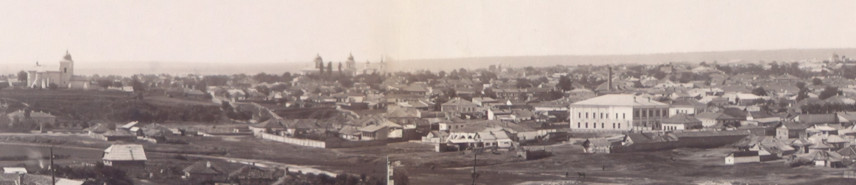
Great Synagogue of Chișinău
The Great, or "Triple", Synagogue was one of the oldest synagogues of Kishinev, standing in the lower old town near the Old Cathedral. Consecrated around 1806 after the 1802 earthquake, it survived the 1940 earthquake and the Second World War, but the Soviet authorities blew it up around 1960 and built a hospital on the site.

Great Synagogue of Csenger
Csenger's main synagogue, a late Baroque hall with a tiered, domed attic, stood near the market square and served a strictly Orthodox community led for 110 years by rabbis of the Yungreis family. Hungarian police stripped it in 1944 before 602 Jews were deported. It was torn down in 1963 after the state sold the plot.
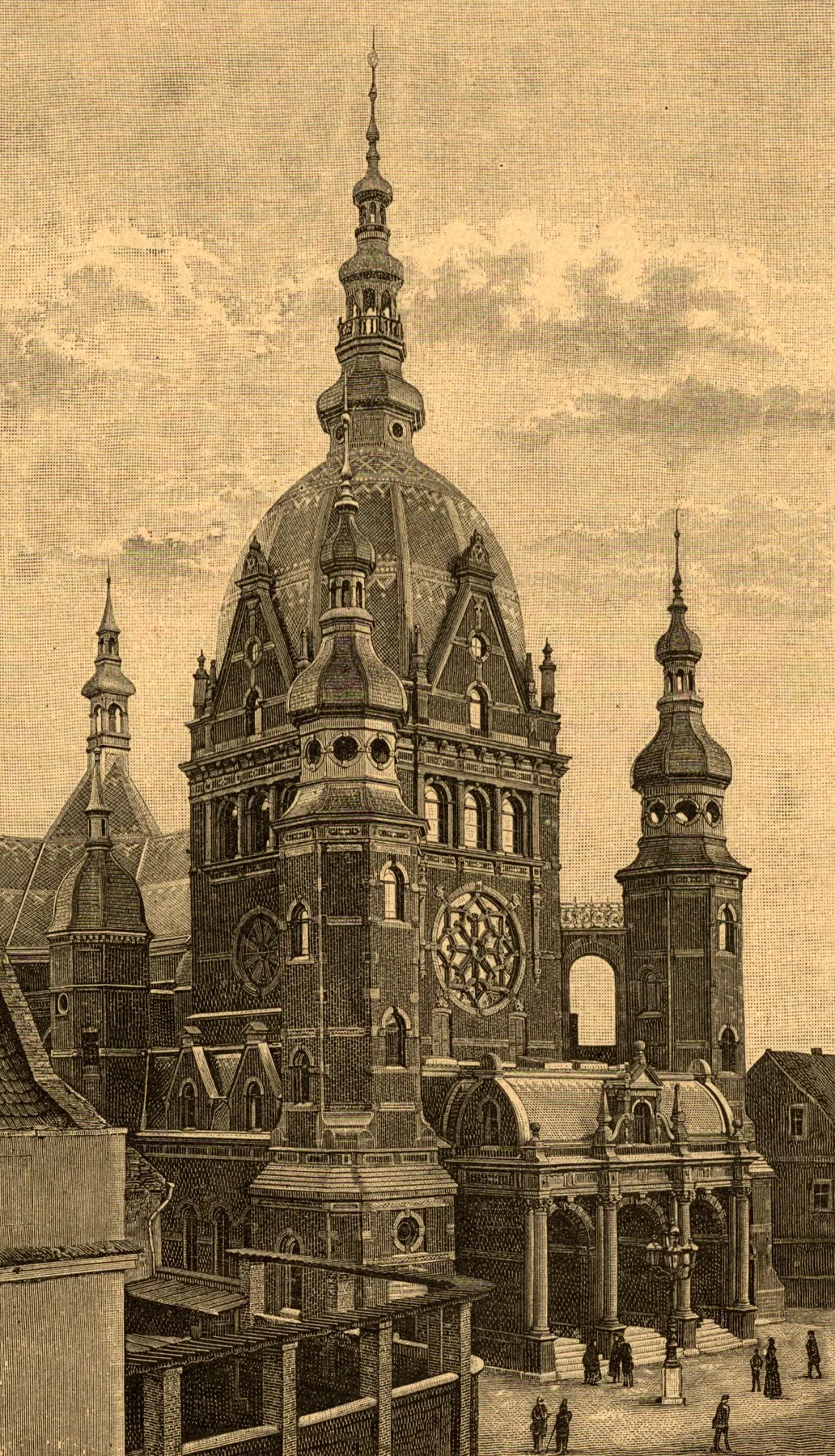
Great Synagogue of Danzig
Dedicated in 1887 on the Reitbahn in central Danzig, this domed, twin-towered synagogue by the Berlin firm Ende & Böckmann was the main house of worship of the city's newly unified Jewish community. After the community was forced to sell it to fund emigration, the Nazi-controlled city authorities began demolishing it in May 1939.
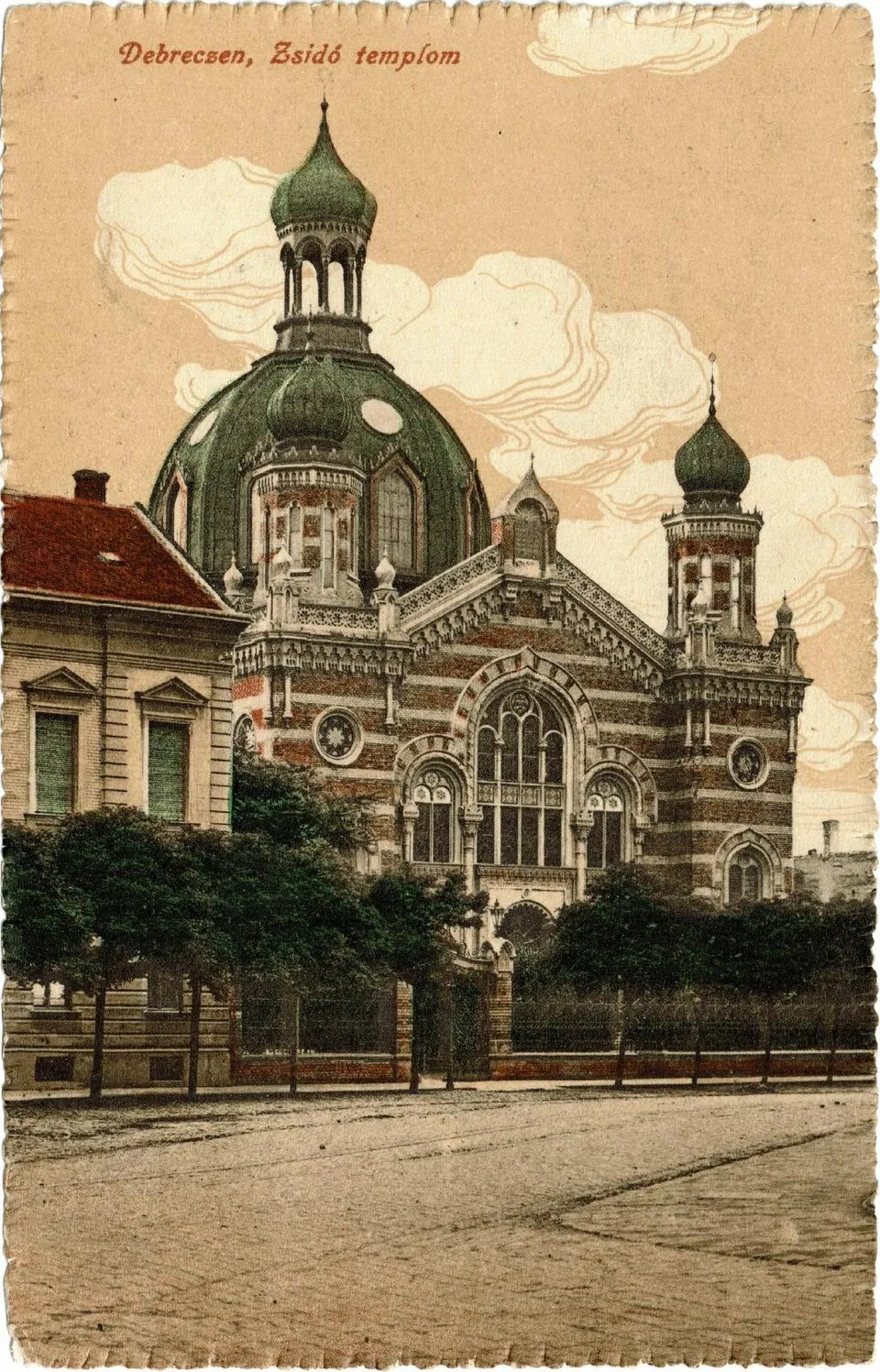
Great Synagogue of Debrecen
The Great Synagogue of Debrecen, a domed, twin-towered Moorish Revival building by the Viennese architect Jakob Gartner, was consecrated in 1897 for the city's Status Quo Ante community. Damaged in the Second World War and gutted by fire in 1948, it stood as a ruin until the Communists demolished it in 1962.
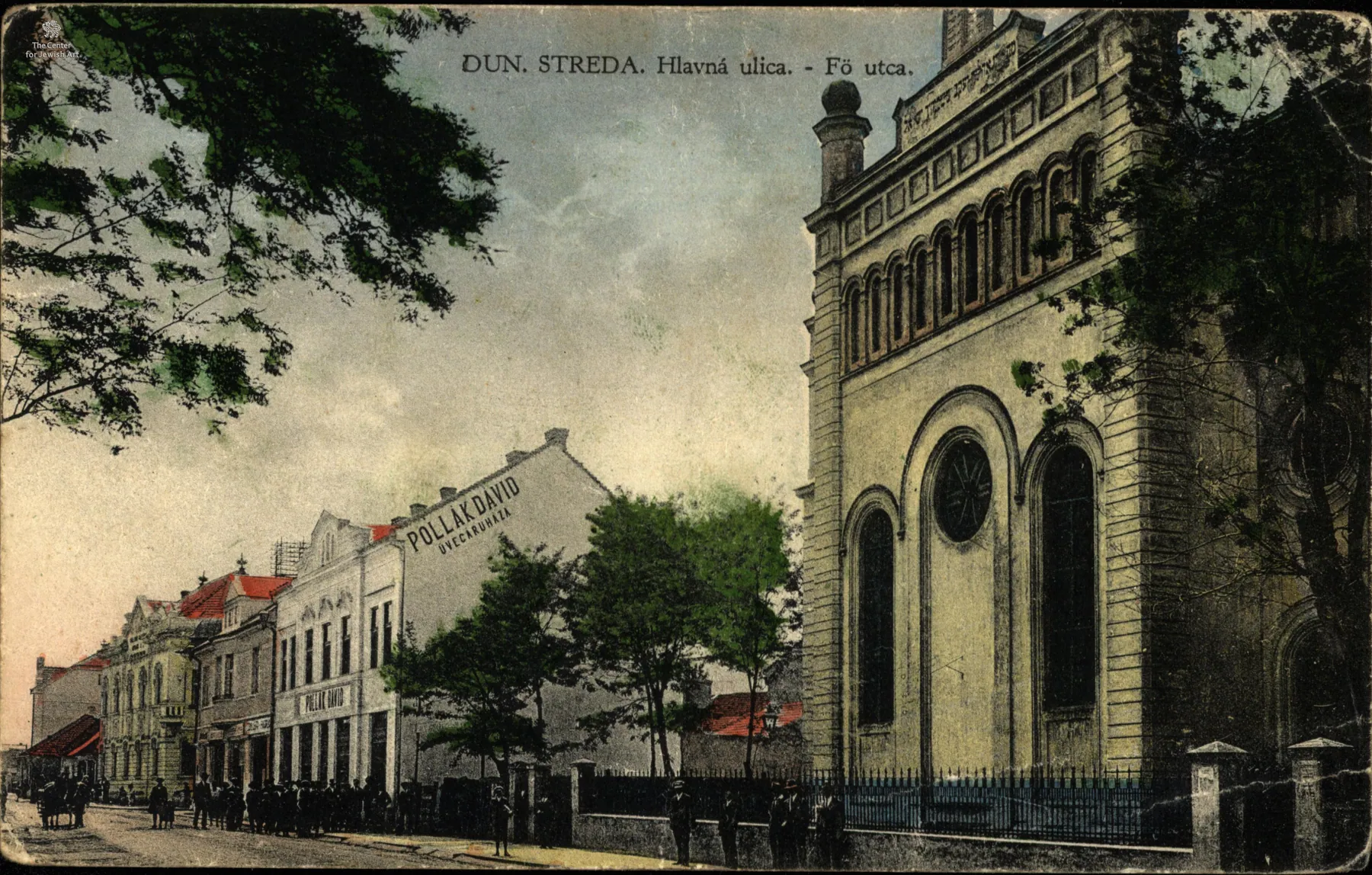
Great Synagogue of Dunajská Streda
The large Orthodox synagogue on the main street of Dunajská Streda, a town known as 'Little Jerusalem' where Jews once formed nearly half the population. Seating about 800, it became the assembly point for deportation to Auschwitz in June 1944, was bomb-damaged in 1945 and demolished around 1951.

Great Synagogue of Düsseldorf
Liberal main synagogue of Düsseldorf's Jewish community on Kasernenstraße, designed by Josef Kleesattel in Neo-Romanesque style and dedicated on 6 September 1904. Seating about 1,300, it was served by rabbis Leo Baeck and Max Eschelbacher. SA men wrecked and burned it on 9–10 November 1938.
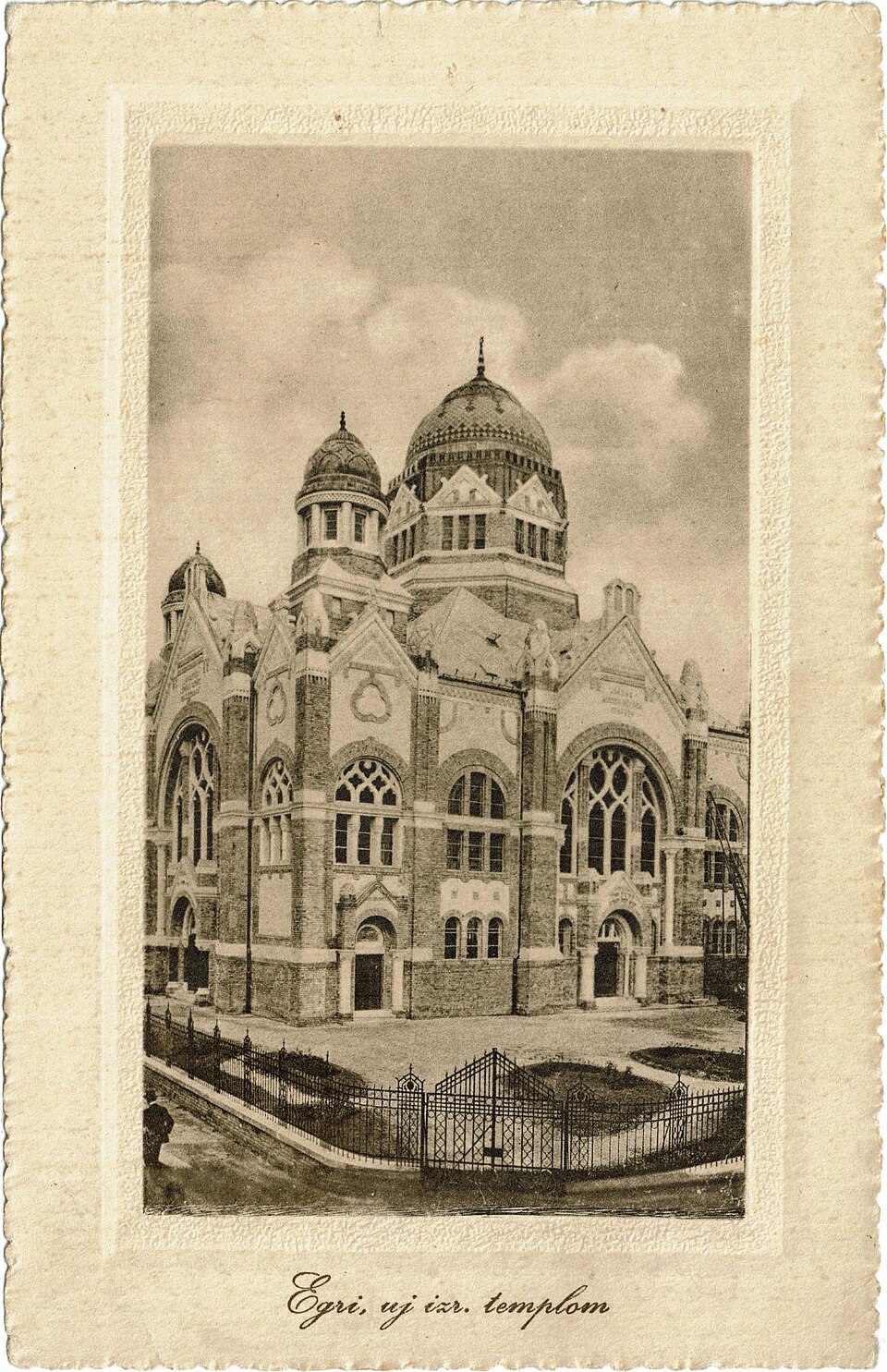
Great Synagogue of Eger
The Great Synagogue of Eger, built in 1911–13 to designs by Lipót Baumhorn for the town's status quo ante congregation, raised a 35-metre dome over the corner of today's Kossuth Lajos and Dr. Hibay Károly streets. Looted in 1944–45 and left derelict, it was demolished by the Communists in 1967; a hotel now stands on the site.
Great Synagogue of Galați
The Great Synagogue was the oldest congregation of Galați, the Danube port of Moldavia: founded in 1780 on Podul de Piatră street, later Marcu Aureliu, and rebuilt from its foundations in 1850. The leading Jews of the town prayed there. It was wrecked in the riots of 1846 and 1859, and Nazi German forces burned it in August 1944.
Great Synagogue of Hanušovce nad Topľou
The Great Synagogue of Hanušovce nad Topľou, a classical-style building of the mid-19th century, served an Orthodox, partly Hasidic community with a well-known yeshiva. On the eve of Yom Kippur in September 1941, under the Slovak State, it was broken into and burned with all its contents. Most of its congregation was deported in 1942.
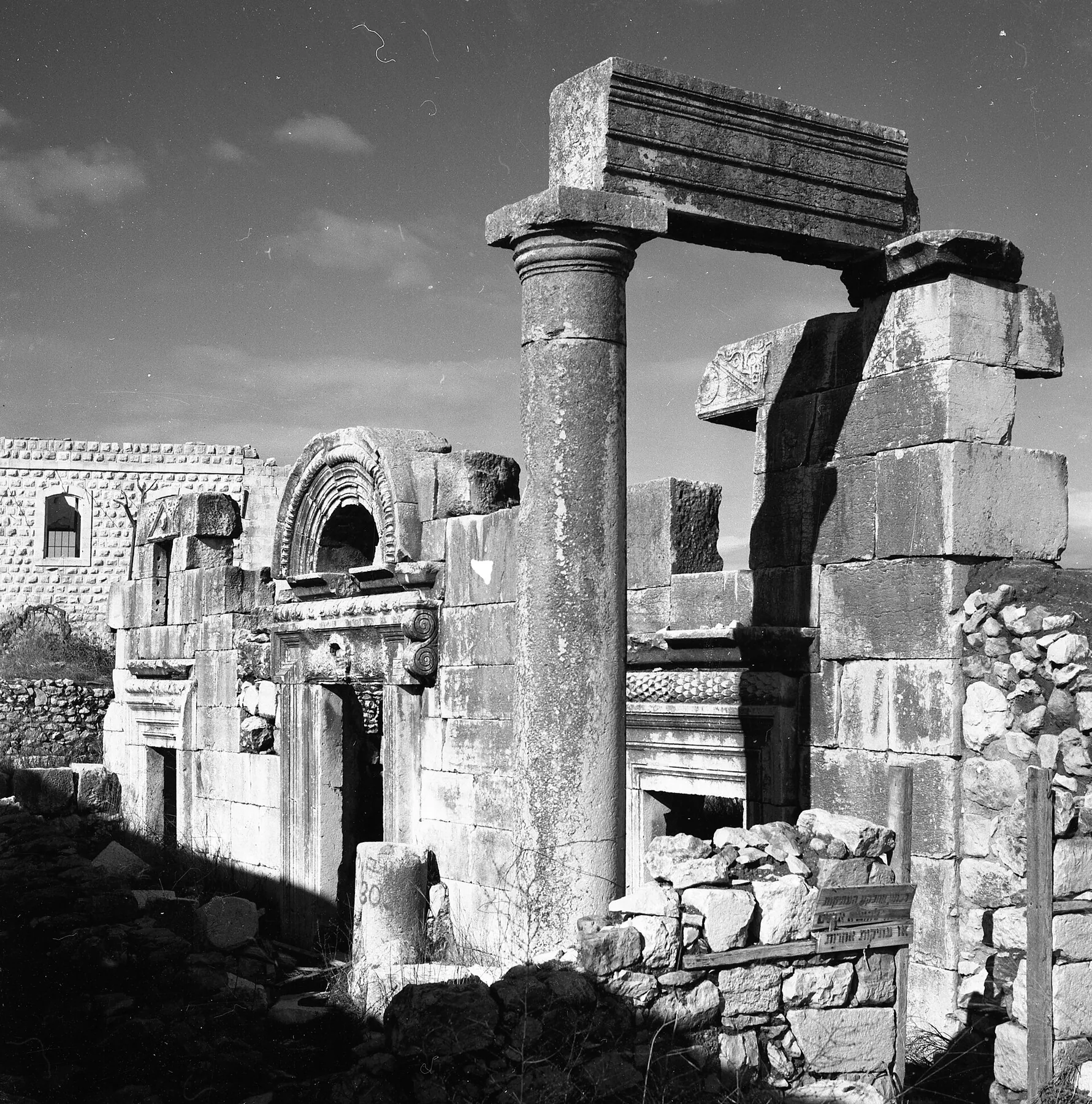
Great Synagogue of Kfar Bar'am
The Great Synagogue of Kfar Bar'am, a basalt Galilean synagogue of the 3rd century CE, is one of the best preserved ancient synagogues in Israel. Its south façade, with three carved doorways and part of its columned porch, still stands close to its full two-storey height, partly restored. When it went out of use is unknown.

Great Synagogue of Kiskőrös
The Great Synagogue of Kiskőrös, the Nagytemplom, was built in 1873 for the town's Jewish community on Petőfi Street. In 1944 the ghetto was set up around it and its congregation was deported to Auschwitz under Nazi German occupation. Left looted and damaged, it was demolished by the Communists in 1950.
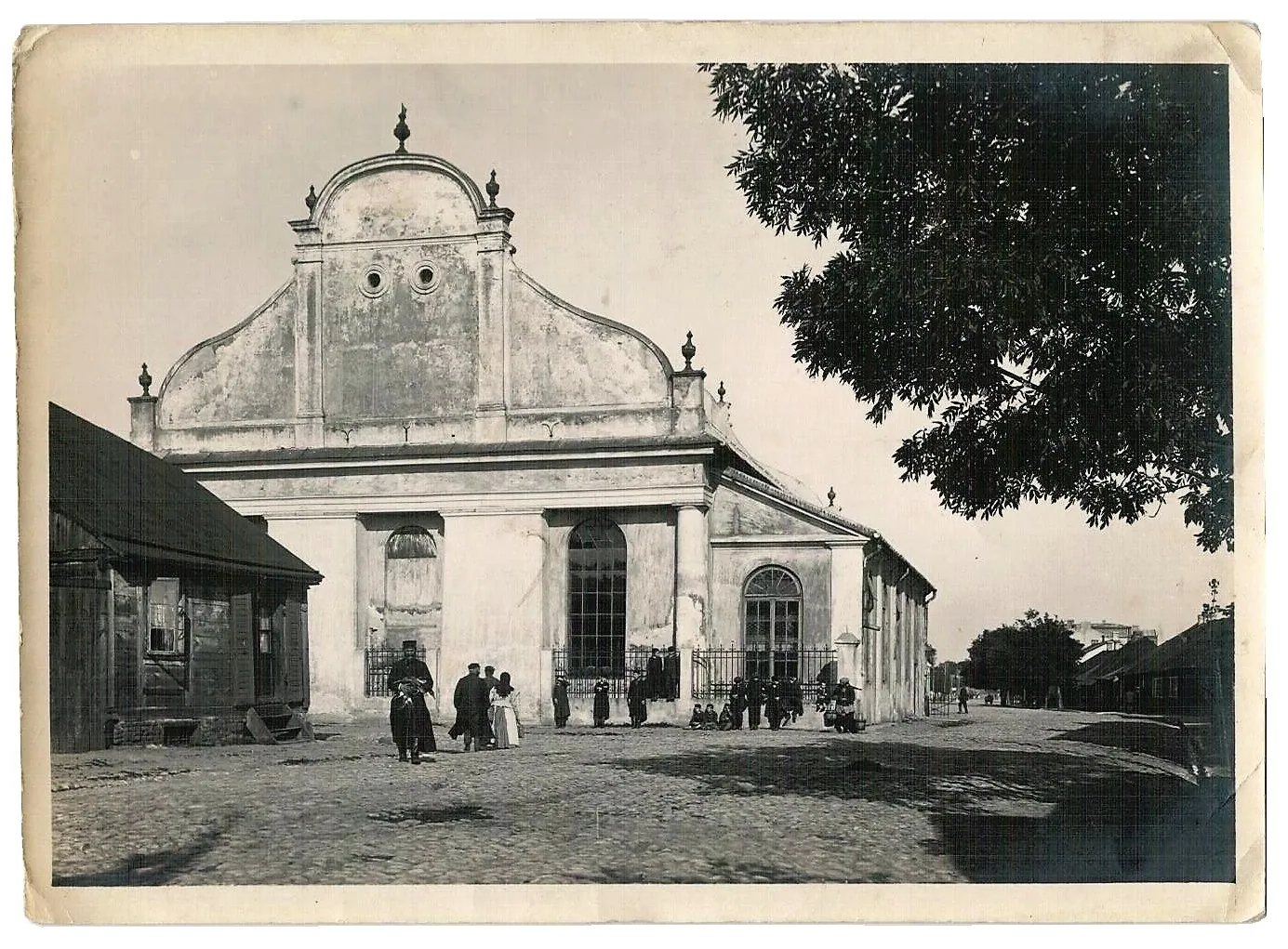
Great Synagogue of Kutno
A Late Baroque brick synagogue built between 1766 and 1799 in Kutno, central Poland, known for its nine-bay vaulted prayer hall and monumental central bimah. Nazi German forces set it on fire after occupying the town in September 1939 and later tore down its burned-out shell. Its site has since been built over.
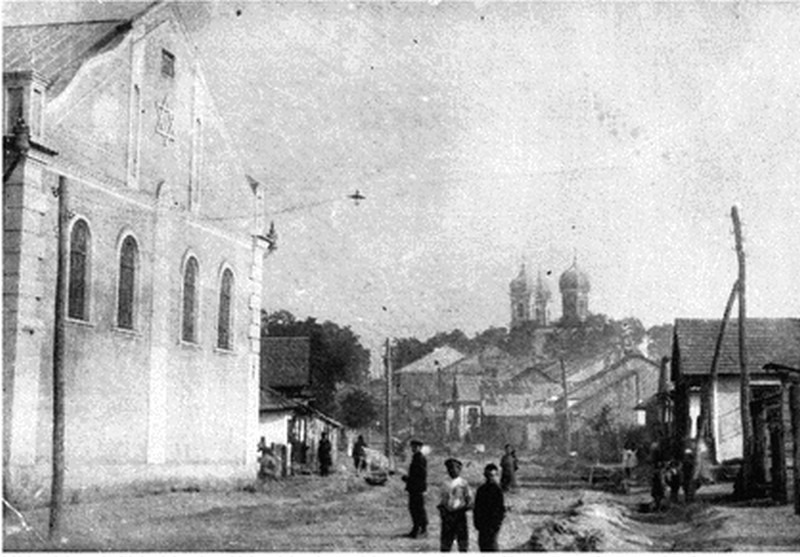
Great Synagogue of Lipcani
The Great Synagogue was the main house of prayer in Lipcani (Lipkany), a Jewish market town on the Prut in northern Bessarabia where Jews were four-fifths of the population. It was destroyed during the Nazi German and Romanian occupation of 1941–1944, when most of the town burned. A school now stands on its site.
Great Synagogue of Lisbon
The Great Synagogue of Lisbon was the main house of prayer of the Judiaria Grande, the city's largest medieval Jewish quarter. When King Manuel I ended the Jewish quarter in 1496-1497 the building was taken, and in 1502 he gave its site to the Order of Christ, which raised the church of Conceição Velha there.
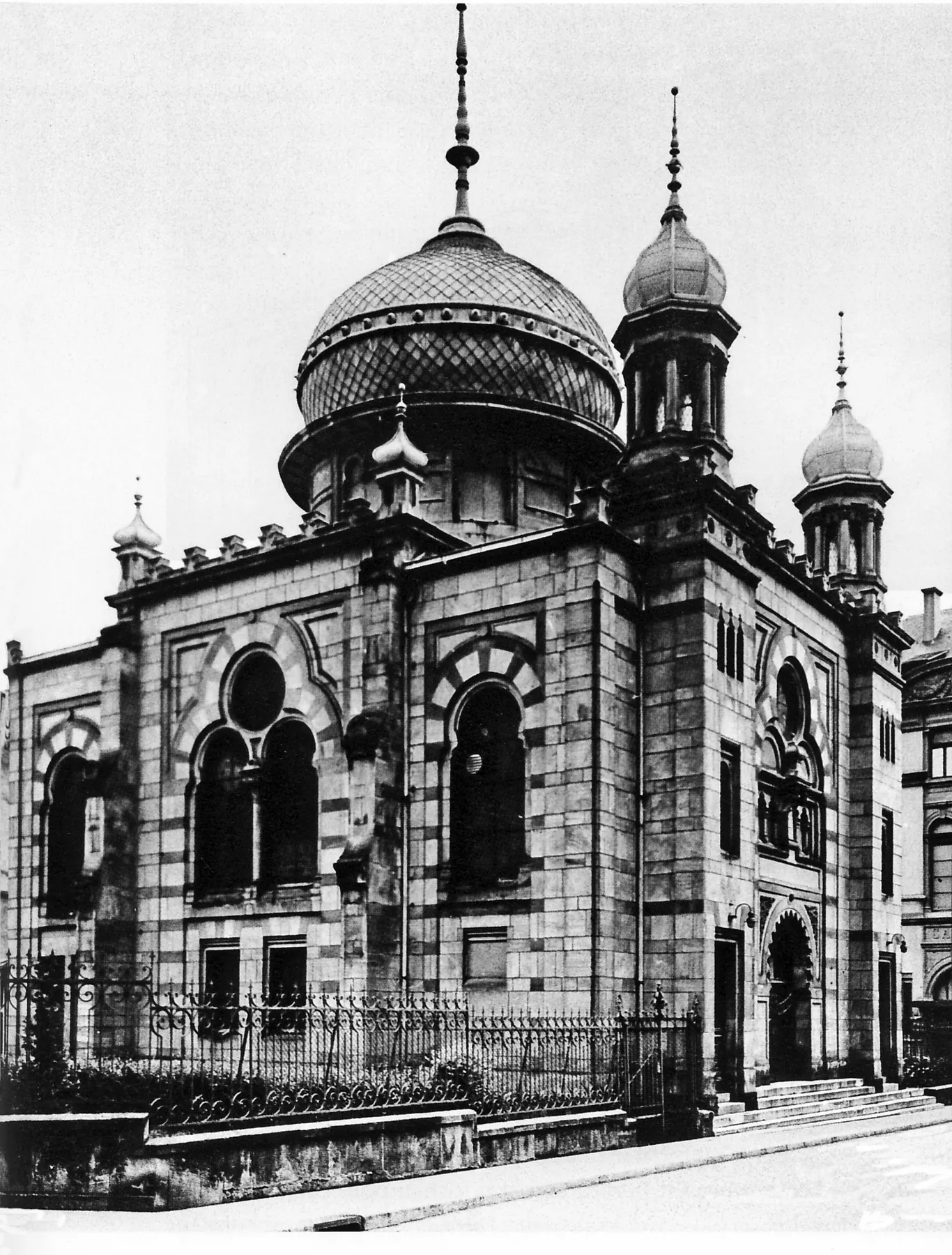
Great Synagogue of Luxembourg (rue Notre-Dame)
Luxembourg City's domed Moorish Revival synagogue, designed by Ludwig Levy of Karlsruhe and built under state architect Charles Arendt, was consecrated on 28 September 1894. After pro-Nazi activists attacked a service in May 1941, the Nazi occupiers closed it and ordered its demolition, which dragged on until 1943.

Great Synagogue of Michalovce
The Great Synagogue of Michalovce, an Oriental-style building of 1888 on the main street opposite the town hall, was the centre of a large Orthodox community whose members were deported in 1942. Survivors repaired and used it after the war, but it was demolished under Communist rule, probably in 1975, and a polyclinic now stands on its site.
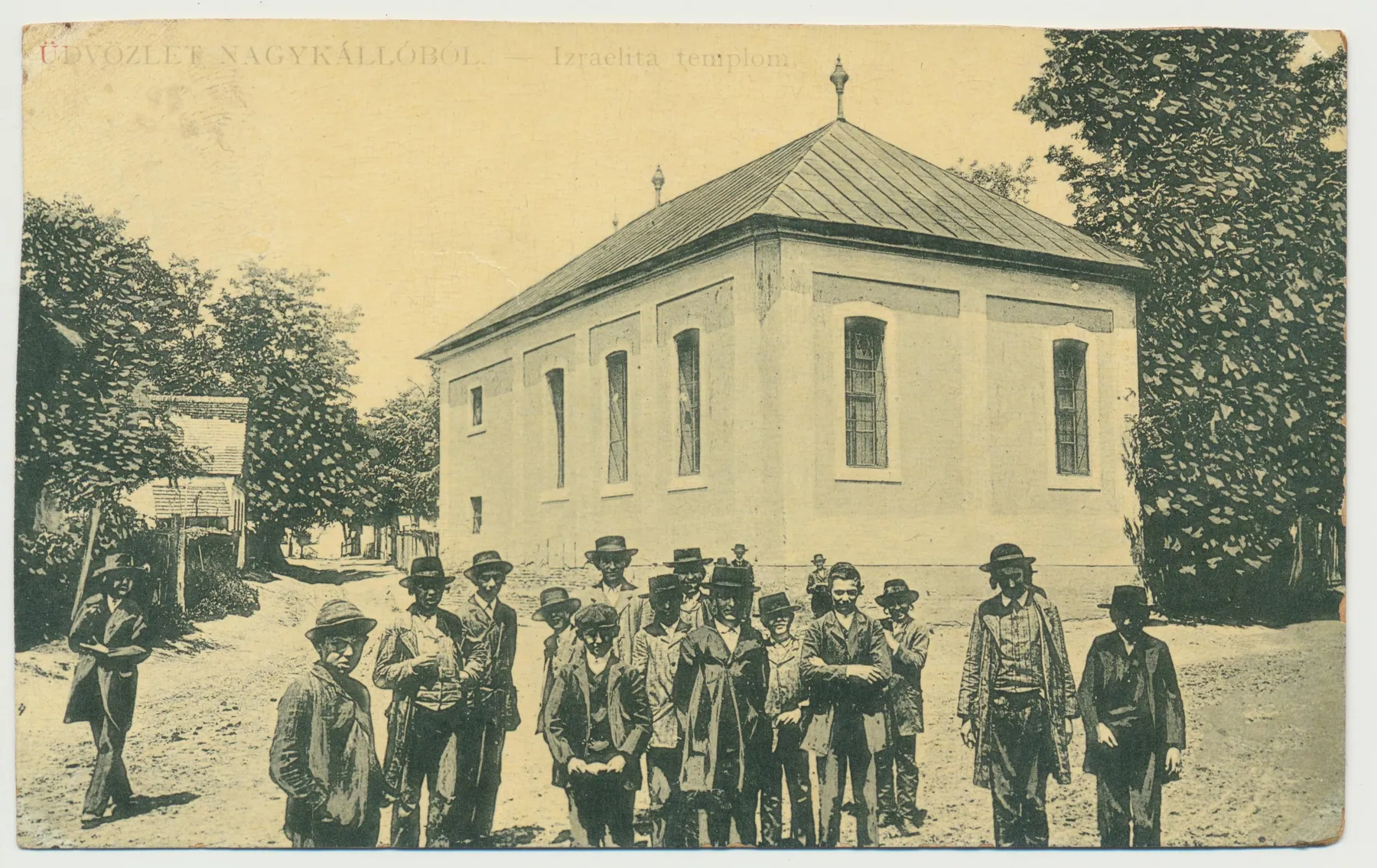
Great Synagogue of Nagykálló
Nagykálló's great synagogue, consecrated around 1800, was the house of prayer of the town where Rabbi Isaac Taub, remembered as the first Hasidic rebbe in Hungary, taught. Rebuilt in 1924, it outlived the deportation of its congregation in 1944, but the town bought it in the early 1950s and the Communists demolished it in the 1960s.
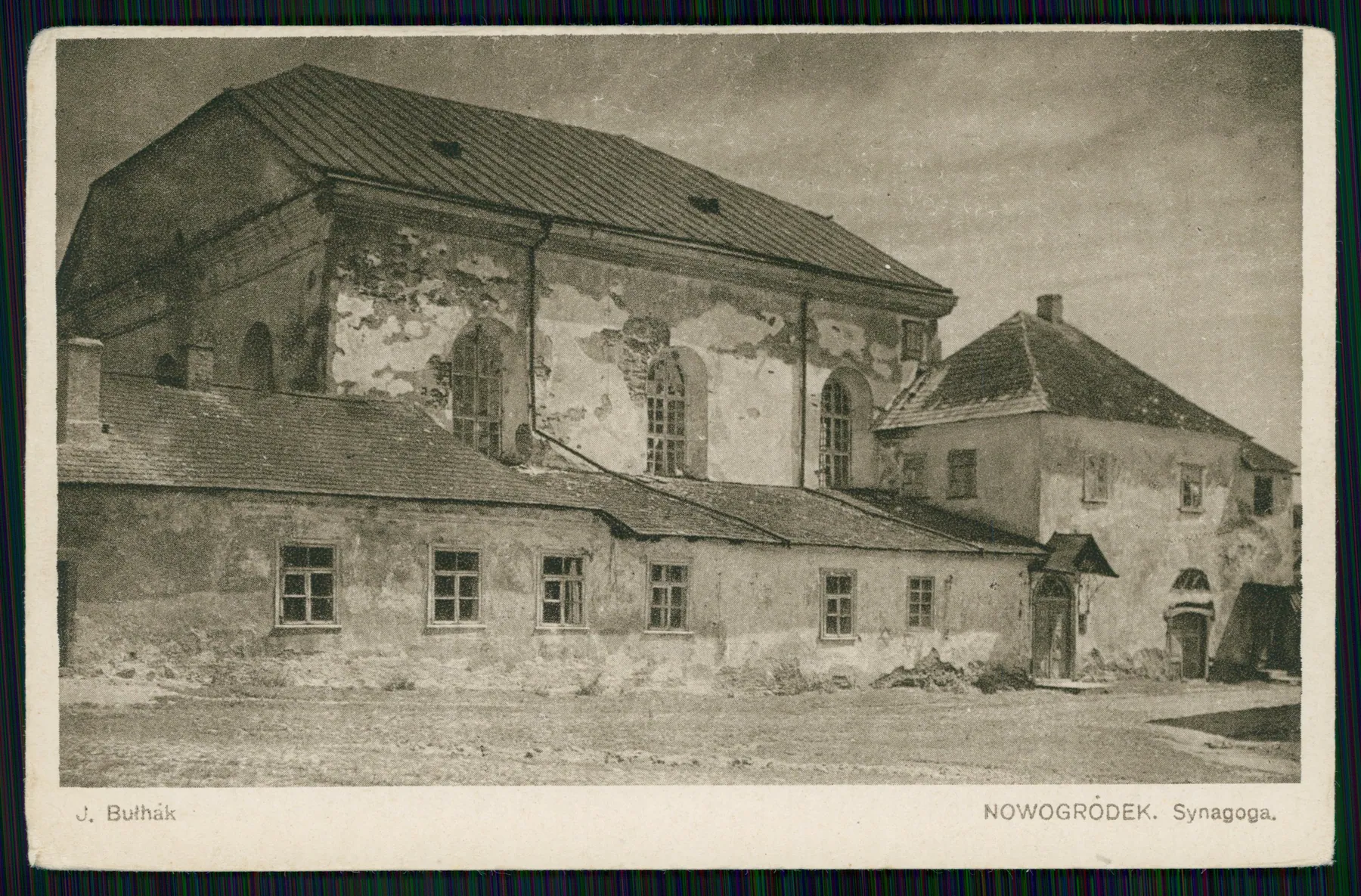
Great Synagogue of Navahrudak (Nowogródek)
The Great Synagogue of Navahrudak (Nowogródek) was a massive seventeenth-century masonry synagogue on Synagogue Lane, the religious centre of one of the great Jewish towns of Lithuania and Belarus. It survived the Holocaust as a roofless ruin, and in 1964 the Soviet authorities blew it up.
Great Synagogue of Palermo
The Meschita, chief synagogue of medieval Palermo's Jewish quarter, was praised by Rabbi Obadiah of Bertinoro in 1487 as without equal. After the expulsion of 1492 its leaders sold it on 6 October 1492; the building was later destroyed and the church of San Nicolò da Tolentino now stands on its site.
Great Synagogue of Palma
The main synagogue of Palma's Jewish quarter, the Call Major, was newly completed when King Sancho of Majorca confiscated it in 1314-1315 as punishment of the community and turned it into the chapel of Santa Fe. The Jesuit church of Monti-sion now stands on its site; no synagogue walls are confirmed visible.
Great Synagogue of Păcurari, Iași
The Great Synagogue of Păcurari was one of the three principal synagogues of Iași, serving the Jews of the Păcurari quarter. Purchase deeds for it date from 1852 and it is reported to have functioned from 1898. It was demolished during the Communist systematization of Iași; the year, and who carried it out, are unknown.
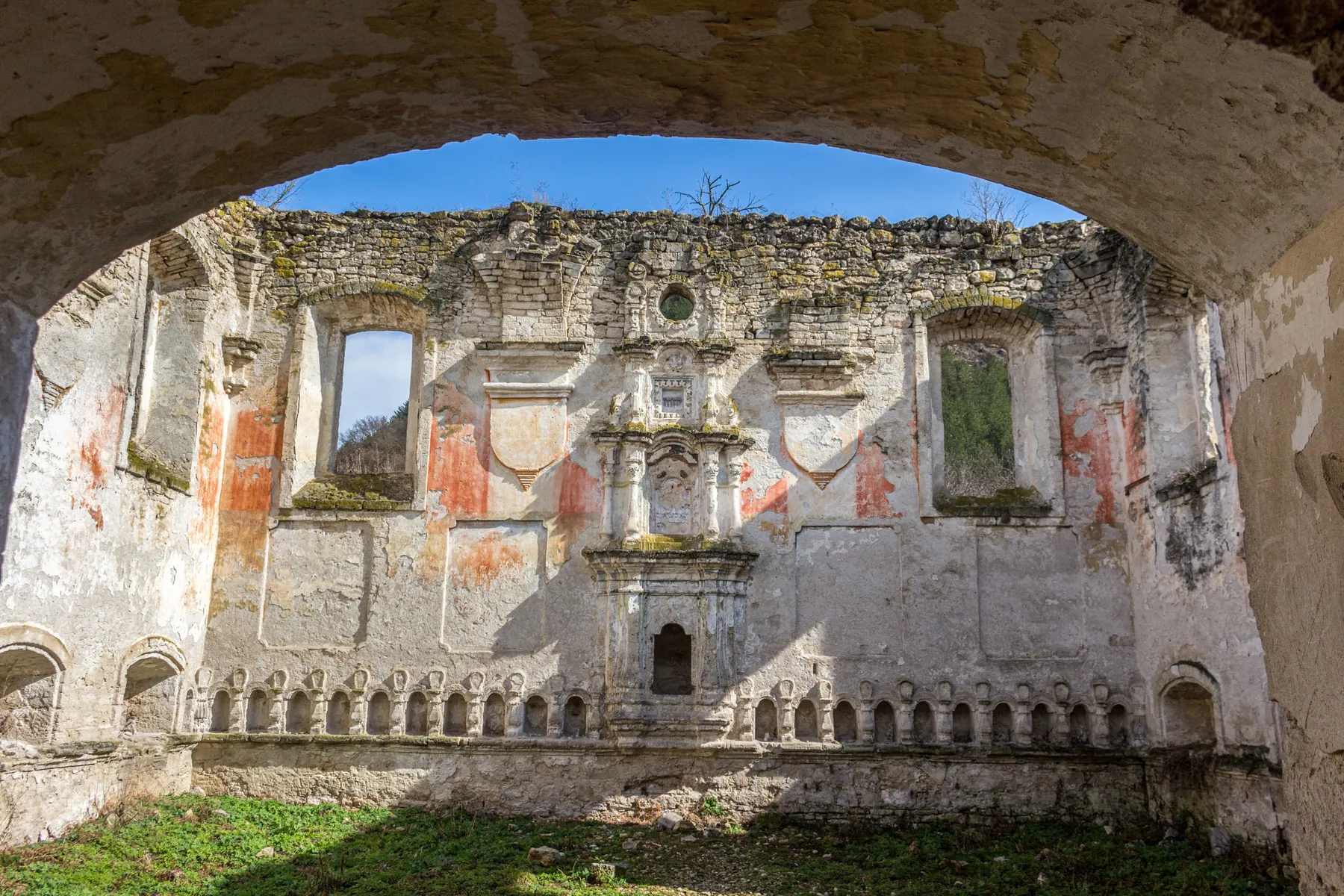
Great Synagogue of Rașcov
The Great Synagogue of Rașcov, a stone Baroque synagogue built in 1749 above the Dniester in today's Transnistria, served one of the oldest Jewish communities in Moldova. Soviet authorities wrecked its vaults during the anti-religious campaign of about 1929 to the early 1930s. Its roofless outer walls, carved decoration and Torah ark wall survive.
Great Synagogue of Senta
The great synagogue of Senta (Zenta), on the Tisza in northern Vojvodina, was built in 1873 or 1874 for the town's Neolog Jewish congregation. Its worshippers were deported to Auschwitz in 1944. The town, then under Communist rule, acquired the empty building and demolished it in 1957.

Great Synagogue of Sighet (Sighetu Marmației)
The Great Synagogue of Sighet, consecrated in 1836 on the site of an eighteenth-century predecessor, was the main house of prayer of one of the largest Hasidic communities of historic Hungary. It was wrecked in 1944, after the deportation of the town's Jews, and stood in ruins in August 1945; later clearance is undocumented.

Great Synagogue of Sátoraljaújhely
Sátoraljaújhely's great synagogue, a striped Moorish Revival building by the Budapest architect Gyula Jemnik, was consecrated on 30 August 1888 beside the town hall. In 1944 it became the centre of the town's ghetto. Damaged in the war, it was sold afterwards and in the 1960s the Communists had it torn down to a shell and rebuilt as a furniture store.
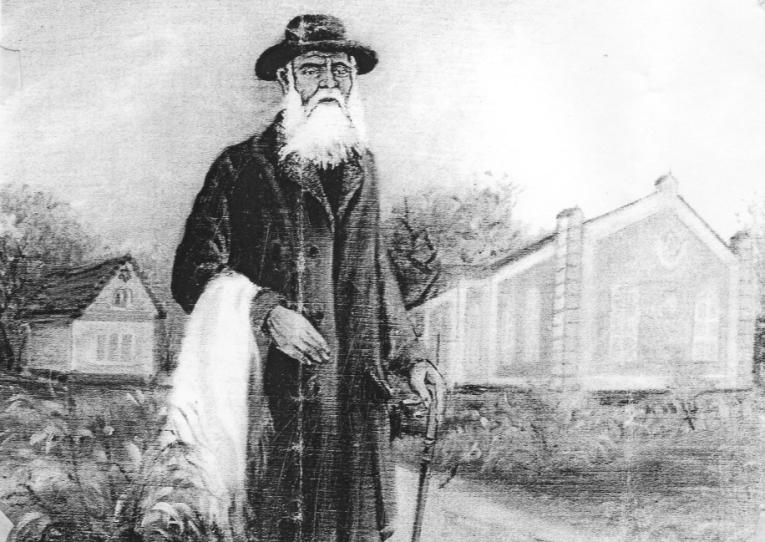
Great Synagogue of Tekovské Lužany
The Great Synagogue of Tekovské Lužany (Nagysalló) was built in the early twentieth century for a small Orthodox community, on the stream that marked the boundary with neighbouring Tekovské Lužianky. Nazi German forces stripped its timbers for bunkers during the war, and its remaining walls were demolished after 1945. Its congregation was deported in 1944.
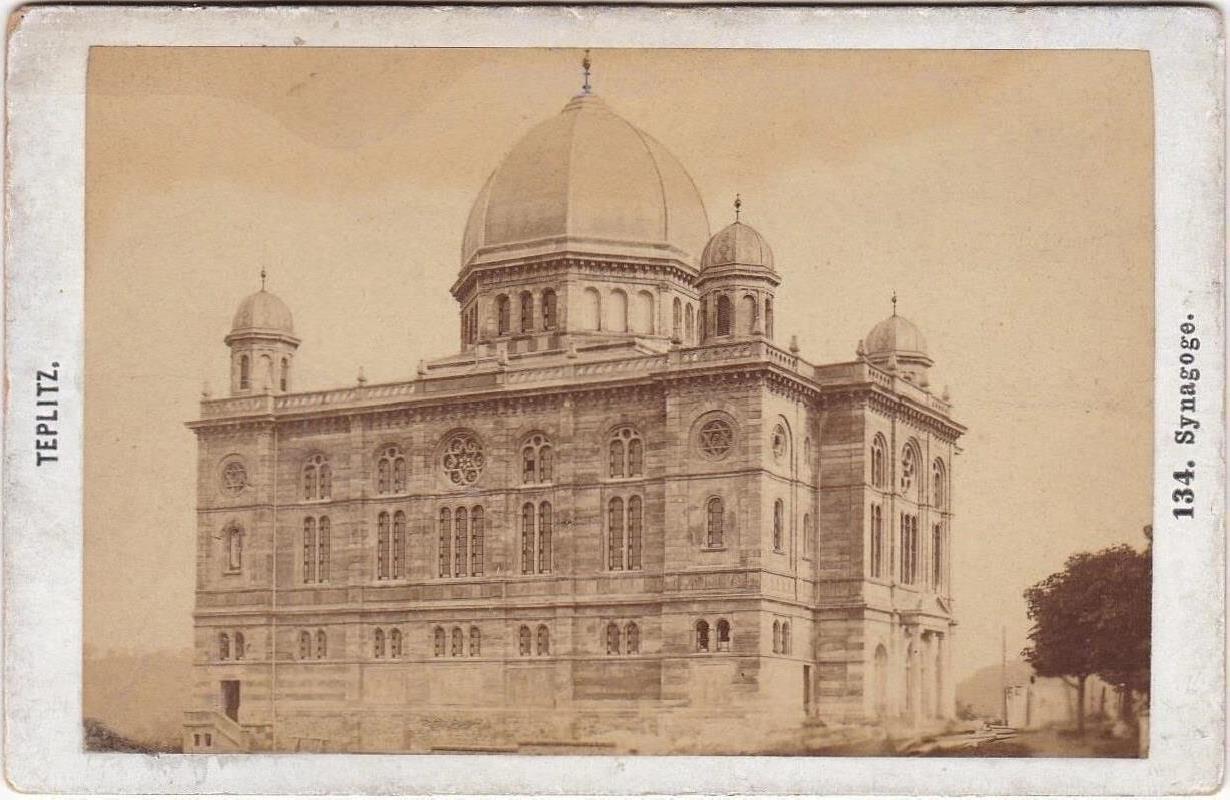
Great Synagogue of Teplice
The Great Synagogue of Teplice, consecrated in 1882 on the hill above the spa town, was the largest synagogue ever built in Bohemia, crowned by a 42-metre dome. Spared on Kristallnacht, it was set on fire by Nazis on the night of 14–15 March 1939 and its ruins were then cleared.
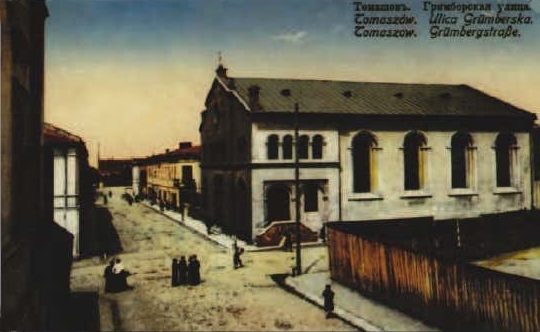
Great Synagogue of Tomaszów Mazowiecki
The Great Synagogue of Tomaszów Mazowiecki was a brick building on Handlowa Street, built in 1864–1878 under Rabbi Eliasz Jakub Wieliczkier and decorated by the painter brothers Warzager. On 16 October 1939 local ethnic Germans under the Nazi occupation set it on fire and stopped firefighters from saving it; the ruins were dismantled in 1940.
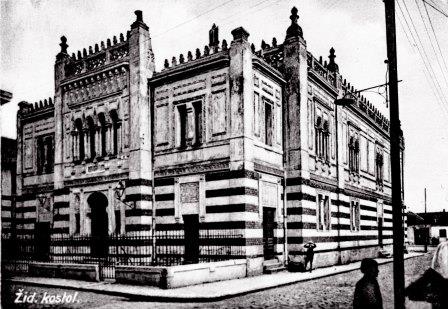
Great Synagogue of Topoľčany
The Great Synagogue of Topoľčany, consecrated in 1900 to designs by the local builder Bilik, had a 40 by 20 metre prayer hall and a striped Moorish facade. Used to store looted Jewish property after the deportations, it was burned at the end of the war; its ruined shell was rebuilt in the 1980s as a secondary school.
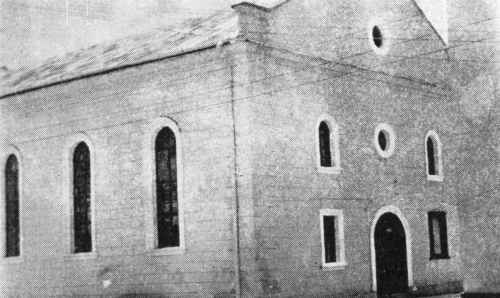
Great Synagogue of Târgu Lăpuș
The great synagogue of Târgu Lăpuș, then Magyarlápos in Hungary, was built in 1885 with money from the foundation of the community's first president, Ignác Hirsch. Its courtyard was the assembly point for the deportation of the district's Jews in May 1944. It still stood when survivors wrote its history around 1970, but had disappeared by 2009.
Great Synagogue of Valencia
The Great Synagogue was the principal synagogue of medieval Valencia's Jewish quarter. Rioters sacked the quarter on 9 July 1391; the building was then consecrated as the church of San Cristóbal, later part of a convent of Augustinian canonesses. That convent was demolished in 1869 when the calle de la Paz was opened.
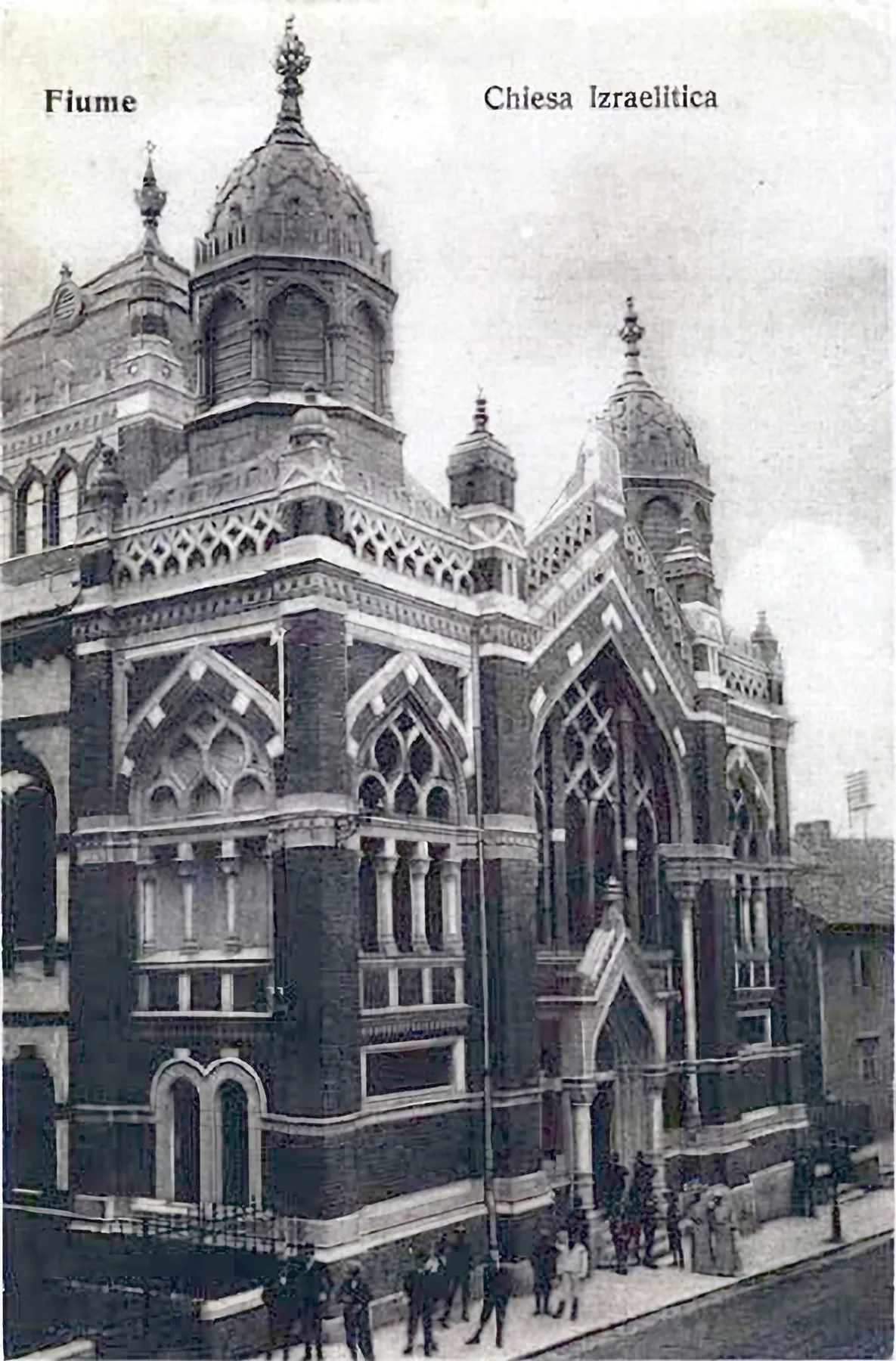
Great Synagogue, Rijeka (Fiume)
The Great Synagogue of Fiume, today's Rijeka, was designed by the Hungarian synagogue architect Lipót Baumhorn and opened on Rosh Hashanah, 22 October 1903. Its red-and-white banded towers and cupolas stood in the heart of the port city until 25 January 1944, when Nazi German occupation forces destroyed it.
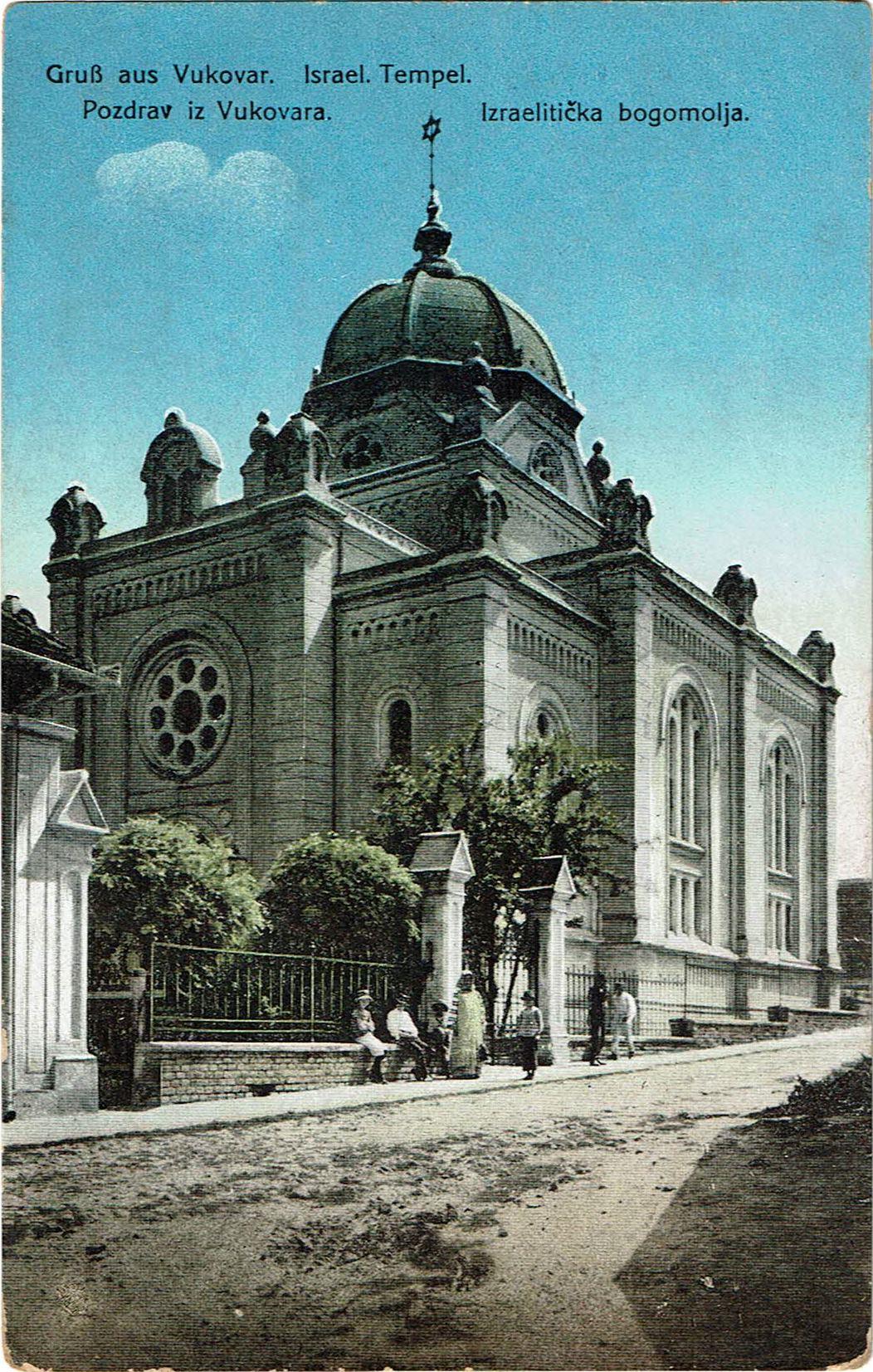
Great Synagogue, Vukovar
Vukovar's domed Great Synagogue, designed by the Viennese architect Ludwig Schöne and completed around 1889–1891, rose above the Danube as one of the town's landmarks. It was plundered and devastated in 1941, when Vukovar's Jews were deported and murdered, and in 1958 the empty building was sold for building material and demolished.
Groß-Enzersdorf Synagogue
The synagogue of Groß-Enzersdorf, east of Vienna, served a small Lower Austrian Jewish community from the late nineteenth century. In November 1938 local Jews were locked inside it, and the local Nazi party had already forced its transfer to the Deutscher Turnerbund. It decayed after the war and was demolished between 1961 and 1965.

Gush Halav Synagogue
The lower synagogue of Gush Halav, in a fig orchard in the valley east of the village of Jish, was a small basilica with two rows of four columns and an eagle lintel over its south door. Excavated in 1977-78, it was damaged by earthquakes and, by the excavators' dating, ruined in 551 CE. Its low walls and columns survive.

Gyönk Synagogue
Gyönk's synagogue, built in 1836 on land given by the landowner Sámuel Magyari-Kossa, was one of the oldest in Tolna county. Looted and set on fire in 1944 during the ghettoisation carried out under Nazi German occupation, it was later demolished by a private buyer, who built a house from its materials before 1955.
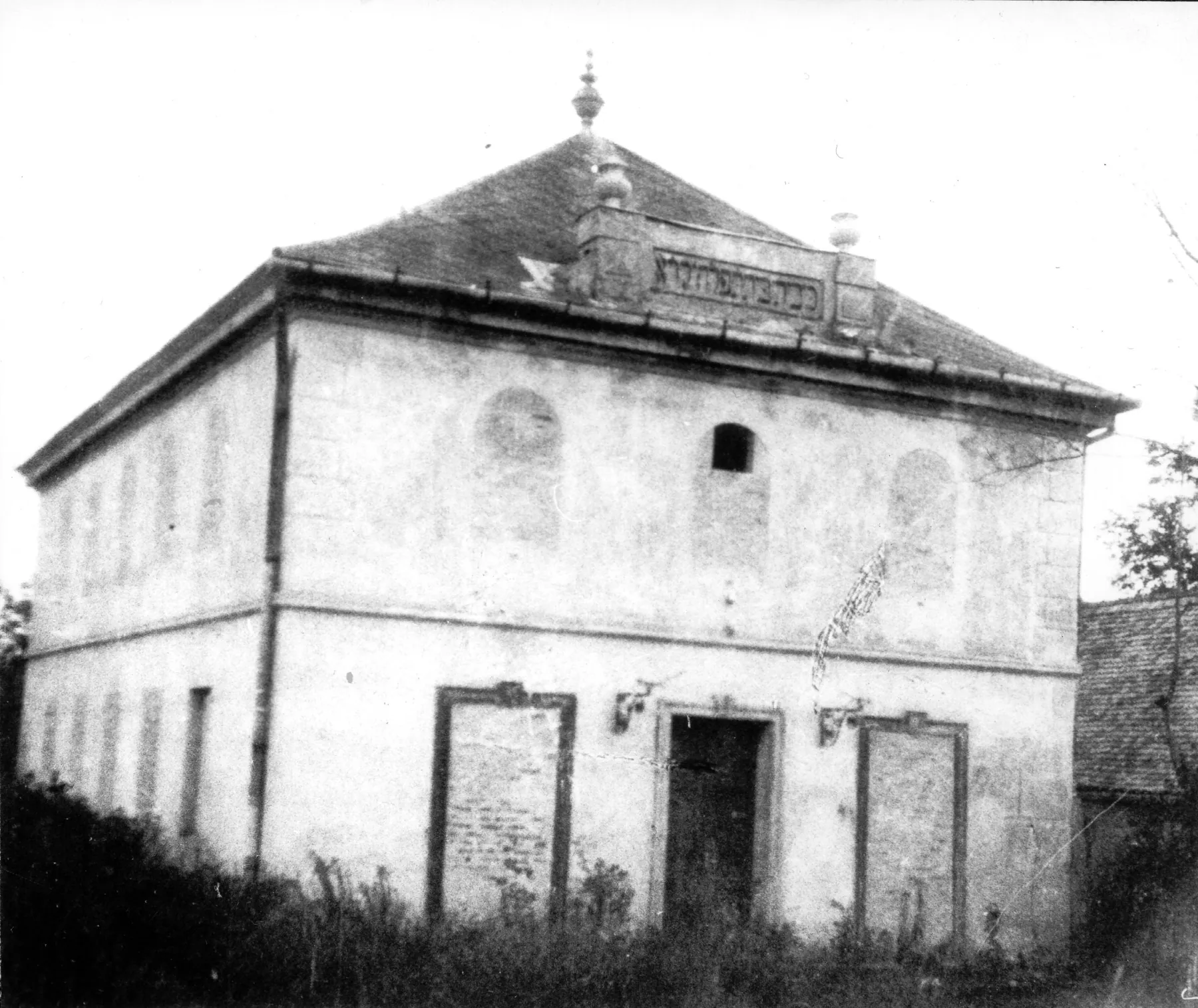
Gödöllő Synagogue
The Gödöllő Synagogue, built in 1894 on Kossuth Lajos Street, served the small Neolog community of this town north-east of Budapest. Its congregation was deported in June 1944. The building, reportedly damaged by a bomb, still stood in 1949, but in the early 1950s the Communists demolished it and a state crèche opened on the plot in 1953.
Güssing Synagogue
The synagogue of Güssing in southern Burgenland was built in 1838-39 by the Batthyány princes on the main square and bought by the Jewish community in 1840. Nazi SA men and Hitler Youth wrecked it in November 1938; it became a gym and festival hall, and in 1953 the town partly demolished it for its new town hall.
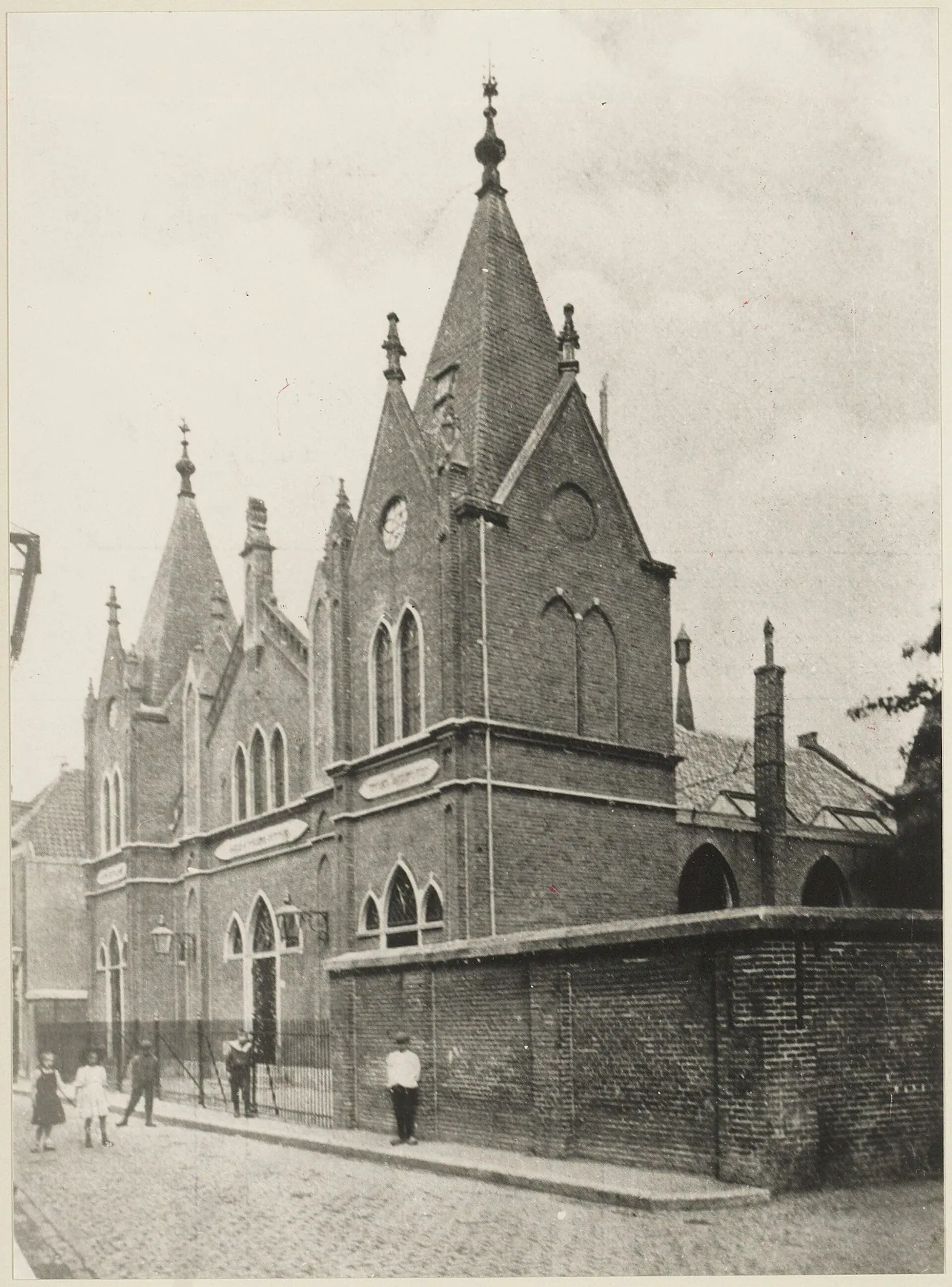
Haarlem Synagogue (Lange Begijnestraat)
Haarlem's main synagogue stood on the Lange Begijnestraat from 1841, built with help from the city, the province and the national government, and enlarged with two spires in 1896. Its congregation was almost entirely deported and murdered in 1942-43. Sold after the war to the printers Joh. Enschedé, it burned out in April 1953 and was later demolished.

Hajdúdorog Synagogue
Hajdúdorog's synagogue, built before 1859, was a plain gabled hall with Stars of David on its corner piers. In 1944 it became the core of the ghetto from which about 350 Jews were deported. A survivor sold it in 1957, and it was later demolished under Communist rule; who pulled it down is not recorded.
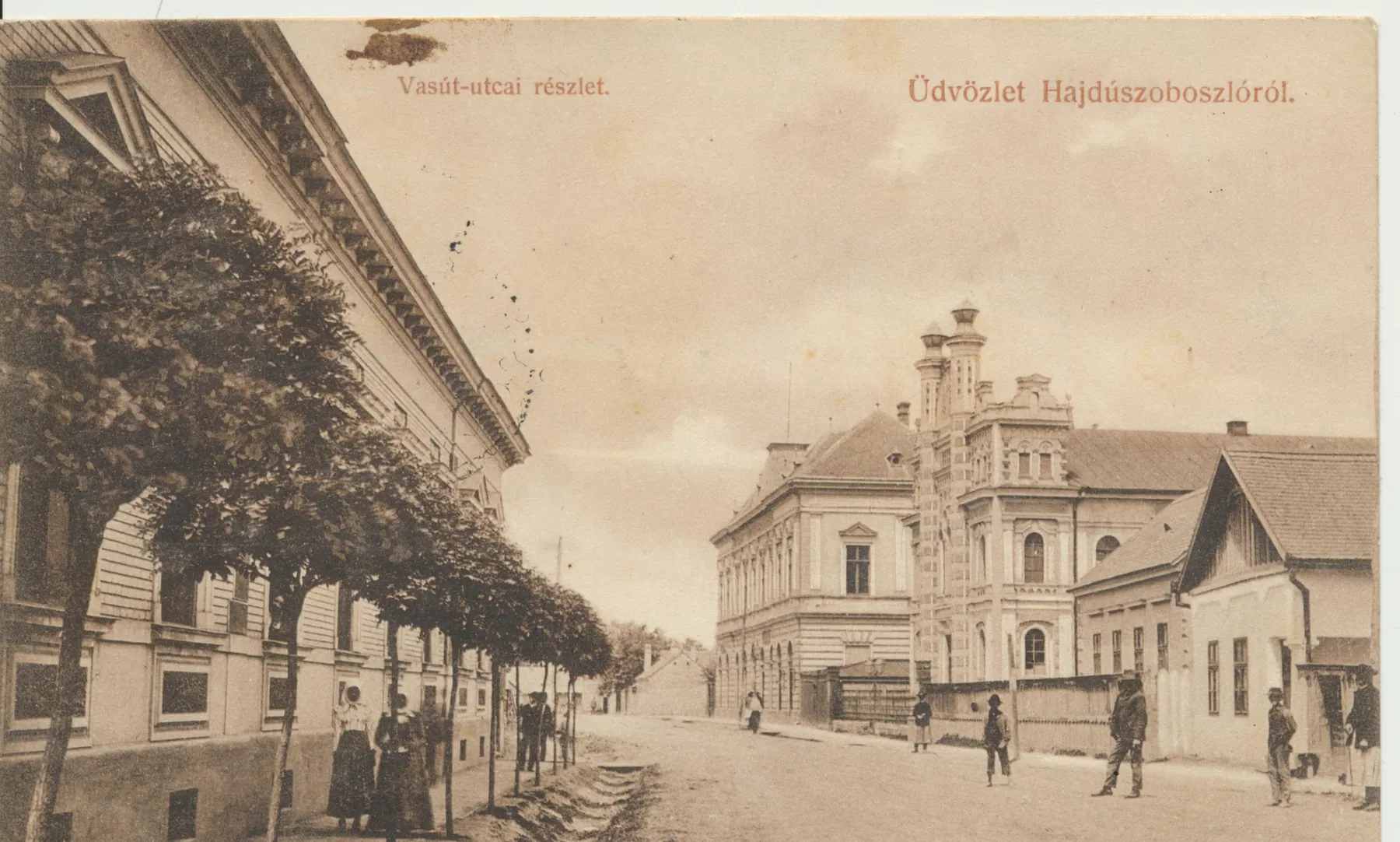
Hajdúszoboszló Synagogue
Hajdúszoboszló's Jews built a grand new synagogue in 1895 or 1896 to replace a house of prayer of 1862 that had grown too small. Its twin-towered facade stood on Vasút utca near the town centre. The congregation was deported in 1944, and the building had been demolished by the 1980s; when and by whom is unknown.
Hajdúsámson Synagogue
The synagogue of Hajdúsámson, a village 7 km from Debrecen, served an Orthodox community whose members were among the first Jews to trade at the Debrecen market. Its congregation was deported in 1944. A survey of 1980-87 recorded the building as demolished; when and by whom it was pulled down is unknown.

Hamat Gader Synagogue
The synagogue of Hamat Gader stood on the mound of Tell Bani beside the hot springs of the Yarmuk valley. Its almost square hall had an apse facing Jerusalem and a mosaic floor with two lions and Aramaic donor inscriptions. E. L. Sukenik excavated it in 1932. When and how it was destroyed is unknown.

Hammat Tiberias North Synagogue
The northern synagogue of ancient Hammat, on the Sea of Galilee shore south of Tiberias, was a square basilican hall with a courtyard, first built about 250 CE and rebuilt twice. Uncovered by Nahum Slouschz in 1921, in the first Jewish-sponsored excavation in the country, it now lies under a modern hotel.
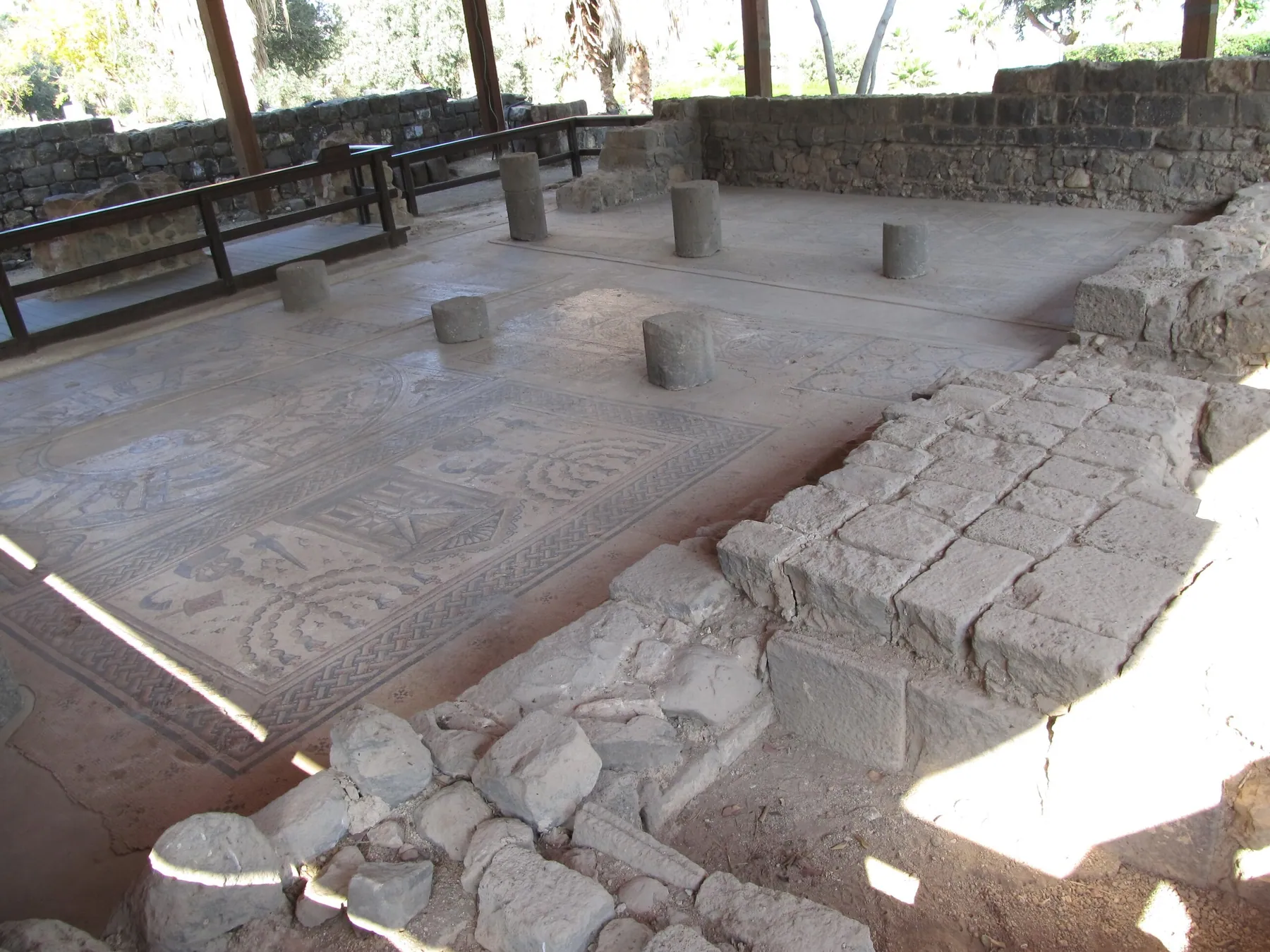
Hammat Tiberias Synagogue
The Severus synagogue at Hammat Tiberias, a fourth-century hall beside the hot springs south of Tiberias, had a mosaic floor with a zodiac, Helios and a Torah shrine. Its excavator held that an earthquake wrecked it in the fifth century; later synagogues on the spot ended by the mid-eighth century.
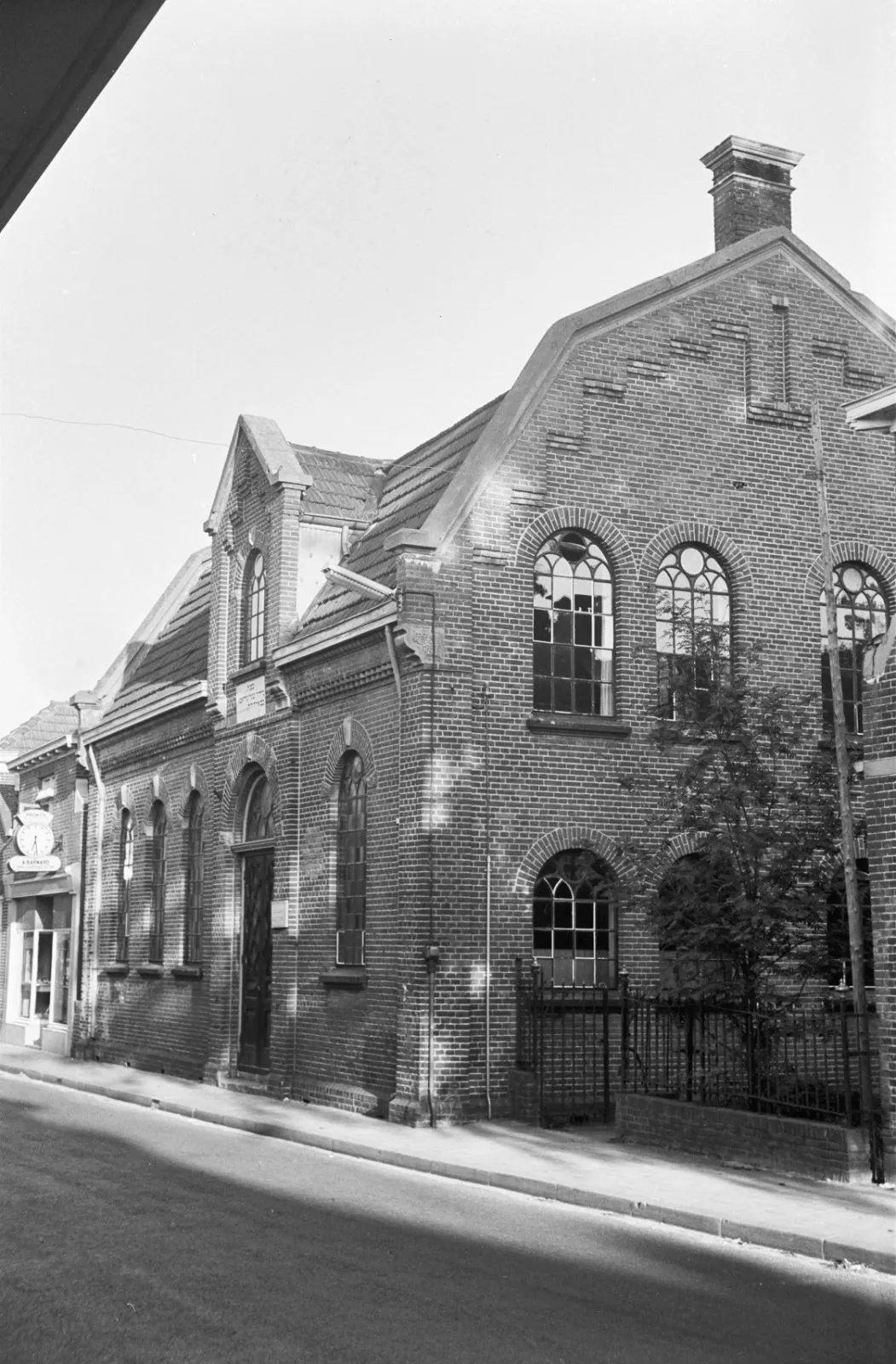
Hardenberg Synagogue
The second synagogue of Hardenberg, in Overijssel, stood on the Oosteinde and served the small Jewish community from 1903. It went out of use in 1940, its congregation was almost entirely deported and murdered in 1942-1943, and it was sold in 1948. Despite protests it was demolished in 1980.
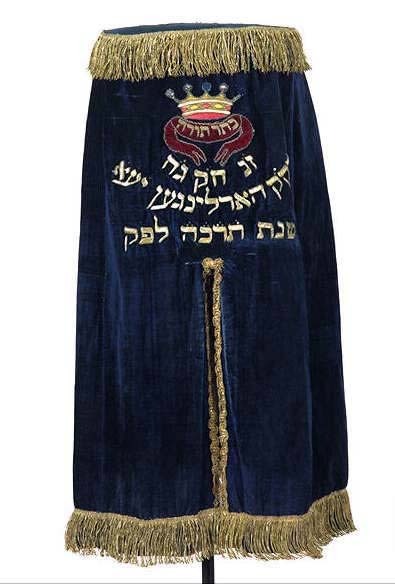
Harlingen Synagogue
The synagogue on the Raamstraat in Harlingen, the Frisian port town, was consecrated at the end of 1812 and enlarged in 1877 and 1897. It served a community that peaked at 356 people in 1869. All Jews still living in Harlingen were deported and murdered in 1942-1943, and the building was destroyed in a wartime bombardment.
Hasidic Synagogue of Mikulov
The Hasidic synagogue of Mikulov (Nikolsburg) was founded by Rabbi Shmelke Horowitz in the 1770s for worshippers following the Hasidic rite. It stood north-east of the surviving Upper Synagogue, outside regular use by about 1900. The masonry building decayed after the war and was pulled down in the 1970s; garages now occupy its site.
Hasselt Synagogue
The synagogue of Hasselt in Overijssel was consecrated in the Ridderstraat in 1802 and renovated in the late 1830s. It served one of the smallest Jewish communities in the province. Its ritual objects were lost during the occupation; the surviving community sold the building after the war, and it was demolished in 1954 for a supermarket.
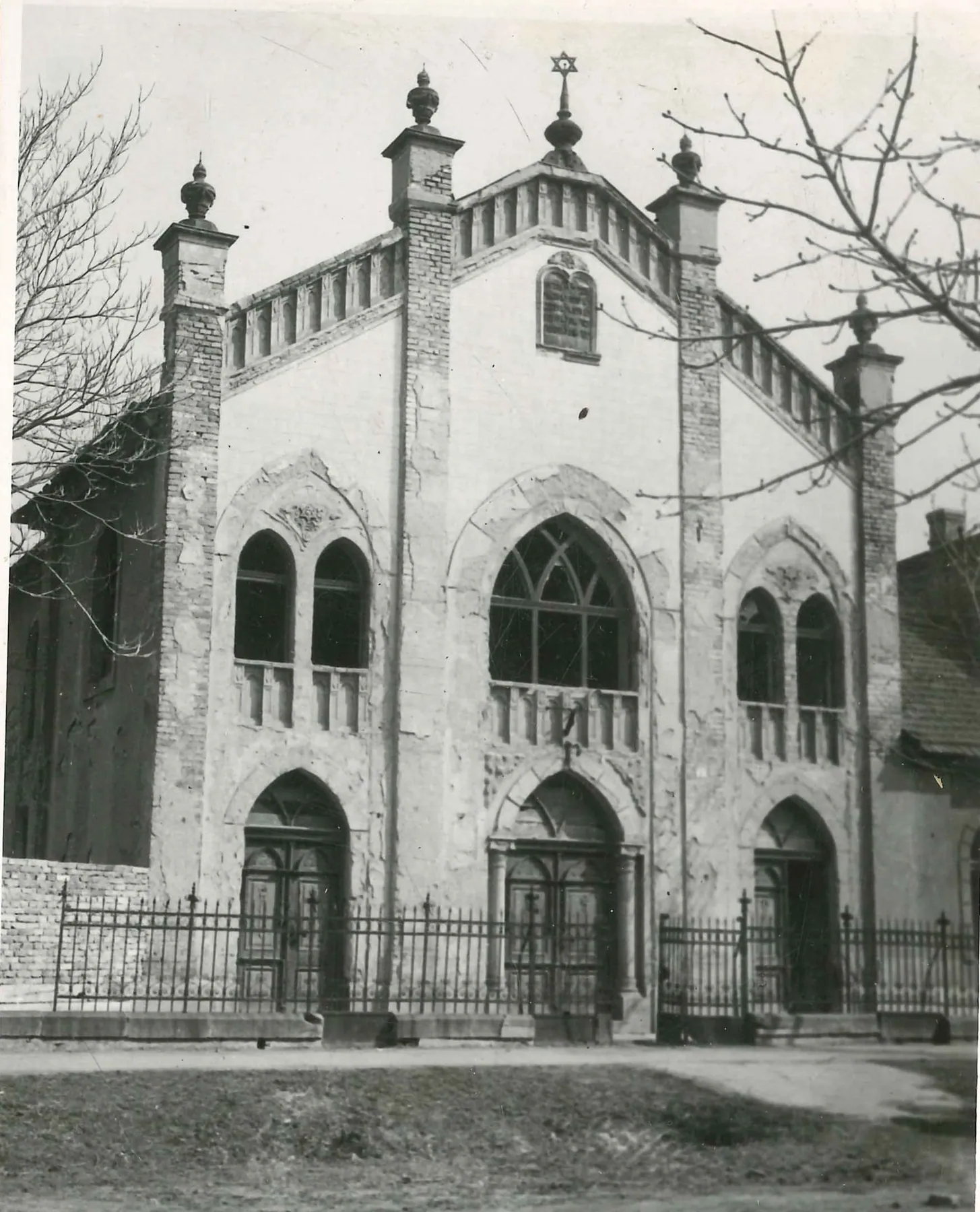
Hatvan Synagogue
Hatvan's synagogue was built in 1876 on land of the Hatvany-Deutsch family and enlarged in 1908 for the only Neolog congregation in Heves County. Its members were deported to Auschwitz in June 1944. Photographed as a gutted shell in 1950 and 1955, it was rebuilt as a shop in the late 1950s under Communist rule.
Havra Synagogue of Prishtina
The Havra was the synagogue of Prishtina's small Sephardic community, a modest nineteenth-century building in the Çarshi, the old bazaar. Most of the congregation died after deportation to Bergen-Belsen in 1944. Yugoslav Communist authorities removed the building in 1960 or 1963; one account says it was rebuilt stone by stone as the 'Stone House'.

Heenvliet Synagogue
The synagogue on the Kerkweg in Heenvliet, consecrated in 1807, was the first on the island of Voorne-Putten and served a small rural congregation for more than a century. Its last members were murdered in 1942. Sold in 1948 with the teacher's house, it was demolished after the 1953 flood; its Hebrew façade stone survives in Amsterdam.
Heerenveen Synagogue
Heerenveen's small synagogue stood behind the houses of the Heerenwal, reached by a narrow alley, and was in use from 1819; it was rebuilt in 1892 and reconsecrated in 1893. When the dwindling congregation merged into Sneek in 1933 the building was sold and demolished. Most of the town's few remaining Jews were murdered in the Holocaust.

Heichal Hasephardim, Sephardic Synagogue of Ploiești
Heichal Hasephardim was the synagogue of the Sephardic Jews of Ploiești, completed in 1895 and dedicated in 1899. On 17 November 1940 men of the Iron Guard had it torn down, claiming earthquake damage, and forced Jewish labourers to do the work. Its furniture was handed to churches and its Torah scrolls burned.
Hellevoetsluis Synagogue
The synagogue on the Achterom in Hellevoetsluis, a fortified naval port on Voorne-Putten, was set up in 1839 for a small Jewish community of about seventy people. Falling numbers forced its sale in 1919, and the former synagogue was pulled down during the Nazi German occupation of 1940-1945; who demolished it is not recorded.
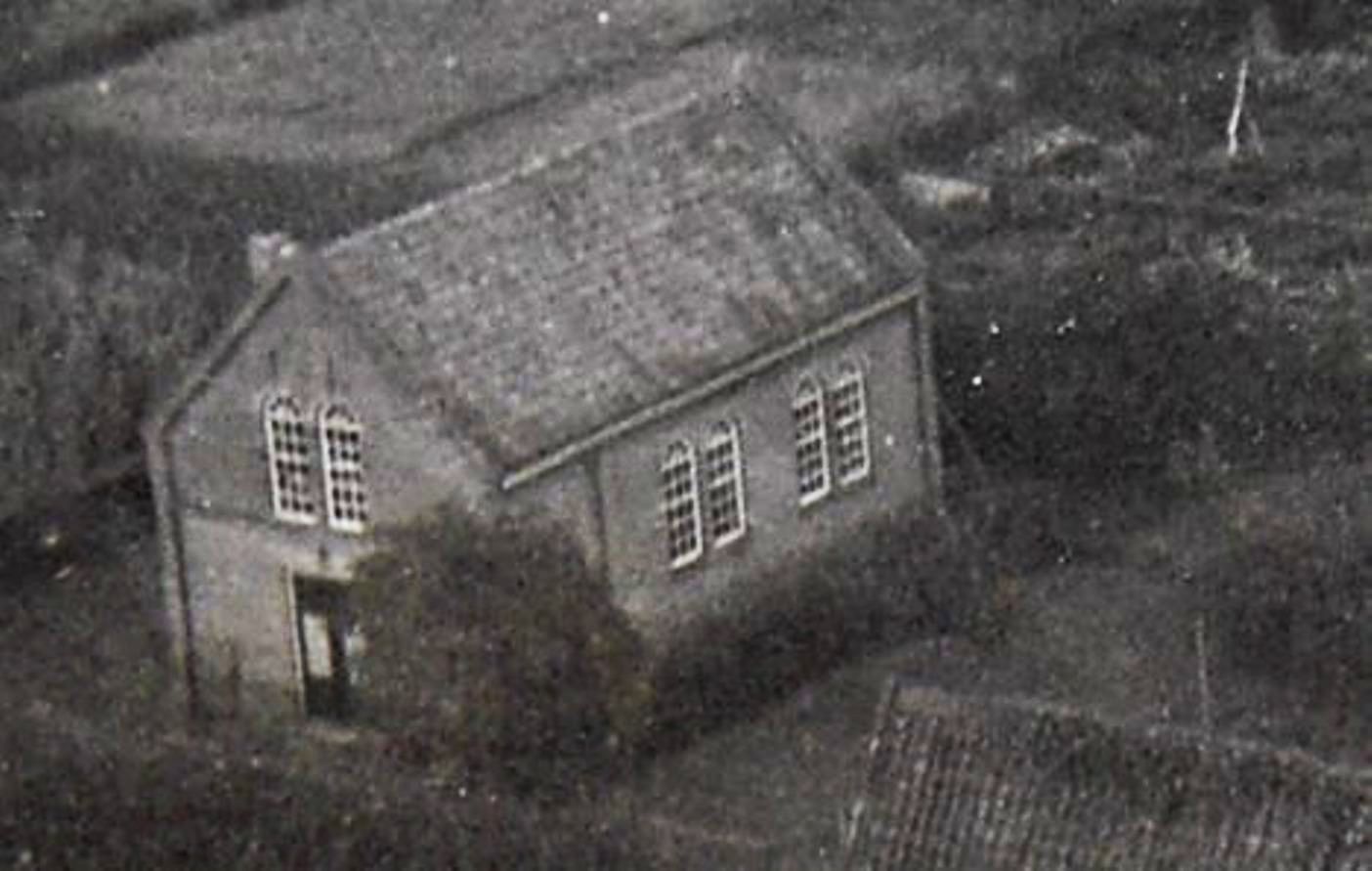
Hengelo (Gelderland) Synagogue
The synagogue of Hengelo in the Gelderland Achterhoek was a small brick hall built in 1882 on the Korte Hofstraat for a village congregation of about forty people. Most of them were murdered in the Holocaust. The building was sold after the war and demolished a few years later; the street is now called Synagogestraat.
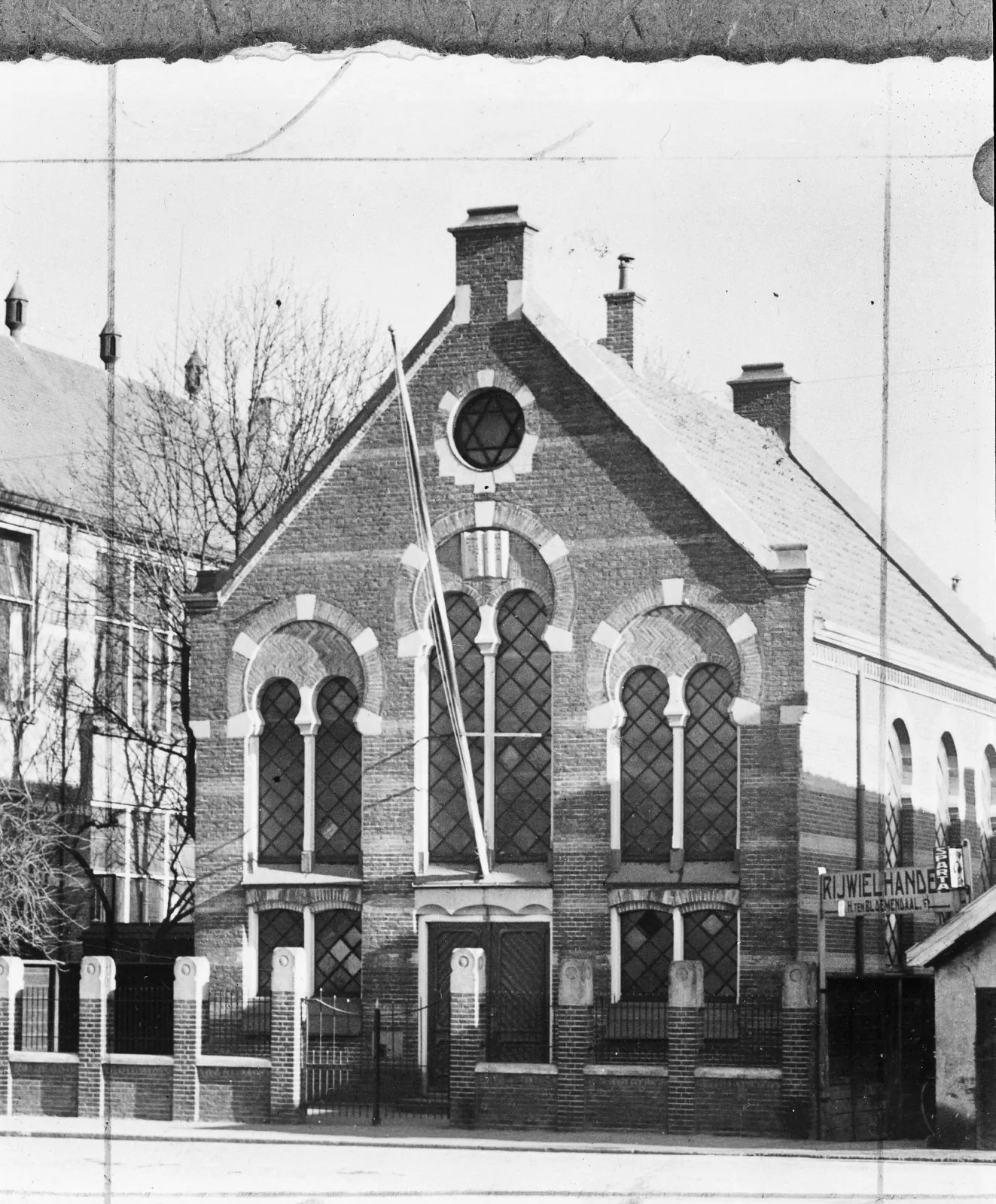
Hengelo Synagogue (Marktstraat)
The synagogue of Hengelo in Twente was built in 1883 for a congregation enlarged by the textile boom. Nazi German occupiers and Dutch Nazis (NSB members) wrecked it in August 1941, and most of its members were later deported. Restored and reconsecrated in 1951, it was demolished in 1960 to make way for redevelopment of the town centre.
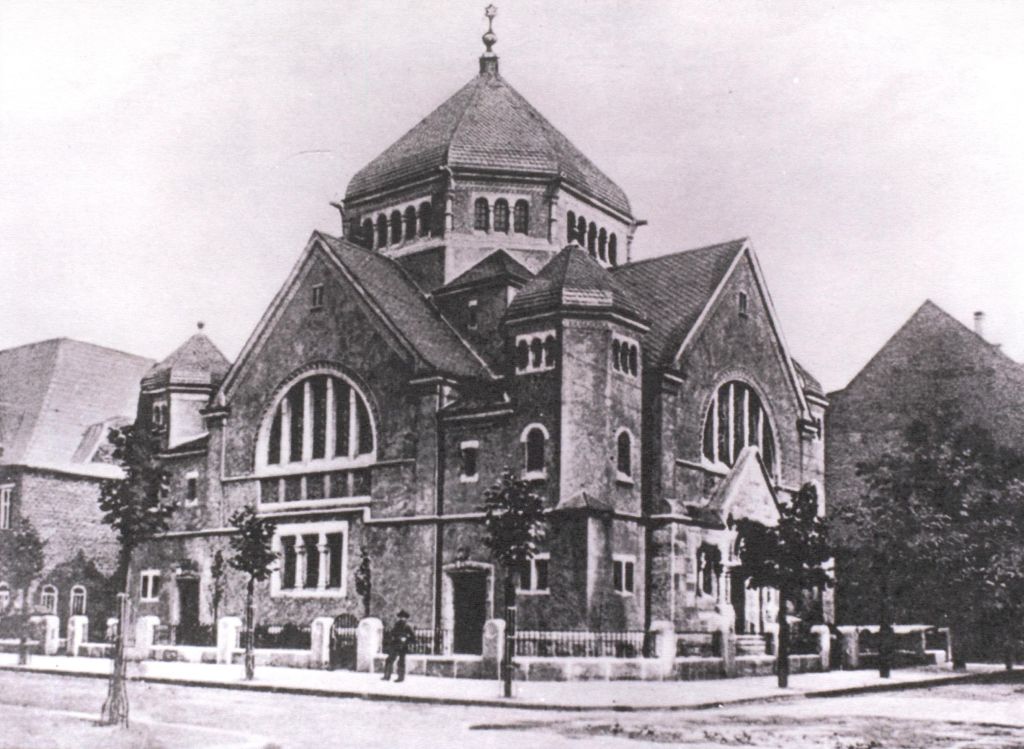
Herne Synagogue
Liberal synagogue of Herne's Jewish community, designed by Bochum architect Heinrich Robert and dedicated in 1911 at Schaeferstraße 32. Seating about 350, it had an organ, mixed choir and domed central tower. SA men burned it on 9–10 November 1938; the ruins were demolished by early 1939.
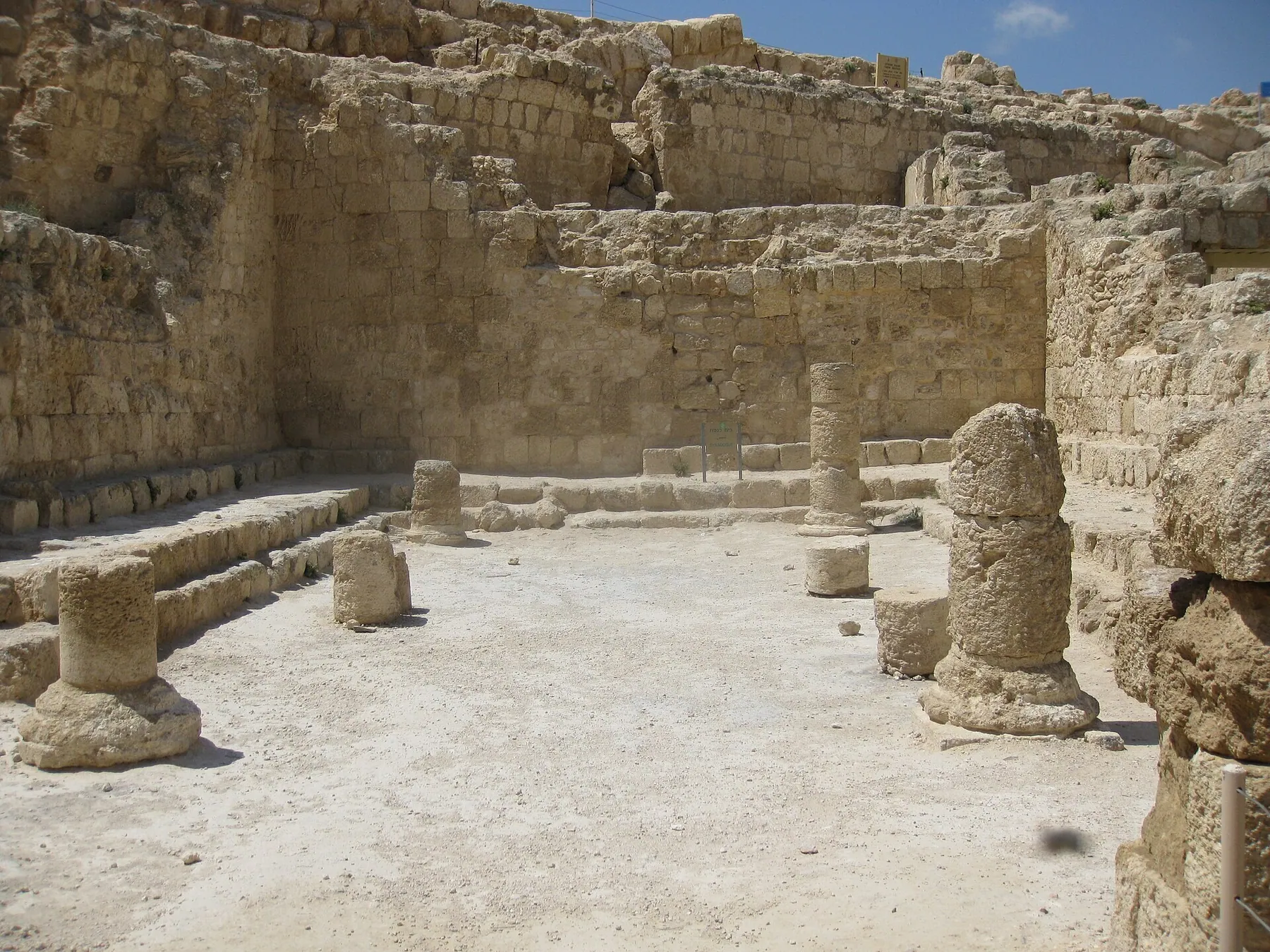
Herodium Synagogue
On the summit of Herodium, Jewish rebels turned the reception hall of King Herod's palace-fortress into a synagogue by building stone benches along its walls. The Romans took the fortress in about 71 CE, and Bar Kokhba's fighters held it again in 132–135 CE. The roofless hall still stands several metres high.
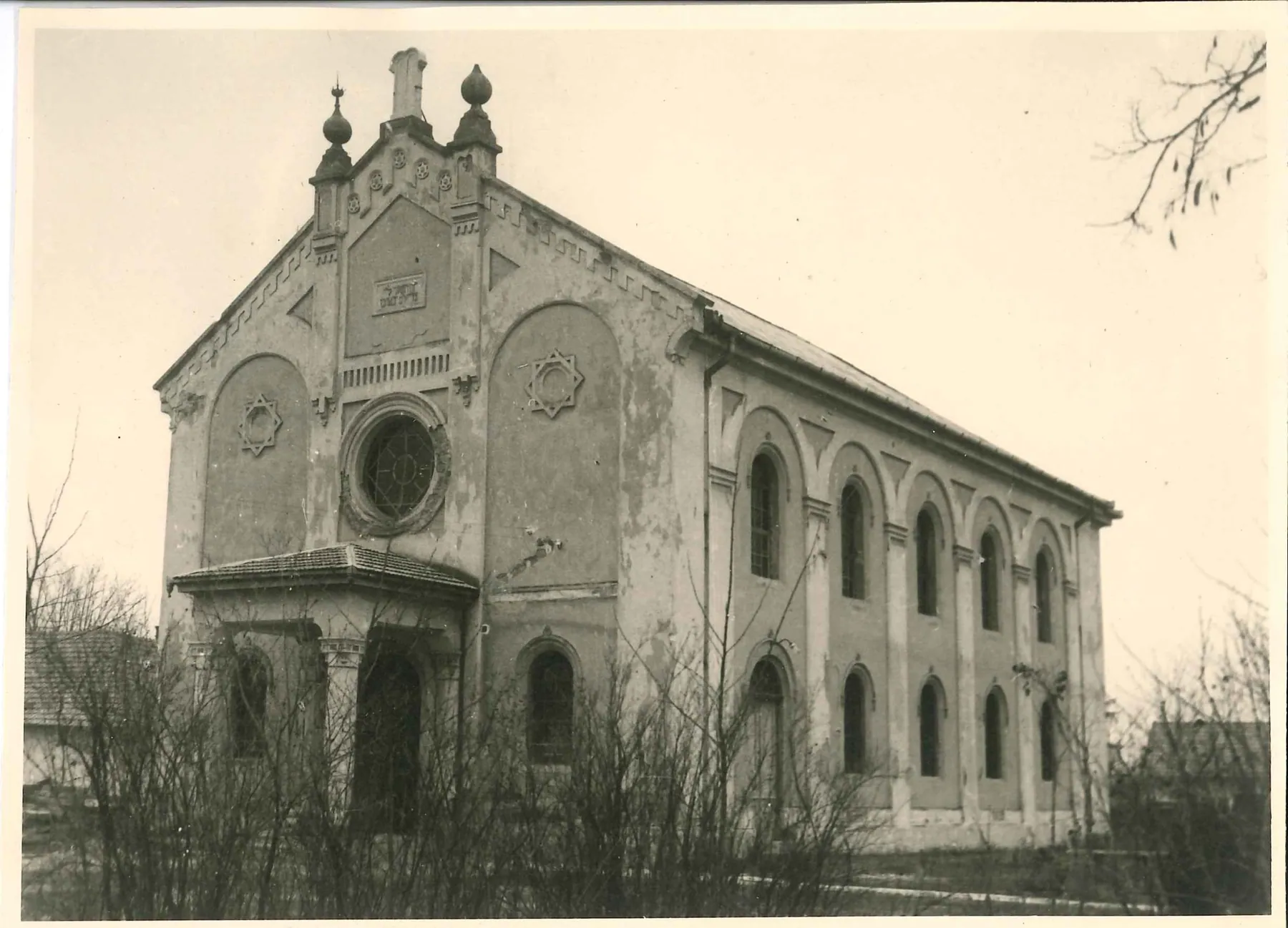
Heves Synagogue
The synagogue of Heves, a market town on the Great Hungarian Plain, was built in 1867 on Baross Gábor utca and restored in 1925. It outlived the Holocaust and was repaired by survivors in 1947. In 1981–82, under Communist rule, a Budapest glove-makers' co-operative bought it and rebuilt it as a factory.
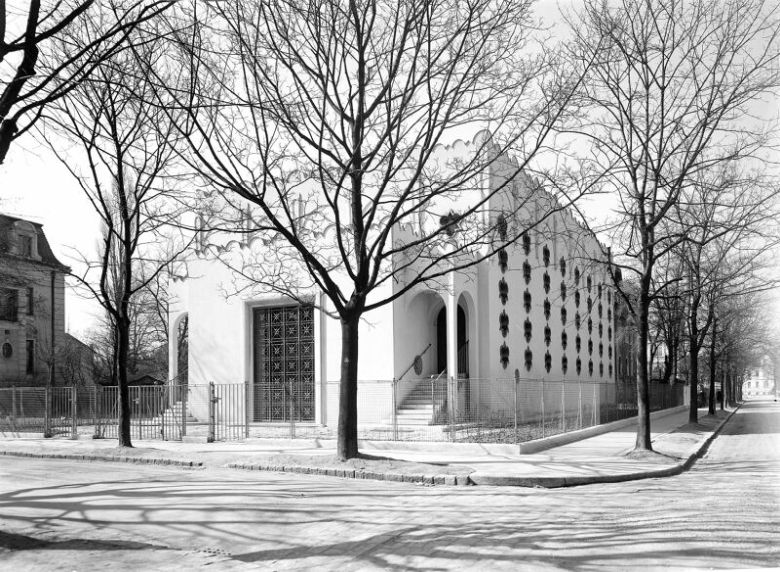
Hietzing Synagogue (Neue Welt Tempel), Vienna
The Hietzing synagogue at Eitelbergergasse 22, a white, crenellated hall designed by Arthur Grünberger and built in 1928-29, was the only free-standing synagogue built in Vienna between the two world wars. It burned in the November Pogrom of 1938, was demolished in 1939, and a block of flats now stands on its plot.
Hilversum School Synagogue (Zeedijk)
After the Second World War the small surviving Jewish community of Hilversum converted its former Jewish school on the Zeedijk into a synagogue, used from 1952. The building, which had housed the school and the teacher's residence since before 1906, was demolished in 1969 during urban renewal and replaced by a new synagogue on the Laanstraat.

Hilversum Synagogue (Zeedijk)
The synagogue on the Zeedijk in Hilversum was consecrated in 1789 and enlarged in 1880 and 1900. Nazi German occupiers looted it in 1942, and in the hunger winter of 1944-1945 it was stripped bare. Most of Hilversum's Jews were murdered. The ruined building was sold and demolished in the 1960s.
Hindeloopen Synagogue
The small synagogue of Hindeloopen stood on the Bueren in this Frisian harbour town and served a Jewish community that settled there from 1715 and later depended on the congregation of Bolsward. The community was dissolved in 1862 and the synagogue was pulled down in 1870; its plot, the 'Jodenerf', is still empty.
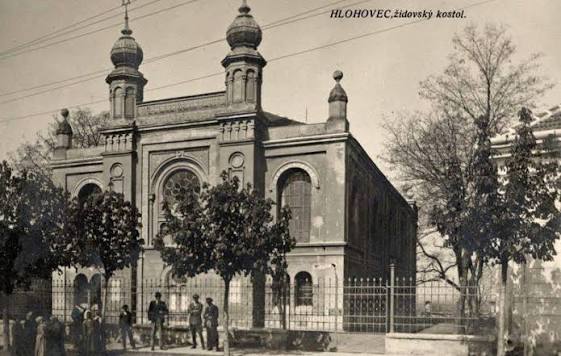
Hlohovec Synagogue
Built in 1891 on a rise above the Váh River, Hlohovec's twin-domed Moorish-Oriental synagogue seated about 800 worshippers and was the largest religious building in the town. Its congregation was deported in 1942; after the war the building became a textile warehouse, and it was demolished in January 1960 to make way for a new bridge.
Hlučín Synagogue
The synagogue of Hlučín (Hultschin), in the Silesian borderland north of Ostrava, was consecrated in 1842/43 for a community that then numbered over 200. As the community dwindled to about twenty people, the building was wrecked or demolished in 1931, so it no longer existed when the Nazis annexed the town in 1938.
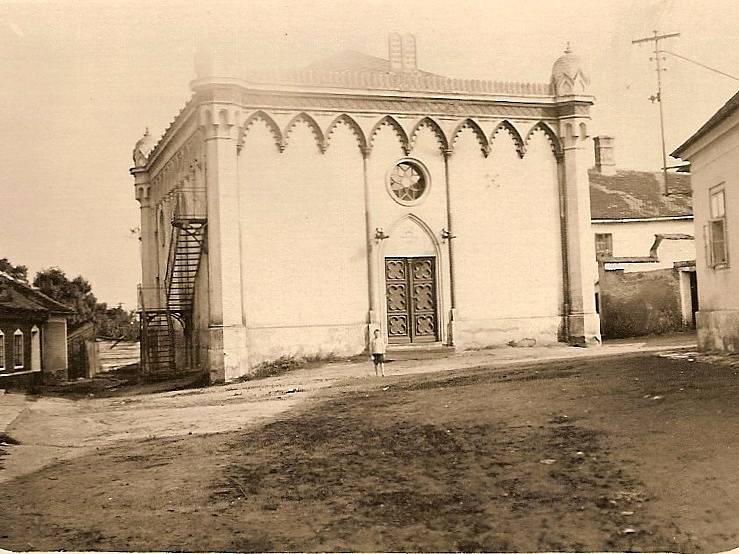
Hodonín Synagogue
The synagogue of Hodonín (German Göding) in South Moravia stood in the old Jewish quarter; a synagogue there is recorded from 1688, and the building was restored and consecrated anew in 1863 with Moorish-style decoration. It was badly damaged under the Nazi occupation, its congregation was deported in 1942, and it was demolished after 1945.
Hohenau an der March Synagogue
The synagogue of Hohenau an der March, a market town on the Moravian border in Lower Austria, was built in 1899 for a Jewish community refounded after 1861 and attached to the Kultusgemeinde of Mistelbach. Its congregation was driven to Vienna in 1938, and the building was pulled down in spring 1939 under Nazi rule.
Holíč Synagogue
The synagogue of Holíč, a Baroque building dedicated in 1786, served one of the oldest and largest Jewish communities in western Slovakia, protected by a 1751 privilege of Maria Theresa. Most of its congregation was deported in 1942. After the war the building was used as a warehouse and was later demolished; the date is unknown.
Hoogeveen Synagogue (1799)
Hoogeveen's first purpose-built synagogue was consecrated in 1799 on the present-day Schutstraat, soon after Dutch Jews gained civil equality. It served a congregation that grew to become the second largest in Drenthe, and was pulled down in 1865-1866 so that a larger synagogue, which still stands, could be built on the same spot.
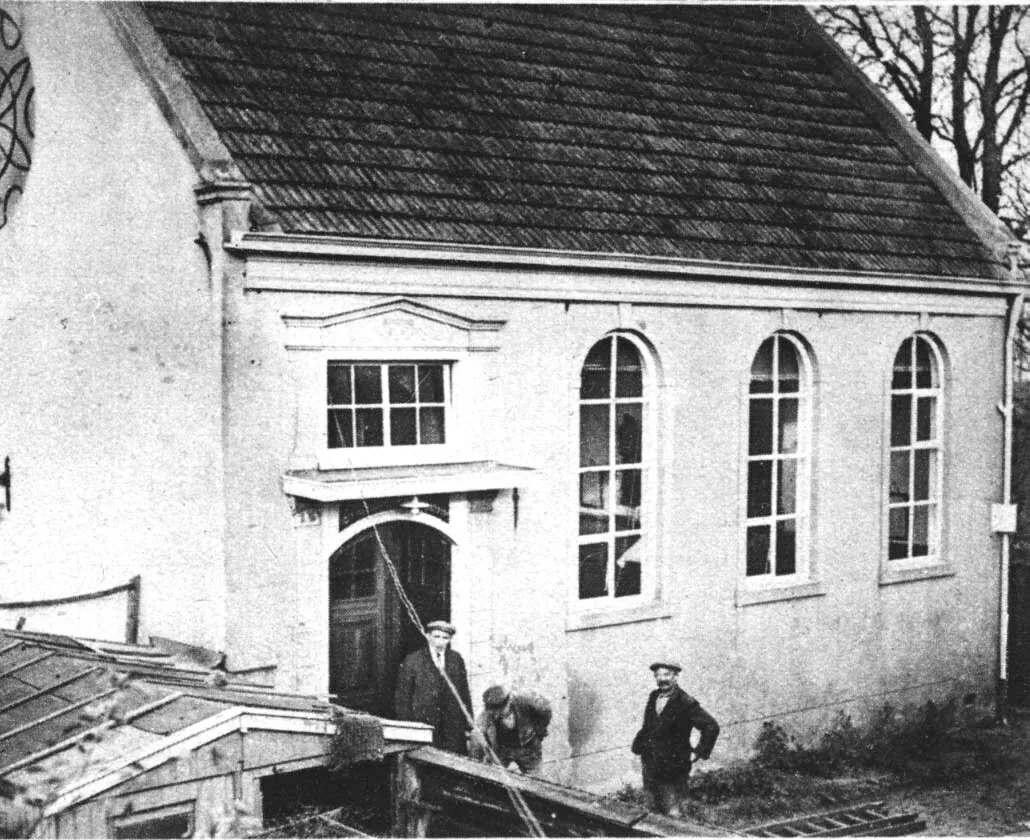
Hoogezand Synagogue
The synagogue of Hoogezand-Sappemeer, opened in 1854 north of the Winschoterdiep, housed the prayer hall, a Jewish school, a meeting room and the teacher's home. Dutch Nazis (NSB members) turned it into a store for flammable materials during the occupation. Sold after the war, it was demolished soon after, possibly in 1959.
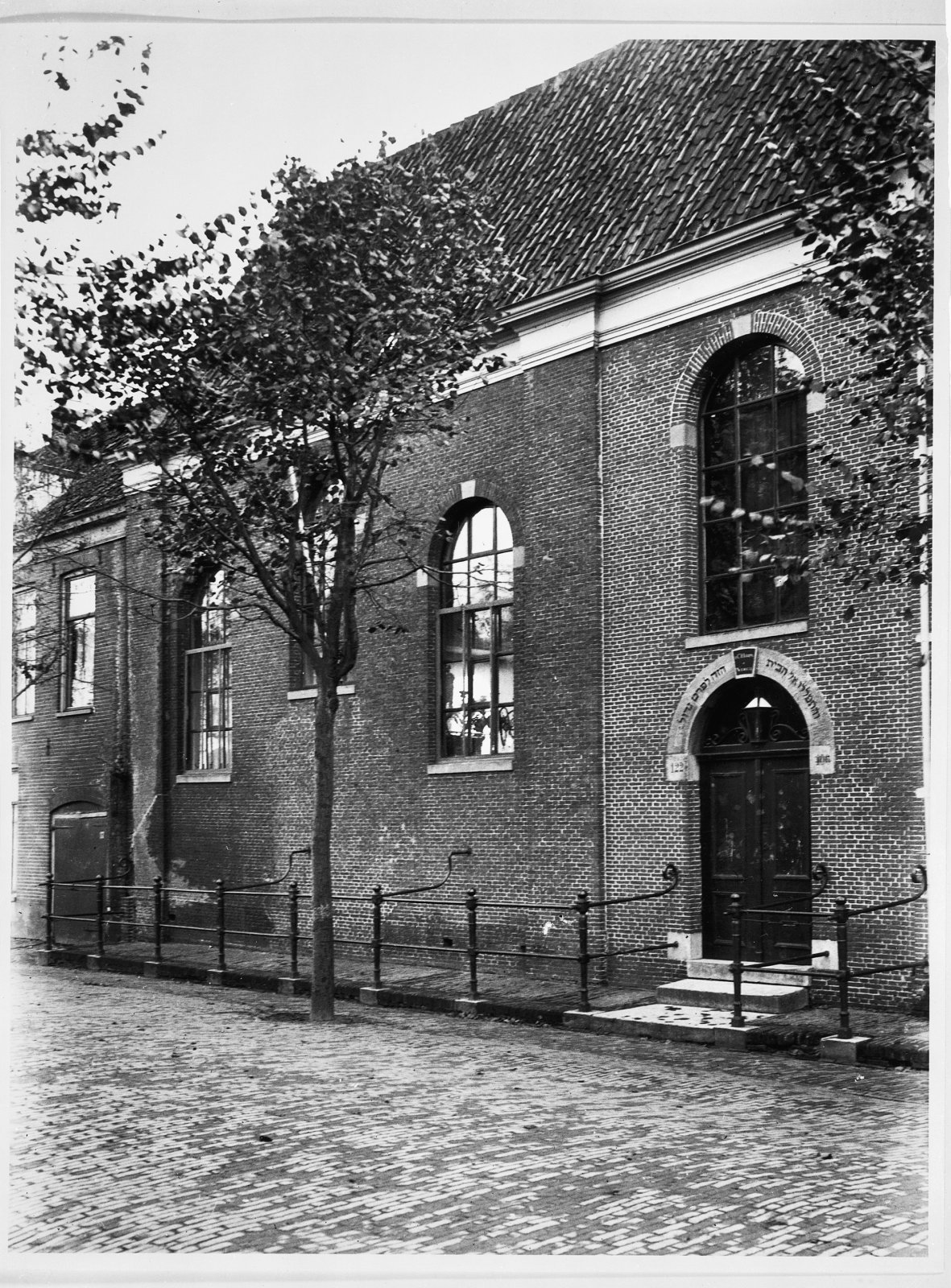
Hoorn Synagogue
The synagogue of Hoorn, built in 1780 on the Italiaanse Zeedijk and enlarged in the 1880s, served what was around 1860 one of the larger Jewish communities of the Netherlands. During the occupation it was sold to a member of the NSB; the municipality bought it in 1953 and it was then demolished.
Horažďovice Synagogue
The synagogue of Horažďovice, a small town in south-west Bohemia, was rebuilt after a fire in 1868 on the site of a seventeenth-century predecessor in the old Jewish street. Nazi German forces used it as a store and its interior was largely destroyed. Handed to the Communist state in 1964, it was demolished in 1980.

Horvat Ethri Synagogue
A public hall of about 13 by 7 metres, with three columns, a courtyard and a large ritual bath, stood in the Jewish village at Horvat Ethri in the Judean foothills. Its excavators date it between the two revolts against Rome and identify it as a synagogue. The Roman army destroyed the village around 135 CE.
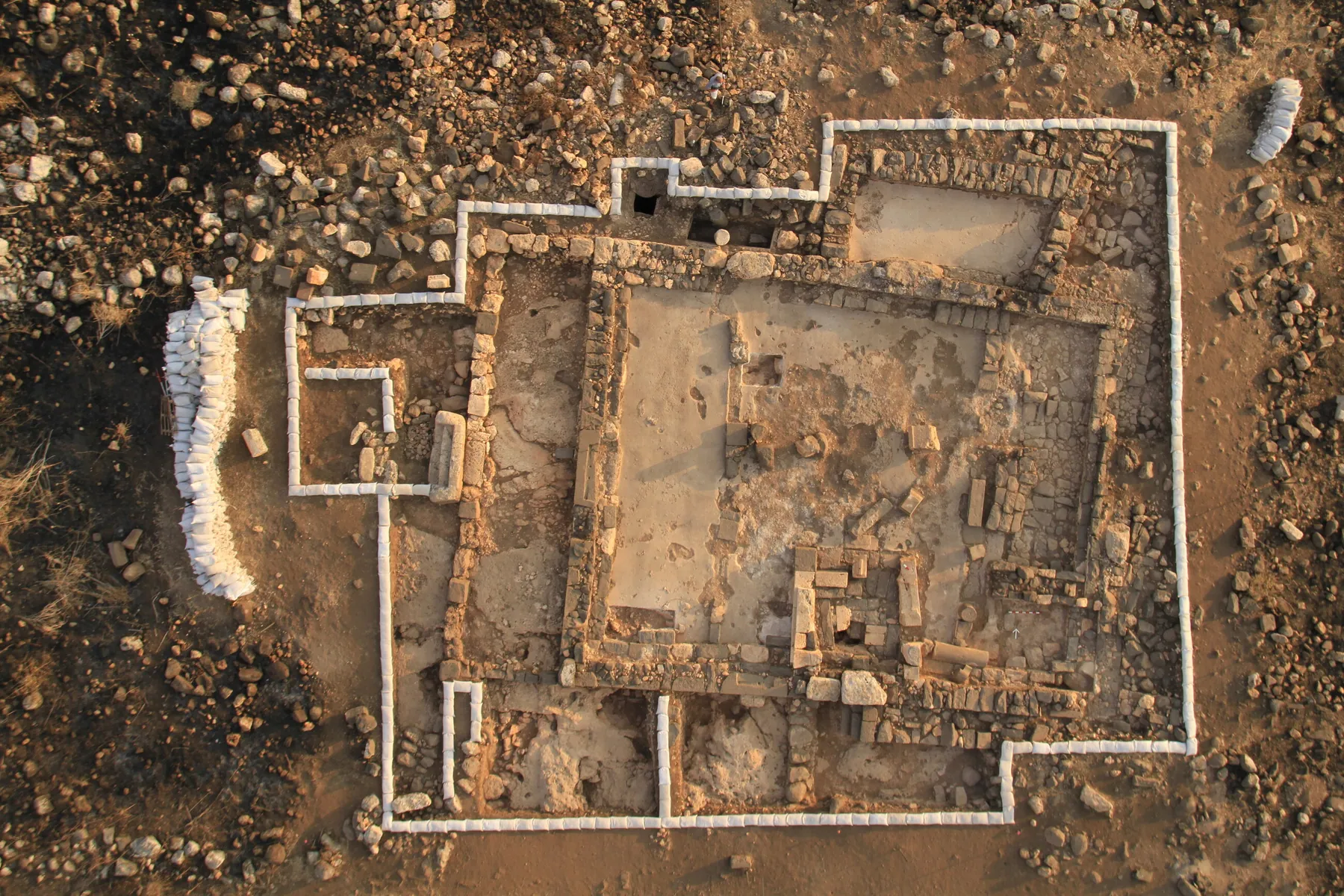
Horvat Kur Synagogue
The synagogue of Horvat Kur stood in a hilltop village above the north-western shore of the Sea of Galilee. Built around 420 CE over an older prayer hall with a menorah mosaic and rebuilt in the late sixth century, it was abandoned in the later seventh century. Only low basalt walls remain, excavated from 2010.
Horvat Ma'on Synagogue (Judea)
A Talmudic-period synagogue on the hill of biblical Ma'on in the southern Hebron hills, built in the late 4th or early 5th century CE and used through two phases into the 7th century. Excavated in 1987-1988, it yielded a monumental marble menorah now in the Israel Museum. Only low excavated remains survive.
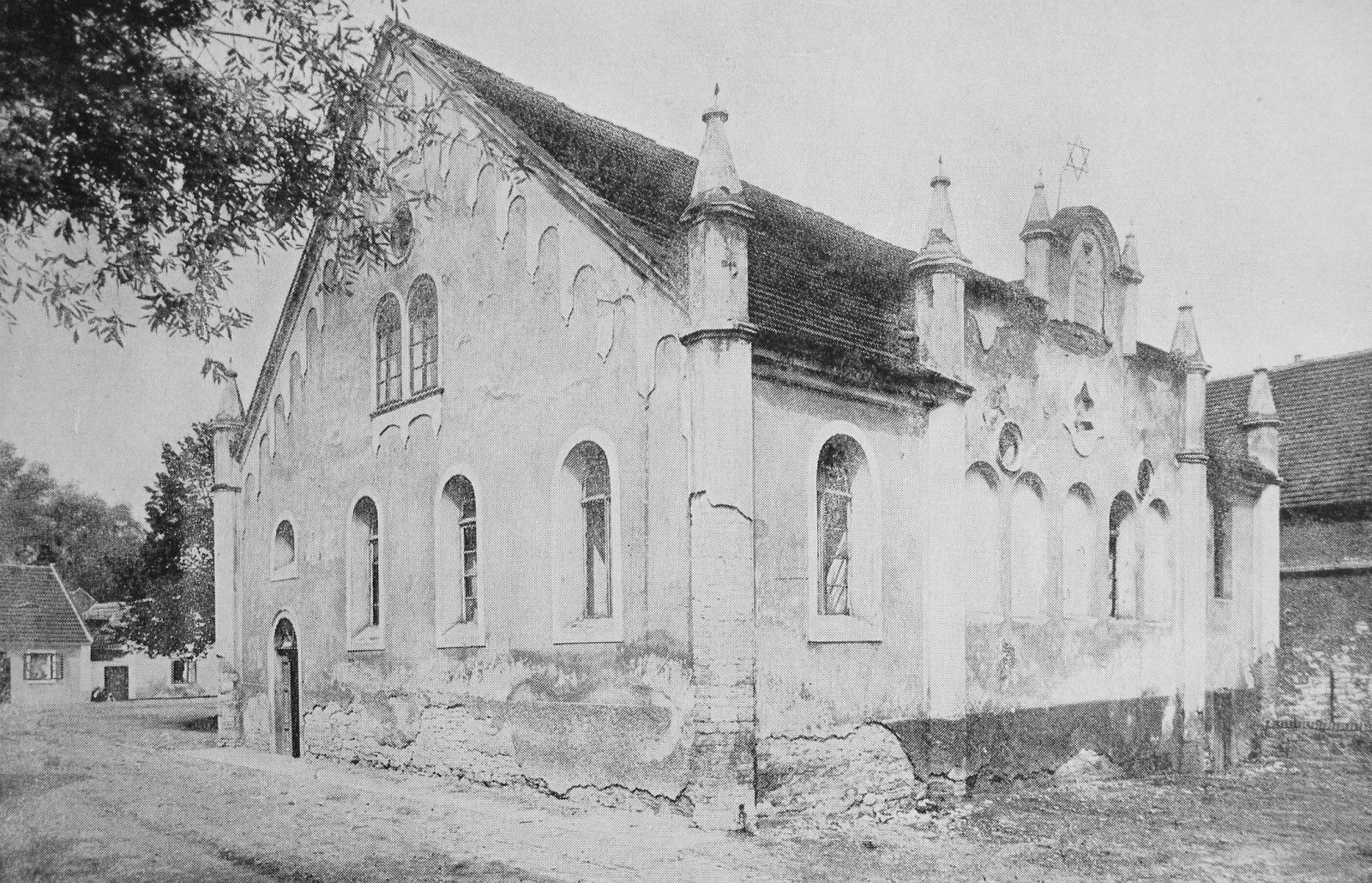
Hostouň Synagogue
The synagogue of Hostouň, a village south-east of Kladno, was built by about 1800 and remodelled in the mid-nineteenth century, when some sixty Jewish families lived there. Services ended before 1925 and the building was sold in 1929. Its prayer hall was pulled down around 1950; a garden now covers the site.
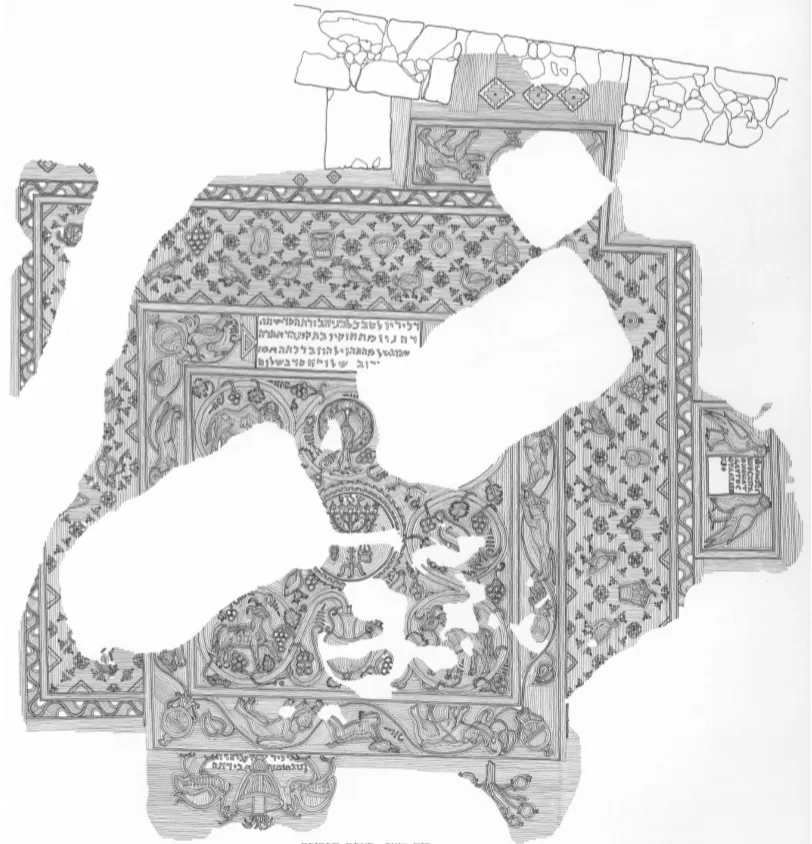
House of Leontis Synagogue, Beth Shean
A small mosaic-paved prayer room, about seven metres square, formed part of the House of Kyrios Leontis in Byzantine Scythopolis (Beth Shean). Its floor showed a menorah, the word shalom and Aramaic blessings for a 'holy society'. Excavated in 1970-1972, it survives only as a lifted mosaic; when and how it ended is unknown.
Hořelice Synagogue
Hořelice, a village west of Prague that is now part of the town of Rudná, had a Jewish congregation of its own and a synagogue built in 1842. Jiří Fiedler's survey of Jewish monuments in Bohemia records that the building was demolished at some point after 1950. Its appearance, exact site and demolisher are unknown.
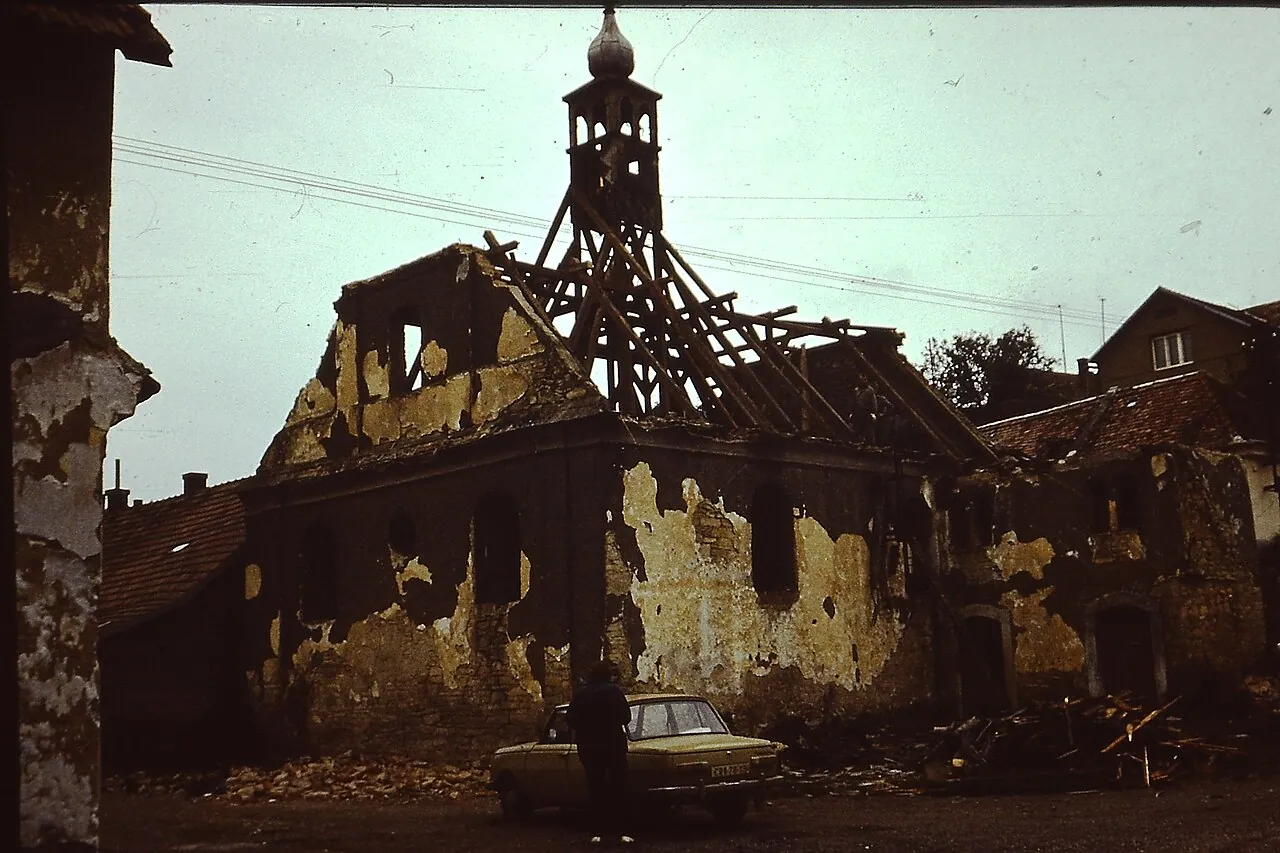
Hroubovice Synagogue
The synagogue of Hroubovice, a small village in the Chrudim district of eastern Bohemia, served a Jewish community that once made up nearly half of the village. It stood in the village centre beside the stream. The congregation dissolved in 1894, its last Jews were deported under Nazi occupation, and the building was demolished in the late 1970s.
Hroznětín Synagogue
The synagogue of Hroznětín (German Lichtenstadt), north of Karlovy Vary, was built in the eighteenth century to replace a prayer house first recorded in 1507. It served one of Bohemia's oldest rural Jewish communities, was partly destroyed in 1938, the year Nazi Germany annexed the region, and was pulled down in the 1950s.
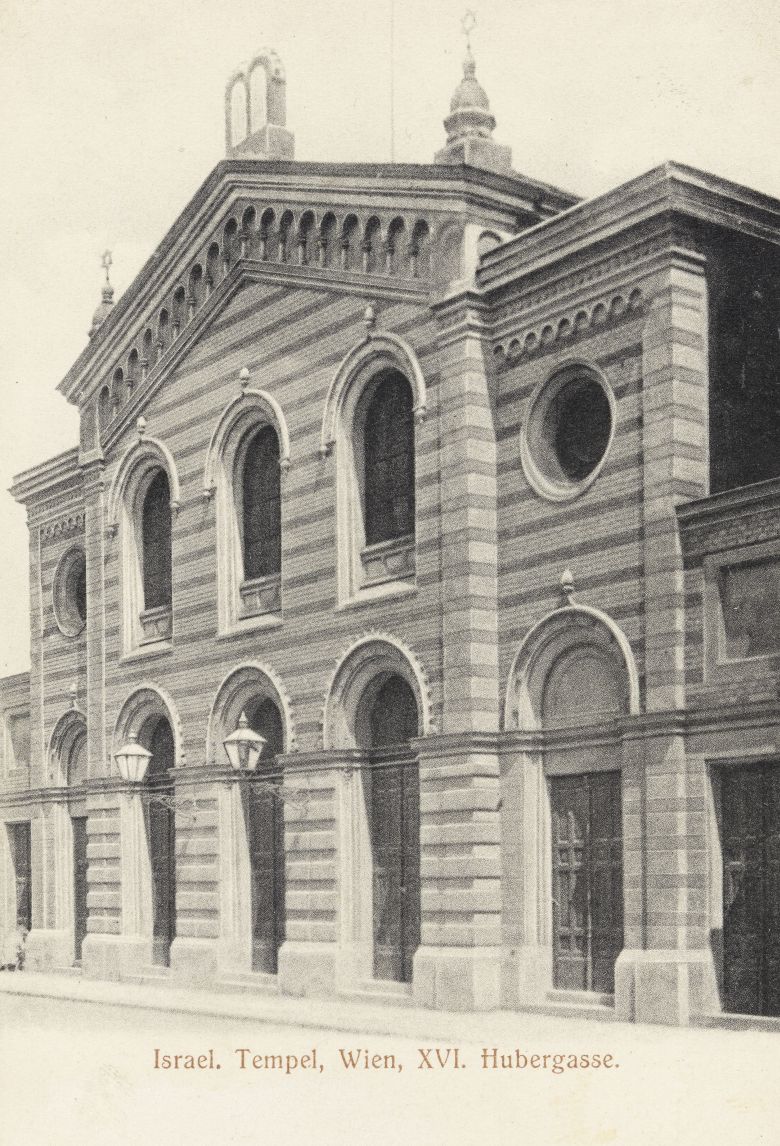
Hubertempel, Vienna-Ottakring
The Hubertempel at Hubergasse 8 in Ottakring, a Neo-Renaissance brick synagogue by Ludwig Tischler, opened in 1886 for the Jews of Vienna's western suburbs. Nazis burned its interior on 10 November 1938. The gutted shell survived the war, was returned to the Jewish community, sold to the City of Vienna in 1969 and demolished in early 1970.

Humboldttempel (Humboldtplatz Synagogue), Vienna
The Humboldttempel on the corner of the Humboldtgasse and Humboldtplatz in Vienna's working-class Favoriten district was a domed synagogue by Jakob Gartner, crowned by a large octagonal dome and eight onion-topped towers. Consecrated on 6 September 1896, it was the centre of Jewish life in the 10th district until the November pogrom, when the Nazis blew it up on 10 November 1938 and cleared the ruins that winter.
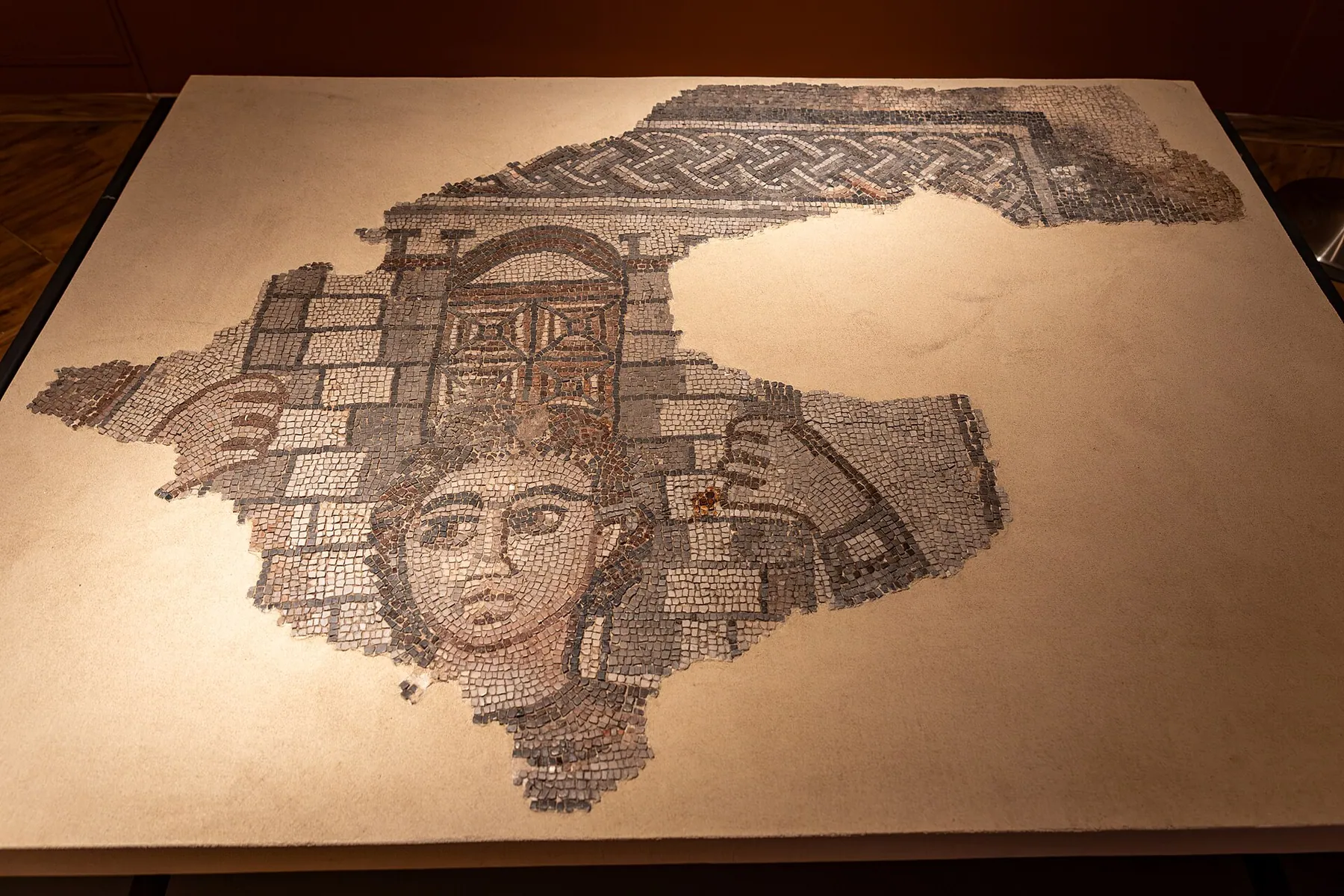
Huqoq Synagogue
Huqoq's late Roman synagogue, built around 400 CE in a Jewish farming village above the Sea of Galilee, was paved throughout with mosaics of biblical scenes. When and why it was abandoned is unknown; part of the building later collapsed, and in the fourteenth century a new hall was raised over the buried floor.
Hurbanovo Synagogue
The synagogue of Ógyalla, today Hurbanovo in southern Slovakia, served a Jewish community recorded since at least the mid-nineteenth century. Its construction date of 1880 and its later loss rest on a single unreferenced list entry; when, why and by whom it was pulled down is unknown.
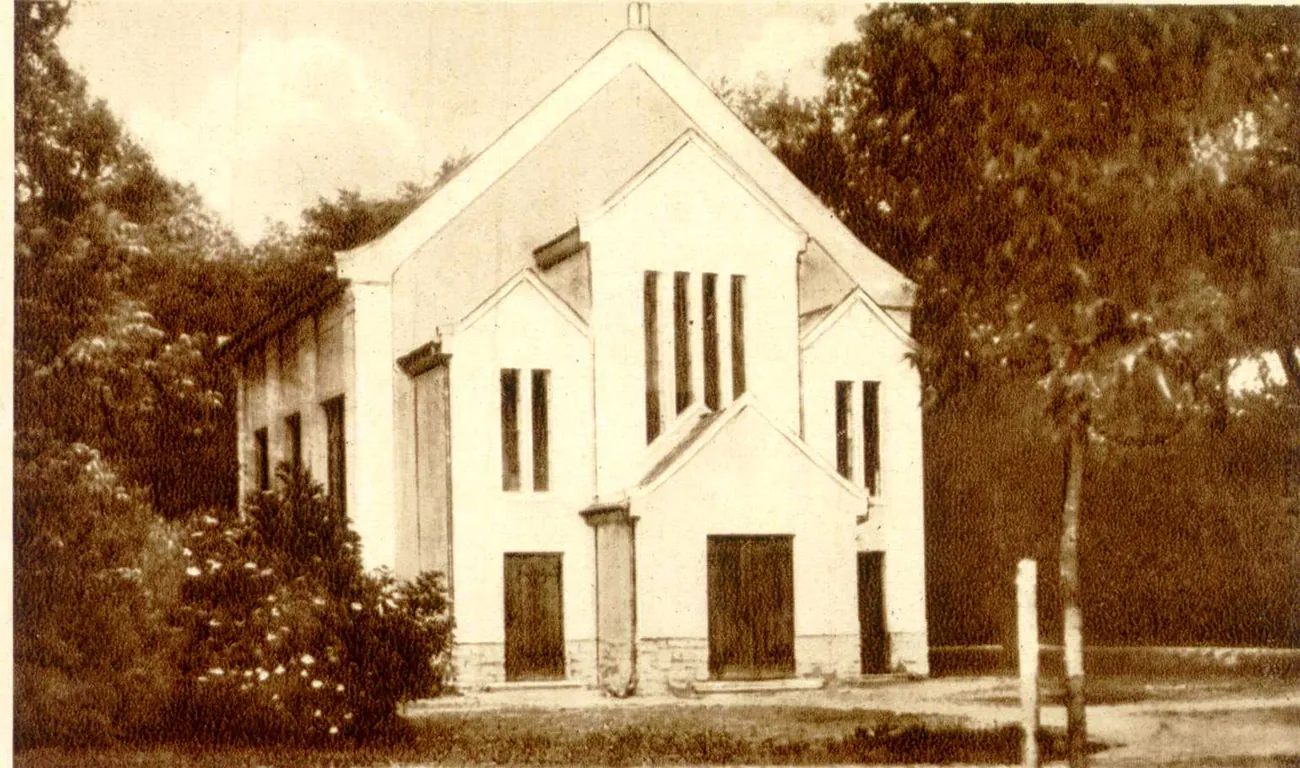
Hévíz Synagogue
Hévíz's synagogue was built in 1930-33 near the thermal lake for the thousands of Jewish guests who took the cure each summer, on land given by Prince Festetics. It survived the war intact, fell out of use in the 1960s, and was demolished in April 1977 under Communist rule, during the rebuilding of the state-run lake bath.
Hřešihlavy Synagogue
Hřešihlavy, a small village above the Berounka valley north of Radnice, had one of the larger rural Jewish communities of the Pilsen region, which for a time outnumbered its Christian neighbours. Its nineteenth-century synagogue was abandoned when the Jews moved to the cities and was demolished before 1938; no image of it is known.
IJsselstein Synagogue
The synagogue of IJsselstein, in the province of Utrecht, stood in the Weidstraat and was in use from 1766 into the twentieth century. It served a small congregation that peaked at 59 people in 1809 and was dissolved in 1918. The building was later pulled down; when, and by whom, is not recorded.
Ilok Synagogue
Ilok's synagogue, built in 1855 and rebuilt after a fire in 1873, was a modest single-storey 'synagogue-house' on the so-called Jewish Street of the Lower Town. It served an Orthodox community whose members were deported by the Ustaše regime in 1942. Empty from 1941, it was sold and demolished in 1948 or 1949.
Iregszemcse Synagogue
The synagogue of Iregszemcse, a Tolna county village known as Felsőireg until 1940, served a Jewish community of about 100 people in 1910 and 50 in 1941. Anikó Gazda's survey of 1980-87 recorded it as demolished. When it was built, when it was pulled down and by whom are all unknown.
Izsák Synagogue
The synagogue of Izsák, a small town in Bács-Kiskun county, was built in the late eighteenth century and repaired in 1866, according to Anikó Gazda's survey of Hungarian synagogues. It had been demolished by the time of her fieldwork in 1980-87. When it came down, and who demolished it, is not recorded in any source found.
Ițcani Synagogue, Suceava
The synagogue of Ițcani (Itzkany), a Bukovinian border town now part of Suceava, served a Jewish community that made up about two fifths of the population around 1900. Its congregation was deported to Transnistria in October 1941. The building decayed to bare walls and was pulled down between 2001 and 2010; no source names who demolished it.
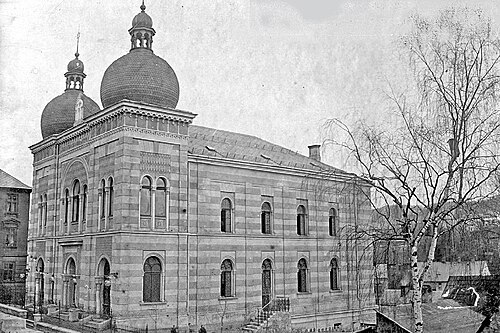
Jablonec Synagogue
Designed by the Viennese architect Wilhelm Stiassny and dedicated on 28 September 1892, the Moorish-style synagogue of Jablonec served a young community of export merchants drawn by the town's glass-jewellery trade. Its twin gilded-star domes marked the skyline until Nazis wrecked and burned it during Kristallnacht, 10 November 1938.
Jelka Synagogue
Jelka, the Hungarian Jóka, is a village on the Little Danube in the Galanta district. Its Jewish community of merchants and traders had a synagogue by 1851 and a Jewish school. About 250 Jews were deported in 1944. Both buildings were later demolished; when, and by whom, is not recorded.
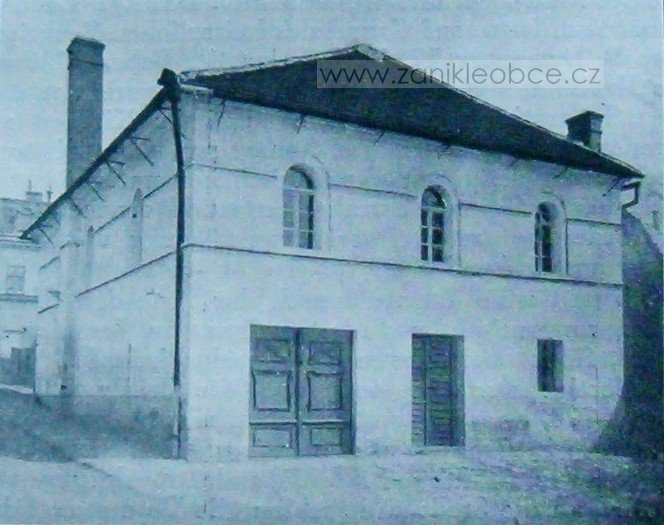
Jemnice Synagogue
The synagogue of Jemnice (German Jamnitz), in south-western Moravia, stood on the Jewish square of one of the oldest Jewish communities in Moravia. A memorial inscription dates its founding to 1649. After most of the town's Jews were deported to Terezín in May 1942, the Nazis demolished the synagogue that same year.

Jerash Synagogue
The synagogue of ancient Gerasa stood on high ground west of the Temple of Artemis. Its mosaic floor showed the animals of Noah's Ark, a menorah and the names of three donors. By 530-531 CE Christians had built a church over it, reversing its direction. Excavators found the buried floor in 1929.
Jewish Temple of Elephantine
The Jewish Temple of Elephantine was a temple, not a synagogue: the sacrificial sanctuary of YHW for the Judean garrison on Elephantine Island. Standing by 525 BCE, it was burned in 410 BCE by troops of the Persian commander Vidranga, urged on by Khnum's priests. Rebuilt, it was abandoned around 400 BCE; only sparse excavated walls remain.
Ješín Synagogue
The synagogue of Ješín, a village now part of Velvary in Kladno district, was the last of the local Jewish community's prayer houses and probably dated from the first half of the 19th century. The community faded after 1848 as families moved to nearby towns, and the empty building was pulled down some time after 1970.

Jihlava Synagogue
Consecrated on 9 September 1863, Jihlava's Romanesque-Moorish synagogue was the religious home of the revived Iglau community, whose rabbi Joachim Jacob Unger taught the young Gustav Mahler. Two weeks after the German occupation, local Nazis set it alight on 30 March 1939, and the city ordered the ruins demolished.
Jiřice u Miroslavi Synagogue
The synagogue of Jiřice u Miroslavi (German: Irritz), a village in South Moravia, probably dated from the mid-eighteenth century and stood in the lane where the village's Jews lived. The congregation dissolved in 1891 and its few remaining Jews were gone by 1939. The former synagogue was destroyed in the last days of the Second World War.
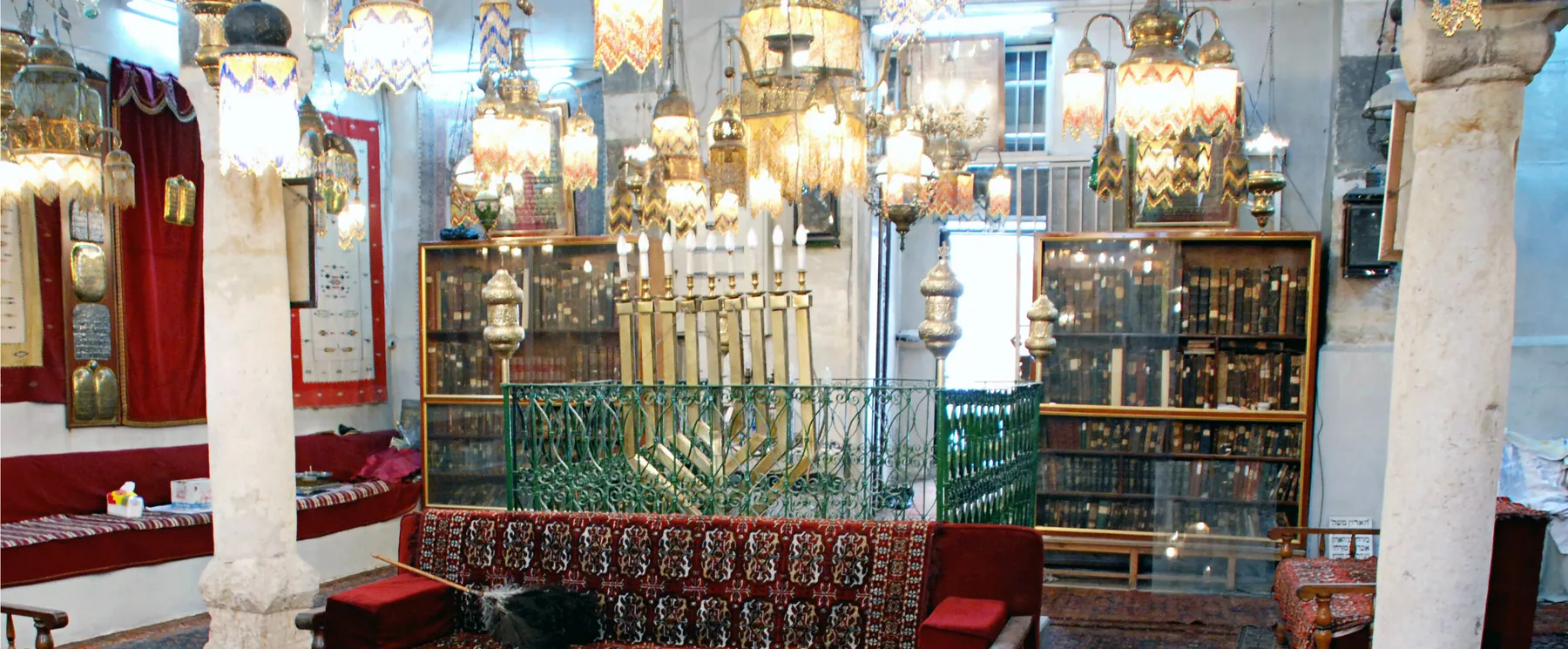
Jobar Synagogue
The Jobar Synagogue, a shrine-synagogue of the prophet Elijah on the edge of Damascus, was first recorded in 1210 and was revered for the cave beneath its hall. Damaged and looted in 2013 during the Syrian civil war, it was shelled into rubble in late May 2014; responsibility is disputed.

Jubiläumstempel (Siebenbrunnengasse Synagogue), Vienna
The Jubiläumstempel at Siebenbrunnengasse 1a in Vienna's Margareten district was the synagogue of the Jews of the Wieden and Margareten districts. Designed by Jakob Gartner with two short towers topped by onion domes and named for Emperor Franz Joseph's 60th jubilee, it opened on 21 May 1910. During the November pogrom on 10 November 1938 the Nazis set it on fire and blew it up, and the ruins were cleared in 1939.
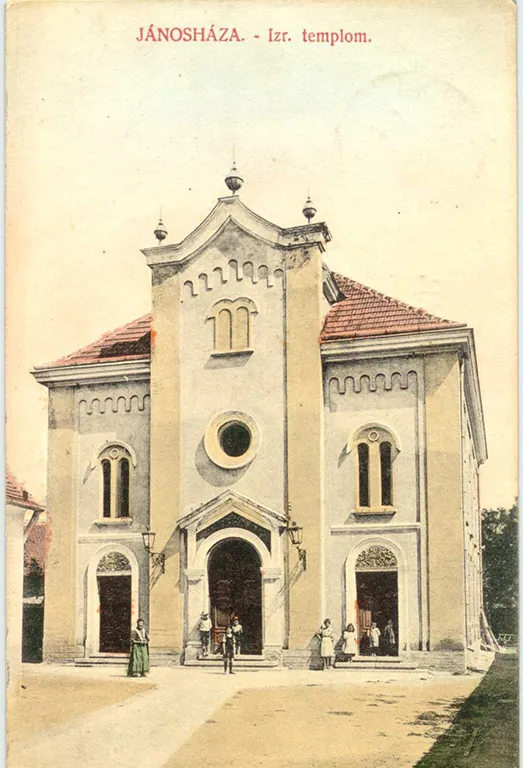
Jánosháza Synagogue
Jánosháza's Orthodox synagogue was built in 1897 with land and bricks given by Count Erdődy, replacing a prayer house of 1836. It served the leading Jewish community of the Kemenesalja region, which also kept a yeshiva. The community was deported in 1944; the building was later demolished, at a date and by hands not recorded.

Jászberény Synagogue
The Jászberény Synagogue, a twin-towered, onion-domed building consecrated on 10 September 1890, was the Neolog house of worship of the leading Jewish community of Hungary's Jászság region. It outlasted the Holocaust, but in 1968 the Communists demolished it and built the town library on its foundations.
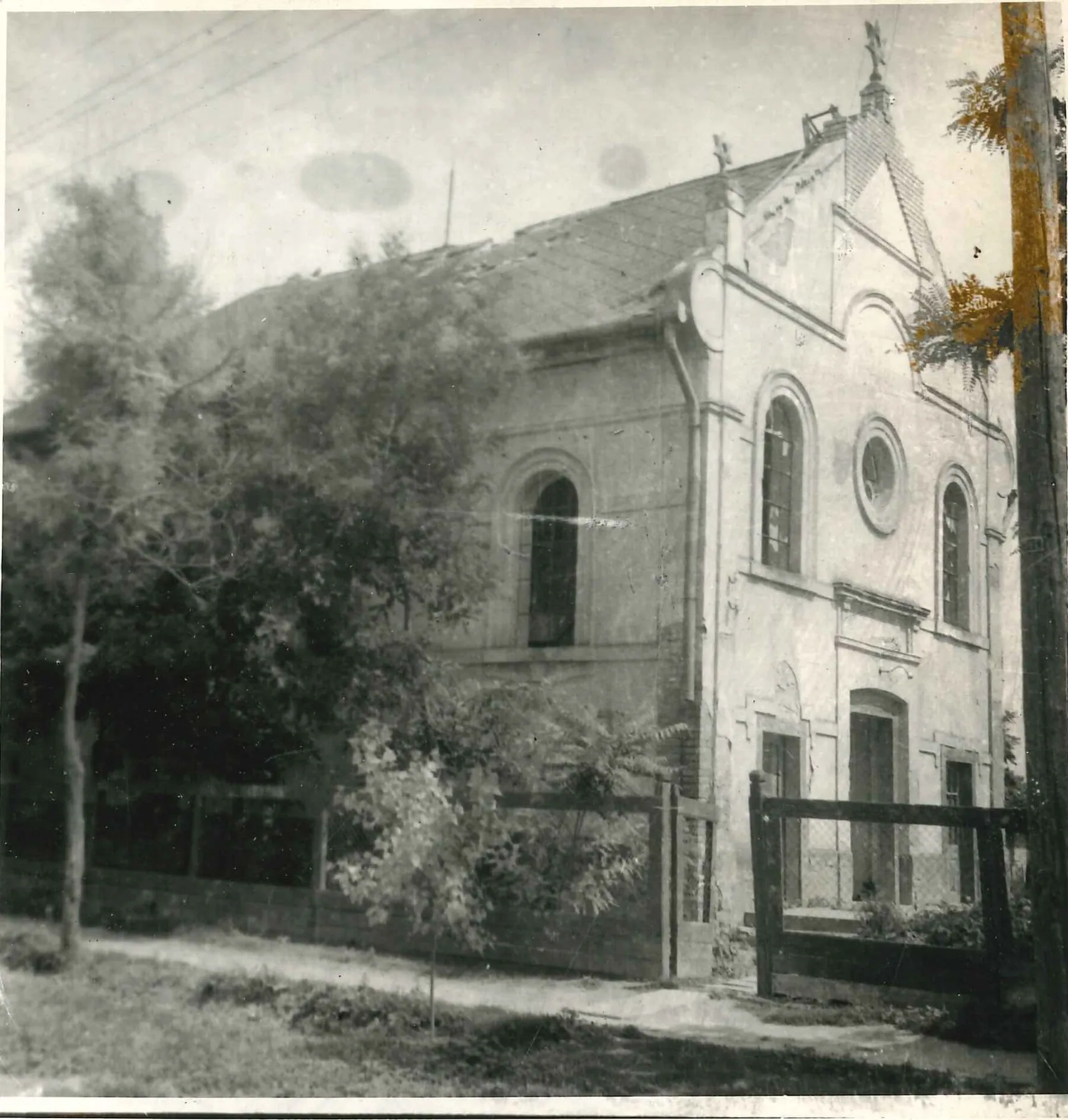
Jászladány Synagogue
The synagogue of Jászladány, a market town of the Jászság in Jász-Nagykun-Szolnok county, is dated 1875 and 1913 in Anikó Gazda's survey, which names Lajos Varga. A 1949 photograph shows it standing empty and damaged. It was demolished under Communist rule by 1987; who pulled it down is not recorded.

Jászárokszállás Synagogue
Jászárokszállás's synagogue was built in 1858 from members' donations, six years after Jews founded a congregation in the town. Photographs of 1955 show it still standing and furnished, eleven years after its congregation was deported to Auschwitz. It was demolished under Communist rule by the 1980s; who pulled it down is not recorded.
Kadaň Synagogue
Kadaň's synagogue, built in 1888-90 in a bastion of the old town fortifications, served a Jewish community that had resettled in the town only in the 1870s. Nazis set it on fire during the November Pogrom of 1938 and it was destroyed down to its foundations; its congregation was driven out and most were later murdered.

Kahal Grande Synagogue, Rhodes
The Kahal Grande, or Kahal Kadosh Gadol, was the oldest and largest synagogue in La Juderia, the Jewish quarter of Rhodes's walled old town, built in the late fifteenth century after the Ottoman siege of 1480. Allied bombing wrecked it in 1944; only its floor and wall bases survive.
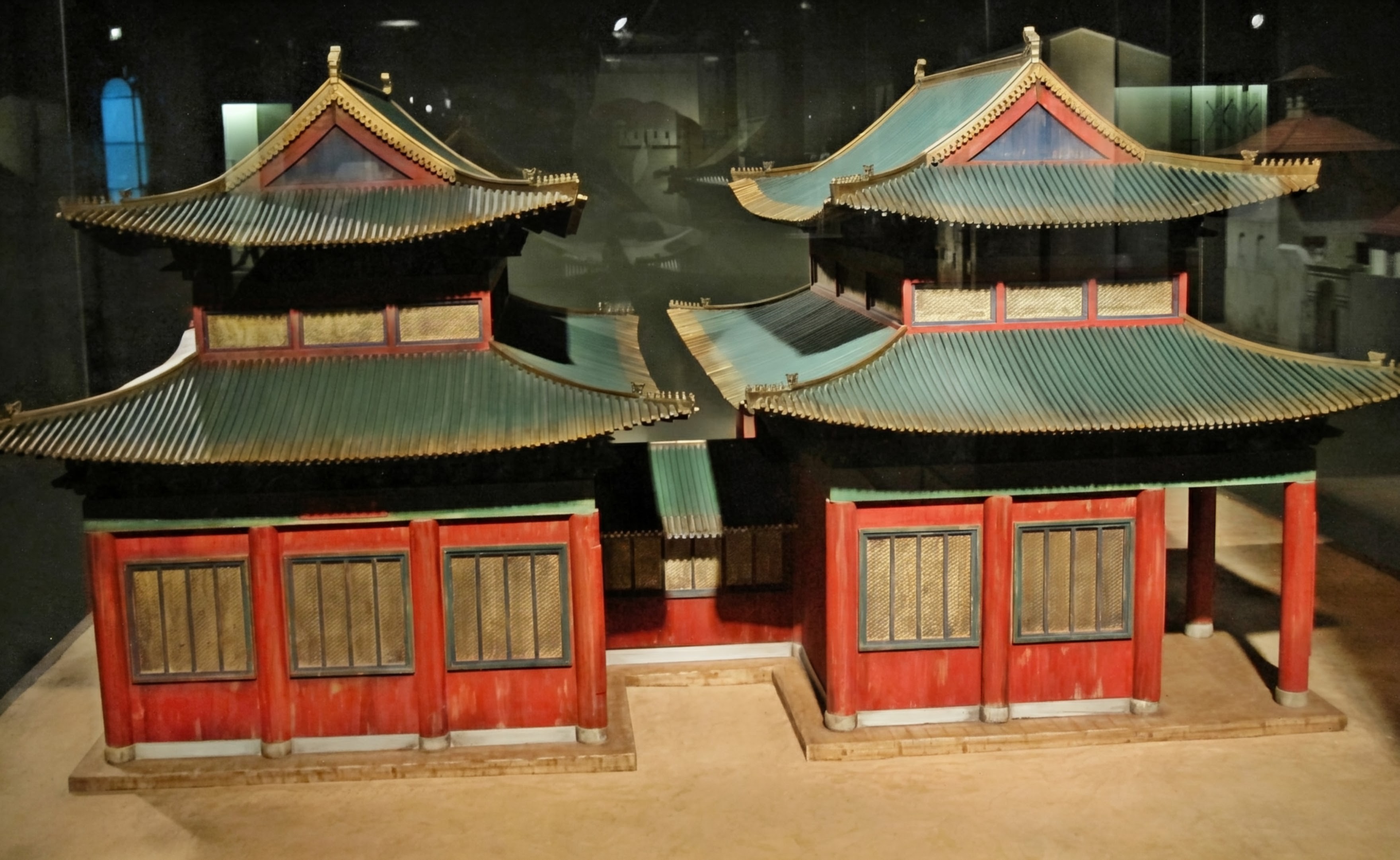
Kaifeng Synagogue
For nearly seven centuries, Kaifeng’s synagogue anchored a Judeo-Persian community that made Jewish tradition at home within Chinese culture.
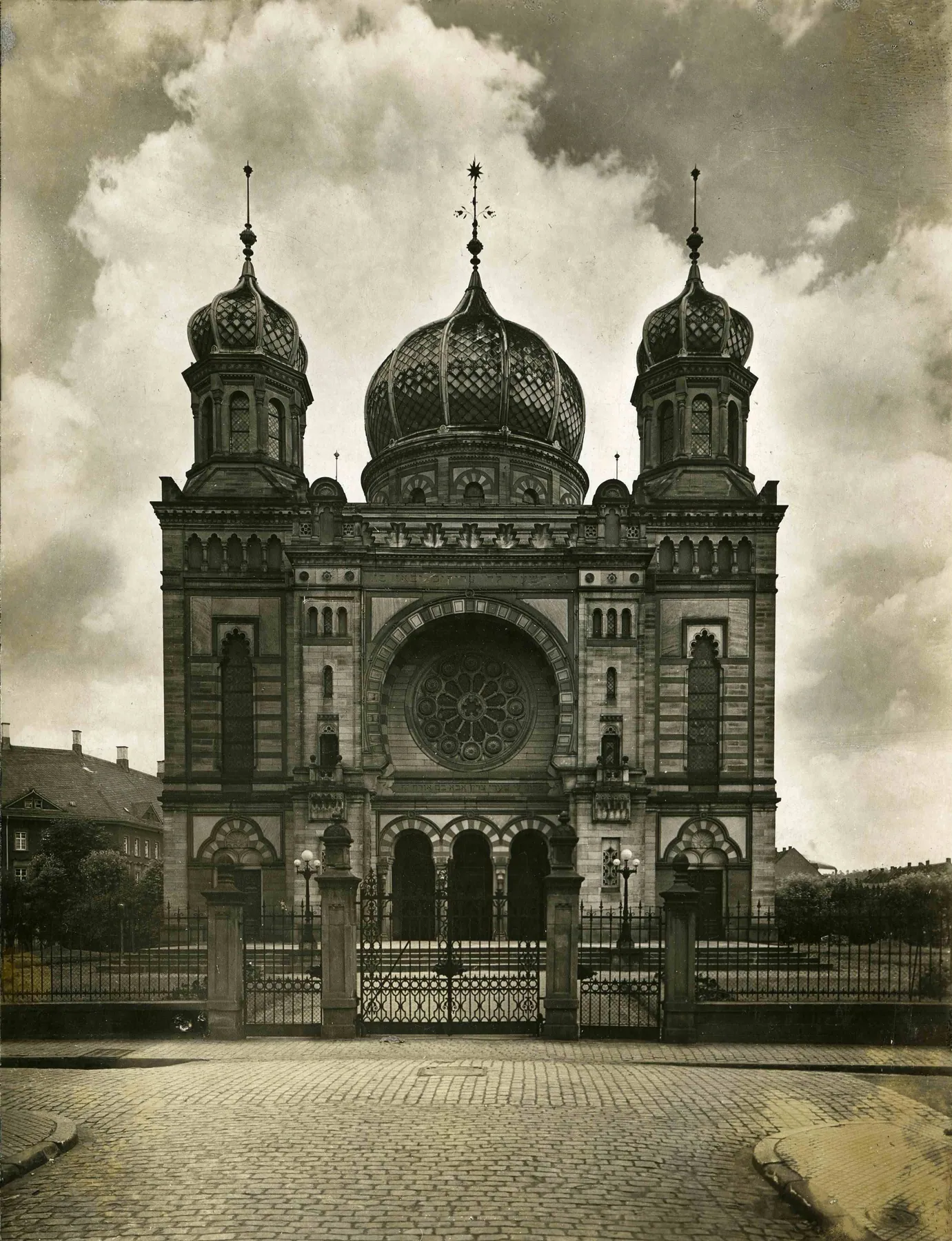
Kaiserslautern Synagogue
Dedicated on 26 February 1886, Ludwig Levy's domed Moorish-Byzantine synagogue was hailed as an ornament of Kaiserslautern. In the summer of 1938, months before Kristallnacht, Nazi mayor Richard Imbt and Gauleiter Josef Bürckel forced the community to surrender it; it was demolished that autumn and its north portal blown up on 9 October 1938.
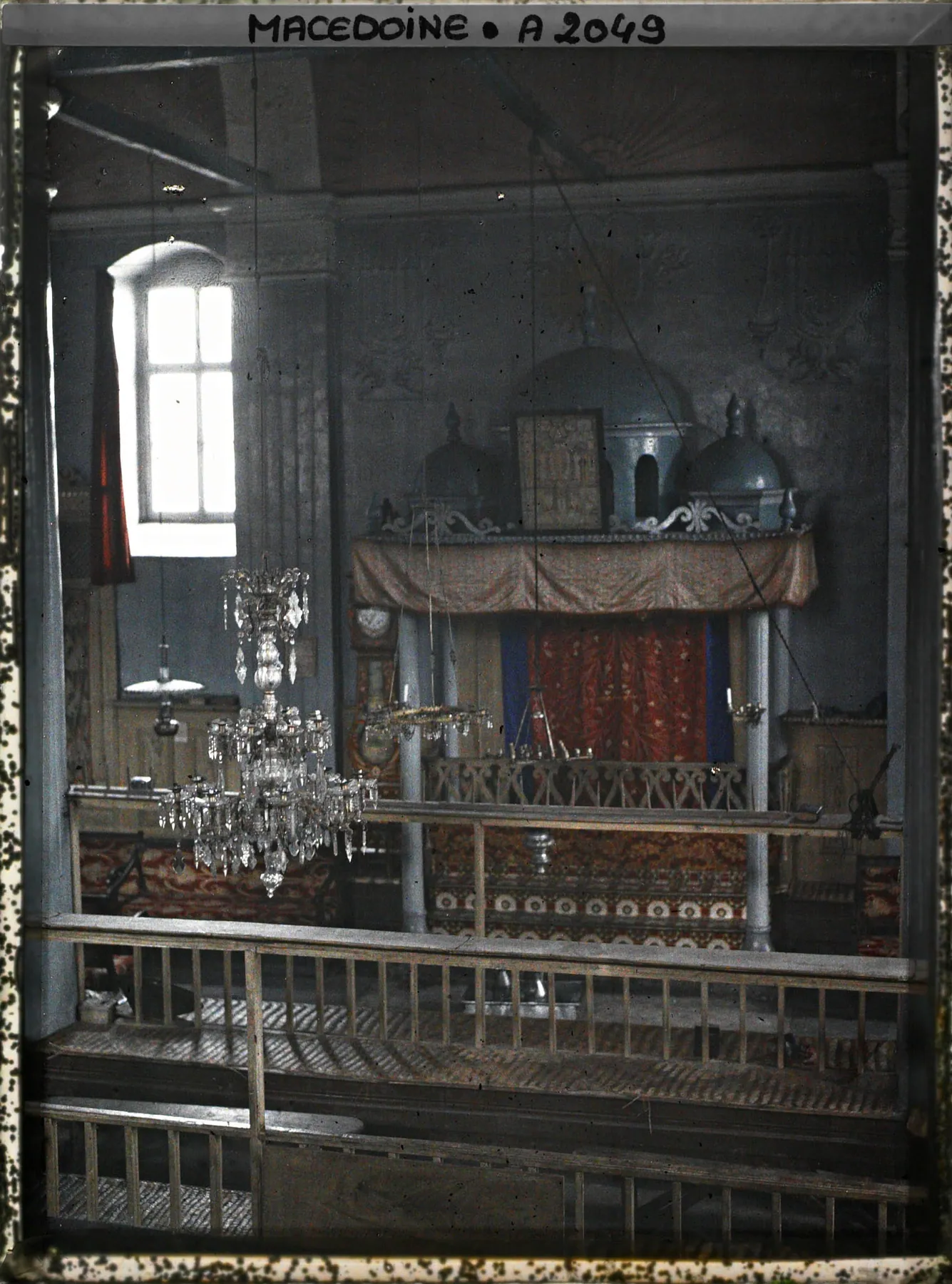
Kal Aragon Synagogue, Bitola
Kal Aragon, founded in the mid-sixteenth century by Spanish exiles and rebuilt after several fires, was the main synagogue of Monastir (Bitola). Bulgarian occupiers, allies of Nazi Germany, turned it into a slaughterhouse after deporting the city's Jews to Treblinka, and wrecked it before withdrawing in 1944; its ruins were razed in 1947.
Kal Gadol (Great Synagogue), Serres
The Kal Gadol, or Great Synagogue, was the main synagogue of the Sephardi community of Serres in Macedonia, rebuilt around 1800 to hold some 2,000 worshippers. Bulgarian army forces burned it with most of the city in 1913. The successor synagogue of 1933 fell silent when Bulgarian occupation forces deported the city's Jews in March 1943.

Kal Portugal Synagogue, Bitola
Kal Portugal, the synagogue of Monastir's Portuguese exiles founded around 1590 opposite Kal Aragon, was a mosque-like hall of columns and twelve domes. Wrecked by shelling in 1917, when Bitola lay on the Macedonian front of the First World War, it was never rebuilt; the municipality razed the ruins in 1929, and two columns survive.
Kanjiža Synagogue
The synagogue of Kanjiža, a market town on the Tisza known in Hungarian as Magyarkanizsa or Ókanizsa, was built in 1861 for a Jewish community of a few hundred people. Its congregation was rounded up in April 1944, and the building was demolished in 1948; who pulled it down is not recorded.
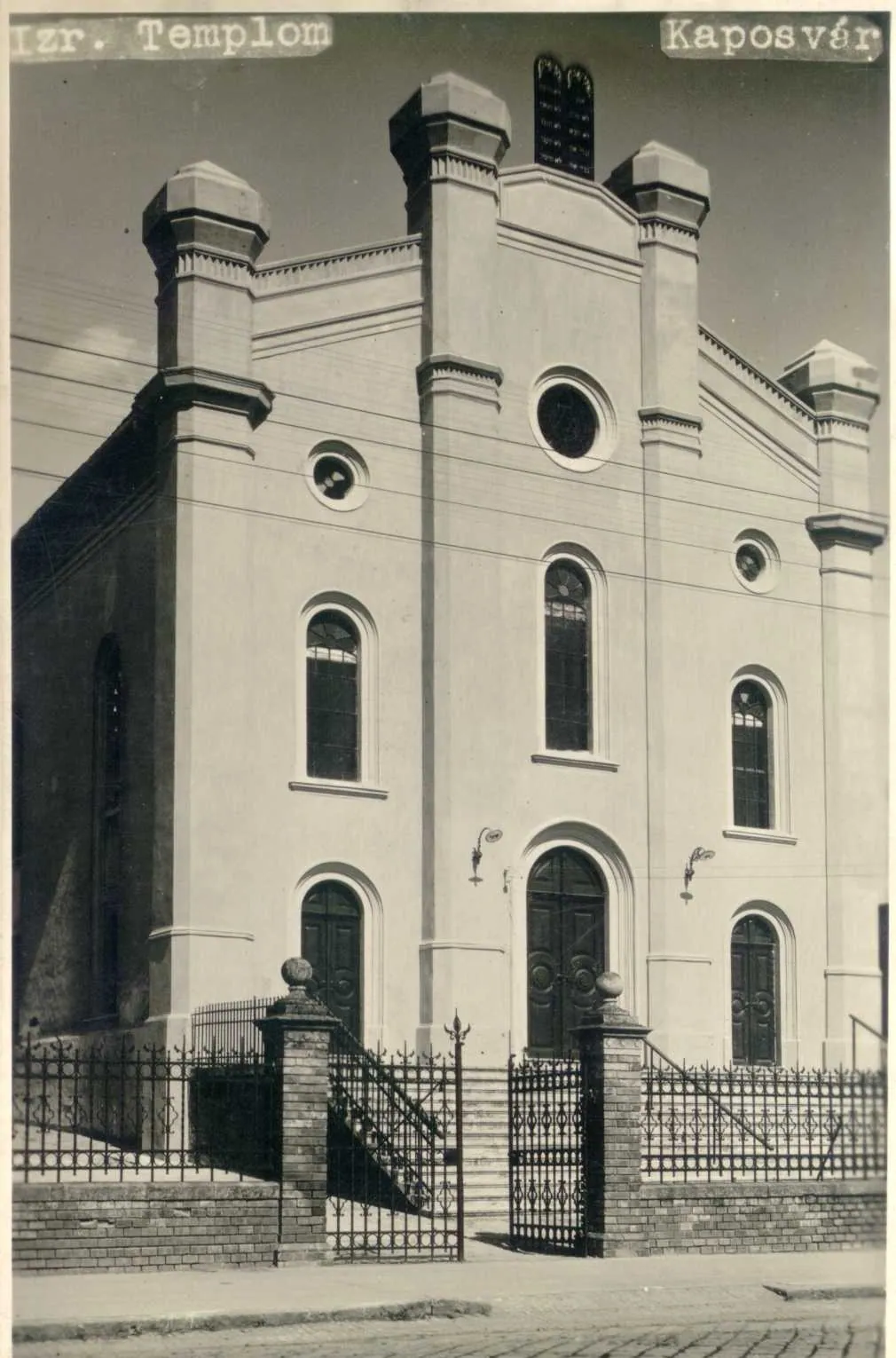
Kaposvár Synagogue
The Kaposvár Synagogue stood on Berzsenyi utca in the Somogy county seat from 1862 and received its final form in 1906 from Lipót Baumhorn. It outlasted the Holocaust, which destroyed most of its congregation, but in July 1980 the Communists blew it up; only its bronze Ten Commandments tablets were saved.

Kardašova Řečice Synagogue
Built in 1864-1866 after a town fire destroyed the wooden synagogue of 1708, this masonry synagogue served the small Jewish community of Kardašova Řečice in South Bohemia until its members were deported in 1942. Long unused and decaying, it was pulled down in 1958-1959; a garden now occupies the site.
Karlovac Synagogue
Karlovac's synagogue, designed by Ljudevit Kappner and Ernest Mühlbauer and consecrated in 1871, stood in Šebetićeva Street at the edge of the old Jewish quarter and had an organ. It became a warehouse during the Second World War, passed to the municipality in 1946 and was demolished by the town around 1960.

Karlovy Vary Synagogue
The great synagogue of the spa town of Karlsbad, designed by the Stuttgart architect Adolf Wolff and consecrated in 1877, was a domed Moorish-Romanesque building paid for largely by Jewish spa guests. Sudeten German Gestapo men and local Nazis set it on fire on 10 November 1938; the shell was demolished; a hotel now occupies the site.
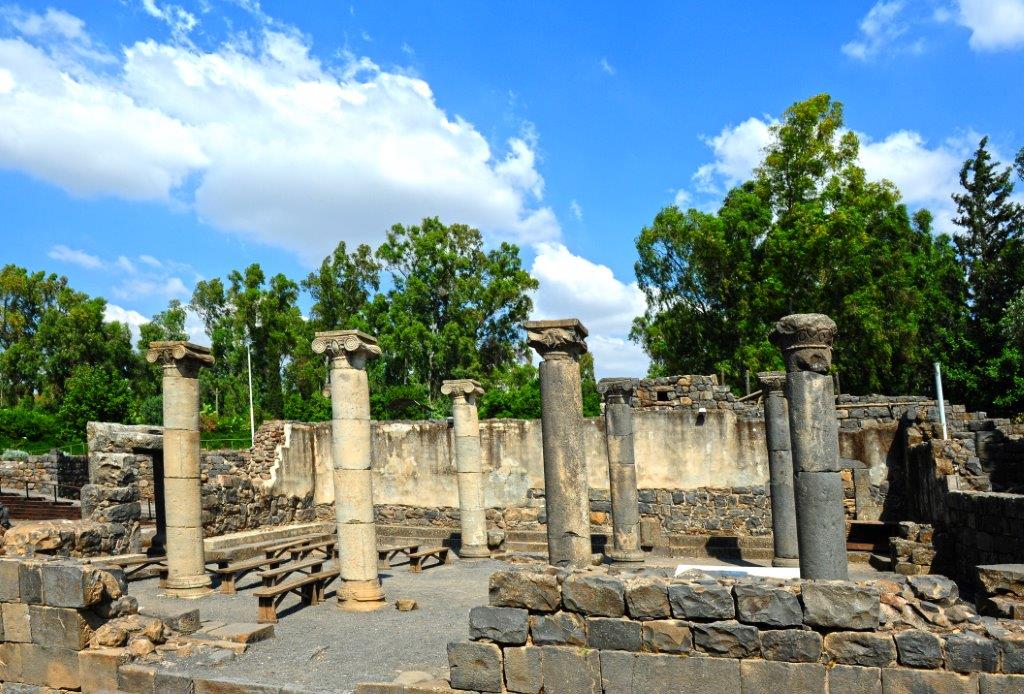
Katzrin Ancient Synagogue
A basalt synagogue of a Jewish village in the central Golan, built in the early sixth century over a late fourth-century predecessor and brought down by an earthquake in the mid-eighth century, usually dated 749 CE. Its original walls were found standing to about 3 m; the columns visible today were re-erected in modern restoration.
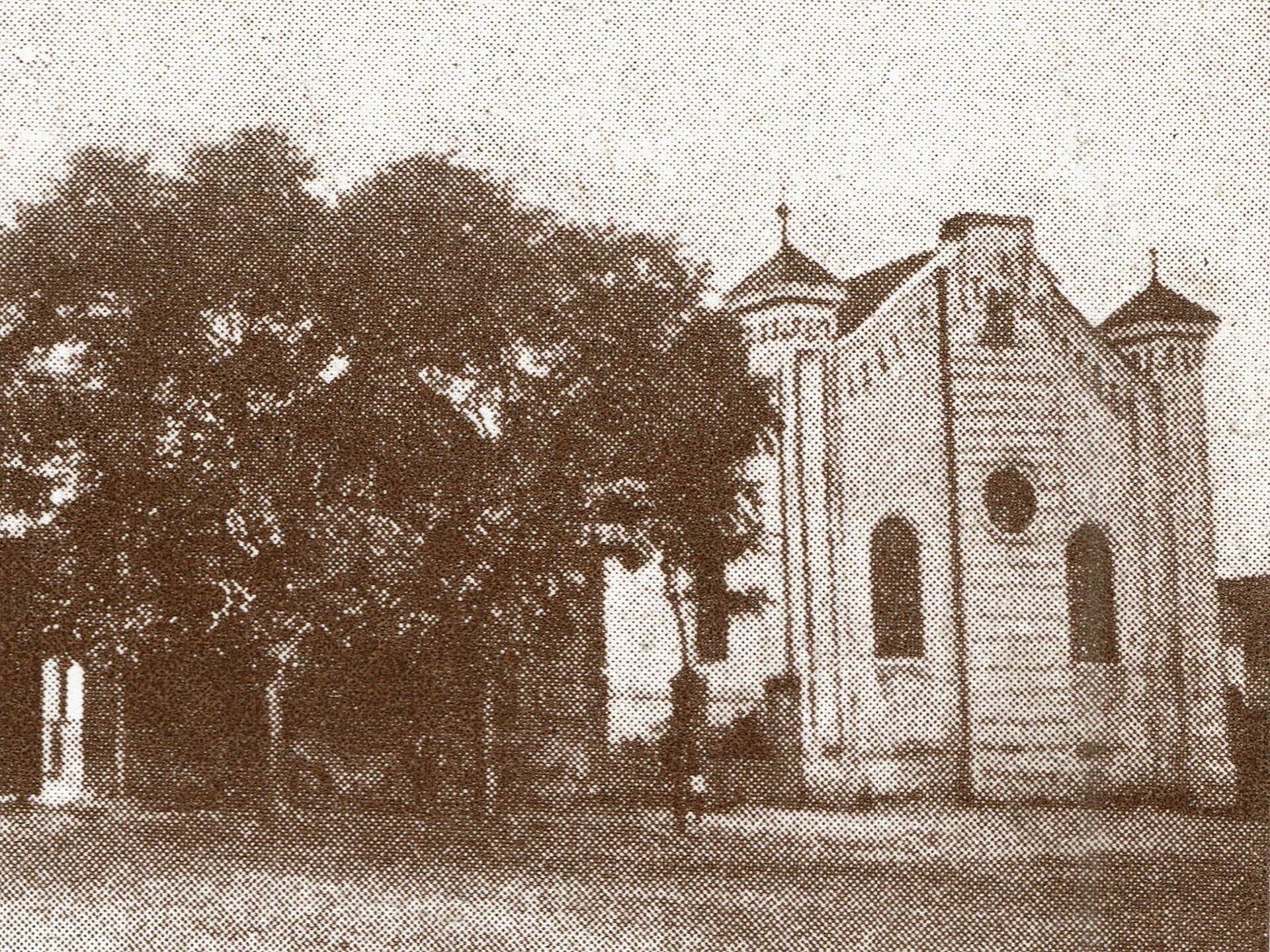
Kecel Synagogue
Kecel's synagogue, built in 1874 or about 1880, served a small Orthodox congregation in a market town of the Hungarian plain. Its members were deported through Szeged in June 1944. The building was pulled down at an unrecorded date before the 1980s; who demolished it is not known.

Kežmarok Hasidic Kloiz
The kloiz was the small Hasidic synagogue of Kežmarok, built for the Sanz Hasidim who gathered around Rabbi Aryeh Leib Halberstamm, the former rebbe of Muszyna. It had about 200 seats, served the survivors as their house of prayer after 1945, was photographed inside in 1983 and was later pulled down under Communist rule.

Khirbet Shema Synagogue
The synagogue of Khirbet Shema, a Roman and Byzantine Jewish village facing Meron in the Upper Galilee, was an unusual broadhouse hall entered down a flight of steps under a lintel carved with a very large menorah. Excavated in 1970-1972, it was brought down by earthquake and abandoned; its tumbled ruins remain on the hillside.
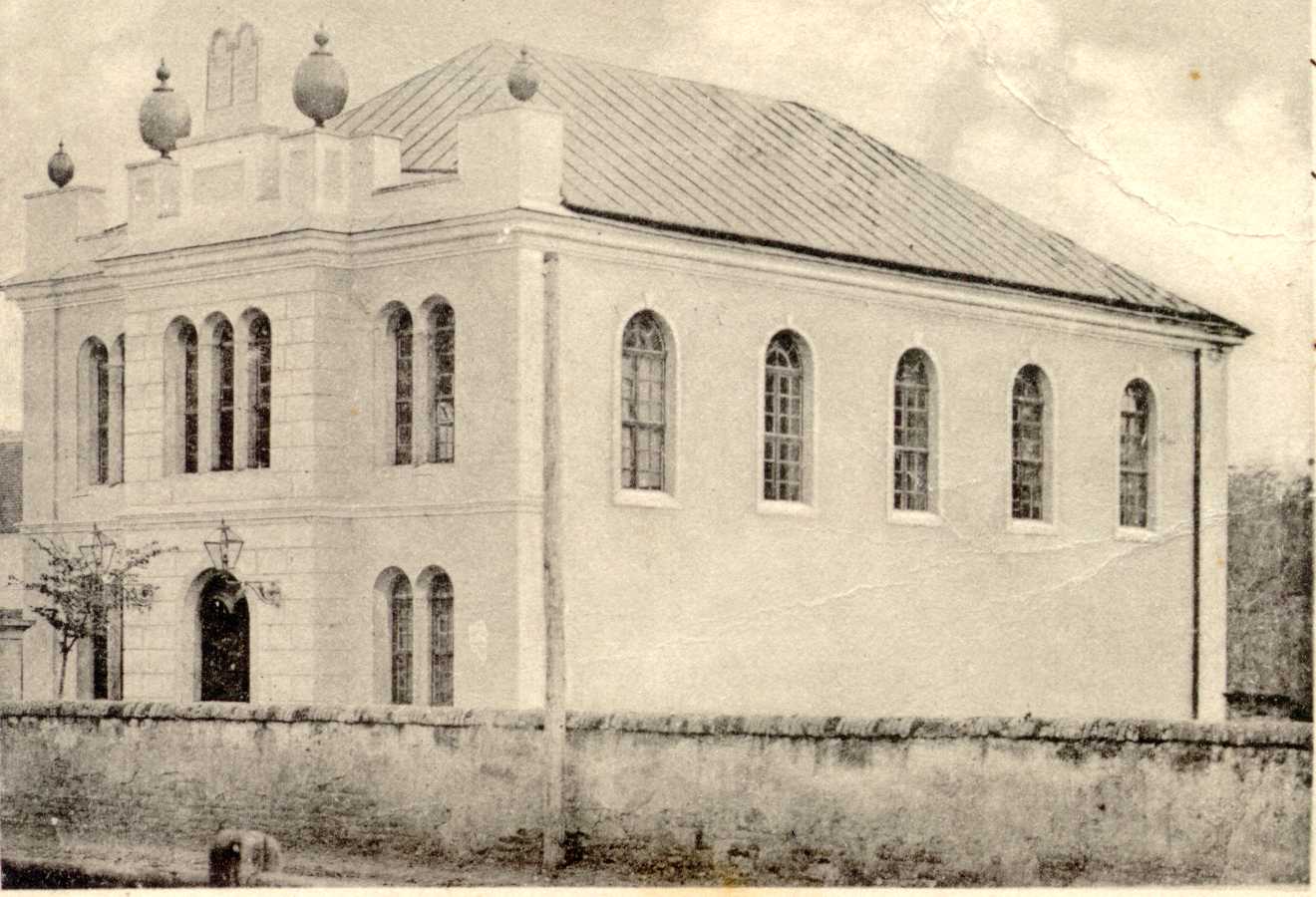
Kisbér Synagogue
The Kisbér Synagogue was built in 1875 by the small Neolog Jewish community of this market town in Komárom-Esztergom county, north-western Hungary. Its congregation was shut into a ghetto and deported to Auschwitz in June 1944 and never re-formed. The empty building was demolished after 1945; neither the year nor the actor is recorded.
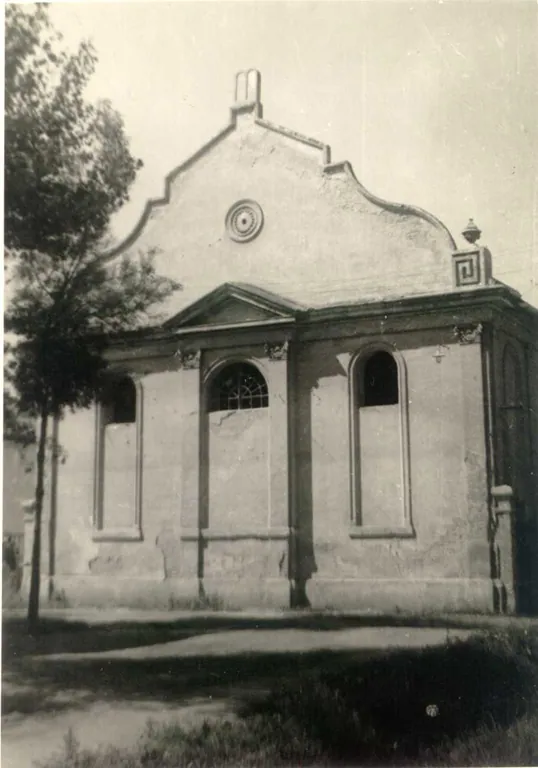
Kiskunfélegyháza Neolog Synagogue
The larger of Kiskunfélegyháza's two synagogues was built in 1899 by the town's Congress (Neolog) congregation to replace a first temple of 1850. Its people were deported in June 1944 and only 97 returned. The building was pulled down after the war, and a state school built in 1954-55 covers its plot.
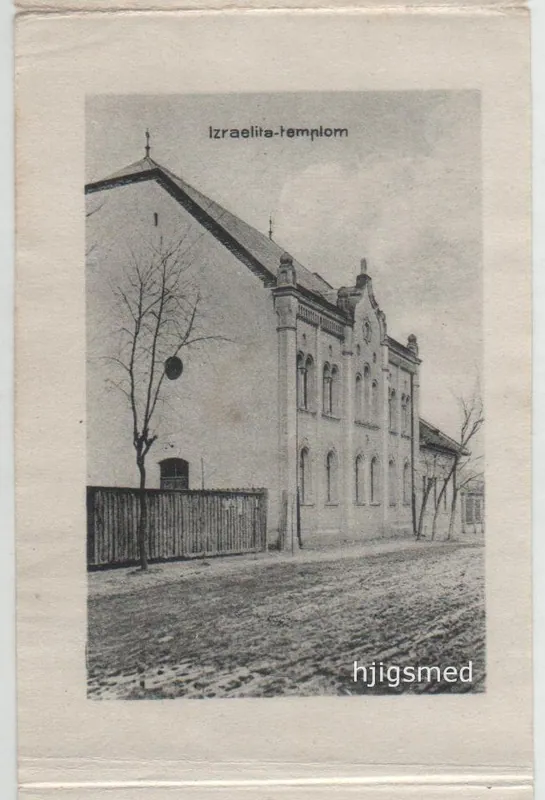
Kispest Synagogue
The synagogue of Kispest, today Budapest's 19th district, was dedicated in 1909 on Petőfi utca. Closed in May 1944 when Hungarian authorities ghettoised the town's Jews under Nazi German occupation, it was never rebuilt after the war, and the Communists built a clinic on its plot in 1951.
Kistelek Synagogue
The synagogue of Kistelek, a market town between Szeged and Kecskemét, was built in 1862 according to Anikó Gazda's survey of Hungarian synagogues. A postwar photograph shows it still furnished, with tablets naming the community's martyrs of 1940-1945. Gazda recorded it as demolished by the 1980s; when and by whom is unknown.
Kleizle Bet Midrash, Piatra Neamț
The Kleizle, a bet midrash (house of study and prayer) in Piatra Neamț, was founded in 1842 in a private house and housed in its own building from 1887. Its library held many antique Hebrew books. No source describes its end; the community president says the Communists razed nearly all the town's synagogues in the 1960s and 1970s.
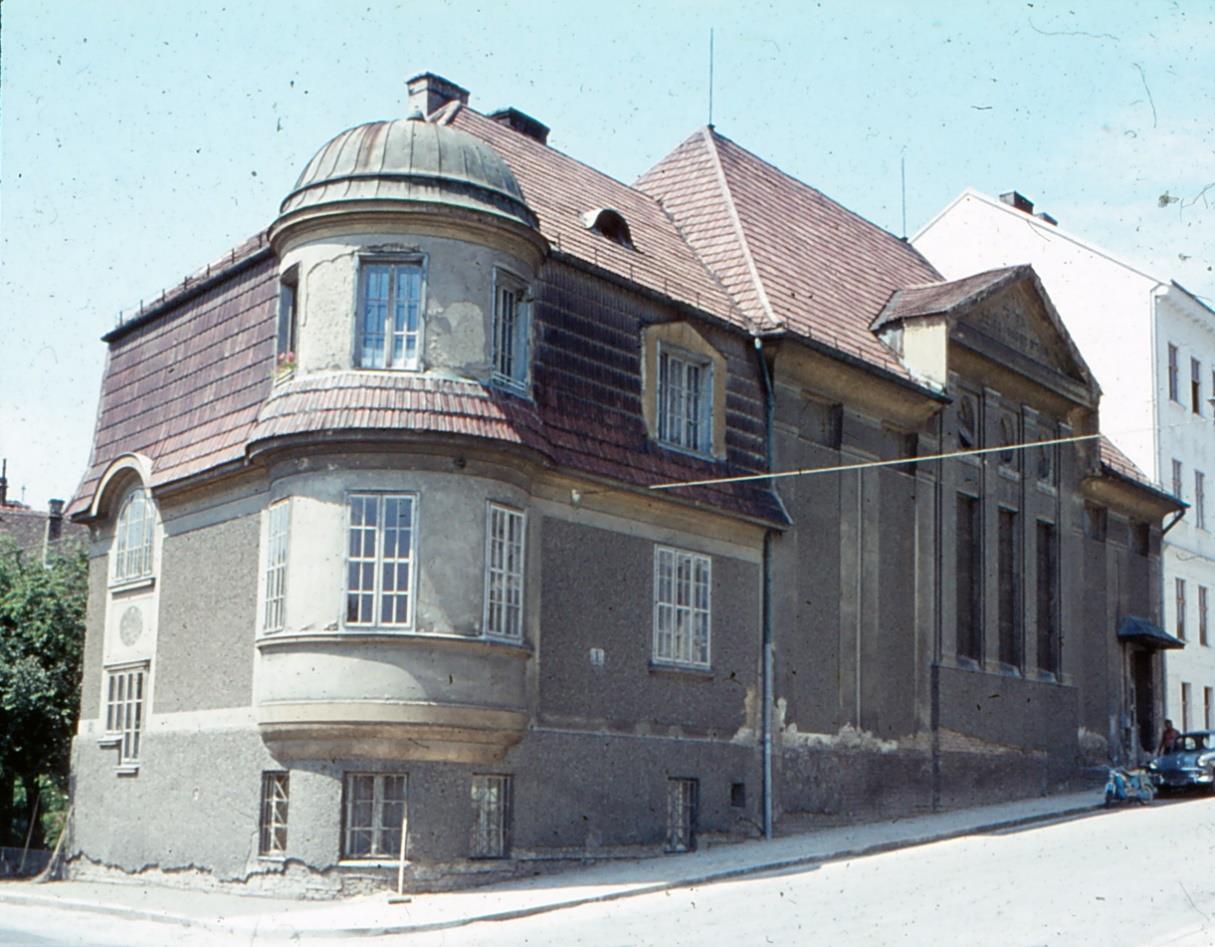
Klosterneuburg Synagogue
Klosterneuburg's synagogue, on the corner of Kierlinger Straße and Medekstraße, was designed by Jakob Winkler and consecrated on 20 August 1914 for the Jewish community of the Tulln district. It was wrecked and set on fire in the Nazi November Pogrom of 1938, stood as a ruin for decades and was demolished in 1991; only its residential wing survives.
Kodungallur (Cranganore) Synagogue
Kodungallur, the medieval port of Cranganore, is remembered by the Jews of Kerala as their first home, where oral tradition places one or more synagogues. In 1524 the Muslims of the town, backed by the Zamorin of Calicut, attacked its Jews, who fled south to Cochin. No trace of a synagogue has been identified.
Kolárovo Synagogue
The synagogue of Gúta, today Kolárovo in southern Slovakia, was a free-standing gabled hall with corner turrets and round-arched windows, built in the second half of the nineteenth century and almost identical to the synagogue of Veľký Meder. Its congregation was murdered in 1944; the building was demolished after the Second World War.
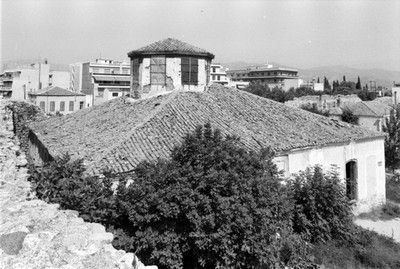
Komotini Synagogue (Beth El)
Beth El, the synagogue of Komotini in Thrace, stood beside the city's Byzantine walls and was known for its ring of columns, central dome and exposed roof lantern. Used as a stable during the Bulgarian occupation and left derelict after the community's deportation in 1943, it was demolished by the Municipality of Komotini in 1994.
Koper Medieval Synagogue
Koper, the Venetian Capodistria, had a small Jewish community of moneylenders from 1386 until 1486, and at the latest 1550. Historian Klemen Jelinčič Boeta counts it among the towns that certainly had a synagogue, placed by tradition in the old Jewish street, but no document describing the building, or recording its end, has been found.
Kostelec nad Černými lesy Synagogue
The synagogue of Kostelec nad Černými lesy (German Schwarzkosteletz), a small town east of Prague, was built in the first half of the nineteenth century for a local Jewish congregation. The historian Jiří Fiedler recorded it as demolished in the twentieth century; the year, the circumstances and who pulled it down are not recorded.
Kozolupy Synagogue
The synagogue of Kozolupy (German Kosolup), a village beside Město Touškov west of Plzeň, was built in 1780 for the joint Jewish community of Touškov and Kozolupy. A flood destroyed it in 1927, and the congregation moved to an enlarged prayer house in Touškov; its members were deported in 1942.
Košice Status Quo Prayer Hall
A small prayer hall built after 1872 for Košice's traditionalist Status Quo congregation, east of the 1866 synagogue on Rákóczi Circle Road (now Moyzesova). It served the congregation for about half a century until 1926, when it was pulled down so that the Neolog community's new domed synagogue, today the State Philharmonic, could rise on its site.

Krefeld Synagogue (Petersstraße)
Krefeld's main synagogue stood at the corner of Petersstraße and Marktstraße from 1853. Crowned by a dome about 40 metres high, it was lavishly remodelled in 1903 and later given windows by Johan Thorn Prikker. SA men wrecked and burned it on the night of 9–10 November 1938.
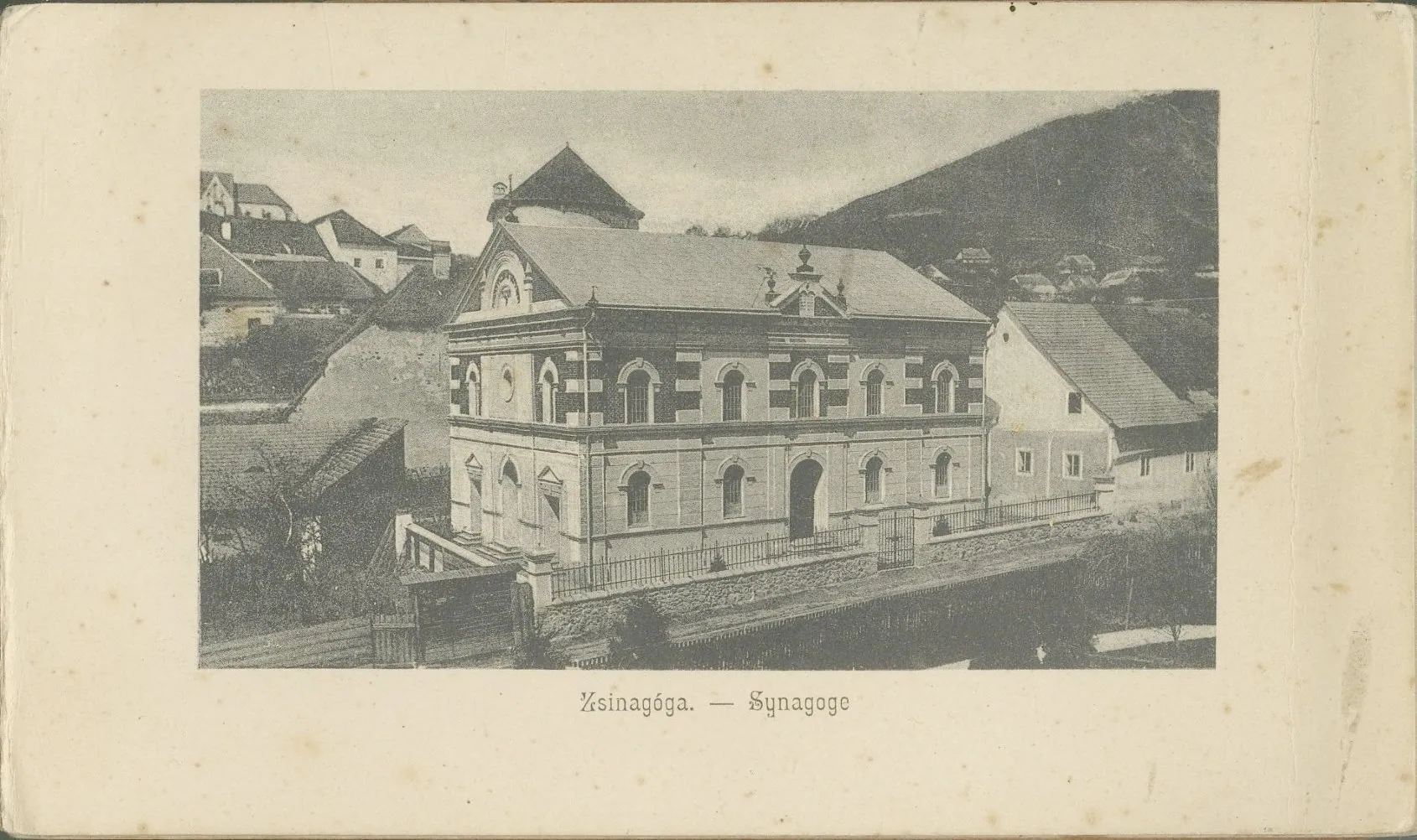
Kremnica Synagogue
Kremnica's synagogue, built in 1890 in the suburb below the walls of the old Hungarian mint town of Körmöcbánya (Kremnitz), was a two-storey hall with a façade of brick and plaster. It served a community founded only in the later nineteenth century and was demolished during the Second World War; who pulled it down is not recorded.
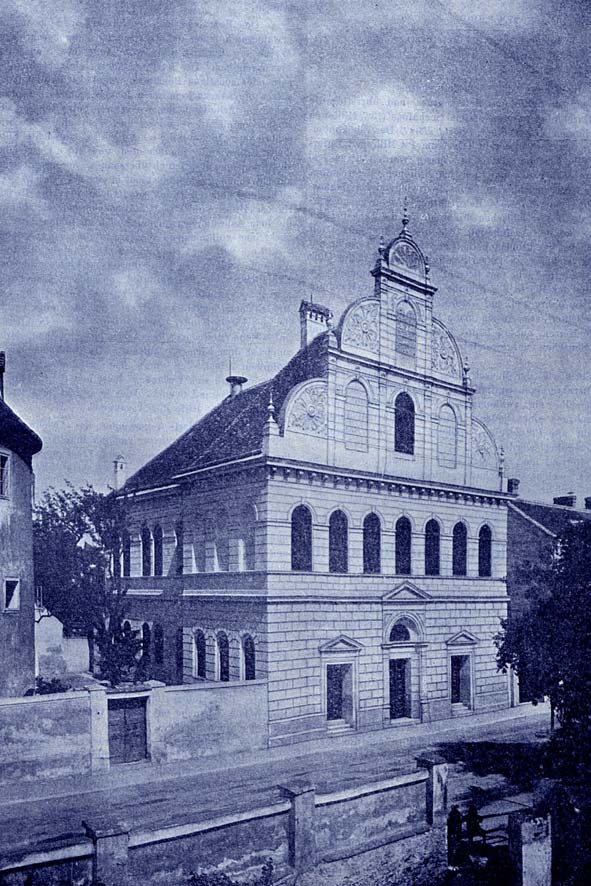
Krems an der Donau Synagogue
Built in 1894 to designs by the Viennese architect Max Fleischer, the Krems synagogue on Dinstlstraße had a stepped Renaissance gable facing the road to the station. Nazi SA men forced the Jews to empty it in September 1938 before the community was driven out. It survived the war intact but was sold in 1971 and demolished in March 1978.
Krompachy Synagogue
Krompachy, an iron and copper town in the Spiš region, had a small Jewish community from the mid-19th century. A synagogue there is recorded only as a single unreferenced entry marked "Destroyed", with no building or demolition date, and nothing else is known of the building. The community was destroyed in the Holocaust.
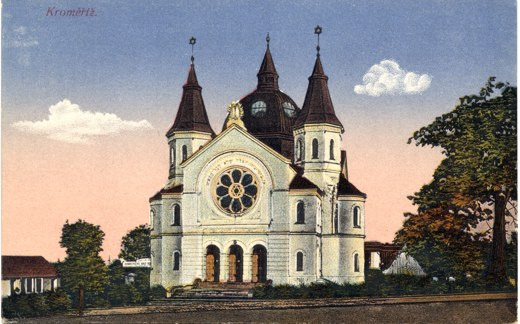
Kroměříž Synagogue
The last of Kroměříž's three synagogues, a domed building with corner towers and a great rose window, was designed by the Viennese architect Jakob Gartner and dedicated in 1910. After the town's Jews were deported in 1942, Nazi German troops looted it and blew it up in November 1942. A House of Culture now occupies the site.
Krumbach Synagogue
The small synagogue of Krumbach in the Bucklige Welt was built around 1870 by Jehuda Blum and his son in the courtyard of the family house. Spared in November 1938 because it stood among other houses, it was used for decades as a cooperative's storehouse and was demolished in 1989.
Kula Synagogue
The synagogue of Kula, a market town in West Bačka, served a Neolog (Congress) congregation organised around 1848. Described in 1929 as handsome and monumental, it outlived the deportation of the town's Jews in 1944 but was demolished in 1948, and the postwar authorities built a cooperative hall on its site.
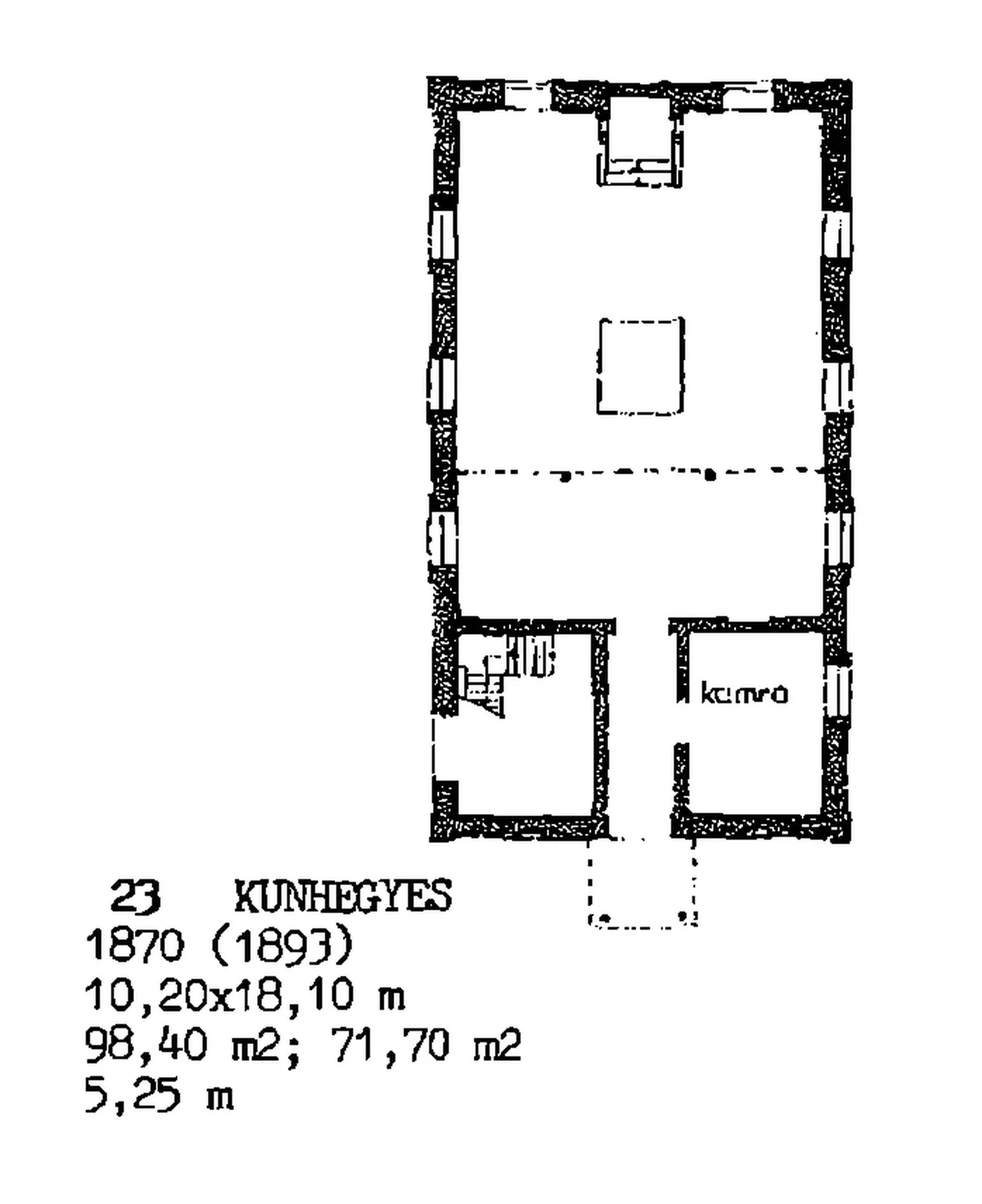
Kunhegyes Synagogue
The Kunhegyes Synagogue, a small Orthodox prayer house whose gable was crowned by stone Tablets of the Law, was built in 1893 on Bethlen Gábor Street. It survived the Holocaust that destroyed its congregation in 1944, then stood empty and decaying for decades until it partly collapsed and was pulled down in 2002–2003.
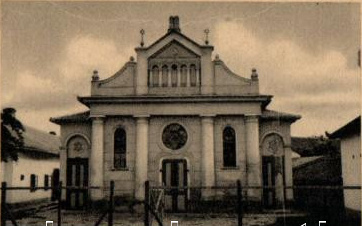
Kunmadaras Synagogue
The Orthodox synagogue of Kunmadaras, on the Great Hungarian Plain, was built around 1878 and collapsed without warning on 18 March 1941, leaving only its western wall. The congregation began rebuilding within weeks. In 1944 its members were deported, and a pogrom in May 1946 drove the survivors away.
Kunszentmiklós Synagogue
Kunszentmiklós, a market town in the Kiskunság south of Budapest, had a synagogue dated to 1898 that served a small community of about 155 people before the Second World War. The community was destroyed in the Holocaust, and the building had been demolished by the time of a survey in the 1980s; when and by whom is unknown.
Kurima Synagogue
The synagogue of Kurima, a village east of Bardejov in north-eastern Slovakia, was a simple free-standing 19th-century house of prayer with a hipped roof and three arched doorways, built for a Hasidic community. Its congregation was deported in 1942, and the building was demolished at an unknown date after the Second World War.
Kutina Synagogue
Kutina's synagogue, a Secession-style building with a pair of towers on its west front, was designed by the Zagreb architects Slavko Benedik and Aladar Vladimir Baranyai and completed in 1914. Abandoned in 1941 when the community was destroyed and confiscated in 1947, it was demolished in 1968 or 1969 and a commercial centre built on its site.
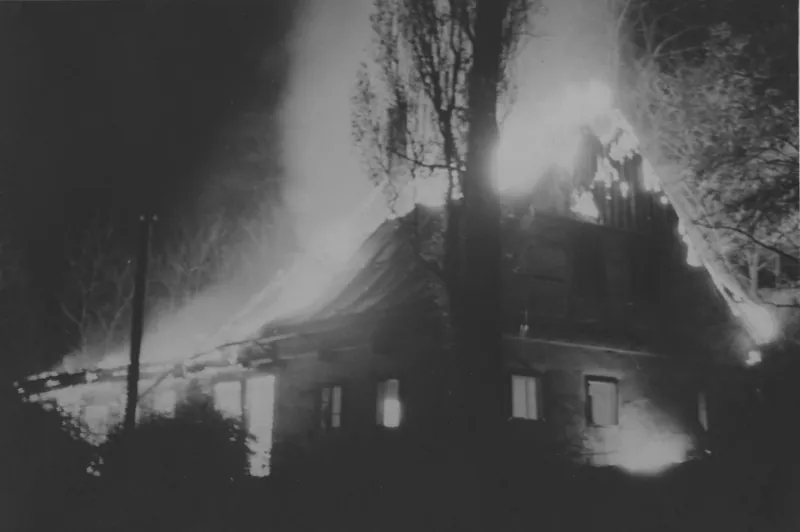
Kynšperk nad Ohří Synagogue
The wooden synagogue of Königsberg an der Eger, now Kynšperk nad Ohří in western Bohemia, was built in 1803 for one of the oldest Jewish communities in Bohemia. Disused by about 1930 as the congregation dwindled, it was set on fire by the Nazis during the November Pogrom of 1938.
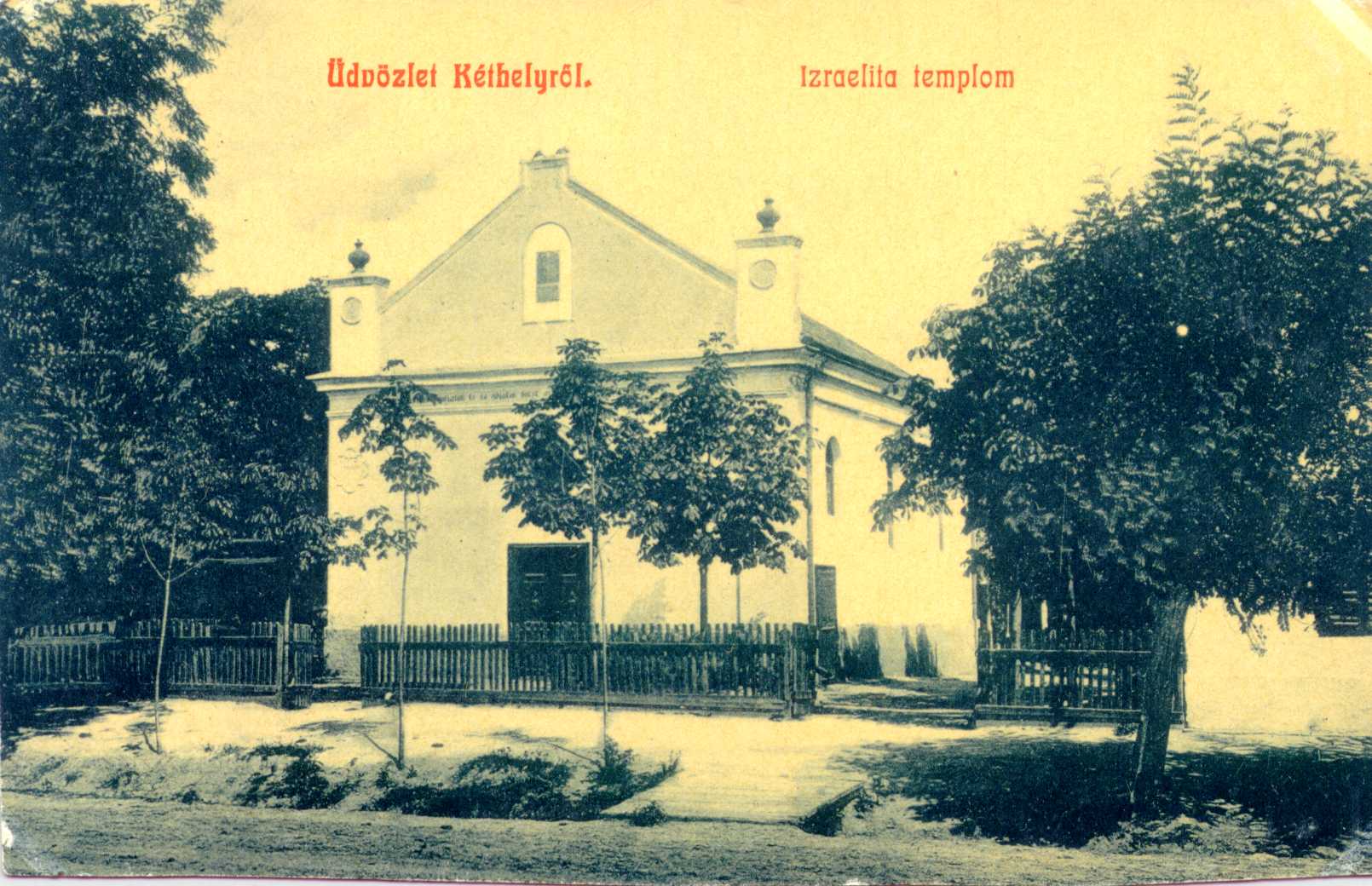
Kéthely Synagogue
Kéthely's synagogue, a small gabled hall with urn-topped corner piers, was dedicated together with a Jewish school in June 1892 by the district rabbi of Marcali. Its congregation, 29 people in 1941, was deported in July 1944. Photographs show the building ransacked after the war; it was later demolished, date and actor unknown.
Kígyó utca Synagogue, Győr
The Kígyó utca synagogue in Győrsziget, the island suburb of Győr, was the town's first Jewish house of prayer, permitted under a 1791 contract with the Bishop of Győr and built between 1795 and 1806. Its congregation perished in the deportations of June 1944. Anikó Gazda recorded the building as demolished in the 1980s; when and by whom is unknown.
Kölcsey Street Hasidic Synagogue, Miskolc
A small Hasidic place of worship on Kölcsey utca in Miskolc, built after the city's Jewish community split over religious reform in the 1860s and 1870s. Its building date, appearance and fate are undocumented in the sources read; it was gone by the 1980s survey of Hungarian synagogues, and who demolished it is not recorded.
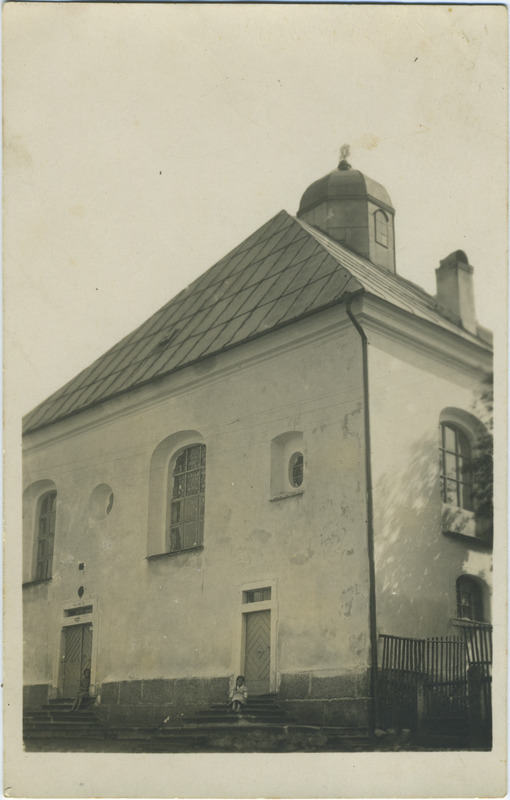
Königswart Synagogue (Lázně Kynžvart)
The synagogue of Königswart, now Lázně Kynžvart near Mariánské Lázně, stood in the old Jewish quarter and was regarded as the town's oldest building. Its baroque Torah ark and bimah were famous in the region. The Nazis plundered and burned it in 1938, after the dwindling community had already dissolved, and it was razed soon afterwards.
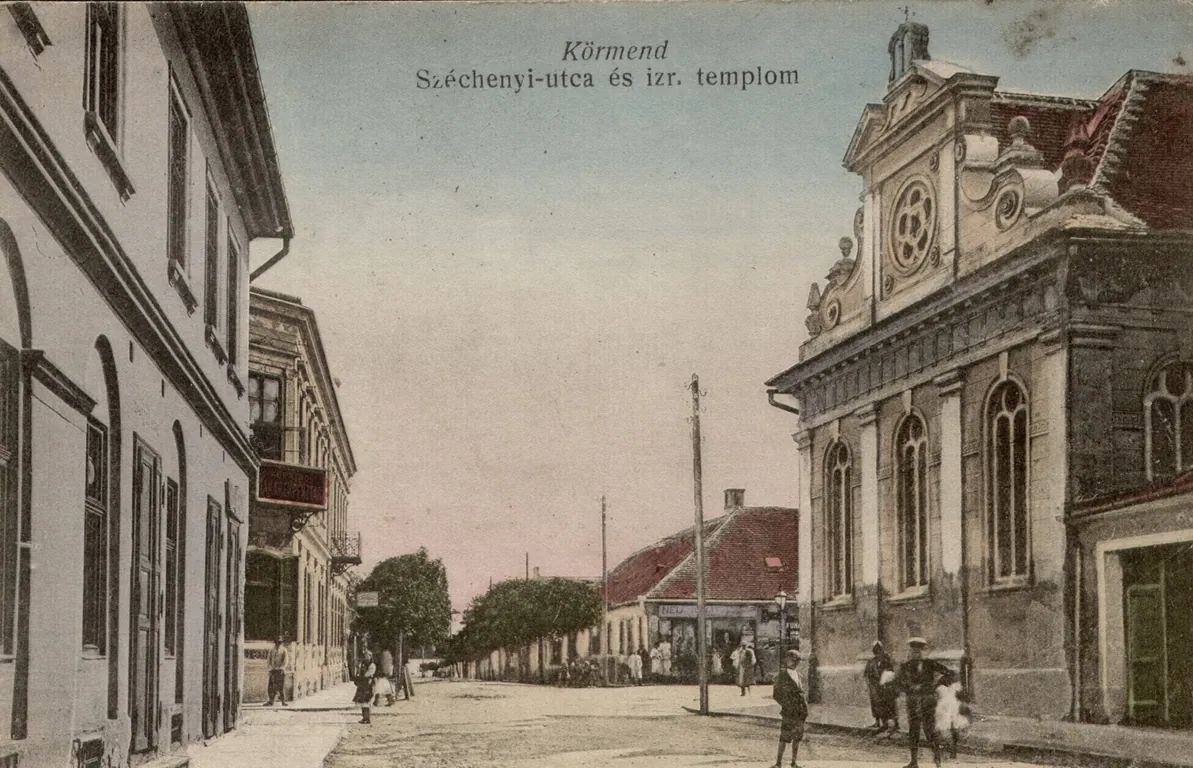
Körmend Synagogue
Körmend's Neolog synagogue stood on the corner of Széchenyi and Dienes Lajos streets, a pilastered hall with a curved neo-Baroque gable and round window. Emptied in 1944 and used as a military store, it burned out on 27 or 28 March 1945; who started the fire is not recorded, and the ruin was later cleared.
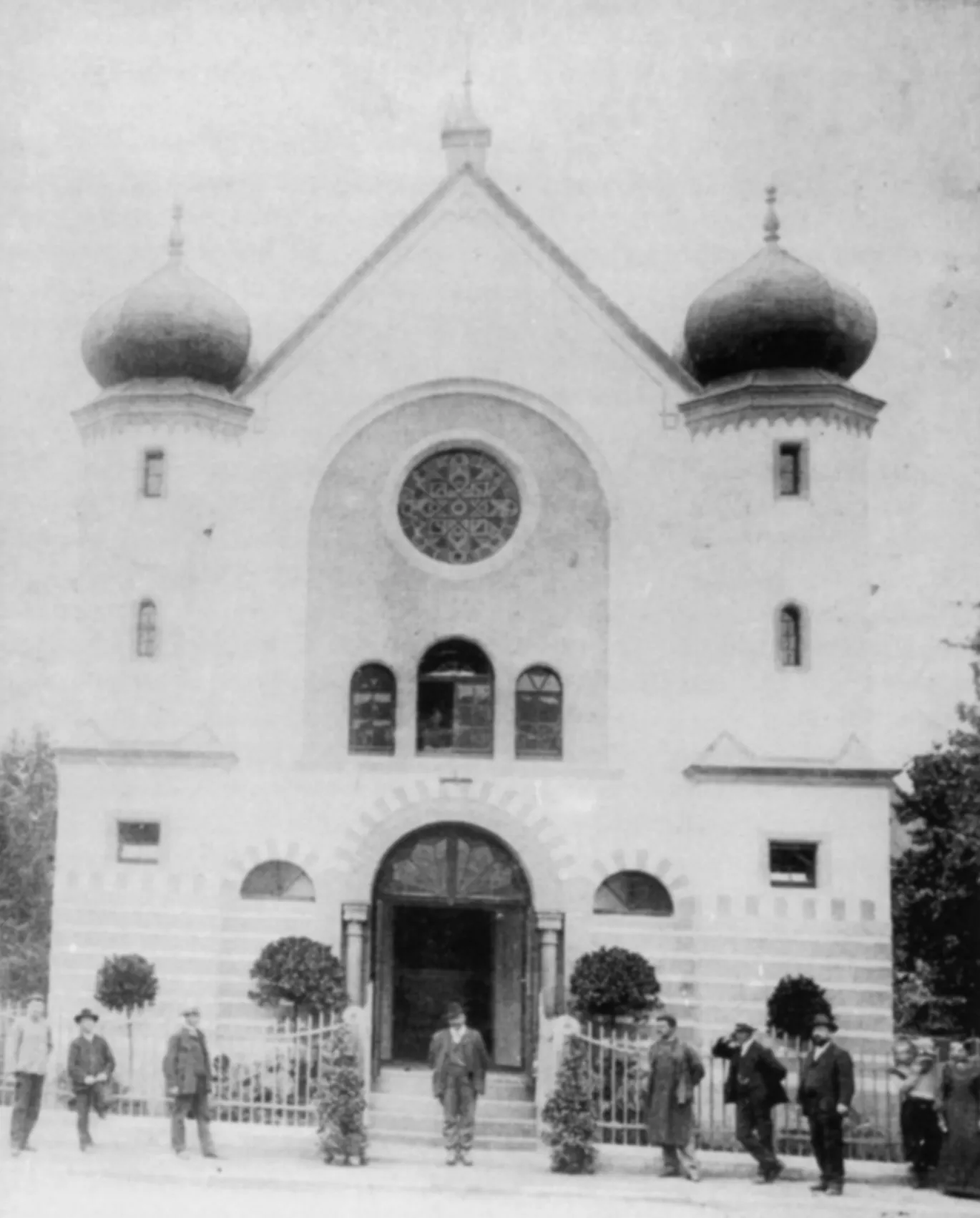
Künzelsau Synagogue
Moorish Revival synagogue by August Ganzenmüller, dedicated in August 1907 for the young Jewish community of Künzelsau in Württemberg. On the evening of 10 November 1938, Nazis from Künzelsau and Heilbronn set it on fire with petrol. The town then made the community pay to clear the ruins and bought the land.
La Havra Synagogue, Bitola
La Havra, the El Kal de la Havra Kadisha, was a purpose-built synagogue in the Jewish quarter of Bitola, the third large one after Aragon and Portugal. Its congregation was deported in March 1943. The empty building served as a warehouse, decayed, and was pulled down around 2000; a newer office building now stands there.

Lackenbach Synagogue
The synagogue of Lackenbach, one of the Seven Communities of Burgenland, stood in a paved yard off Tempelgasse. First built in the sixteenth century and rebuilt after 1671 with help from the court Jew Samson Wertheimer, it was wrecked after the community's expulsion in 1938 and blown up by the Nazis on 20 February 1941.
Large Velența Synagogue, Oradea
The large synagogue of Oradea's Velența district held about 1,000 worshippers and stood beside the older small synagogue of about 1803, in the quarter where most of the town's Jews first lived. Its construction date, architect and appearance are unknown. Both buildings were demolished in 1950, under Communist rule; the source does not name who demolished them.
Last Synagogue of Girona
Girona's last medieval synagogue was built from 1434-35 on overgrown plots in the walled Jewish quarter and served a shrinking community until the expulsion of 1492, when it was sold to a cathedral priest. Nothing of the prayer hall survives; only its mikveh, later turned into a cistern, remains inside today's Museum of Jewish History.
Lednice Synagogue
The synagogue of Lednice (German Eisgrub), on the Liechtenstein estate in South Moravia, served a community founded in the 1670s by Jews expelled from Vienna, and on high holidays also the Jews of six neighbouring villages. It was pulled down during the Nazi occupation, and its ruin was finally cleared in the 1960s.
Legrad Synagogue
Legrad, an old market town on the Drava in Koprivnica-Križevci county, had a small Jewish community registered in 1820 that built a synagogue in the nineteenth century. The congregation had dissolved by 1918, the building was abandoned before 1941, and it was sold in 1947 and demolished; who pulled it down is not recorded.
Levoča Synagogue
Levoča's large Oriental-style synagogue was dedicated in 1899 outside the medieval town wall, with a school and mikveh beside it. It served the status quo congregation until the deportations of 1942. Pinkas Hakehillot says the Nazis wrecked it in 1944-45; a Slovak heritage gazetteer records that it was demolished in the 1970s.
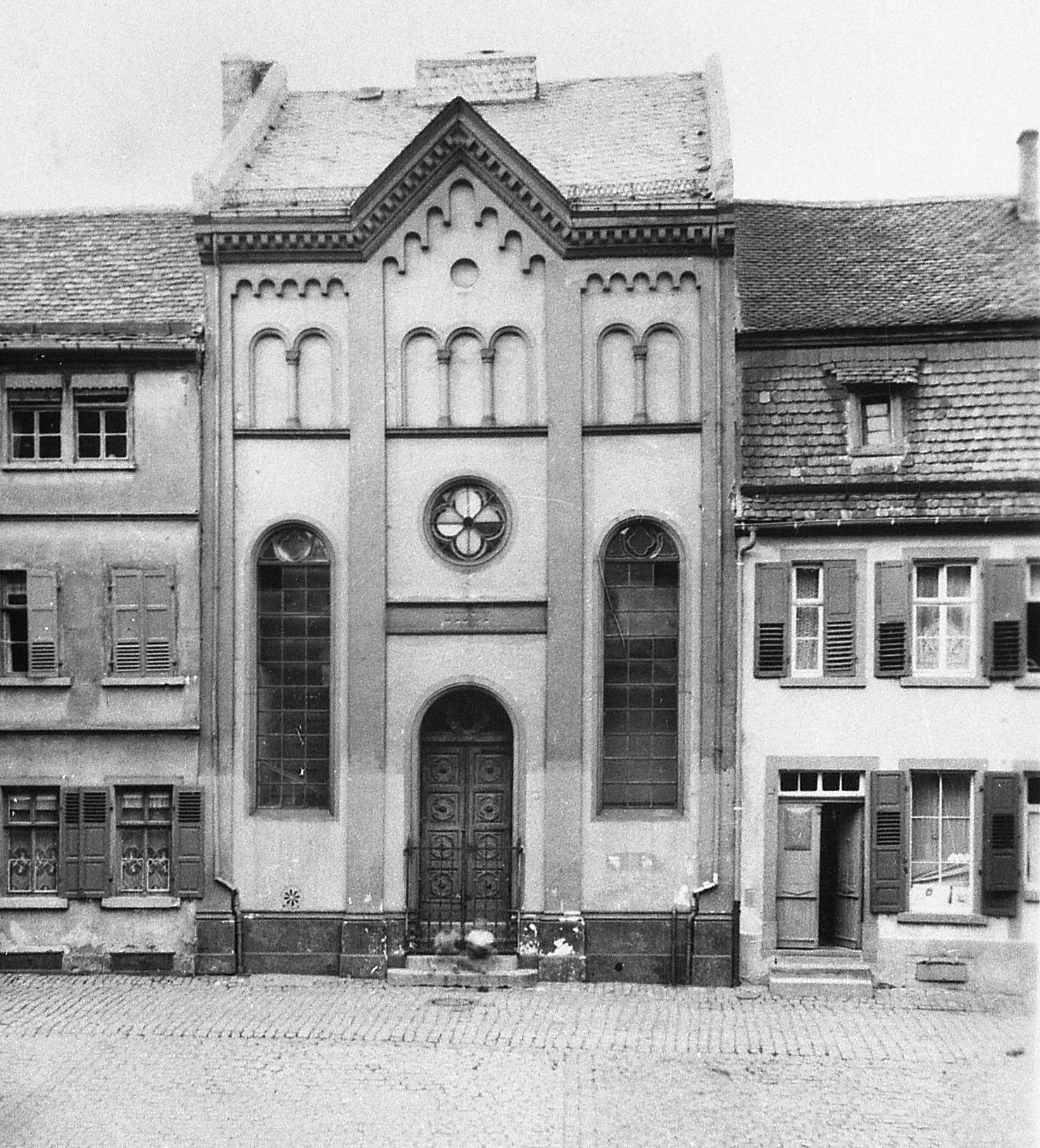
Levy Synagogue, Worms
The Levy Synagogue, or New Synagogue, was a Romanesque Revival building on Worms's Judengasse, facing the medieval Rashi synagogue. Donated by the merchant Leopold Levy and consecrated in 1875 for the community's conservative members, it was wrecked by Nazis on 10 November 1938, damaged by bombing in 1945 and demolished in 1947.
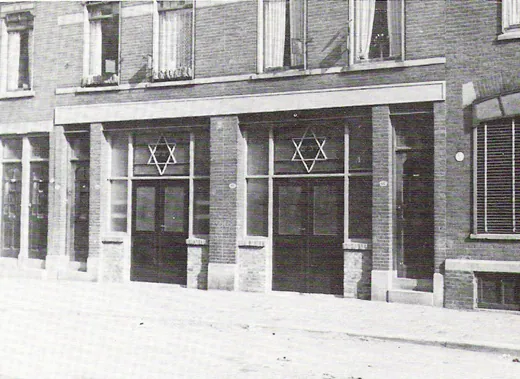
Lew Jom Synagogue, Rotterdam
The Lew Jom synagogue, 'Heart of the West', was a neighbourhood prayer house in Rotterdam-West, fitted out in 1927-28 inside a commercial building at Joost van Geelstraat 68-70. It escaped the bombing of May 1940 and in 1945 became the first synagogue in the city to hold services again. It closed in 1954 and was demolished in 1993 or 1994.
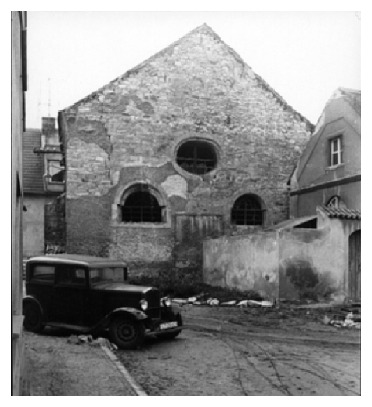
Libochovice Synagogue
The synagogue of Libochovice, a small town south-west of Litoměřice, served one of the old rural Jewish communities of northern Bohemia. First recorded in 1651 and remodelled in Rococo style in the eighteenth century, it lost its congregation to deportation in 1942, served as a store and stable, and was demolished in the 1980s.

Linnaeusstraat Synagogue, Amsterdam
The Synagoge Oost on the Linnaeusstraat, designed by Jacobus Baars in the brick idiom of the Amsterdam School, opened in September 1928 for Jews moving to the new eastern districts of Amsterdam. Nazi forces raided and looted it in June 1943 and deported much of its congregation. Left a ruin, it was demolished in 1962.
Linz Synagogue (Bethlehemstraße)
The synagogue in Linz's Bethlehemstraße, a neo-Romanesque building modelled on the synagogue of Kassel, was consecrated in 1877 and enlarged in 1906. Nazi SA and SS men set it on fire on 10 November 1938, days before the city's last Jews were expelled. The burnt ruin stood until 1967, when a new synagogue replaced it.
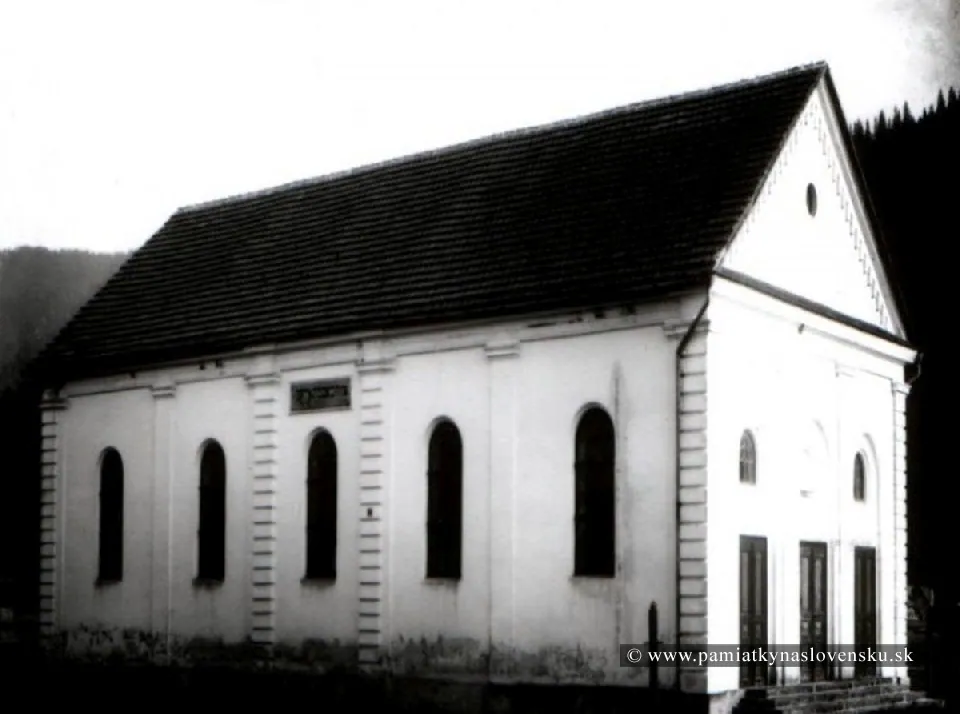
Liptovský Hrádok Synagogue
The synagogue of Liptovský Hrádok, a small town in the Liptov region of northern Slovakia, was built around 1900 on roughly the site of an older synagogue recorded in 1859. A plain gabled hall with tall arched windows, it served a small community under the Liptovský Mikuláš rabbinate. It was demolished after the Second World War.
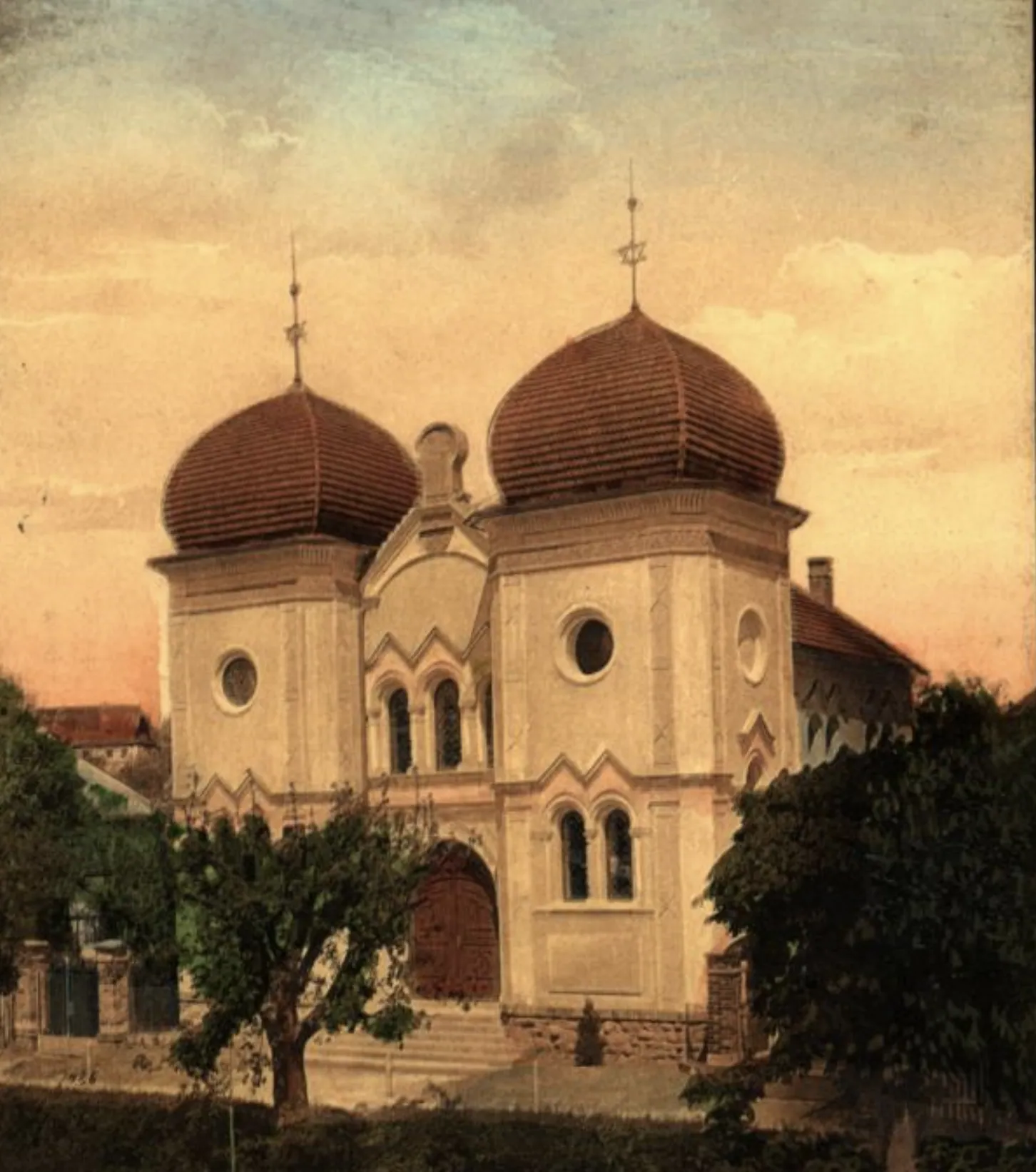
Litomyšl Synagogue
A two-towered Romanesque-Moorish synagogue designed by Čeněk O. Staněk and completed in May 1909 for the small Jewish community of Litomyšl. It survived the Nazi occupation with damage, was used as a warehouse and flea market under Communist rule, and was demolished from 1968.
Lost Third Synagogue of Šahy
Šahy (Hungarian Ipolyság) once had three synagogues, according to the Hungarian and Slovak Wikipedia articles on the town; two survive. The third has not been identified: its name, date, site and fate are unknown, and its existence rests on that single unreferenced statement. The congregation was deported to Auschwitz in 1944.
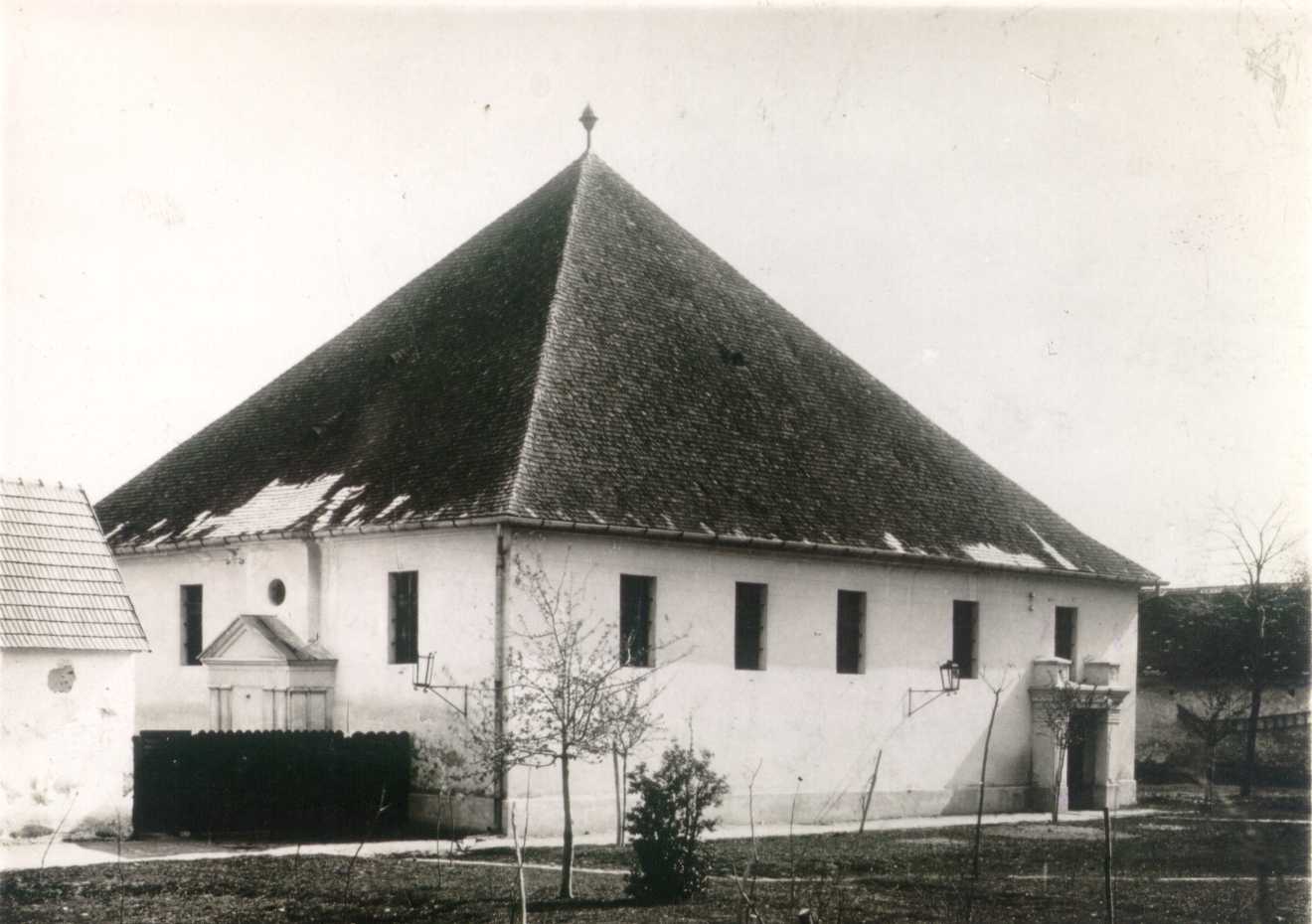
Lovasberény Synagogue
Lovasberény's synagogue, built about 1790 for one of the oldest Jewish communities in Fejér county and enlarged in 1825 with Count Antal Cziráky's help, was a plain hall under a tall hipped roof with a fine columned ark. Derelict after the 1944 deportations, it was demolished in 1949 under Communist rule; who ordered this is unrecorded.

Lovosice Synagogue
The synagogue of Lovosice (Lobositz) stood in the small Jewish quarter around Studniční Square, close to the Elbe. Rebuilt after a fire around 1760 and renovated in the 1920s, it was wrecked under Nazi rule after the town's annexation in 1938 and pulled down in 1939. Most of the community perished in the Holocaust.
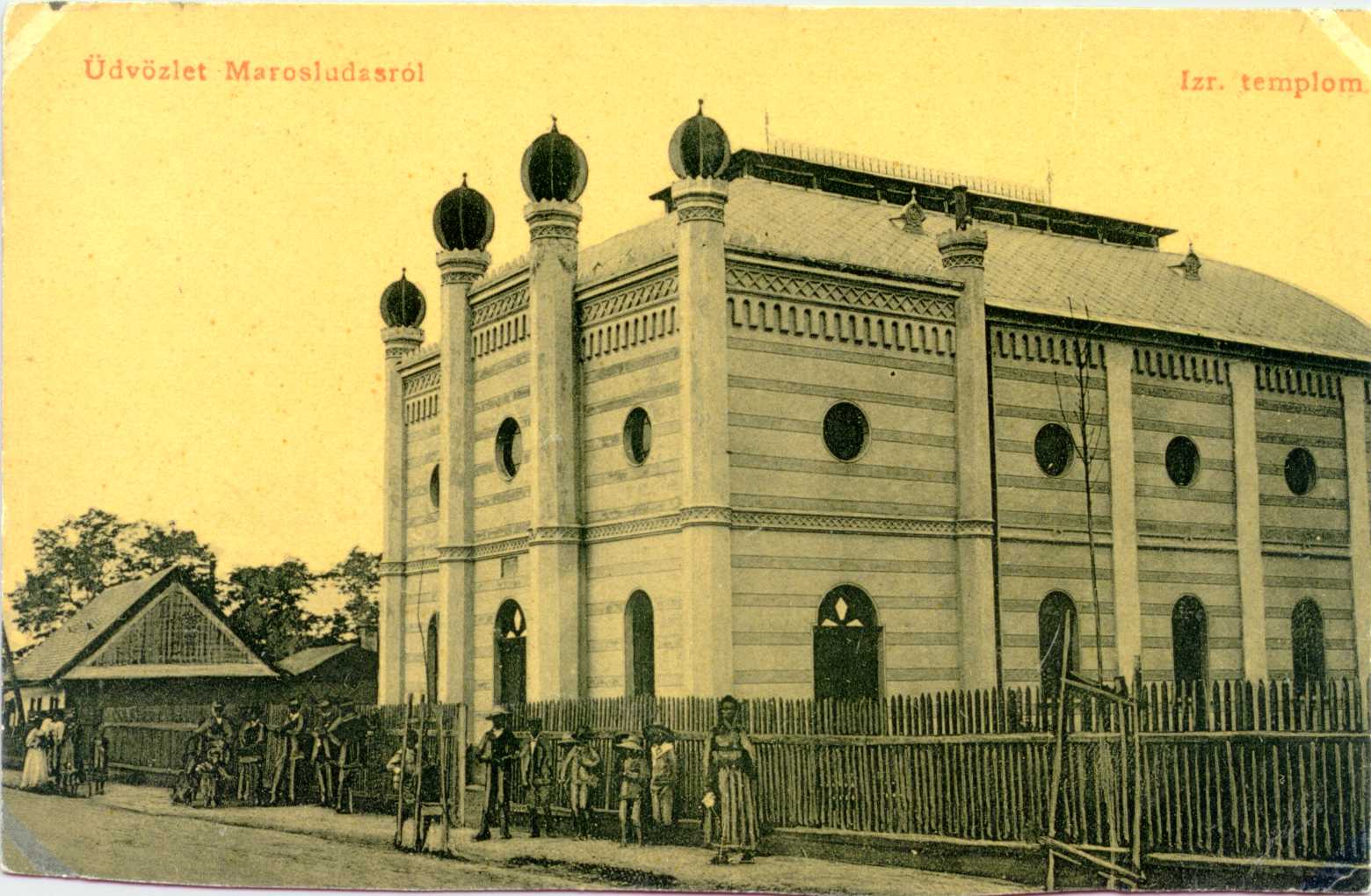
Luduș Synagogue
Luduș (Marosludas) in Transylvania had a Moorish Revival synagogue with four onion-domed corner turrets, built after the community appealed for funds in 1886. It is recorded as burned down in 1944, the year Hungarian troops occupied the town and killed Jews there; no source found names who set the fire.
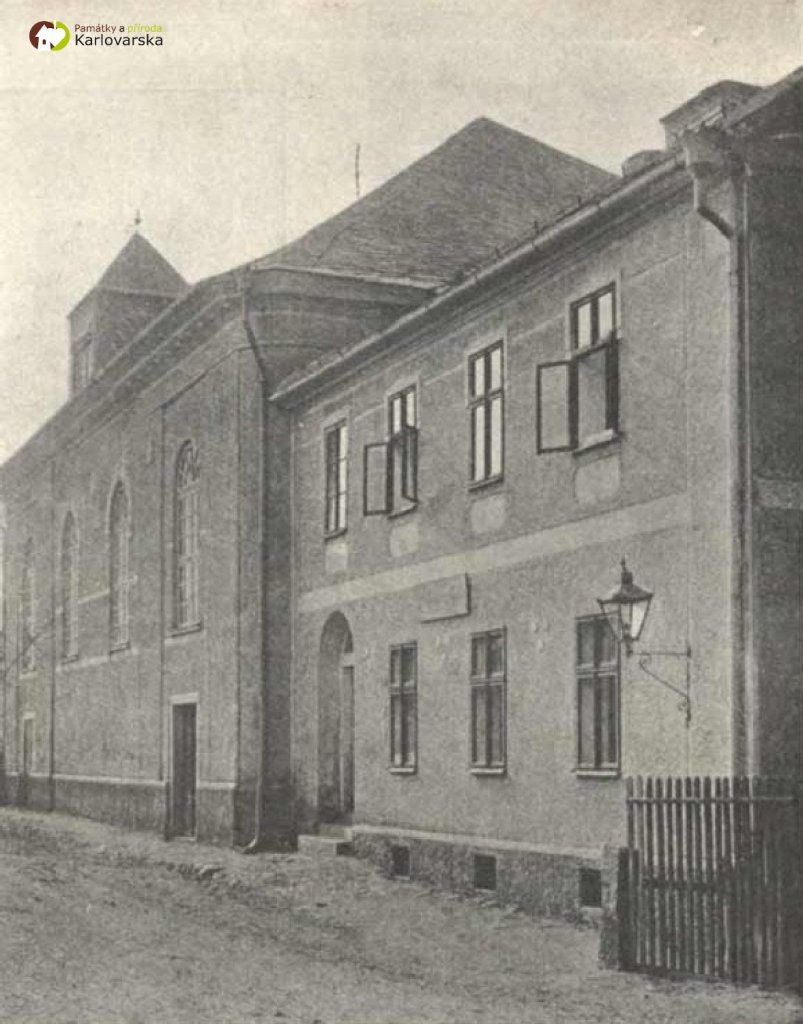
Luka Synagogue
The classicist synagogue of Luka (Luck) in western Bohemia was built in 1842 on the site of an older synagogue lost in that year's fire. It served one of the oldest and once largest rural Jewish communities of the region. The Nazis looted and burned it on 12 November 1938, and its burned shell was pulled down around 1960.
Luther utca Synagogue, Budapest
A synagogue at Luther utca 4 in Józsefváros, Budapest's eighth district, dated to 1920 in Anikó Gazda's survey, which links it with the Haladás prayer association and recorded it as demolished by the 1980s. No other source describing the building, its congregation, its appearance or its end was found.
Læderstræde Synagogue, Copenhagen
For most of the eighteenth century the main synagogue of Copenhagen stood in Læderstræde, in the medieval heart of the city. The congregation moved there after a fire in 1728; sources date the building to 1733 or 1766. It burned to the ground in the Copenhagen fire of 1795 and was never rebuilt; Krystalgade replaced it in 1833.
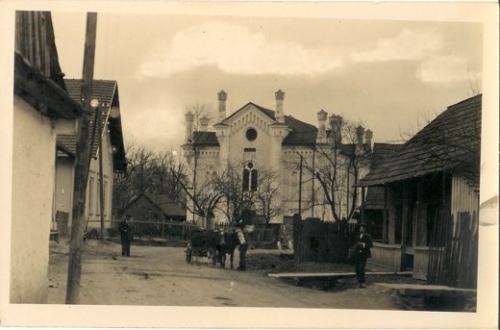
Lúky Synagogue
The synagogue of Lúky, a village in the Púchov district of north-western Slovakia, was built in 1872 for what became the district's second-largest Jewish community. Its congregation was deported in 1942. In the spring of 1945 retreating Nazi German troops set the empty building on fire and destroyed it.
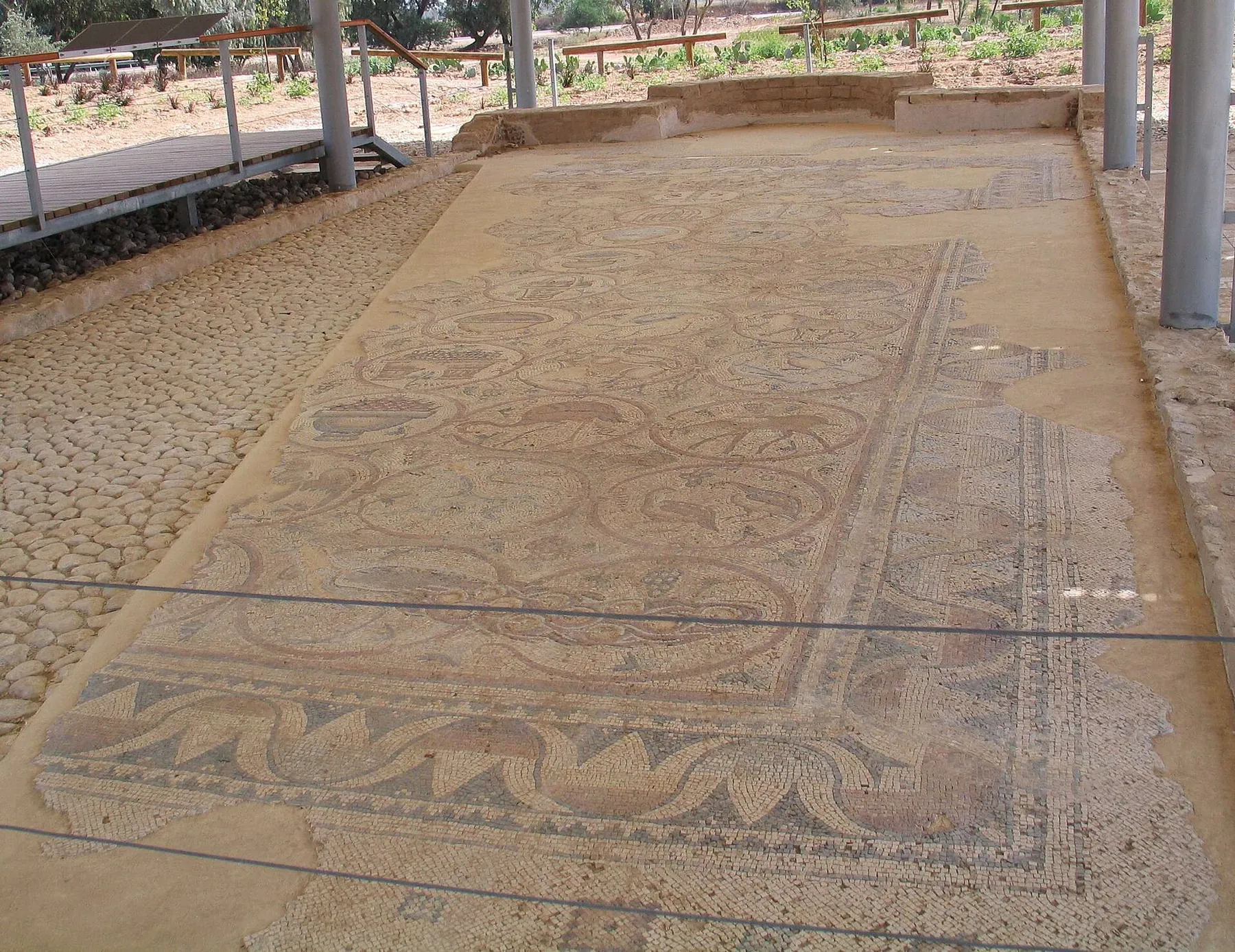
Ma'on Synagogue
The synagogue at Ma'on, beside Kibbutz Nirim in the western Negev, was a small basilica rebuilt in the sixth century CE with an apse and a mosaic of animals in vine medallions below a menorah flanked by lions. It was found in 1957. When and how it went out of use is unknown.
Maarsseveen Ashkenazi Synagogue (Maarssen)
The synagogue of the High German (Ashkenazi) Jews of Maarssen stood on the Diependaalsedijk in Maarsseveen, across the Vecht from Maarssen, where the community was allowed to build in 1759. The congregation shrank after Jews could settle in Utrecht, merged with Utrecht in 1923, and its synagogue was sold and demolished in 1927.
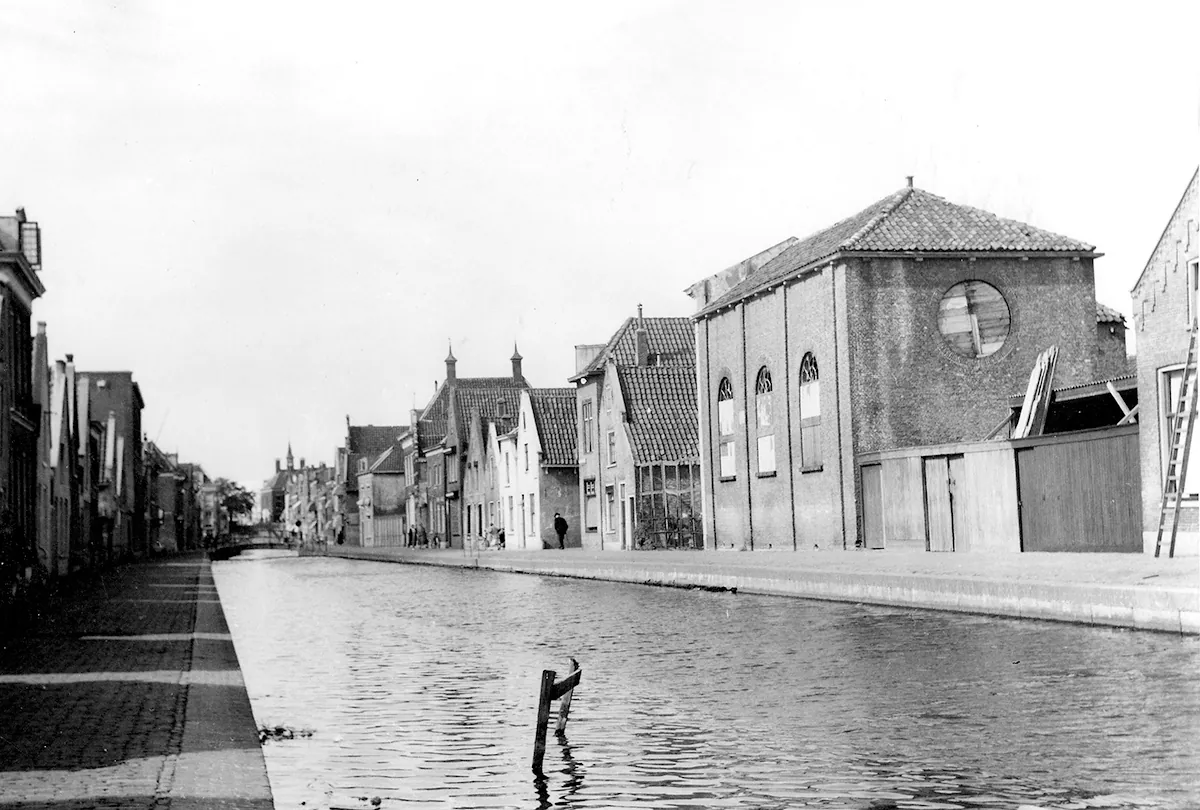
Maassluis Synagogue
The third and last synagogue of Maassluis, a plain brick hall on the north quay of the Zuidvliet, was inaugurated on 30 April 1858. The small congregation faded away by 1940 and its last members were deported in 1942. The municipality bought the dilapidated complex in 1949 and it was demolished in 1960.
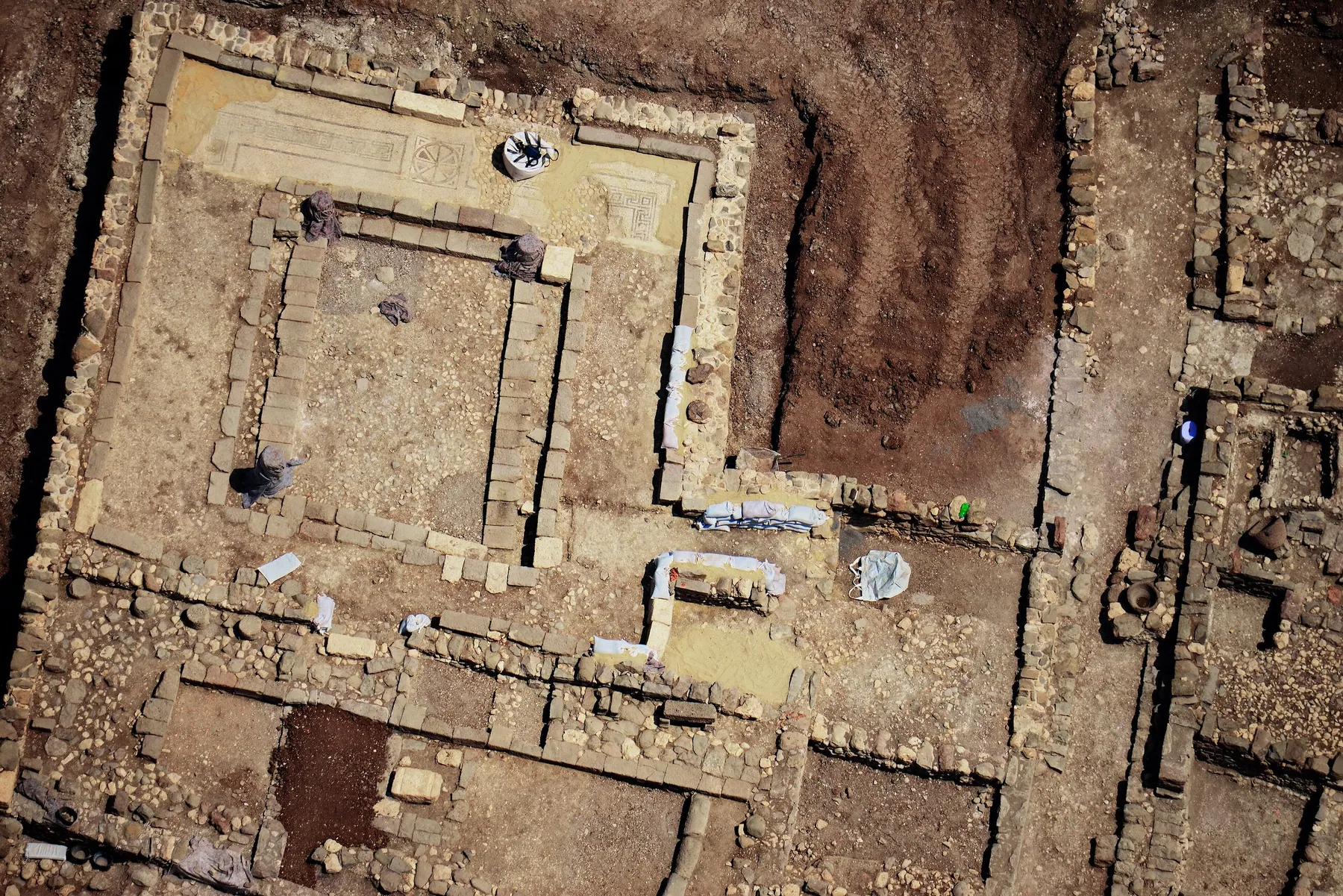
Magdala Synagogue
A first-century synagogue in the lakeside town of Magdala, found in 2009 under a planned hotel. Its benched hall had painted walls, a rosette mosaic and a carved stone showing the Temple menorah. The excavators say it was deserted as the town prepared for the revolt against Rome; only low walls survive.

Main Synagogue of Moravská Ostrava
The main synagogue of Moravská Ostrava, a twin-domed oriental building in the Pittlergasse modelled on Berlin's Neue Synagoge, was consecrated on 15 September 1879 and given a modernist facade in 1934. It burned on the night of 13 June 1939 under Nazi German occupation, and its ruins were demolished.
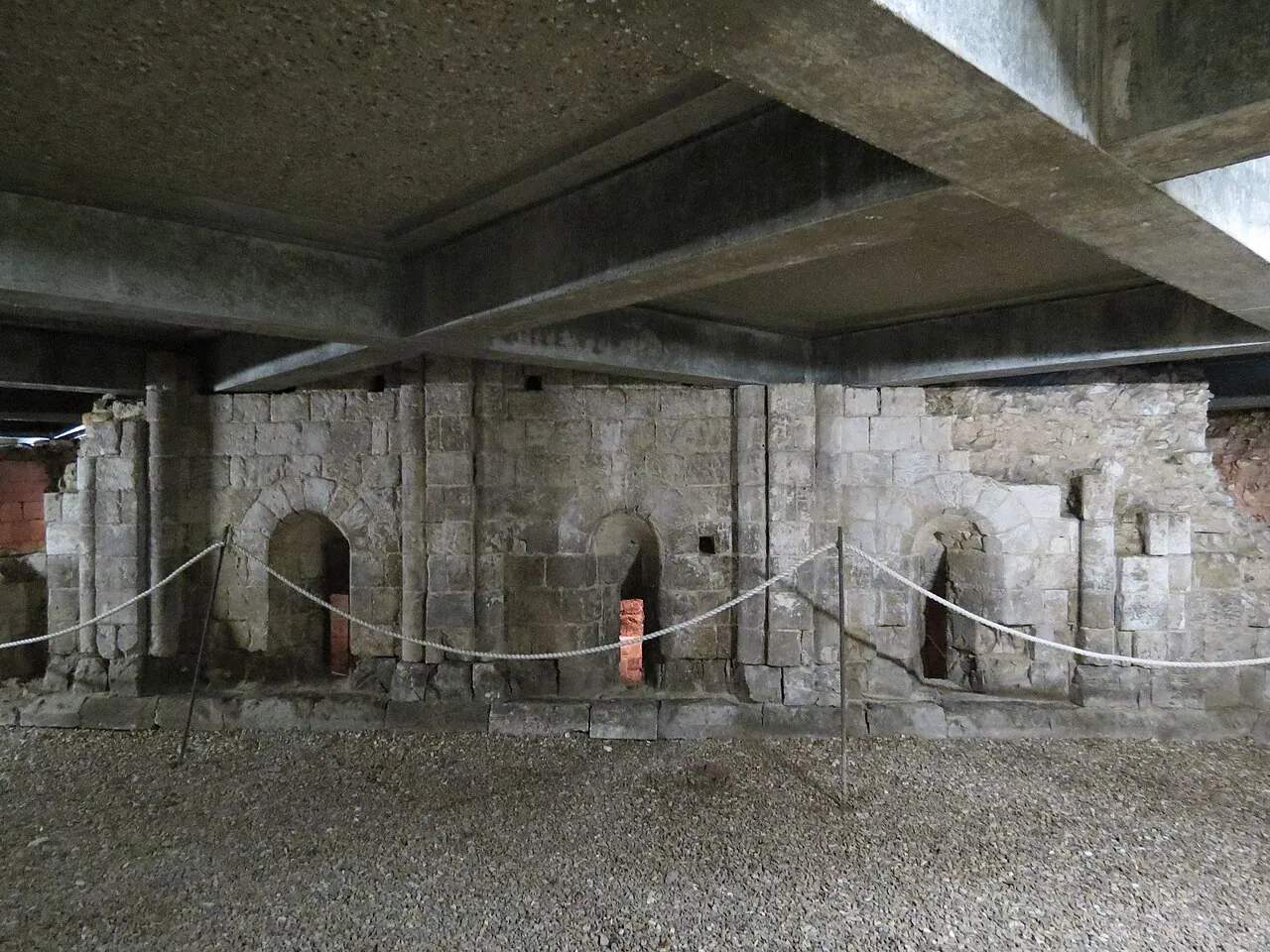
Maison Sublime of Rouen
The Maison Sublime is a Romanesque stone building of about 1100 in Rouen's medieval Jewish quarter, found in 1976 under the Palais de Justice courtyard. Scholars disagree whether it was a synagogue, a rabbinic school (yeshiva) or a house. It was confiscated at the expulsion of 1306 and later razed; its lower room survives.
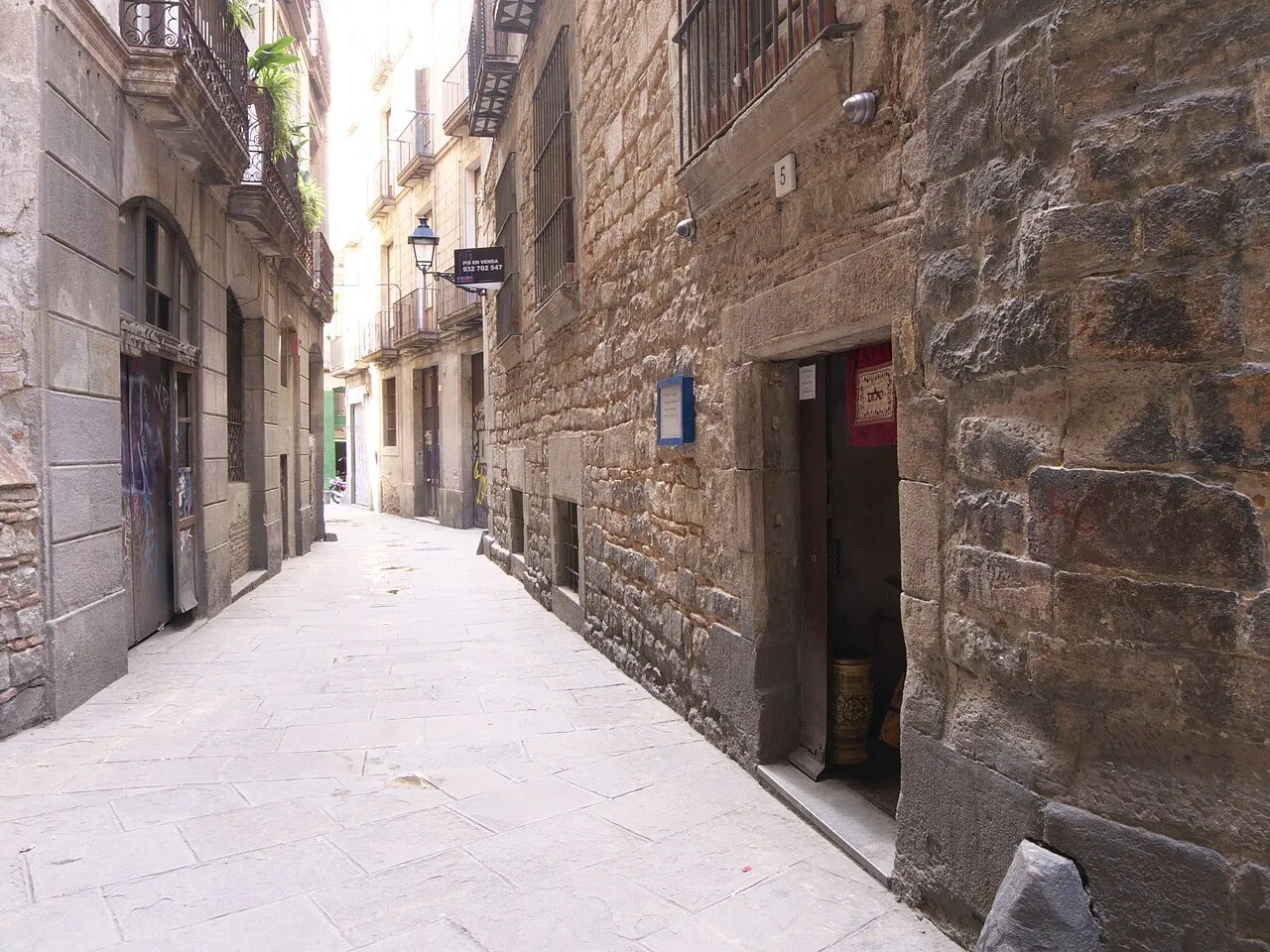
Major Synagogue of Barcelona
The Sinagoga Major was the main synagogue of the Call, the Jewish quarter of medieval Barcelona, until rioters sacked the Call in August 1391 and the community was never re-established. Vaulted rooms at Carrer de Marlet 5, open since 2002 as a museum and occasional synagogue, are presented as its remains, but city historians dispute that identification.

Makó Neolog Synagogue
The Neolog synagogue of Makó, designed by Lipót Baumhorn and consecrated in September 1914, was a domed Moorish and Art Nouveau landmark in the town's old Jewish quarter. It outlived the Holocaust with a damaged dome, but in 1965 the Communists demolished it; a party headquarters, now the police station, was built on its site.
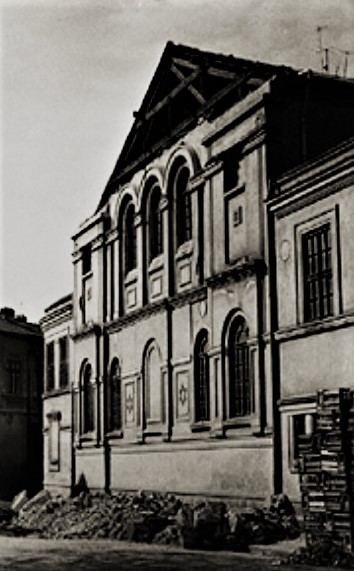
Malbim Synagogue, Bucharest
The Malbim Synagogue on Strada Bravilor in Bucharest's Jewish quarter was built in 1864 and named after Rabbi Meir Leibush Malbim, chief rabbi of Bucharest. Legionnaires (Iron Guard) wrecked it in 1941. Repaired after the war and after the 1977 earthquake, it was demolished by the Communist authorities in the mid-1980s for the Victory of Socialism Boulevard.
Malešov Synagogue
The synagogue of Malešov (German Maleschau), a small market town south of Kutná Hora, probably dated from the late eighteenth century and served a rural community first recorded in 1719. The congregation dwindled after 1848 and merged with Kutná Hora. The empty building was demolished in the 1980s, under Communist rule; who pulled it down is not recorded.
Malín Synagogue
The synagogue of Malín, a small market town now part of Kutná Hora in Central Bohemia, was built between 1859 and 1863 for a Jewish community that had flourished there in the early nineteenth century. It outlived that community and was demolished at some point after 1970; who pulled it down is not recorded.
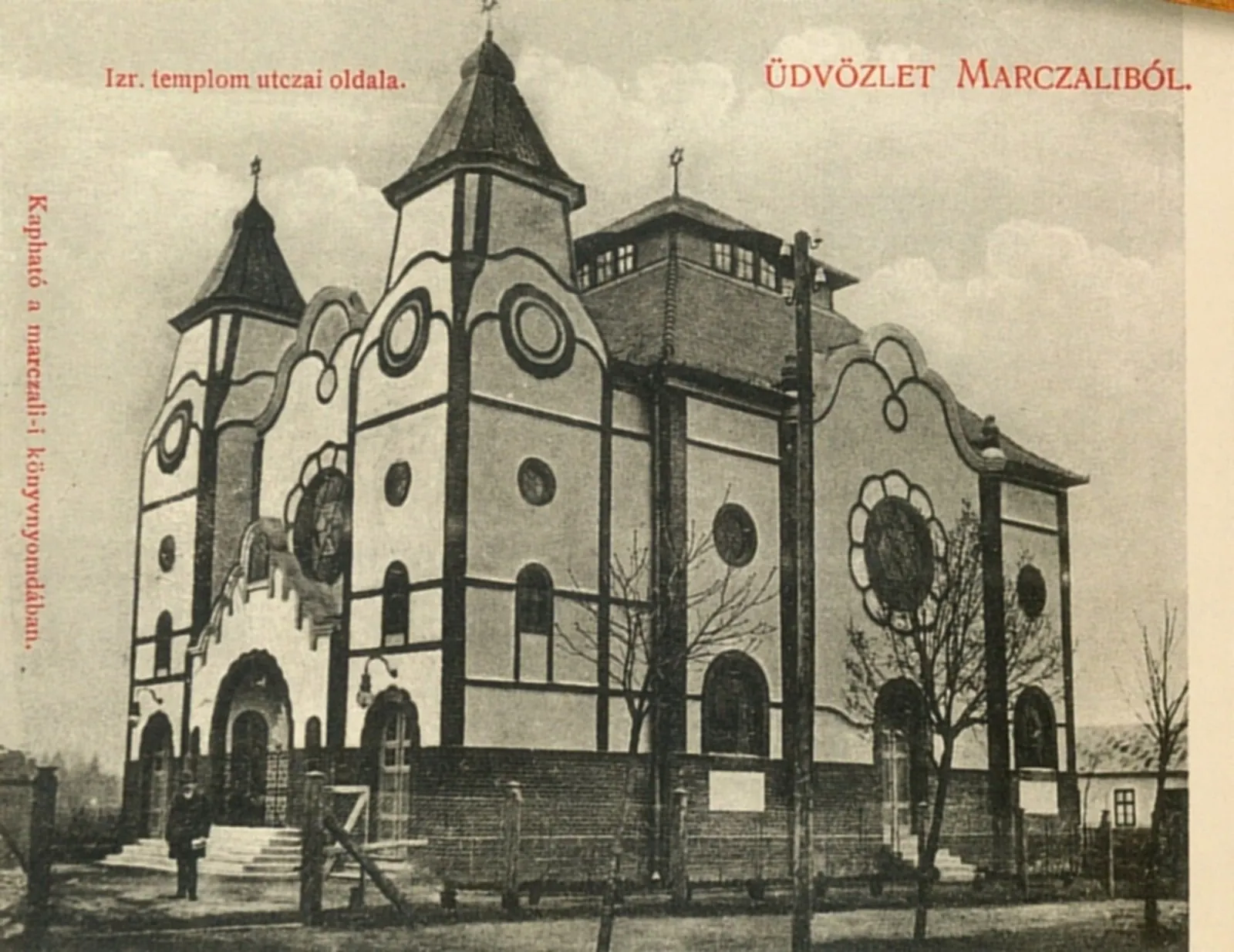
Marcali Synagogue
The Marcali Synagogue, consecrated on 28 October 1906 on today's Petőfi Sándor Street, was a Hungarian Secession building by Marcell Komor and Dezső Jakab, a smaller relative of their synagogue in Subotica. Its congregation was deported in 1944, and the Communists demolished the looted, abandoned building in 1963 to make way for a secondary school.
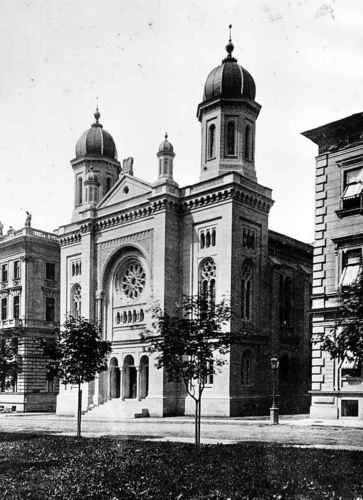
Marienbad Synagogue (Mariánské Lázně)
A twin-domed Moorish Revival synagogue designed by local architect Eduard Stern and opened on 1 August 1884 in the spa town of Marienbad, largely funded by Jewish spa guests. Nazis looted and burned it on Kristallnacht, 9–10 November 1938; its ruins were cleared by February 1939.
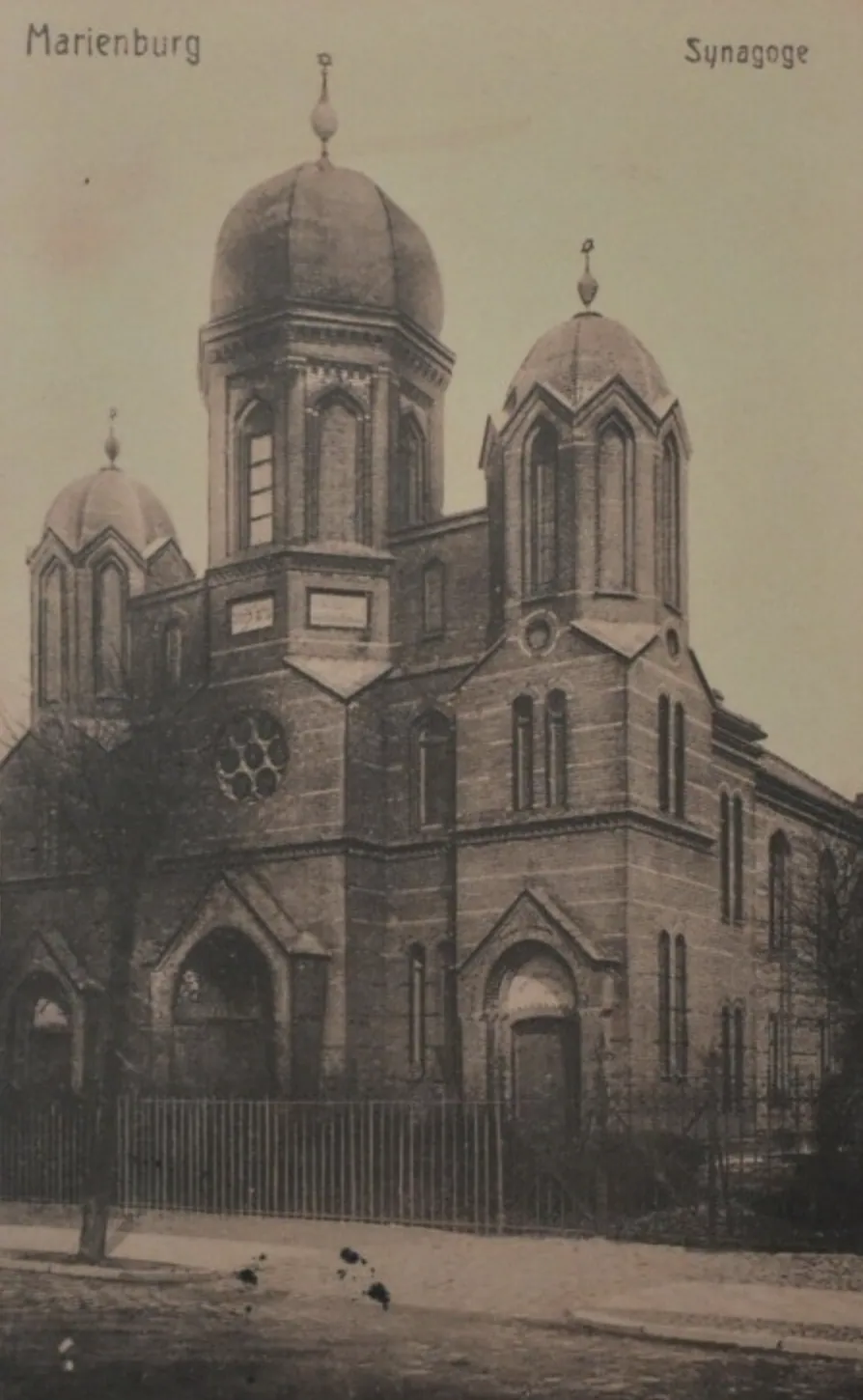
Marienburg Synagogue (Malbork)
A three-towered Moorish Revival synagogue designed by Carl Lübke and dedicated on 30 August 1898 on Schulgasse in Marienburg, West Prussia. It served a shrinking German-Jewish congregation for forty years before Nazis set it on fire on 10 November 1938, during the November Pogrom.
Markvarec Synagogue
The Baroque synagogue of Markvarec, a village near Slavonice, was built in 1784-1786 at the heart of a small Jewish quarter. After the congregation dissolved in 1888 it was sold, became a roofing-tile workshop and a hay barn, burned twice, lost its roof in the mid-1980s and had its last walls pulled down in 1992.
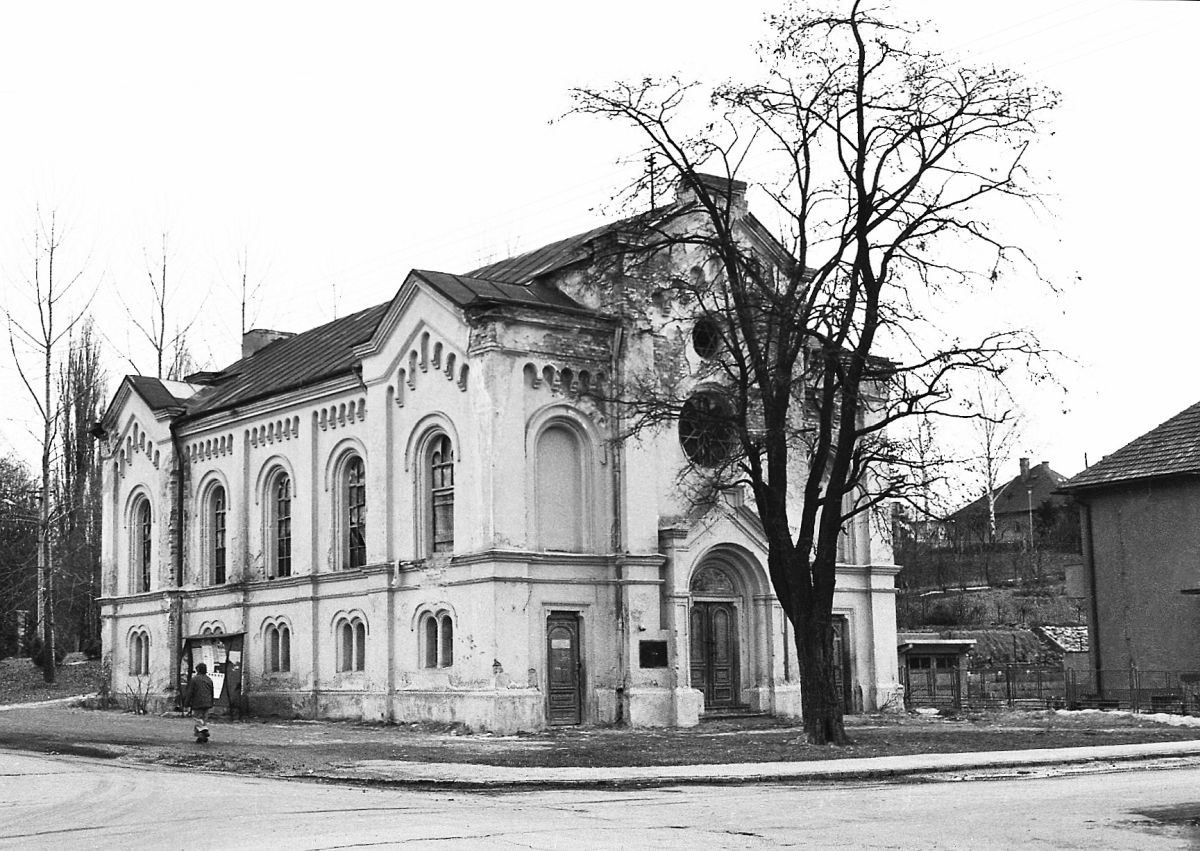
Martin Synagogue
Martin's synagogue, a rendered hall with a gabled front, rose window and arched windows, was built in 1875 beside the town's Jewish cemetery and repaired after a fire in 1881. Its congregation was deported in the Holocaust; used afterwards as a grain store, the building was pulled down by the Communist-era town authorities in the mid-1970s.

Martonvásár Synagogue
Martonvásár's synagogue, a two-storey brick building with a Star of David in its gable, is dated to 1903 and served a small Neolog congregation. Fifty-six local Jews were deported to concentration camps and killed. Photographed derelict in October 1948, it was demolished under Communist rule by the 1980s; who pulled it down is not recorded.
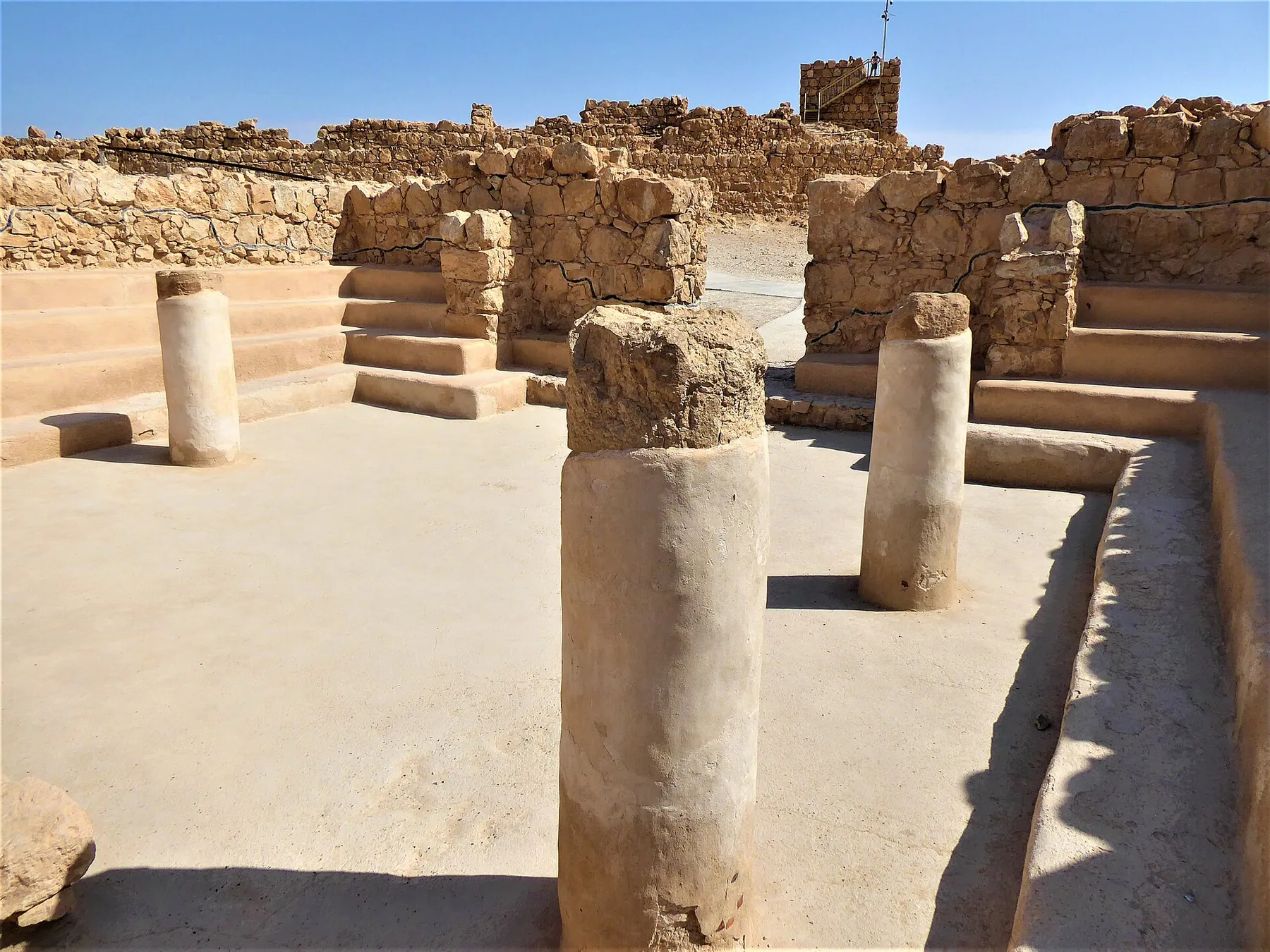
Masada Synagogue
A hall in Masada's north-western casemate wall, built under Herod and probably first a stable, was refitted as a synagogue by the Jewish rebels who held the fortress during the revolt against Rome. Its use ended when the Roman army took Masada in 73 or 74 CE. Roofless, partly restored walls, benches and column stumps remain.
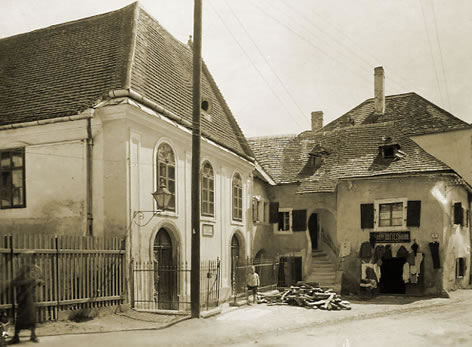
Mattersdorf Synagogue (Mattersburg)
The synagogue of Mattersdorf, now Mattersburg, was the old vaulted house of prayer of one of Burgenland's 'Seven Communities' and seat of a famous yeshiva. A plaque claimed it was built in 1354. After the Jews were driven out in 1938 it stood empty until a Wehrmacht engineer platoon blew it up in September 1940 under Nazi rule.
Medernach Synagogue
In 1882 the small Jewish community of Medernach, in the Ernz valley of northern Luxembourg, set up a prayer house, locally called the synagogue, for the Jews of Medernach, Waldbillig and Christnach. Its congregation was deported by the Nazis in 1941 and 1942. The building is gone; when and by whom it was removed is not recorded.
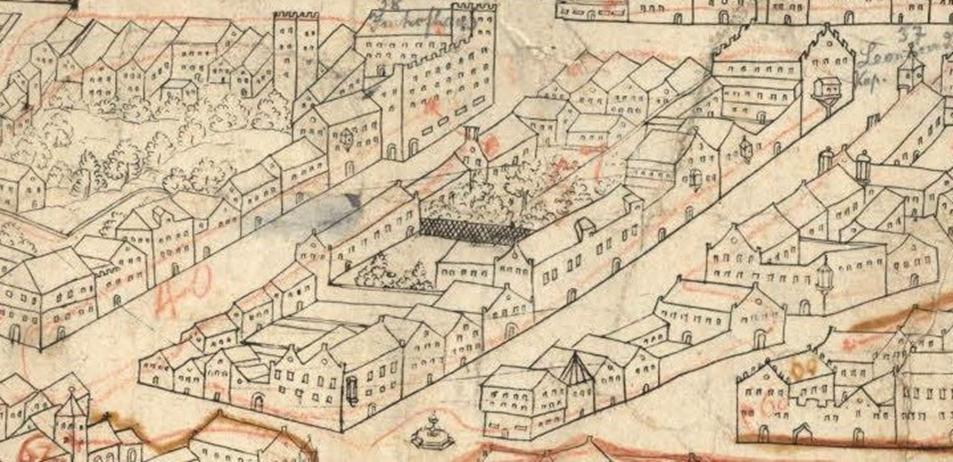
Medieval Synagogue of Augsburg
The medieval synagogue of Augsburg stood in the Judengasse, today's Karlstraße, and is first recorded in the city law of 1276. It survived the massacre of November 1348, but after the city council decided in July 1438 to expel the Jews, the council seized it by 1440 and later turned it into dwellings.
Medieval Synagogue of Bad Radkersburg
The medieval synagogue of Radkersburg, a small town in south-eastern Styria, served a small Jewish community of the fourteenth and fifteenth centuries. It probably stood in the Judengasse, on today's Frauenplatz. After the Jews were expelled in 1496, a chapel of the Virgin Mary took its place; the late Baroque Frauenkirche stands there now.
Medieval Synagogue of Basel, Grünpfahlgässlein
The synagogue at Grünpfahlgässlein 1 served Basel's second medieval Jewish community, re-established in the 1360s after the burning of the first community in January 1349. The Jews left the city in 1397. The building, still called the 'Judenschule' into the nineteenth century, later disappeared; its site lies under the present Gerbergasse 30.
Medieval Synagogue of Bern
Bern's medieval Jewish community, recorded from 1259, had a synagogue near the Judengasse (today's Kochergasse) and the Judentor, on ground now occupied by the Federal Palace. The community was attacked and expelled in 1294, burned in 1348, and finally banished by the town council in 1427. When and how the building disappeared is unknown.
Medieval Synagogue of Bratislava
Bratislava's medieval synagogue stood inside the town walls, roughly where the Ursuline convent stands today. First recorded in 1335, when a papal bull ordered its demolition after Cistercian complaints, it was rebuilt in 1339, destroyed when the Jews were expelled in 1360 and replaced after 1399. Abandoned at the expulsion of 1526, it housed a mill by 1548.
Medieval Synagogue of Brno
The medieval synagogue of Brno stood in the Jewish quarter in the south-east of the walled town, near today's Masarykova street. After the Jews were expelled in 1454 it was turned into a small church of St Mary Magdalene, and the Franciscans rebuilt that church from its foundations in 1651-1654.
Medieval Synagogue of Celje
Celje, the German Cilli, had a medieval Jewish community with its own Jewish street and, according to the historian Klemen Jelinčič Boeta, certainly a synagogue. Its best-known members were the bankers Musch and Hatschim. Herman II expelled the Jews from Celje in 1410; the synagogue does not survive, and its site and fate are unknown.
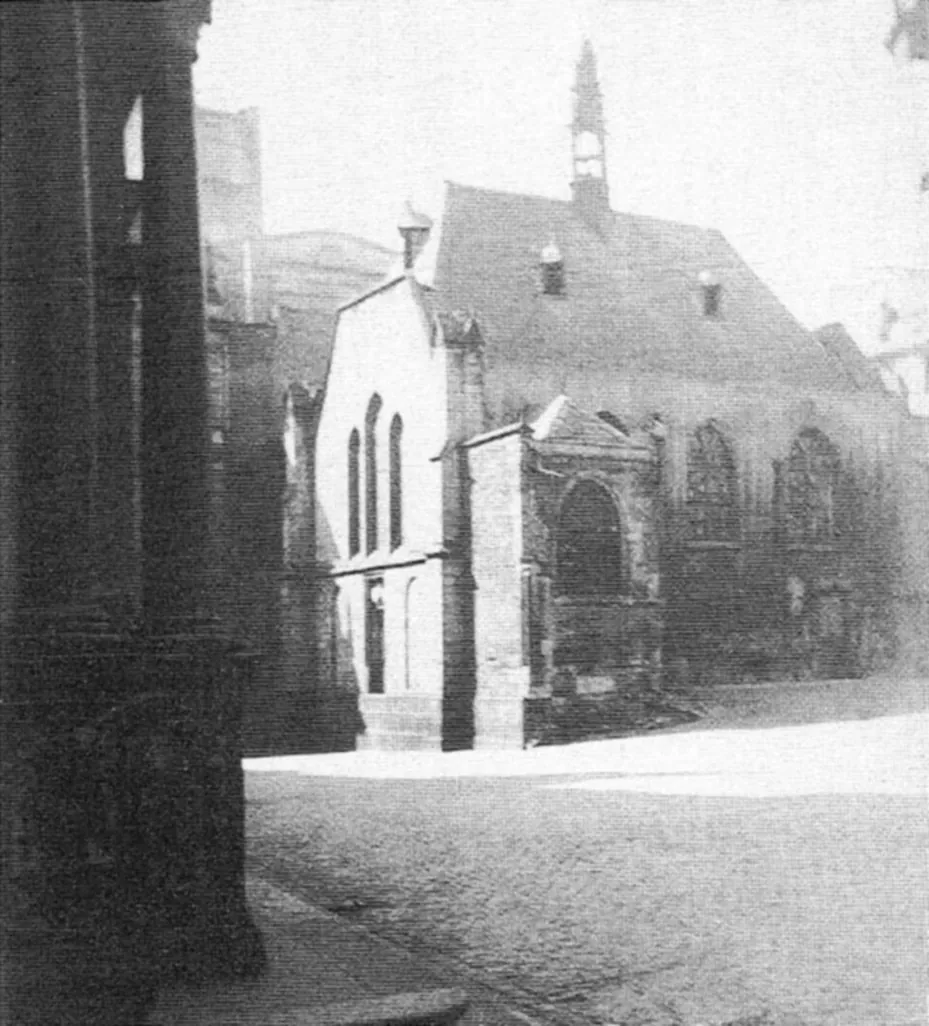
Medieval Synagogue of Cologne
Cologne's medieval synagogue stood beside the town hall from the early eleventh century. Sacked in 1096 and wrecked in the Black Death pogrom of 1349, it was rebuilt in 1372, then turned into the council chapel after the Jews were expelled in 1424. Bombs ruined the building in the Second World War; only excavated foundations remain.
Medieval Synagogue of Diessenhofen
The small Rhine town of Diessenhofen in Thurgau had a synagogue in the late Middle Ages. Its Jews were killed or driven out in 1349, burned again after a ritual-murder charge in 1401, and expelled in 1494. Local tradition places the synagogue on the site of the house 'Zum Erker'; when it disappeared is unknown.
Medieval Synagogue of Frankfurt
The first synagogue of Frankfurt's Jews stood south of the cathedral, on the site later occupied by the city weigh house on the Weckmarkt. Wrecked in the pogrom of 1241 and burned out when the whole community was murdered in July 1349, it was rebuilt, abandoned in 1462 and dug out in 1503.
Medieval Synagogue of Graz
The synagogue of medieval Graz stood at the centre of the walled Jewish quarter south of the Hauptplatz. It is recorded with a mikveh by 1398. After Duke Friedrich V expelled the Jews in 1438/39, townspeople tore down part of the quarter, and the Corpus Christi chapel, today's Stadtpfarrkirche, rose on or beside its site from 1440.
Medieval Synagogue of Hallein
The medieval Jews of Hallein, the archbishop of Salzburg's salt town on the Salzach, had a synagogue close to the town hall. It was destroyed in 1404, when the Jews of Salzburg and Hallein were falsely charged with desecrating the host; other sources date the destruction of Hallein's synagogue to the final expulsion of 1498.
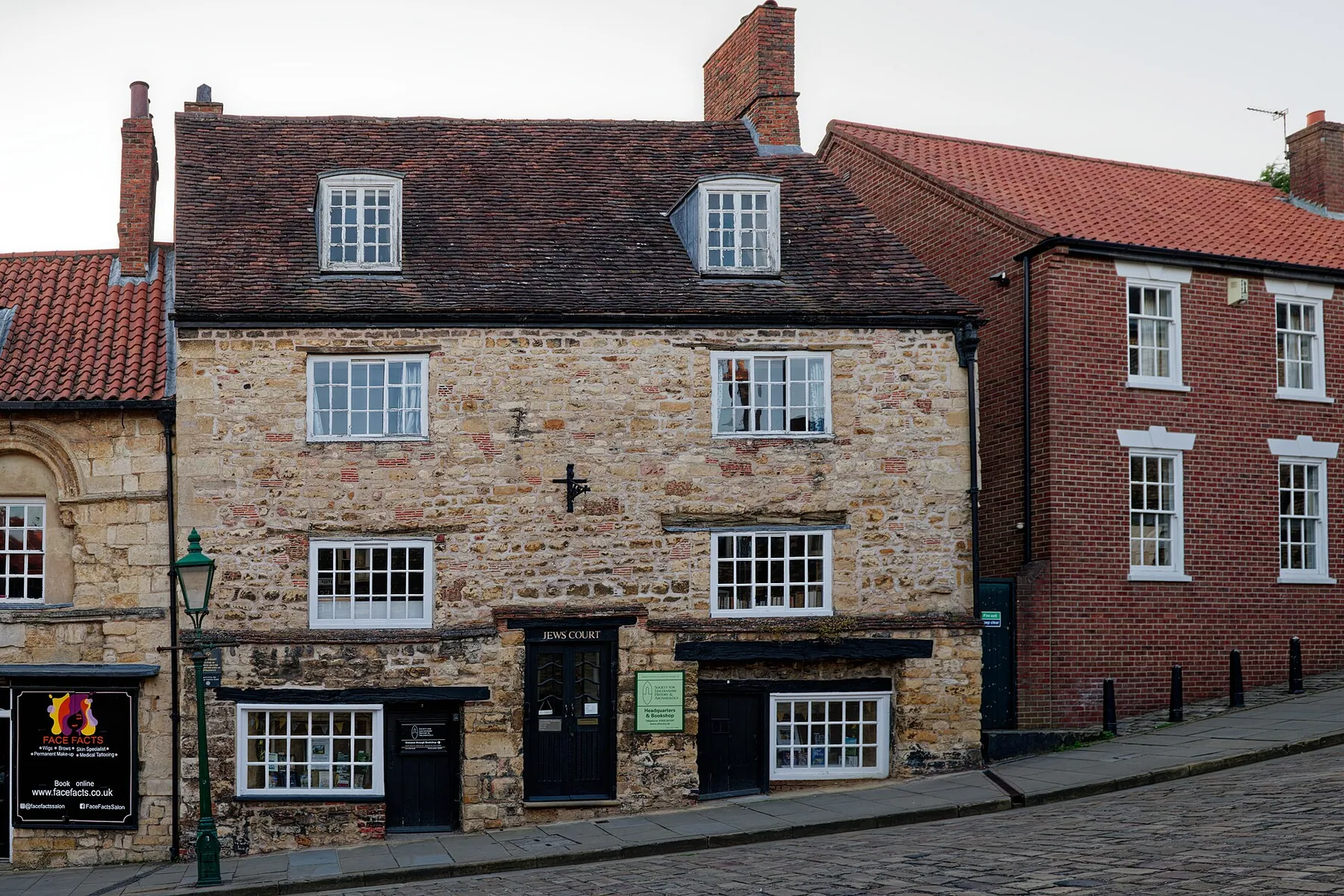
Medieval Synagogue of Lincoln (Jews' Court tradition)
Jews' Court, a stone house on Steep Hill in Lincoln that Historic England dates to about 1170, is by long tradition the synagogue of Lincoln's medieval Jewry, one of England's leading communities. The identification is unproven and disputed. Jewish worship in medieval Lincoln ended with Edward I's expulsion of 1290; the much-altered building still stands.
Medieval Synagogue of Ljubljana
The synagogue of medieval Ljubljana (Laibach) stood in the Jewish quarter on the left bank of the Ljubljanica, probably at today's Židovska steza 4. Recorded by Valvasor in 1213 and attested in 1445, it served the community until the Jews were expelled from Carniola in 1515. It became a chapel and later disappeared.
Medieval Synagogue of Luxembourg City
The medieval Jews of Luxembourg City, recorded from 1276, lived in their own quarter with a Jews' gate, a cemetery and a synagogue. The community was struck by the Black Death persecutions of 1349, expelled in 1391, attacked again in the 1470s and expelled in 1530. When and how its synagogue disappeared is not recorded.
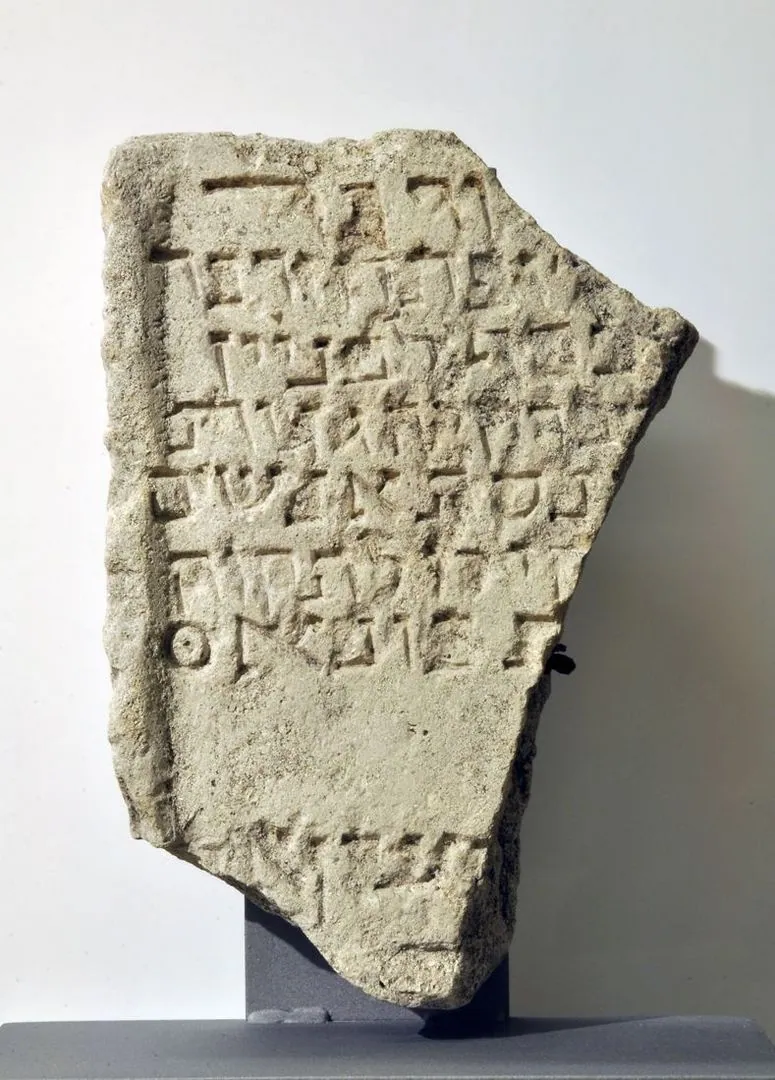
Medieval Synagogue of Mainz
The synagogue of medieval Mainz, recorded by 1093, served one of the three ShUM communities on the Rhine. It was burned in 1096, attacked again in the 1280s and engulfed in the pogrom of 1349. After the expulsion of 1438 the city used it as a coal store, and in 1473 it became a Christian chapel. Nothing of it stands.

Medieval Synagogue of Marburg
Marburg's medieval synagogue stood in the Judengasse, now Schloßsteig, above the market place. Built about 1280 and rebuilt after the town fire of 1319, it was wrecked and partly pulled down in 1452. Its buried shell was found in 1993 and has lain under a glass cube since 2002.
Medieval Synagogue of Mödling
A small Gothic synagogue stood in the back courtyard of a house in Mödling's Judengasse, today Kaiserin-Elisabeth-Straße 7. It served a Jewish community recorded from before 1350 until 1420, when Duke Albrecht V expelled the Jews and seized it. Sold in 1437 as the 'Judenschuel', it was demolished in the late 19th century.
Medieval Synagogue of Nuremberg
Nuremberg's first documented synagogue was consecrated in 1296 in the Jewish quarter on the site of today's Hauptmarkt. In 1349 Emperor Charles IV handed the quarter to the city council, which was to turn the synagogue into a church of the Virgin Mary; about 562 Jews were killed on 5 December 1349. The Frauenkirche now stands on the site.
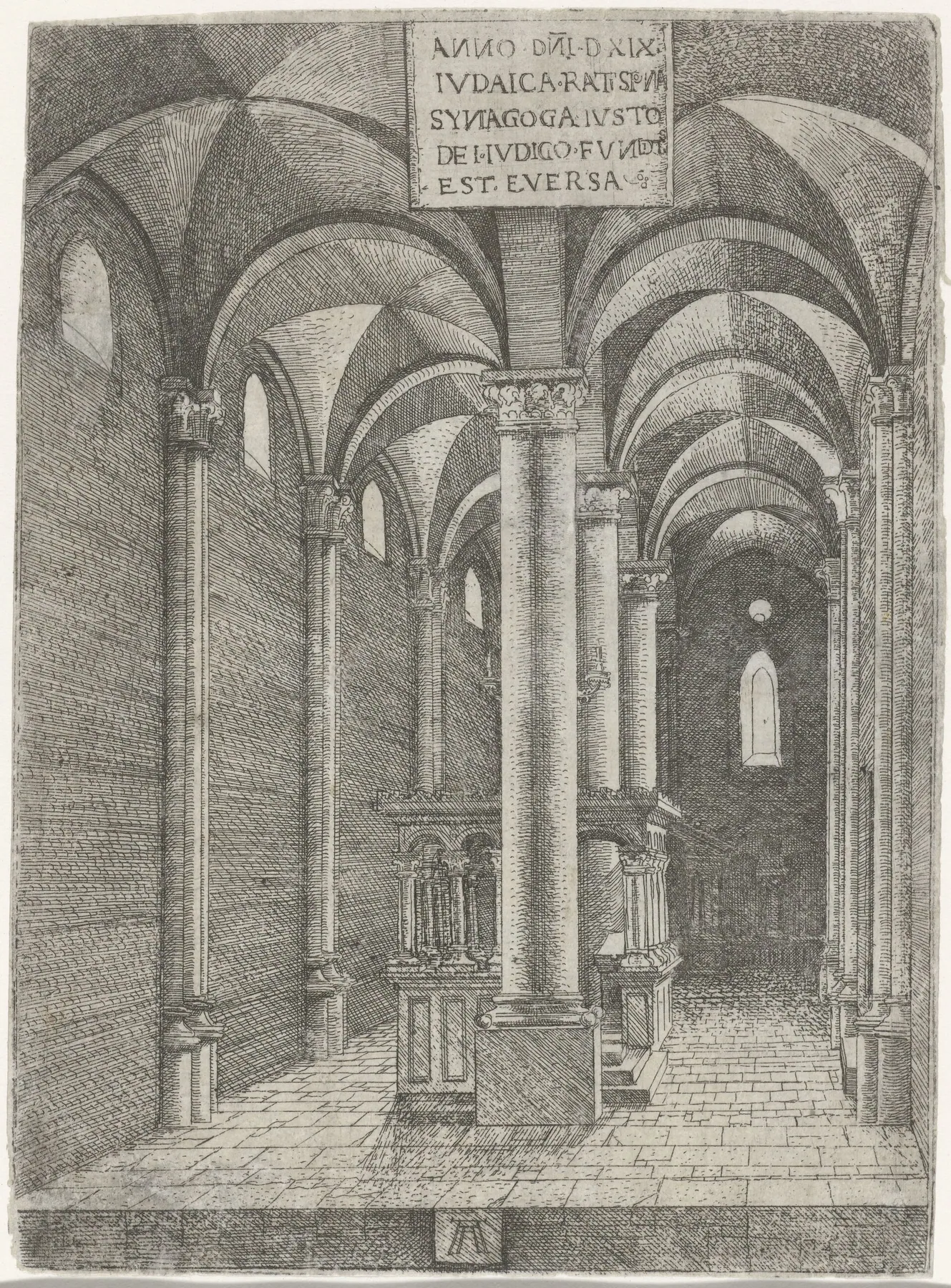
Medieval Synagogue of Regensburg
Regensburg's medieval synagogue stood at the heart of one of the oldest Jewish quarters in Germany. A late eleventh-century hall was rebuilt in the early thirteenth century as a vaulted, two-aisled room. In February 1519 the city council expelled the Jews and had the synagogue pulled down within days.
Medieval Synagogue of Trnava
The synagogue of medieval Trnava served one of the oldest Jewish communities in present-day Slovakia, settled in a Jewish street along the Trnávka stream. After a blood libel, King Ferdinand I expelled the Jews in 1539 at the town council's request. The synagogue was handed to a royal official and later destroyed; no trace survives.
Medieval Synagogue of Ulm (Judenhof)
The medieval synagogue of Ulm stood in the Judenhof, the Jewish quarter beside the Minster. Seized by the city after the Black Death massacre of 1349 and returned in 1354, it served the community until the Ulm city council obtained the expulsion of the Jews in 1499. The building's later fate is unrecorded.
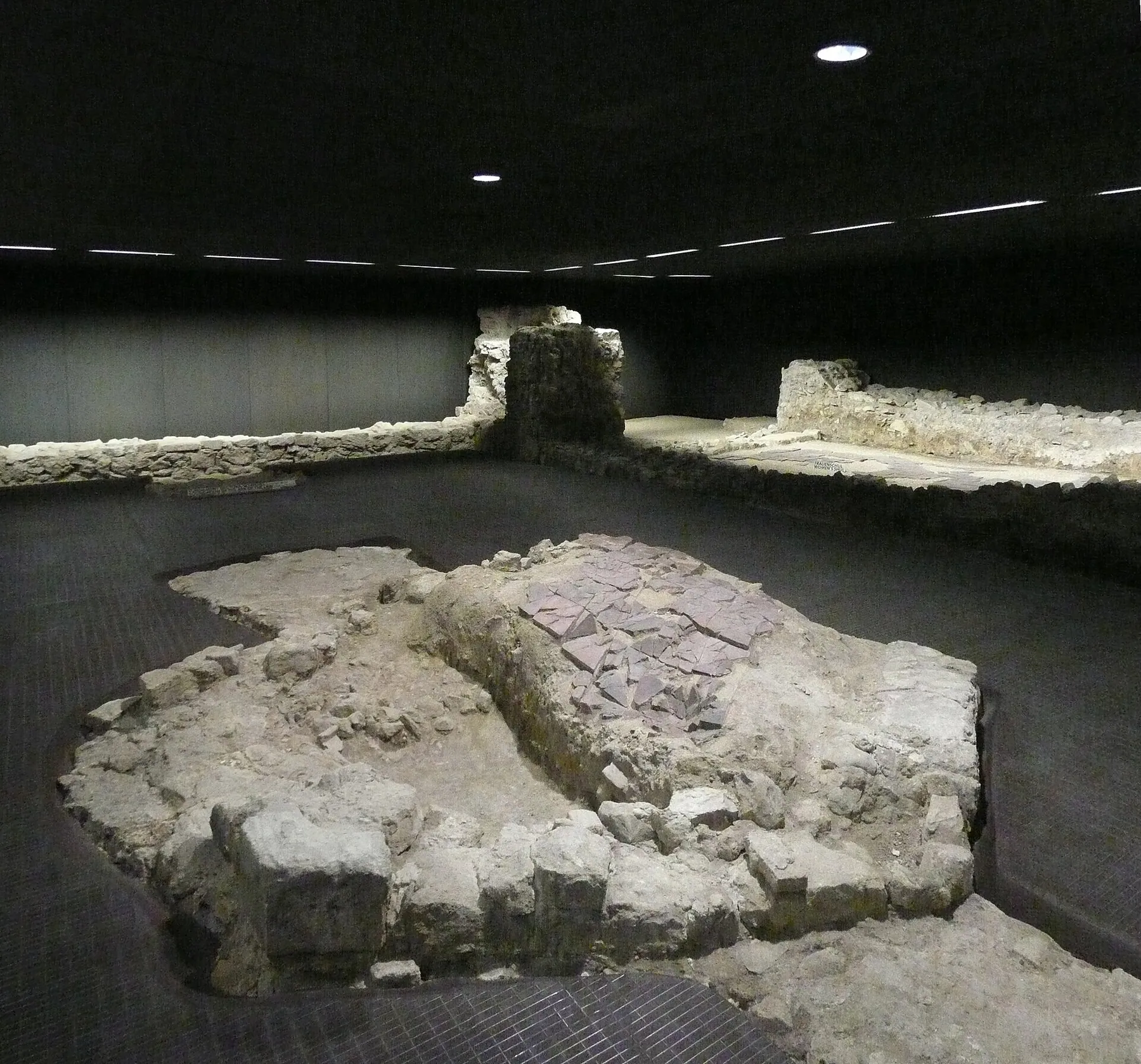
Medieval Synagogue of Vienna (Or Sarua)
Vienna's medieval synagogue stood on the Schulhof, today's Judenplatz, from about 1240-50 and grew in three phases into one of the largest known medieval synagogues. Duke Albert V had it demolished in 1421 after the Vienna Gesera, and its stones went to the university. Its excavated foundations lie beneath the square.
Medieval Synagogue of Vienna, Seitenstettengasse
Vienna's earliest recorded synagogue, the Judenschule of the city's first Jewish settlement, stood at today's Seitenstettengasse 2. It is said to have been founded before 1196 on the initiative of the ducal mint master Schlom and is mentioned in 1204. When and by whom it was pulled down is unknown; a house of 1825-27 now occupies the plot.
Medieval Synagogue of Würzburg
The medieval synagogue of Würzburg, first recorded in 1170, stood at the heart of the Jewish quarter by the market square and served one of the leading centres of Ashkenazi learning. It was destroyed in the Black Death pogrom of April 1349, and the Marienkapelle, begun in 1377, now stands on its site.
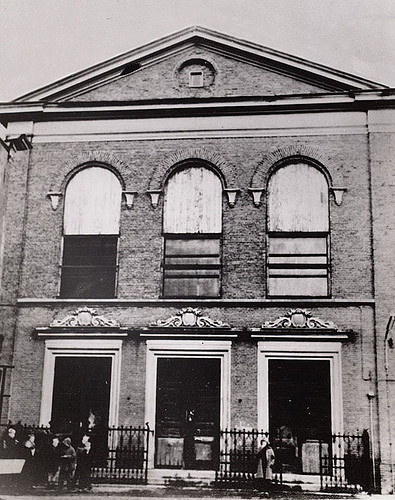
Meppel Synagogue
Meppel's synagogue on the Touwstraat, a brick building of 1865 with about 350 seats that replaced a sjoel of 1799, was the main synagogue of Drenthe and seat of its chief rabbi. Its interior was wrecked during the Nazi German occupation; after the war it was sold and demolished in 1960 for urban renewal.

Meroth Synagogue
The synagogue of Meroth, an ancient Jewish village in Israel's Upper Galilee, was built around 400 CE and rebuilt more than once, gaining a mosaic of a young warrior, a study house and a hidden treasury. Jewish settlement ended in the ninth or tenth century. Excavated in the 1980s, it survives as low ruins inside an army training area.
Mezőberény Synagogue
The synagogue of Mezőberény's Status Quo Ante congregation was built in 1884 and dedicated on 17 September that year by Alexander Kohut, chief rabbi of Nagyvárad. Emptied during the Second World War and left without a congregation after the deportations of 1944, the Romantic-style building was demolished by the Communists in 1985.
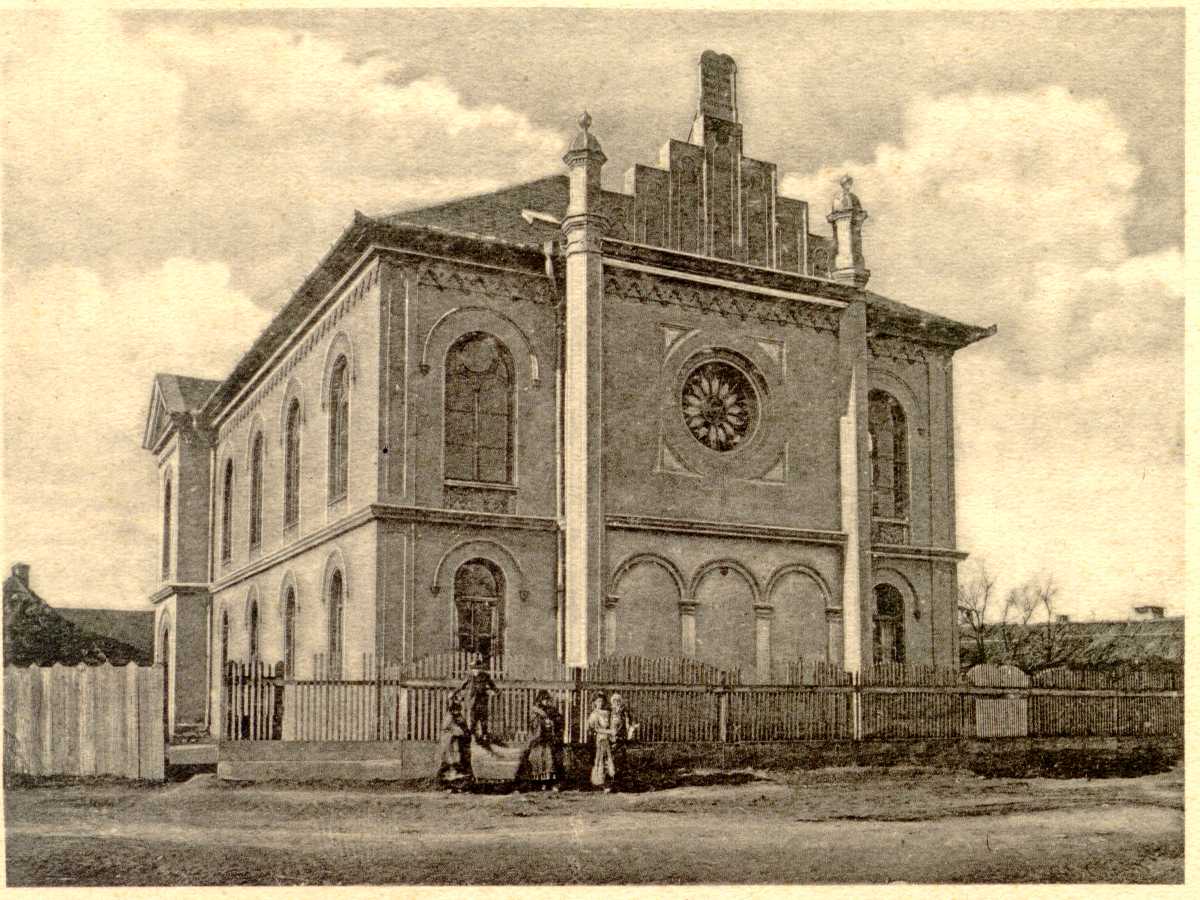
Mezőkövesd Synagogue
The Orthodox synagogue of Mezőkövesd, built by the town's Jewish community in 1896 on Arany János utca, served some 800 Jews until their deportation to Auschwitz in June 1944. It stood decaying into the 1960s; under Communist rule the Communists demolished it around 1970, and a primary school's yard now covers the site.
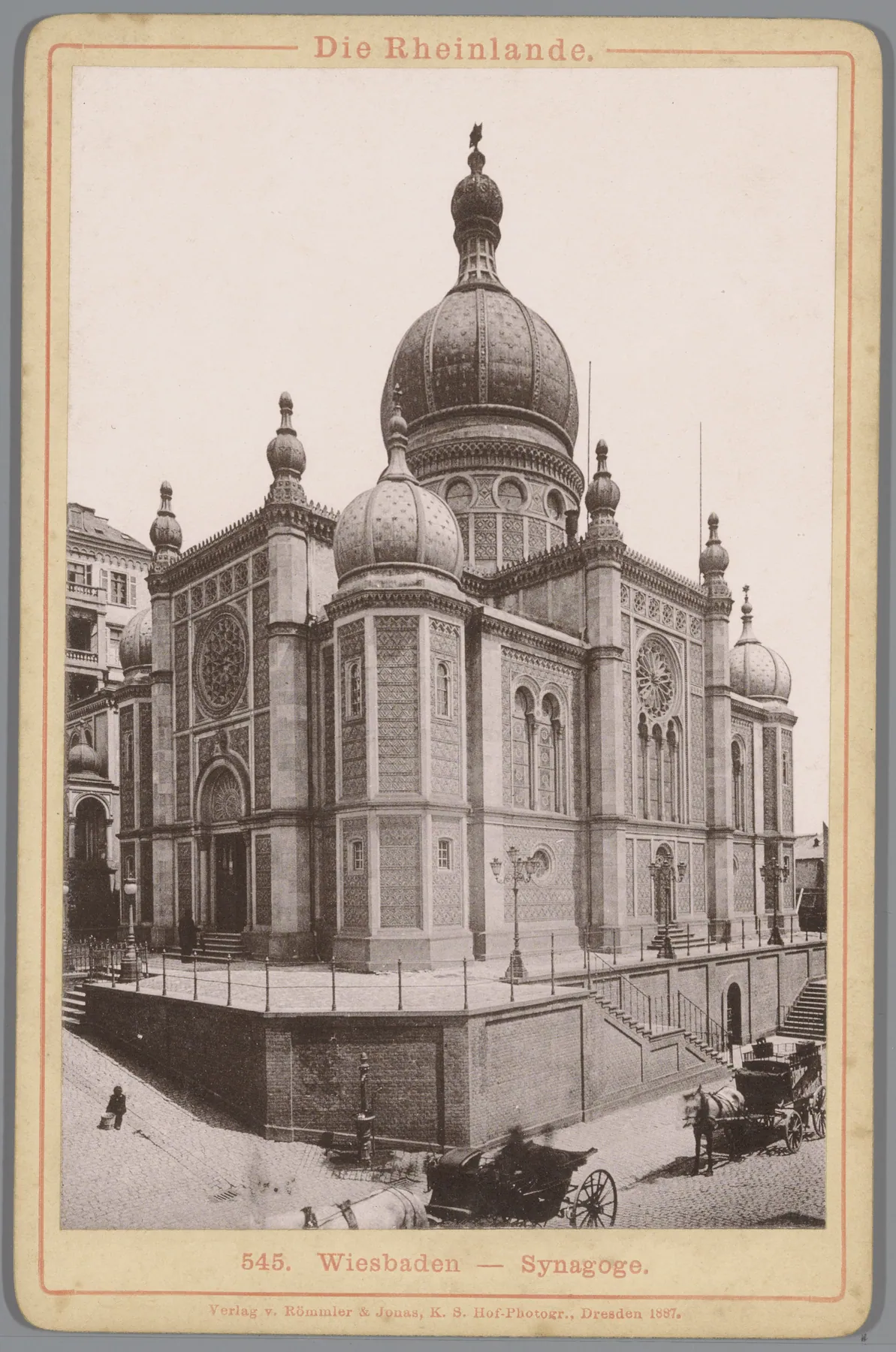
Michelsberg Synagogue, Wiesbaden
Wiesbaden's monumental Michelsberg synagogue embodied a newly visible Jewish civic life before Nazi attackers burned it in the November 1938 pogrom.

Mielec Synagogue
A two-towered brick synagogue built in the late nineteenth century for Mielec's large, mainly Hasidic community, notable for murals of the Creation and the Flood. Nazi German soldiers set it on fire on 13 September 1939, the eve of Rosh Hashanah, with Jews trapped inside.

Mindszent Synagogue
The synagogue of Mindszent, a small town on the Tisza in Csongrád-Csanád county, stood on Kossuth Street beside the community's school. Photographs in the Hungarian Jewish Museum show it still standing, empty and decaying, in 1950 and 1955, after the town's Jews were deported in 1944. It was demolished before the late 1980s.
Mirotice Synagogue
The Baroque synagogue of Mirotice, a small town north-west of Písek in South Bohemia, served a Jewish community recorded since the sixteenth century. Built around 1750 or in 1763, it was destroyed on 29 April 1945 when American aircraft attacked a retreating Nazi German column in the town and wrecked much of it.

Mistelbach Synagogue
Mistelbach's synagogue, a red-brick basilica in Byzantine-Romanesque forms by the Viennese architect Friedrich Schön, was consecrated on 25 February 1896. The Nazis took it over in 1938, and it was badly damaged by 1945. Restituted after the war, it was sold to private owners and demolished in the later 1970s.
Miszla Synagogue
Miszla, a small village in Tolna county, had a synagogue serving a rural Jewish community that numbered 60 people in 1851 and only eight in 1941. Anikó Gazda's survey of 1980-87 recorded the building as demolished. When it was built, what it looked like, and when and by whom it was pulled down are all unknown.
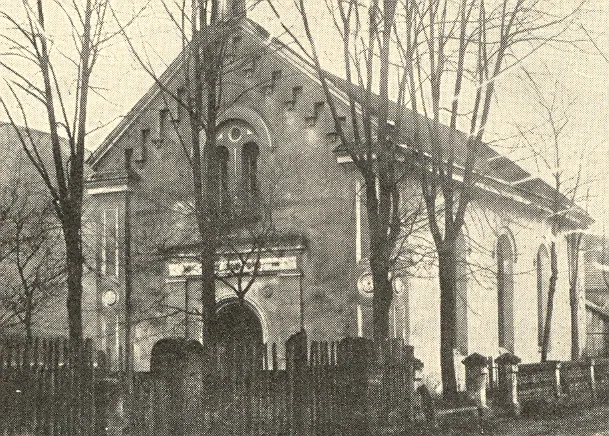
Mladá Boleslav Synagogue
The synagogue of Mladá Boleslav (Jungbunzlau), one of Bohemia's oldest Jewish communities, was rebuilt after a late-17th-century fire on the model of Prague's Maisel Synagogue. Its congregation was deported by the Nazis in January 1943. The decayed building was demolished between 1960 and 1962, under Communist rule, with the rest of the Jewish quarter.
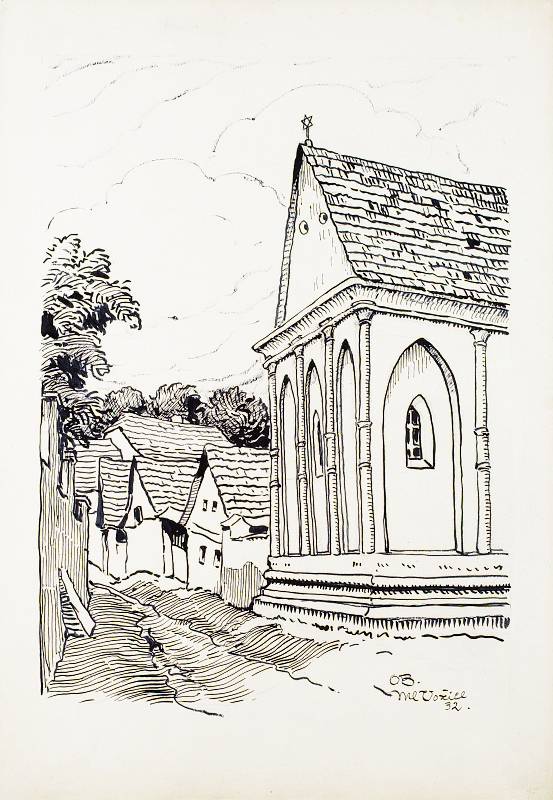
Mladá Vožice Synagogue
The Neo-Gothic synagogue of Mladá Vožice, a small town in South Bohemia, replaced an older prayer house in the mid-nineteenth century and stood in Židovská Street. The Nazi authorities closed it by 1941 and the congregation was deported in 1942. The empty building decayed and was largely pulled down between 1949 and about 1960.
Mnichovo Hradiště Synagogue
The synagogue of Mnichovo Hradiště (Münchengrätz) in north-central Bohemia probably dated from the early nineteenth century, when the town's Jewish community was at its largest. It was demolished during the Second World War; who pulled it down is not recorded. The town's last Jews were deported under the Nazi occupation.
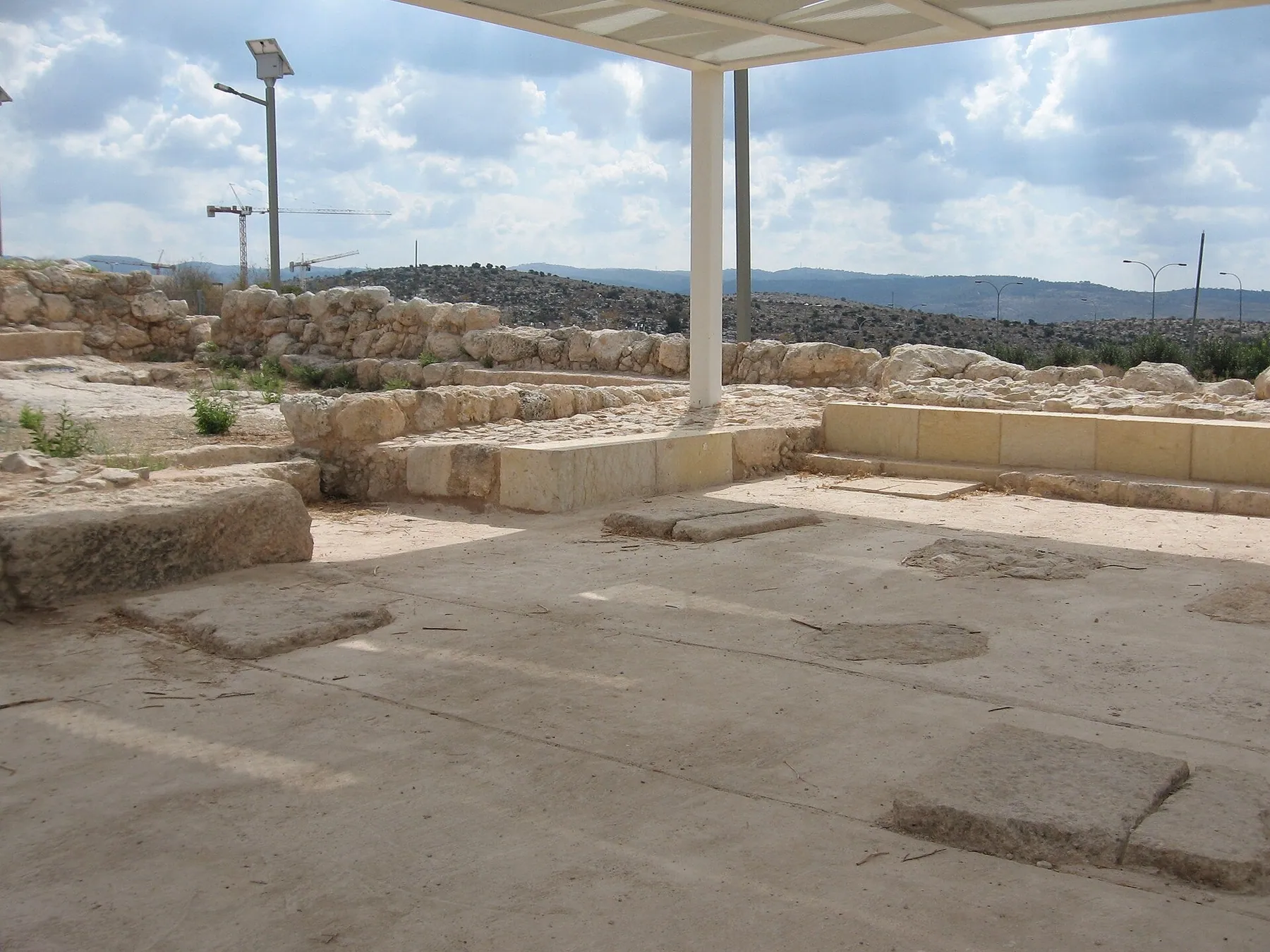
Modi'in Synagogue (Umm el-Umdan)
A village hall at Khirbet Umm el-Umdan, in today's Modi'in, was used as a synagogue from the Hasmonean period and rebuilt with two rows of columns under Herod. Excavators found it violently wrecked about 66 CE, repaired, and out of use after the second century CE. Only low walls, benches and floors remain.
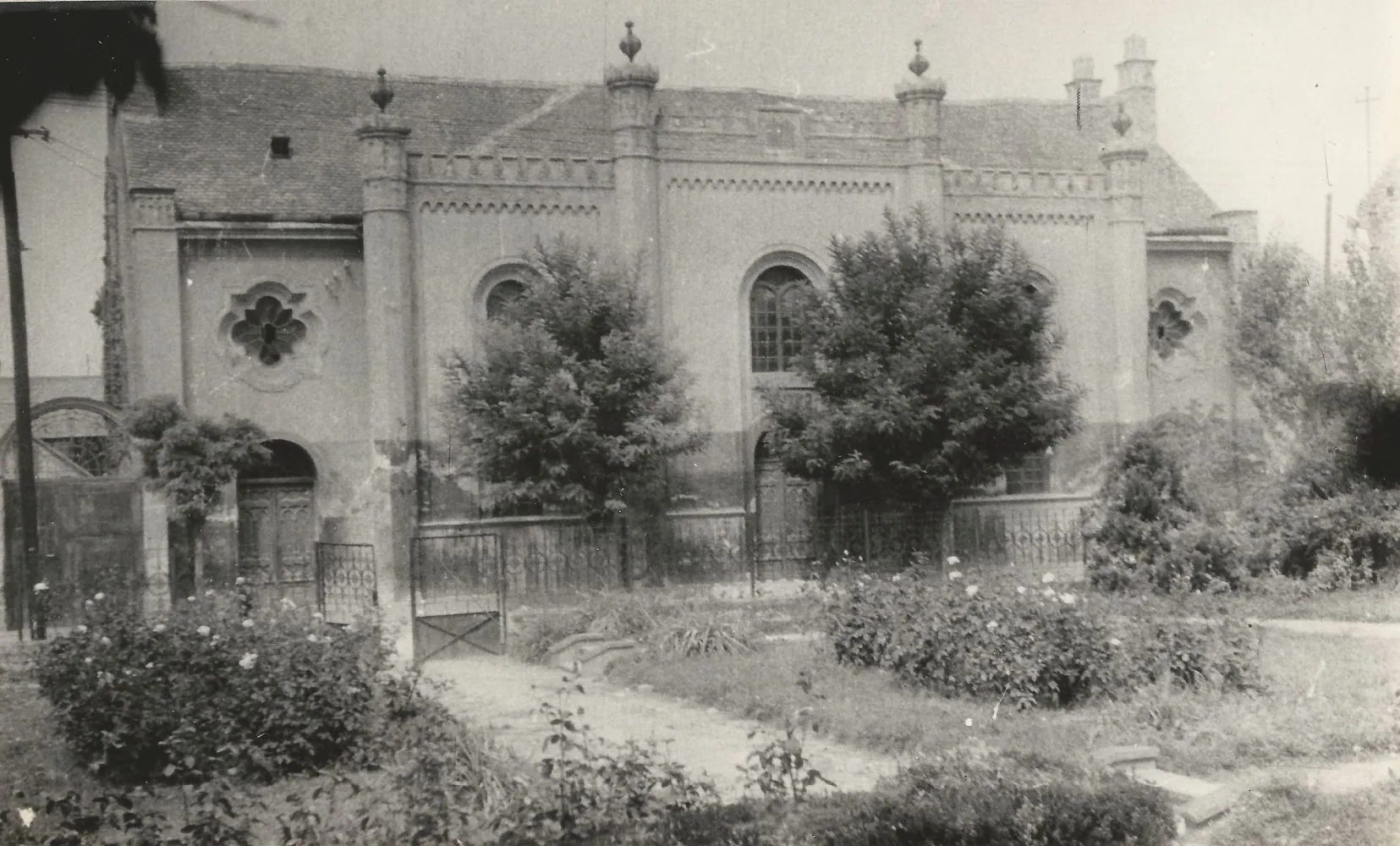
Mohács Synagogue
The Mohács Synagogue stood on Eötvös Street in the old Jewish quarter of this Danube town in southern Hungary. Dedicated on 22 September 1864, it served a Neolog community that was deported in 1944. The Communist town council bought the building in the 1960s and demolished it; a public library opened on the site in 1971.
Mol Synagogue
Mol, a small town on the Bačka bank of the Tisza, had a synagogue completed in 1892. Its congregation was destroyed in the Holocaust. After the war the empty building served as a warehouse, and it was demolished in 1960 under Communist rule; who carried out the demolition is not recorded.
Molenbeekstraat Synagogue, Sittard
Sittard's first known synagogue was consecrated in 1725 in the Molenbeekstraat, with the permission of the town authorities. It served the Jewish community of Sittard and its surroundings for more than a century, until a larger synagogue opened in the Plakstraat in 1853. The old building survived until 1963, when it was demolished.
Monnickendam Synagogue (1814)
Monnickendam's synagogue of 1814 was a house bought from the Mol family, in whose home services had been held, and fitted out for worship by a congregation of a few dozen. It burned down on 27 March 1894. A brick synagogue with a stepped gable replaced it on the same plot within six months.
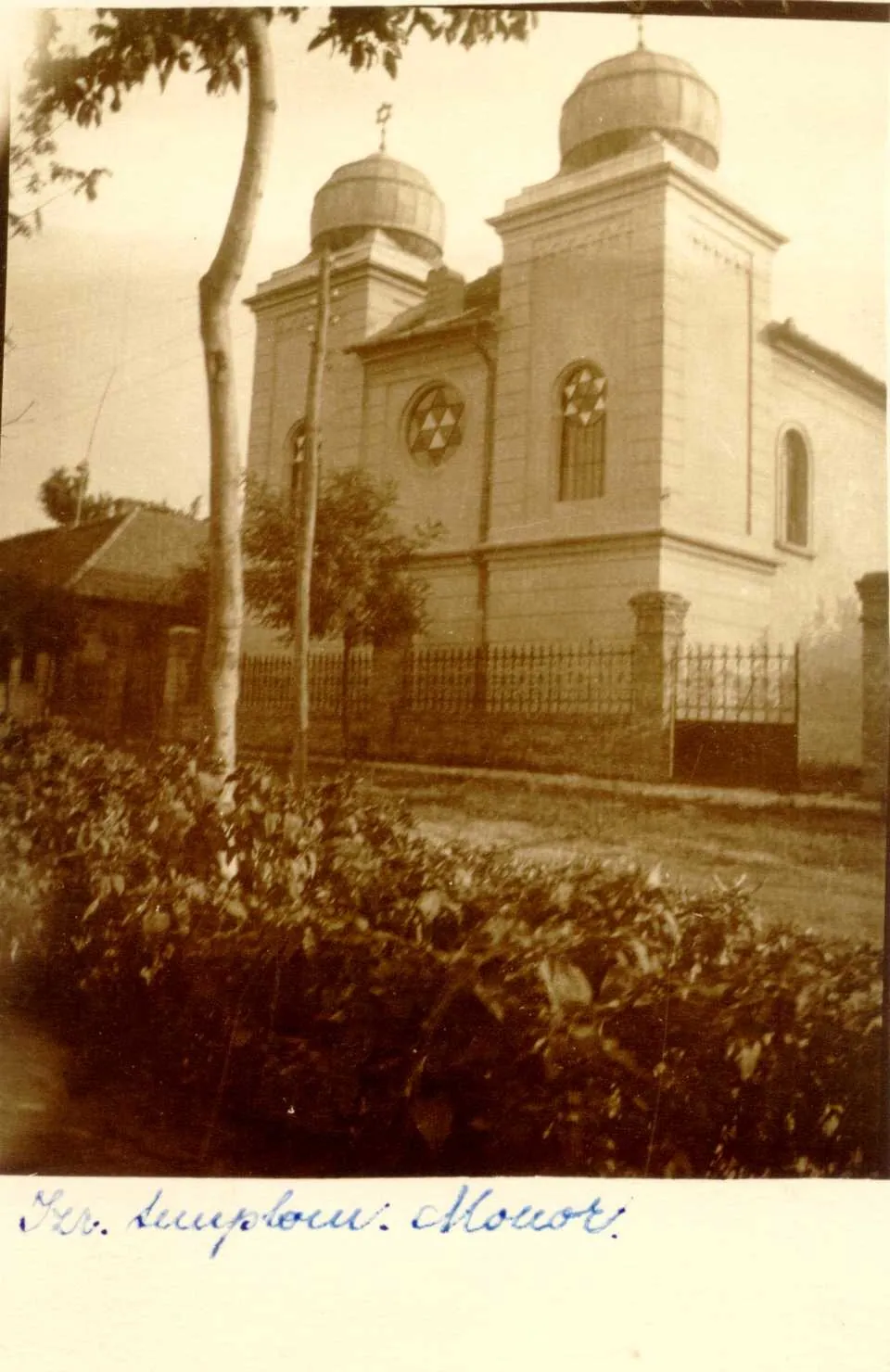
Monor Synagogue
Monor's Neolog synagogue, built in 1863 and enlarged with twin onion-domed towers in 1899, stood on today's Dózsa György utca. Hungarian gendarmes and Nazi German SS troops wrecked its interior in 1944, when the congregation was deported to Auschwitz. The ruined building was sold after 1956 and pulled down around 1960.
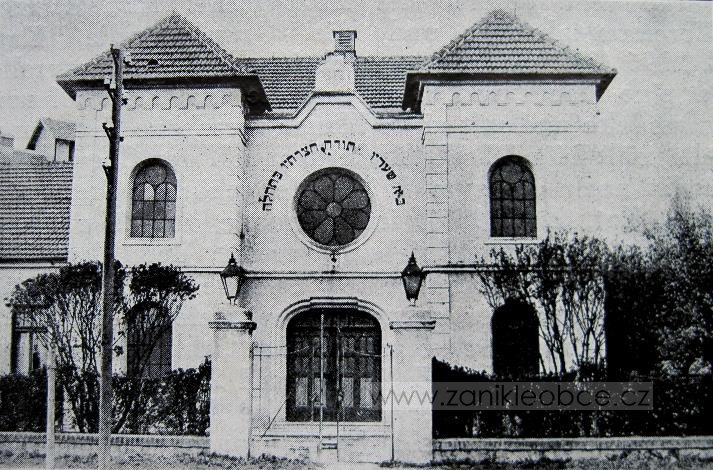
Moravské Budějovice Synagogue
Moravské Budějovice's Art Nouveau synagogue was built in 1910 for a small Jewish community that had re-formed after 1848 and until then prayed in a prayer room. Its congregation was deported in 1942. After the war the building served as a warehouse, and in 1977, under Communist rule, it was demolished during construction of the town's bus station.
Moravský Krumlov Synagogue
The synagogue of Moravský Krumlov (Mährisch-Kromau) in South Moravia stood in the town's Jewish quarter, home to a community recorded from 1402. The last Jewish families were expelled in 1938. The synagogue was destroyed in the fighting of spring 1945, and its ruin was pulled down soon afterwards.

Mosonmagyaróvár Synagogue (Moson)
The Status Quo community of Moson, now part of Mosonmagyaróvár in north-western Hungary, built its galleried synagogue from 1862 to plans by Károly Bendl. It outlived the deportation of its congregation in June 1944 and was repaired by survivors, but was later demolished; neither the year nor the body responsible is recorded.
Mostová Synagogue
The Jews of Mostová, a Hungarian-speaking village near Galanta in south-western Slovakia, built a small synagogue or prayer house in the second half of the nineteenth century. It stood beside the present Slovak-language primary school and was demolished in the 1950s; who pulled it down is not recorded, and no picture of it has been found.

Murska Sobota Synagogue
Murska Sobota's synagogue, designed by Budapest architect Lipót Baumhorn and opened on 31 August 1908, was the centre of Jewish life in Prekmurje and later of all Slovene Jewry. In April 1944 the town's Jews were assembled there for deportation to Auschwitz; the Communists demolished the building in 1954.
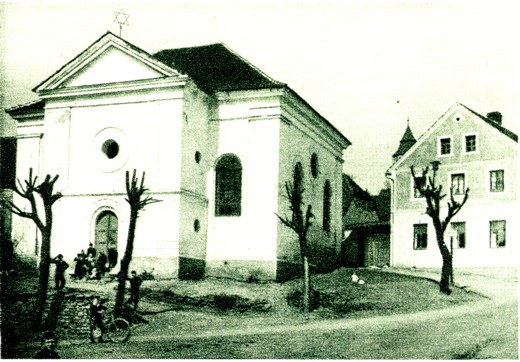
Mutěnín Synagogue
The synagogue of Mutěnín (Muttersdorf), a village west of Domažlice, was a classicist hall built in 1860 to replace a wooden synagogue of the 1660s and thoroughly rebuilt in 1923. The dwindling congregation dissolved in 1938, and the building was destroyed under Nazi rule; one source says the Nazis blew it up in 1938.
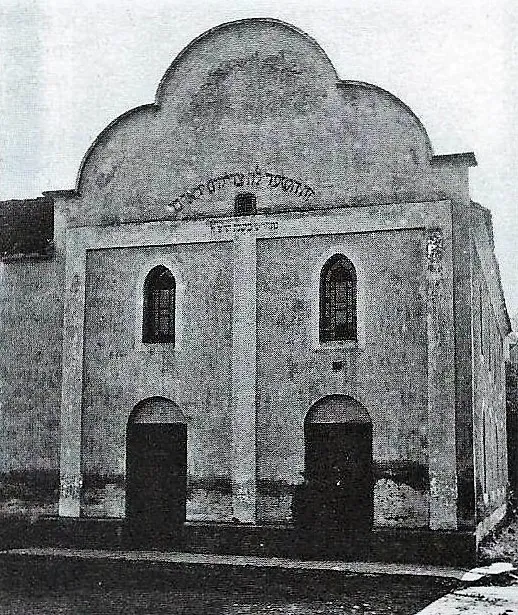
Myjava Synagogue
The synagogue of Myjava, a small town in western Slovakia, was a gabled hall with a Hebrew inscription on its front, dated 1791 by local sources and the mid-1840s by others. Its congregation was deported in 1942 and 1944, and the empty building was demolished in 1964-1966 under Communist rule.
Mágocs Synagogue
The synagogue of Mágocs, a small market town in the Hegyhát area of Baranya county, was built in 1846 and restored in 1906 for a Jewish community of between 100 and 170 people. Its congregation was destroyed in the Holocaust, and the building was gone by the 1980s; when and by whom it was demolished is not recorded.
Mándok Synagogue
Mándok's Orthodox synagogue, dated 1861 by most sources, stood on Petőfi utca with a ritual bath, a school and the rabbi's house around it. Its congregation of about 400 was taken to the Kisvárda ghetto in April 1944 and deported to Auschwitz. The building was destroyed in 1963; who pulled it down is not recorded.
Mór Synagogue
The synagogue of Mór, a market town in Fejér county, was built in 1802 with a donation from Salamon Rosenthal and his wife, altered in 1861 and enlarged in 1906. It served its congregation until the deportations of 1944. It was demolished at an unrecorded date before the 1980s; who pulled it down is not known.
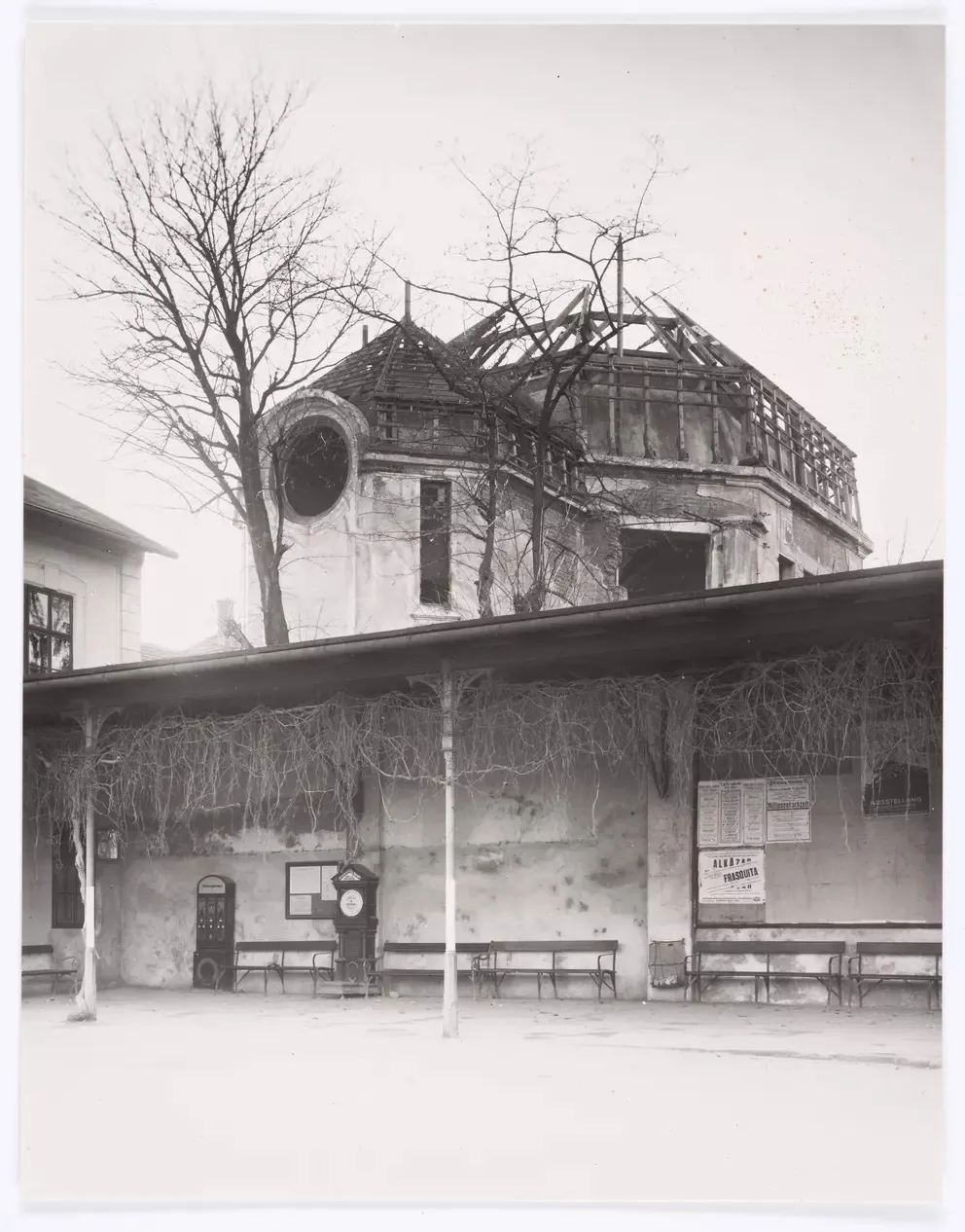
Mödling Synagogue
The synagogue of Mödling, south of Vienna, was designed by Ignaz Nathan Reiser and opened in August 1914 on Enzersdorferstraße. On 10 November 1938 a Nazi mob wrecked its interior and the building burned out. The congregation was destroyed in the Holocaust, and the roofless ruin stood until it was removed in November 1987.
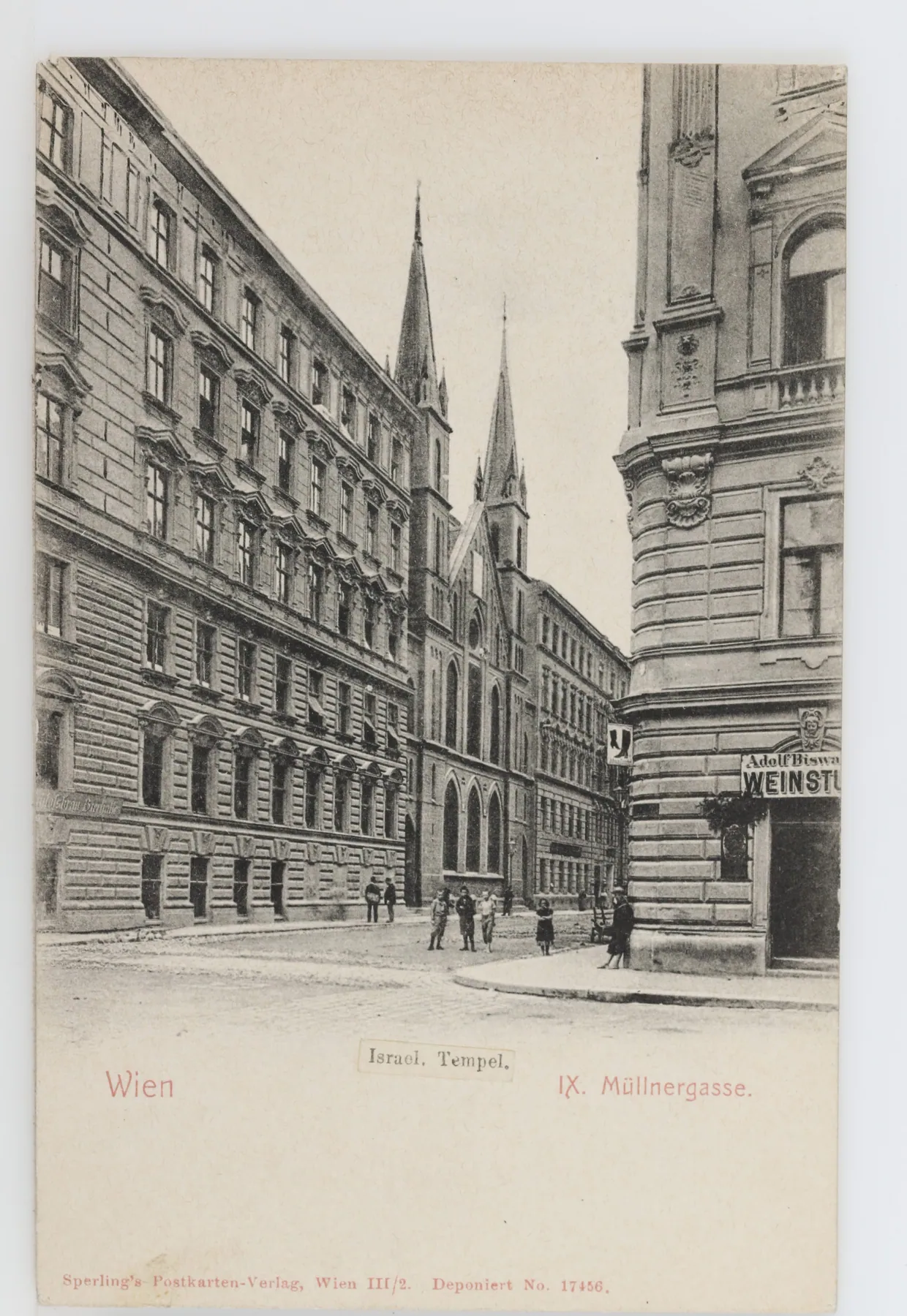
Müllnertempel, Vienna (Müllnergasse Synagogue)
The Müllnertempel was a Gothic Revival brick synagogue with twin spires, built in 1888-89 to designs by Max Fleischer for a prayer-house association in Vienna's Alsergrund district. Nazi SA men wrecked and burned it on 10 November 1938, and the shell was demolished in 1939; housing has stood on the plot since the 1970s.
Mělník Synagogue
Mělník's neo-Romanesque synagogue was built in 1861-62 in Bezručova Street in the northern suburb of Záduší, where the town's modern Jewish community had settled after 1848. It served until the Second World War, when the congregation was deported and almost entirely murdered. After the war it was a cowshed and hayloft, and it was demolished before 1970.
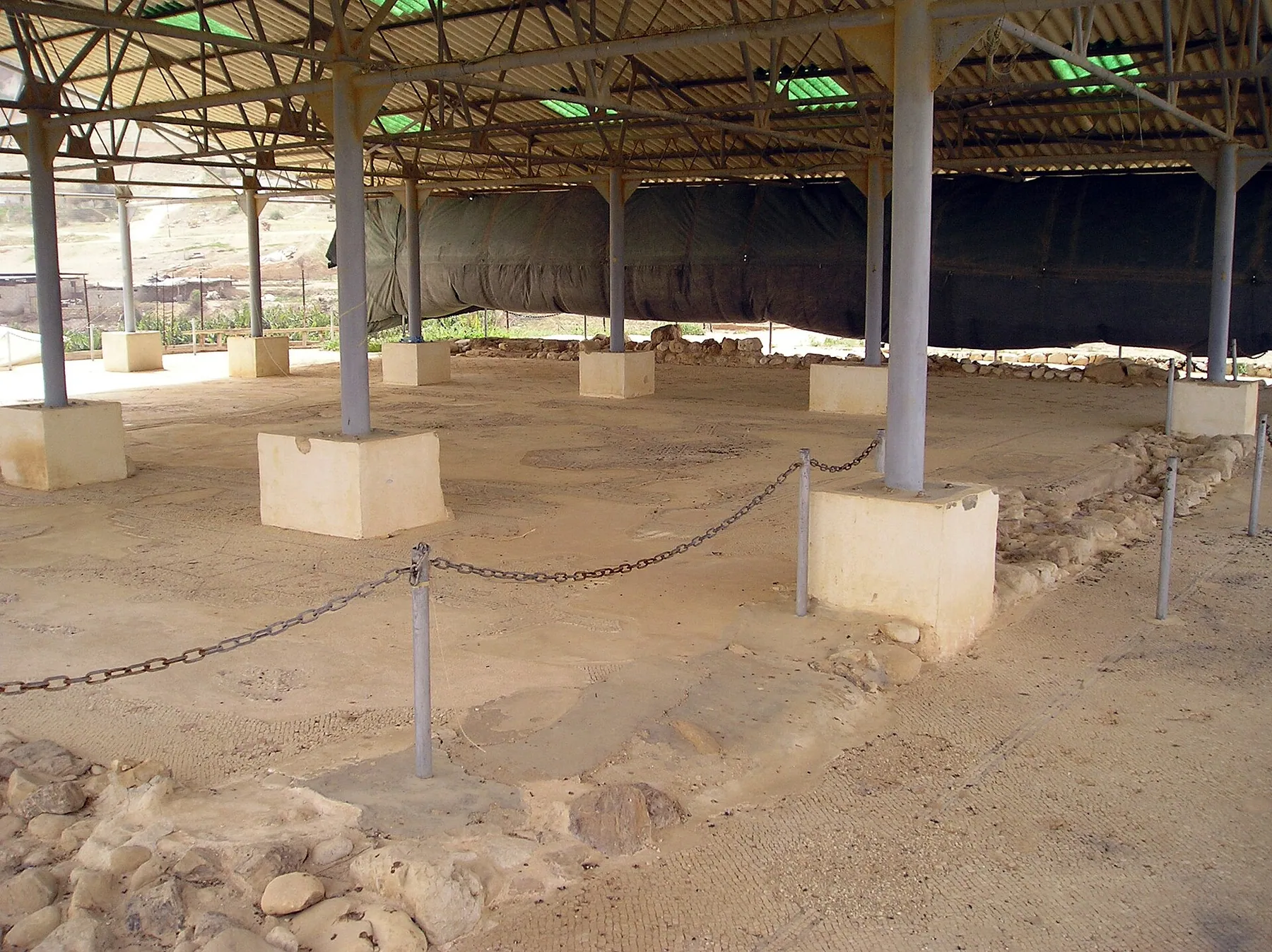
Na'aran Synagogue
The synagogue of Na'aran, a Jewish village north-west of Jericho, was built in the sixth century CE and paved with mosaics showing a zodiac, Daniel between two lions and two menorahs. The figures were later deliberately removed. A shell uncovered the floor in 1918; when and how the building ended is unknown.
Naarden Synagogue
The synagogue on the Gansoordstraat inside the fortress town of Naarden was consecrated in 1727 by Portuguese Jews from Amsterdam and later used by an Ashkenazi congregation, which received it formally in 1887. Services stopped after 1917, the congregation was dissolved in 1933, and the neglected building collapsed in 1935.

Nabratein Synagogue
The synagogue of Nabratein, in the Biriya forest north of Safed, went through several phases from the second century CE. The excavators link the end of its earlier halls to the revolt of 350-352 and the earthquake of 363. A dated lintel records a rebuilding in 564 CE. Its excavated ruins stand today, with a partly reconstructed façade.
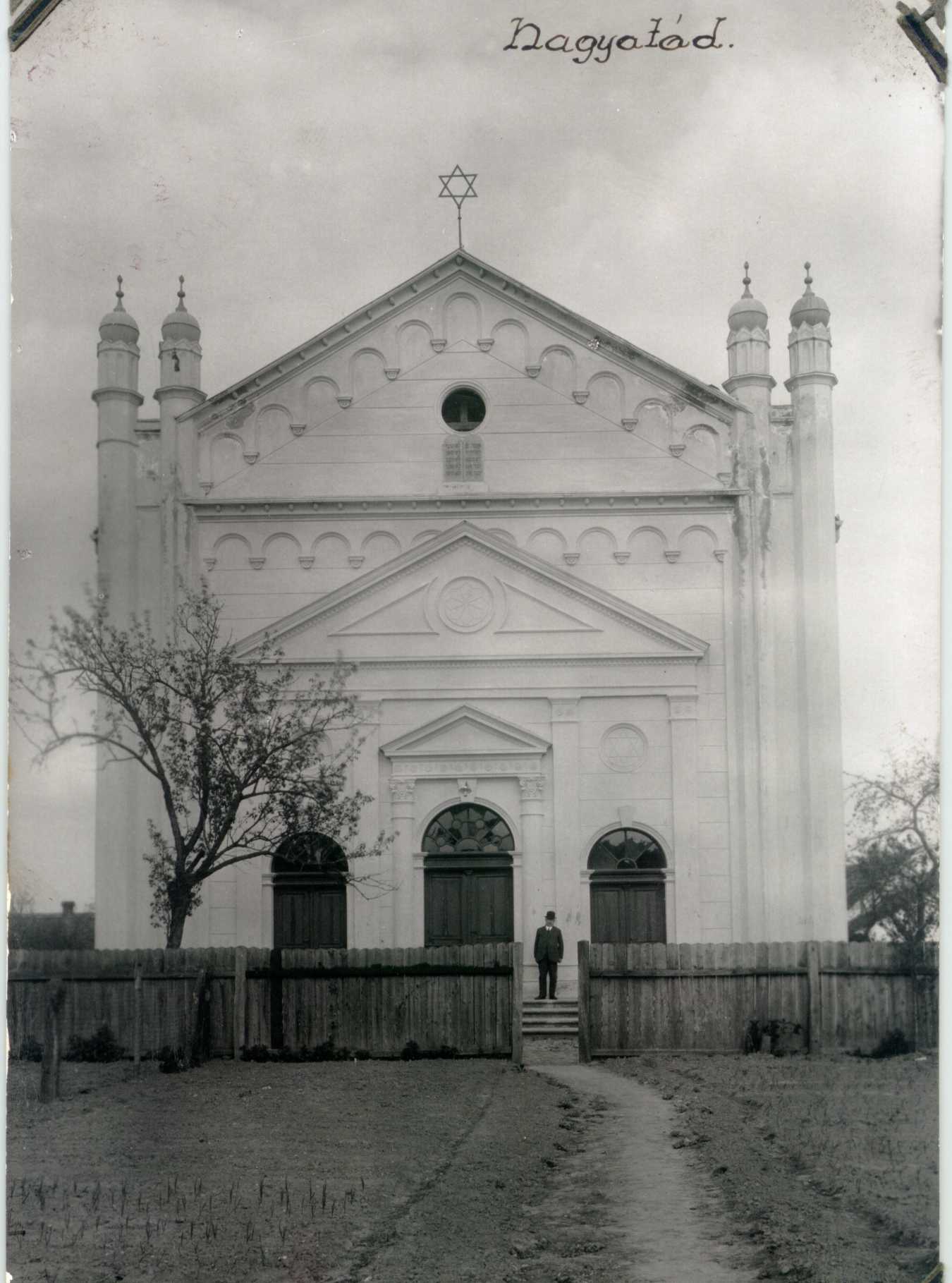
Nagyatád Synagogue
The Neolog synagogue of Nagyatád in Somogy county was a gabled building with four slender, domed corner turrets and an organ above the Ark. In 1944 the town's Jews were assembled in it before deportation. It was later destroyed and its site cleared; the sources found do not record when or by whom.
Nagydorog Synagogue
Nagydorog, a village in Tolna county, had a small Jewish community of 97 people in 1910 and 82 in 1941. Its synagogue, built after 1912 at what is now Táncsics utca 4, was recorded as demolished in Anikó Gazda's survey of 1980-87. When it was pulled down, and by whom, is unknown.
Nagyecsed Synagogue
The synagogue of Nagyecsed, a small town in Szatmár near Mátészalka, was built around 1850 for a pious Orthodox community that grew to about 600 people. Its congregation was deported in 1944, and the few survivors who returned found the building destroyed. No photograph or plan of it has been found.
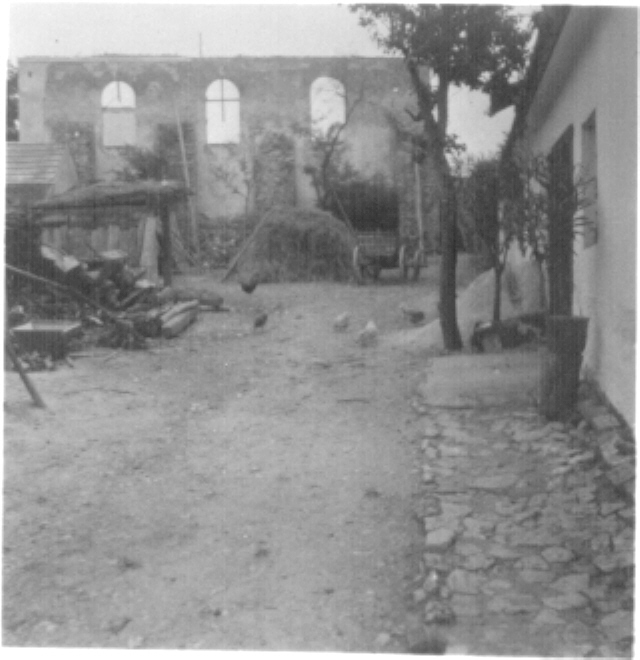
Nagyvázsony Synagogue
Nagyvázsony's synagogue, an eighteenth-century hall renovated in 1885, served a small Neolog community in the hills north of Lake Balaton. Its Jews were taken to the Veszprém ghetto in 1944 and deported. By 1955 the building was a roofless shell, half demolished; it had vanished by the 1980s.
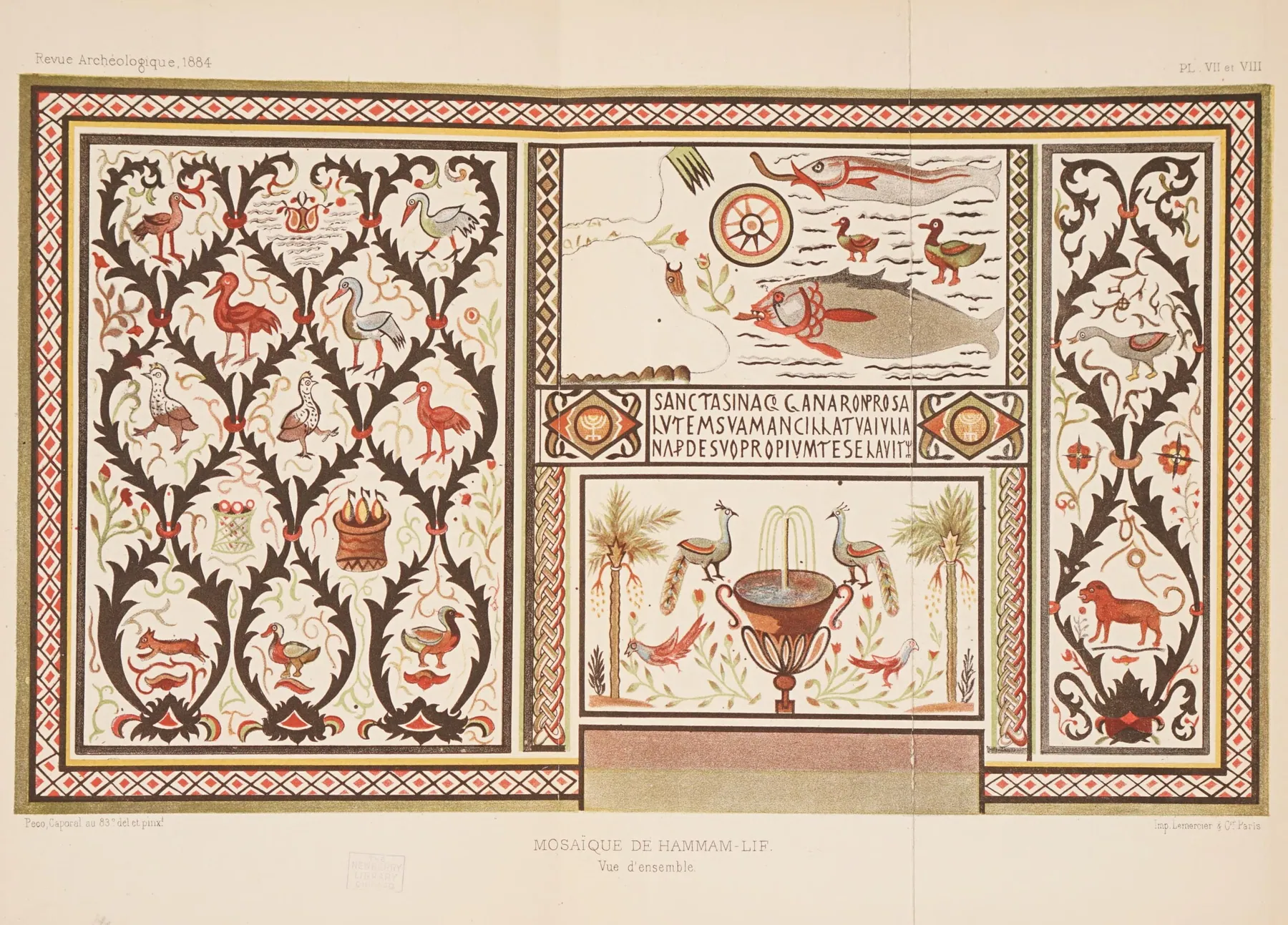
Naro Synagogue (Hammam-Lif)
The synagogue of ancient Naro, at Hammam-Lif near Tunis, was a many-roomed building with mosaic floors and three Latin inscriptions, one calling it the holy synagogue of Naro. French soldiers under Captain Ernest de Prudhomme uncovered it in February 1883; the floors were soon cut up and dispersed, and the building itself can no longer be found.
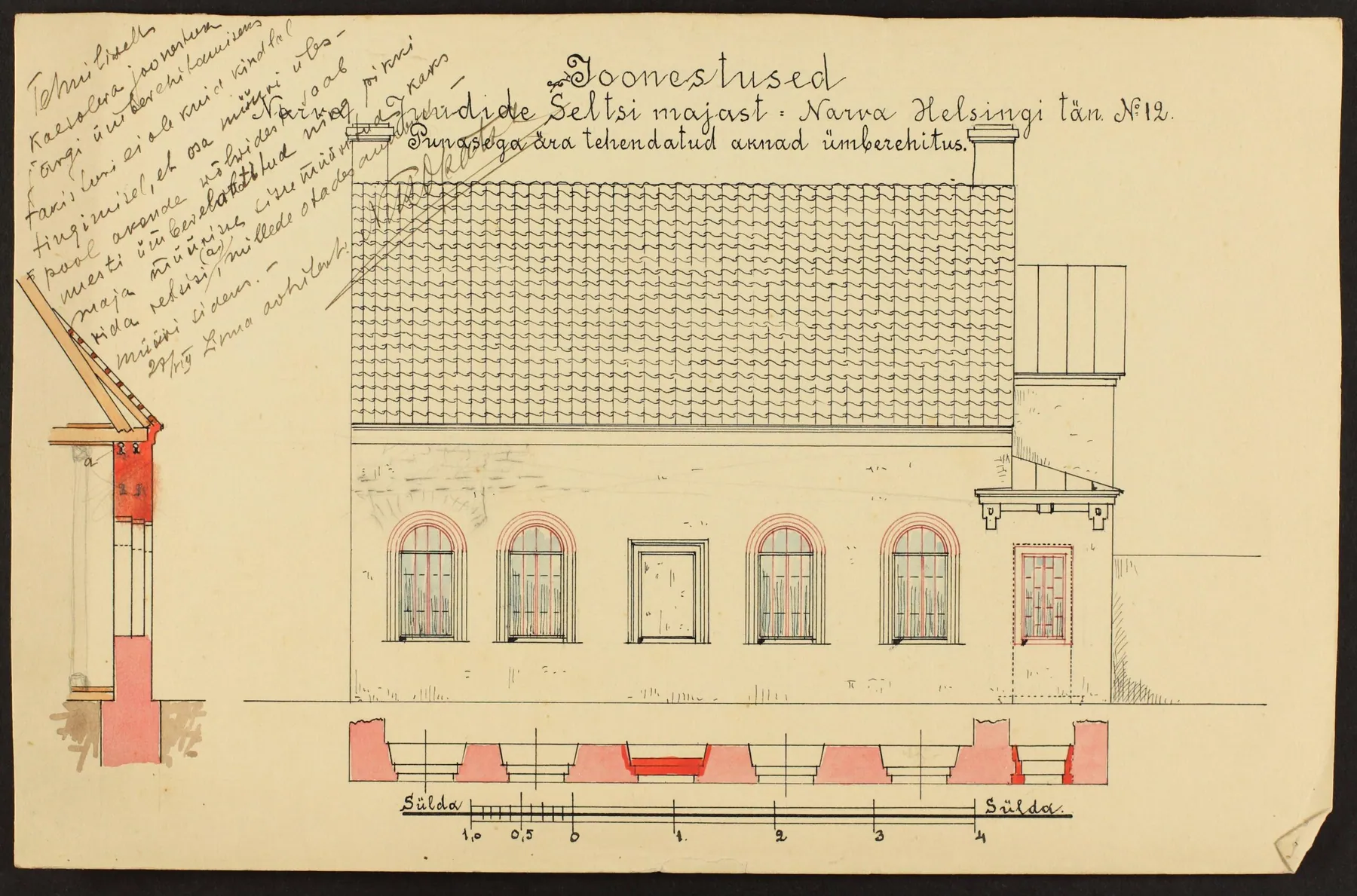
Narva Synagogue (Helsingi Street 12)
From 1920 Narva's Jews prayed in an old limestone house at Helsingi Street 12 in the Baroque Old Town, which they bought in 1922 and rebuilt as a synagogue and community house by 1935. Its people were murdered or scattered in 1941; the building was wrecked in the 1944 fighting and its ruins were cleared after the war.

Nazna Wooden Synagogue
Nazna, the Hungarian Náznánfalva near Târgu Mureș, had a wooden synagogue built in 1747 and extended in 1785, its walls painted with prayers, psalms and zodiac signs. Abandoned as the village's Jews moved away, it had collapsed by about 1940; rescued panels survive in the Hungarian Jewish Museum in Budapest.
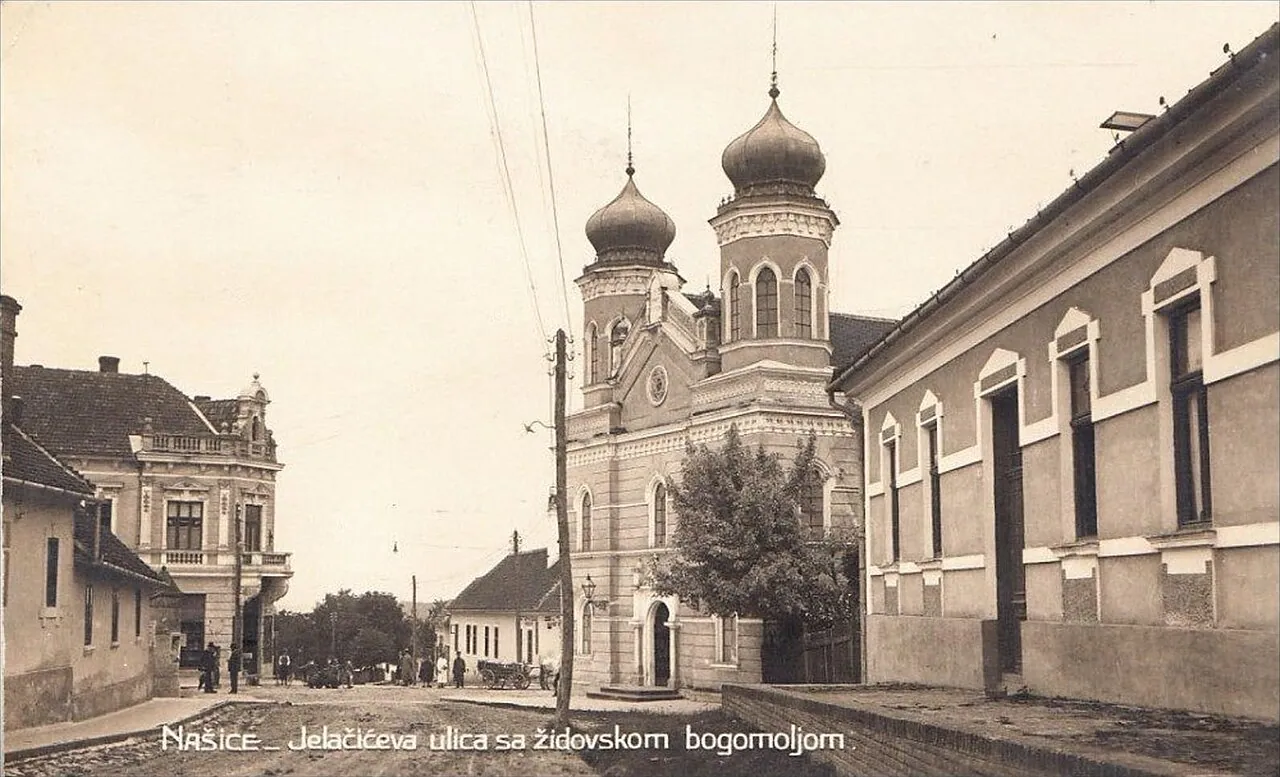
Našice Synagogue
Našice's synagogue, a two-towered building in the late Rundbogenstil, was put up between 1893 and 1898 on Jelačićeva Street near the main square for a Jewish community of merchants and craftsmen. It was demolished in the spring of 1942, under the Ustaše regime of the Independent State of Croatia, after the community's deportation; the demolishers are not named.

Neolog Synagogue of Bratislava
The Neolog synagogue of Bratislava, a twin-towered Moorish building by the Viennese architect Dionys Milch, stood on Rybné námestie beside St Martin's Cathedral from 1895. Its congregation was destroyed in the deportations of 1942. Nationalised under Communist rule, it was bought by the city road administration and demolished in April 1969 to clear the approach to the new Danube bridge.
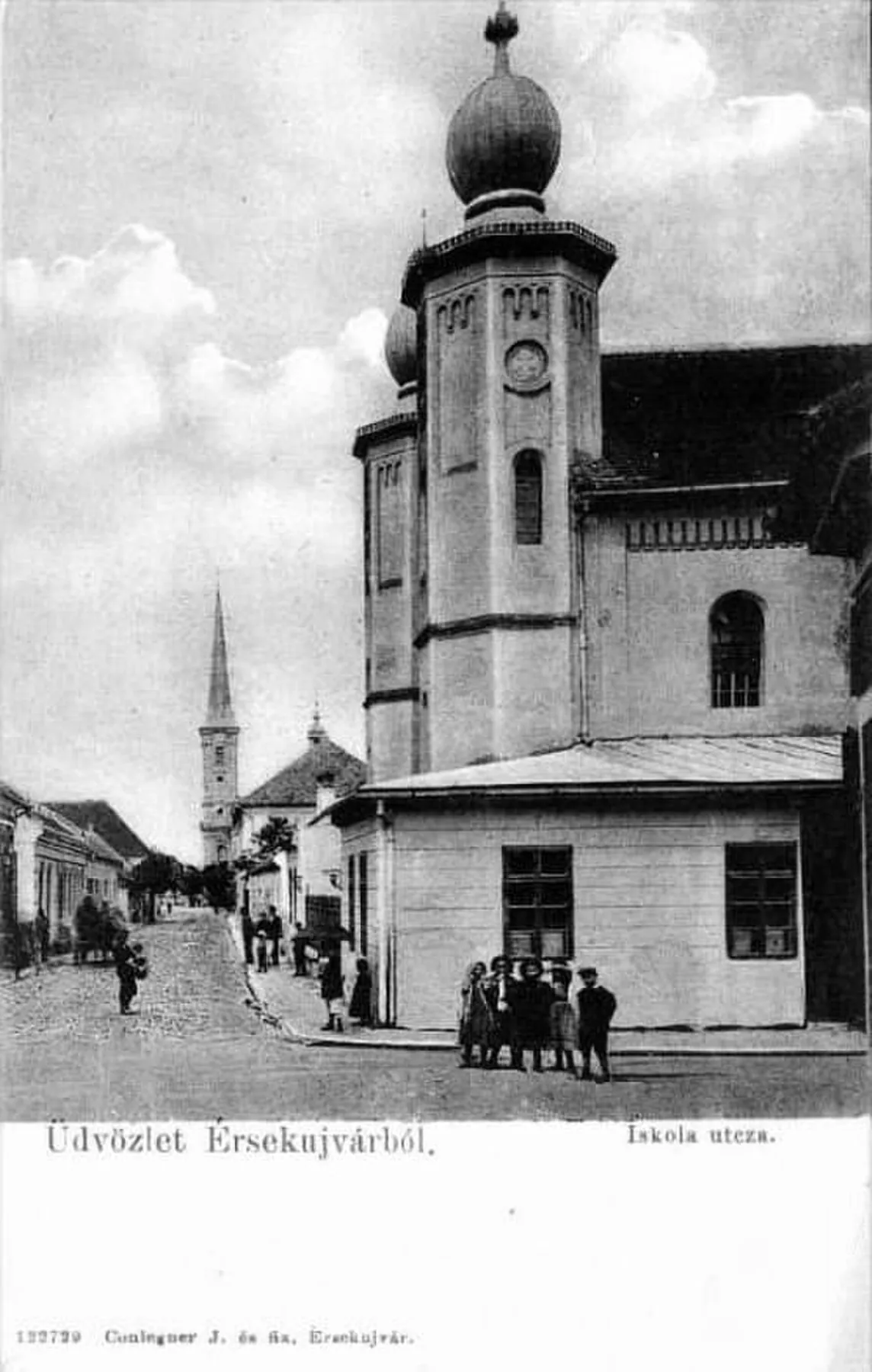
Neolog Synagogue of Nové Zámky
The first synagogue of Érsekújvár, today Nové Zámky, was built around 1859-1860 and later served the town's Neolog congregation. Modelled on Budapest's Dohány Street Synagogue, it had two domed towers. Allied air raids on the town in 1944-1945 damaged it, and its remains were demolished after the war.
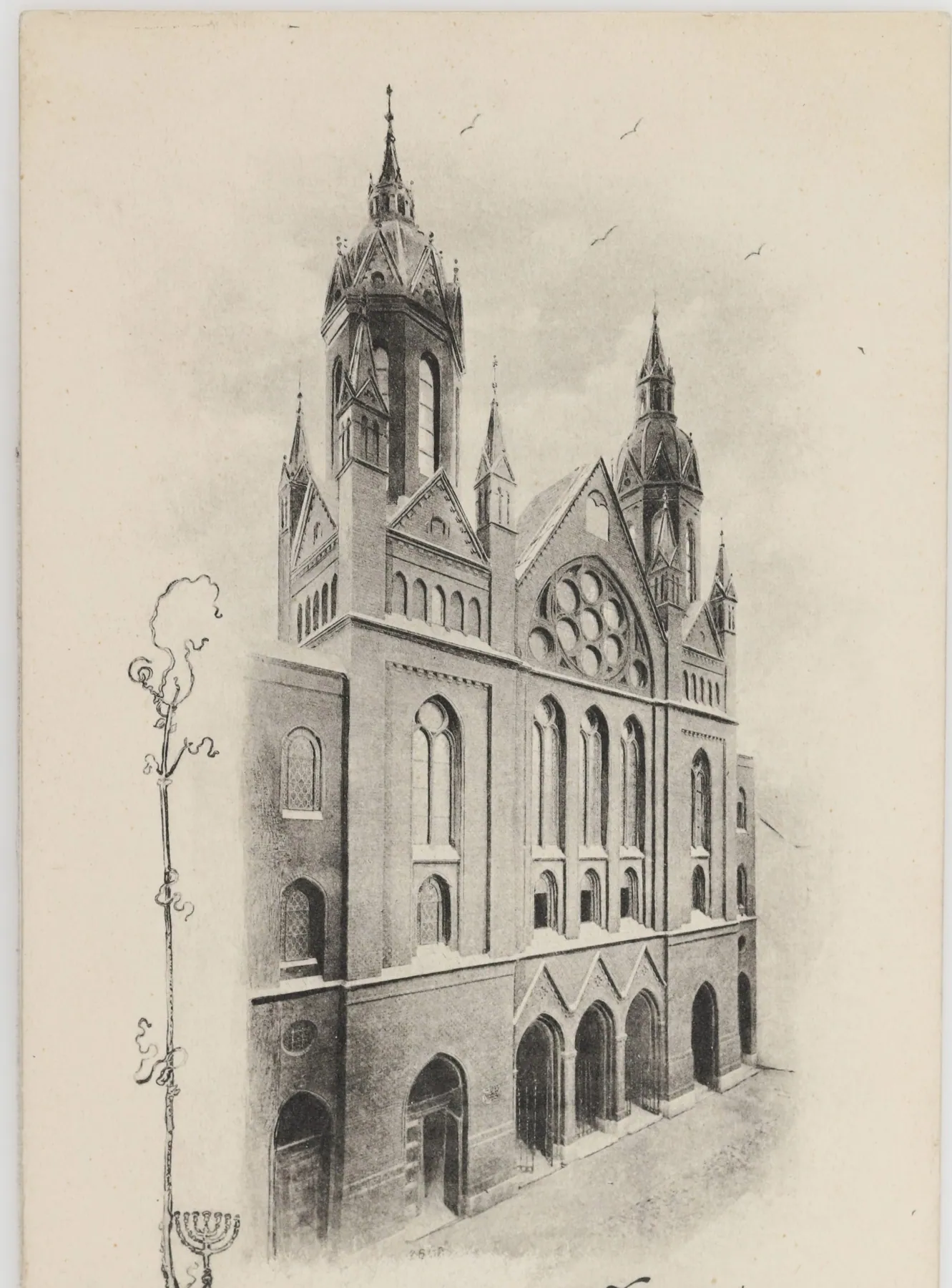
Neudegger Tempel (Neudeggergasse Synagogue), Vienna
The Neudegger Tempel at Neudeggergasse 12 in Vienna's Josefstadt was a twin-towered brick Gothic synagogue designed by Max Fleischer, funded mainly by a bequest of Baron Moriz von Königswarter and consecrated on 16 September 1903. During the November pogrom on 10 November 1938 Nazis desecrated it, threw its books into the street and set it on fire; the burnt-out building was demolished in 1939–1940.

Neunkirchen Synagogue
The synagogue of Neunkirchen in Lower Austria, a small round-arched hall on the Rohrbacher Straße, was built in 1883 for a community re-founded by migrants from western Hungary. The Nazis wrecked it in November 1938 and later used it to house Hungarian Jewish forced labourers. Left to decay after the war, it was demolished in 1984.
Neuschotz Temple, Iași
The Neuschotz Temple, also called Beit Yaakov or Beit Hadaș, was a modern synagogue built in 1865 in the centre of Iași for the city's well-to-do Jews and named after its donor, Jacob Neuschotz. The future chief rabbi Jacob Itzhak Niemirower preached there from 1896. It was bombed in 1944 and later demolished.
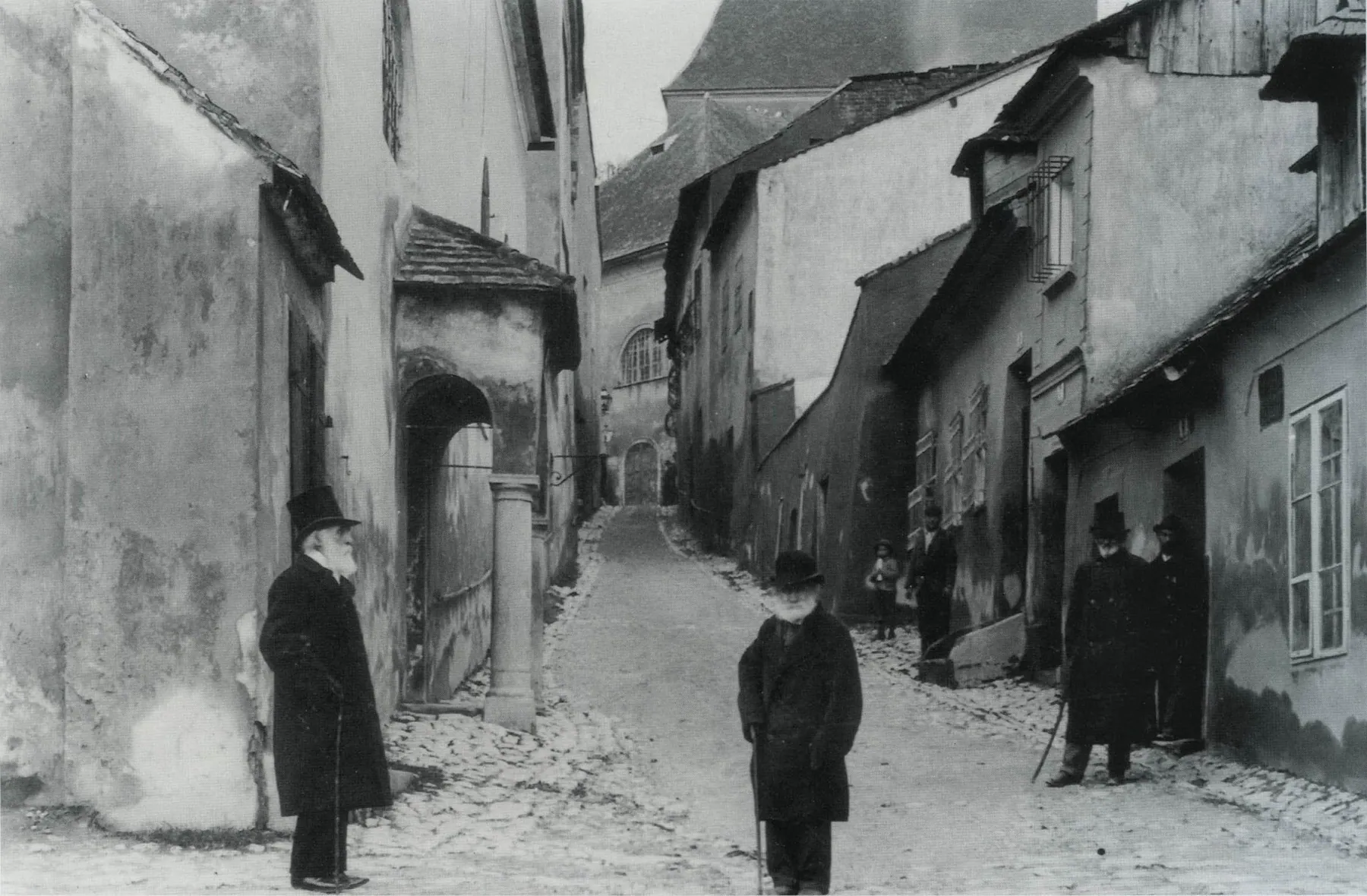
Neuschul (New Synagogue), Mikulov
The Neuschul was one of the two synagogues of Nikolsburg, the seat of Moravia's chief rabbis, still in use when the dozen older prayer houses had closed. It stood at the corner of the Tempelgasse below the surviving Altschul. Its congregation was destroyed in the Holocaust, and the Communist authorities demolished it in the 1970s.

New Synagogue in Holešov
Holešov's New Synagogue, designed by the Viennese synagogue architect Jakob Gartner and consecrated on 3 September 1893, served one of Moravia's oldest and most learned Jewish communities alongside the older Šach Synagogue. Nazi arsonists, aided by Czech collaborators, burned it in the summer of 1941, and its ruins were demolished in June 1942.

New Synagogue of Bamberg
Bamberg’s monumental 1910 synagogue made Jewish communal life unmistakably visible in the city. Nazis looted and burned it during the November 1938 pogrom, and the surviving structure was demolished.

New Synagogue of Brno
Brno's New Synagogue, a Neo-Romanesque basilica by the Viennese architect Max Fleischer, opened in September 1906 behind a community house on Koliště. The Nazis turned it into a store for plundered Jewish property and its congregation was deported. Bomb-damaged and used as a warehouse after the war, it was demolished in 1985-86 for a hospital wing.
New Synagogue of Den Helder
Den Helder's synagogue on the Kanaalweg, near the Zeedijk, was inaugurated in August 1928 on the site of the congregation's 1837 synagogue. It served for little more than a decade: during the occupation the Nazis demolished it, together with the whole harbour quarter, to build coastal fortifications. The town's remaining Jews were deported in 1942.
New Synagogue of Humenné
The New Synagogue was the second of two large synagogues serving the Jews of Humenné in north-eastern Slovakia. Survivors repaired a synagogue after 1945, but most emigrated in 1948-49. The Communists demolished the building in the 1970s and put up a district Communist Party headquarters on its site.
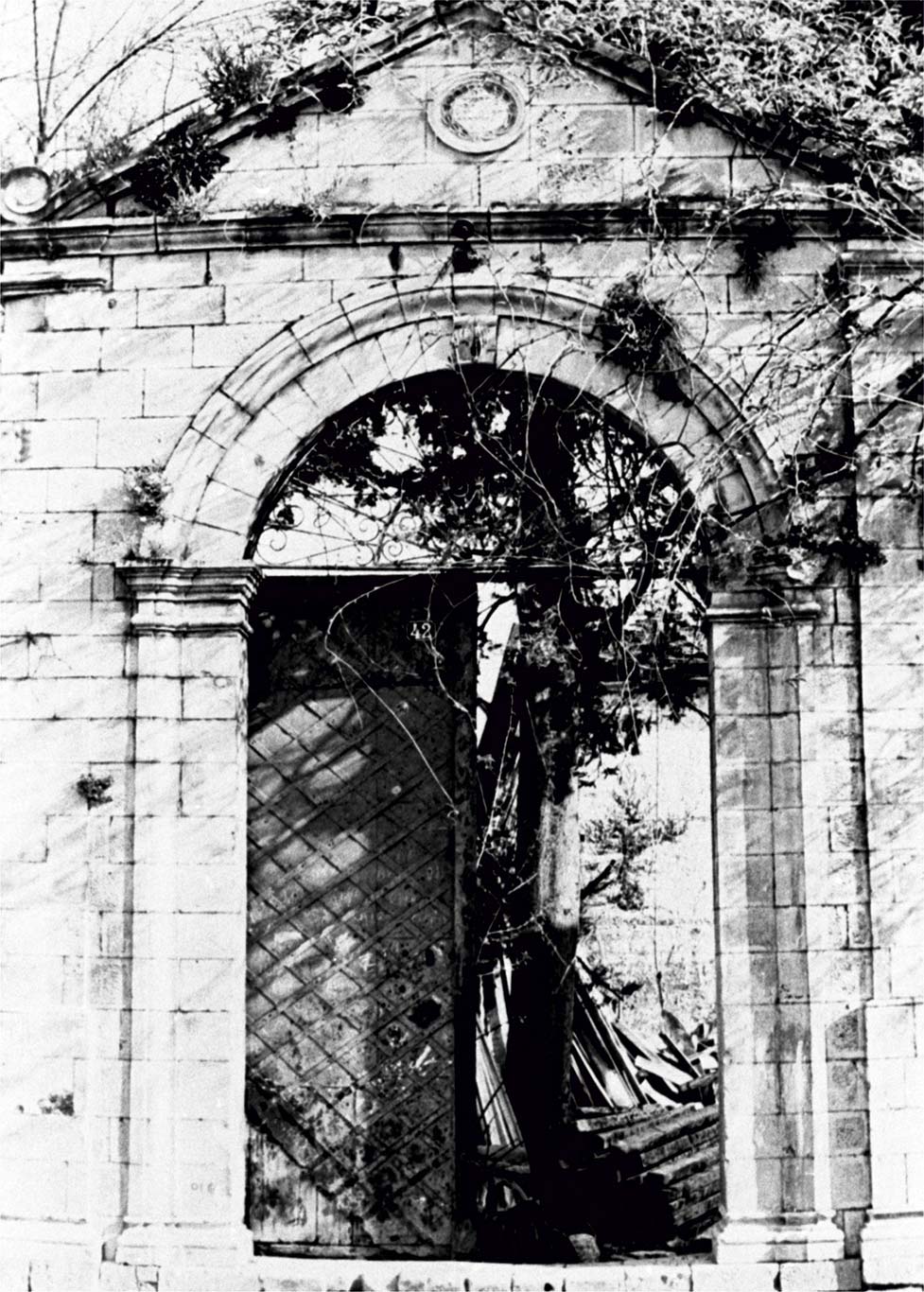
New Synagogue of Ioannina (Kahal Kadosh Hadash)
The New Synagogue, Kahal Kadosh Hadash, stood outside the castle walls of Ioannina at the end of the Megali Rouga, the main street of the Jewish quarter. Nazi German forces used it as a prison or stable in 1943–44 and wrecked it. The ruin was demolished in the 1960s and apartment blocks now occupy the site.
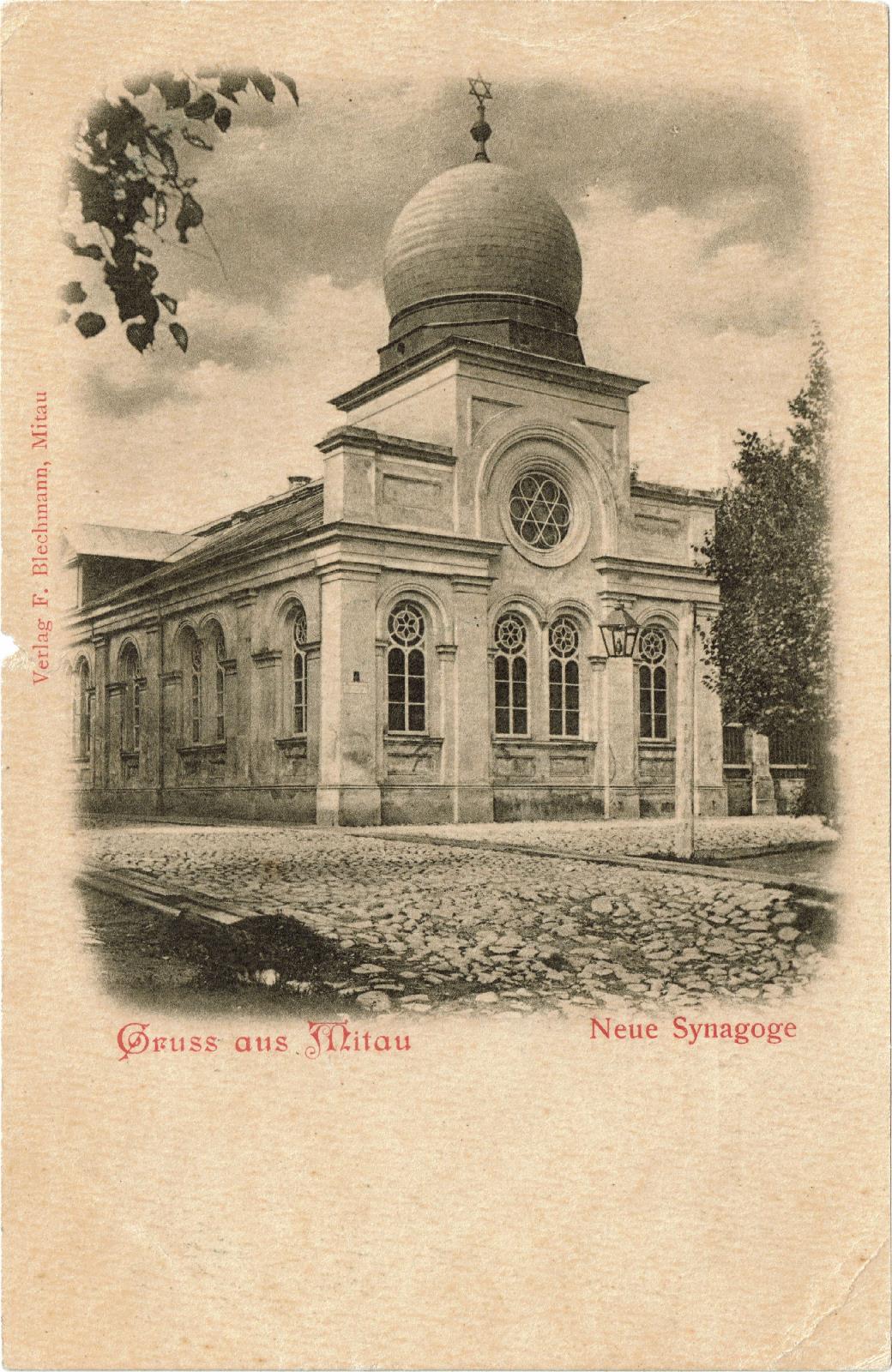
New Synagogue of Jelgava
Jelgava's domed New Synagogue, designed by city architect Oskars Bārs and built in 1877 beside the older Great Synagogue, was a landmark of the Driksa riverfront in the Courland capital Mitau. Nazi forces burned the synagogue complex on 3 July 1941, days after occupying the town, and cleared the ruins that autumn.
New Synagogue of Prague (Josefov)
The New Synagogue, or Nová škola, was founded in the late sixteenth century by Rabbi Isaac Wechsler as a private prayer house in Prague's Jewish Town. Burned in 1689 and 1754 and twice rebuilt, it was demolished in 1898 during the city's asanace slum clearance of Josefov; most of Prague's Jews were later murdered by the Nazis.
New Synagogue of Párovce, Nitra
Built in 1818 in classical style beside Nitra's older synagogue in the Jewish suburb of Párovce, this much larger building served the town's community and later its Orthodox congregation. Most of its worshippers were murdered in the Holocaust. It was pulled down when Communist Czechoslovakia cleared old Párovce for a housing estate.
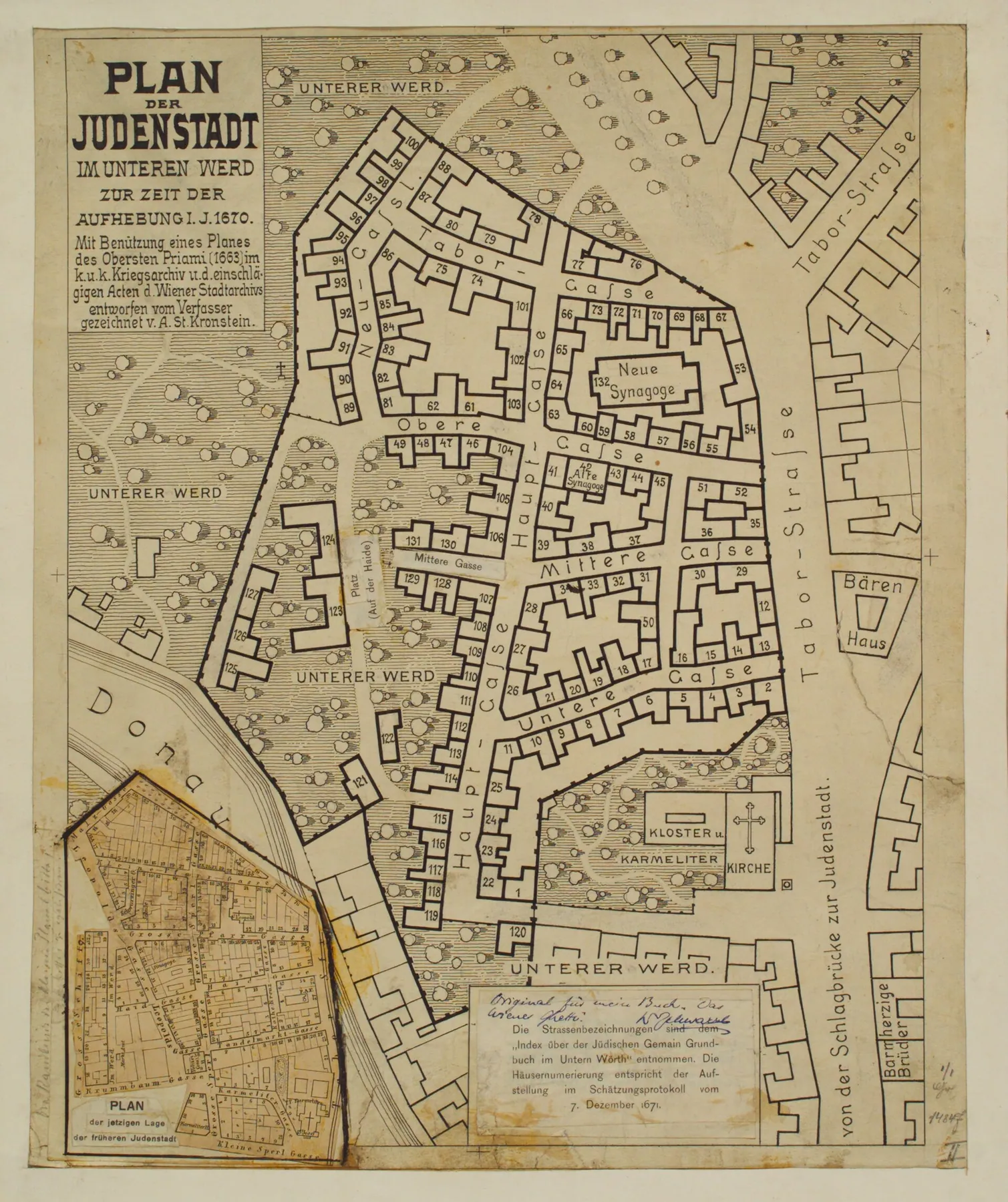
New Synagogue of the Vienna Judenstadt (Unterer Werd)
The New Synagogue was the main synagogue of Vienna's second ghetto, the Judenstadt in the Unterer Werd, endowed after 1650 by Zacharias Mayer Halewi. After Emperor Leopold I expelled the Jews in 1670, the building was either demolished or converted, sources disagree, and the Leopoldskirche rose on its site.
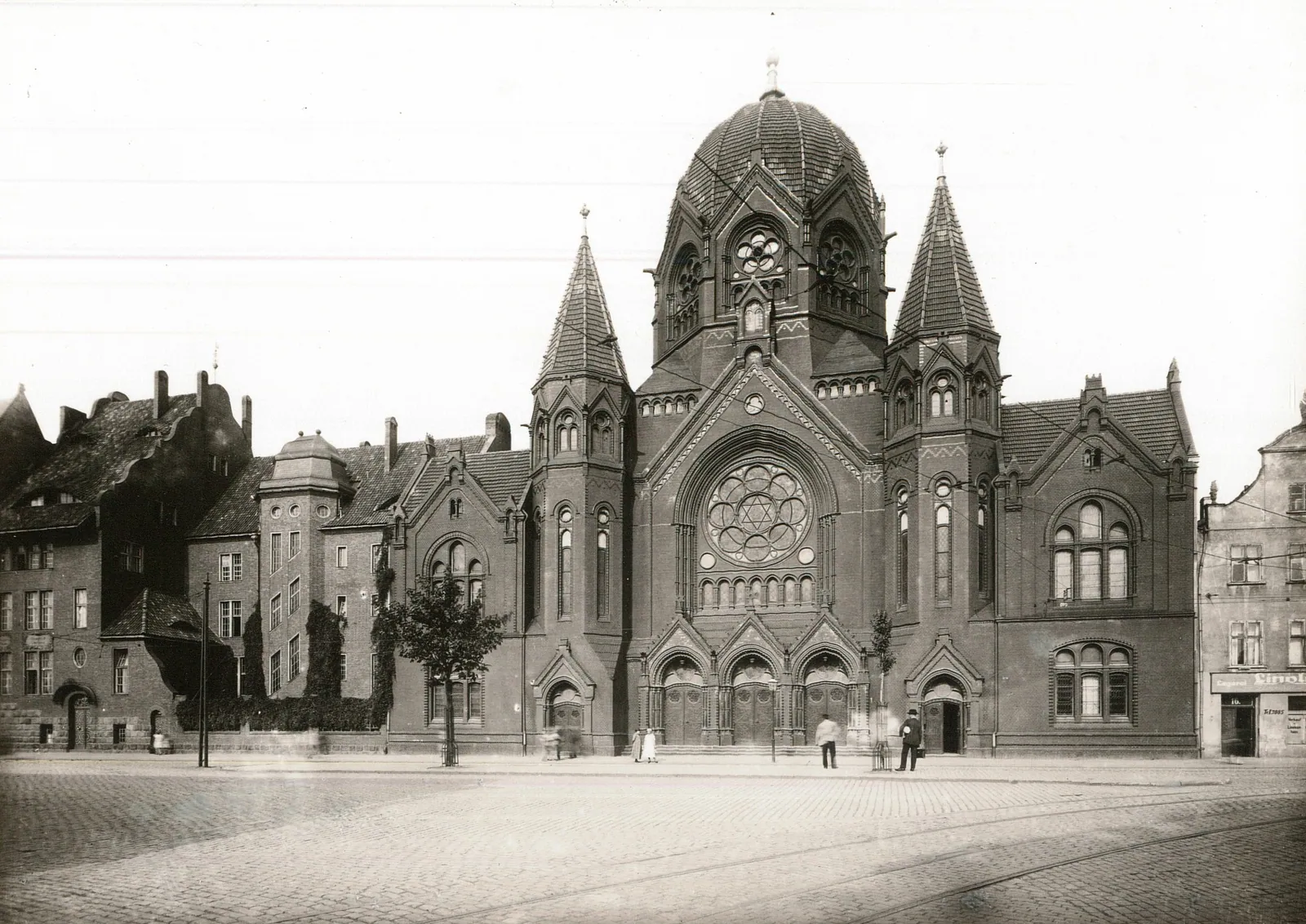
New Synagogue, Königsberg
The New Synagogue of Königsberg, a domed neo-Romanesque building by the Berlin firm Cremer & Wolffenstein, was consecrated on 25 August 1896 on the Lindenstraße, facing the cathedral island. It was wrecked and set on fire by the SS on Kristallnacht, 9–10 November 1938, during the Nazi pogrom. A new synagogue modelled on it opened on the same site in Kaliningrad in 2018.

New Temple, Banja Luka
The New Temple was the Sephardic synagogue of Banja Luka, built in 1936–37 on Jukićeva Street together with a Jewish cultural home and consecrated by Yugoslavia's chief rabbi, Isaac Alcalay. The Ustaše seized it in 1941 and turned it into a bar and brothel; Allied bombing destroyed the prayer hall in May 1944.
Nieuw-Amsterdam Synagogue
The small synagogue of Nieuw-Amsterdam (Veenoord), a peat-colony village in south-east Drenthe, served Jewish families there from 1899, although the village never won recognition as an independent congregation and remained under Emmen. Its members shared the fate of Drenthe's Jews in the Holocaust. The building, locally called the 'jodenkerkje', was demolished in 1970.
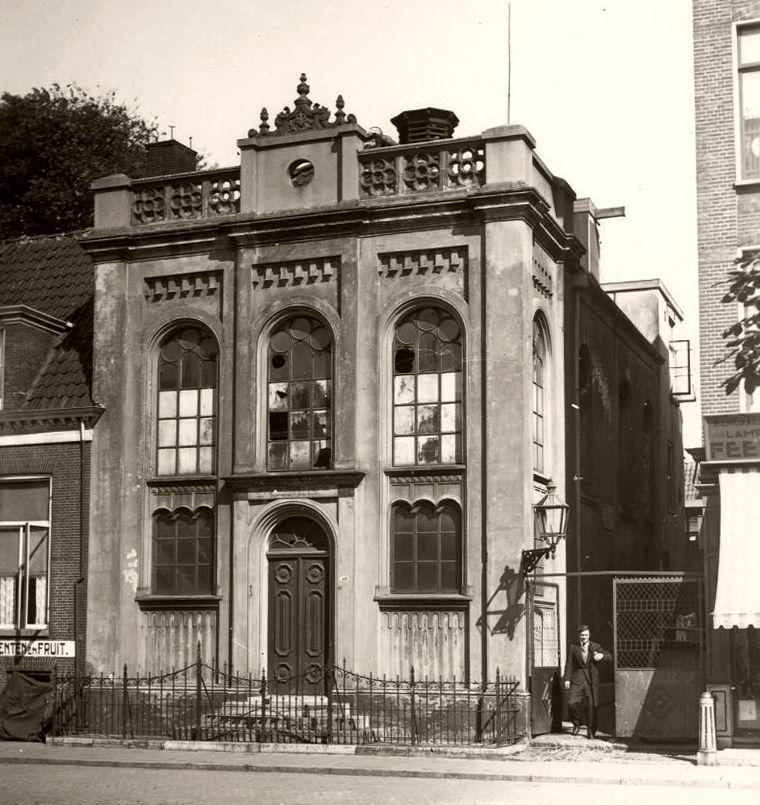
Nije Sjoel, Groningen
The Nije Sjoel on the Zuiderdiep was the synagogue of a traditionalist congregation that broke away from Groningen's main Jewish community in 1852 over reforms to worship. It served the separate congregation until the two groups reunited in 1881, stood unused by Jews afterwards, and was demolished in 1933.
Nižný Hrabovec Prayer House
Nižný Hrabovec, a farming village in the Vranov nad Topľou district of eastern Slovakia, had 86 Jews in 1837. They probably built a prayer house of their own in the first half of the nineteenth century. It disappeared soon after the Second World War; its appearance, exact site and the circumstances of its loss are not recorded.
Noordwolde Synagogue
The synagogue on the Hoofdstraat-West in Noordwolde, a village in the Stellingwerf district of southeastern Friesland, existed before 1786 and was one of only three synagogues in Friesland listed in 1789. As the small congregation dwindled it was sold in 1876 and demolished four years later; who pulled it down is not recorded.
Nova Gradiška Synagogue
Nova Gradiška's synagogue, a modest late-academic building designed by the local engineer Samuel Lang, was built in 1923-1925 on the street leading to the railway station. It was damaged or demolished in 1941 under Ustaša rule, when the town's Jews were murdered; the building, sold in 1949, no longer stands.
Nová Ves nad Váhom Synagogue
The synagogue of Nová Ves nad Váhom, a farming village on the Váh in western Slovakia, was built in 1796 under the Toleration Patent and was one of the older village synagogues of the Trenčín region. It was demolished in 1953, under Communist rule; no source names who ordered or carried out the demolition.

Nové Mesto nad Váhom Synagogue
The synagogue of Nové Mesto nad Váhom, a large round-arched hall in the old Jewish quarter, served one of the oldest and largest Jewish communities in Upper Hungary. Most of its congregation was deported in 1942 and 1944; the synagogue was burned during the war, and the surviving Jewish community dismantled the desecrated building after the war.
Nové Mesto nad Váhom Synagogue (1780s)
The synagogue consecrated in the 1780s served Nové Mesto nad Váhom, in the early nineteenth century one of the largest and most Jewish towns in Slovakia. It burned in the great town fire of 1856, together with a second synagogue and most Jewish houses. A new synagogue replaced it some years later.
Nové Sedliště Synagogue
The synagogue of Nové Sedliště (Neu Zedlisch), a village near Tachov in western Bohemia, was built in 1787-88 with a school attached for a well-off rural Jewish community. As families moved to the towns the congregation dwindled; the building was given up by 1911 and demolished in 1918. No picture of it has been found.

Nyírbátor Synagogue
Nyírbátor's main synagogue was a banded-brick historicist building with turrets and onion-shaped finials, raised after a design competition of 1904. Its congregation was deported in 1944 by Hungarian authorities under Nazi German occupation. The synagogue was afterwards demolished, under the Communists as far as the evidence shows, and nothing of it stands today.
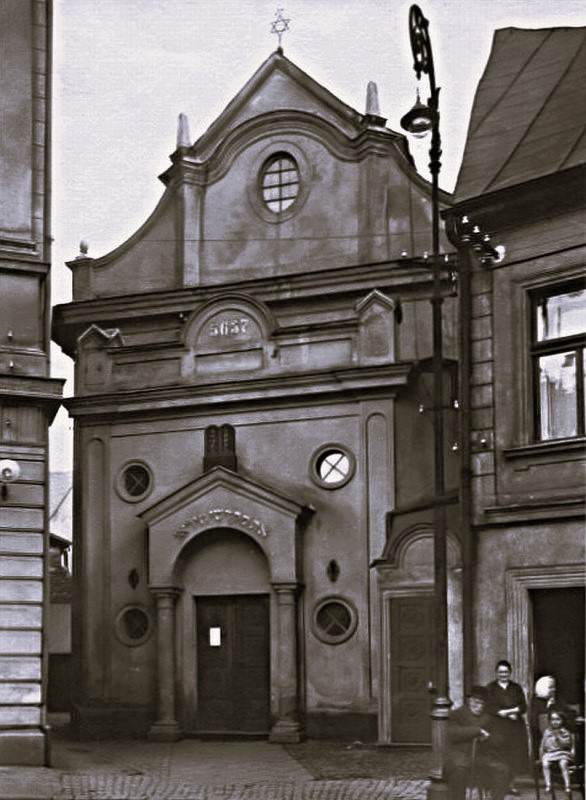
Náchod Synagogue
The Baroque synagogue of Náchod in north-eastern Bohemia stood in the town's former Jewish Street near the Upper Gate from about 1777-1780. Desecrated under Nazi occupation in 1939 and reportedly partly pulled down in 1943, it still stood derelict around 1960 and was demolished with the whole street in the 1960s.
Námestovo Synagogue
The synagogue of Námestovo, the Orava town that had the region's largest Jewish community in the early nineteenth century, was built to a plan dated 1810 and stood opposite the church of SS Simon and Jude. It was hit in a bombing raid in 1945, never restored, and has vanished.
Németi Synagogue, Satu Mare
The Németi synagogue was one of three large synagogues in Satu Mare (Szatmárnémeti), standing in Németi, the historic town on the Someș that merged with Szatmár. Its date of building, its congregation and its fate are undocumented; of the city's twenty-five synagogues and prayer houses, only the Great Synagogue survives today.
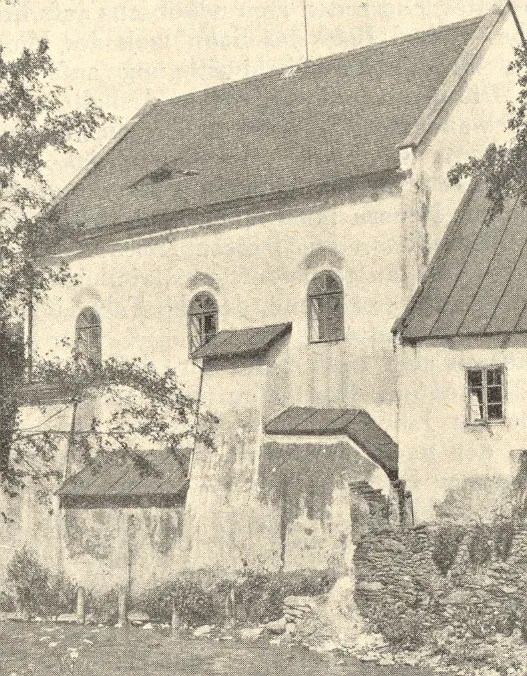
Nýrsko Synagogue
The synagogue of Nýrsko (Neuern) stood by the Úhlava river in the town's Jewish quarter. Founded in a house bought in 1797 and rebuilt after the fires of 1798 and 1861, it served the community until 1938, was looted in the November pogrom, and was pulled down, dilapidated, around 1958.
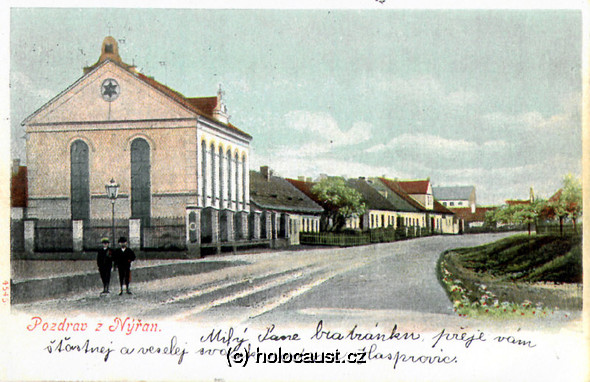
Nýřany Synagogue
The synagogue of Nýřany (Nürschan), a coal-mining town west of Plzeň, served a small Jewish community formed in the late nineteenth century. A rendered gabled hall on the main road, it may have been a converted church. It was set on fire in November 1938, after the Nazi annexation, and the ruin was demolished in 1939.
Oirschot Synagogue
Oirschot's small synagogue on the Rijkesluisstraat opened in 1842 after permission was granted in 1841, and was restored in 1875. It served a community of never more than about thirty people and was last used at Rosh Hashanah in 1905. It was then sold to a local butcher and later demolished.
Olaszliszka Synagogue
The synagogue of Olaszliszka, a wine village near Tokaj, was the seat of the Hasidic rabbi Tzvi Hirsch Friedman, founder of the Liska dynasty, and held about 500 people. Its congregation was deported in 1944. The empty building decayed and was pulled apart under Communist rule; by the late 1970s only its east wall stood.
Old Jewry Synagogue, London
A synagogue at the north end of Old Jewry, in the heart of medieval London's Jewish quarter. Around 1272 King Henry III took it from the Jews and gave it to the neighbouring Friars of the Sack, who used it as their chapel. The building later passed to Robert Fitzwalter and then to secular use; nothing survives.
Old Klaus Synagogue, Prague
The first Klaus synagogue stood at the edge of the Old Jewish Cemetery in Prague's Jewish Town, part of a small group of buildings called the klausen, linked to the financier Mordechai Maisel and to Rabbi Judah Loew's school. Founded in 1564 or the 1570s, it burned with almost the whole ghetto on 21 June 1689.
Old Prayer Hall of Hlohovec
An 18th-century Jewish prayer hall on the former Gottwaldovo Square in Hlohovec, separate from the town's 1891 synagogue, survived the Holocaust only to be demolished after the Second World War. Its existence and loss rest on a single source, Maroš Borský's gazetteer, whose photograph of the demolition shows Hebrew liturgical texts painted on the walls.
Old Schlossberg Synagogue, Bratislava
The first purpose-built synagogue of the Jewish settlement on the Schlossberg below Bratislava Castle, raised about 1716-17 under the protection of the Pálffy counts on what became Zámocká ulica. Enlarged in 1783 and damaged by fire, it served until 1862, when the community pulled it down to build the great Orthodox synagogue on the same site.
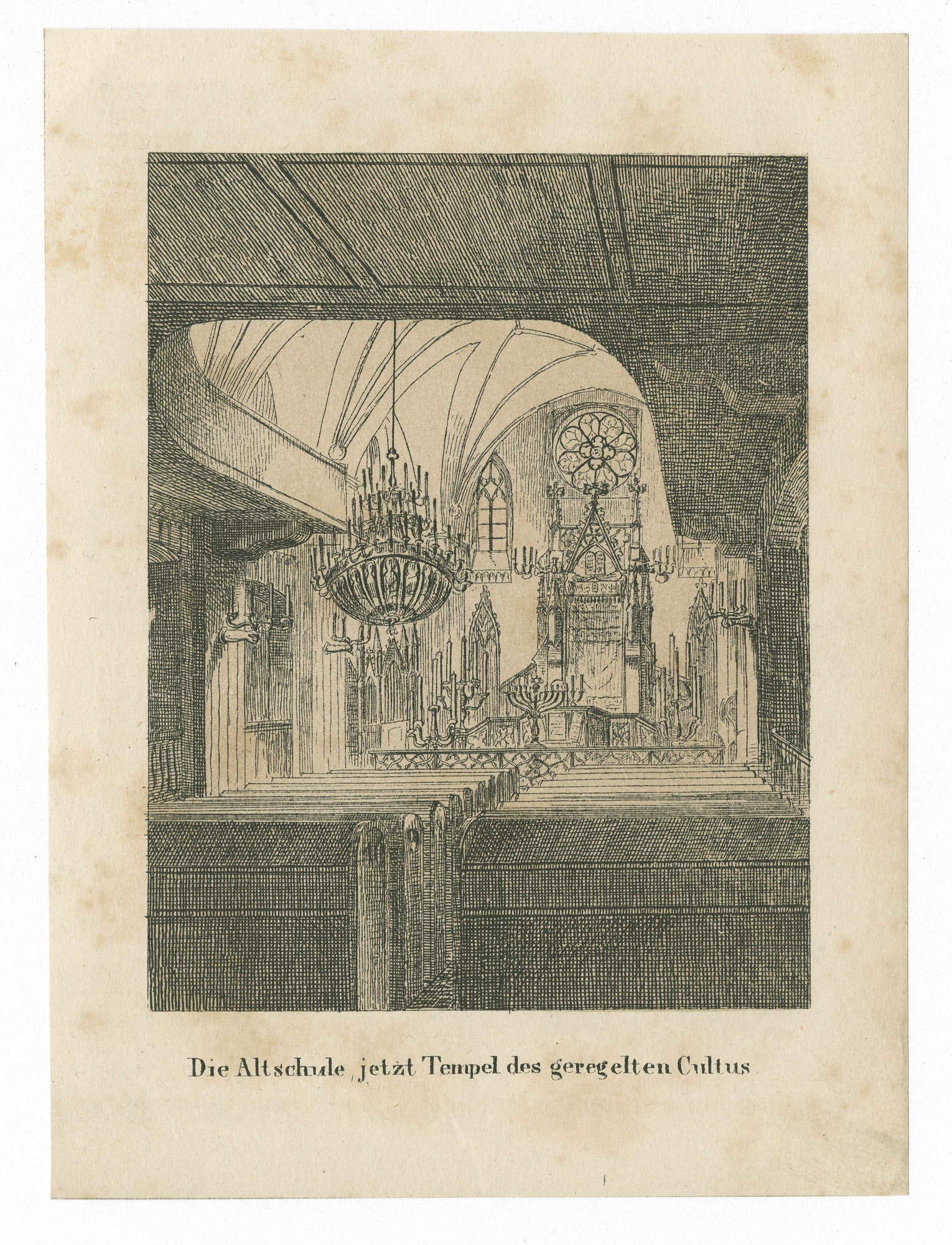
Old School (Altschul) of Prague
The Old School, or Altschul, stood beside the church of the Holy Spirit and was reckoned the oldest house of prayer in Prague's Jewish Town. Burned in 1389 and repeatedly wrecked and rebuilt, it became the city's Reform temple in 1837. Its own congregation demolished it in 1867 and built the Spanish Synagogue on the site.

Old Synagogue in Przemyśl
Przemyśl’s sixteenth-century Old Synagogue placed the Torah-reading platform at the architectural centre of its great hall. Nazi attacks gutted it; the remaining walls were demolished in 1956.
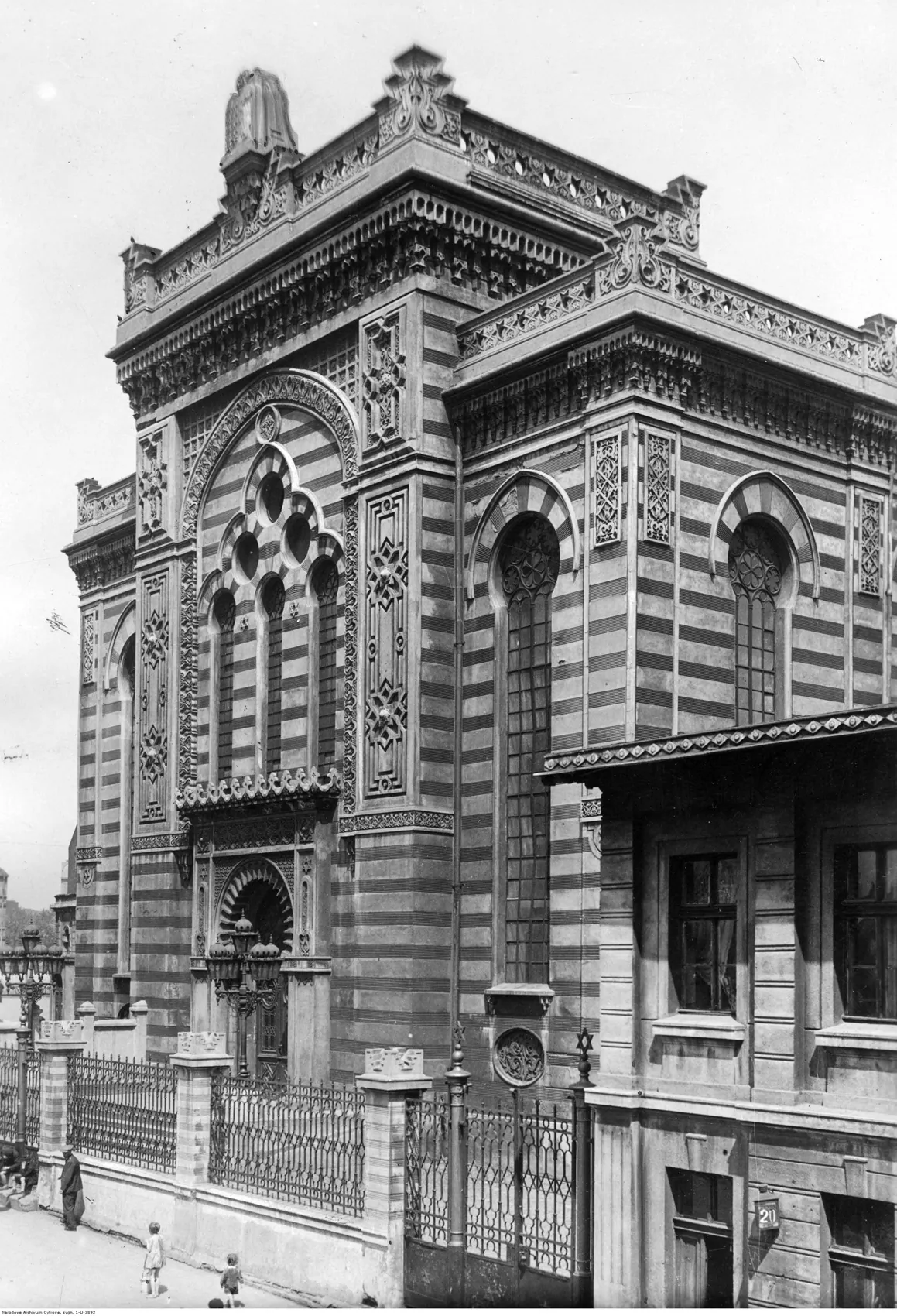
Old Synagogue in Łódź
The principal synagogue of Łódź's Jewish community stood on Wolborska Street, where Adolf Zeligson transformed an earlier building into a Moorish Revival landmark.
Old Synagogue of Batelov
The first synagogue of Batelov, a small Moravian market town near Jihlava, stood on the square of the Jewish quarter. Its building date is unknown. It burned down in a great fire in 1790 that also destroyed most Jewish houses, and a new synagogue was built on the same site about four years later.
Old Synagogue of Berettyóújfalu
The old synagogue of Berettyóújfalu, in Bihar county, was the first house of prayer of a Jewish community that settled in the town around 1800. It is dated 1790 by Anikó Gazda and 1840 by the Encyclopaedia Judaica. The community perished in 1944, and the building was recorded as demolished by 1987; when and by whom is unknown.

Old Synagogue of Bjelovar
Bjelovar's first synagogue, a modest single-storey building with a triangular gable, was consecrated on 19 September 1881 for a community founded only four years earlier. Replaced in 1917 by the domed synagogue that still stands, it was sold to a man named Suhanek for use as a mill and later demolished; an apartment block now occupies the site.
Old Synagogue of Bzenec
The old synagogue of Bzenec (Bisenz) in South Moravia stood inside the town walls, facing the castle entrance, and by oral tradition was about 500 years old. It also served as the community's Hebrew school. It was pulled down in 1859, and a new synagogue designed by Ludwig von Förster rose on the same plot in 1863.
Old Synagogue of Békéscsaba
The first synagogue of Békéscsaba was begun in 1846 for a young community of Jewish traders whose rabbi, József Hirschfeld, preached in German. It served the congregation until the 1880s, when the community split and a larger two-towered synagogue replaced it. It was later demolished; when and by whom is not recorded.
Old Synagogue of Břeclav (Lundenburg)
The synagogue of Lundenburg, today Břeclav in South Moravia, was built in the 1670s by a Jewish community refounded after the Thirty Years' War. Its domed roof fell in about twenty years later and was rebuilt. A great fire in March 1812 destroyed it with every house of the Jewish quarter.
Old Synagogue of Břeclav (before 1643)
Břeclav (Lundenburg) in South Moravia had Jews from the early fifteenth century and a synagogue by at least the sixteenth. During the Thirty Years' War, Swedish troops took the town on 3 May 1643; the synagogue and the Jewish cemetery were destroyed, and war and the plague that followed practically annihilated the community.
Old Synagogue of Dej
The first brick synagogue of Dej (Hungarian Dés) in Transylvania dates from 1862, the year the Jewish community adopted its statutes and its first rabbi of the Paneth dynasty took office. After the temple of 1907-09 replaced it, the old building served Hasidic worshippers. When it disappeared, and who pulled it down, is unknown.
Old Synagogue of Den Helder (Kanaalweg, 1837)
Den Helder's second synagogue was built in 1837 on the Kanaalweg, near the sea dyke, for a Jewish community that had grown after the North Holland Canal opened in 1824. After some ninety years of use it had become dilapidated, and it was replaced in 1928 by a new synagogue on the same site.
Old Synagogue of Deutschkreutz (1747)
The synagogue of Deutschkreutz (Zelem), one of the Seven Communities under Esterházy protection, was being built in 1746 and is dated 1747. It was larger than the princely administration had approved, but Prince Paul II Anton Esterházy let the work continue. It burned down in the great fire of 1777.

Old Synagogue of Doboj
The old synagogue of Doboj, in northern Bosnia, was built in 1874 as part of a Jewish communal house, three years after the town's Jewish community was founded. It was destroyed in 1941, in the first months of Ustaše rule, when most of Doboj's Jews were taken to camps. Only its metal entrance doors survive.
Old Synagogue of Dobříš
The old synagogue of Dobříš, south-west of Prague, served the town's Jewish community until 1904, when a new synagogue replaced it. A synagogue built in 1777 burned about thirty years later and was soon rebuilt; whether the old building is that one is not stated. It was demolished in 1960; who demolished it is not recorded.
Old Synagogue of Dolní Kounice
The first synagogue of Dolní Kounice (Kanitz), south-west of Brno, served a Jewish community present since the fifteenth century or earlier. It stood in the eastern part of the town near the old Jewish cemetery and was destroyed by Swedish troops in 1645, late in the Thirty Years' War. No image or plan survives.
Old Synagogue of Dolný Kubín
Dolný Kubín's first synagogue, built in 1775 on leased land and enlarged in 1885, served the Jews of the Orava region's county town and fourteen surrounding villages. A great fire in 1893 destroyed it with several communal buildings; a larger synagogue, still standing as a cinema, replaced it.
Old Synagogue of Eindhoven (Kerkstraat)
Eindhoven's first synagogue was a house on the Kerkstraat that local Jews bought in 1781 and fitted out as a prayer house, with a ritual bath, classroom and cantor's dwelling beside it. After a visit by King Lodewijk Napoleon in 1809 it was pulled down and replaced by a larger synagogue, inaugurated in May 1810.
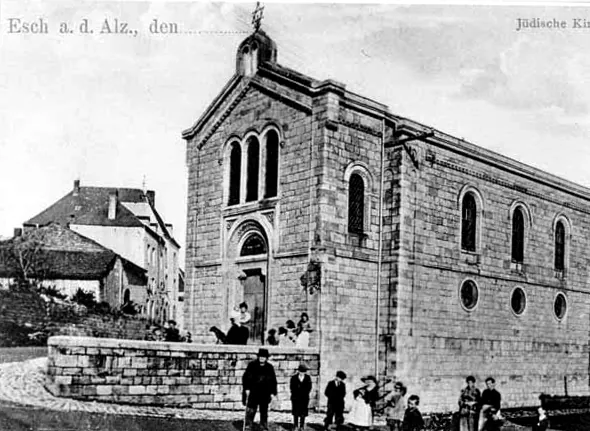
Old Synagogue of Esch-sur-Alzette
The first synagogue of Esch-sur-Alzette, Luxembourg's iron-ore and steel town, was designed by state architect Charles Arendt and consecrated by Chief Rabbi Isaac Blumenstein on 28 July 1899. On 3 June 1941 the Nazi occupiers ordered it destroyed and made municipal workers raze it. Its site is now the Place de la Synagogue.
Old Synagogue of Faaborg (Klostergade)
From 1804 the Jews of Faaborg, once Funen's most Jewish town, worshipped in an old two-storey half-timbered house at Klostergade 10-12, first rented and from 1814 owned by the congregation. By the 1850s it was too small and too decayed to repair, and in 1859 it was torn down when a new synagogue rose behind it.
Old Synagogue of Frauenkirchen
Frauenkirchen's Jews rebuilt their synagogue after the fire of August 1778 had burned the first one, documented in 1749, together with the whole Jewish quarter. The rebuilt house of prayer, where Rabbi Shalom Ullmann served before 1809, was wrecked by another fire, dated 21 August 1840, and was replaced on the same spot.
Old Synagogue of Golčův Jeníkov
The second synagogue of Golčův Jeníkov was built after a fire in 1808 destroyed the community's first synagogue, recorded from 1659. It served one of Bohemia's leading centres of Talmud study, the yeshiva of Aaron Kornfeld, until it too burned in 1870. The present synagogue was built on its foundations.
Old Synagogue of Gorinchem (Havendijk)
Gorinchem's first purpose-owned synagogue was a small former Protestant church on the Havendijk, bought by the Jewish community in 1814 and opened for worship in 1817. Damaged in the bombardment of 1814, it was closed as unsafe in 1837. One source says it was then razed; another says it became a grain store until demolition in 1951.
Old Synagogue of Hranice
The old synagogue of Hranice, first recorded in the 1630s, stood in the courtyard of the Jewish town hall in the Judengasse beside the western town wall. Mostly of timber and too small for a congregation of some 800, it was pulled down by the Jewish community in 1863 to make way for a new synagogue.
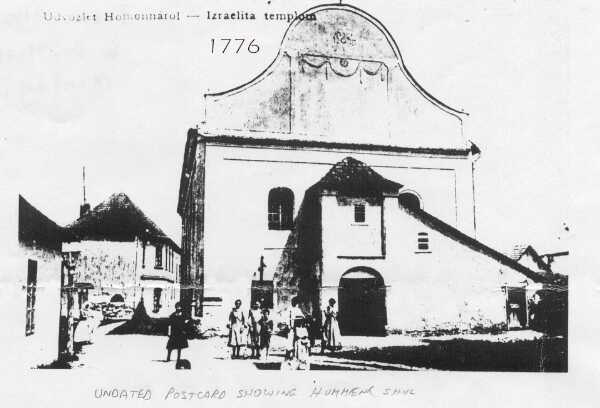
Old Synagogue of Humenné
The older of Humenné's two large synagogues, built in 1792 or 1795 on what is now Námestie slobody, replaced a thatched prayer house. It served an Orthodox community of some two thousand people until the deportations of 1942. Badly damaged by bombing in the Second World War, it was later demolished; a post office now stands on the site.
Old Synagogue of Ivanovice na Hané
The older synagogue of Ivanovice na Hané, a small Moravian town north-east of Vyškov, was built after the Thirty Years' War on the site of the present synagogue building in Stará čtvrť. It was destroyed in a large fire in 1799, and the congregation built an Empire-style replacement the following year.
Old Synagogue of Kardašova Řečice
The first purpose-built synagogue of Kardašova Řečice, in South Bohemia, was a wooden building put up in 1708 among the houses of the small Jewish quarter, replacing a prayer room in a private house. It burned to the ground in the town fire of 18 May 1863; a masonry synagogue was then built on the same site.
Old Synagogue of Kroměříž
The Old Synagogue of Kroměříž was built in 1693-94 in the walled Jewish quarter on today's Moravcova street, replacing a synagogue burned when Swedish troops sacked the town in 1642. It served the congregation for over two centuries until the new synagogue opened in 1910, and was torn down in 1921.
Old Synagogue of Kroměříž (16th century)
The second synagogue of the Jews of Kroměříž (Kremsier), a community under the protection of the bishops of Olomouc, was built in the sixteenth century to succeed a house of prayer of about 1425. It was burned in 1642, when Swedish troops of the Thirty Years' War took, plundered and set fire to the town.
Old Synagogue of Kurima
The Old Synagogue of Kurima was an early house of prayer of the Jewish community in this Šariš village in the Bardejov district, probably built of wood. It is known only from a single scholarly note recording its demolition in 1810. Its builders, appearance and site are unknown; a later synagogue replaced it in the nineteenth century.
Old Synagogue of Kyjov
The old synagogue of Kyjov (German Gaya) in South Moravia served one of the few Jewish communities allowed to live in a Moravian royal town. Dated variously to 1506 or about 1610, it was torn down by the community in 1851 so that a new synagogue could be built on the same site.
Old Synagogue of Libeň, Prague
The old synagogue of Libeň, built in 1592 and rebuilt in 1770, stood at the centre of the Jewish quarter in Koželužská Street, in a district that was then a separate town outside Prague. Repeated flooding made it unusable; a new synagogue was built further from the river in 1846-58, and the old one was demolished before 1900.
Old Synagogue of Liptovský Mikuláš
The first synagogue of Liptovský Mikuláš, a wooden building in the manner of the old Moravian synagogues, was built in 1731 by Jewish settlers from Holešov. Enlarged under Rabbi Yehuda Leib Kunitz and again in 1818, it served one of Hungary's great Torah centres until it was cleared for the classicist synagogue of 1842-46.
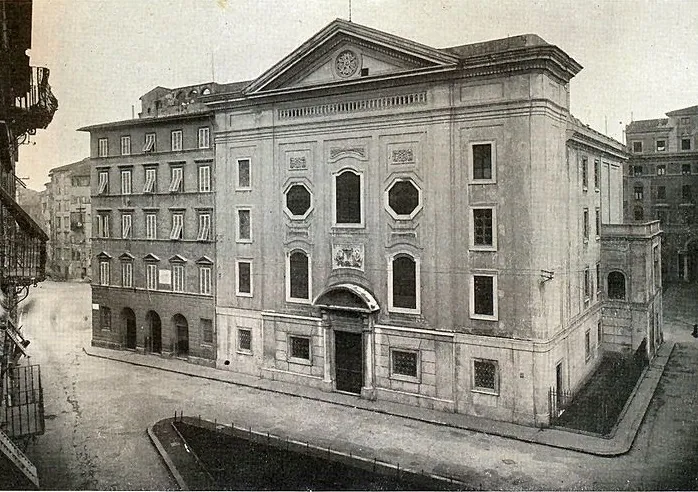
Old Synagogue of Livorno
The Old Synagogue of Livorno, founded in 1603 and enlarged and embellished over two centuries, was the pride of Italy's freest Jewish community and was counted among the most beautiful synagogues in Europe. Allied bombing in 1943–44 wrecked it, and its ruins were cleared after the war; a new synagogue opened on the site in 1962.
Old Synagogue of Luka
The original synagogue of Luka (Luck) in western Bohemia stood in the village's Jewish quarter on the road to Verušičky. Its building date is unknown. It served one of the oldest rural Jewish communities of the region until 1842, when a fire swept the Jewish quarter and destroyed it completely, together with many houses and the community archive.

Old Synagogue of Lučenec
Lučenec's first purpose-built synagogue, a towered Moorish-style building on today's Adyho Street, was completed in 1863 for a congregation of about 100 families. By the 1920s it was far too small, and the Neolog community itself pulled it down from 31 March 1924 to build Lipót Baumhorn's synagogue on the same plot.
Old Synagogue of Makó
Makó's first synagogue, a plain early Neoclassical hall between today's Deák Ferenc and Eötvös streets, was built around 1791 and served the town's Jews for more than a century. Altered in 1872 for the Neolog congregation, it was replaced in 1914 by Lipót Baumhorn's domed synagogue next door and pulled down in 1919.
Old Synagogue of Mezőkövesd
Mezőkövesd's first synagogue was built in 1853 by the town's young Jewish community on its plot at Arany János utca 1. In 1896 the congregation built a larger synagogue on the same plot. When and by whom the older building was pulled down is not recorded; nothing of it survives.
Old Synagogue of Mladá Boleslav
The first synagogue of Mladá Boleslav (Jungbunzlau) was recorded in 1579 and probably built around 1590 with the support of Emperor Rudolf II. It served one of Bohemia's leading rural Jewish communities until a town fire in the late seventeenth century destroyed it together with part of the Jewish quarter.
Old Synagogue of Modra
Modra's older synagogue stood in the courtyard of a family house at Štúrova 28, on parcel 42, and probably dates from the nineteenth century. It apparently preceded the synagogue of 1902 on Súkenícka Street, which still stands. Its appearance, its use and when and by whom it was removed are all unknown.
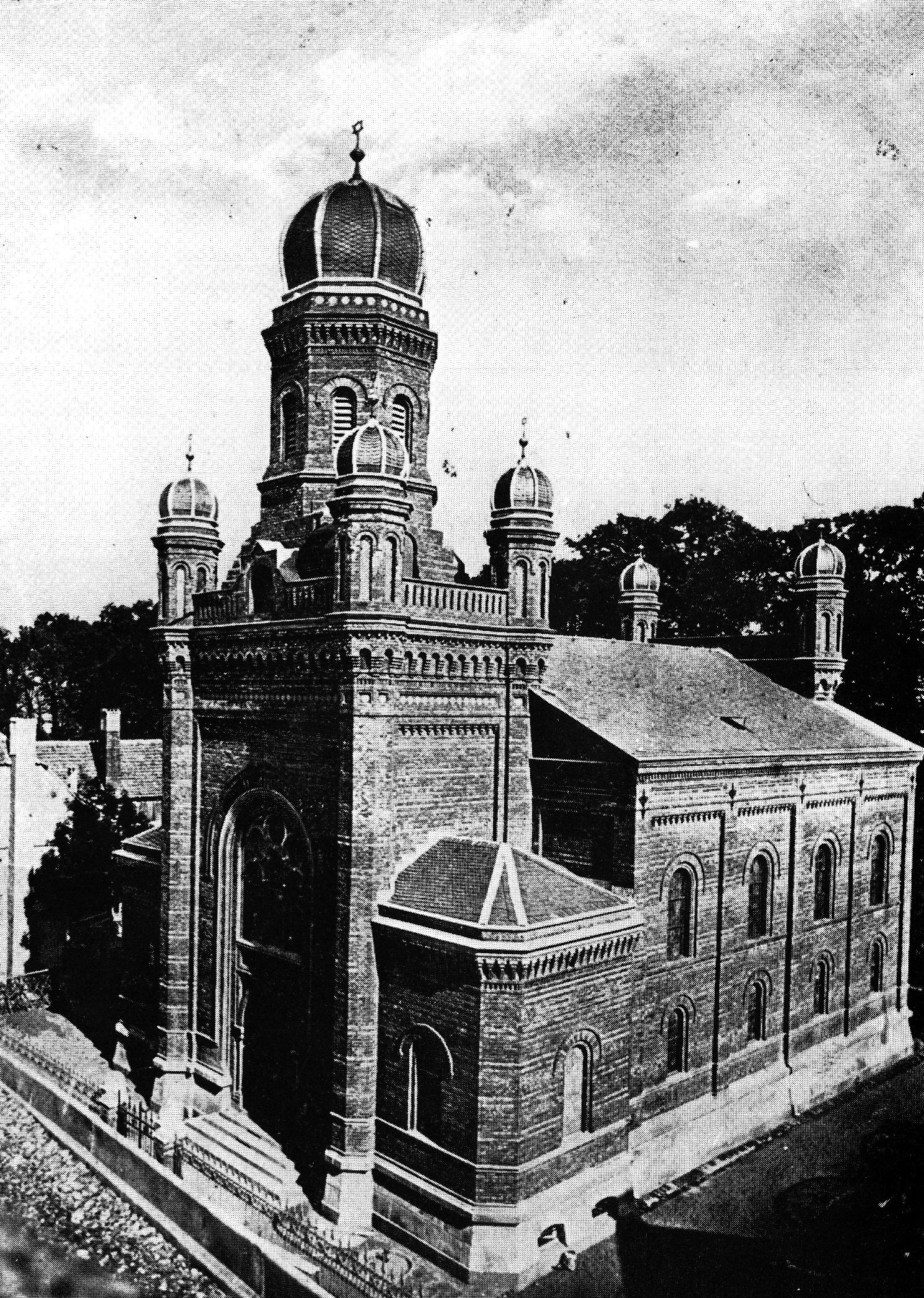
Old Synagogue of Münster
Münster's synagogue on Klosterstraße was a Romanesque Revival building crowned with onion domes, the first work of the young architect Karl Hofmann, consecrated in 1880. On the night of 9–10 November 1938 Nazis set it on fire; the fire brigade only stepped in when sparks threatened the neighbouring hospital.
Old Synagogue of Oituz Street, Focșani
An earlier synagogue stood on the plot at 4 Oituz Street in Focșani, Moldavia, until an earthquake destroyed it about 1894. The community rebuilt on the same site in 1896; that successor, today called the Ahai Vereai Synagogue, is the last of the eight synagogues the town had before the Second World War.
Old Synagogue of Oldenzaal
The Old Synagogue of Oldenzaal, in Twente, was consecrated in 1802 on the Weestrik, a lane later called the Kerksteegje, after a short-lived split in the congregation. It served the Jews of Oldenzaal and the surrounding villages for almost eighty years until, in danger of collapse, it was pulled down in 1879 and replaced by a new synagogue.
Old Synagogue of Pezinok
The Old Synagogue of Pezinok stood on what is now Sládkovičova Street, in the Cajla quarter where Jews were long confined. Its name sets it apart from the New Synagogue built around 1870 on today's Šancová Street, which was demolished in 1957-58. When and by whom it was pulled down is not recorded; a multifunctional building now occupies its plot.
Old Synagogue of Prešov
Prešov's first synagogue, a Neoclassical hall on Konštantínova Street, was built in 1847-49 by the contractor Pribula for a young, reform-minded congregation. After the 1871 split it served the Neolog community until the great town fire of 6 May 1887 burned it; it was then demolished and replaced by the present Neolog synagogue.
Old Synagogue of Prostějov
The Baroque synagogue of Prostějov, begun in 1674 and finished in 1676, was the main house of prayer of one of Moravia's largest and most learned Jewish communities for over two centuries. The congregation itself pulled it down in 1903-1904 to build Jakob Gartner's new synagogue on the cleared site.
Old Synagogue of Púchov
Púchov's first synagogue was set up in 1806 by a Jewish community whose roots in the town went back to the seventeenth century. Just under six decades later it was destroyed by fire, and in 1868 the congregation built a new synagogue on the same spot. No image, plan or description of the first building is known.
Old Synagogue of Přerov
The old synagogue of Přerov stood beside the town's Jewish street from at least the seventeenth century, and possibly the sixteenth. A fire in 1832 badly damaged it; after emergency repairs it served until 1860, when the community replaced the small, cramped building with a new synagogue on the same site.
Old Synagogue of Rijeka (Calle del Tempio)
Rijeka's third Sephardic synagogue occupied a whole three-storey house in the old town, given to the Jewish community by Moses Saul ha-Levi in January 1837 and remodelled that year by the city architect Adam Olf. It gave Calle del Tempio its name. The building no longer exists; when and how it disappeared is unknown.
Old Synagogue of Senec
The first synagogue of Senec, built in 1825, stood set back in a courtyard complex off the town's market square. A large fire around the turn of the twentieth century left it in ruins, and it was demolished. The congregation built the present synagogue of 1904-07 on the same site.
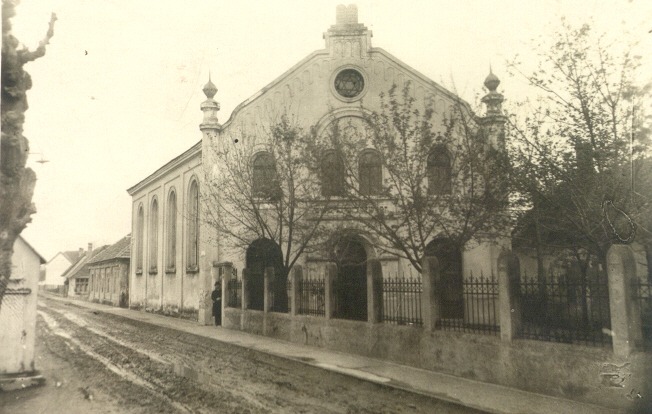
Old Synagogue of Siófok
The old synagogue of Siófok, built by the town's Neolog Jewish community in 1869, stood at the corner of Fő utca and Széchenyi utca. It survived the Holocaust and was restored by the few survivors, then fell derelict; around 1985 the Communists demolished it to make room for a new central post office.
Old Synagogue of Slavkov u Brna (Austerlitz)
The old synagogue of Austerlitz, today Slavkov u Brna, served one of the oldest Jewish communities in Moravia. Rebuilt with help from all Moravian congregations after the town fire of 1762 and restored about 1850, it was pulled down in 1857/58 so that a new synagogue could rise on its foundations.

Old Synagogue of Speyer
Speyer's Romanesque synagogue in the Judenhof was consecrated in 1104 and served the Jewish community for about four centuries. After the Jews were gone around 1500, the city used it as an arsenal. French troops burned Speyer in 1689 and the synagogue was gutted. Its outer walls still stand, the gable ends almost to full height.

Old Synagogue of St. Pölten
From 1885 the Jews of St. Pölten worshipped in a converted drying house of the Gasser factory on the Schulpromenade, a temple with 76 men's and 71 women's seats. Too small and partly standing on a planned promenade, it was pulled down in 1913, just after the new synagogue beside it opened.
Old Synagogue of Stráž
The old synagogue of Stráž (German Neustadtl am Klinger), in western Bohemia, stood for about two hundred years on the south side of the town's Judengasse. It burned with the community house and every Jewish home in the town fire of 20 May 1876, taking the festival prayer books, the memorial book and the old registers with it.
Old Synagogue of Szolnok
Szolnok's first synagogue, a plain building of about 1850-1855 on the narrow inner-town street later named after it, served the whole community until Baumhorn's synagogue opened in 1899 and the small Orthodox congregation afterwards. Its plot now lies within the Aba-Novák cultural centre site; when and by whom it was demolished is unknown.
Old Synagogue of Tachov
The old synagogue of Tachov (Tachau) in western Bohemia stood in the town's Jewish street, where a synagogue is recorded before 1606. In spring 1911 a great fire swept the Jewish quarter and burned the synagogue to the ground; only the Torah scrolls were saved. A new synagogue replaced it in 1912.

Old Synagogue of Tiszafüred
Tiszafüred's first synagogue was a Neoclassical hall with a columned portico on the town's main street, near the Roman Catholic church, recorded by 1847. The congregation sold it at auction in 1911 and built a new synagogue; the old building was gone by 1913. The town's Jews were deported to Auschwitz in 1944.
Old Synagogue of Tokaj
Tokaj's first synagogue was built around the middle of the eighteenth century for Jews who had come from Poland to work in the wine trade. It served the congregation for well over a century until a fire destroyed it in 1890. It was replaced by the large synagogue that still stands in the town.
Old Synagogue of Toledo (Sinagoga Vieja)
The "old synagogue" of Toledo stood beside the Jewish butchers' stalls on the high ground of the Jewish quarter, near the city wall above the Tagus. It was badly damaged in the anti-Jewish riots of summer 1391, sold on royal order in 1494, and gradually replaced by houses. Nothing of it is known to survive.
Old Synagogue of Travnik (Il Kal Santo)
Il Kal Santo was the first synagogue of the Sephardi Jews of Travnik, the Ottoman vizier's seat in central Bosnia, built in 1768 or 1769. Heritage surveys say it was torn down in 1860 and replaced on the same foundations by the New Synagogue. Why it was removed, and by whom, is not recorded, and no picture of it survives.
Old Synagogue of Trenčín
Trenčín's old synagogue was built in 1790, with the town's support, to replace a wooden synagogue lost in the great fire of that year. Enlarged in 1873, it served the community until 9 April 1912, when the congregation demolished it to build the present synagogue, consecrated in 1913, on the same site.
Old Synagogue of Třešť
The old synagogue of Třešť (Triesch) in Moravia served one of the larger Jewish communities of the region, home in about 1800 to Rabbi Eleazar Löw's yeshiva. A great fire, dated to 1824, burned the whole walled Jewish quarter together with the synagogue. The Empire-style synagogue consecrated in September 1825 replaced it.
Old Synagogue of Uherský Brod
The first known synagogue of Uherský Brod, a Moravian border town with Jews recorded from 1470, stood with the community's houses outside the old town centre. During the Thirty Years' War, in the 1620s, mercenaries quartered in the town destroyed both the Jewish homes and the synagogue. Its builder, date and appearance are unknown.
Old Synagogue of Vinkovci
Vinkovci's first synagogue, a modest Baroque-Classicist synagogue-house of 1880 on the corner of Relković and Frankopanska streets, served the young Jewish community for over four decades. Outgrown, it was replaced in 1923 by Fran Funtak's new temple, and the community itself decided in June 1928 to demolish the old building.
Old Synagogue of Vlorë
The old synagogue of Vlorë (Valona) stood near the town centre and was the last link to one of the largest Jewish communities of the Ottoman Adriatic. Romaniote settlers identified it again around 1850. After Italian forces occupied the town it served as a military store, and it burned during the First World War; nothing of it survives.
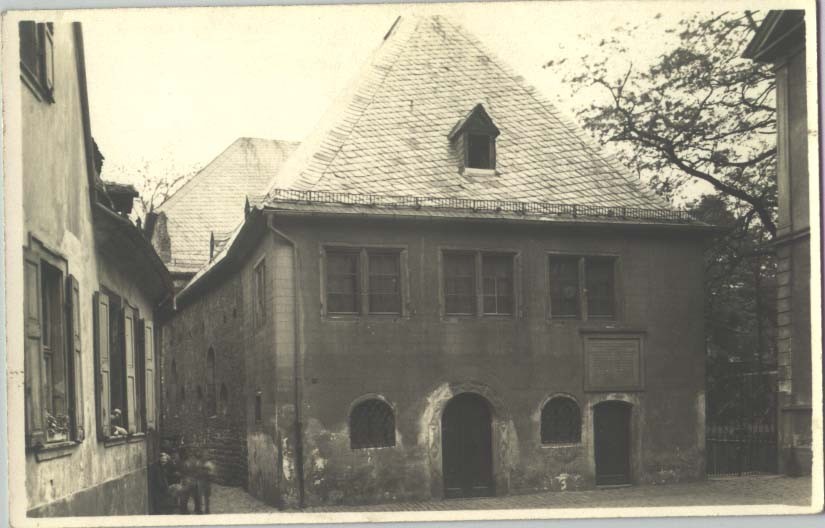
Old Synagogue of Worms (Rashi Shul)
The synagogue of Worms, first built in 1034 and rebuilt in Romanesque form in 1174/75, with a women's synagogue of 1212/13 and the Rashi yeshiva of 1623/24, was burned by the Nazis (SA and Gestapo) on 10 November 1938 and its ruins pulled down by 1942. Today's building is a 1959-61 reconstruction reusing salvaged original parts.
Old Synagogue of Zalaegerszeg
Zalaegerszeg's old synagogue stood in a courtyard beside the town inn, on land given by the Bishop of Szombathely, and served the Jewish community until 1904. Cramped and decaying, it was replaced by a new synagogue, became the town's first cinema, the Edison mozgó, and was set on fire by Nazi German forces in spring 1945.
Old Synagogue of Újpest (Bocskai utca), Budapest
Újpest's first synagogue was built in 1839 on Bocskai utca, on a plot given by Count István Károlyi, and consecrated in 1840. After its larger successor opened in 1886 it remained in use as the community's 'old temple', still listed in 1929. It was later demolished; when and by whom is not recorded.
Old Synagogue of Úsov
The synagogue of Úsov (Mährisch-Aussee) in northern Moravia was built around 1690 in the hilltop Jewish quarter. After a priest was forcibly removed from it on the eve of Yom Kippur 1721, the courts ordered it demolished in 1722 and banned public services. Its successor of 1784 stands on the same site.

Old Synagogue of Česká Lípa
The old synagogue of Česká Lípa (Böhmisch Leipa) stood in the Jewish quarter outside the eastern town walls. Permitted around 1700 and built decades later, it held the ritual bath in its cellar, was badly damaged in the town fire of 1820, rebuilt and enlarged, and was pulled down in 1863 to make way for a new synagogue.
Old Synagogue of Čkyně (Vysoký dvůr)
The first synagogue of Čkyně, a small market town in South Bohemia, stood inside the manor farmyard of Vysoký dvůr on the town's northern edge, probably from the eighteenth century. In 1828 the estate owner took it over in exchange for a new synagogue. Used as a barn, it was pulled down with the farmyard under Communist rule, by 1977.
Old Synagogue of Đakovo
Đakovo's first synagogue was a small house adapted for worship on the eastern edge of the town's historic core, recorded on the first land register of 1856. From 1863 the Great Synagogue rose in front of it on the same plot, and by 1902 the old building had gone; who removed it, and when, is not recorded.
Old Synagogue of Žilina
The first synagogue of Žilina's Jewish community, a gabled street-front building with a rose window and slender turrets, served the congregation from the 1860s or 1880s until about 1930. It was then pulled down so that the domed Neolog synagogue designed by Peter Behrens, finished in 1931, could rise on the same plot.
Old Wooden Synagogue of Dorohoi
The old wooden synagogue of Dorohoi, in northern Moldavia, was said by tradition to be about two hundred years old when the town hall ordered it pulled down in 1890, claiming it was about to collapse. An earlier order of 1877 had been withdrawn after Jewish protests. No image or plan of it is known.
Old Wooden Synagogue of Koryčany
Koryčany, a small market town in eastern Moravia, probably had a wooden synagogue from the second half of the sixteenth century, serving one of the region's earliest Jewish settlements. It vanished during the Thirty Years' War, which left Jewish houses in the town deserted. Nothing of its form, exact site or builders is recorded.
Old Wooden Synagogue of Kovanice
The first synagogue of Kovanice, a village near Nymburk in Central Bohemia, was a wooden building in use in the second half of the eighteenth century. It was destroyed by fire on an unrecorded date, and in the 1840s the growing community built a new synagogue on the same plot, which survives as a house.
Old Wooden Synagogue of Pečovská Nová Ves
The first synagogue of Pečovská Nová Ves, in the Sabinov district of Šariš, was a wooden building of the eighteenth century serving one of the oldest Jewish communities in the region. A masonry synagogue replaced it as the house of worship in 1868, and the old building was demolished in 1896.
Old Wooden Synagogue of Rokytnice v Orlických horách
The first synagogue of Rokytnice v Orlických horách (Rokitnitz) was a wooden building of about 1715-1720 that housed both the prayer hall and the Jewish school. It burned in 1861 together with other buildings of the Jewish quarter, and the congregation built a stone synagogue on or near the same spot.
Old Wooden Synagogue of Turnov
Turnov's wooden synagogue stood in Jizerní Street, today Krajířova Street, in the Jewish quarter that took shape after the Swedish-caused town fire of 1643. Built from 1647 together with a Jewish school, it burned with the school in the great town fire of 1707 and was replaced by the stone synagogue completed in 1719.

Oldenzaal Synagogue (Kerkstraat)
The Kerkstraat synagogue, a brick hall with stepped gables and a ritual bath, was built in 1879-1880 for the Jewish community of Oldenzaal in Twente. It came through the occupation undamaged while its congregation was deported and murdered. The municipality bought it after the war and demolished it in 1964 for a new town hall.

Ommen Synagogue
Ommen's small brick synagogue stood at the corner of the Middenstraat and the Varsenerpoort and was consecrated in 1855 for a village congregation of traders and butchers. Its members were deported in November 1942; the building was heavily damaged during the liberation fighting of April 1945, sold after the war and demolished in 1951.
Onga Synagogue
The synagogue of Onga, a village near Miskolc in the former Abaúj-Torna county, served a small Orthodox congregation of between about forty and eighty people that was subordinate to Szikszó. Its members were deported to Auschwitz in 1944. A survey of 1980-87 recorded the building as demolished; when and by whom is unknown.
Ootmarsum Synagogue
The synagogue on the Kloosterstraat in Ootmarsum, Twente, was consecrated about 1860 to replace a synagogue and school of 1843 lost in a fire in 1859. Restored in 1904, it fell out of use after the small congregation merged with Oldenzaal in 1924, was sold, and was demolished in 1936.
Opoj Synagogue
The synagogue of Opoj, a village near Trnava, was a single-storey brick building of the nineteenth century with a yellow facade, arched windows and a carved wooden women's gallery. It served Jews of the surrounding villages into the Second World War. After the war, when no deported Jew came back to live there, it was demolished.
Orahovica Synagogue
The synagogue of Orahovica in Slavonia was built in 1911 for a small but prosperous Jewish community. Its remaining Jews were murdered in concentration camps during the Second World War. On 20 December 1942 the building was burned to the ground in what the ESJF survey calls a 'guerrilla Communist attack' on the town.
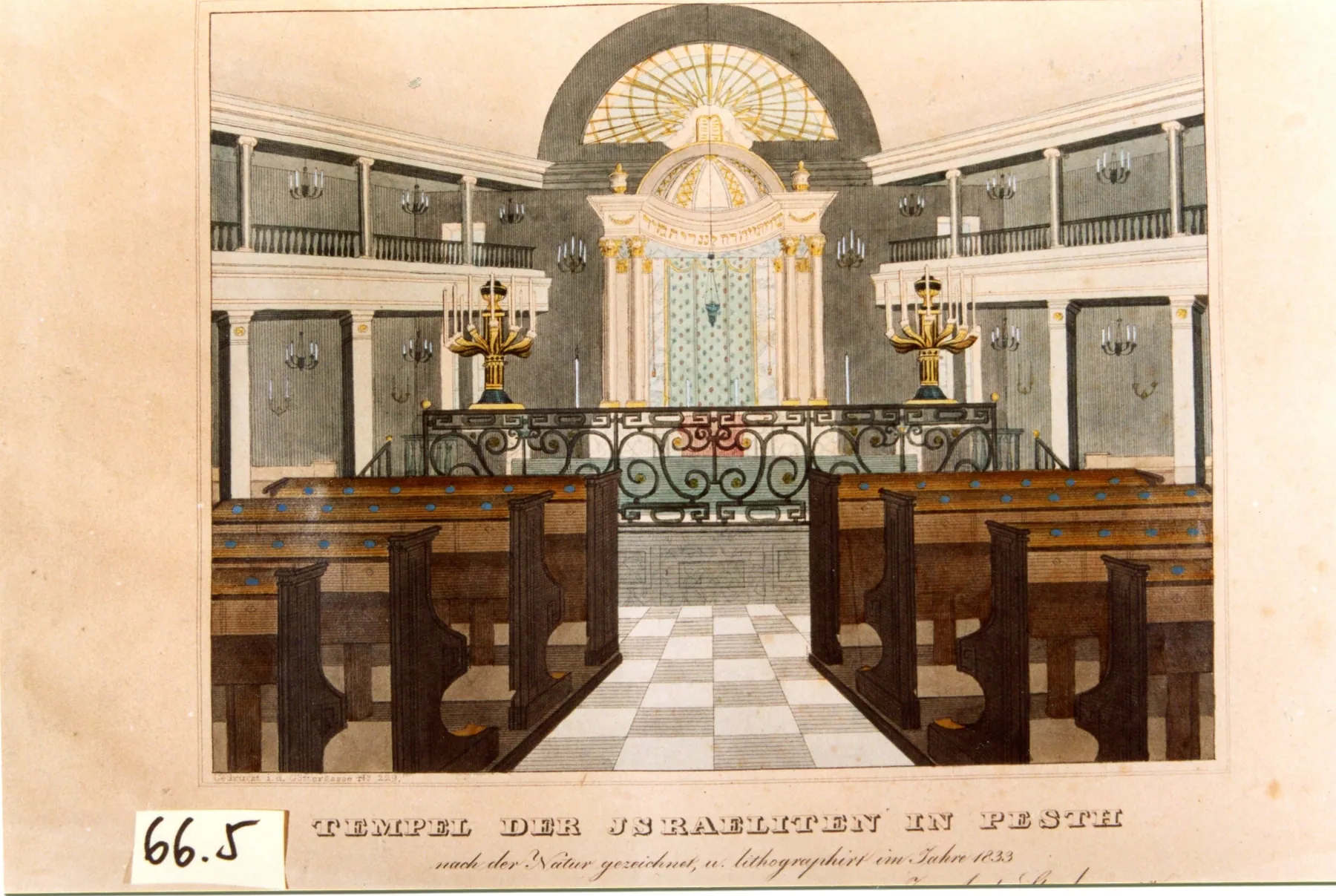
Orczy House Synagogues
The Orczy House, a vast tenement at the corner of today's Károly körút and Király utca, held the first synagogues of Pest's Jews from 1796. In 1830 Lőrinc Zofahl built two halls side by side there: the traditional Great Synagogue and the reforming Cultustempel. The whole complex was demolished in 1937 for the Madách houses.
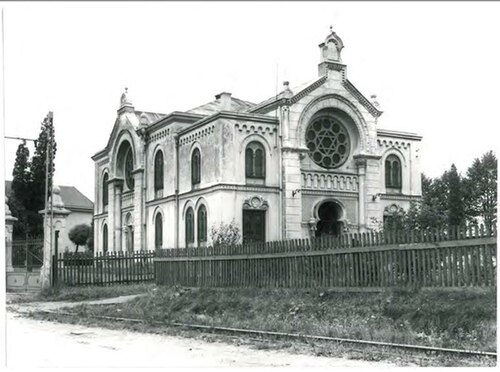
Orlová Synagogue
The synagogue of the Reform congregation of Orlová, a coal-mining town in Czech Silesia, was designed by the Viennese architect Jakob Gartner and opened on 10 September 1905. Nazi German forces destroyed it in September 1939, immediately after they occupied the town; the ruin was cleared and only its foundations remain.

Orthodox Synagogue of Csorna
The Orthodox synagogue of Csorna, built in 1854 and enlarged in 1884, stood in a communal 'temple yard' beside today's Mártírok tere. Its congregation was deported in 1944. Reduced to a workshop and warehouse, the building was sold and demolished in the 1980s under Communist rule; who ordered the demolition is not recorded.
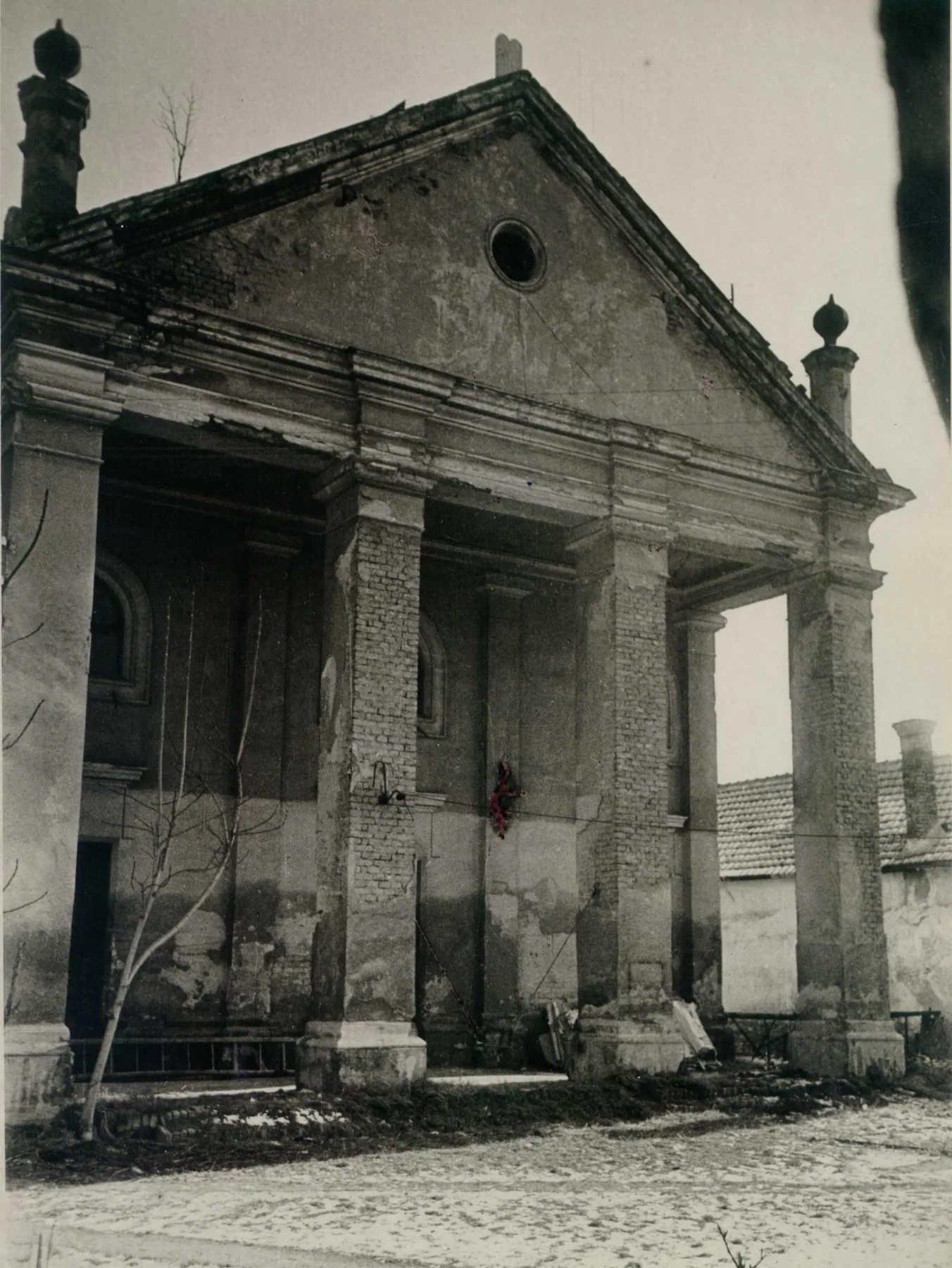
Orthodox Synagogue of Kiskunfélegyháza
The Orthodox synagogue of Kiskunfélegyháza was built in 1878 by a congregation founded two years earlier by 26 members who left the town's older Congress community. A columned, pedimented hall on Bercsényi utca, it lost its worshippers to deportation in June 1944 and was demolished in 1960; a fuel and building-materials yard later occupied the site.
Orthodox Synagogue of Lučenec
The Orthodox synagogue of Lučenec, a 24 by 13 metre building opened in 1930, served the smaller of the town's two Jewish communities. Most of its congregation was deported to Auschwitz in 1944. Survivors reopened it after the war, but it was destroyed in 1969; who demolished it is not recorded.
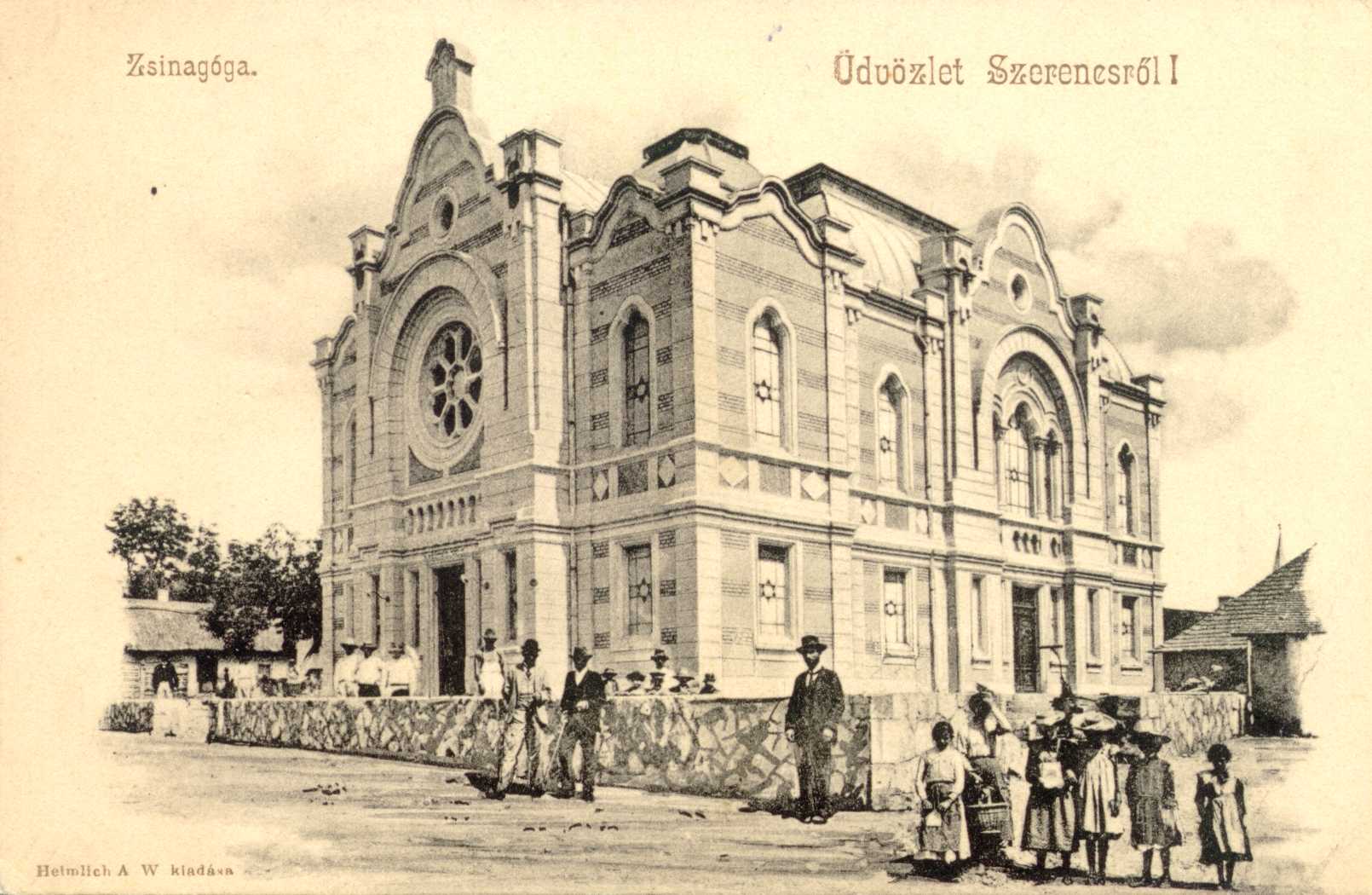
Orthodox Synagogue of Szerencs
The Orthodox synagogue of Szerencs, in the Tokaj wine region, was designed by the Miskolc architect Miksa Korach and begun in 1903. Its congregation was deported in 1944. The building stood derelict by 1963 and was demolished by the Communists in the mid-1970s.
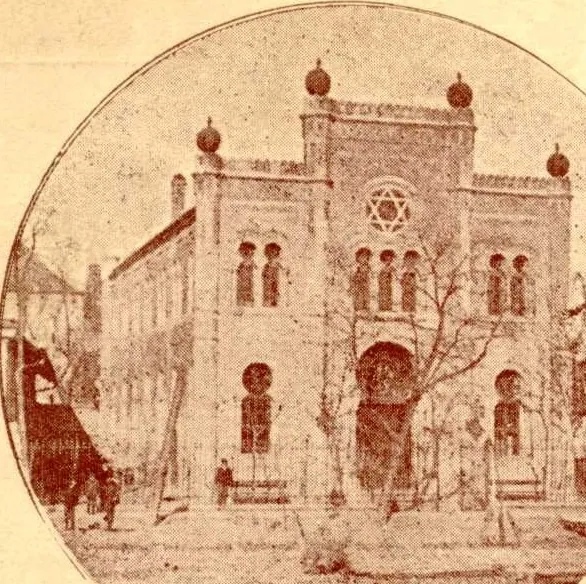
Orthodox Synagogue of Székesfehérvár
The Orthodox congregation of Székesfehérvár built its Moorish Revival synagogue on the market square in 1870. Its members were deported in June 1944. The empty building was wrecked by bombs during the Allied air raids and the Soviet and Nazi German battles for the city in 1944–45, and the ruin was demolished within a few years.

Osoblaha Synagogue
The last synagogue of Hotzenplotz, today Osoblaha in Czech Silesia, was a gabled two-storey hall of the early nineteenth century with a Polish-type interior and a four-column bimah. It served what had once been one of Moravia's largest Jewish communities, and was demolished as dilapidated in 1933 after the congregation had dwindled away.
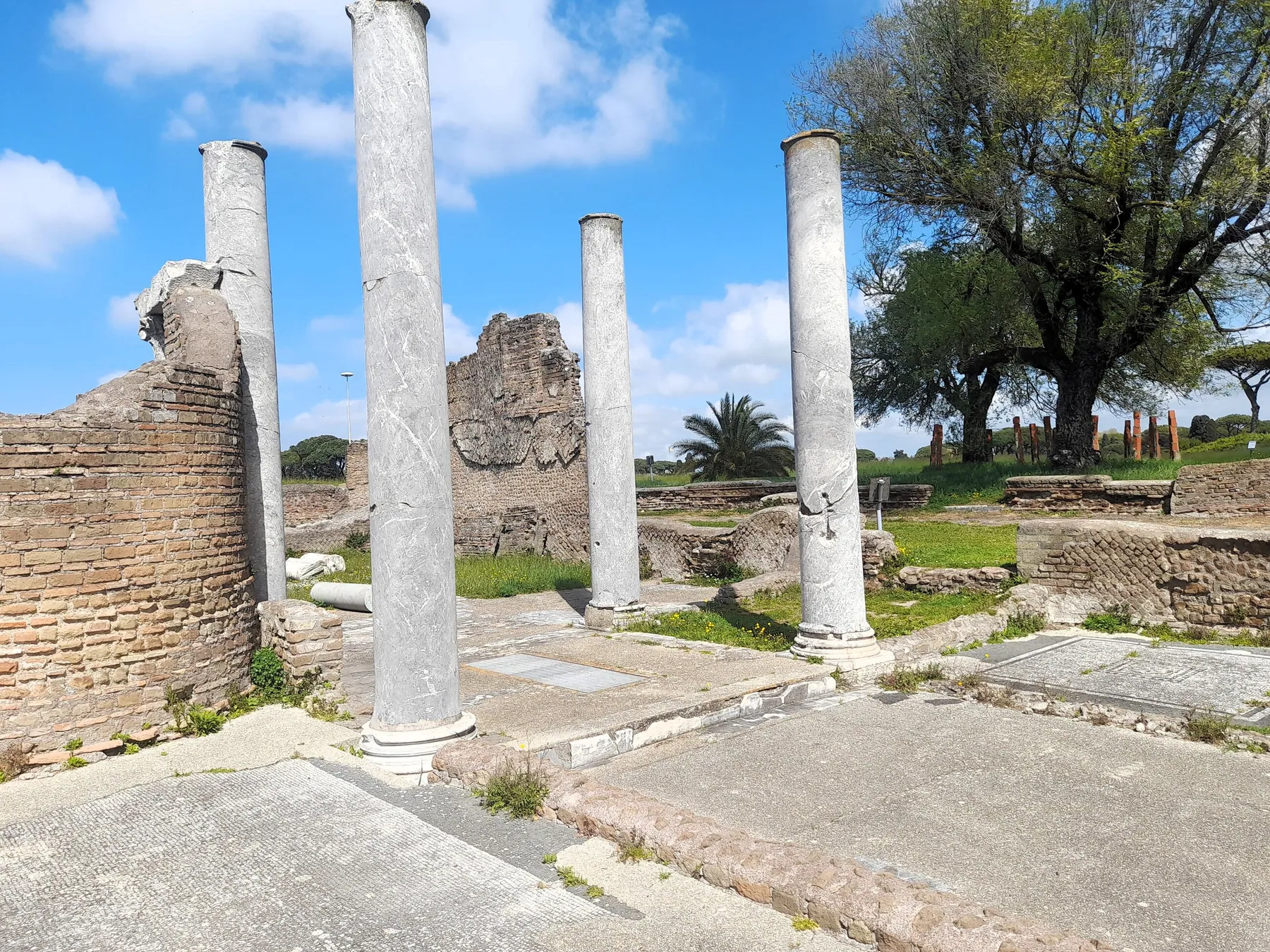
Ostia Antica Synagogue
The synagogue of ancient Ostia, Rome's harbour city, stood near the seashore outside the walls. Found by chance in 1961, it kept its Torah shrine with carved menorahs. Its first excavator dated it to the first century CE; newer excavations place the building in the third. Abandoned in late antiquity, it survives as low ruins.
Oude Pekela Synagogue
The synagogue on the Hendrik Westerstraat in Oude Pekela, inaugurated in 1884 with a ritual bath and a teacher's house, served the Jews of Oude and Nieuwe Pekela, a community dating from 1683. It was heavily damaged during the Nazi German occupation, sold in 1950 and demolished about thirty years later.
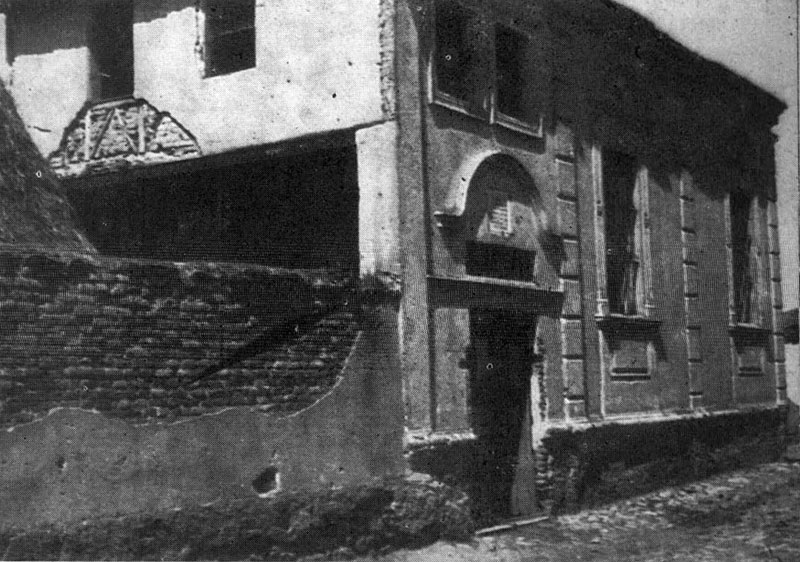
Ozer Dalim Synagogue, Bitola
Ozer Dalim ('helper of the poor'), a two-storey synagogue opened in 1907 in Bitola's Jewish quarter and linked to the community's charity society of the same name, was damaged in both world wars. After the Bulgarian authorities deported Monastir's Jews to Treblinka in 1943 it stood desecrated, and the Communists demolished it in 1950.

Ozora Synagogue
Ozora's synagogue was a small rendered hall with a stepped gable and pointed side windows, built for a village Jewish community that numbered 103 in 1910 and 48 in 1941. A 1949 photograph shows it shuttered and damaged but still standing. It was demolished by the 1980s; who pulled it down is unknown.
Pakrac Synagogue
The synagogue of Pakrac in western Slavonia was built in 1875 for a Jewish community of about 63 families. Survey data compiled for JewishGen record that it was destroyed in 1941, the first year of Ustaša rule, but no source read names who destroyed it. Almost all of the town's Jews were murdered in the Holocaust.
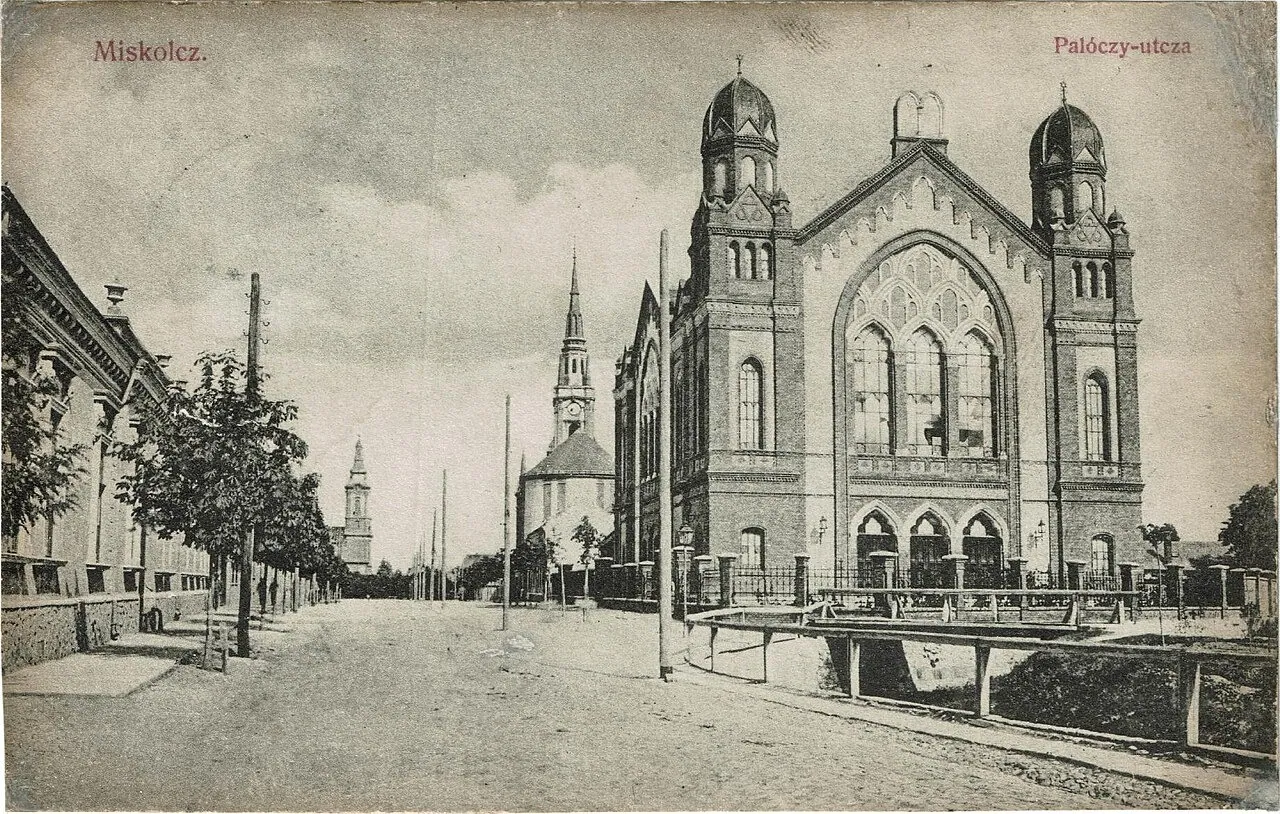
Palóczy Street Synagogue
The Palóczy Street Synagogue was the second large synagogue of Miskolc's Orthodox Jewish community, a domed, twin-towered brick building designed by Marcell Székely and consecrated in 1901 on the site of the town's oldest synagogue. Damaged in the Second World War and reduced to a warehouse, it was blown up by the Communists in 1963.

Pardubice Synagogue
The synagogue of Pardubice, an oriental-style building with corner turrets designed by František Schmoranz Jr., was built in 1879-80 and enlarged in 1904. It outlasted the Nazi occupation, in which most of the town's Jews were deported and murdered, became a municipal art museum, and was pulled down in 1958 for new road alignments.
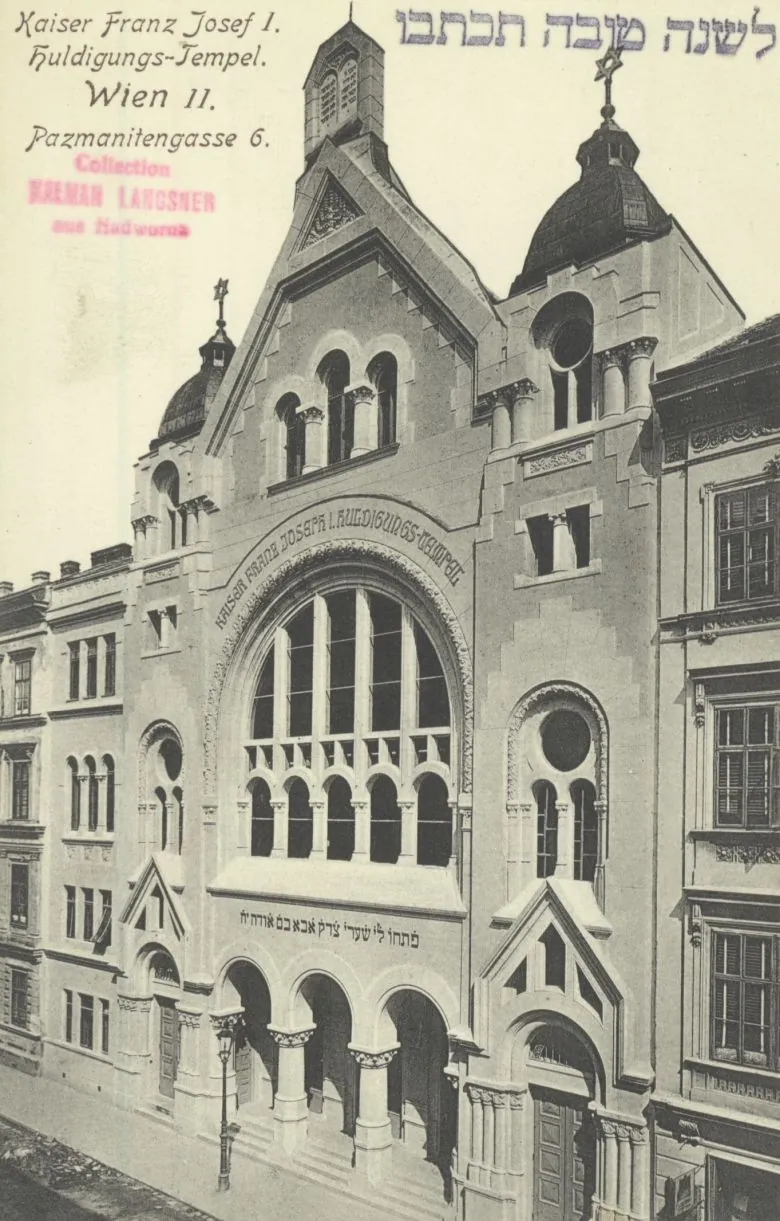
Pazmanitentempel (Kaiser Franz Joseph Jubilee Synagogue), Vienna
The Pazmanitentempel at Pazmanitengasse 6 in Vienna's Leopoldstadt was one of the largest synagogues in Vienna. It was built for about 900 worshippers by the prayer-house association Am Volkert to designs by Ignaz Reiser, and consecrated on 28 September 1913 as the Kaiser Franz Joseph Jubilee Synagogue. During the November pogrom of 1938 the Nazis set it on fire and then blew it up, and the concrete ruins were cleared in 1939–1940.
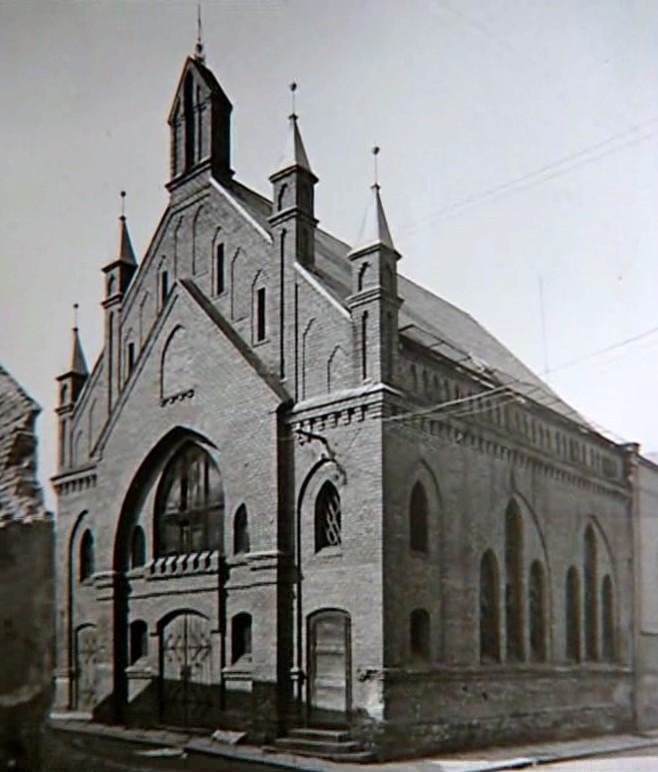
Pelhřimov Synagogue
Pelhřimov's synagogue, a red-brick neo-Gothic hall designed by the Viennese architect Max Fleischer, was built in 1890-91 for a community of about 300 Jews. It was closed in 1941, its remaining congregation was deported the following year, and after serving as a food warehouse it was demolished in 1967 under Communist rule.
Pestújhely Synagogue (Neptun utca), Budapest
A synagogue in Neptun utca, Pestújhely, now part of Budapest's 15th district, is recorded by Anikó Gazda's 1980-87 survey as built in 1927 and demolished, as was an earlier prayer house in Adria utca. No other source describes the building, and when and by whom it was pulled down is unknown.
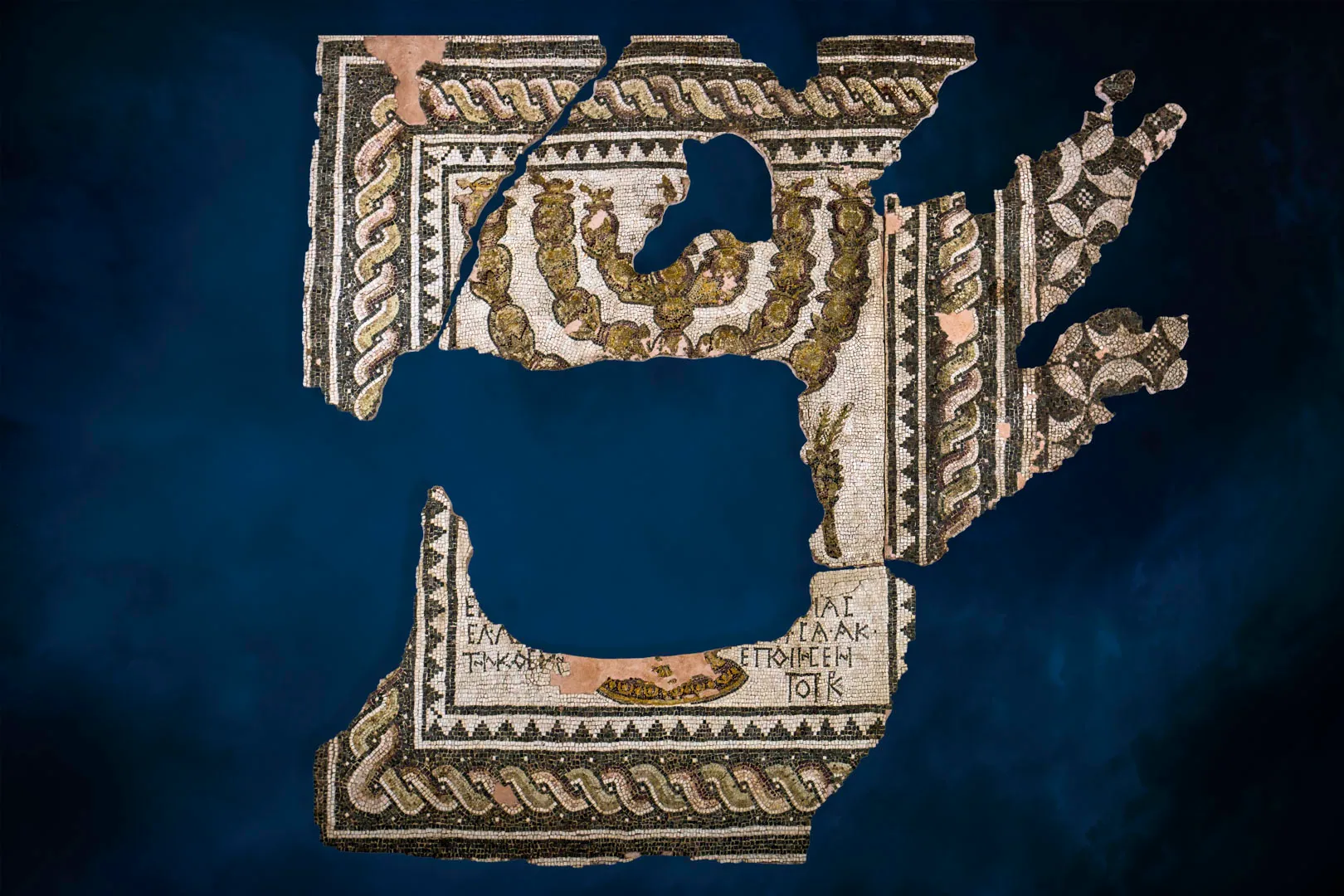
Philippopolis Synagogue, Plovdiv
The only ancient synagogue found in Bulgaria stood in Roman Philippopolis, today's Plovdiv. Built in the early third century CE, it was wrecked and rebuilt twice before it was abandoned and destroyed at the end of the sixth century. Its menorah mosaic, excavated in 1981, is shown in Plovdiv's Regional Archaeological Museum.
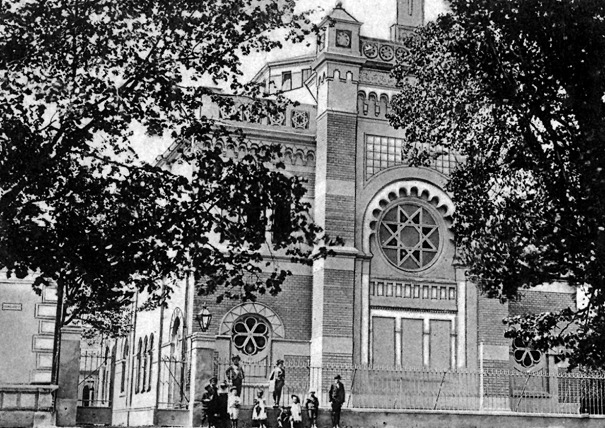
Piešťany Orthodox Synagogue
The large Moorish-style synagogue of Piešťany's Orthodox community, built of glazed facing brick, stood on Winterova street in the spa town. Its congregation was deported in 1942 and 1944. Local sources say it was taken apart for its building material in the early 1950s; Pinkas Hakehillot dates its destruction to 1979.
Pincehely-Görbő Synagogue
The synagogue of the Orthodox community of Görbő, a village joined to Pincehely in 1930, was built in 1840 on today's Mátyás király tér. Its congregation was deported to Auschwitz in July 1944. Local memory holds that the Arrow Cross then blew the building up; its ruins lay on the plot into the 1970s.
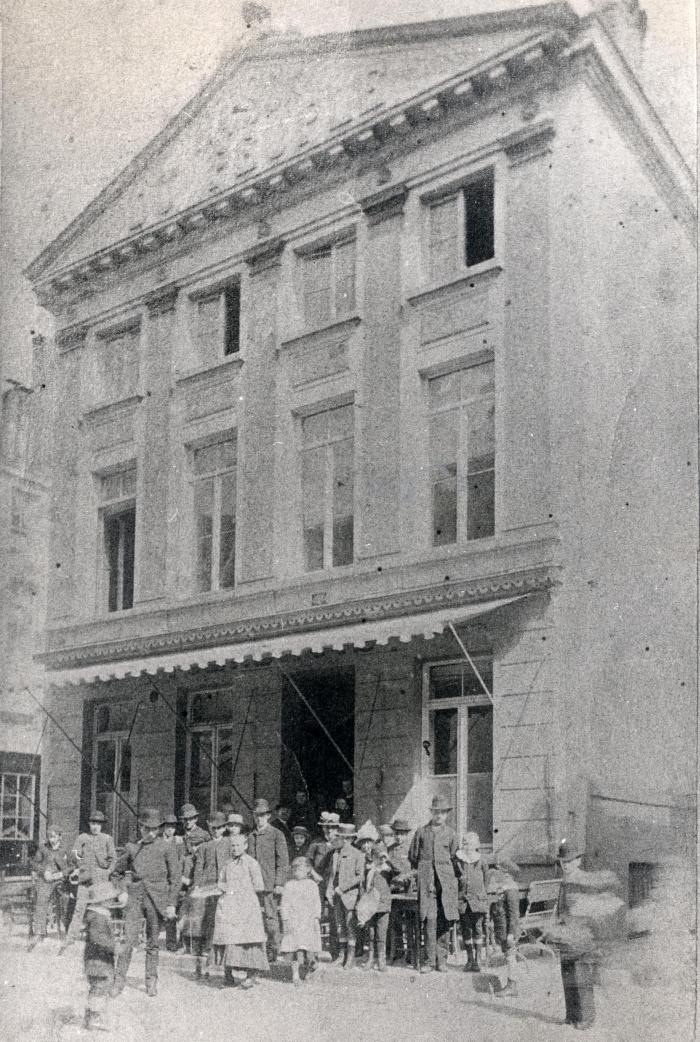
Place de Bavière Synagogue, Brussels
The first synagogue of Brussels occupied the Petite Boucherie, an early eighteenth-century hall standing free in the middle of the Place de Bavière. Inaugurated on 18 April 1834, it served the community until 1878, then became the city's first Maison du Peuple. It was demolished around 1955-1956 during the North-South rail junction works.
Plešivec Synagogue
The synagogue of Plešivec (Hungarian Pelsőc), a small town in the Gemer region, was a modest free-standing building of around 1900 whose street front carried the Ten Commandments and stained-glass Stars of David. It stood empty after the Holocaust and was demolished at an unknown date after the Second World War; who pulled it down is not recorded.

Poběžovice Synagogue
The synagogue of Ronsperg, today Poběžovice in western Bohemia, was built in 1816 and also held the Jewish school, a rabbi's flat and, below it, a mikveh revered by Hasidic pilgrims. It was set on fire in 1938 and afterwards pulled down by the Nazis; its congregation was dispersed, deported and murdered.
Pod Roșu Synagogue, Iași
The Pod Roșu Synagogue was a Hasidic house of prayer in the Podu Roș quarter of Iași, built around 1810 with money from Rabbi Avraham Yehoshua Heschel, the Apter Rav. One of the city's three main synagogues, it was demolished during the Communist systematization of Iași; the exact year is unknown.
Podbořanský Rohozec Synagogue
The synagogue of Deutsch Rust, today Podbořanský Rohozec in the Louny district, was built in 1816 for a village Jewish community that around 1865 made up about half the population. The community dwindled to 13 people by 1930, and the empty building was pulled down in 1957, under Communist rule; who demolished it is not recorded.
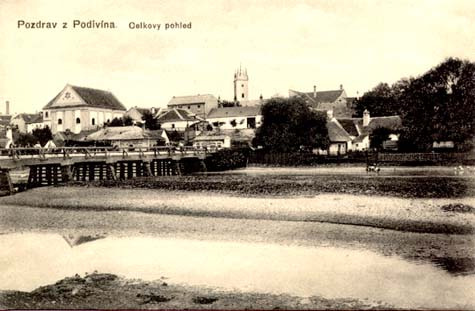
Podivín Synagogue
The synagogue of Podivín, known in German as Kostel, stood in the southern part of the Jewish quarter of what was reputedly Moravia's oldest Jewish community. Probably built in the mid-17th century and renovated in the early 1820s, it lost its congregation in the Holocaust and was demolished at an unknown date after 1945.
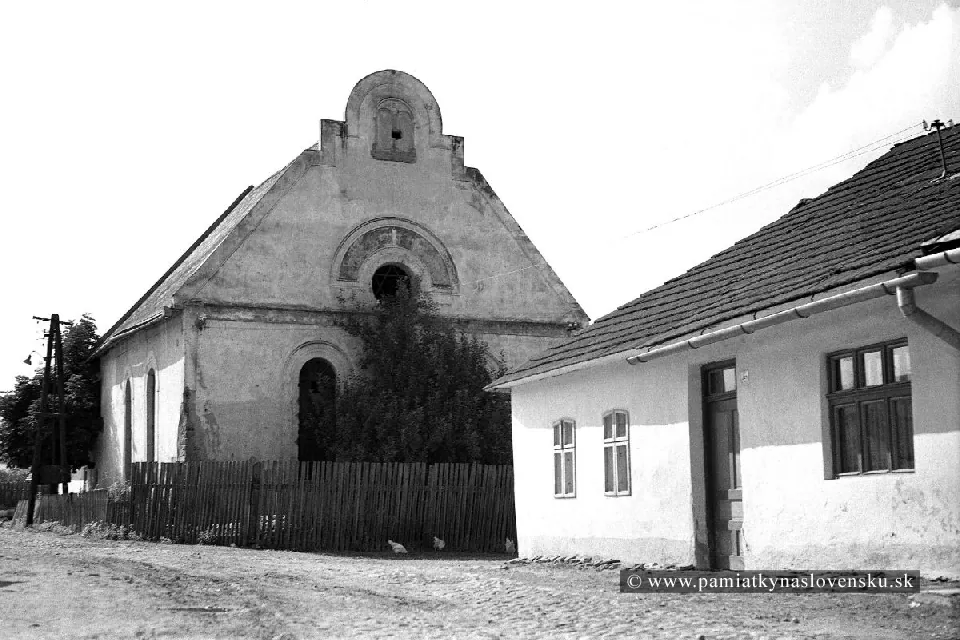
Podolínec Synagogue
The synagogue of Podolínec, an old royal town in the Spiš region, was a plain free-standing house of prayer built for a small Orthodox congregation in the last quarter of the nineteenth century, beside the former town fortifications. Its congregation was deported in 1942. The building stood abandoned after the war and was demolished in 1988.
Poděbrady Synagogue
The synagogue of Poděbrady, on today's Husova street, was built after the congregation bought its plot in 1852 and stood beside a Jewish school and rabbi's flat. Most of the town's Jews were deported and murdered in 1942-1944; the town acquired the building in 1948 and it was gone by 1959.
Pohořelice Synagogue
The synagogue of Pohořelice (Pohrlitz), built in 1854-55 and consecrated in 1856 to replace an older, overcrowded house of prayer, served one of the oldest Jewish communities in Moravia. Under Nazi rule it was released for demolition in 1938 and destroyed; its congregation was deported and mostly murdered, and the site is now open ground.
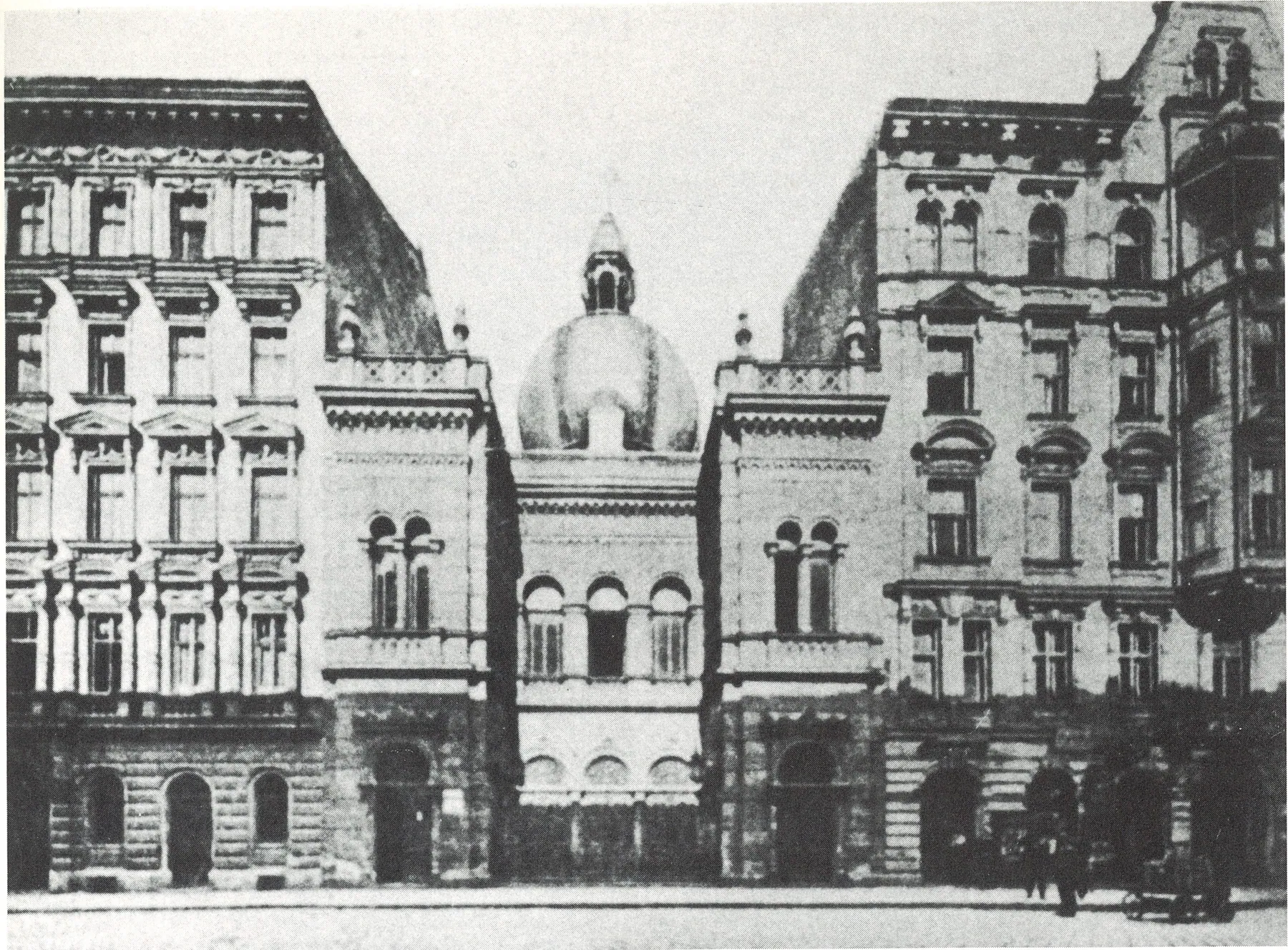
Polnische Schul (Leopoldsgasse Synagogue), Vienna
The Polnische Schul at Leopoldsgasse 29 in Vienna's Leopoldstadt was the main synagogue of the city's Orthodox Jews from Poland and Galicia. Designed by Wilhelm Stiassny with an onion-shaped dome over its entrance, it was consecrated on 8 September 1893. The Nazis set it on fire during the November pogrom on 10 November 1938, and the burnt-out ruin was pulled down in 1939.
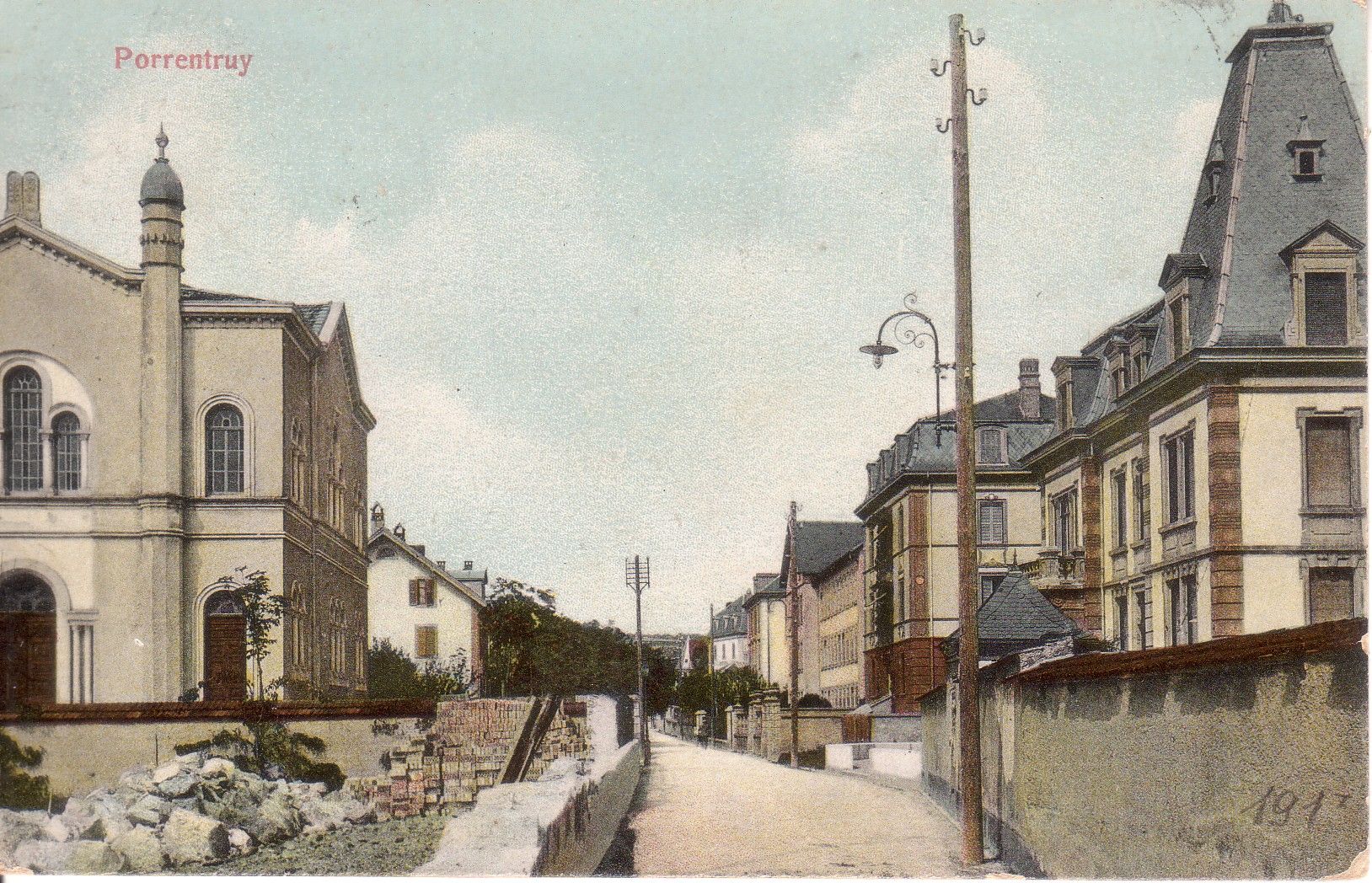
Porrentruy Synagogue
The synagogue of Porrentruy in the Swiss Jura was built in 1872-1874 by Jewish families from Alsace and consecrated on 3 September 1874. A basilica with two slender towers, it emptied as the community dwindled. The last three Jewish residents sold it for demolition, and it was pulled down on 28 April 1983.
Portuguese Synagogue Neveh Shalom, Maarssen
Neveh Shalom, the 'Dwelling of Peace', was the summer synagogue of the wealthy Portuguese Jews who kept country houses along the Vecht at Maarssen. Opened in a converted house in 1719-1720 despite opposition from the Reformed church council and enlarged in 1736, it fell out of use as the families left and was sold for demolition in 1839.
Postoloprty Synagogue
The brick synagogue of Postoloprty (Postelberg), in north-western Bohemia, was built in 1722 for a Jewish community settled in the town from about 1670, and was rebuilt in 1867. The congregation was scattered and destroyed under Nazi rule, and the empty building was demolished in 1980, during the Communist period; who demolished it is not recorded.
Považská Bystrica Synagogue
The synagogue of Považská Bystrica, in the Váh valley of north-western Slovakia, was built in the 1890s to a design by the architect Dionýz Milch. Its congregation was deported in 1942. Under Communist rule its domed tower was removed and it became the Považan department store, before being demolished in the 1970s town-centre rebuilding.
Pozdišovce Synagogue
Pozdišovce, a Zemplín village near Michalovce, had a synagogue that in the 18th century also served the Jews of Michalovce before they formed their own community. Its 55 Jews of 1930 were largely deported in 1942. The building is recorded only as a lost monument; when and how it disappeared is unknown.
Požega Synagogue
The synagogue of Požega, in central Slavonia, was a modest two-towered building of 1885 set into a street row behind a front garden, with a richly painted Torah ark inside. It was demolished in 1941, the first year of Ustaše rule, and the town's Jews were destroyed by 1942. Who carried out the demolition is not recorded.
Prayer Hall of Humenné
The prayer hall of Humenné was a small free-standing house of prayer with its own women's gallery, built in the second half of the nineteenth century in a narrow lane beside the town's Old and New Synagogues. Its congregation was deported in 1942 and 1944, and the hall was demolished in the 1970s together with both synagogues.
Prašný Újezd Synagogue
The synagogue of Prašný Újezd, a village in western Bohemia, served what was once the strongest Jewish community in its area after Terešov. Recorded by 1838, it burned down in 1907, when the community was already dwindling, and its remains were cleared in the early 1960s together with neighbouring houses.

Pribeta Synagogue
Pribeta Synagogue was a small house of prayer in the farming village of Pribeta (Hungarian Perbete), Komárno district, southern Slovakia. Built in the nineteenth century, according to one source in 1897, it was a simple village building with a two-window gabled front. Its congregation was deported in 1944; the building was damaged in 1945 and demolished after the war.
Prievidza Synagogue
Prievidza's synagogue on Košovská cesta was built in 1868 for the Jewish community of this upper Nitra valley town. Its tri-partite front carried the Ten Commandments and an unusual hexagonal window. Most of the congregation was murdered in the Holocaust, and the empty building was demolished in 1980, under Communist rule.
Pruské Synagogue
Pruské, a former market town in the Váh valley of north-western Slovakia, once had a synagogue serving a small Jewish community. After the Second World War and the deportation of Slovakia's Jews it was left without a congregation, fell into decay and was later demolished; when, and by whom, is not recorded.

Pusztakovácsi Synagogue
Pusztakovácsi's synagogue was a small rendered village hall with a curved gable, built at an unknown date for a Jewish community of 86 people in 1851. Its last Jews were deported through Kaposvár in 1944. A photograph dated 1949 shows it derelict; it was demolished by the 1980s, by whom is not recorded.

Pâncota Synagogue
The synagogue of Pâncota (Hungarian Pankota), a small town in Arad county, was a twin-towered building with bell-shaped domes, shown on a postcard posted in 1912. It served a community of about 170 Jews. It was pulled down after the Second World War; the only account of the demolition comes second-hand through one witness.
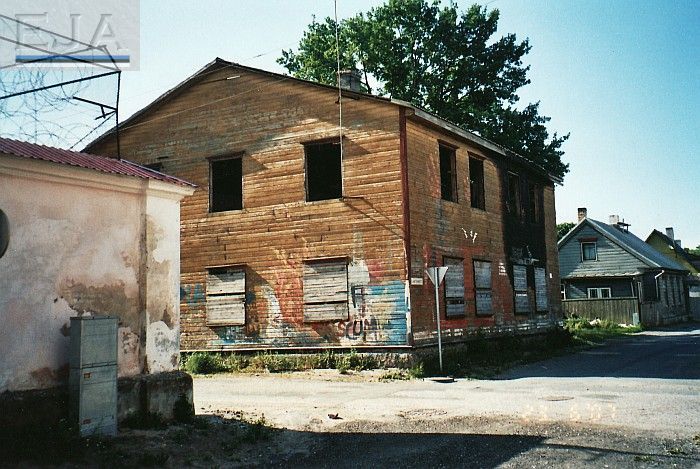
Pärnu Synagogue
Pärnu's synagogue was a two-storey wooden building at Laatsareti 2, beside the town prison, with a small stone wing for the congregation's offices. Local Omakaitse men murdered 34 Jewish children inside it on 2 November 1941. Later used as housing, it was left ransacked and burned in the 1990s and demolished between 2010 and 2013.

Pécsvárad Synagogue
The synagogue of Pécsvárad, a small district town in Baranya county, served a Jewish community of 160 people in 1910 and 120 in 1941. Its Jews were taken to Pécs and deported on 4 July 1944. The synagogue was photographed derelict in 1956 and later demolished; who pulled it down is not recorded.
Písečné Synagogue
The synagogue of Písečné (Piesling), a village near Slavonice in the historic Moravian borderland, was built between 1768 and 1782 for a Jewish community of some fifty families. It stood in the western Jewish quarter beside the creek. Long disused and dilapidated, it was demolished with much of that quarter a few years after the Second World War.
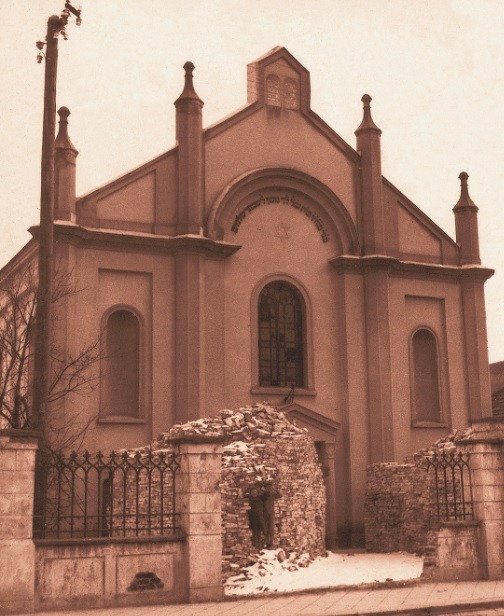
Púchov Synagogue
Púchov's brick Neo-Gothic synagogue was built in 1868 after fire destroyed an earlier wooden prayer house. It served the town's Jews until most of them were deported in 1942 and the rest in 1944. Used as a warehouse and furniture shop under Communism, it was demolished by the Communist authorities in 1988.
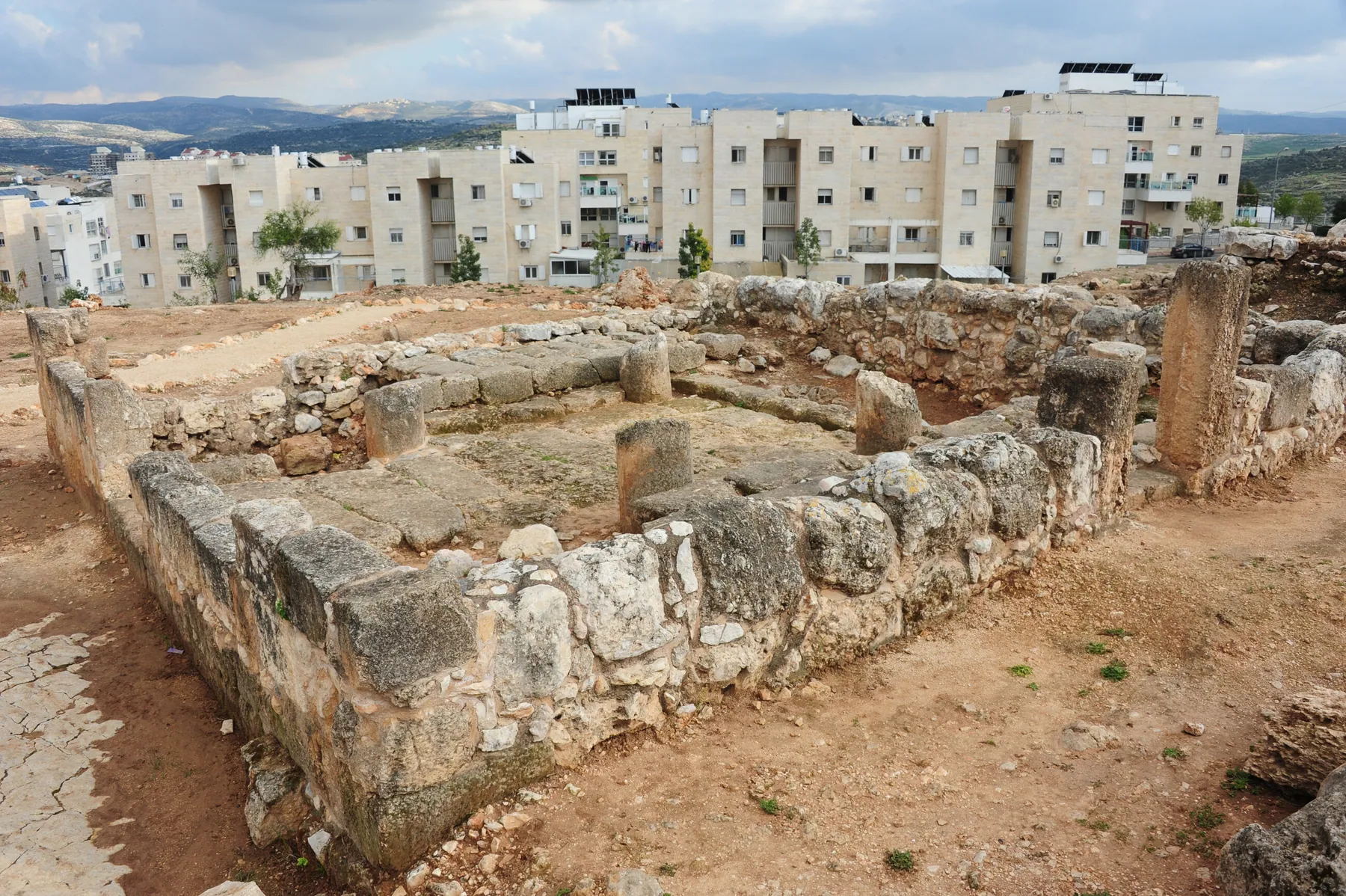
Qiryat Sefer Synagogue
A small square hall with stone benches and two rows of columns, built in a Jewish farming village of the late Second Temple period at Khirbet Badd 'Isa. The village emptied when Rome crushed the Bar Kokhba revolt around 135 CE; low excavated walls remain inside modern Modi'in Illit.
Rabbi Senkman Synagogue, Galați
The Rabin Senkman Synagogue was one of the many small prayer houses of Galați, the Danube port with one of Moldavia's largest Jewish communities. It stood at Serii Street 13, in the hill district where Jews settled from 1769. It no longer exists; when it was lost, and who pulled it down, is unknown.
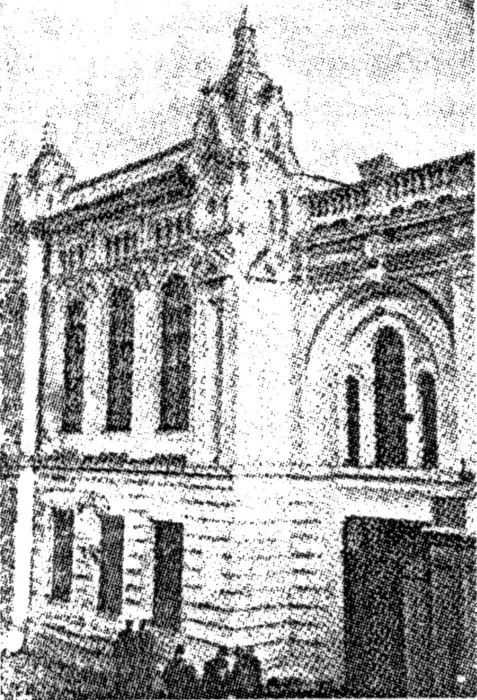
Rabbi Tsirelson's Synagogue and Magen David Yeshiva
Rabbi Tsirelson's Synagogue stood at the heart of a Jewish charitable complex on Popovskaya Street in Chișinău: a synagogue between an old-age home and a boys' yeshiva, founded by the Perelmuter and Kligman families. Taken from the Jewish community under Soviet rule and then neglected for decades, it is now a roofless, half-ruined shell.
Rabbi's Synagogue, Ploiești
The Rabbi's Synagogue was one of the oldest synagogues of Ploiești, built in 1780 and renovated in 1891, with the Great Synagogue next to it. On 17 November 1940 the Iron Guard had it pulled down, together with other Jewish buildings, on the pretext of earthquake damage.

Radouň Synagogue
The synagogue of Radouň, a village north of Mělník now part of Štětí, was built in the first half of the nineteenth century for a small rural Jewish community. Services ended in the 1930s. After 1945 the empty building was gradually stripped by local people, and its last walls were pulled down around 1980.
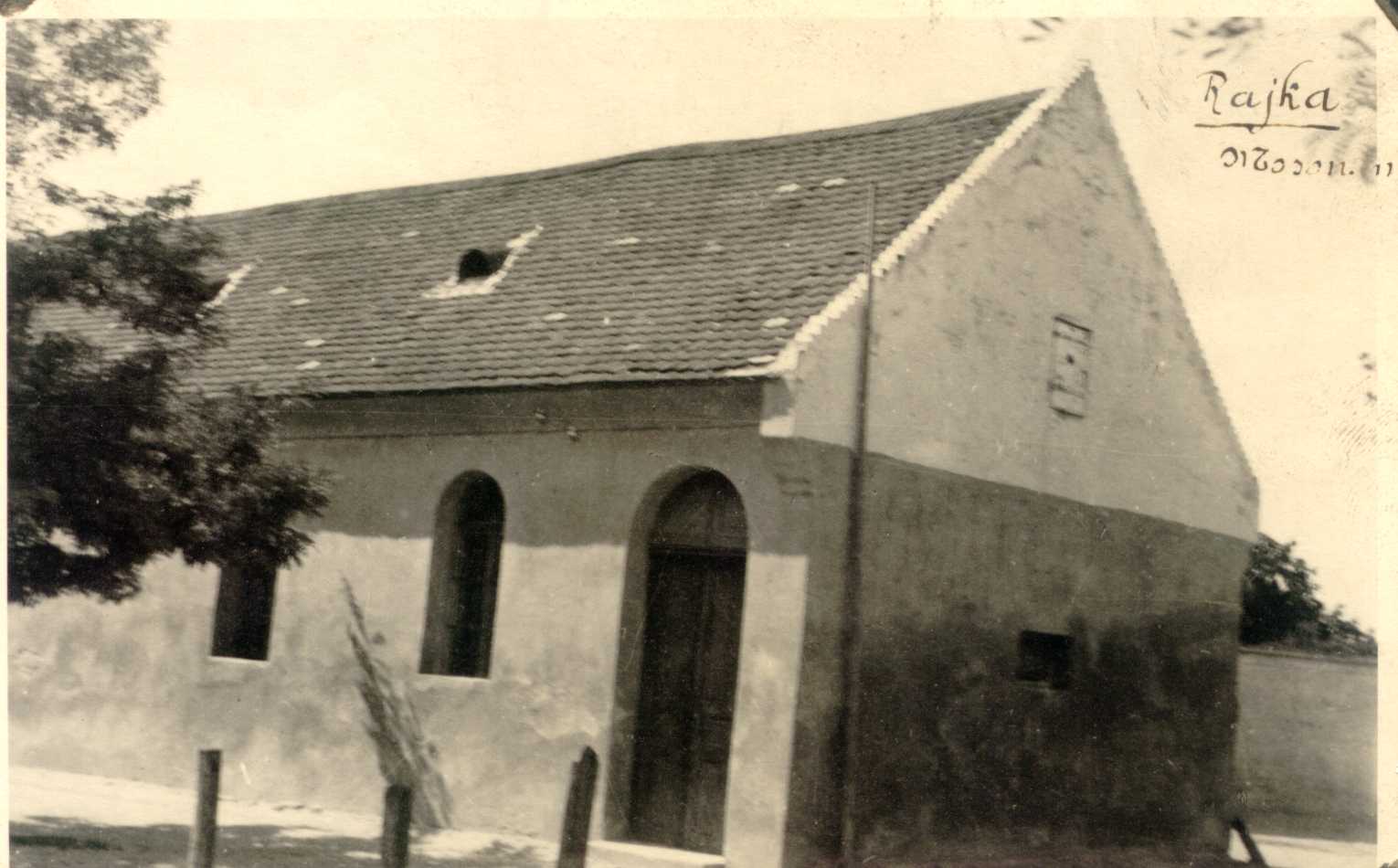
Rajka Synagogue
Rajka's small Orthodox synagogue, a plain gabled hall with a richly painted interior, served a Jewish community settled in this Moson county border village since at least the early eighteenth century. Its members were deported in 1944. The derelict building was pulled down, together with the ritual bath, after 1945; the year and the demolisher are unrecorded.
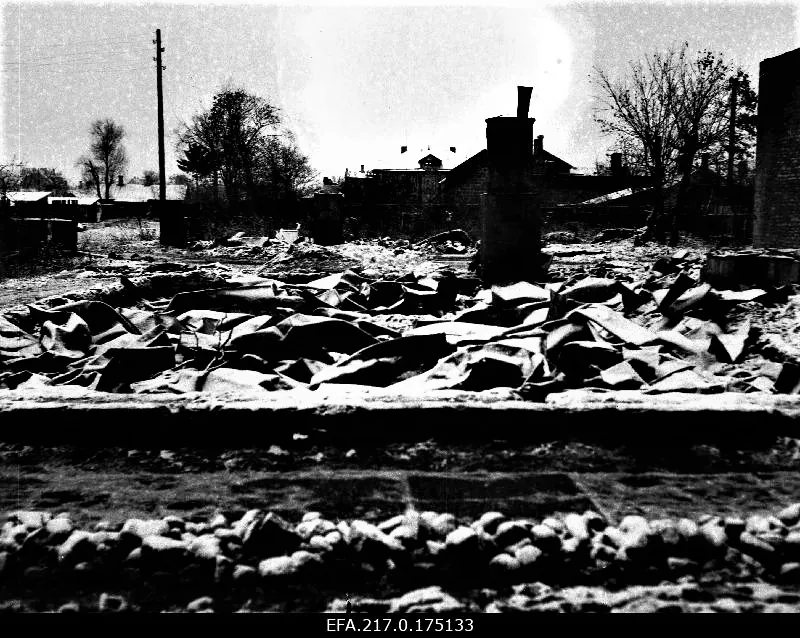
Rakvere Synagogue
Rakvere's synagogue was a tall one-storey wooden house on Rohuaia Street, built in 1883 for a community of about a hundred people. It held a prayer hall, a latticed women's balcony, the congregation office and the rabbi's rooms. Used by the Nazi German army during the occupation, it burned in autumn 1944.
Reca Synagogue
The synagogue of Reca (Hungarian Réte), a village east of Senec, was built at the end of the eighteenth century in the manner of Moravian synagogues. Its small Orthodox congregation was deported in 1944, and the building, which stood behind the rabbi's house, was demolished in the early 1950s; the village cultural house now occupies the site.
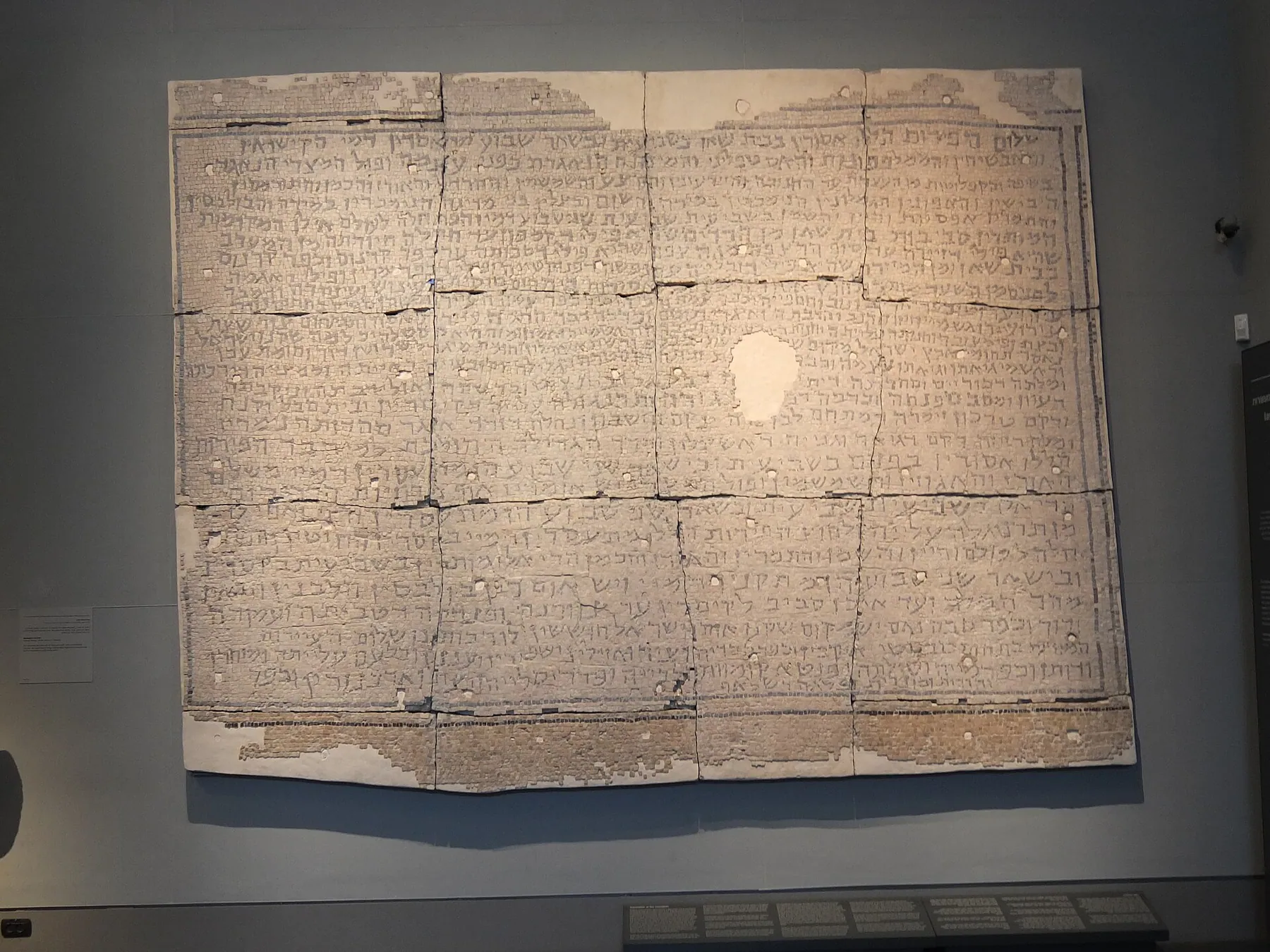
Rehov Synagogue
The synagogue of ancient Rehov stood in the Beth Shean Valley, in what are now the fields of Kibbutz Ein HaNatziv. Built in the fourth or fifth century CE and twice rebuilt, it held a long halakhic inscription in mosaic. It collapsed suddenly in the late 680s CE, probably in an earthquake.

Reichenberg Synagogue (Liberec)
Neo-Renaissance synagogue of Reichenberg (Liberec) by the Viennese architect Carl König, dedicated in September 1889. Its tall domed tower dominated the city skyline. The Nazis burned it on the night of 9–10 November 1938, weeks after Germany annexed the Sudetenland. The Building of Reconciliation, containing a new synagogue, has stood on the site since 2000.
Rendarilor Synagogue, Dorohoi
The Rendarilor Synagogue was one of six prayer houses around a small square beside the Great Synagogue of Dorohoi, attended mostly by merchants. A congregant who prayed there from 1932 until about 1950 said in 2006 that it had long since closed and been demolished, with the town's heating station now on its site.

Rimavská Seč Synagogue
The small synagogue of Rimavská Seč (Hungarian Rimaszécs), a village in the Gömör region of southern Slovakia, was built around 1900 for a small Jewish community. It survived the Second World War but was demolished afterwards, according to a published list in 1957-1958, under Communist rule. A family house now stands on the site.
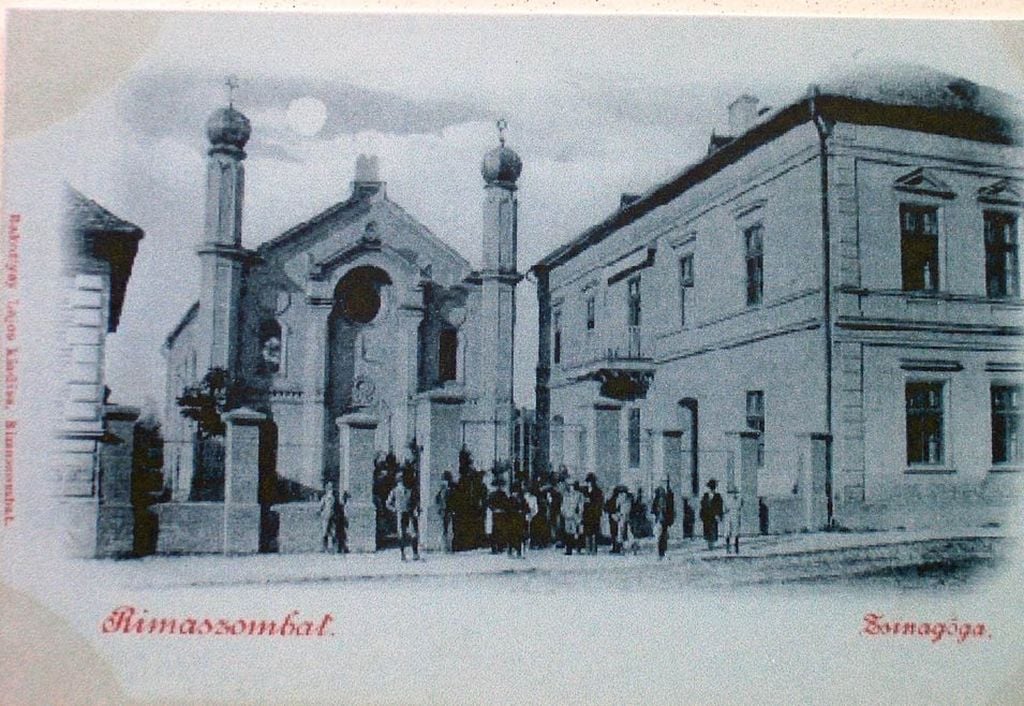
Rimavská Sobota Synagogue
The Neolog synagogue of Rimavská Sobota, completed in 1868, was a free-standing hall whose street front showed the ark niche between two slender onion-domed minarets. Most of the town's Jews were deported to Auschwitz-Birkenau in 1944. Services ended in 1969, and the Communist-run Local National Committee had the decaying building demolished in December 1986.
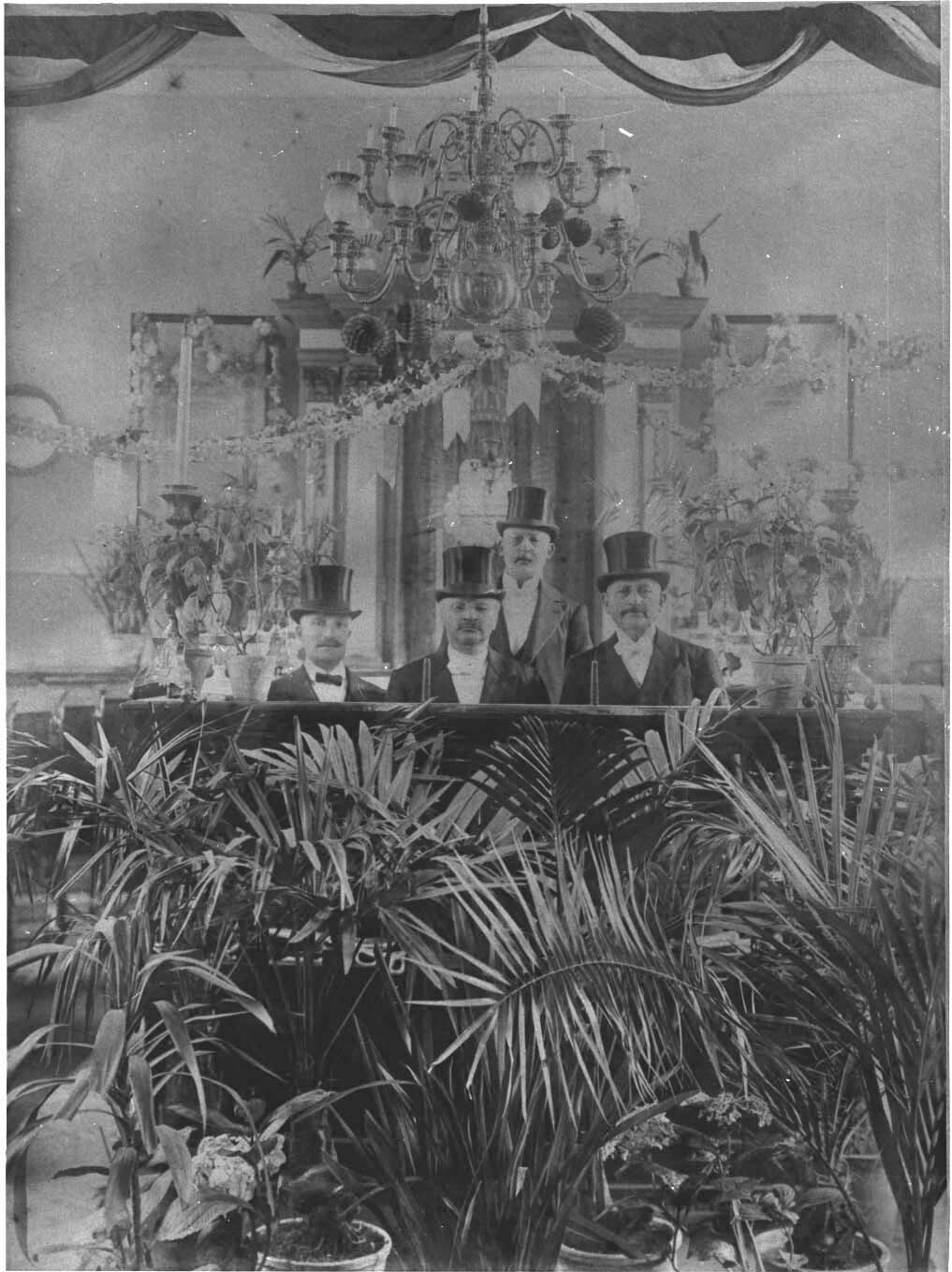
Roermond Synagogue
Roermond's synagogue, a small hall opened in 1853 behind a house on the Hamstraat, served the Jewish community of central Limburg for ninety years. Nazi German occupiers used it as a horse stable from 1942, and an Allied bomb destroyed it in November 1944. Most of the congregation was deported and murdered in 1942-1943.
Rokycany Synagogue
Rokycany's synagogue was built in 1871 for a small Jewish community in the West Bohemian town east of Plzeň, which had about 98 members in 1910. The community ended in the Holocaust, and the building was pulled down in 1981 under Communist rule; who demolished it is not recorded.
Rokytnice v Orlických horách Synagogue
The stone synagogue of Rokytnice v Orlických horách replaced a wooden prayer house and school that burned in 1861. It served a small community that dissolved in the 1890s, was rebuilt as an apartment house between the world wars, was damaged during the Second World War and no longer stands.
Rosenthal Synagogue (prayer hall), Topoľčany
The Rosenthal prayer hall was a small free-standing synagogue in Topoľčany, built during or soon after the First World War by the Rosenthal family of Nedanovce in memory of a son killed in that war. It came through the Holocaust undamaged, served returning survivors until 1965 and was demolished in the early 1980s.

Rothenburg ob der Tauber Synagogue at the Judenkirchhof
Rothenburg's last medieval synagogue was built beside the Jewish cemetery around 1404 to 1407, after the older synagogue on today's Kapellenplatz was sold and made a chapel. A mob incited by the preacher Johannes Teuschlein plundered it on 8 January 1520, the city council expelled the Jews, and the building became a pilgrimage chapel, demolished in 1560 or 1561.
Rozhanovce Synagogue
The synagogue of Rozhanovce, a village just north-east of Košice, served one of the two rural Jewish communities where the Jews trading in Košice lived before the city let them settle. A synagogue is recorded there by 1851. The architectural historian Maroš Borský writes that it burned in 1930; the cause is unknown.

Rožňava Synagogue
Rožňava's synagogue, a turreted historicist building with a stepped gable, was designed by Nándor Kunfalvi of Szeged, built by the local builder Nándor Szilvássy and opened on 29 August 1893. Its congregation was deported in June 1944. Used afterwards as a furniture store, it was pulled down in 1957 or 1958, reportedly by the town's Communist-era leadership.
Ráckeve Synagogue
Ráckeve, a market town in Pest county, had a synagogue built in 1885 by a young Status Quo community founded in 1879, paid for by members' donations and collections. The community numbered 209 in 1910 and 123 in 1941. A survey of 1980-87 recorded the synagogue as demolished; when and by whom is unknown.
Sabinov Synagogue
The synagogue of Sabinov (Hungarian Kisszeben), a town in the Šariš region of eastern Slovakia, was built in 1864 or 1870. After the town's Jews were deported from 1942 it served as a grain store, and on 19 January 1945 retreating Nazi German troops set it on fire. Its site lies in the town park.
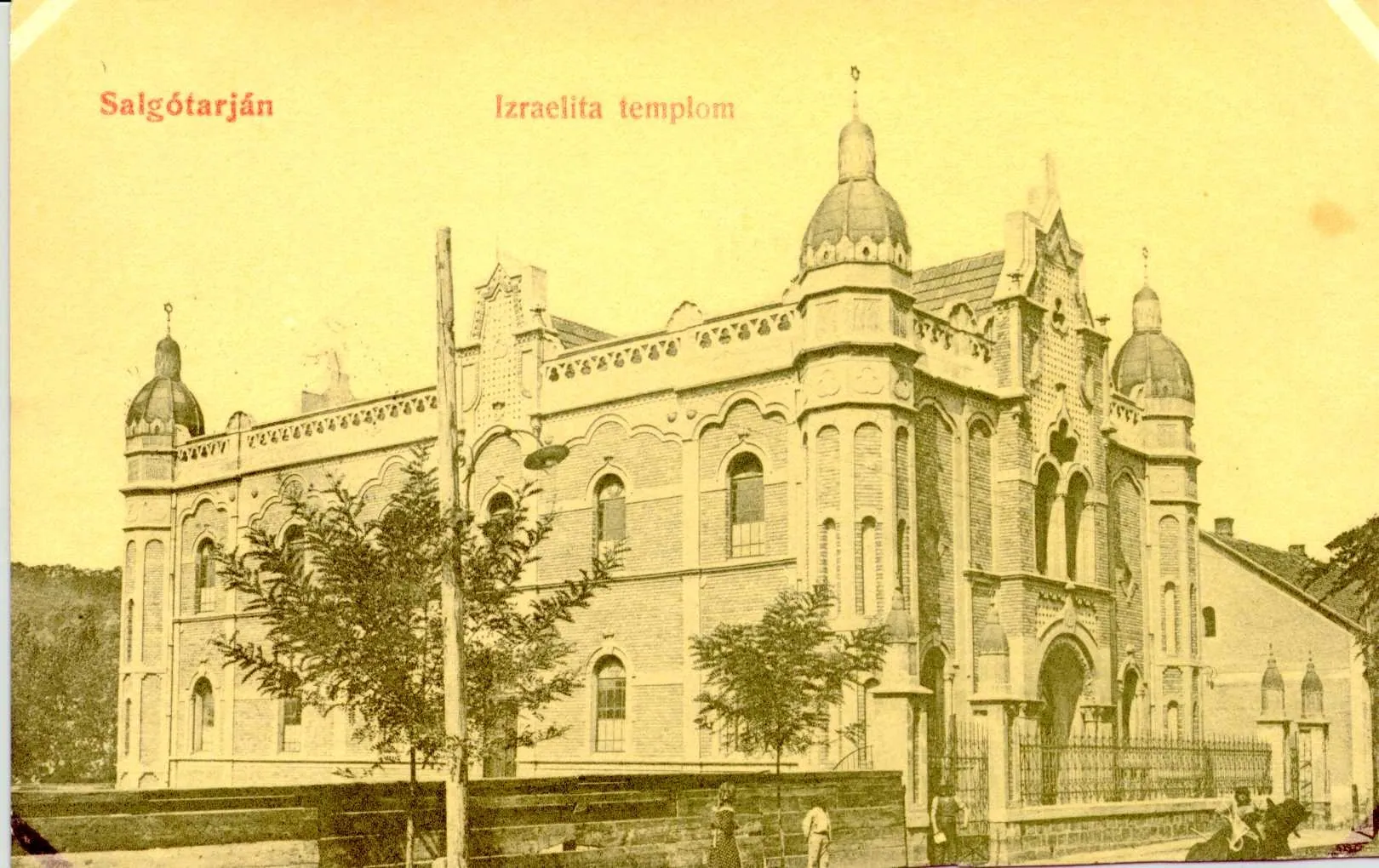
Salgótarján Synagogue
Salgótarján's Orthodox synagogue, a twin-towered Moorish Revival building designed by Gyula Szvoboda, was dedicated in September 1902 in the heart of the mining town. It survived two world wars and served a much-reduced congregation until 1969, when the Communists demolished it, despite its protected-monument status, to rebuild the town centre.
Santa Cruz Synagogue of Seville
One of the three principal synagogues of medieval Seville, this former mosque stood on today's Plaza de Santa Cruz. After the mob attack on the Jewish quarter in June 1391, stirred up by Archdeacon Ferrand Martínez, it was turned into the parish church of Santa Cruz. That church was demolished in 1810-1811, during the French occupation.

Sardis Synagogue
The Sardis synagogue, the largest known from the ancient diaspora, was made from part of the Roman bath-gymnasium complex and held nearly a thousand people. It was abandoned in the early seventh century CE when the city fell to an earthquake and, by some accounts, a Persian attack. Excavated from 1962, it was partly rebuilt by 1973.
Sačurov Synagogue
Sačurov, a village in the Vranov nad Topľou district of eastern Slovakia, once had a synagogue that the Slovak heritage portal Pamiatky na Slovensku now lists among the country's lost monuments. Its builder, its dates and the circumstances of its loss are unknown; a Jewish cemetery survives in the woods west of the village.
Schiffschul, Vienna
The Schiffschul in Große Schiffgasse, Leopoldstadt, consecrated in 1864, was the centre of strictly Orthodox Judaism in Vienna and seated about 750 worshippers. Nazis wrecked it in October 1938 and burned it on 10 November 1938; its congregation was driven out or murdered, and the ruins were cleared after 1939. The site is now open ground.

Schmalzhoftempel (Schmalzhofgasse Synagogue), Vienna
The Schmalzhoftempel at Schmalzhofgasse 3 in Vienna's Mariahilf district was a monumental neo-Gothic brick synagogue by Max Fleischer, consecrated on 9 September 1884 for the Jews of Mariahilf and Neubau. The Nazis looted and burned it during the November pogrom on 10 November 1938, and the ruin was demolished in 1939.
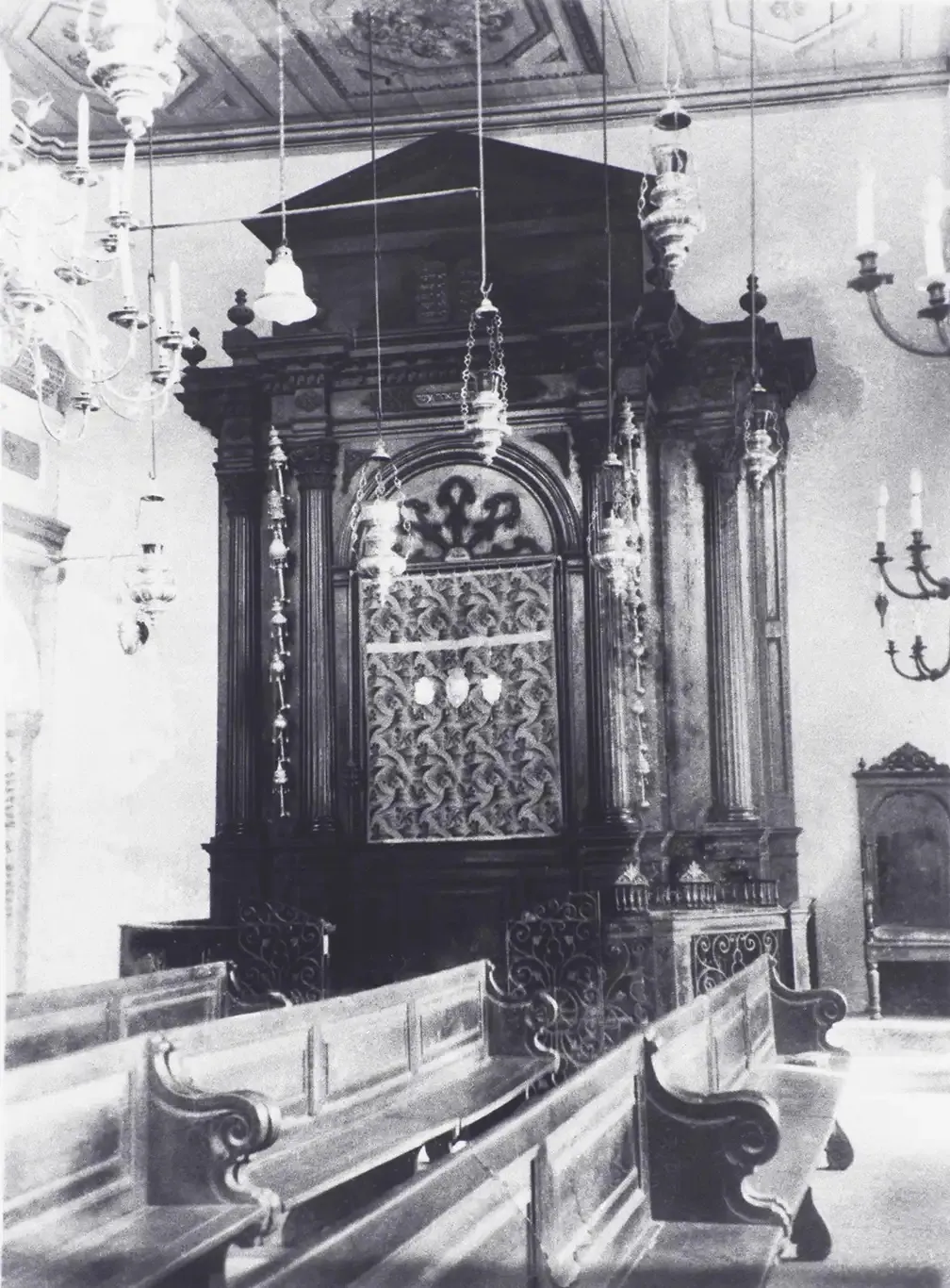
Scuola Pugliese Synagogue (Corfu)
The Scuola Pugliese was the synagogue of Corfu's Apulian (Italian and Sephardi) Jewish community, standing on Palaiologou Street in the old Jewish quarter. Founded in the sixteenth century and later rebuilt, it was destroyed by fire in the Nazi German air raid on Corfu town of 13–14 September 1943.
Second Sephardic Synagogue of Banja Luka
The second synagogue of Banja Luka's Sephardic community was built at the end of 1880 on Jukićeva ulica, in the town centre, under its first rabbi, Jozef Nahmijas, with a meldar school attached. By the 1930s it was too small, and in 1936 the community began its New Temple on the same site.
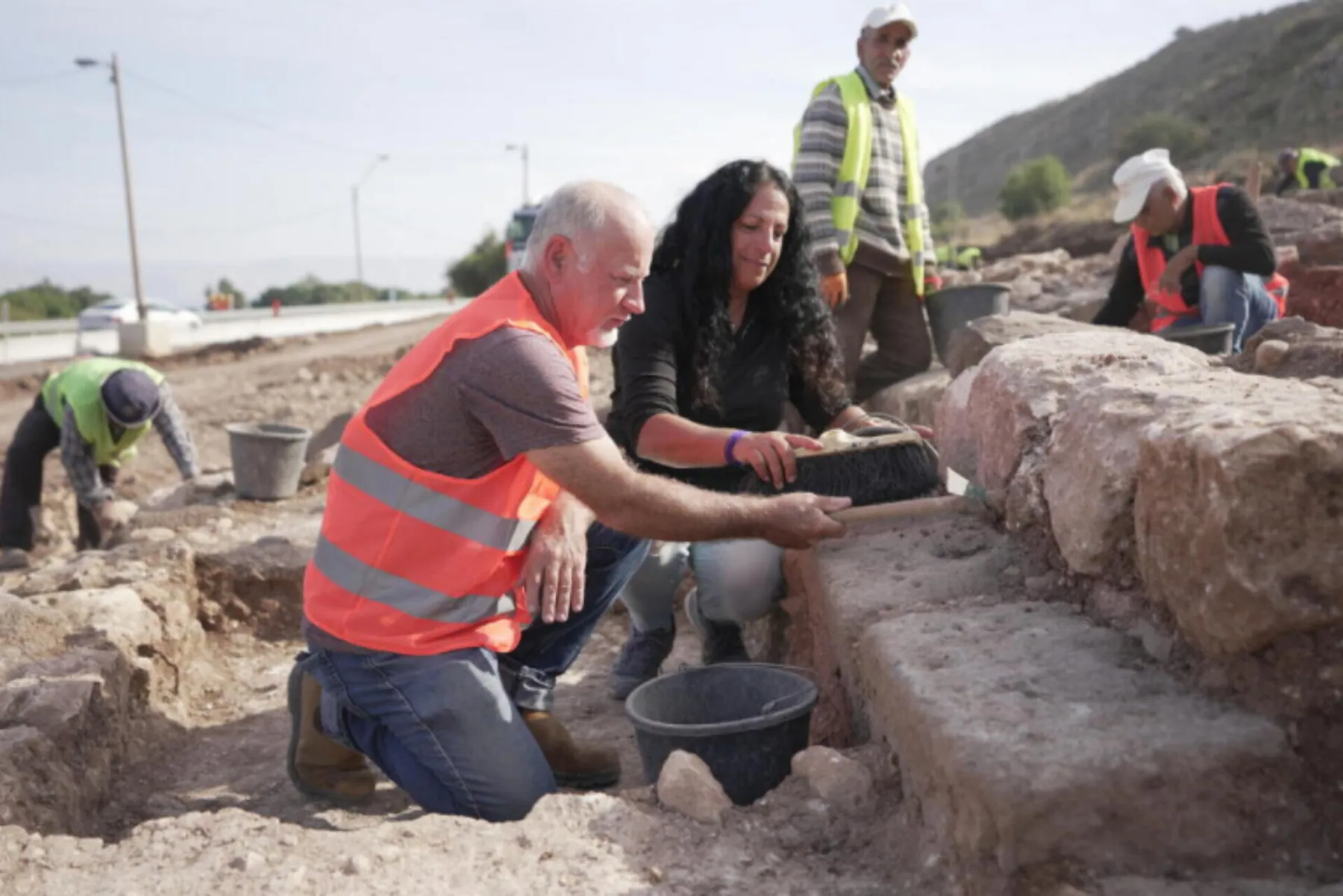
Second Synagogue of Magdala
A second synagogue of the Second Temple period at Magdala (Migdal) on the Sea of Galilee, found in 2021 during salvage digging for the widening of Route 90, between 160 and 200 metres from the synagogue found in 2009. It was a square basalt and limestone hall with plastered benches. When and how it went out of use is unknown.
Second Synagogue of Osoblaha (1625)
The second synagogue of Osoblaha (Hotzenplotz) was built in 1625 on the site of the town's first synagogue, which had burned down. For almost two centuries it served one of the largest Jewish communities in Moravia's Silesian enclave, until the great town fire of 1802 destroyed it together with 32 Torah scrolls.
Second Wooden Synagogue of Loštice
The second synagogue of Loštice in Moravia was a log building on masonry foundations, put up in 1651 with the lord's permission after its predecessor was lost in the Thirty Years' War. Moved into the new ghetto in 1727, it was destroyed, reportedly by fire, at the end of the eighteenth century and replaced in 1805.
Seleuș Synagogue
Seleuș, a village in Arad county known in Hungarian as Csigérszőllős, had a small synagogue serving a Jewish community of a few dozen people at most. According to the Arad judge Andrei Popper, it was demolished soon after the Second World War under an order of the Jewish Federation in Bucharest; its furniture went to the village hall.
Sellye Synagogue
Sellye, a small town in southern Baranya county, had a synagogue that Anikó Gazda dates to 1909, at what was in the 1980s Mező Imre utca 63. The town had 46 Jews in 1941. Gazda's survey of 1980-87 found the building demolished; when it was pulled down, and by whom, is not recorded.
Senica Synagogue
Senica's synagogue, an ornate building in the oriental style completed in 1866, served one of the larger Jewish communities of western Slovakia, which once made up about a third of the town. The community's wartime fate is poorly documented in the sources found, and the synagogue was demolished under Communist rule when the town centre was rebuilt.
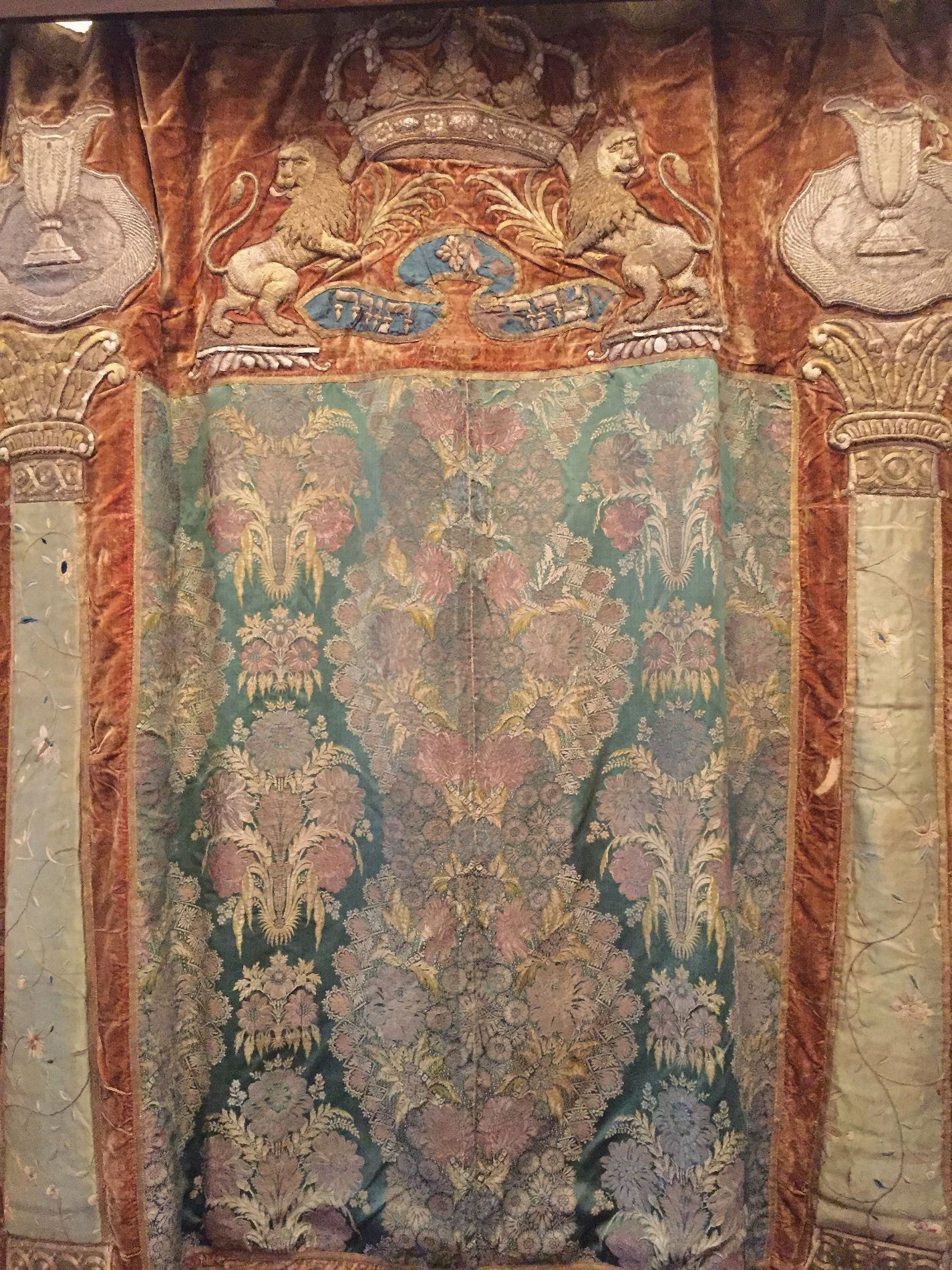
Sephardic Synagogue of Timișoara (Cetate)
The small Sephardic synagogue of Timișoara stood in the Judenhof, the Jewish courtyard in the Cetate district, beside an Ashkenazi synagogue; both were inaugurated in 1762. It served the city's Spanish-rite Jews for over a century until the Jewish community itself demolished it in 1905 to build its headquarters at Mărășești Street 10.
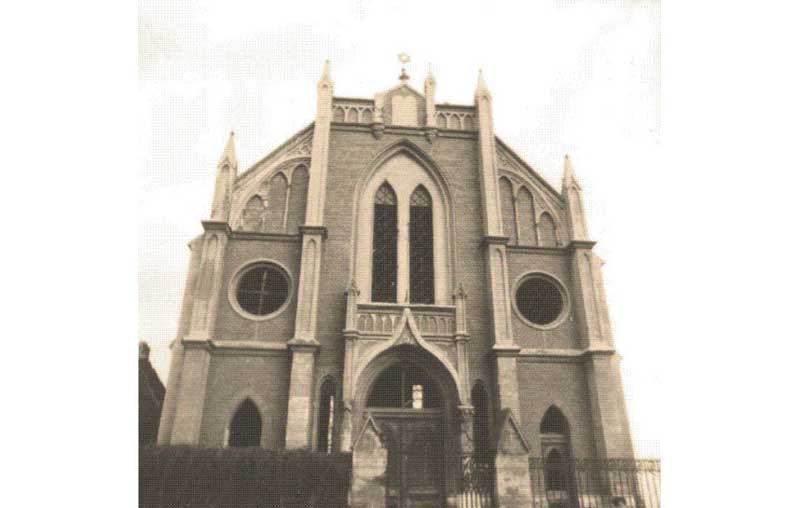
Sephardic Temple of Constanța
The Sephardic Temple on Mircea Street in Constanța, a brick Gothic Revival synagogue designed by Adolf Lintz and painted inside by Moritz Finkelstein, was completed between 1905 and 1908 for the port's Sephardic congregation. Heavily damaged in the Second World War and by the 1977 earthquake, it was demolished in 1989 under Ceaușescu's Communist regime.
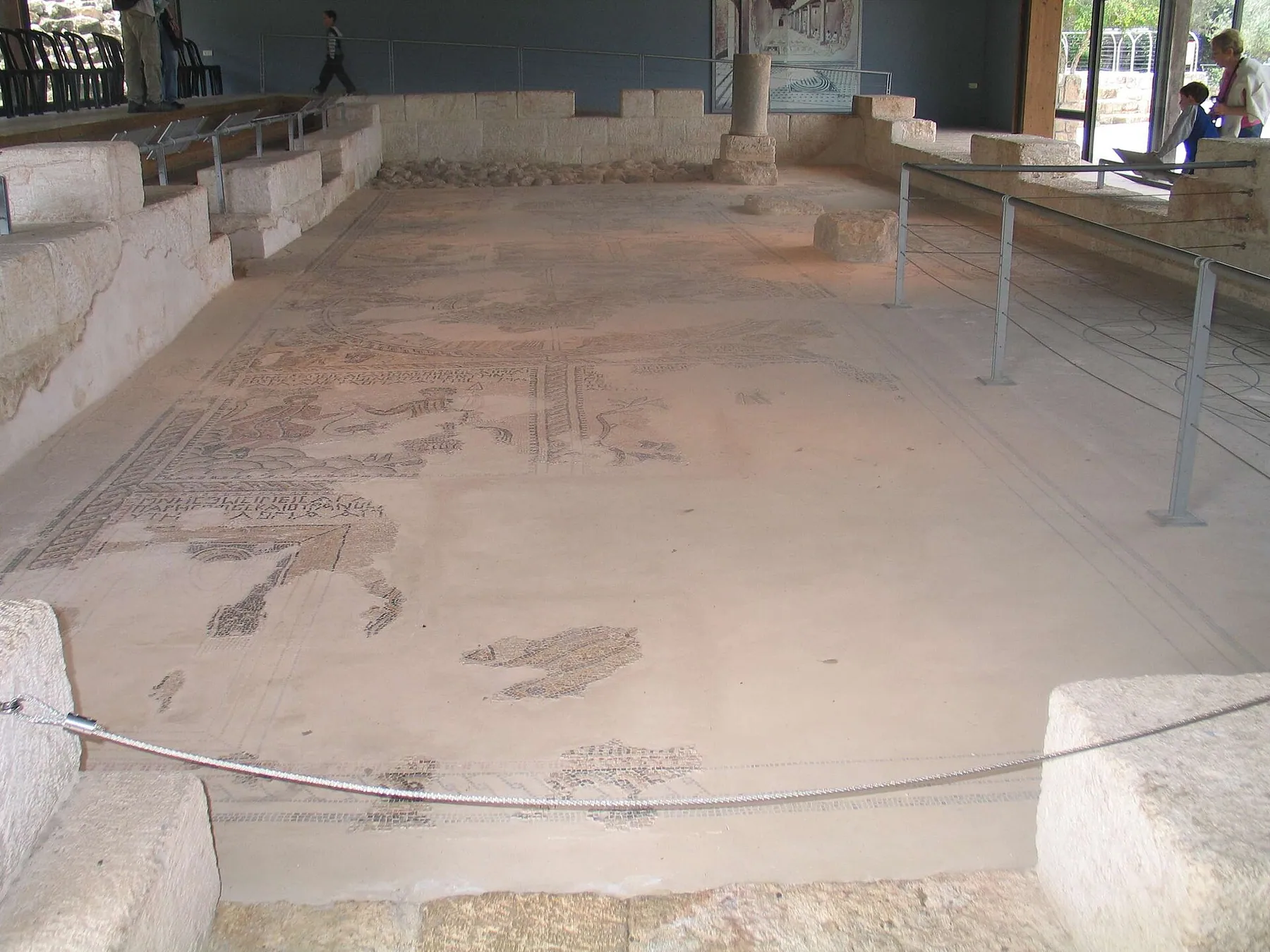
Sepphoris Synagogue
A long, narrow synagogue in the Galilean city of Sepphoris, dated by its excavators to the early fifth century CE and destroyed at the end of the Byzantine period. Its walls are gone, but the mosaic floor, with a zodiac, biblical scenes and donors' inscriptions, survives in Zippori National Park.
Sereď Synagogue
Sereď Synagogue on Hlavná Street was built in the 1920s with a plain, three-bay facade that broke with nineteenth-century synagogue design. Its congregation was destroyed in the Holocaust. After the war the building was heavily altered and used as a gym by the local sport union, and it was demolished in 2001 for new sports facilities.
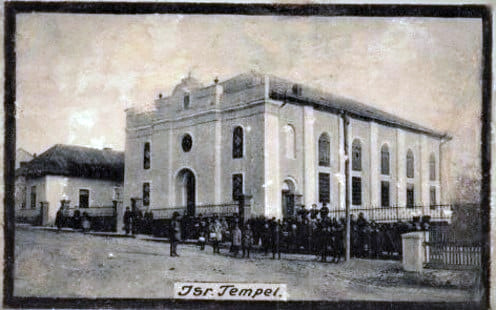
Sečovce Synagogue
The Orthodox synagogue of Sečovce (Gálszécs), a towerless two-storey hall of 15 by 22 metres with a Star of David window, was completed in 1904 after fire destroyed its predecessor. Most of the town's Jews were deported in 1942. Survivors reused it briefly; it later became a warehouse and was demolished in 1976.
Seňa Synagogue
The Orthodox synagogue of Seňa (Hungarian Szina), a village near Košice on the Hungarian border, was a small adobe hall with a women's balcony, built in the 1880s and enlarged in 1929. Its congregation was deported in 1944. Sources disagree on whether it was destroyed in the war or decayed and was demolished afterwards.
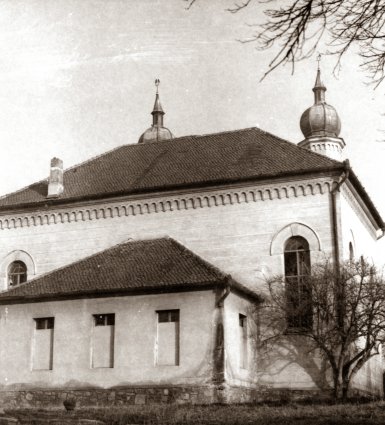
Sfântu Gheorghe Synagogue
The synagogue of Sfântu Gheorghe, Hungarian Sepsiszentgyörgy, stood in Csíki street and served a small Status Quo congregation in the Székely Land. Its people were deported in 1944, but the building survived the war and was photographed in 1962, when a couple held their religious wedding there. It was demolished in the early 1970s under Communist rule.
Shaf ve-Yativ Synagogue, Nehardea
Shaf ve-Yativ was the ancient synagogue of Nehardea in Babylonia, which tradition said the exiles of King Jeconiah built with stones and earth from the Temple. The Talmud calls it a seat of the Divine Presence where Rav, Shmuel and Abaye prayed. When and how it finally perished is unknown; its site is lost.
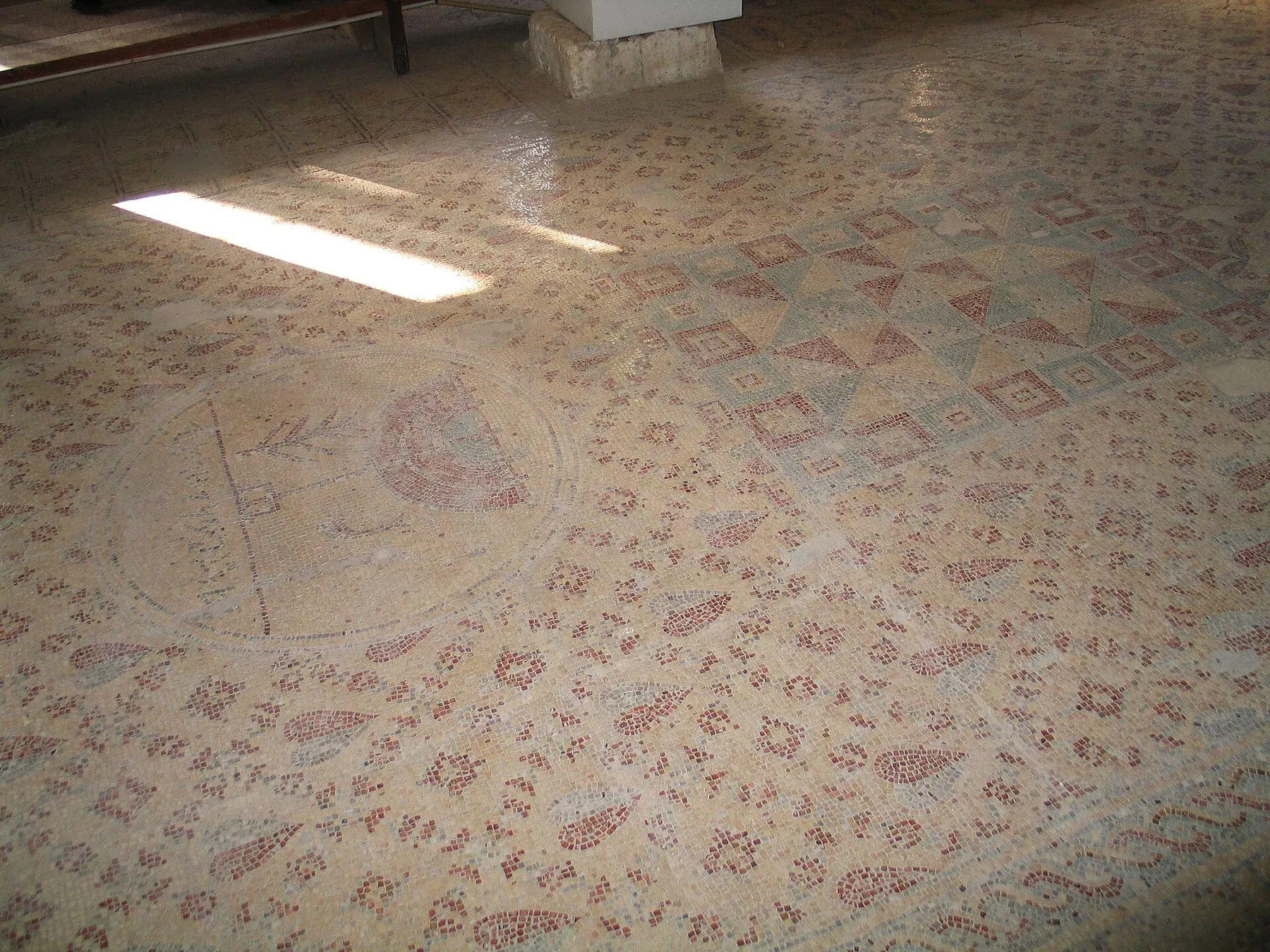
Shalom al Yisrael Synagogue, Jericho
A small basilical synagogue stood north of Tell es-Sultan at Jericho in the Byzantine and early Islamic periods. Its mosaic floor shows a Torah ark, a menorah, a lulav and a shofar above the Hebrew words 'Peace upon Israel'. Found in the 1930s, only its floor and foundations survive; when and how the building fell is unknown.
Shevet Achim Craftsmen's Synagogue, Piatra Neamț
Shevet Achim was a Bet Midrash put up by the Jewish craftsmen of Piatra Neamț in 1895, one of nearly twenty prayer houses in a town that was half Jewish around 1900. Its later history is unrecorded; the community's president says all the town's synagogues except the Baal Shem Tov were demolished by the Communists in the 1960s and 1970s.
Shoemakers' Synagogue of Mikulov
The Shoemakers' Synagogue (Schusterschul) was a small brick synagogue built around 1750 in the courtyard of a house on Brněnská Street in Mikulov, one of the dozen houses of prayer of Moravia's leading Jewish community. It outlived the community's destruction in the Holocaust but decayed and was pulled down in the early 1980s.
Shomre Torah Synagogue of Topoľčany
The Shomre Torah, or Old Synagogue, was a late Baroque prayer house of the eighteenth century, hidden inside the Jewish communal compound on the former Lipová Street in Topoľčany. It served the community until the deportations of 1942, became a storeroom, and was pulled down in 1960, with the yeshiva beside it, to make room for apartments.
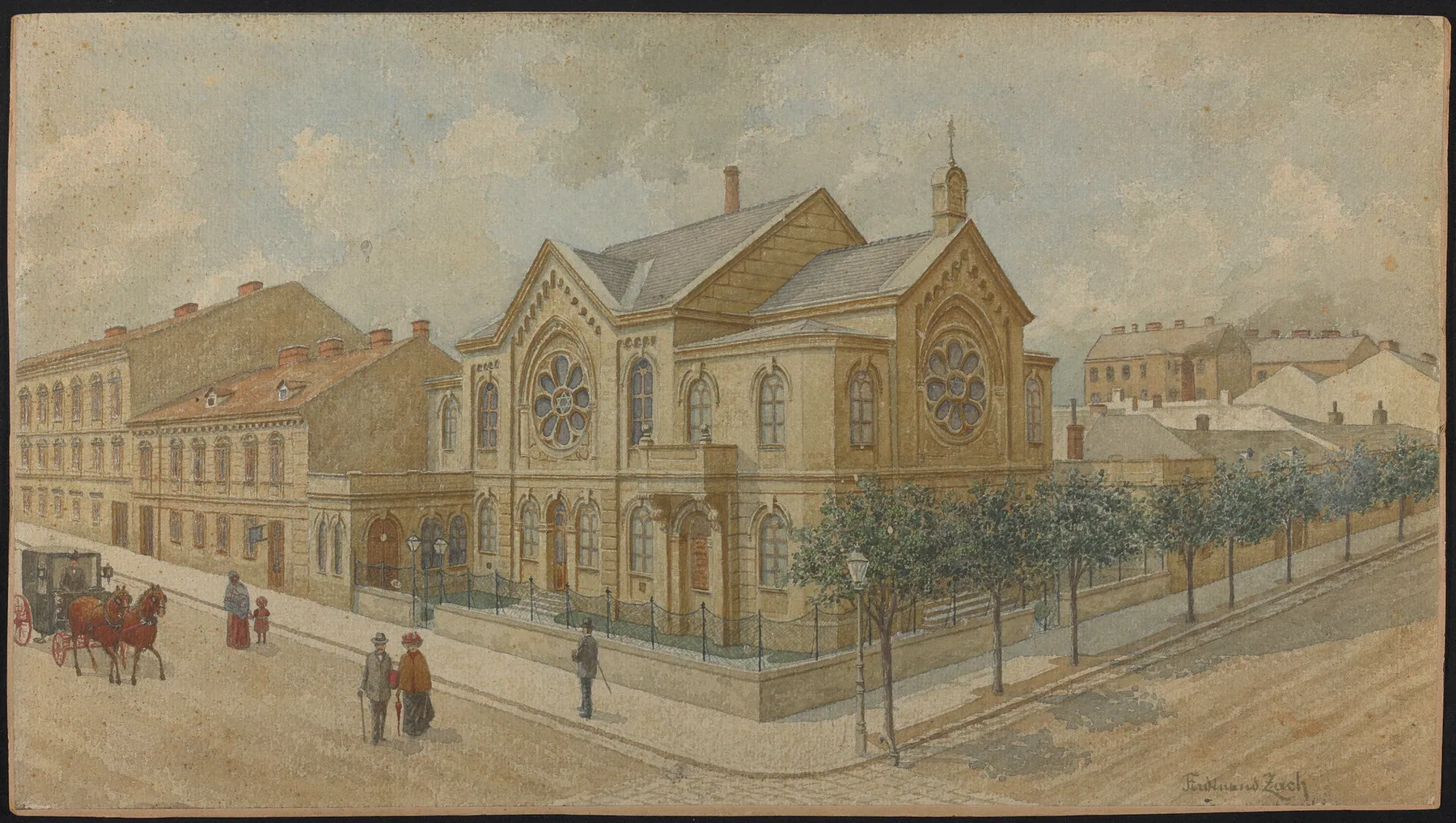
Simmering Synagogue, Vienna (Simmeringer Tempel)
The Simmering Synagogue, designed by Jakob Gartner for the Israelite Temple Association of Simmering, opened in Vienna's 11th district on 24 August 1899. Nazis looted and destroyed it in the November Pogrom of 1938, and a builder contracted by the Nazi Stillhaltekommissar pulled down what remained. Housing has stood on the site since 1977.
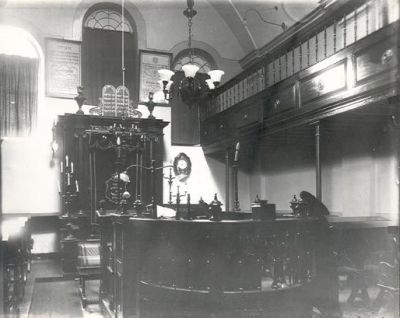
Sittard Synagogue (Plakstraat)
The Plakstraat synagogue, consecrated in 1853, replaced Sittard's older prayer house in the Molenbeekstraat and served the Jews of this Limburg town for almost ninety years. It was closed in May 1940 and its interior wrecked under Nazi German occupation, while most of its members were murdered. Restored in 1945, it was demolished in 1953.
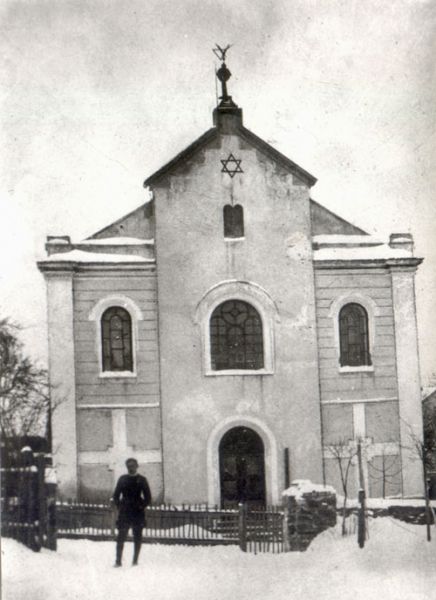
Slabce Synagogue
The synagogue of Slabce, a market village south of Rakovník in Central Bohemia, was built in 1867-68 after fire destroyed the prayer house of neighbouring Svinařov and the congregation moved its seat to Slabce. By 1930 only five Jews lived in the village. The neglected building was photographed in the 1960s and demolished after 1970.
Slanica Synagogue
Slanica was an Orava village in northern Slovakia that disappeared beneath the Orava reservoir in the early 1950s. A synagogue there is listed as built around 1850 and destroyed around 1950, but no other source found confirms its existence, its appearance, its fate or what became of the Jews who used it.

Slavonski Brod Synagogue
The synagogue of Slavonski Brod, then Brod na Savi, was a twin-towered brick building put up between 1895 and about 1899 by the Zagreb firm Hönigsberg & Deutsch on land given by Jakob Kohn. It was looted and burned in April 1941, after Nazi German forces occupied the town, and Allied bombs destroyed its ruins in 1944-45.
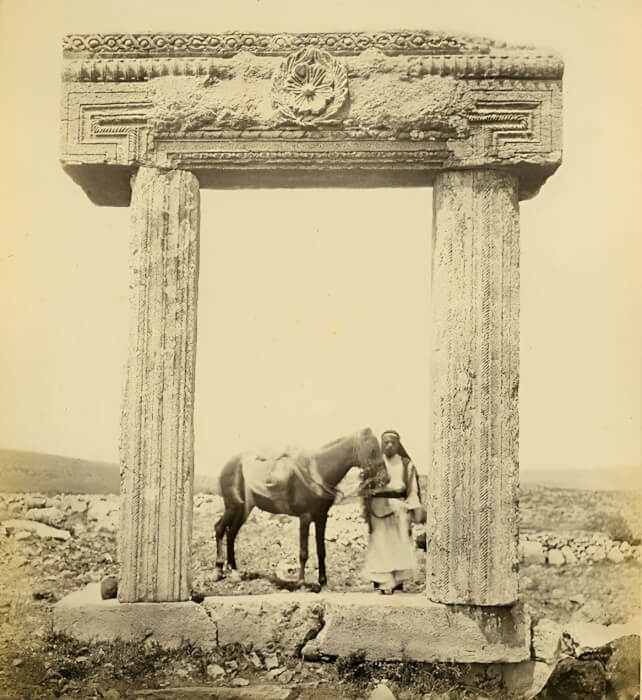
Small Synagogue of Bar'am
The smaller of Bar'am's two ancient synagogues stood outside the village, about 300 metres north of the Great Synagogue. Its carved gateway still stood in the 19th century and was photographed, but it was later pulled apart: a fragment of its inscribed lintel, naming Yose the Levite, is in the Louvre. Only foundations remain.
Small Synagogue of Velența, Oradea
The small synagogue in Velența (Hungarian Velence), the eastern quarter of Oradea, is said to have been built around 1803 in Baroque style as the first true synagogue of the town's Jews. A 1,000-seat synagogue was later built beside it. Both were demolished in 1950, under Communist rule; who carried out the demolition is not recorded.
Smilde Synagogue (Kloosterveen)
The synagogue of Smilde was built in 1846 in Kloosterveen, one of the peat-colony villages that make up Smilde in Drenthe. It served a small rural congregation that peaked at about 150 people around 1869. Almost all of Smilde's Jews were murdered during the Nazi German occupation, and the building was demolished soon after the war.
Smolenice Synagogue
The synagogue of Smolenice (Hungarian Szomolány), a market town below the Little Carpathians, was already standing in 1786. It was a towerless building with tall windows. Its congregation was destroyed in the deportations of 1942, and after the Second World War the synagogue was pulled down and its bricks reused for other buildings.

Sneek Synagogue
Sneek's synagogue on the Wijde Burgstraat was rebuilt in 1880 with a Moorish façade and three small towers on the site of the community's first synagogue of 1836. Dutch Nazis (NSB members) wrecked it during a raid on 3 November 1944, leaving only the walls, which were pulled down in 1949.
Sobrance Synagogue
The synagogue of Sobrance, an Orthodox district rabbinate in eastern Slovakia, stood on the town's main street. Built around 1800 or in the 1880s according to different sources, it was destroyed by Nazi German forces during the Second World War, after the town's Jews had been deported to Auschwitz in 1944. Survivors built a prayer house in its place.
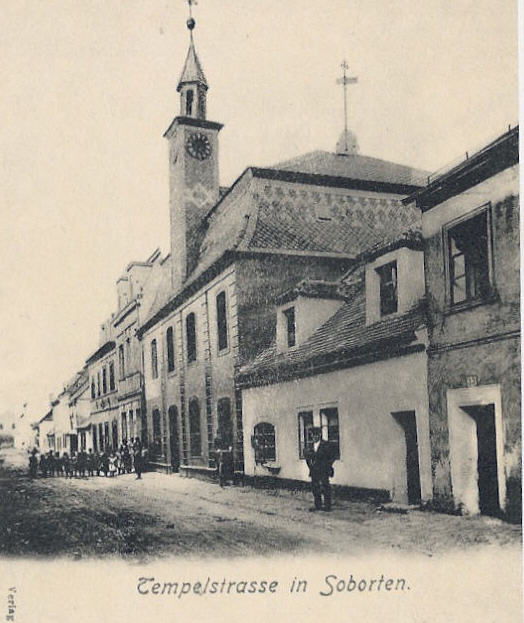
Sobědruhy Synagogue (Soborten)
The synagogue of Soborten, now the Sobědruhy district of Teplice, served one of the oldest Jewish communities in Bohemia. A stone building of about 1500, it was known for the clock tower added around 1750. The community ended in 1938; the synagogue was badly damaged in the Nazi era and its ruin was demolished in the 1950s.
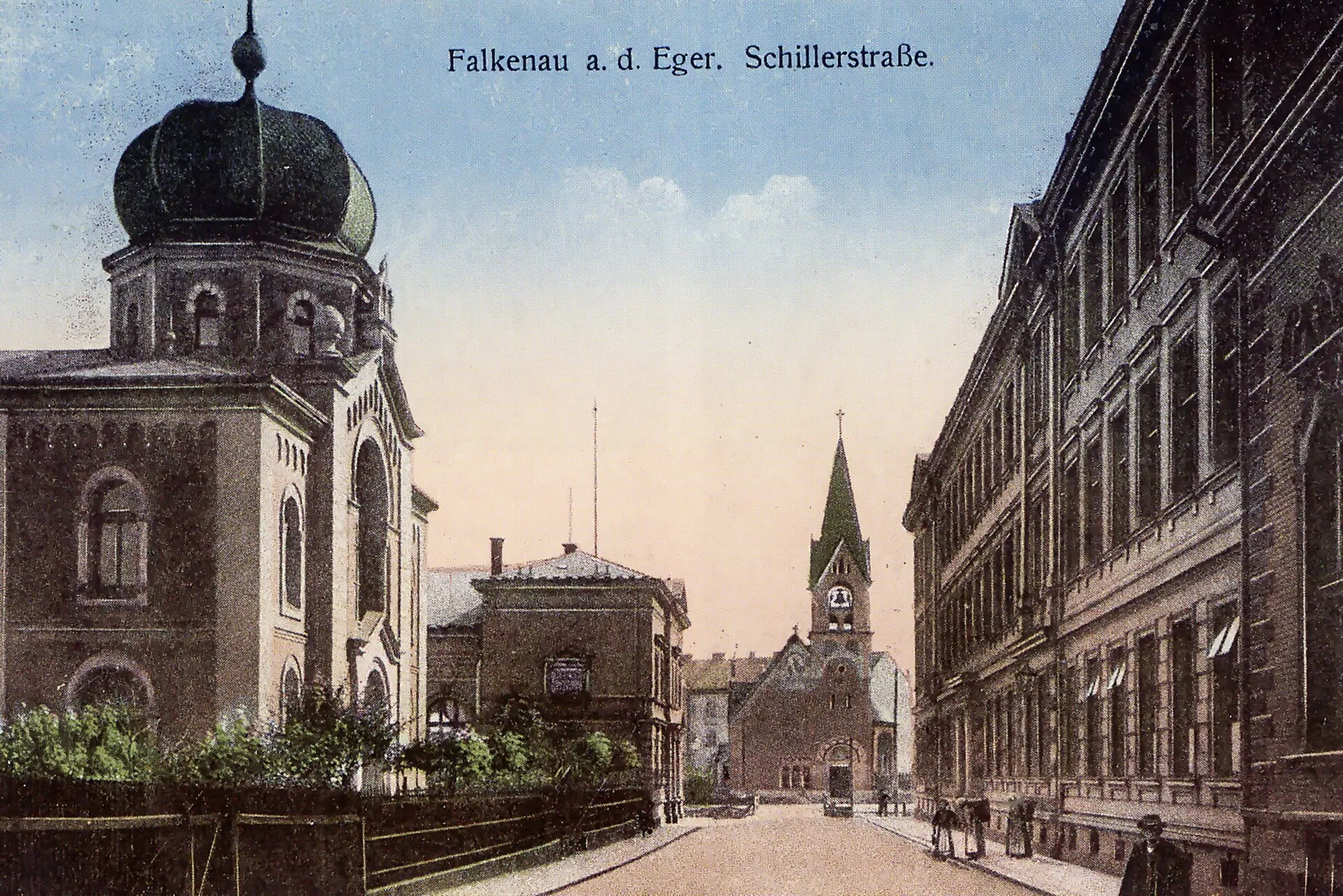
Sokolov Synagogue
The synagogue of Falkenau an der Eger, today Sokolov in western Bohemia, was built on Schillerstraße in 1896-97 and consecrated in August 1897. Local members of the Sudeten German Party wrecked and burned it on 10 November 1938, and the burnt-out shell was pulled down in 1939. Most of the town's Jews had already fled.
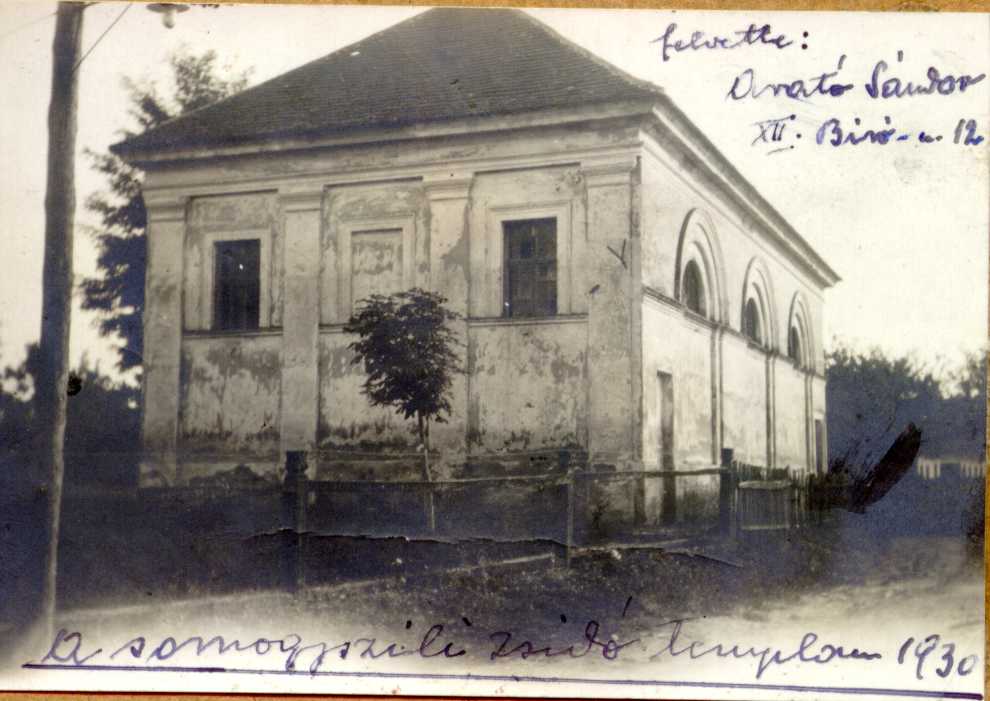
Somogyszil Synagogue
Somogyszil's synagogue, built in 1835, was a plain rendered hall with a hipped roof and round-arched side windows, photographed in 1930. Its Congress (Neolog) community shrank from 195 people in 1910 to 40 in 1941. A 1955 survey found that it had already disappeared; when it was demolished and by whom is unknown.
Somotor Synagogue
A small village synagogue built in 1890 in Somotor (Szomotor), in the Bodrogköz of the old Zemplén county. It looked like a country house with a Baroque gable and had separate doors for men and for the women's gallery. It served a small Jewish community and was demolished at an unknown date after 1945.
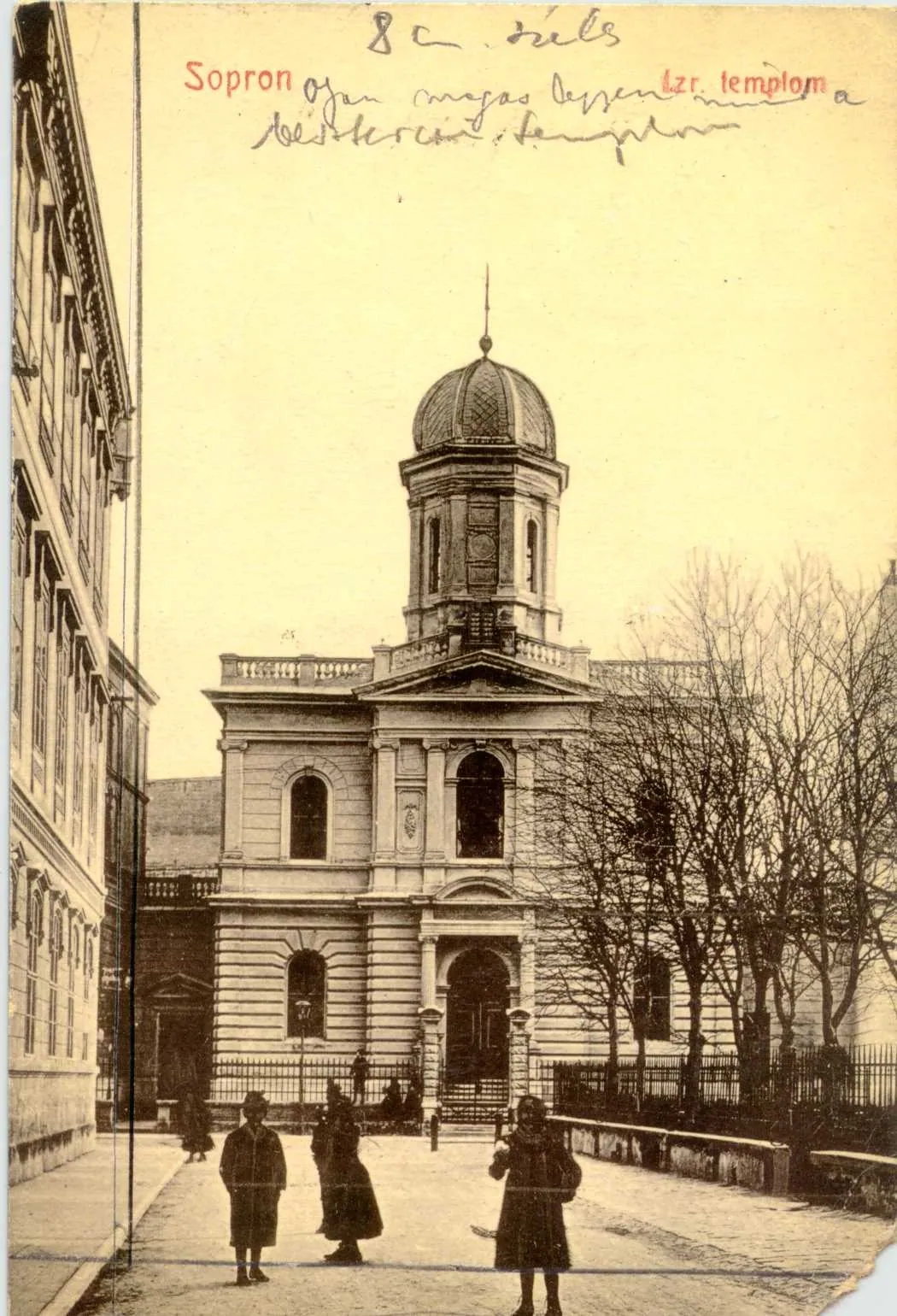
Sopron Neolog Synagogue
Sopron's Neolog synagogue, a domed early Neo-Renaissance temple dedicated in 1876, stood at Templom utca 23 on the edge of the old town. Allied bombing wrecked it in 1944–45, and around 1950 the Communists demolished the ruin. A 1960 apartment block now occupies the plot.
Soroksári út Synagogue, Budapest
A synagogue built in 1925 stood at Soroksári út 25 in Ferencváros, Budapest's ninth district. Anikó Gazda's survey of Hungarian synagogues lists it as one of only two permanent synagogues in the district and records it as demolished by the 1980s. Its congregation, appearance and the date of its loss are unknown.
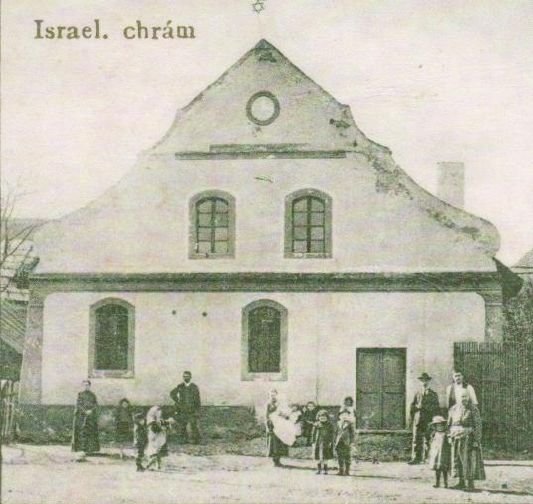
Spálené Poříčí Synagogue
The synagogue of Spálené Poříčí, near Plzeň, stood in the town's Jewish street from the seventeenth century. A gabled Baroque hall, it served a community of up to 160 people. A storm badly damaged it in 1925, it decayed as the congregation dwindled, and it was demolished in 1946; who pulled it down is not recorded.

Stabu Street Synagogue (Zeilen-shul), Riga
The Zeilen-shul at Stabu iela 63 in Riga, a yellow-brick Neo-Romanesque prayer house designed in 1899 and built by 1901, was one of the synagogues burned on 4 July 1941, when Latvian collaborators of the Nazis set fire to Riga's synagogues. Eyewitnesses said Jews were locked inside and burned alive.

Stadskanaal Synagogue (Onstwedde)
The synagogue of the Jewish community of Stadskanaal, then part of the municipality of Onstwedde, was built on the Hoofdstraat in 1860. It was plundered and heavily damaged during the Nazi German occupation, when most of the congregation was deported and murdered, and it was sold and razed in 1958.
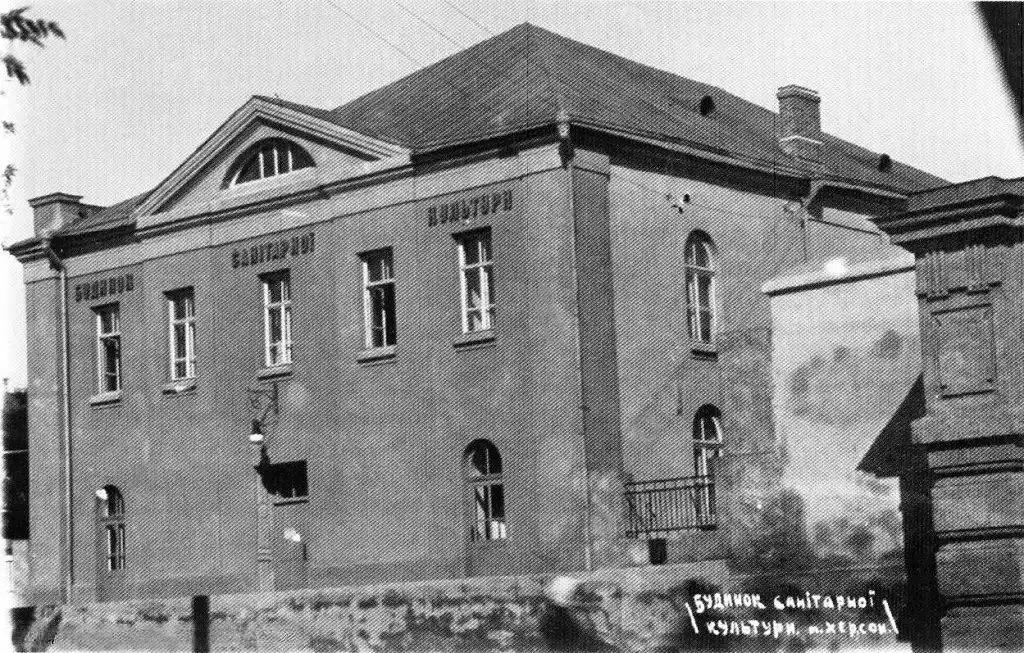
Staro-Nikolaevskaya (Old Mykolaiv) Synagogue
Kherson's oldest synagogue, founded in the 1780s soon after the city was established and rebuilt in 1880. Closed by the Soviet authorities in 1928, it became a sports hall and then, from 1960, the city planetarium. The building survived the Second World War but was critically damaged by Russian shelling in November 2025.
Stará Bystrica Synagogue
The synagogue of Stará Bystrica, a village in the Kysuce region of the Čadca district, was built in 1901 for a Jewish community that had come from Galicia in the nineteenth century. Services ended in 1941, and almost all the village's Jews were murdered at Auschwitz. In 1956 the building was sold to František Vulkán, who had it demolished.
Stará Turá Synagogue
Stará Turá's synagogue was built in 1904-1905 for a small Jewish community of about 95 people in this town in western Slovakia. Dozens of its members were deported in 1942. The empty building was demolished about fifty years before 2025, around 1975, under Communist rule; who pulled it down is not recorded.
Stará Ľubovňa Synagogue
The synagogue of Stará Ľubovňa served an Orthodox community in the Spiš town on the Polish border. Pinkas Hakehillot dates it to the 1880s; Maroš Borský describes a two-storey gabled building of the 1920s or 1930s. Its congregation was largely deported in 1942, and the building was pulled down after 1945; who demolished it is not recorded.
Staré Město pod Landštejnem Synagogue
A brick Classicist synagogue built in the first half or middle of the nineteenth century replaced an older wooden one in this small South Bohemian market town. The congregation dissolved in the 1890s as members moved away. Sources disagree on when the empty building was pulled down: the late 1930s, 1955 or 1959.

Status Quo Ante Synagogue of Satu Mare
The Status Quo Ante synagogue of Satu Mare (Szatmárnémeti), built in 1904–1906 on a corner site with facades to three streets, was one of the finest buildings in the city, crowned by a large ribbed dome. Its congregation was deported to Auschwitz in 1944, and in 1965 the Communists demolished it to build the county police headquarters.

Status Quo Ante Synagogue, Košice
Built in 1866 on Moyzesova Street to designs by the Košice architect Michal Répászky, this Moorish-style synagogue with twin domed towers was the first purpose-built synagogue in Košice and later the house of worship of the city's small status quo ante congregation. Its rabbi was deported in 1944, and it was demolished in 1958.
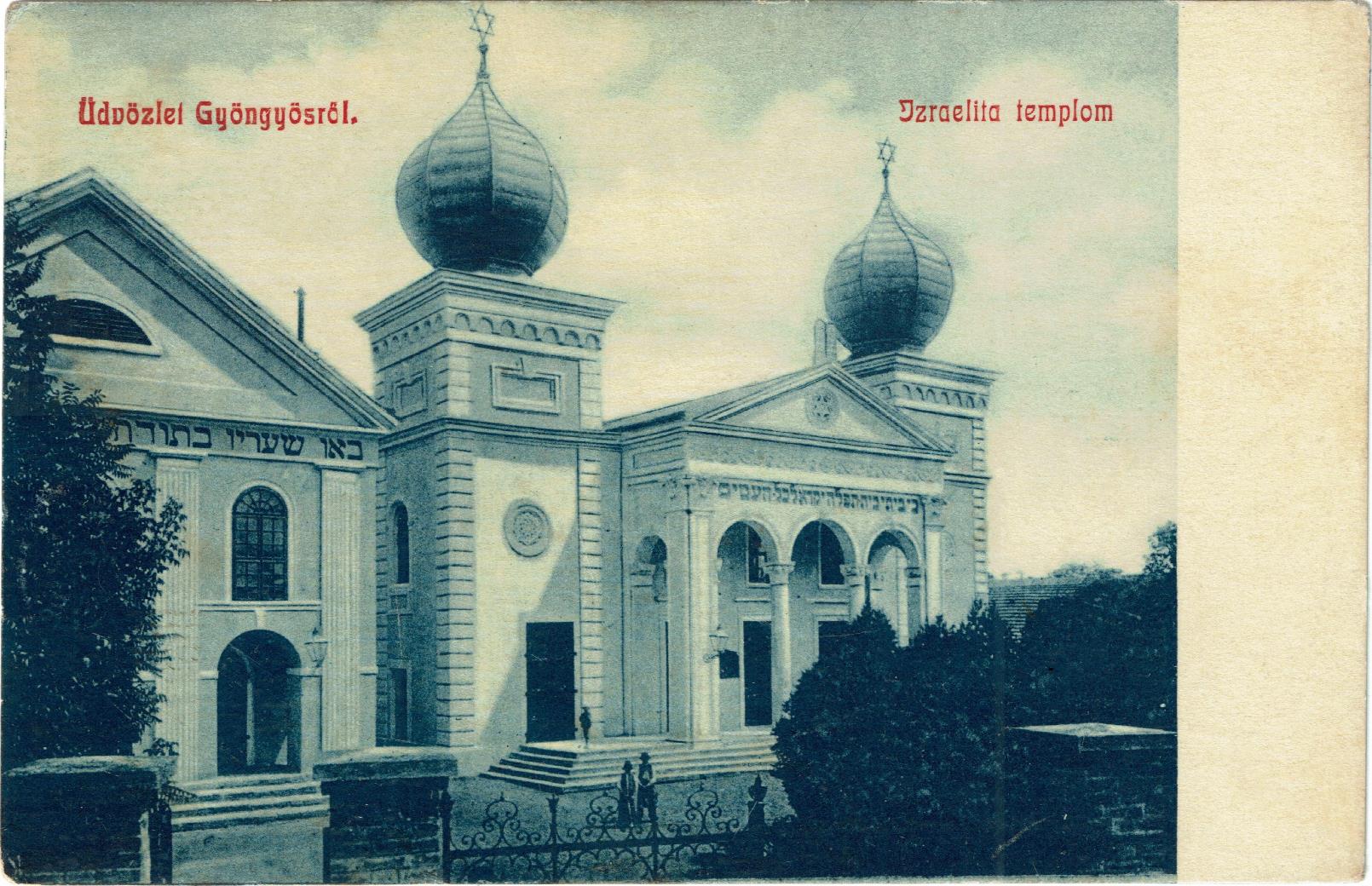
Status Quo Synagogue of Gyöngyös (1872)
The Status Quo Ante congregation of Gyöngyös built this twin-towered, onion-domed synagogue in 1872 beside its older prayer house of 1816, and enlarged it in 1897. It burned out in the accidental town fire of 21 May 1917, and the ruin was later cleared for the larger synagogue completed on the site in 1930.
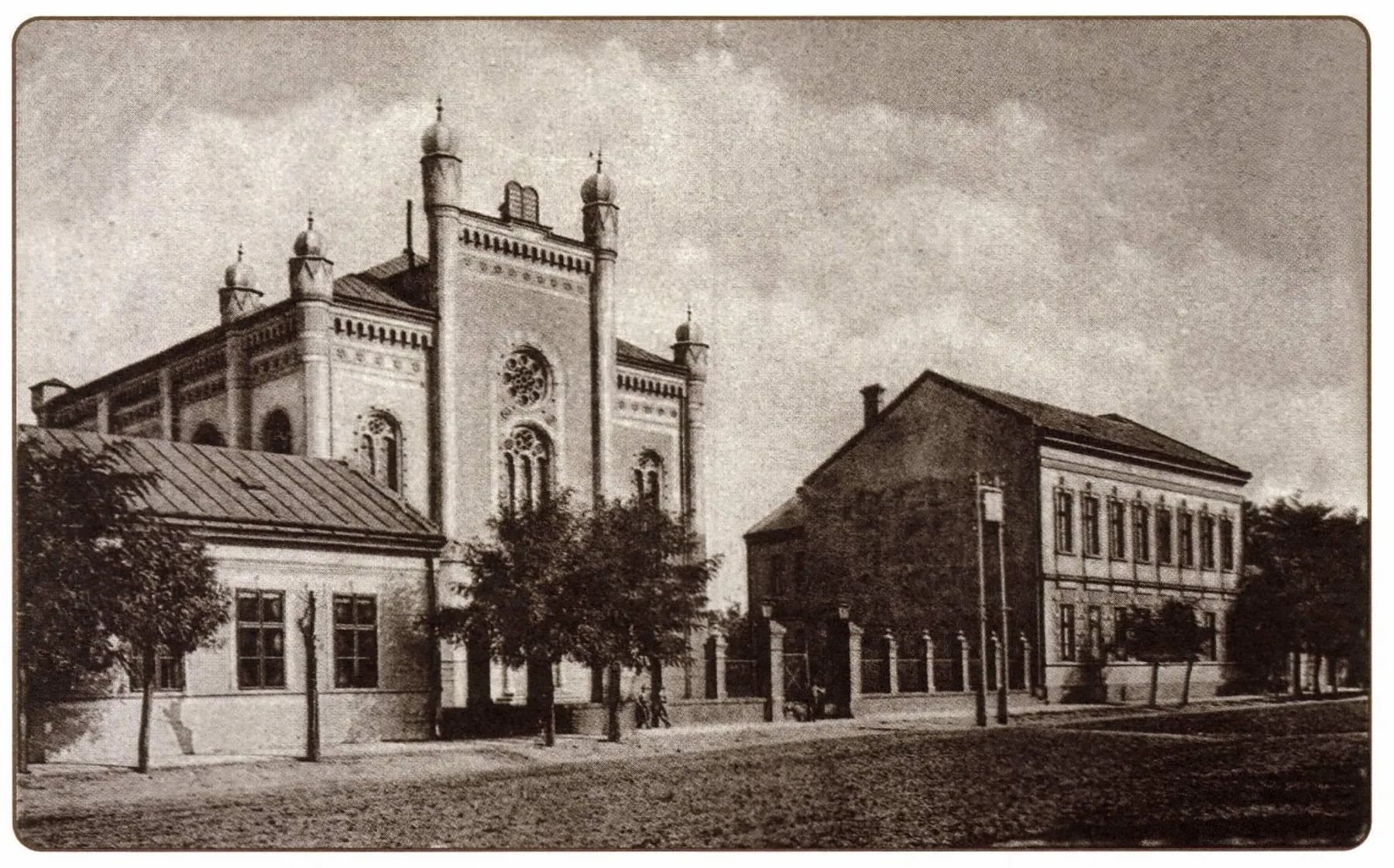
Status Quo Synagogue of Nyíregyháza
The Status Quo Synagogue of Nyíregyháza, consecrated on 5 September 1880 on Szarvas utca, served a Jewish community that grew to some 5,000. In October 1944, months after its congregation was deported to Auschwitz, it was gutted; most accounts say retreating Nazi German troops blew it up. A school now covers the site.
Steenwijk Synagogue
Steenwijk's synagogue stood on the Gasthuisstraat at the corner of the Kornputsingel. Built in 1869-1870 when a split congregation reunited, it survived the occupation as a store for furniture taken from Jewish homes, while about half its members were murdered. It was sold after the war and later demolished.
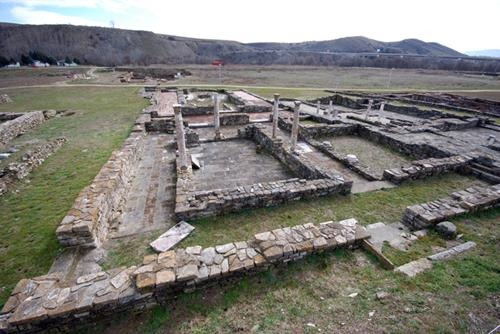
Stobi Synagogue
Two successive synagogues stood at Stobi. The first was given by Claudius Tiberius Polycharmos, 'father of the synagogue', from part of his own house in the second or third century CE; the second was a mosaic-floored hall of the early fourth century. A Christian basilica was then built over the ruins, and only buried floors and wall stumps survive.
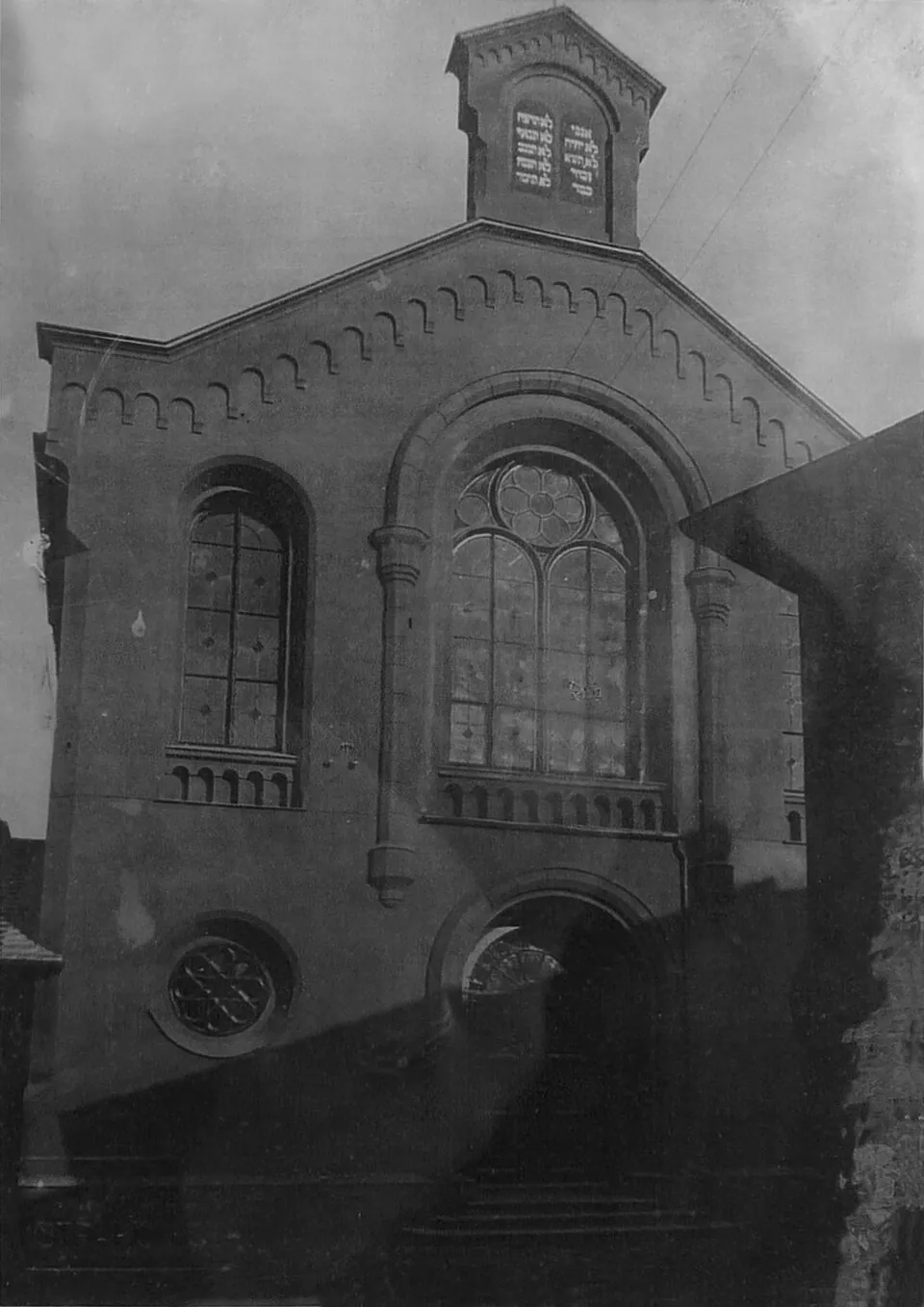
Strakonice Synagogue
The neo-Romanesque synagogue of Strakonice, built about 1860 in the Jewish quarter of Bezděkov beside the Volyňka river, was once called the finest in South Bohemia. Its congregation was deported in 1942 and 1943. Used as a store in the war and by a Protestant church from 1951, it was pulled down in 1976.
Streda nad Bodrogom Synagogue
The synagogue of Streda nad Bodrogom (Hungarian Bodrogszerdahely), a mainly Hungarian-speaking village on the Bodrog river in south-eastern Slovakia, was built by the local Jewish community around 1900. After its congregation was deported during the Second World War it served as a warehouse, and it was demolished under Communist rule in 1965 or the early 1970s.
Stropkov Hasidic Synagogue
The older of Stropkov's two synagogues, a small Classicist building of the first half of the nineteenth century, was the prayer house of the town's Hasidim, followers of the Halberstam rebbes. It stood at the street front of the communal plot on Hrnčiarska street, emptied by the deportations of 1942 and 1944, decayed, and was demolished in the 1980s.
Stropkov Synagogue
The larger of Stropkov's two synagogues, built in 1894 for the town's non-Hasidic Ashkenazi congregation, was a plain free-standing hall with a hipped roof. Its worshippers were deported in 1942. After the war it served as a storehouse, decayed, and was demolished in the 1980s; who pulled it down is not recorded.
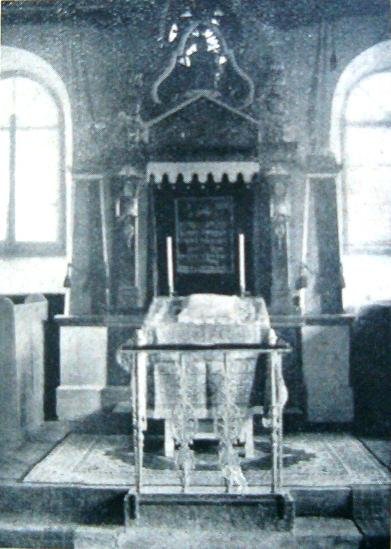
Stráž Synagogue
The synagogue of Stráž near Tachov, the German Neustadtl am Klinger, was built in 1883 with a community house, school and mikveh after a town fire destroyed the older temple. It was set on fire in November 1938, weeks after the Nazi German annexation of the region, and its ruin was demolished in the 1950s.
Strážske Synagogue
The synagogue of Strážske, a small town in the Michalovce district of eastern Slovakia, served a Jewish community of more than fifty people. During the Second World War the Nazi German army used it for field kitchens and as a stable for horses and cattle, and it was left completely destroyed.
Stumperschul, Vienna
The Stumperschul was an association synagogue in the rear courtyard of Stumpergasse 42 in Vienna's 6th district, Mariahilf, dated to 1864 or 1891. Its rabbi Moses David Flesch inspired Sarah Schenirer, founder of the Beit Jaakov schools. Nazi SS men set it on fire in November 1938; the ruined building was demolished in 1976-78.

Susya Synagogue
The synagogue of ancient Susya, in the south Hebron Hills in Judea and Samaria, was a broadhouse hall with mosaic floors, built in the fourth or fifth century CE. Its figured mosaics were later defaced, a mosque rose in its courtyard, and the town was abandoned by the late ninth century. It was excavated in 1971-72.
Sušice Synagogue
Sušice's neo-Romanesque synagogue was built in 1857-59 on the town's former Jewish street, now Vodní, for a congregation then approaching 300 people. It served until the Second World War, when the Nazis deported the community. After the war it passed to the town and was demolished in 1963-64, under Communist rule.
Synagoga Minor, Boskovice
The Synagoga Minor was the smaller of the two synagogue buildings in the Jewish town of Boskovice, built in the 18th century at today's Traplova 7. It served as a study house and later an Orthodox congregation. Its community was deported in 1942, and in the 1950s the building was demolished because of its poor condition.
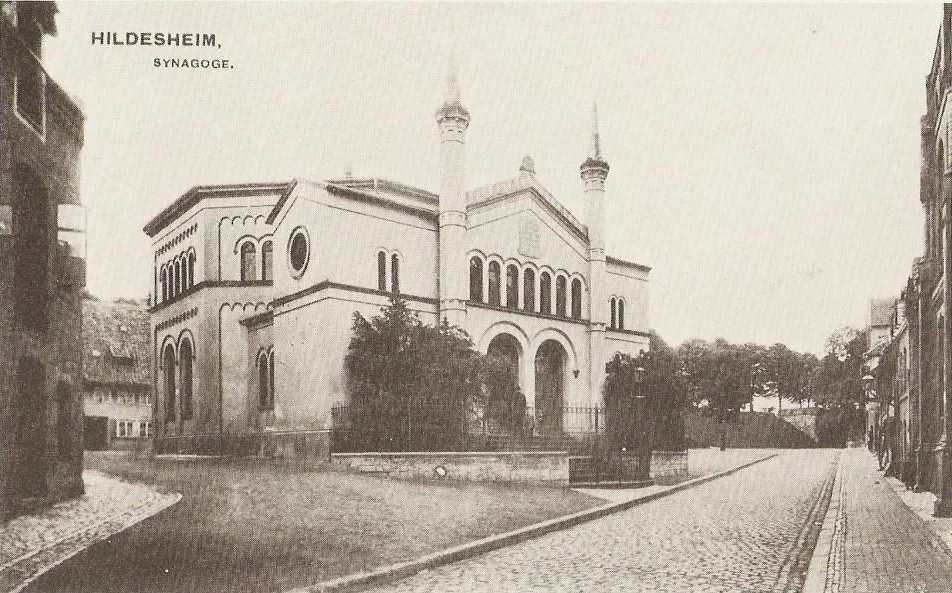
Synagogue am Lappenberg
Dedicated on 8 November 1849, the octagonal synagogue on Hildesheim's Lappenberg square replaced a cramped, decaying prayer house and served the town's Jewish community for almost ninety years. On the night of 9–10 November 1938 an SS squad plundered and burned it; its remaining walls were pulled down and the rubble cleared by 1940.
Synagogue below Prague Castle, Prague
Prague's oldest recorded synagogue stood in the Jewish settlement of the castle suburb, in today's Malá Strana. It burned with the Jewish quarter in 1142, during the siege of Prague Castle. Almost nothing else is known: its site, date, builder and appearance are unrecorded, and one chronicle mention is all the evidence.
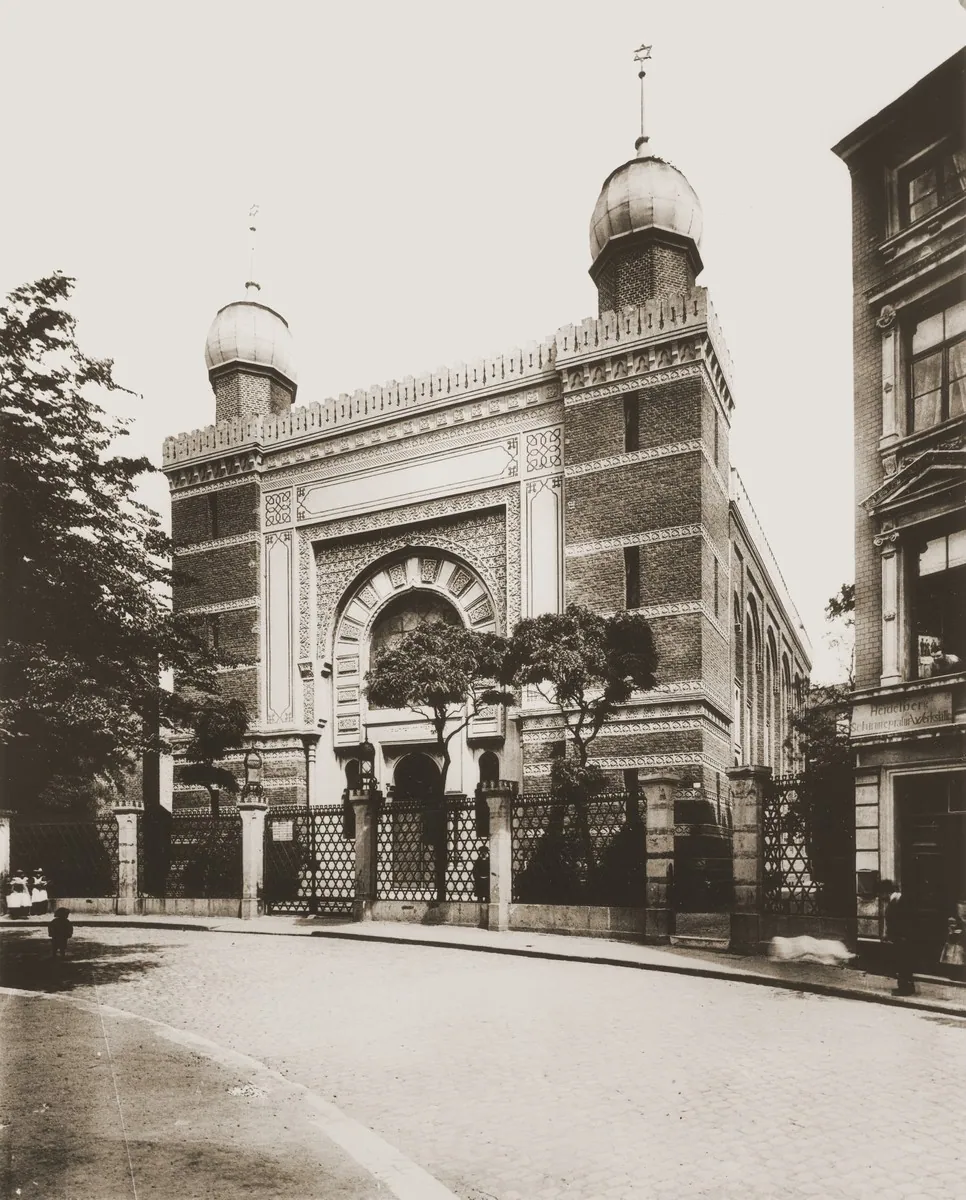
Synagogue in Aachen
Inaugurated in 1862, Aachen’s Moorish Revival synagogue stood for 76 years before Nazis burned it during the November 1938 pogrom. A new synagogue now occupies the historic site.
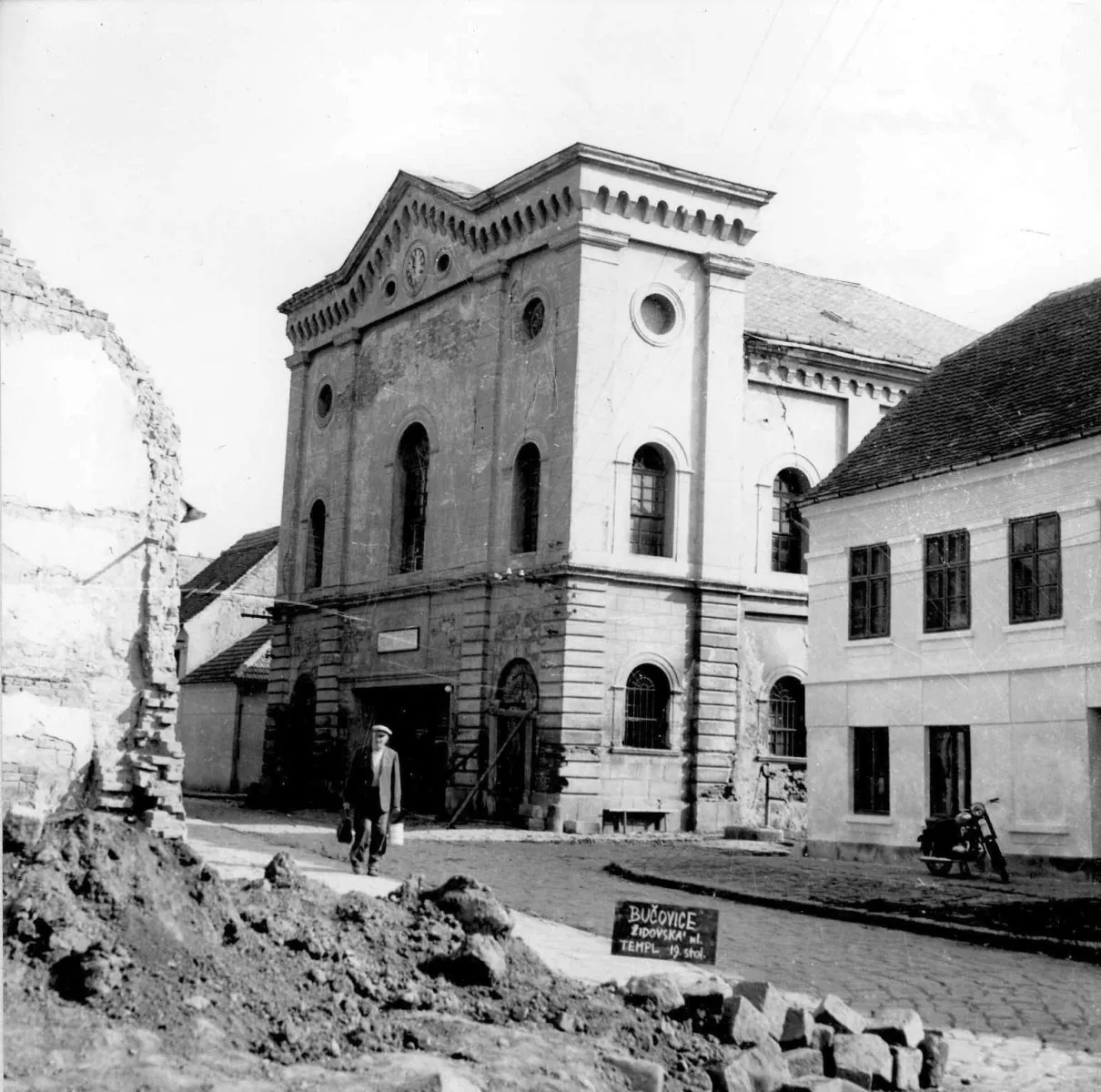
Synagogue in Bučovice (Butschowitz)
Bučovice’s 1853 Neo-Romanesque synagogue served one of Moravia’s oldest Jewish communities, survived the Nazi occupation, and was demolished by the local authorities in 1966.
Synagogue in Chomutov
The Synagogue in Chomutov (German: Komotau) was a neo-Romanesque synagogue consecrated on 14 September 1876 at today's corner of Mostecká and Karla Buriana streets. It served a Jewish community of several hundred until the November 1938 pogrom, when it was burned. Its ruins were demolished in April 1939, and flats now stand on the site.

Synagogue in Czarnków (Czarnikau)
The red-brick synagogue of Czarnków (German: Czarnikau), then in the Prussian Province of Posen, replaced a 1759 synagogue on the old Jewish square in 1878–1879 and was consecrated by Rabbi Shlomo Popper. German occupiers demolished it, most likely in 1940. Its site, today's Plac Jana Karskiego, later became the town bus station.

Synagogue in Dortmund
Dortmund’s monumental domed synagogue at Hiltropwall and Hansastraße was designed by Eduard Fürstenau and consecrated in June 1900. Forced into municipal ownership under Nazi pressure in 1938, it was demolished before the November pogrom.

Synagogue in Düren
Dedicated in May 1872, the Moorish Revival synagogue on Düren's Schützenstraße combined a prominent brick façade with an attached Jewish elementary school. It served the district community until Nazi Party and paramilitary participants deliberately burned it during the November pogrom on 10 November 1938.
Synagogue of Antioch (Kerateion)
A synagogue in Antioch's Kerateion quarter is known only from texts. The sixth-century chronicler John Malalas places the tomb of the Maccabean martyrs there beside a synagogue, and by the 390s a Christian basilica of the Maccabees stood on the site. Whether Christians seized a synagogue or simply built a church is disputed. Nothing survives.
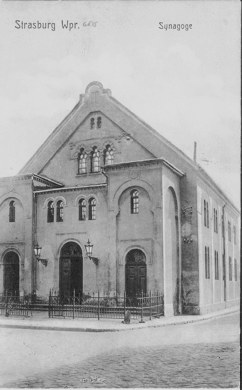
Synagogue of Brodnica (Strasburg in West Prussia)
The synagogue of Brodnica, known in Prussian times as Strasburg in West Prussia, was built in 1839 on what is now Pocztowa Street. After the German invasion of Poland in 1939, Nazi German soldiers set it on fire and guarded the blaze so no one could put it out; the ruins were cleared and the site levelled.
Synagogue of Clermont (Clermont-Ferrand)
The synagogue of the Jews of Clermont (Arverna) in Merovingian Gaul is known only from Gregory of Tours and Venantius Fortunatus. On Ascension Day 576, a Christian crowd following Bishop Avitus's procession rushed on it and razed it to its foundations. The Jews were then told to accept baptism or leave the city. Nothing of it survives.
Synagogue of Daphne
The synagogue of Daphne stood in Antioch's garden suburb, at present-day Harbiye. John Chrysostom attacked it in a sermon of 386. On 9 July 507, during the Olympic festival, the Green circus faction led by the charioteer Calliopas plundered and burned it, killed many people and turned the site into a shrine of St Leontius.

Synagogue of Dvůr Králové nad Labem
Romanesque Revival synagogue on a Greek-cross plan, designed by Prague architect Stanislav Franzen and consecrated in 1891 for the small Jewish community of Dvůr Králové. It survived the Nazi occupation, though closed in 1941, but was demolished by the communist town council in 1965–1966 for road construction.
Synagogue of Edessa
A synagogue of the Jews of Edessa, known only from the sixth-century Syriac Chronicle of Edessa. In the Seleucid year 723 (411/412 CE) Bishop Rabbula, acting by command of the emperor, turned it into the church of Mar Stephanus (St Stephen). No remains of it have been identified, and its site is unknown.
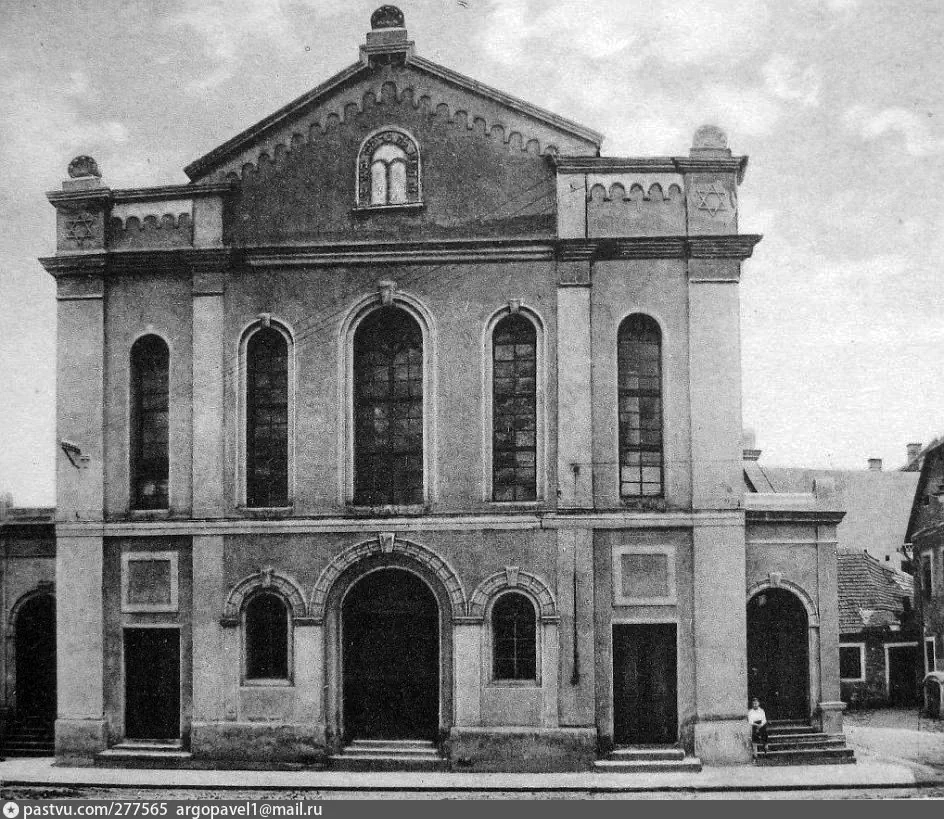
Synagogue of Kyjov (Gaya)
Stone synagogue of the Jewish community of Kyjov (German: Gaya) in south Moravia, dedicated in 1852 to replace a much older prayer house. It survived the Holocaust, but the community that used it was deported in 1943; the communist-era town demolished it in 1962 to build a cultural centre.
Synagogue of Magona (Mahón)
The synagogue of Magona, today Mahón on Menorca, is known only from the letter of Bishop Severus. In February 418 a Christian crowd led by Severus marched from Iamona, wrecked and burned the building, and pressed the town's Jews, led by Theodorus, into baptism; a church was then to be built on its site.
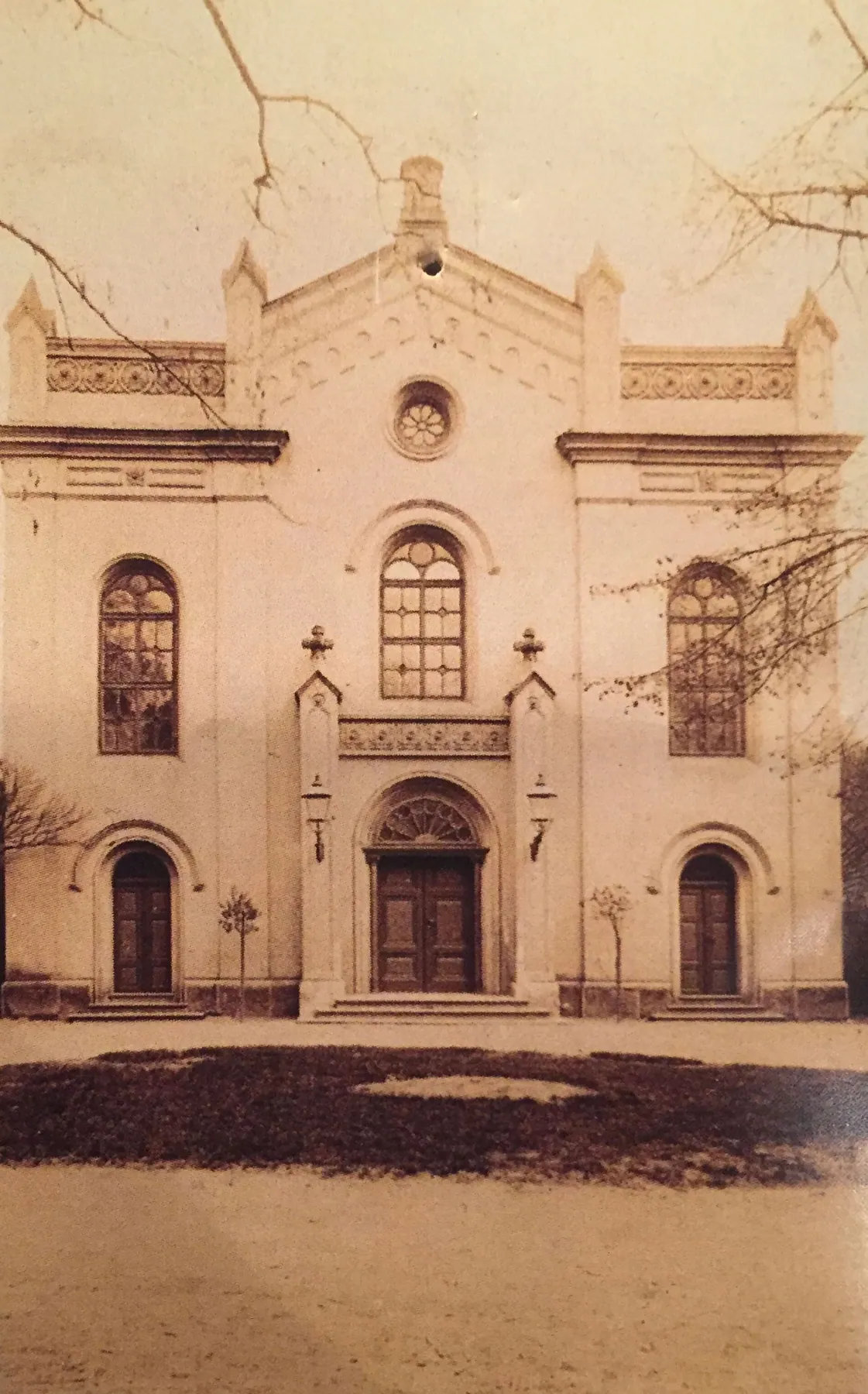
Synagogue of Most
The synagogue of Most (Brüx), a Neo-Romanesque temple built in 1872–73 for a community refounded after four centuries of exclusion, was deliberately set on fire by Nazis at about 6 p.m. on 10 November 1938 and burned to the ground. Its ruins were cleared around 1940, and the old town around it was later demolished for coal mining.
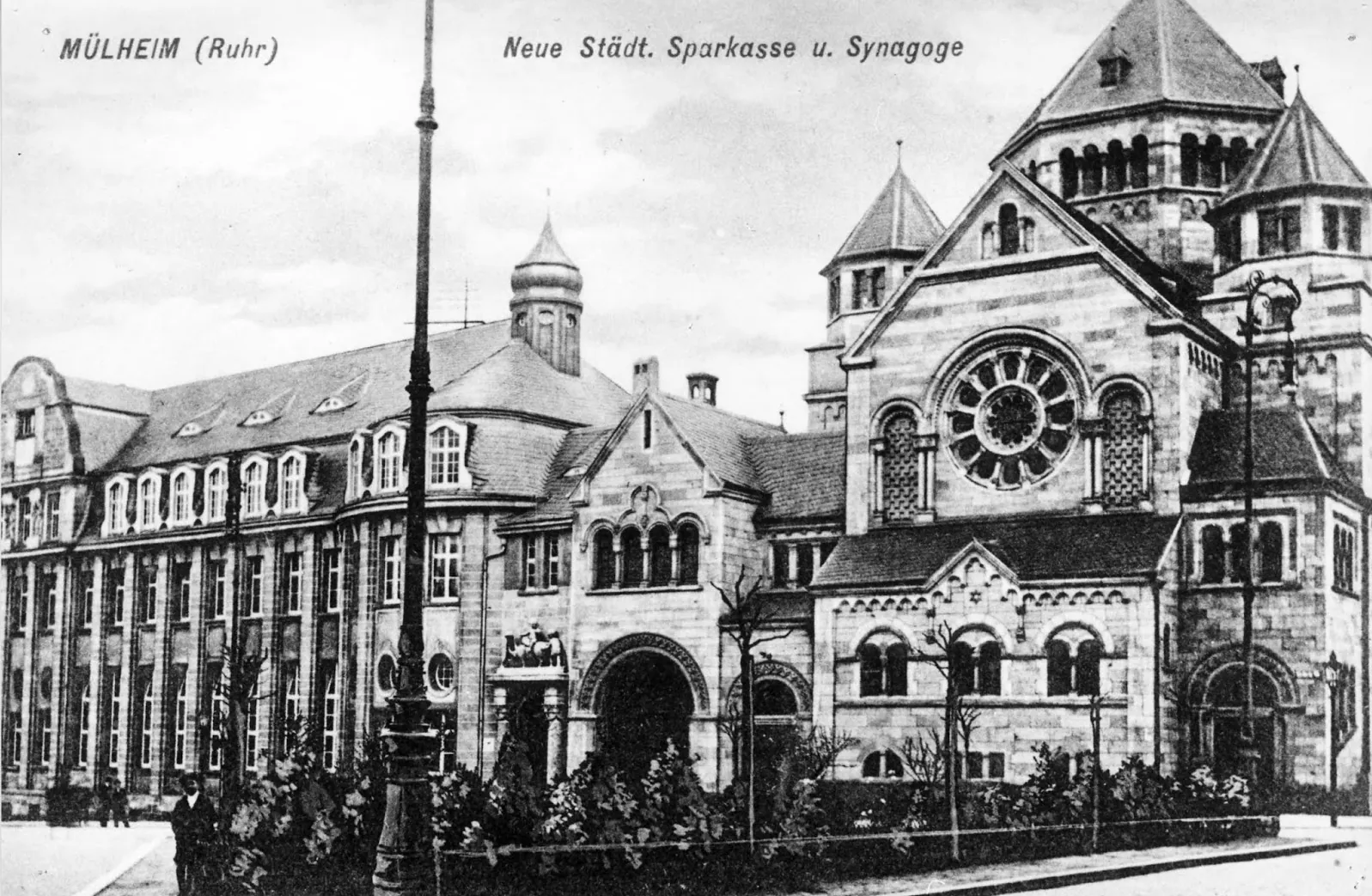
Synagogue of Mülheim an der Ruhr
The synagogue on Viktoriaplatz in Mülheim an der Ruhr was a domed Romanesque Revival building by the Düsseldorf architect Josef Kleesattel, consecrated on 2 August 1907 and once called the most beautiful house of worship in the city. On the night of 9–10 November 1938 Nazis set it on fire.
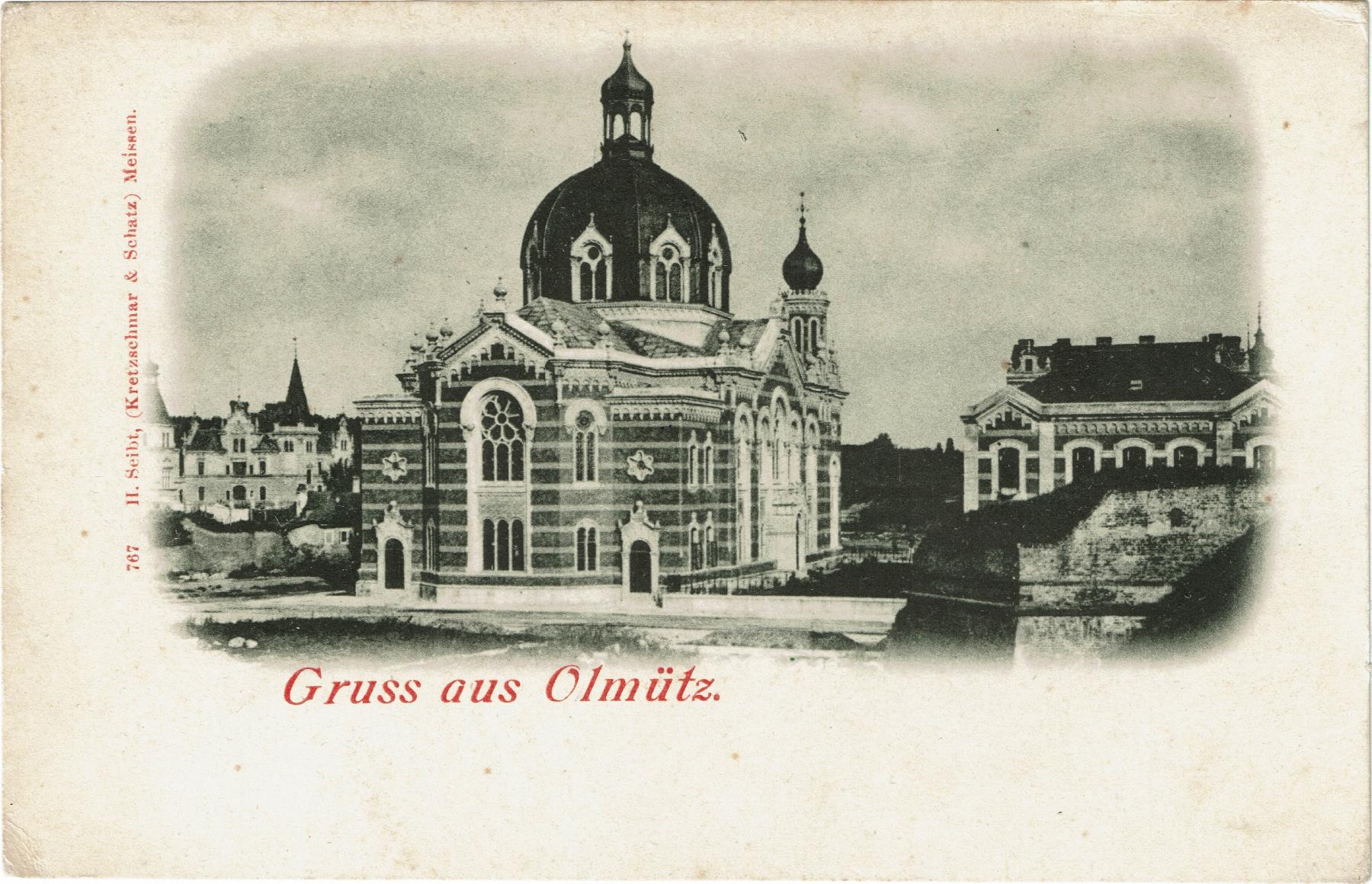
Synagogue of Olomouc
The synagogue of Olomouc, a domed Moorish Revival temple by Jakob Gartner beside the Theresian Gate, was consecrated on 11 April 1897 and was one of the landmarks of the city. On the night of 15–16 March 1939, as German troops occupied Moravia, local Nazis set it on fire and prevented firemen from putting it out.
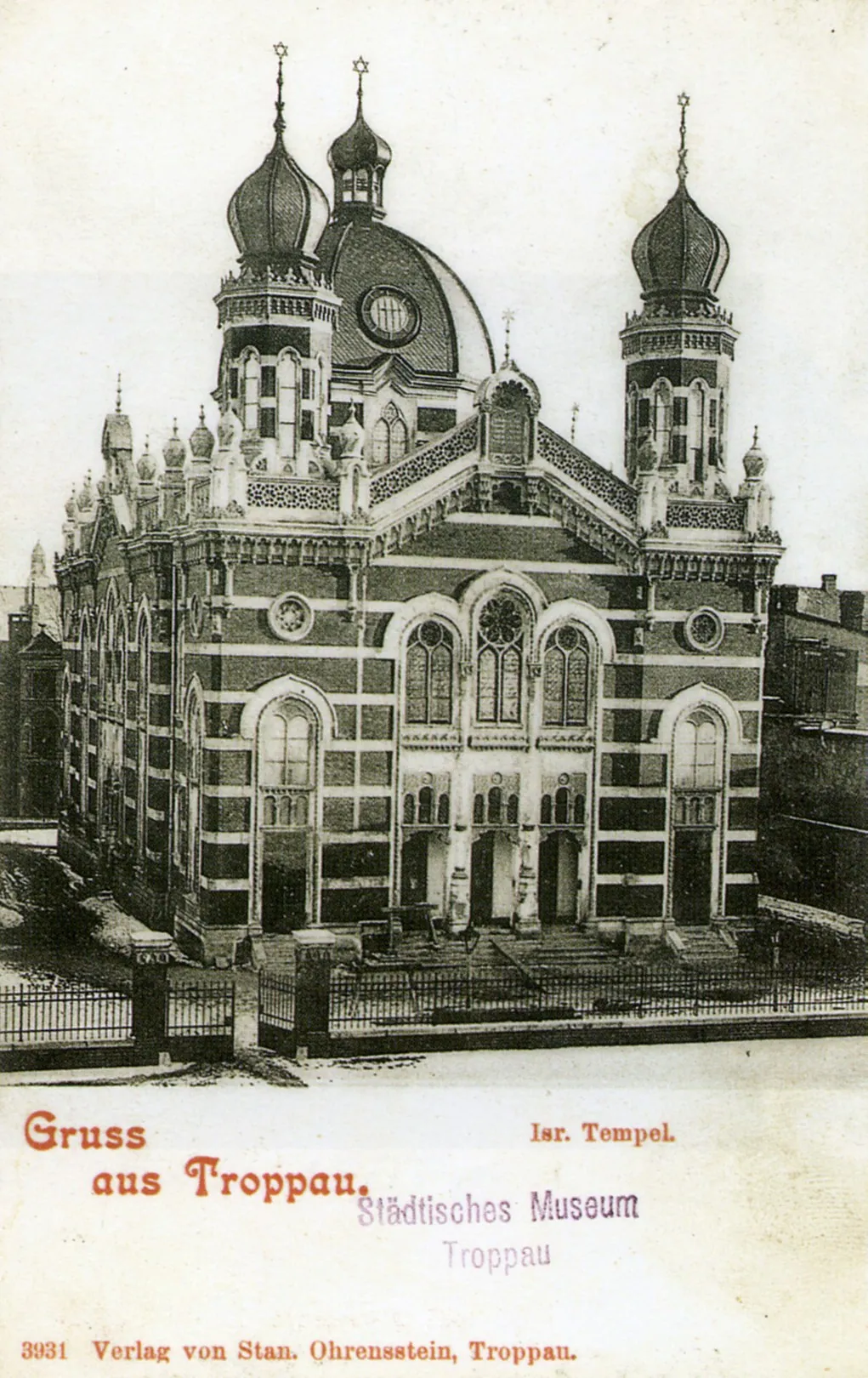
Synagogue of Opava
The synagogue of Opava (Troppau), a domed, red-and-white striped Moorish Revival temple by the architect Jakob Gartner, opened in 1896 and was one of the most striking synagogues in Czechoslovakia. Nazis set it on fire on 10 November 1938 while crowds watched; its ruins were razed, and a granite memorial has marked the site since 2013.

Synagogue of Paderborn
Paderborn's synagogue was a Moorish-style brick building with an octagonal central hall and onion-domed turrets, consecrated in August 1882 beside the Busdorf church. On 10 November 1938 the SS set it on fire, with the city's building officer and the head of the municipal vehicle depot taking part.
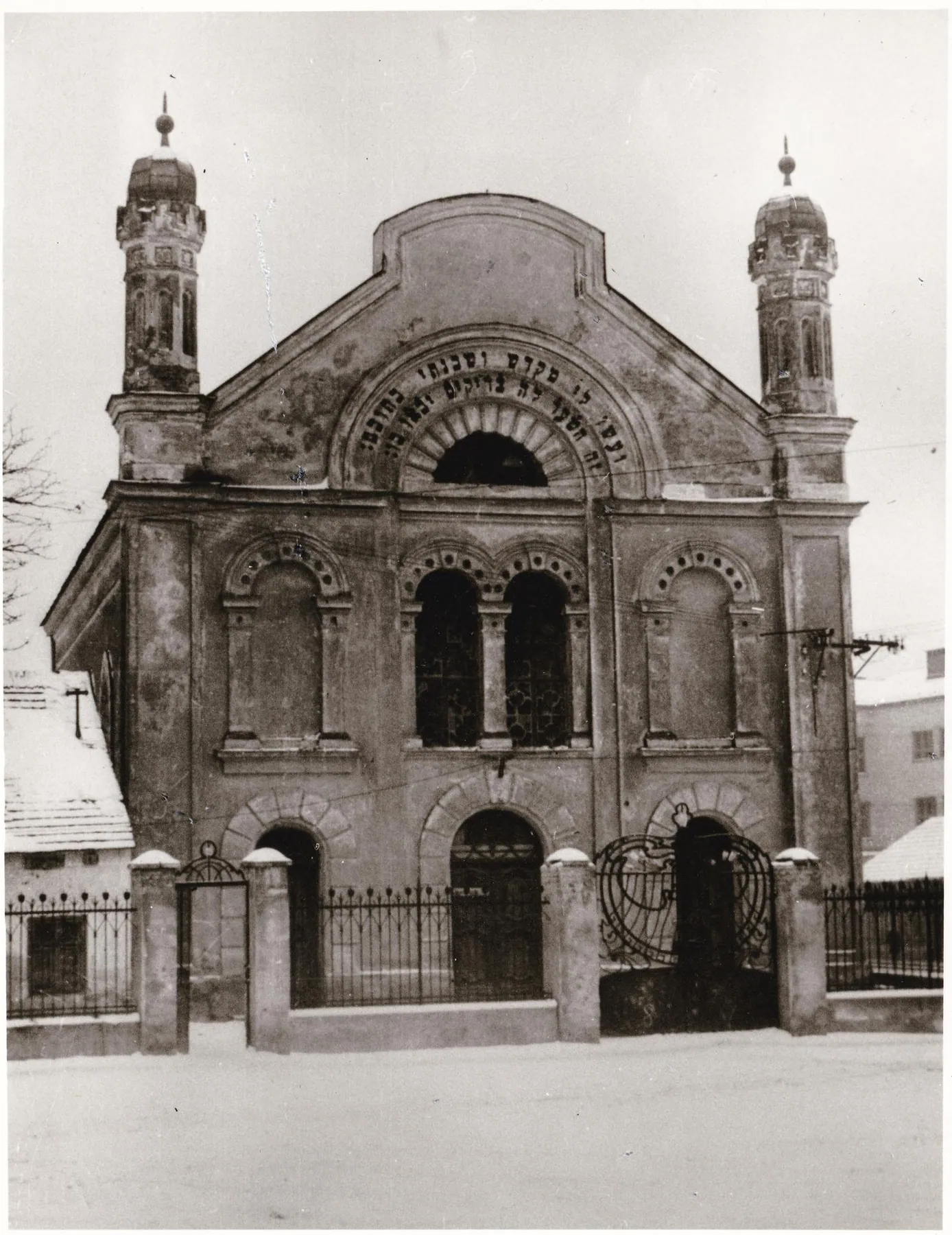
Synagogue of Pezinok
The Moorish-Byzantine synagogue of Pezinok, built from 1869 just outside the old town walls with bricks from the demolished town gates, had a 25 by 14 metre hall and two ornate towers. Wrecked by the Hlinka Guard in 1939 and closed in 1943, it became a warehouse and was demolished under the Communists in 1957–1958.
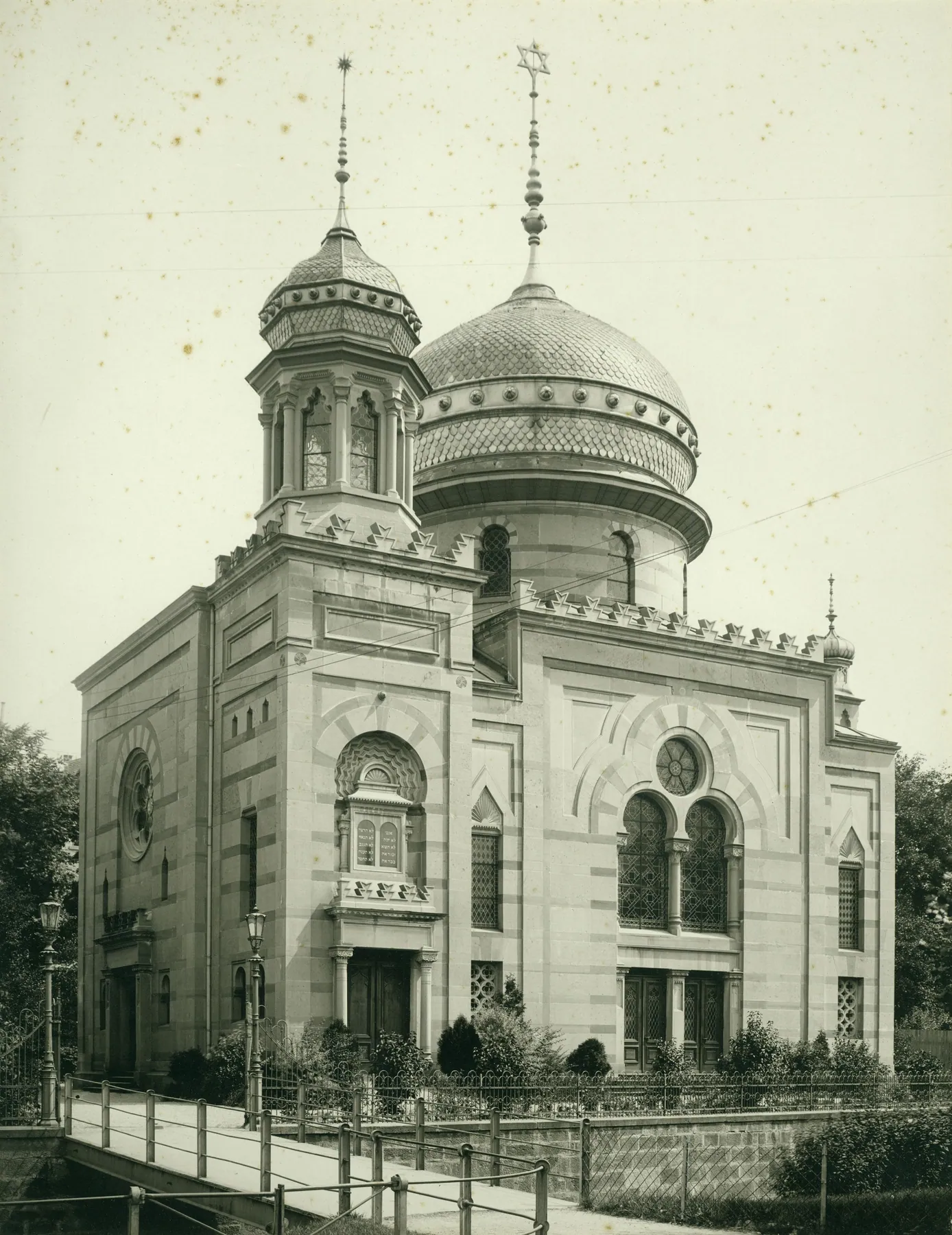
Synagogue of Pforzheim
The synagogue on Zerrennerstraße in Pforzheim was a domed Moorish-style building by the Karlsruhe architect Ludwig Levy, consecrated on 27 December 1892. On the morning of 10 November 1938 Nazis desecrated it and wrecked it with an explosive charge; the Jewish community was then forced to demolish it at its own expense.
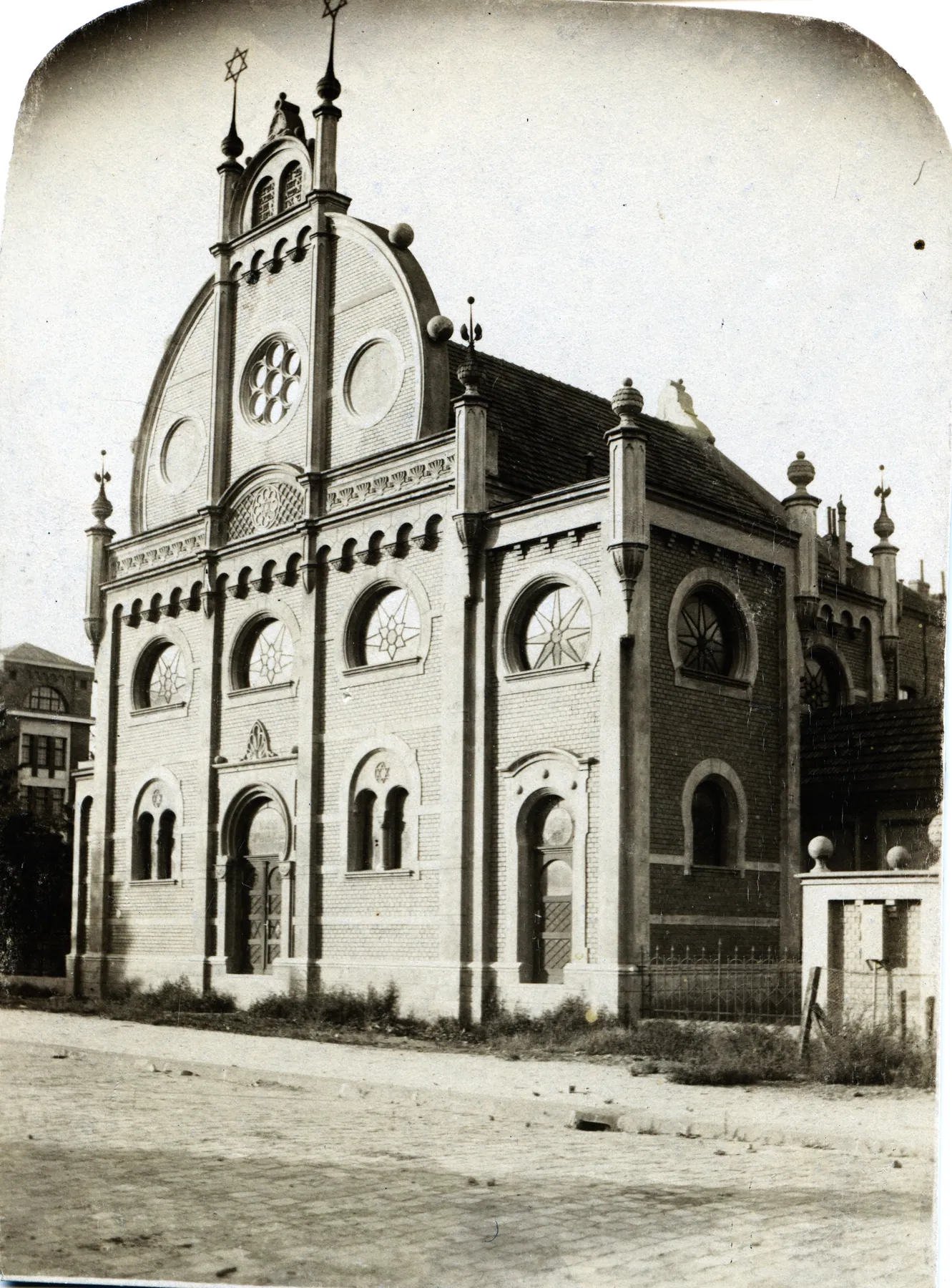
Synagogue of Poppelsdorf, Bonn
The synagogue of Poppelsdorf, a suburb of Bonn, was a small Moorish-style building by the Bonn architect Wilhelm Weinreis, consecrated in May 1902 for a traditional congregation that had broken away from Bonn's Reform community. On 10 November 1938 Nazis broke in with axes, doused the interior with petrol and set it on fire.

Synagogue of Přeštice
The small Neo-Romanesque synagogue of Přeštice, in western Bohemia, was consecrated on 7 September 1913 by Rabbi Leopold Singer. Its community was deported in 1942 and only three survived. After the war it became a Protestant church, and in early 1974 the communist authorities demolished it to make way for a block of flats.

Synagogue of Příbram
The synagogue of Příbram, a Moorish-style conversion of a former inn in the centre of this Bohemian mining town, opened in 1875. It survived the Nazi occupation, but its congregation was deported in 1942. Left to decay under communism, it was blown up by the town authorities on 10 April 1969.
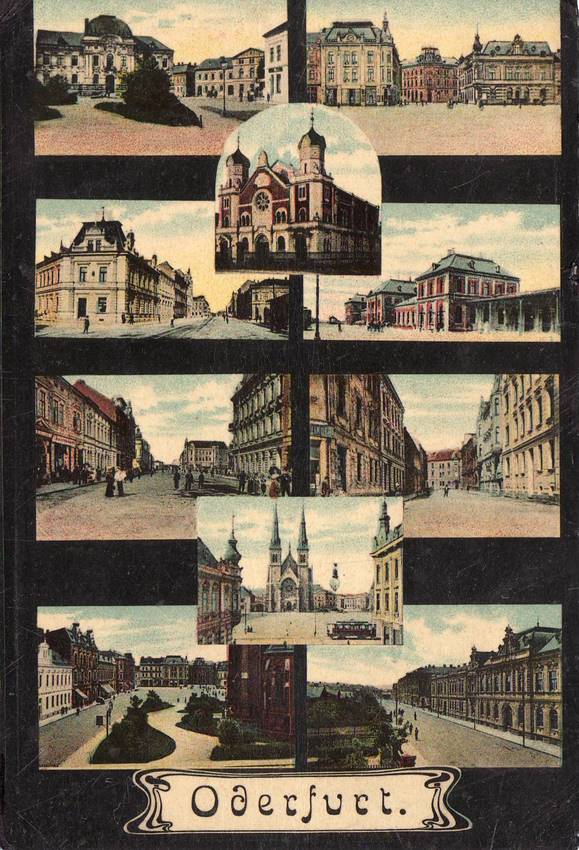
Synagogue of Přívoz (Ostrava)
The synagogue of Přívoz (Oderfurt), now part of Ostrava, was a red-brick Neo-Romanesque temple with twin towers crowned by Stars of David, consecrated on 30 October 1904. Nazis set it on fire on the night of 9–10 June 1939, three months after the German occupation, and its ruins were demolished in 1939–1940.
Synagogue of Rome (burned c. 387–388)
A synagogue in Rome was burned in the reign of the usurper Magnus Maximus (383–388 CE). It is known only from one sentence in a letter of Ambrose of Milan, who says Maximus sent an edict to Rome about the fire. Ambrose does not name the arsonists; modern scholars take them to have been Christians.
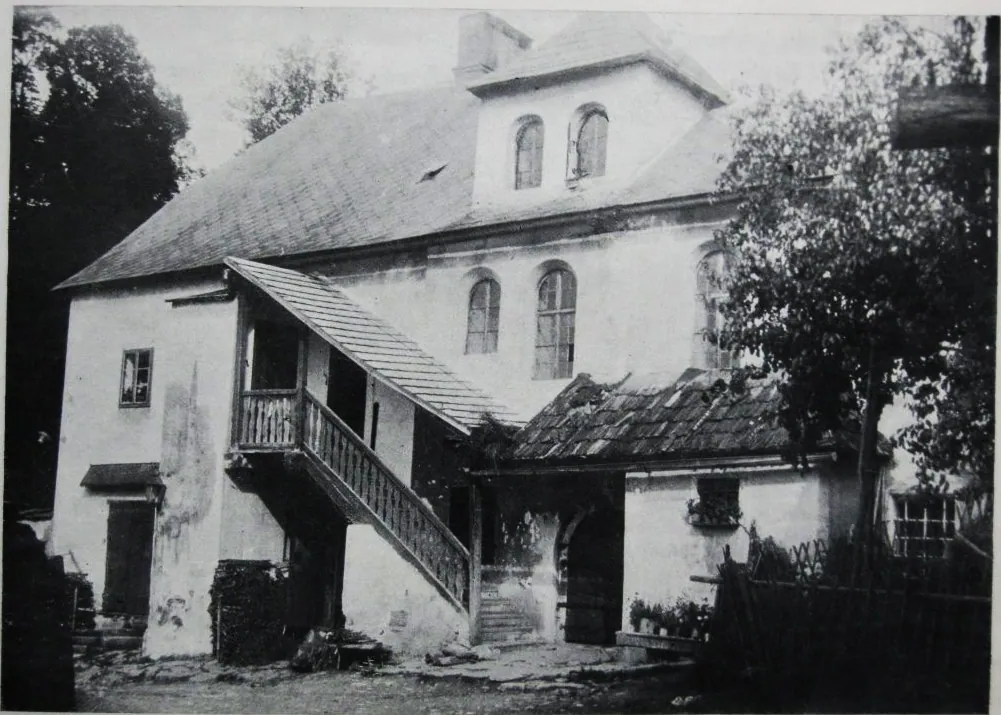
Synagogue of Rožmberk nad Vltavou
The small synagogue of Rožmberk nad Vltavou, in the Jewish quarter of the Latrán suburb below the castle, dated from the late seventeenth century and held a Baroque ark and three seventeenth-century brass chandeliers. An SS unit from Linz wrecked its interior in September 1938; used as flats and a workshop, it was demolished in 1966.

Synagogue of Sarreguemines
The synagogue of Sarreguemines in Moselle, a domed Romano-Byzantine building in Vosges sandstone completed around 1862, was the seat of a rabbinate on the border between Lorraine and the Saar. In September 1940, after the Nazi annexation of Moselle, it was blown up by the Germans. A new synagogue was built elsewhere in the town in 1958.
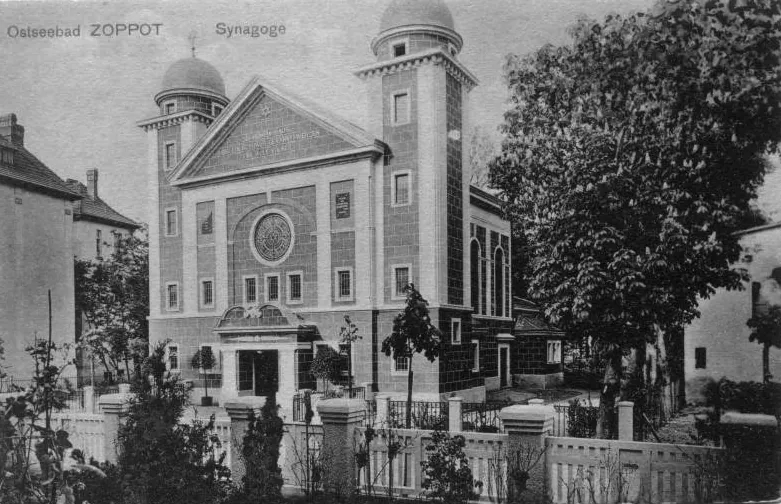
Synagogue of Sopot (Zoppot)
The synagogue of Sopot, then the German seaside resort of Zoppot, was built in 1913–1914 to designs by the local architect Adolf Bielefeldt and consecrated on 26 May 1914. During the November pogrom of 1938 in the Free City of Danzig, Nazis looted it and burned it to the ground.
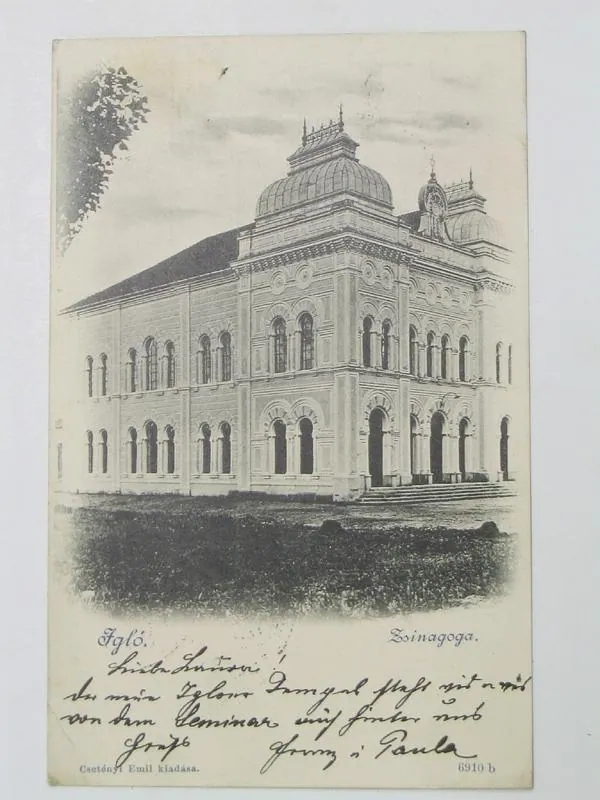
Synagogue of Spišská Nová Ves
The synagogue of Spišská Nová Ves, consecrated in 1899 opposite the teachers' college, was the largest in the Spiš region, an 18 by 30 metre twin-towered building with a gilded Star of David. On 1 May 1941 a local Nazi led Hitler Youth members who wrecked it and set it on fire; the shell was taken down in 1957–1958.

Synagogue of Svitavy
The synagogue of Svitavy (Zwittau), a Neo-Baroque temple designed by the Viennese architect Ernst von Gotthilf, was consecrated on 27 September 1902 for one of the youngest Jewish communities in Moravia. Nazis set it on fire on the morning of 10 November 1938; its ruins were cleared and a bus station now stands on the site.
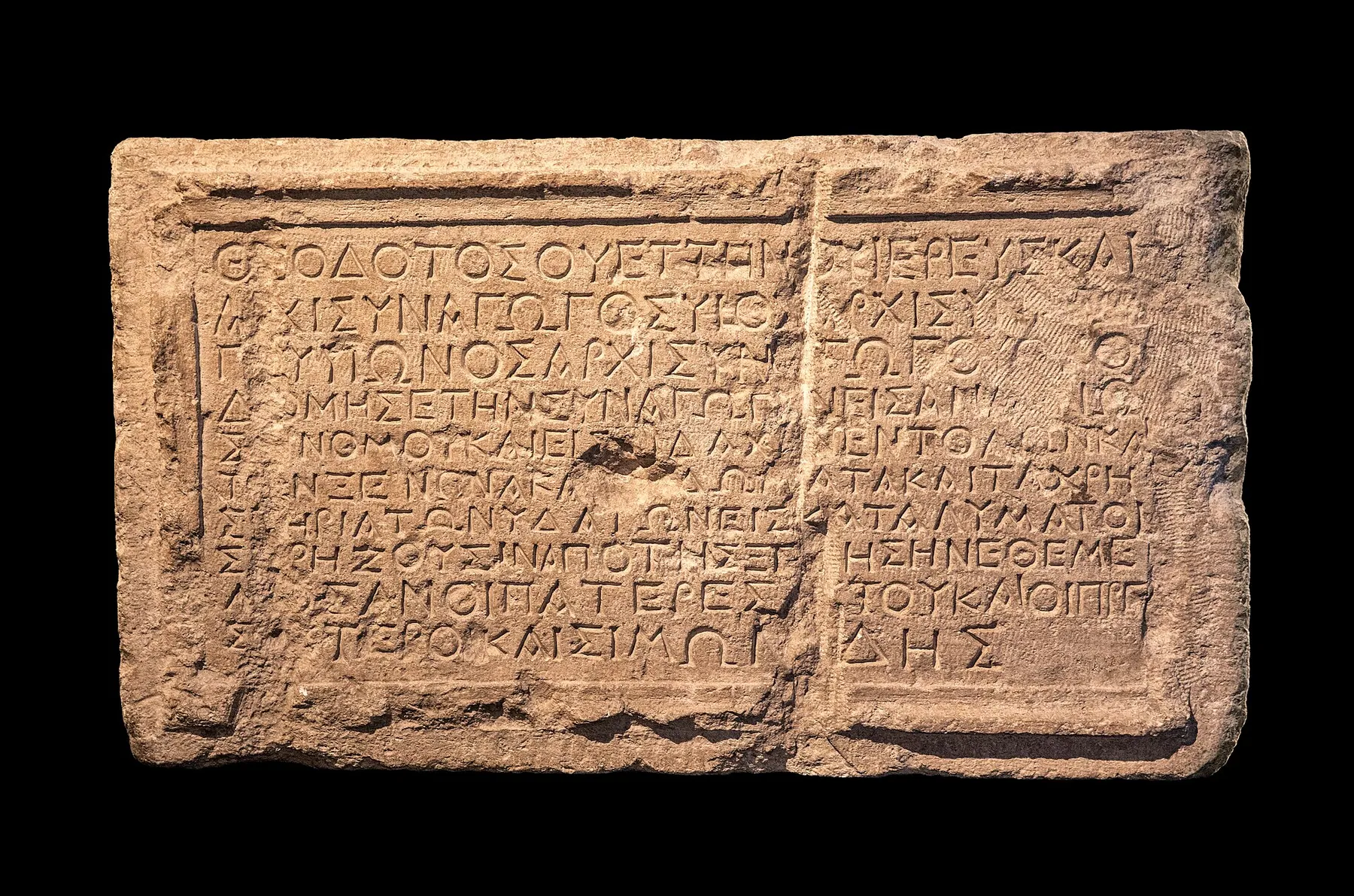
Synagogue of Theodotus, Jerusalem
The Synagogue of Theodotus in Jerusalem is known only from a Greek dedication stone found in 1913 in a cistern on the City of David ridge. It records a synagogue, guest-house and water installations built by the priest Theodotus. The building itself has never been identified; most scholars date it before 70 CE.
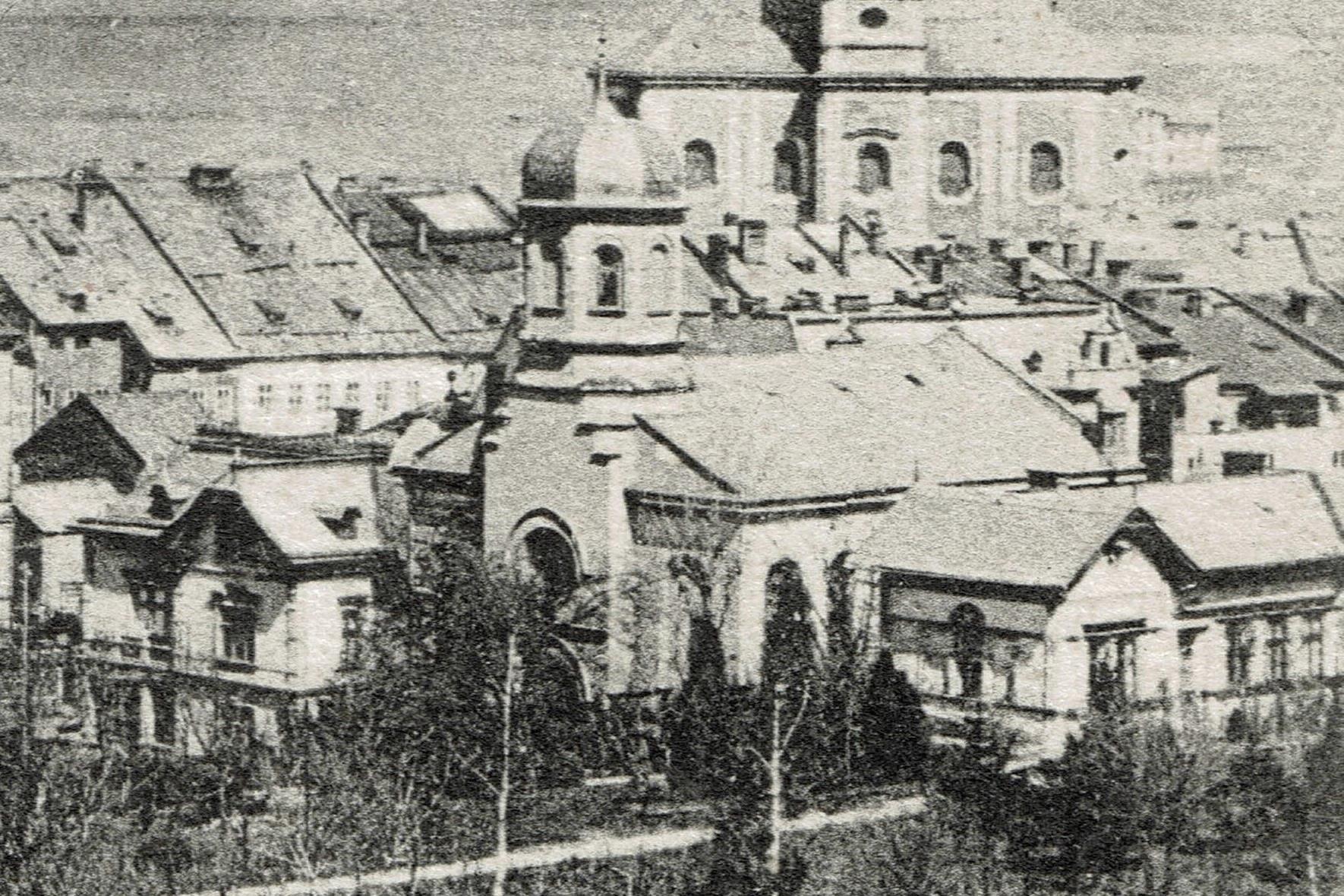
Synagogue of Trutnov
The synagogue of Trutnov (Trautenau), designed by the town builder Konrad Kühn in a Moorish and Neo-Renaissance style, opened on 3 September 1885 and its domed tower became a landmark of the town. During the November pogrom of 1938 Nazis looted it and set it on fire, and it burned to its foundations.
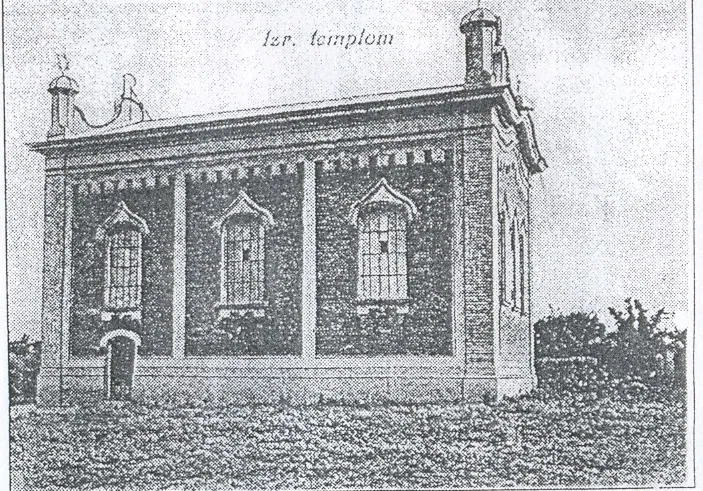
Synagogue of Veľké Ripňany
The small village synagogue of Veľké Ripňany near Topoľčany, built in the first decade of the twentieth century, had pointed windows and corner turrets. Its community of about twenty families was deported in 1942–1945, and in 1953 the Communists' collective farm pulled the synagogue down for building material.
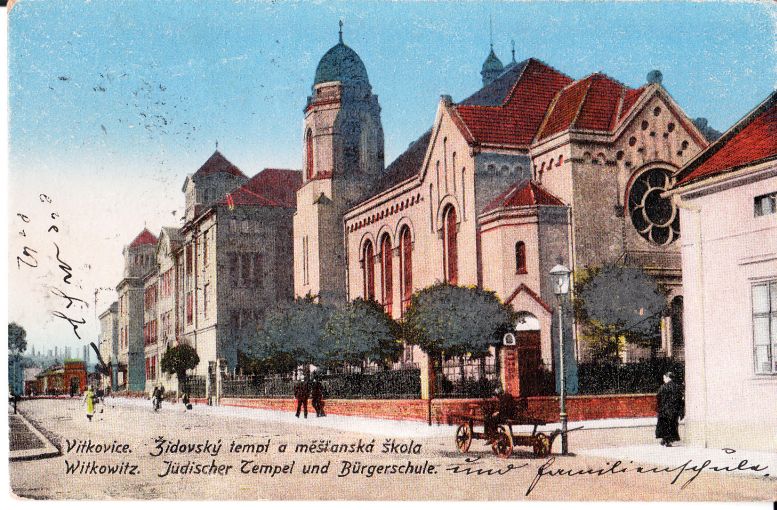
Synagogue of Vítkovice (Ostrava)
The synagogue of Vítkovice, the Rothschild ironworks town that is now part of Ostrava, was a free-standing twin-towered temple designed by the Ostrava architect Felix Neumann and completed in 1911. It was set on fire on 24 May 1939, shortly after the German occupation, and its burned-out shell was demolished in the summer of 1941.
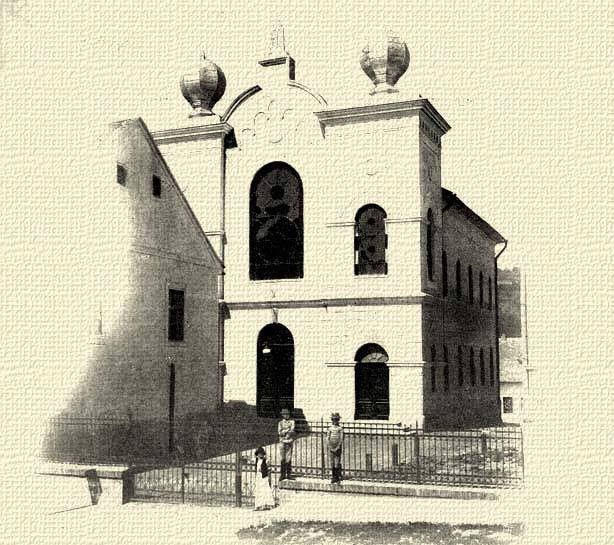
Synagogue of Zalău
The synagogue of Zalău (Zilah), built in 1903 for a community of a few hundred, had a twin-towered front crowned with onion domes. Its congregation was deported to Auschwitz in 1944; the building was left to decay from 1955 and in 1970, under the Communists, it was sold and demolished.
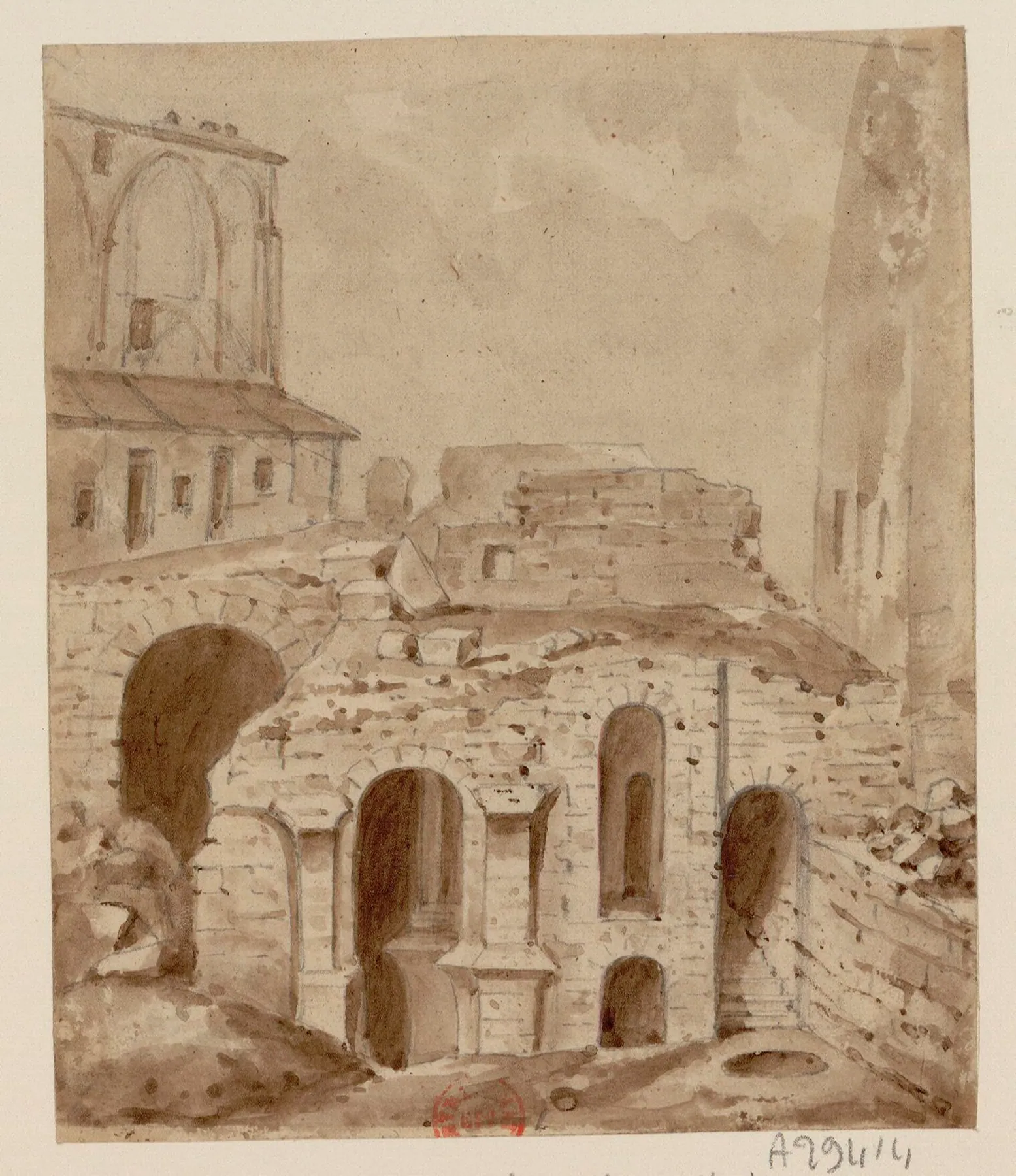
Synagogue of the Rue de la Juiverie, Paris
The synagogue of the rue de la Juiverie on the Île de la Cité served the Jews of twelfth-century Paris. After Philip II Augustus expelled them, the king gave it in 1183 to Bishop Maurice de Sully, who made it the parish church of Sainte-Madeleine-en-la-Cité. Sold in 1793, the church was pulled down; its last remains went in 1843.
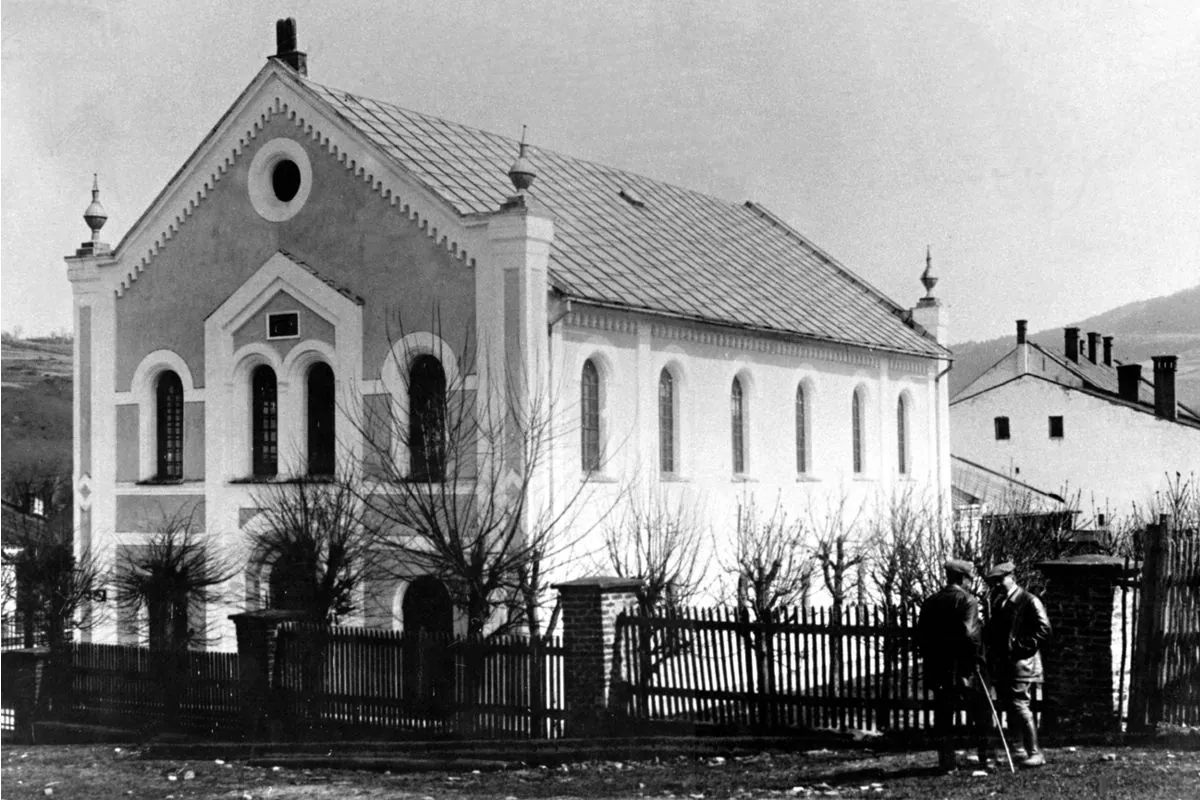
Synagogue of Čadca
The synagogue of Čadca, a rectangular round-arched building of 1864 near today's town fountain, served the Jews of the Kysuce region for eighty years. Emptied by the deportations of 1942, it was used as a fuel store and stable in 1944, then as a food warehouse, and was demolished by the Communists' town authority in 1972.
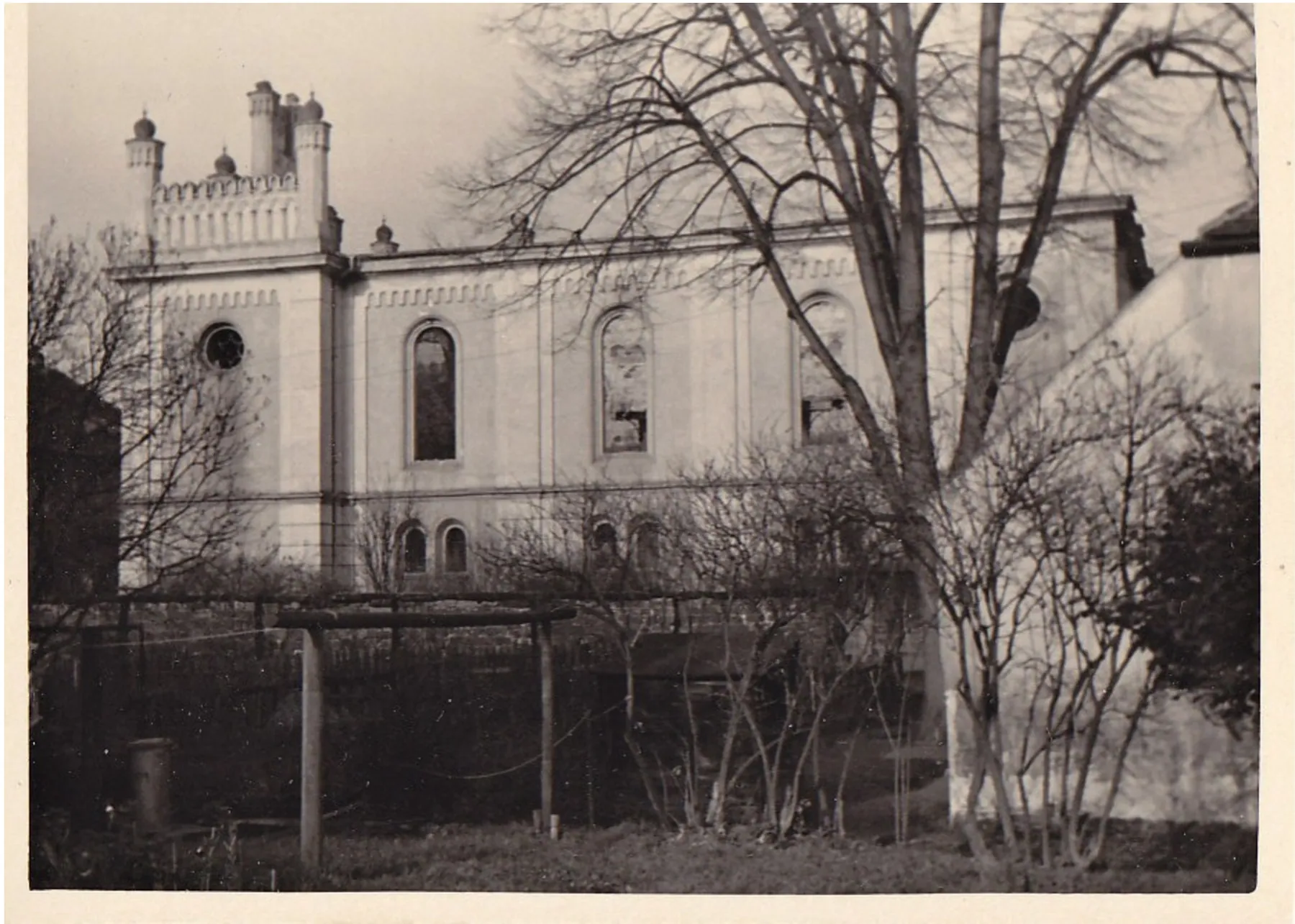
Synagogue of Česká Lípa
The synagogue of Česká Lípa (Böhmisch Leipa), a Neo-Romanesque temple with Moorish domes consecrated on 23 September 1864, served one of the oldest Jewish communities in northern Bohemia. Nazis set it on fire on the night of 10–11 November 1938 and burned it again the next morning; its walls were cleared in 1941.
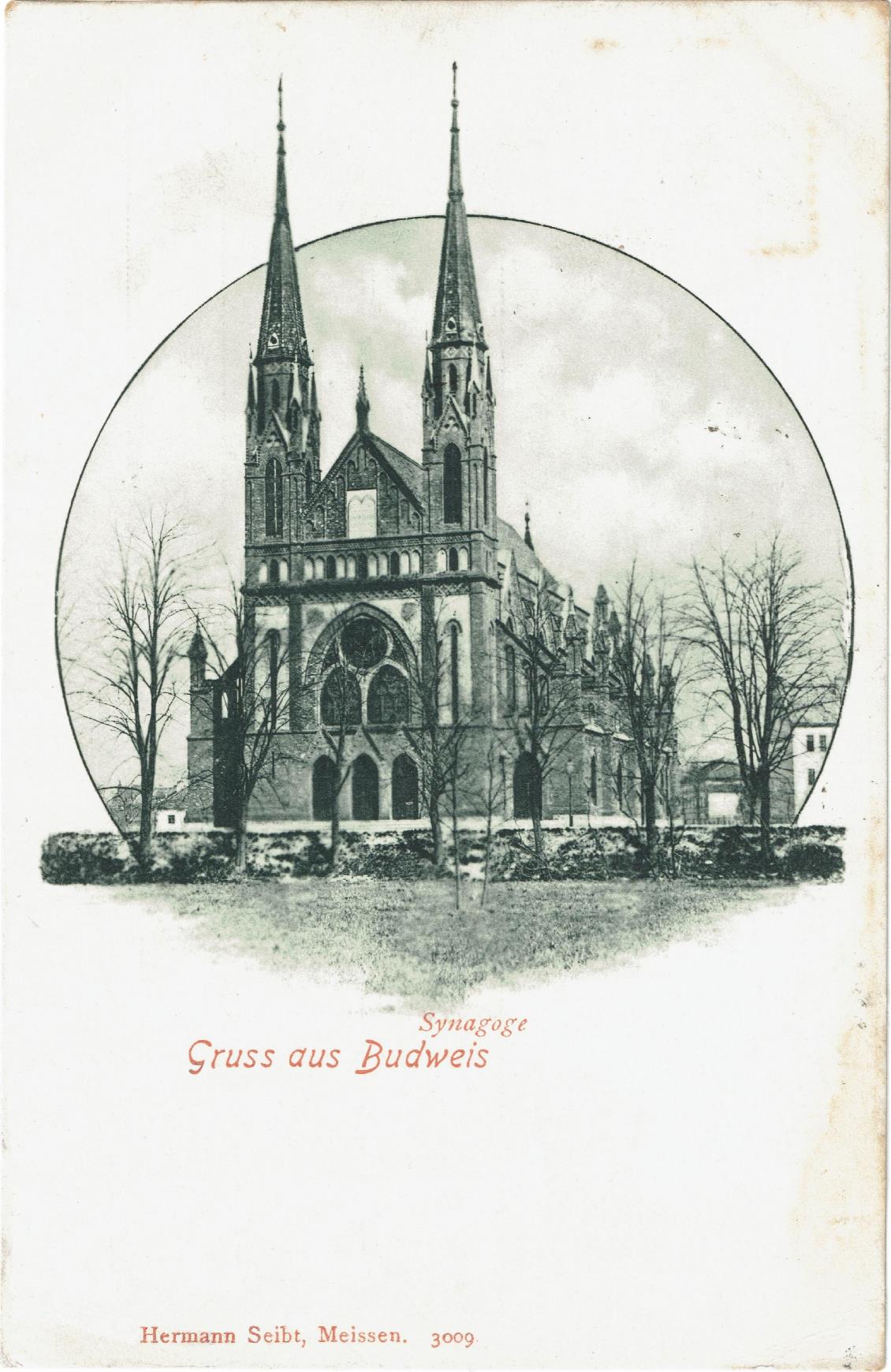
Synagogue of České Budějovice
The synagogue of České Budějovice, a twin-towered Neo-Gothic brick building by the Viennese architect Max Fleischer, was consecrated in 1888 and received an organ in 1898. Under the Nazi occupation it was blown up in the summer of 1942 on the orders of the German town commissioner, weeks after the city's Jews had been deported.

Synagogue of Šaľa
The Orthodox synagogue of Šaľa on Vlčianska ulica, completed in 1896 beside a Jewish school and ritual bath, had a front framed by two towers with onion domes. Its congregation, some 400 people, was deported in 1944; the empty synagogue was demolished under the Communists in the 1960s.

Synagogue, Insterburg
The synagogue of Insterburg, now Chernyakhovsk in Russia's Kaliningrad region, was consecrated in 1865 on the Forchestraße. It was burned by the Nazis between 3 and 4 a.m. on 10 November 1938, during Kristallnacht, with its Torah scrolls and library, and by 1941 the site was an empty lot.
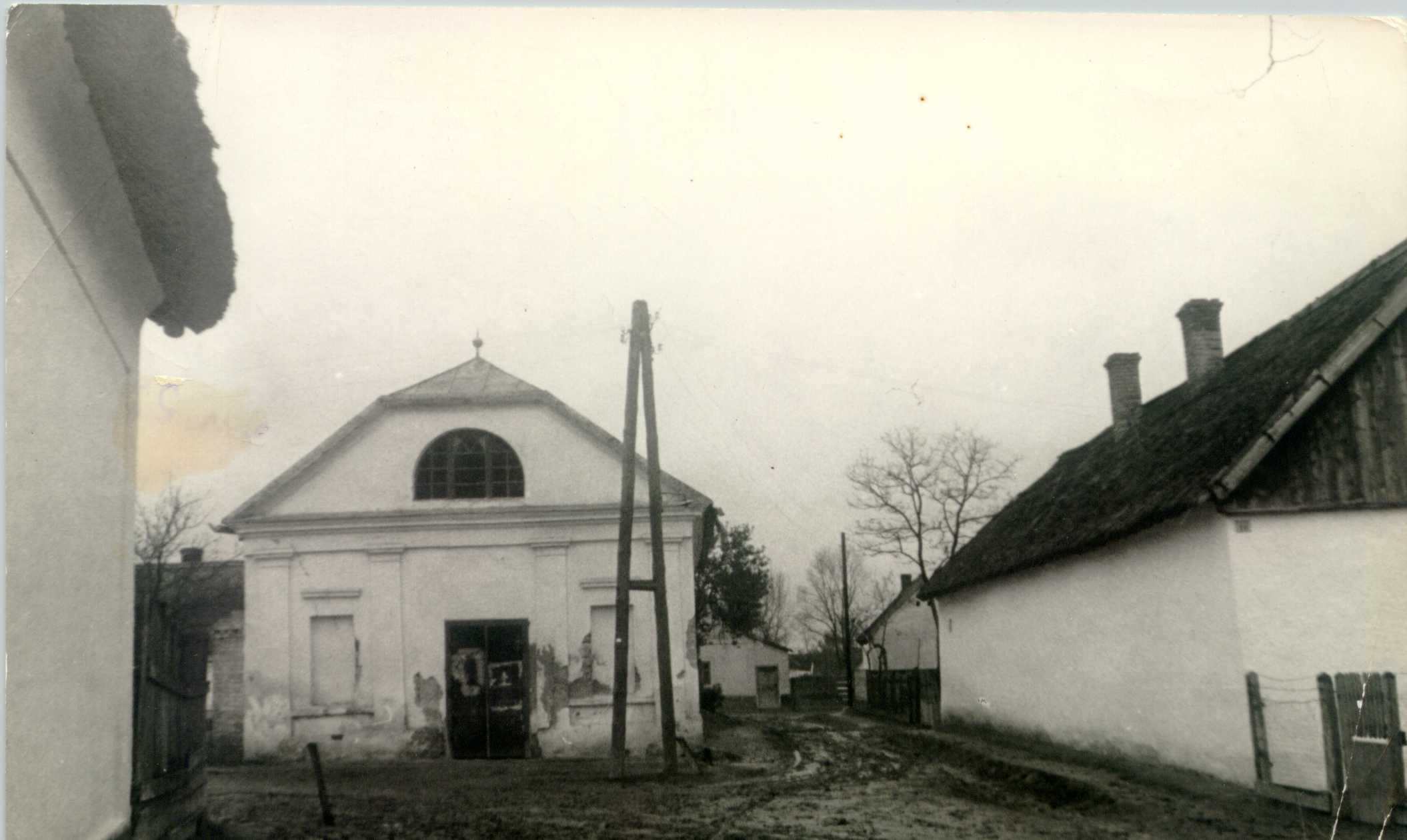
Szabadszállás Synagogue
The Orthodox Jews of Szabadszállás, a market town on the Hungarian plain, founded their congregation in 1858 and built a small pilastered synagogue soon afterwards. The town's Jews were deported in 1944. The building was photographed derelict in 1952 and was later demolished under Communist rule; who pulled it down is not recorded.
Szarvas Synagogue
The synagogue of Szarvas in Békés county was built by the town's Jewish community in 1856 and stood on Rákóczi utca. In 1944, when the community was deported, the building was burned to the ground. Who set the fire is not recorded in the sources read, and no photograph of it has been found.

Szatmárcseke Synagogue
The synagogue of Szatmárcseke, a village in the Szatmár region near the Tisza, was consecrated in 1884 for a small Orthodox community. Its roughly seventy Jews were deported in 1944. A photograph taken after the war shows the empty, peeling interior; by the 1980s the building had been demolished, by whom and when is not recorded.
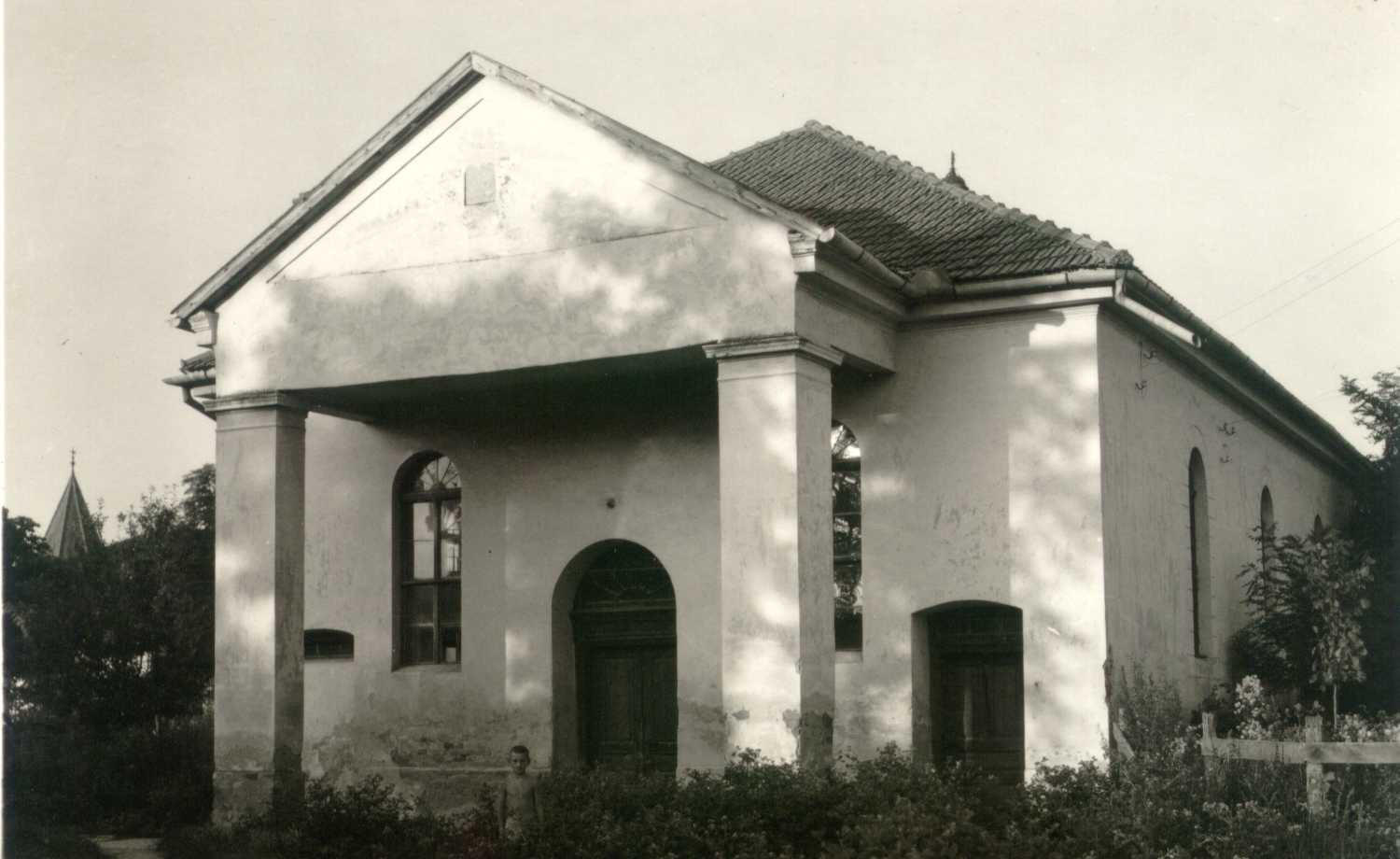
Szeghalom Synagogue
Szeghalom's synagogue was built in 1889, together with a school, for a small Congress (Neolog) community founded in 1856. In 1944 the town's Jews were held in a ghetto around it and deported through Szolnok. Photographs catalogued under 1954 show it intact; it was demolished before the 1980s, and nobody is named as responsible.
Szentgotthárd Synagogue
The small Neolog congregation of Szentgotthárd, on the Austrian border, consecrated its prayer house in 1898 and is said to have built a synagogue in Széchenyi utca soon afterwards. Its members were deported in 1944. The building was demolished under Communist rule in the early 1970s, when Mártírok út was redeveloped.
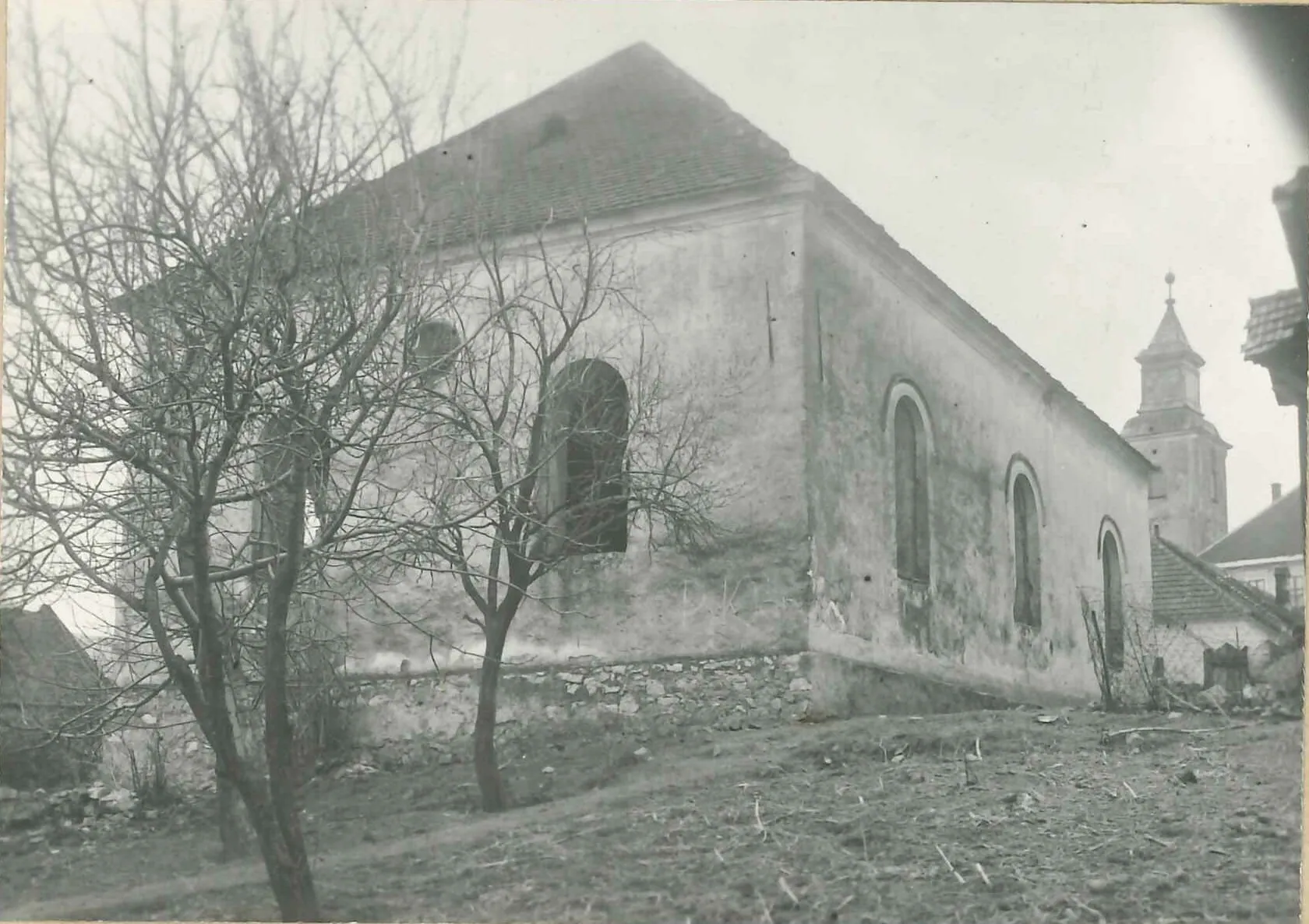
Szentgál Synagogue
Szentgál's synagogue, a plain round-arched hall built in 1897 for a Jewish community of about a hundred people in this Bakony village, was photographed gutted and derelict after 1945. It was later demolished and was gone by the 1980s; when it was pulled down, and by whom, is not recorded.
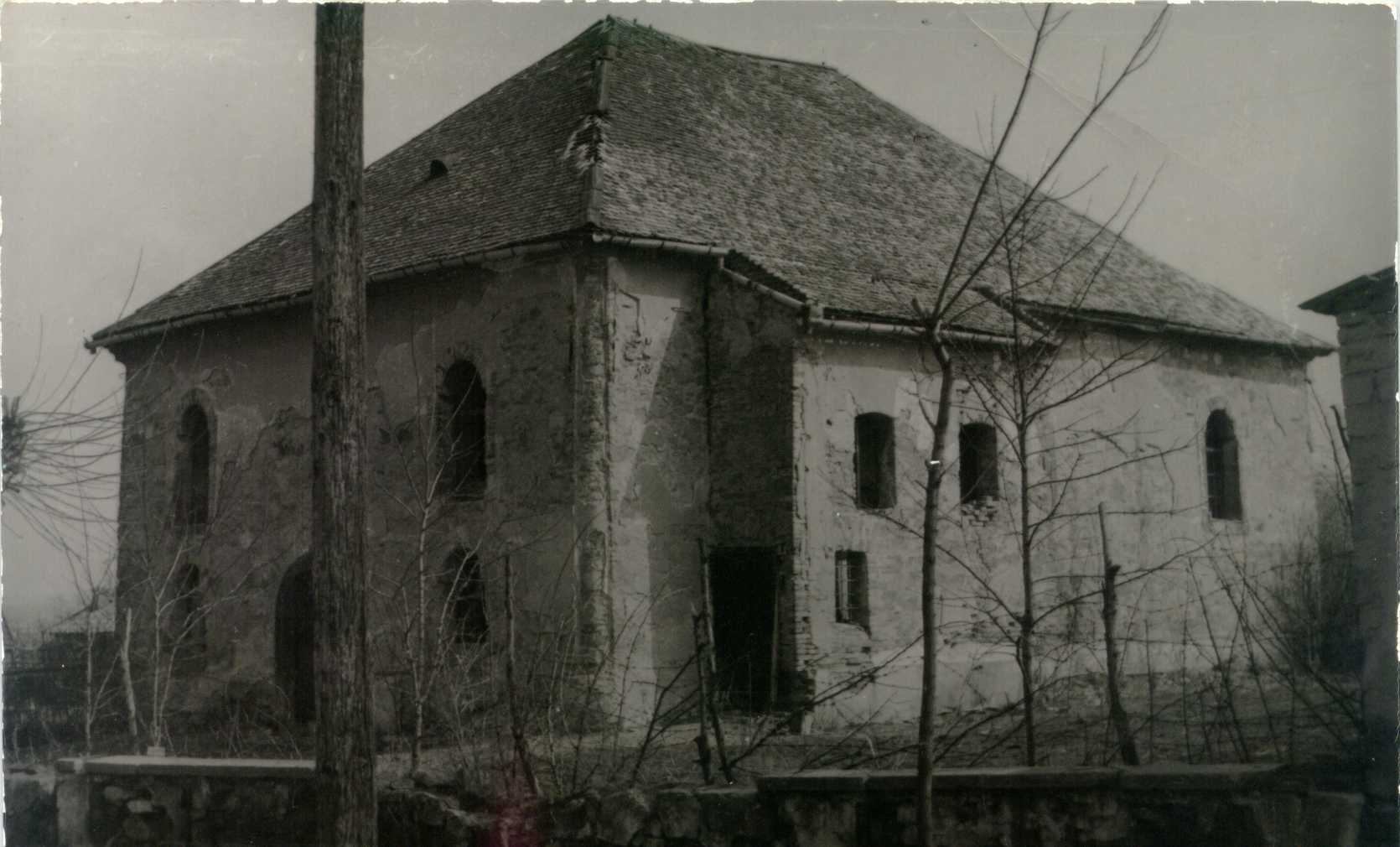
Szécsény Synagogue
The synagogue of Szécsény, a small town in Nógrád county, was a vaulted hall with a four-column bimah at its centre. It outlived the deportation of its congregation in 1944, stood empty and stripped, and was demolished after 1945; the year and the body that ordered the demolition have not been established.
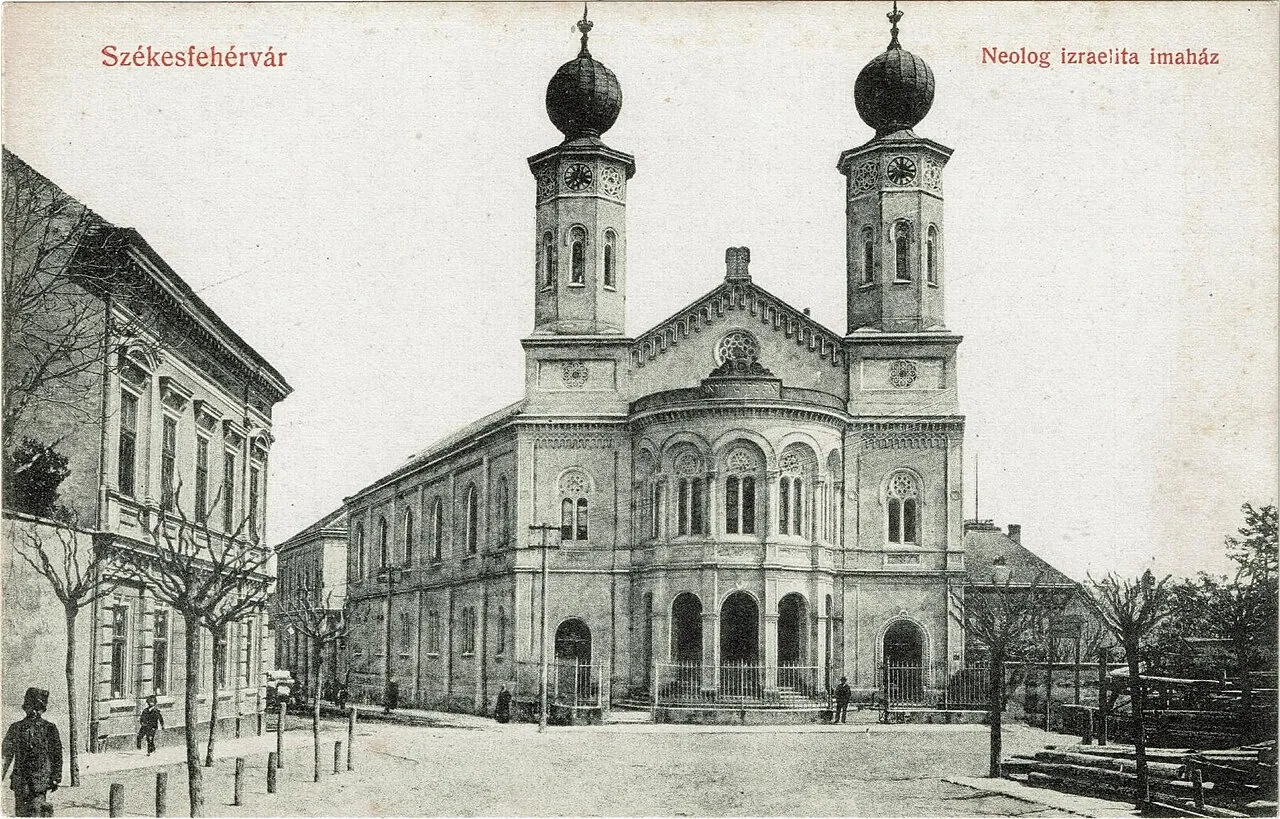
Székesfehérvár Neolog Synagogue
The Neolog synagogue of Székesfehérvár, built in 1862–64 beside the ruins of Hungary's medieval coronation basilica, was the twin-towered landmark of the city's reform-minded Jewish community. Gutted by Allied bombing in autumn 1944, months after its congregation was deported to Auschwitz, the ruin was pulled down in 1949 on the orders of the Communist-era city leadership.

Sály Synagogue
Sály's synagogue was a small rendered prayer hall in a Bükkalja village of Borsod county, known from a single undated photograph in the Hungarian Jewish Museum and Archives. Its congregation was taken to the Mezőkeresztes ghetto in May 1944. The building had been demolished by the 1980s; when and by whom is not recorded.

Tab Synagogue
The Orthodox synagogue of Tab, in Somogy county, was built in 1897 to designs by the Budapest architect Dezső Hönig and stood above a broad flight of steps. Its congregation was deported in July 1944. The building had vanished by the mid-1950s; the sources found do not record who pulled it down.
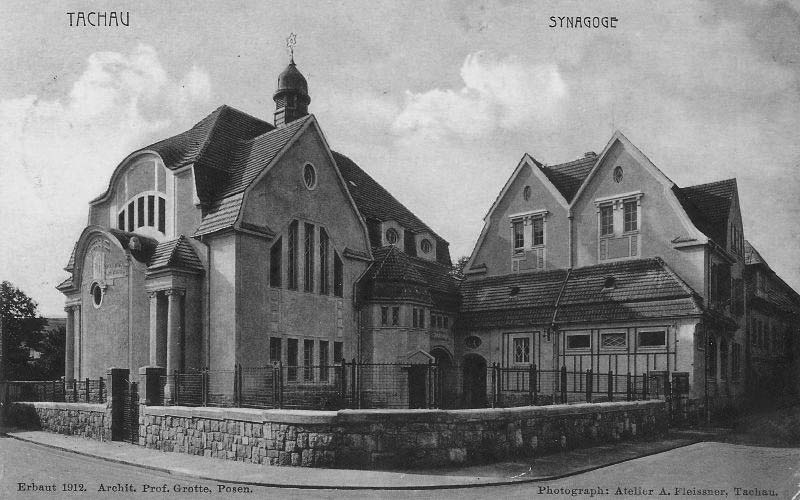
Tachov Synagogue (1912)
Tachov's second synagogue was built in 1911-1912 to plans by Alfred Grotte, who worked without fee, after a town fire destroyed the old one. A Secession-style hall for about 186 worshippers, it was set on fire by the Nazis on 10 November 1938 and soon pulled down. Its site beside the surviving rabbi's house is still empty.
Tailors' Synagogue of Piatra Neamț
The tailors of Piatra Neamț kept their own bet midrash, whose minute book dated from 1827, and received a new building in 1926. It was one of about twenty Jewish houses of prayer in the town. According to the community's president, the Communists pulled down all of them except the Baal Shem Tov Synagogue in the 1960s and 1970s.
Tailors' Synagogue, Iași
The Tailors' Synagogue was the prayer house of the Jewish tailors' guild in Iași, one of more than a hundred synagogues in the city. A Centropa witness recalls it being destroyed while the community dwindled after the war. It was gone by 1995; when and by whom it was demolished is not recorded.
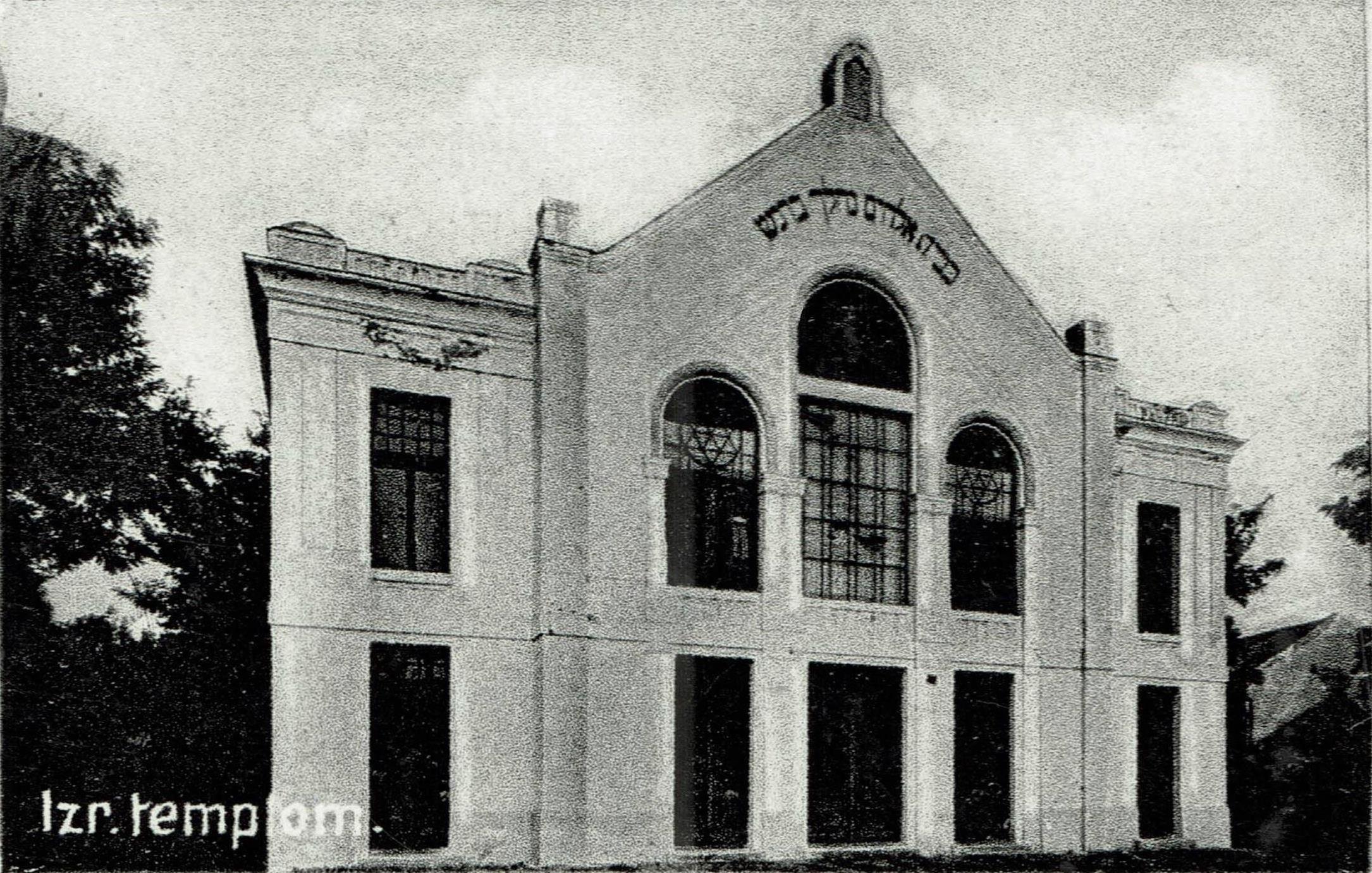
Tamási Synagogue
Tamási's Neolog synagogue stood from about 1872 at the corner of today's Eötvös and Arany János streets and was remodelled in 1913. Used as the final assembly point of the 1944 ghetto, it was sold in 1951, under Communist rule, by the national Jewish office to a private buyer and demolished.
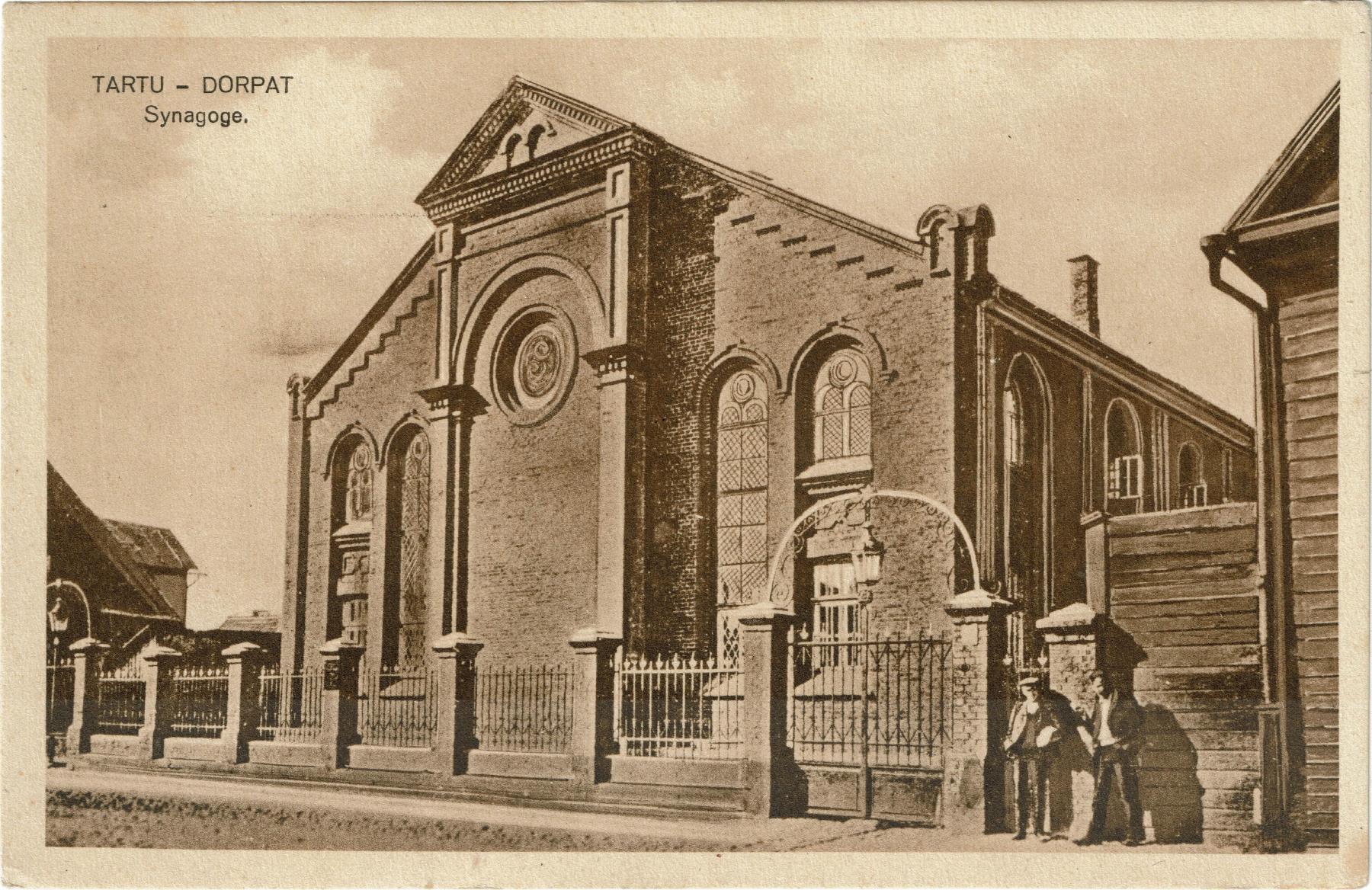
Tartu Synagogue
Tartu's red-brick Neo-Romanesque synagogue on Turu Street, designed by local architect Robert Pohlmann and opened in 1903, served the city's large Jewish community and its university students. It was wrecked in August 1944 during the fighting for Tartu; its ruins were later cleared and apartment blocks now cover the site.

Tass Synagogue
The synagogue of Tass, a village on the Danube in Bács-Kiskun county, was a plain Neoclassical hall that the county website dates to 1834. Photographs of 1949 show it standing but stripped. It was pulled down at some point before the 1980s, under Communist rule; no source found names who demolished it.
Tejfalu (Mliečno) Synagogue, Šamorín
The synagogue of Tejfalu (Mliečno), now part of Šamorín, served one of the oldest Jewish communities of the Upper Csallóköz, a rabbinate seat by the eighteenth century. It stood by 1851. A memorial book published in 1975 prints a photograph of its destruction, but when and by whom it was pulled down is unknown.
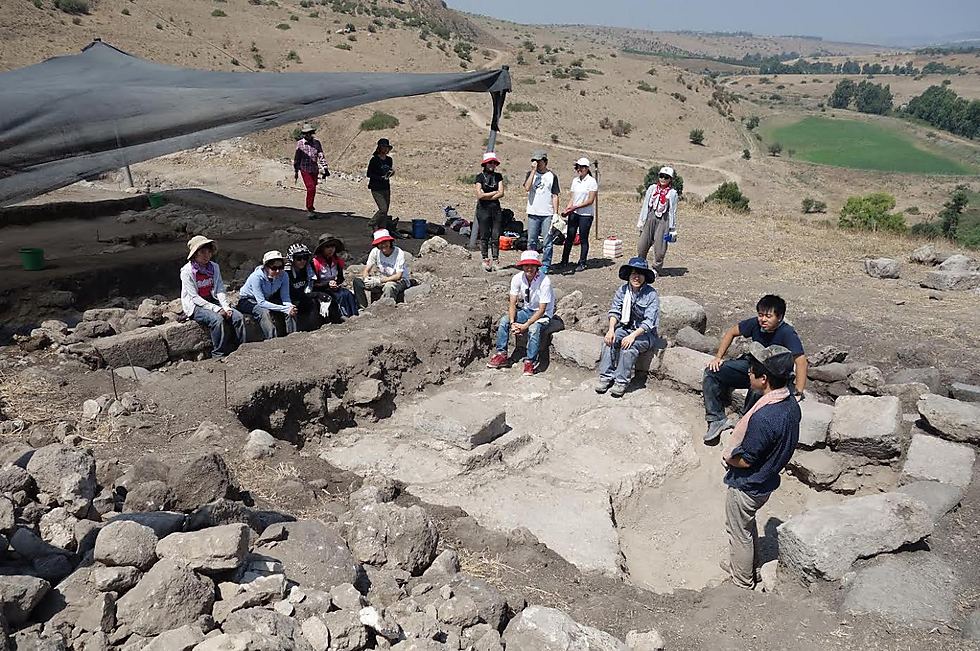
Tel Rechesh Synagogue
A square hall lined with a limestone bench, built in the first century CE inside a Jewish farm estate on the summit of Tel Rechesh in the eastern Lower Galilee. Its excavators read it as a rural synagogue. The estate was abandoned in the mid-second century CE, and the hall was found in 2016 just below the surface.
Telegdy utca Synagogue, Miskolc
A synagogue on Telegdy utca in Miskolc is recorded in Anikó Gazda's survey of Hungarian synagogues, made in 1980-87, as one of six Jewish buildings of the town and as demolished. No other source found describes the building, its congregation, its date or its end, and the street no longer appears under that name.
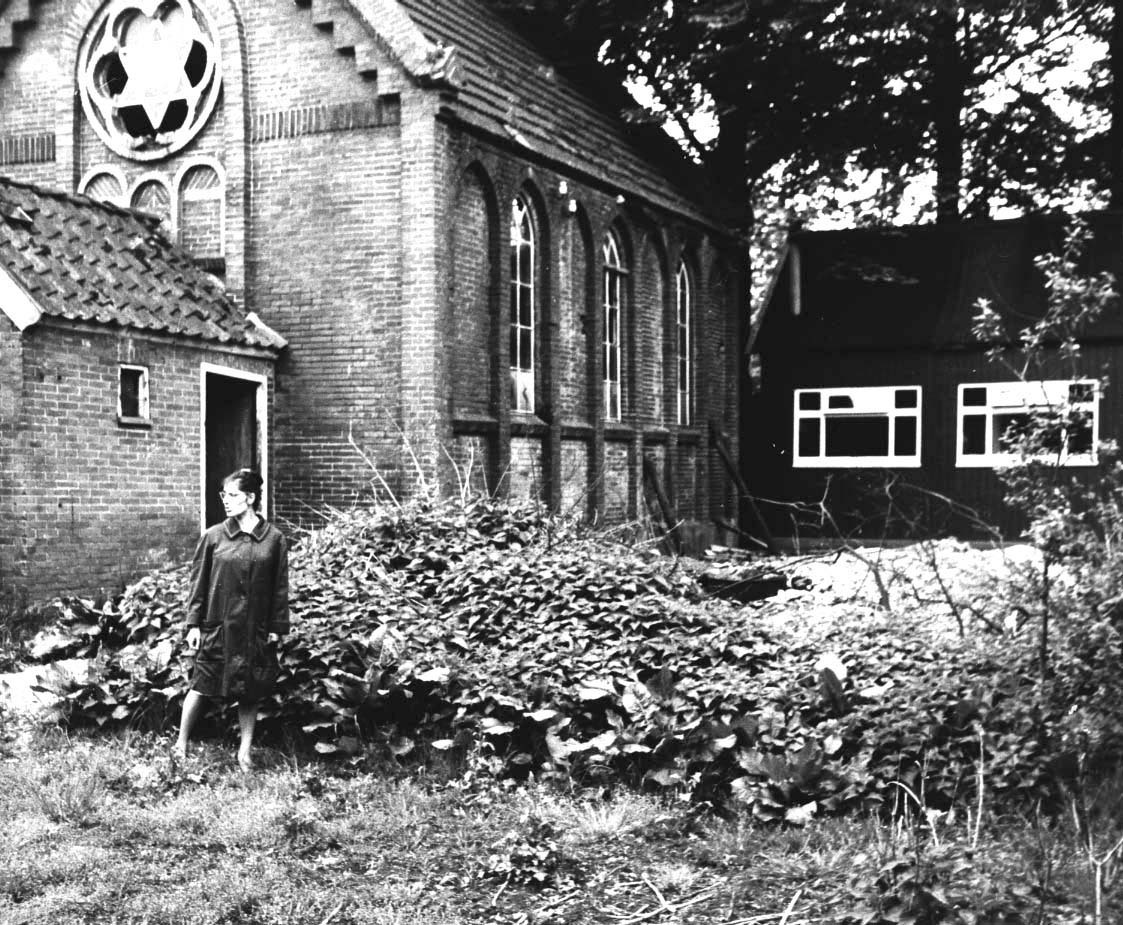
Ter Apel Synagogue
The synagogue of Ter Apel, a small brick hall on the Oosterstraat with a large round window bearing a Star of David, was inaugurated in 1883 for the Jews of Ter Apel and nearby villages. It was looted during the war, sold to the municipality of Vlagtwedde in 1949 and later demolished, after about 1960.
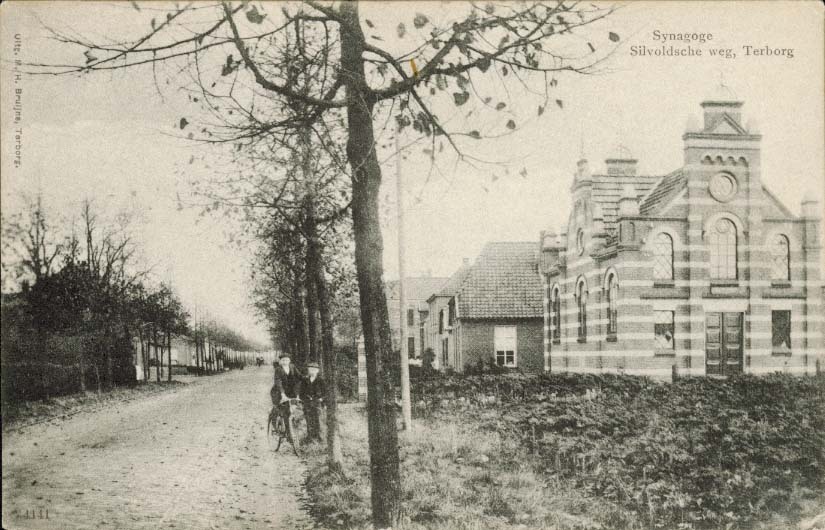
Terborg Synagogue (Silvoldseweg)
Terborg's synagogue, a striped brick hall with a stepped front gable and corner turrets, was built on the Silvoldseweg in 1901 to replace the congregation's Dorpsstraat synagogue of 1840. Most of its members were deported and murdered in 1942-1943. Looted during the occupation, it was heavily damaged in a bombing in 1945 and later demolished.
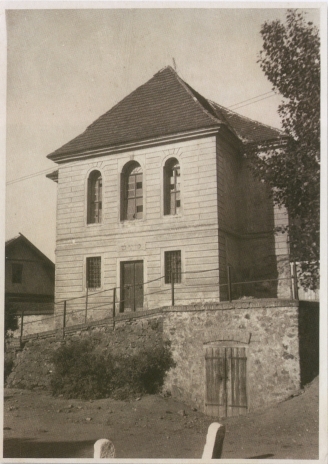
Terešov Synagogue
The synagogue of Terešov, a village in the Rokycany district of western Bohemia, served the oldest Jewish community in the district, whose burial society traced itself to 1623. Documented by 1786, it fell out of use in the 1930s as the community dwindled to nothing, and was pulled down in 1962 because of its poor condition.
Tetín Synagogue
Tetín, an old Czech village a quarter of an hour from Beroun in Central Bohemia, had a small Jewish community whose synagogue was described in 1934 as the oldest in the Beroun area. The community dissolved in 1872, a local landowner bought the building and kept it from secular use, and it was demolished at some point after 1973.

Tiszabő Synagogue
Tiszabő's synagogue, a tall gabled hall dated to the end of the eighteenth century, served what was once the central Jewish community of the middle Tisza region. The congregation dissolved in 1921 for lack of members, and the building was demolished at an unrecorded date by the 1980s; who pulled it down is unknown.

Tiszaföldvár Synagogue
Tiszaföldvár, a town on the Tisza in Jász-Nagykun-Szolnok county, had a synagogue dated to 1903, a hall fronted by two round towers with onion domes. A photograph in the Hungarian Jewish Museum and Archives shows it intact. By the site survey of 1980-87 it had been demolished; when and by whom is unknown.
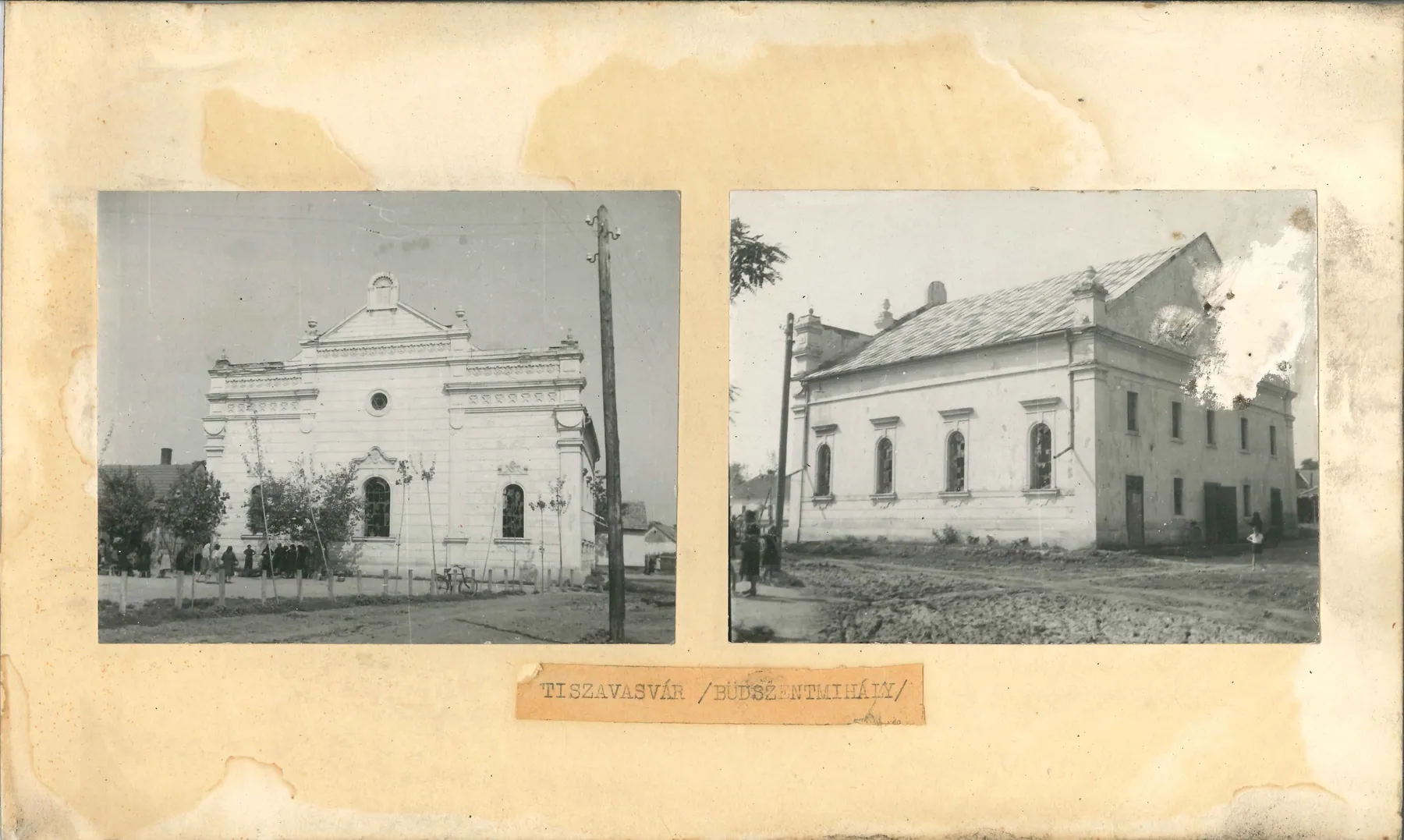
Tiszavasvári (Büdszentmihály) Synagogue
The synagogue of Büdszentmihály, today part of Tiszavasvári, was completed in 1903 for a Jewish community that had grown to more than 700 people. Its richly ornamented front faced a village street. After the community was deported in 1944 the building survived the war, but local authorities later demolished it.

Tolcsva Synagogue
Tolcsva's Orthodox synagogue, a banded, round-arched hall with rose windows, was rebuilt in 1865 after a fire in this Tokaj wine village. In 1944 Hungarian authorities held nearly 300 Jews in it before deportation to Auschwitz. The returning survivors sold the building, and it was dismantled in the mid-twentieth century; by whom is not recorded.
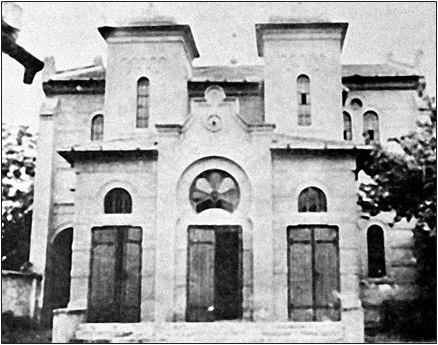
Tolna Synagogue
Tolna's small Status Quo Ante congregation built its synagogue in the early twentieth century (1906 or 1914; sources differ) at the back of the community plot at Deák Ferenc utca 7. Emptied by the 1944 deportations, it was demolished in 1959 under Communist rule, reportedly by the last remaining members of the congregation themselves.
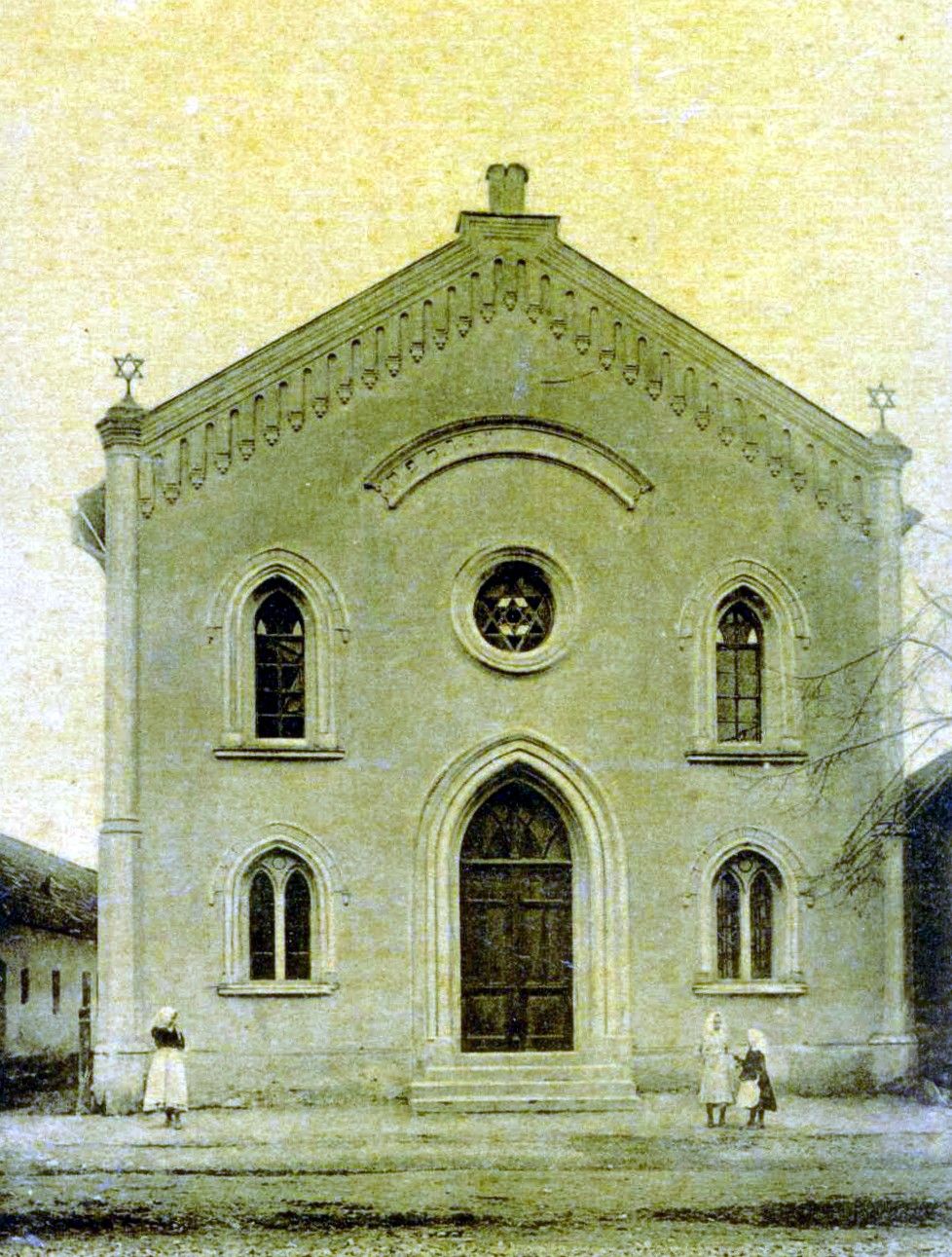
Tornaľa Orthodox Synagogue
Tornaľa's synagogue of 1890, recorded as the town's Orthodox synagogue, was a gabled Gothic Revival hall with a Star of David in its round window. Its congregation was destroyed in 1944, when more than 650 Jews of the town were deported and murdered. The building was demolished after the Second World War, possibly in 1989.
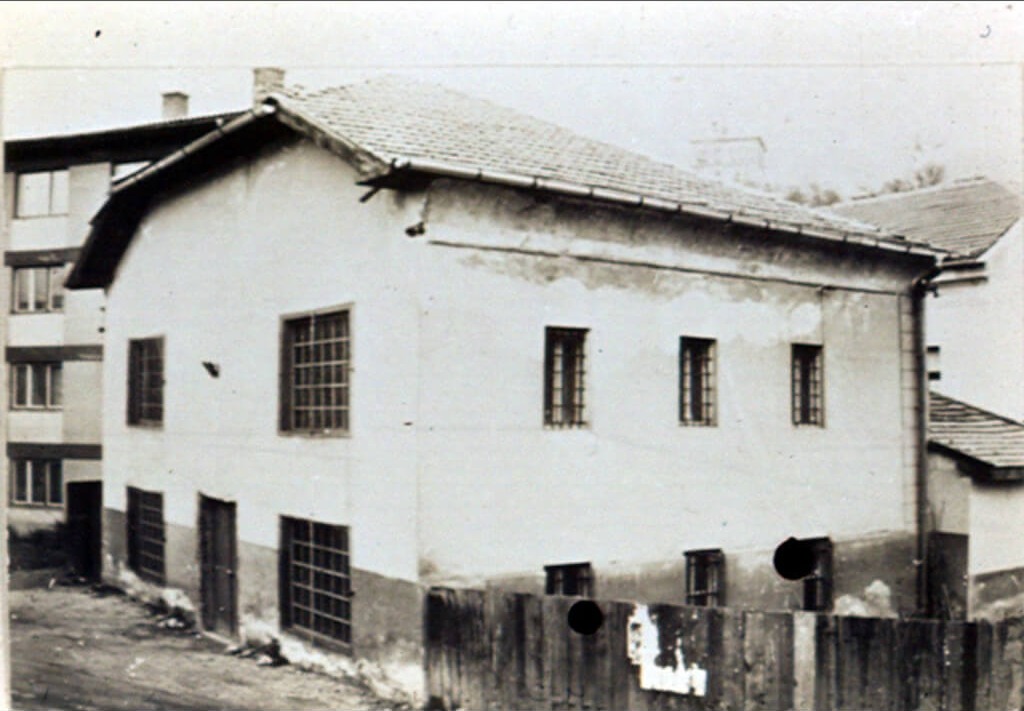
Travnik Synagogue
The Travnik synagogue, known locally as Kalkadoš or the Templ, was a plain two-storey Sephardic house of prayer rebuilt in the 1860s below the old town. Looted by the Ustaše in 1941 and later used as a metal workshop, it was demolished in late August 2008, despite public protests, to make way for a shopping centre.
Trebišov Synagogue
The synagogue of Trebišov, in the Zemplín lowland of eastern Slovakia, was a simple Rundbogenstil building put up after 1900 on the town's main road. Its congregation was destroyed in the Holocaust. In the 1970s, when most of the historic town was razed under Communist rule, the synagogue was demolished and replaced by a cultural centre.
Trenčianska Teplá Synagogue
A synagogue in Trenčianska Teplá, a village on the Váh north of Trenčín, is recorded only by a single unreferenced row in an English Wikipedia list, which marks it as destroyed without giving a date of building or loss. The village's small Jewish community grew to 144 people by 1910 and was destroyed in the Holocaust.
Trenčianske Stankovce Synagogue (Sedličná)
The synagogue of Sedličná (Hungarian Szedliczna, later Vágszállás), a small village on the left bank of the Váh now part of Trenčianske Stankovce near Trenčín, served a rural Jewish community recorded by 1851. Its Jews numbered eleven by 1930. Local sources say the building disappeared after the Second World War; no date or actor is recorded.

Trenčianske Teplice Synagogue
The synagogue of Trenčianske Teplice was built around 1866 in the centre of the spa town, next to the spa compound, and enlarged in 1906. It served the Jewish community that grew with the spa in the later nineteenth century. A tall round-arched building with a rose window and corner turrets, it was demolished after the Second World War.
Turany Synagogue
A small synagogue built in Turany, a village in the Turiec valley north-east of Martin, in the first half of the 19th century. Its existence and loss rest on two brief listings, which say it was pulled down in the 1980s; nothing is known of its appearance. The village's Jews were deported during the Second World War.
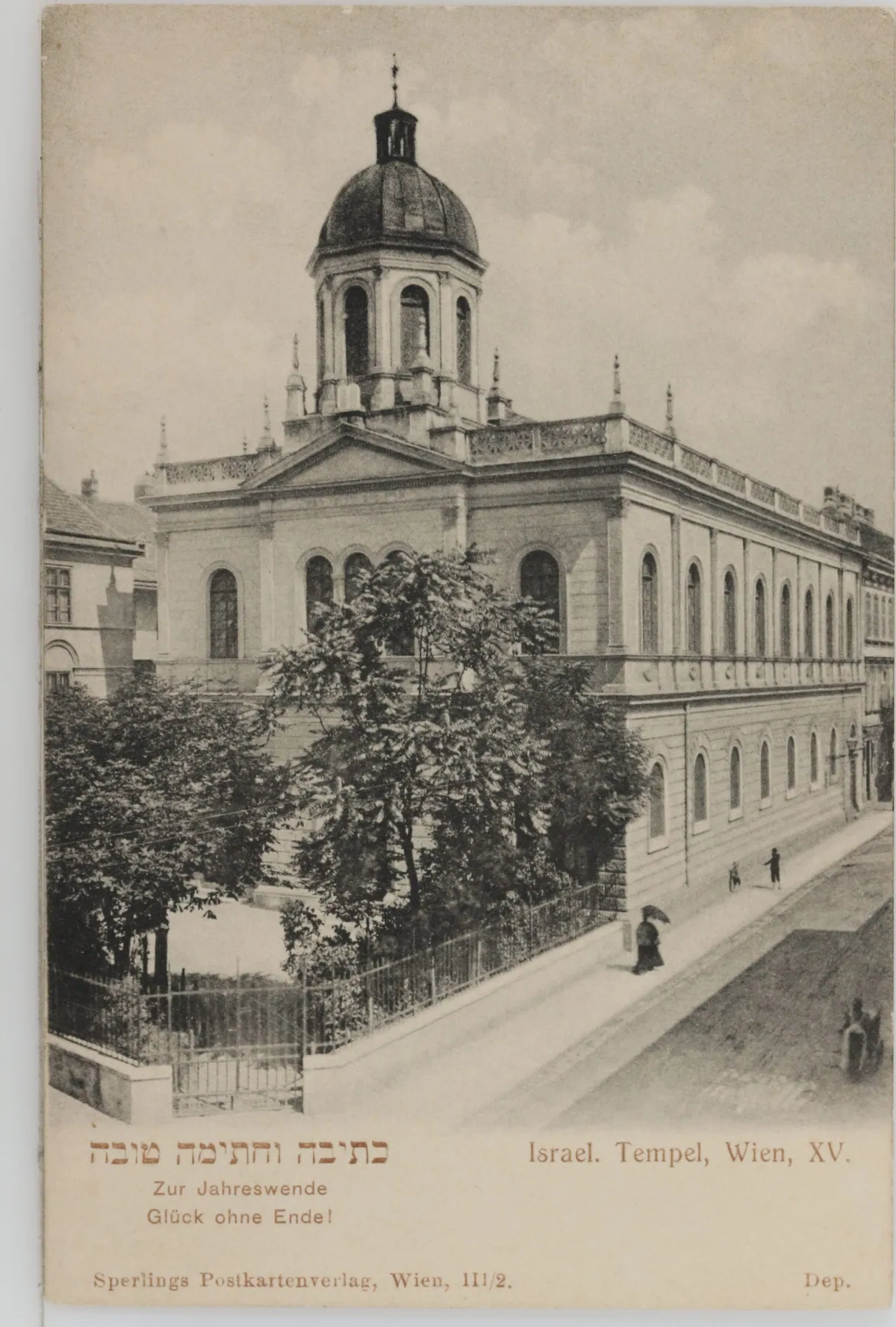
Turnertempel (Turnergasse Synagogue), Vienna
The Turnertempel at Turnergasse 22 in Vienna's Rudolfsheim-Fünfhaus was a Neo-Renaissance synagogue with an octagonal lantern tower, designed by Carl König and opened on 26 September 1872 for the then independent community of Sechshaus. The Nazis looted it and set it on fire during the November pogrom on 10 November 1938.
Turzovka Synagogue
The synagogue of Turzovka, in the Kysuce hills of northern Slovakia, was built in the 1890s for what had long been the largest Jewish community in the region. Its congregation was deported in 1942. The empty building served as a warehouse after the war and was pulled down in the 1960s, under Communist rule.
Turčianske Teplice Synagogue
A synagogue in the spa town of Turčianske Teplice (Hungarian Stubnyafürdő), in the Turiec valley of central Slovakia, is known only from one unreferenced row in an online list of Slovak synagogues, which says it was destroyed after 1945. Its date, appearance, site and the circumstances of its loss are unknown.

Tábor Synagogue
Tábor's synagogue, a domed building in the oriental style, was completed in 1885 on the Parkány ramparts of the old town and stood out in the town's skyline. Services ended under the Nazi occupation and the congregation was deported in 1942. Used afterwards as a warehouse, the building was demolished by the Communist authorities in February 1977.
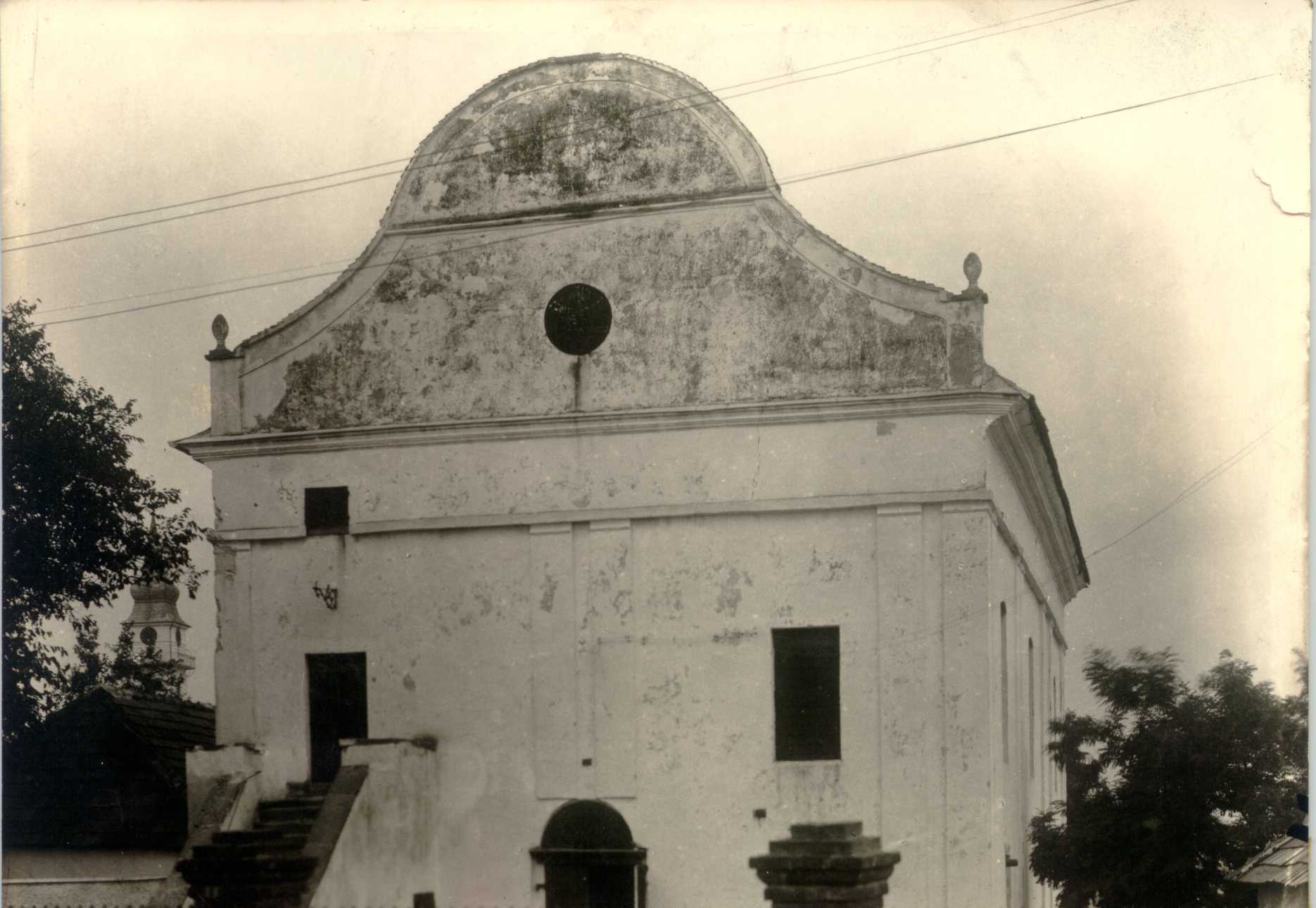
Tállya Synagogue
The Orthodox synagogue of Tállya, a wine town in Tokaj-Hegyalja, was built around 1840 and was known for a carved Torah ark guarded by two lions. Emptied by the deportations of 1944, it decayed after the last survivors left and was pulled down in 1964, under Communist rule, after the national Jewish office asked for its demolition.

Tápióbicske Synagogue
Tápióbicske's synagogue, dated 1840, stood in the village that was the seat of the district rabbi for the Tápió region until he moved to Nagykáta in 1868. A plain gabled building, it served a community that shrank from 334 Jews in 1828 to 38 in 1941. A 1980-87 survey found it demolished; when and by whom is unknown.
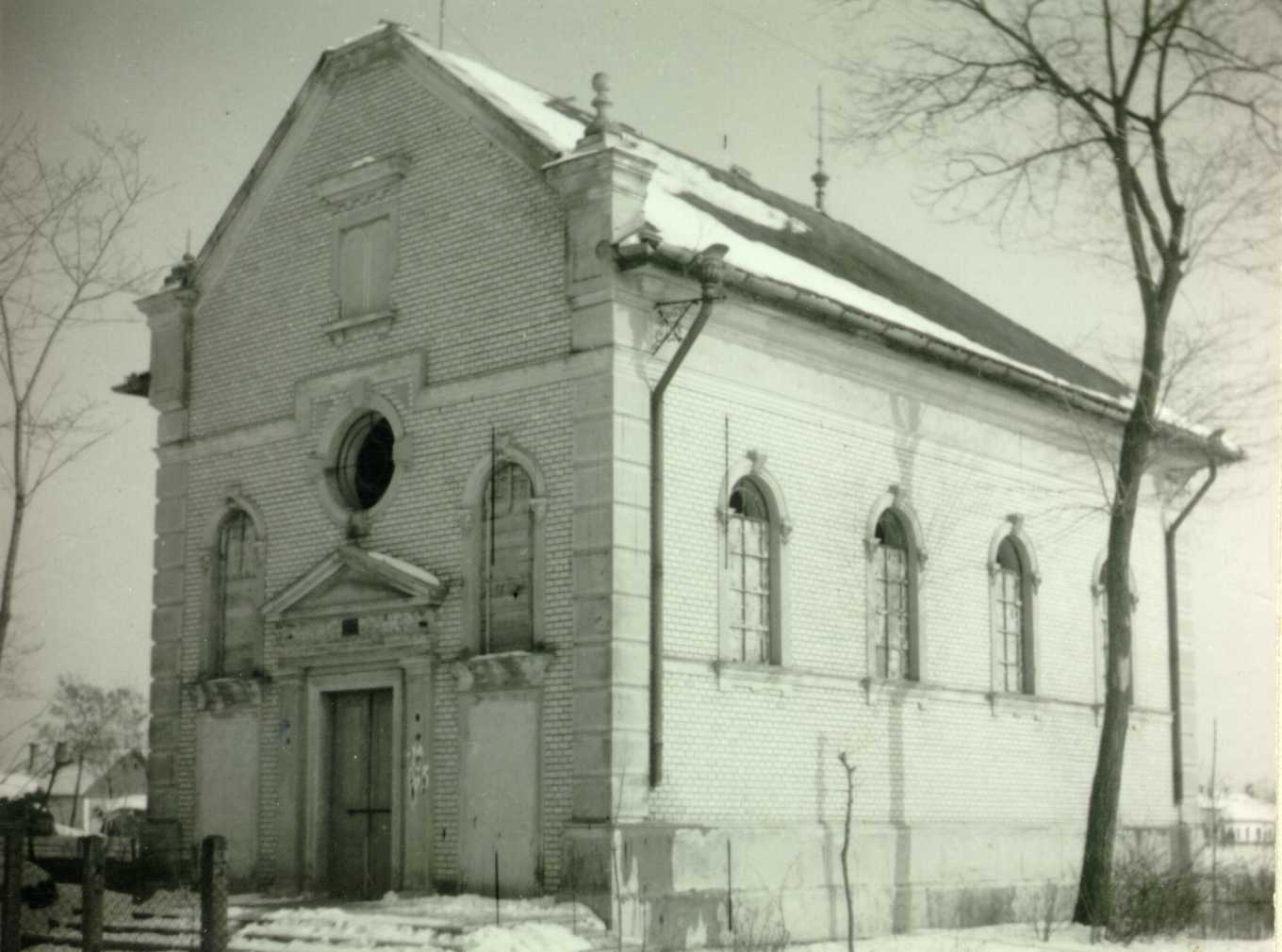
Tápiógyörgye Synagogue
The small Neolog synagogue of Tápiógyörgye, a village in Pest county, was built in 1896 and is credited to the landowning Tafler-Györgyey family. It outlived its congregation, deported in 1944, became a warehouse under Communist rule and was later pulled down. Three archive photographs are the only known record of it.
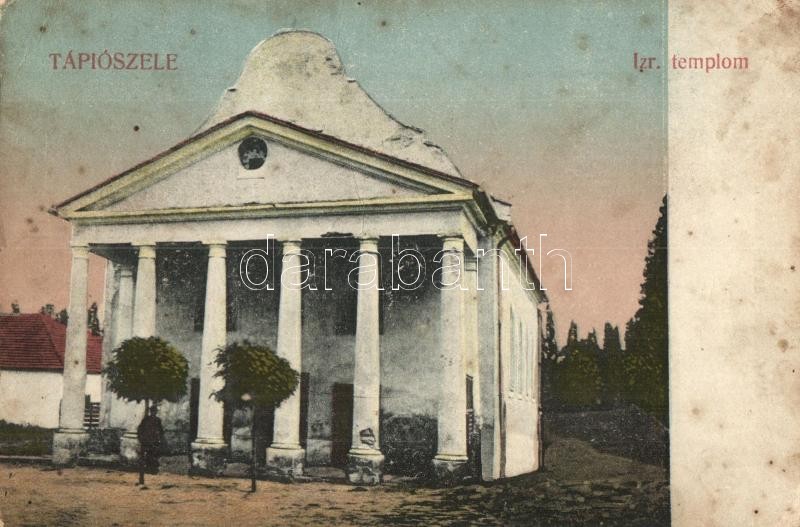
Tápiószele Synagogue
Tápiószele's synagogue, a Neoclassical hall with a columned portico, served a Jewish community dating from about 1770. Rabbi Ignác Lichtenstein preached Jesus as Messiah from its pulpit until 1892. Its last 69 Jews were deported in 1944, and the building was demolished around 1950; who pulled it down is not recorded.
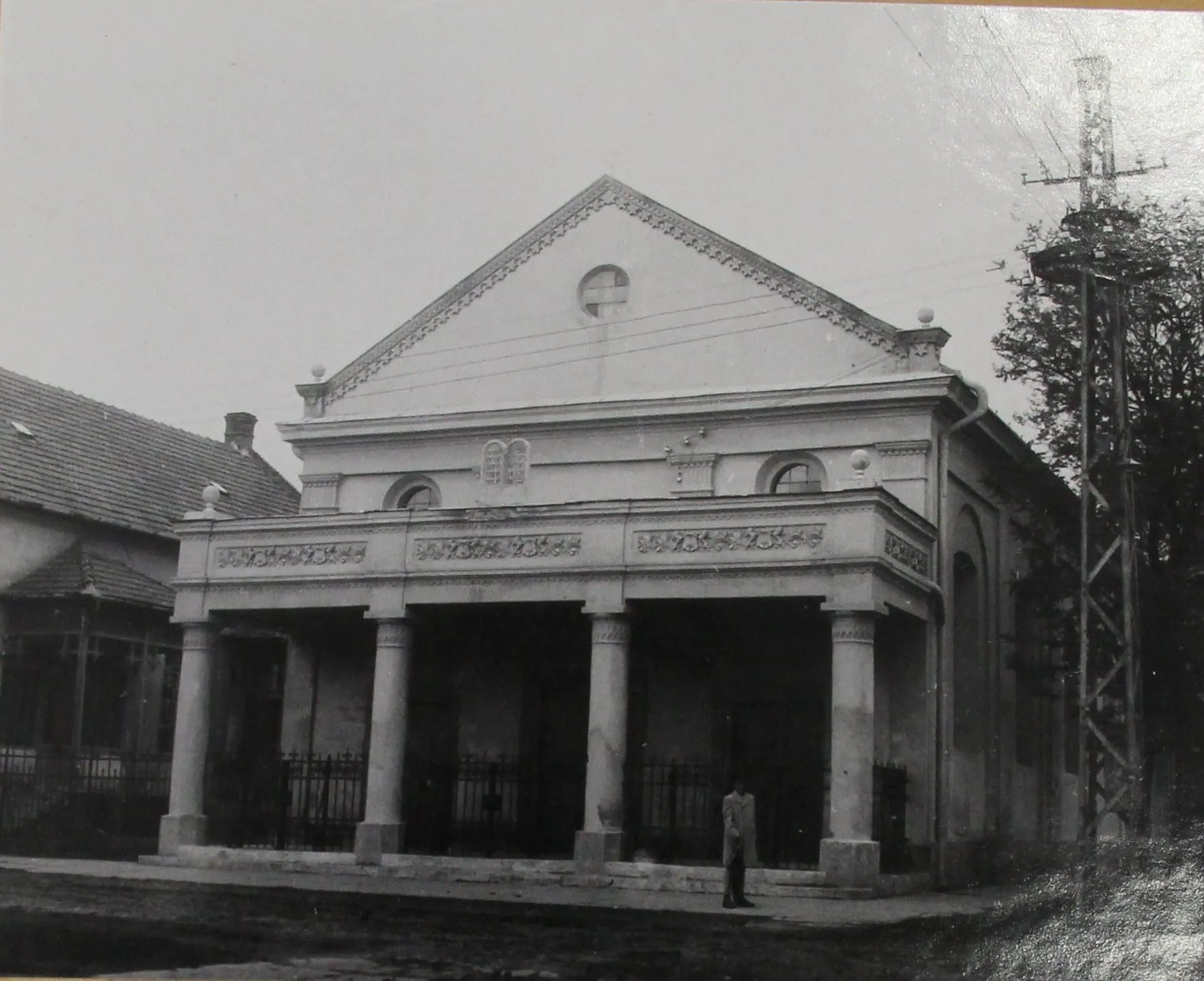
Törökszentmiklós Synagogue
The synagogue of Törökszentmiklós, a Classicist hall with a four-column portico, was built in 1857 from a physician's bequest. Turned into a workshop in 1944 and restored by survivors, it served a shrinking congregation until the Communists demolished it in 1980. A memorial plaque marks the site.
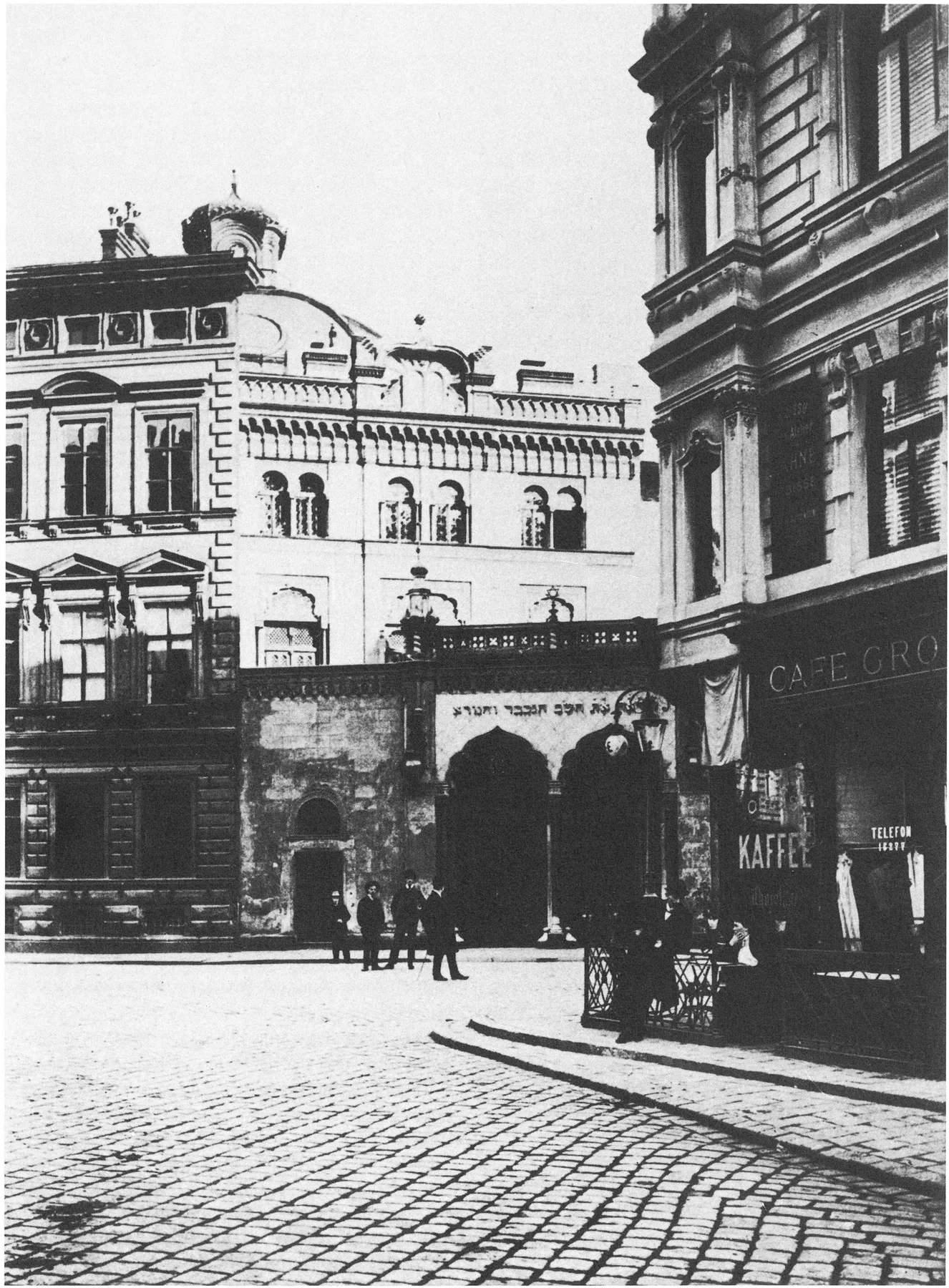
Türkischer Tempel (Turkish Temple), Zirkusgasse, Vienna
The Türkischer Tempel at Zirkusgasse 22 in Vienna's Leopoldstadt was the synagogue of the city's Sephardic Jews, who came from the Ottoman Empire and were known as 'Turkish' Jews. Designed by Hugo von Wiedenfeld on the model of the Alhambra, with a 12-metre octagonal dome, it was consecrated on 18 September 1887. The Nazis set it on fire on 10 November 1938, a police officer forbade the fire brigade to put it out, and the ruins were demolished in 1939.
Třinec Synagogue
Třinec's synagogue, built in 1930/31 for a community of almost 140 Jews attached to the congregation of Teschen, served for less than a decade. Nazi German forces burned it down in October 1939, soon after occupying the town, and its congregation was soon deported and murdered.

Uherský Brod Synagogue
The synagogue of Uherský Brod in south-eastern Moravia was dedicated around 1715 to 1720 in the town's Jewish quarter and served one of the largest congregations in Moravia until 1941. That year Czech fascists set it on fire, and the damaged building was later demolished. The town's Jews were deported in January 1943.
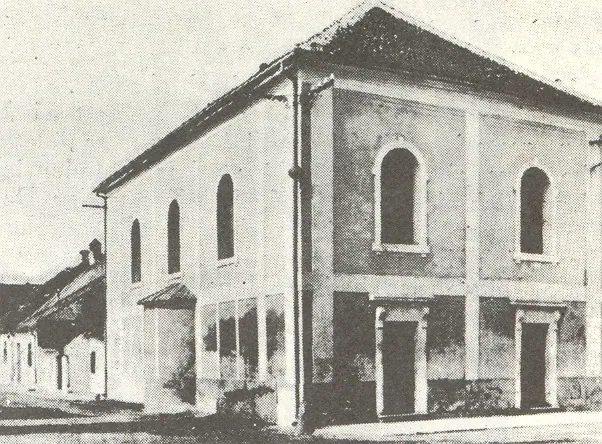
Uherský Ostroh Synagogue
The synagogue of Uherský Ostroh, a small town in south-eastern Moravia, served a Jewish community recorded there since 1592. A photograph of about 1930 shows a plain, rendered two-storey building with round-arched windows. The community was murdered in the Holocaust, and the synagogue was destroyed in 1944 or 1945; who destroyed it is not recorded.
Uithoorn Synagogue (1805)
The first synagogue of the Jews of Thamen, later Uithoorn, was a disused Mennonite church bought with money from Amsterdam benefactors and consecrated in August 1805. Repaired after a storm in 1836, it served a congregation of about a hundred people until 1900, when it was pulled down as structurally unsound and replaced.
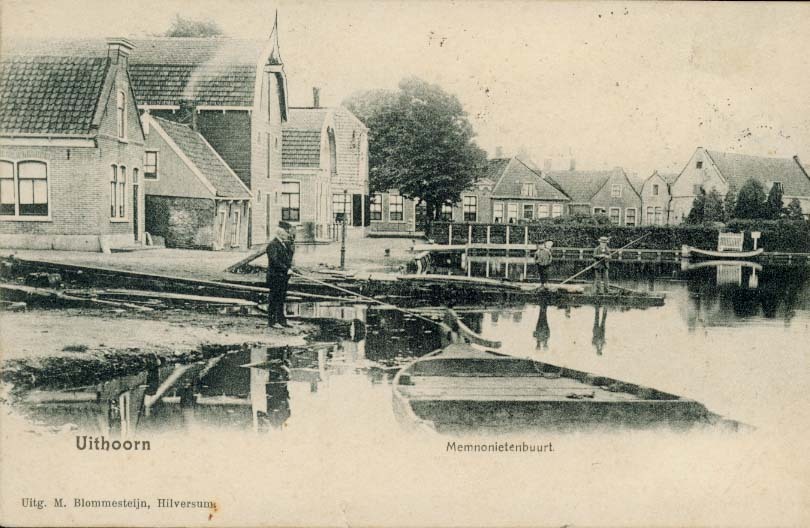
Uithoorn Synagogue (1900)
Built around 1900 to replace the decayed synagogue of 1805, this small house of prayer served the Jews of Uithoorn and nearby Mijdrecht on the Amstel. It fell out of use in 1938, and during the Nazi occupation the remaining Jewish residents pulled it down themselves to prevent looting, shortly before most of them were deported and murdered.
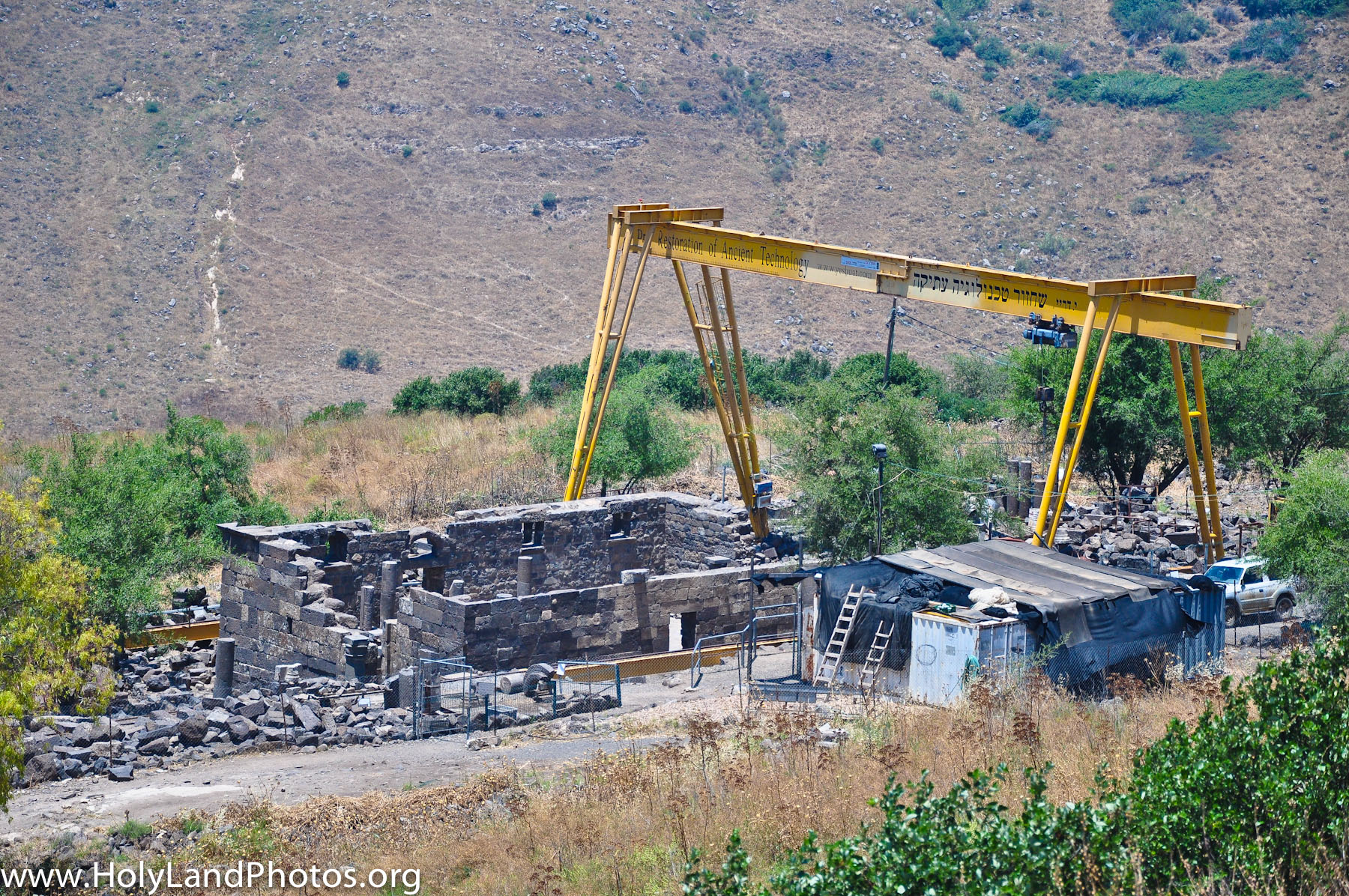
Umm el-Qanatir Synagogue
A large basalt synagogue of a Jewish flax-working village in the southern Golan, built in the fifth century CE and destroyed with the village by the earthquake of 749. Its fallen stones lay almost undisturbed until 2003, when a reconstruction from the original blocks began; by 2016 about half of the building had been raised again.
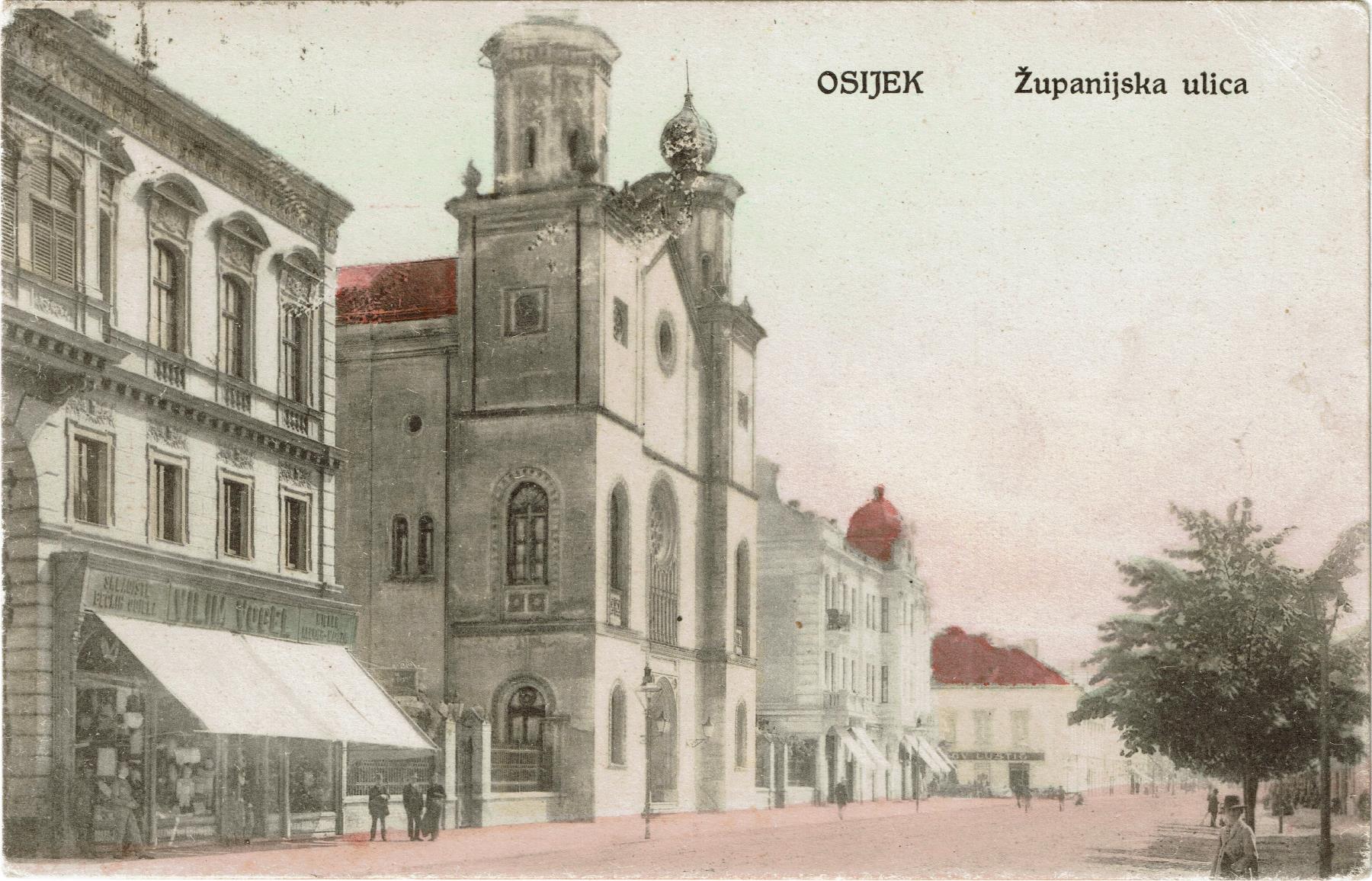
Upper Town Synagogue, Osijek
The Upper Town Synagogue on Županijska Street, built from 1869 to designs by Theodor Stern, was the great synagogue of Osijek and the tallest building in the city. On 13 April 1941 it was looted and burned by the Ustaše and local ethnic Germans; its ruin was demolished after the war and housing now stands on the site.
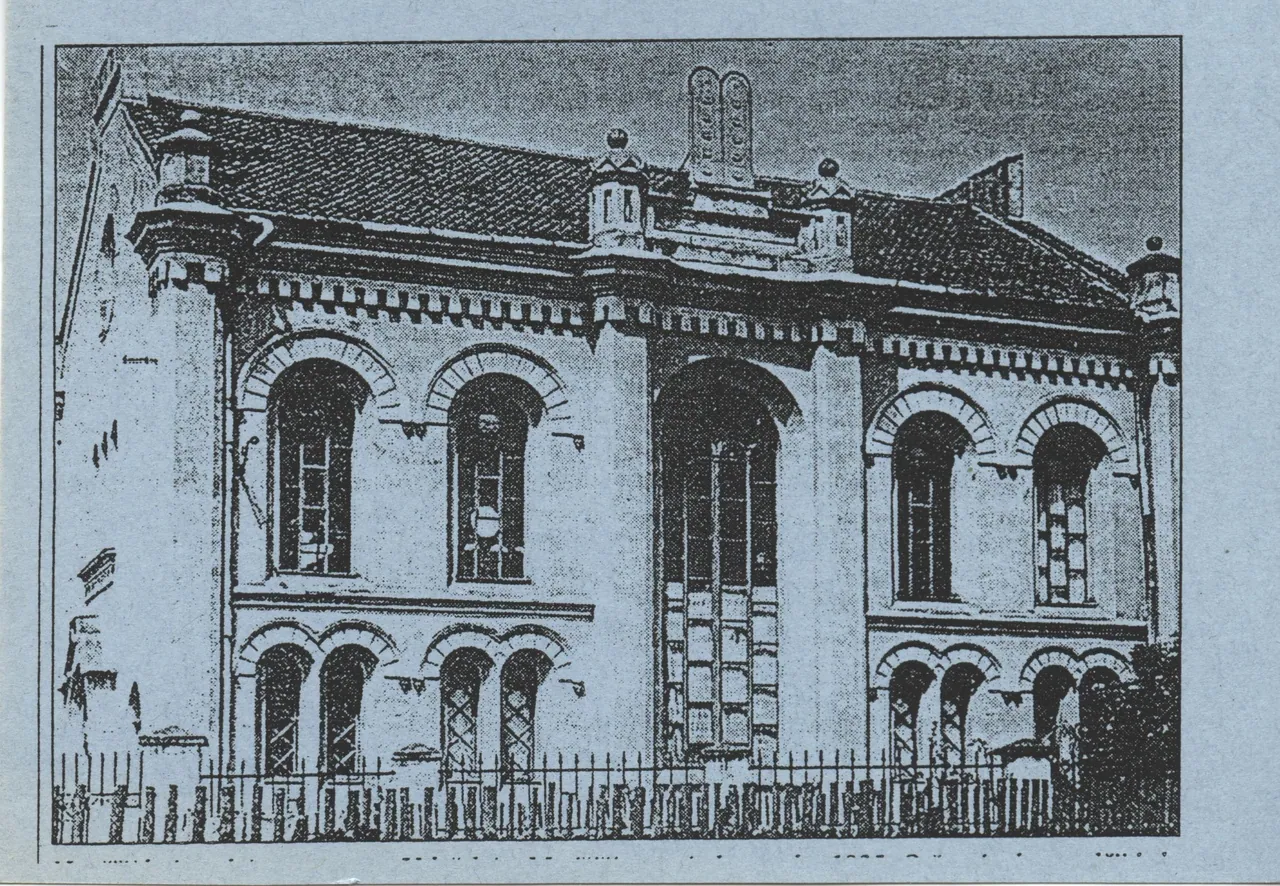
Valašské Meziříčí Synagogue
The synagogue of Valašské Meziříčí, a Neo-Romanesque hall designed by Ambrož Zapletal of Frenštát, stood on Vodní Street in Krásno from the 1860s. Its congregation was deported by the Nazis in 1942. In 1949 the Communist-run town national committee claimed the building, forcing its sale, and it was demolished in 1949 or 1950.
Valpovo Synagogue
Valpovo, a manorial town in eastern Slavonia, had a small Jewish community of 140 to 175 people between the world wars. Its synagogue, built in 1898, is recorded as destroyed in 1941, the year the community was closed under the Ustaše state. No source found names who destroyed it, and no picture of it is known.

Van den Nestlei Synagogue, Antwerp
The synagogue on the corner of Van den Nestlei and Oostenstraat, opened in the late 1920s as a provisional building, was wrecked and looted by Flemish pro-Nazi collaborators in the Antwerp pogrom of 14 April 1941 and damaged again in 1944-45. Rebuilt on the same site in 1954, it stands today as the Romi Goldmuntz Synagogue and is in use.
Varín Synagogue
Varín, a small town on the Váh east of Žilina, had a Jewish community large enough by 1851 to keep a synagogue and, earlier, a Jewish school. About 25 Jewish families lived there before the Second World War and none came back. When and how the synagogue disappeared is not documented in any source read.
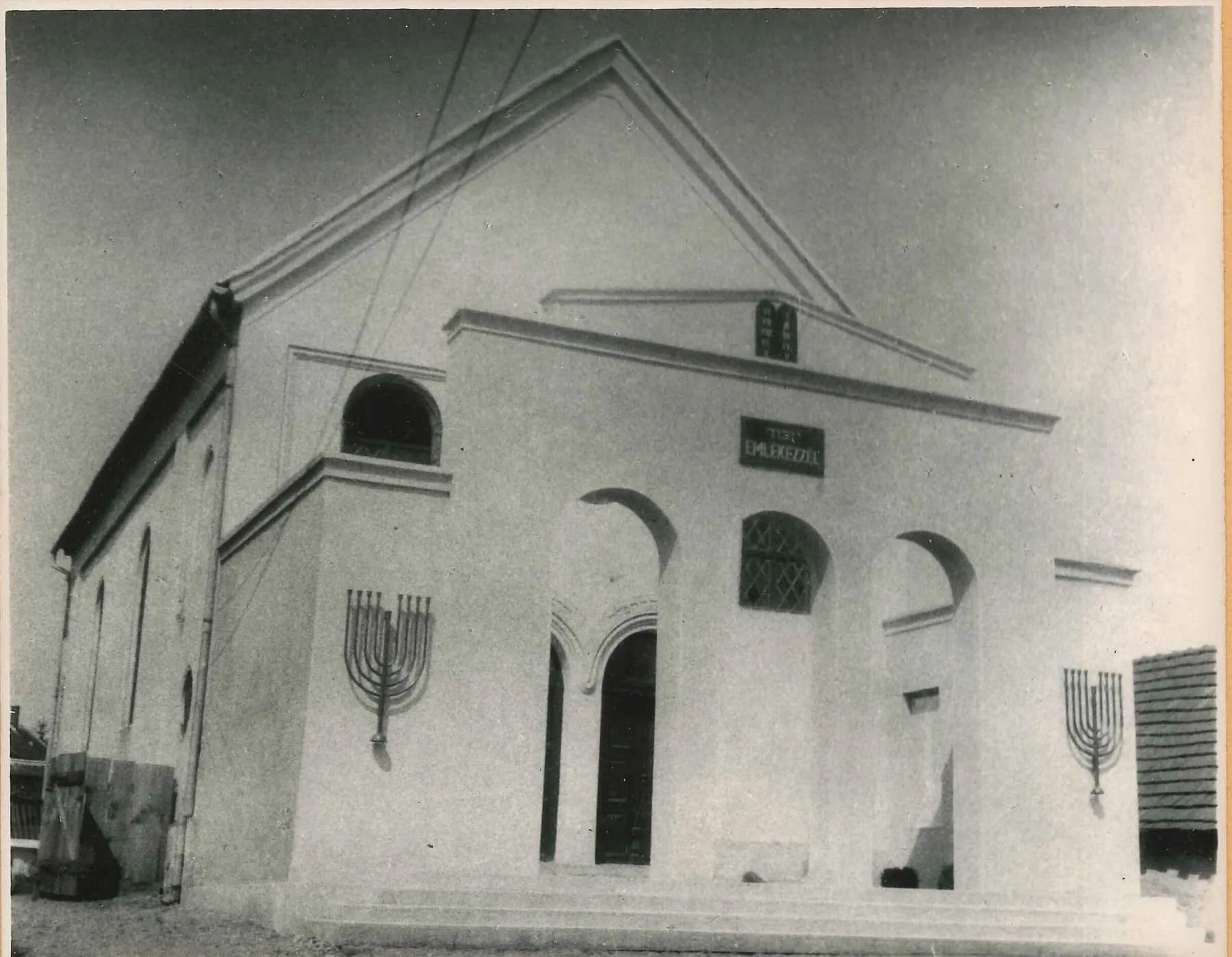
Vasvár Synagogue
Vasvár's synagogue, dated to 1865, was a rendered hall with a round-arched, three-bay entrance front and a women's gallery inside. Its congregation was deported in 1944; in 1949 the building became the town's Holocaust memorial. It was photographed standing in 1956 and was recorded as demolished in the 1980s; who pulled it down is unknown.
Vecsés Synagogue
Vecsés, a town in Pest county on the south-eastern edge of Budapest, had a synagogue that Gazda's survey of 1980-87 recorded as demolished. The same survey counts 176 Jews in the town in 1910 and 190 in 1941. No source read describes the building, dates it, or says when and by whom it was pulled down.
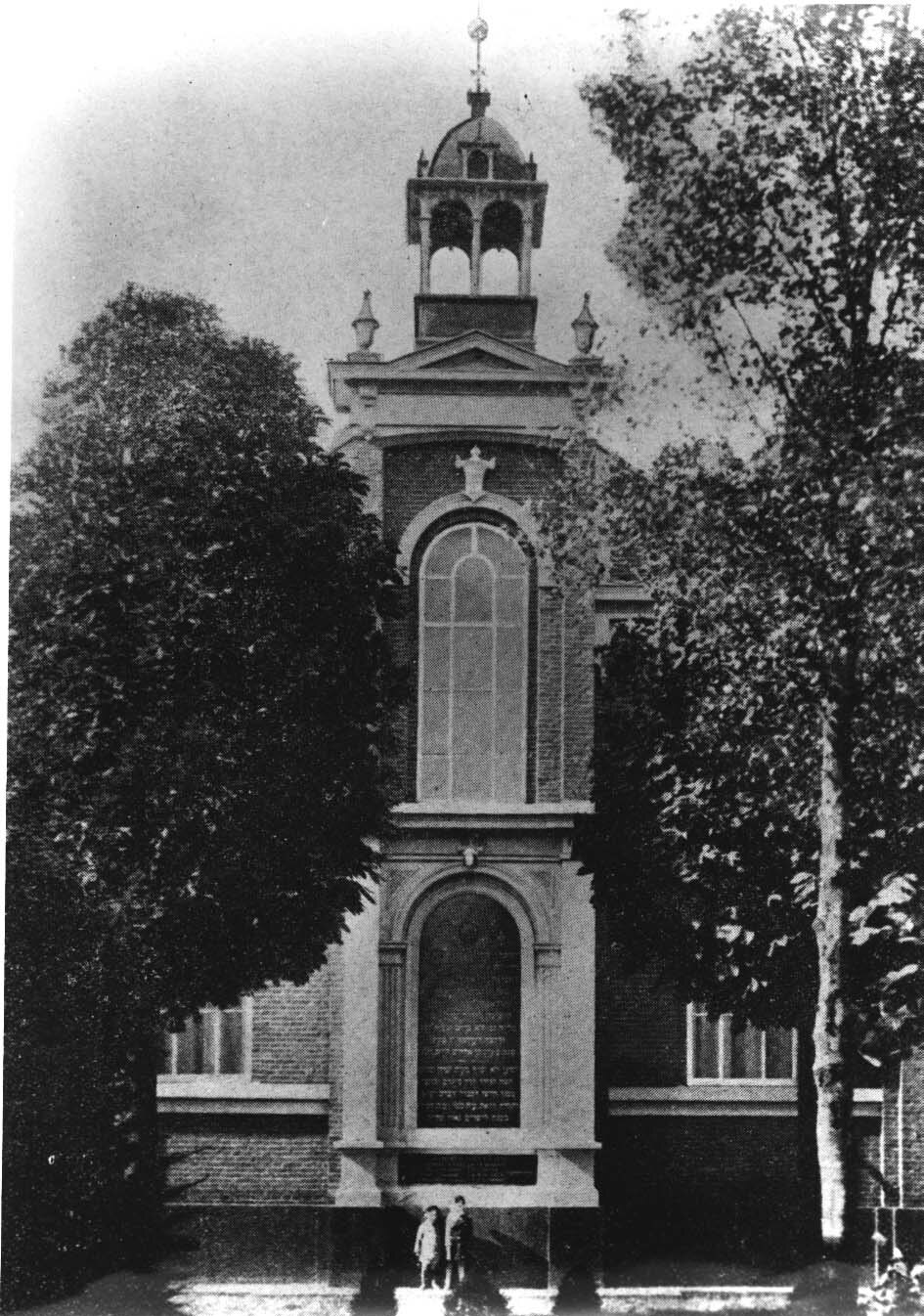
Veendam Synagogue
Veendam's synagogue on the Midden-Verlaat began in 1745 as a synagogue in a private house, was bought by the Jewish community and officially consecrated in 1798, and was thoroughly renovated in 1892, when it gained a towered street front. Its congregation was deported from autumn 1942; the building was sold after the war and demolished in 1947.
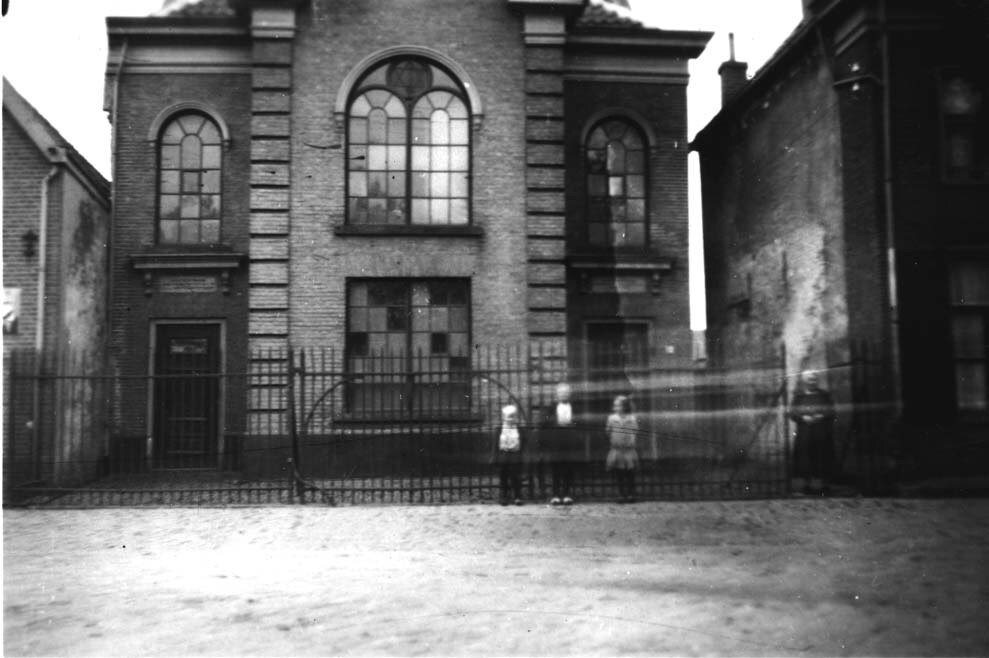
Veenendaal Synagogue
Veenendaal's synagogue on the Verlaat was built in 1852 for a community that had worshipped in the town since the seventeenth century. Nazi German occupiers vandalised and looted it, and most of its members were deported and murdered. Sold after the war and given another use, it was demolished in 1967.
Veličná Wooden Synagogue
Veličná, a village on the Orava river in northern Slovakia, had a small wooden synagogue built at an unknown date for the local Jewish families. It was demolished during the Second World War, probably in 1943; who pulled it down is not recorded. Only the Jewish cemetery survives in the village today.
Velká Dobrá Synagogue
Velká Dobrá, a village four kilometres south-west of Kladno known in German as Gross-Dobray, had a small rural Jewish community whose synagogue was built in 1805. The building was demolished some time before the middle of the twentieth century; when, why and by whom is not recorded in the sources found.
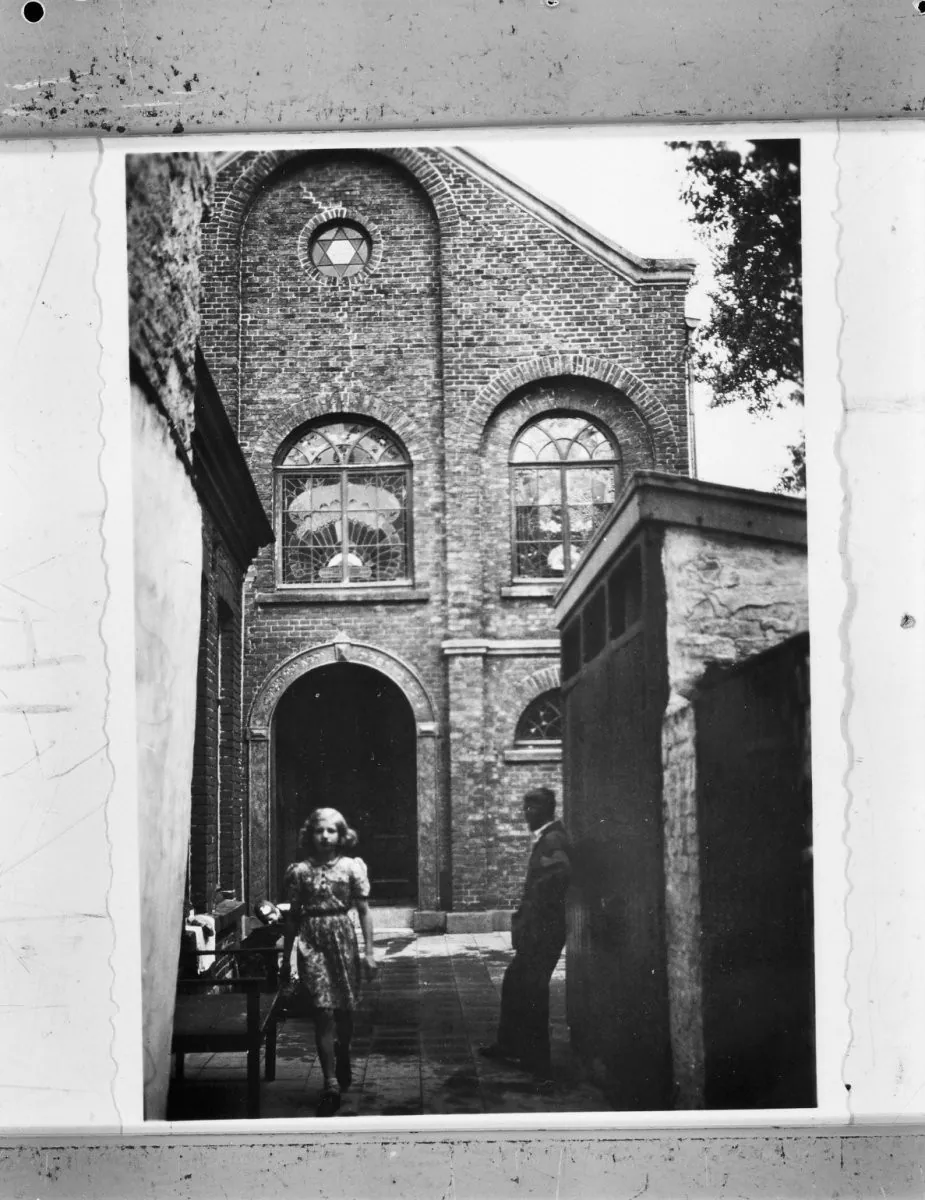
Venlo Synagogue
The synagogue of Venlo, a brick building on the Maasschriksel consecrated in 1865, served a congregation of about a hundred people. Most of its members were deported and murdered in 1942-1943. Bombing in the autumn of 1944 left it heavily damaged, and in 1965 it was decided not to restore it; the building was then demolished.
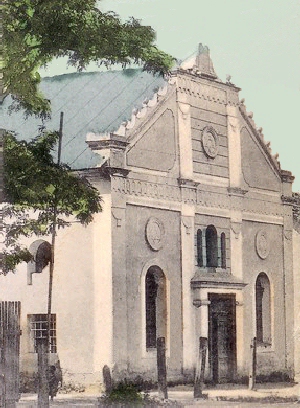
Veľké Kapušany Synagogue
The synagogue of Veľké Kapušany (Nagykapos), a free-standing historicist building with a gabled street front, was dedicated in 1891 beside the town's elementary school. It served an Orthodox community led by the Fried rabbinic dynasty until the Jews were deported in 1944, and it was demolished after the Second World War, reportedly in the 1960s.
Veľké Leváre Synagogue
The synagogue of Veľké Leváre, a Záhorie village north of Malacky, stood right beside the Roman Catholic parish house, with a one-room Jewish school in an annex. It served a small community of 86 Jews in 1919. When and by whom it was pulled down is not recorded; a private family house now occupies the site.
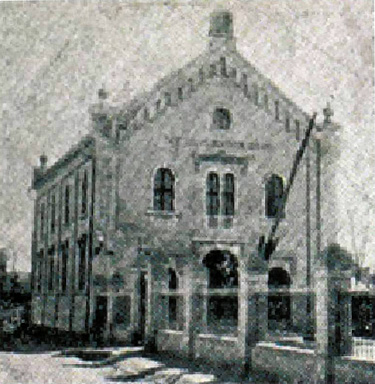
Veľký Meder Synagogue
The synagogue of Nagymegyer, today Veľký Meder in southern Slovakia, served an Orthodox community of about 500 people. Built in 1828 according to one source and in the 1870s according to another, it lost its congregation when the town's Jews were deported to Auschwitz in June 1944, and it was demolished in 1955.
Villány Synagogue
Villány, a town in southern Baranya county, had a small Neolog Jewish community that built a synagogue in 1891, according to Anikó Gazda's survey of Hungarian synagogues. About 81 Jews lived there before the Second World War and were deported in 1944. The building was demolished at an unknown date before 1987.
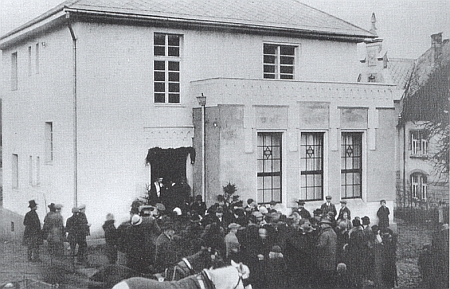
Vimperk Synagogue
Vimperk's synagogue, a small two-storey building completed in 1925 and dedicated on 3 January 1926, served the Jews of this Bohemian Forest town for only thirteen years. Local Nazis burned its interior on 10 November 1938, and in 1941 a local doctor bought the ruin and had it demolished.
Vinkovci Synagogue (1923)
Vinkovci's second synagogue, designed by the Vukovar engineer Fran Funtak and consecrated on 9 December 1923, was one of the largest interwar synagogues in Croatia, crowned by a ribbed dome. Under the Ustaše regime of the Independent State of Croatia it became a prison for local Jews and was stripped and blown up.
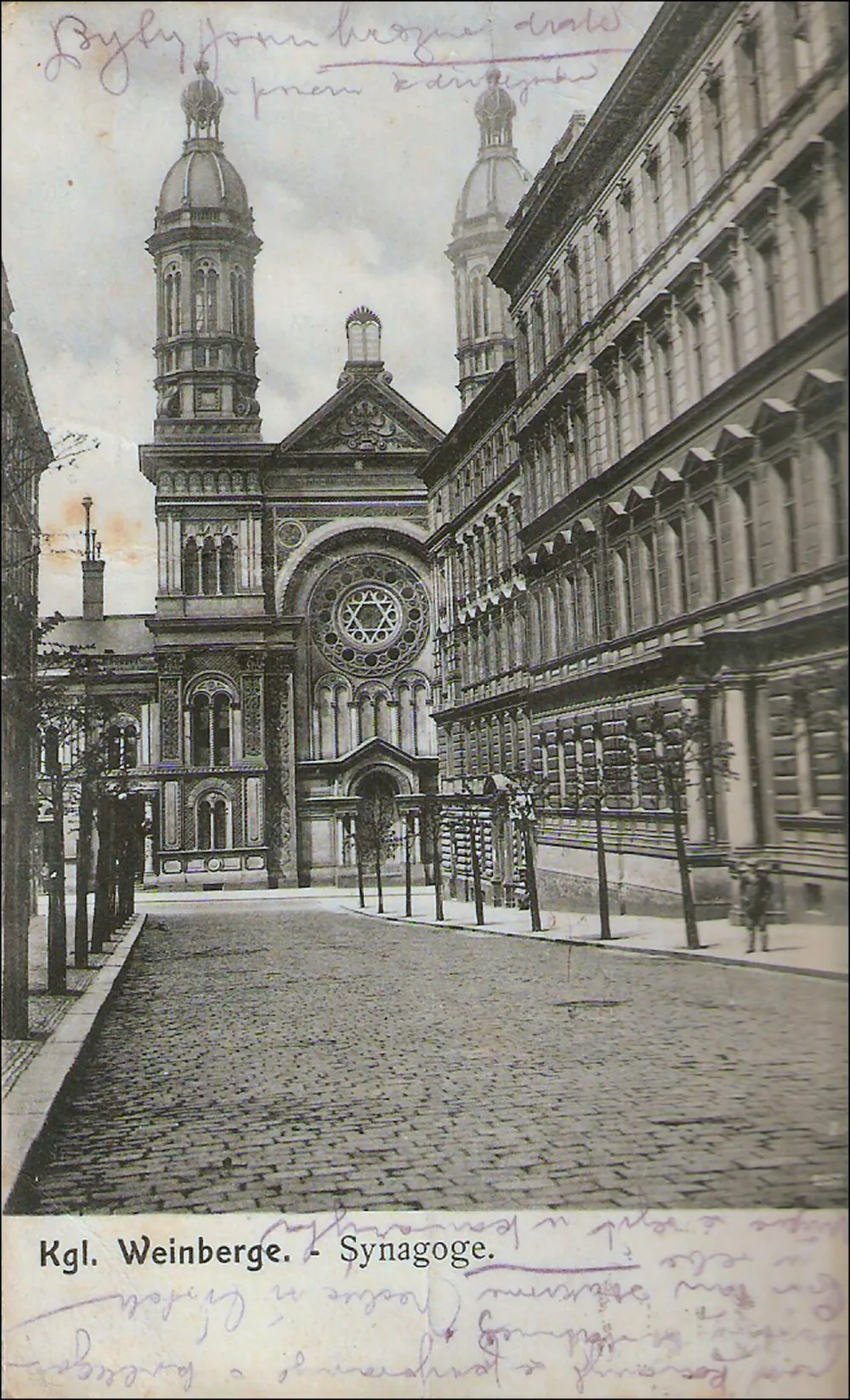
Vinohrady Synagogue, Prague
The Vinohrady Synagogue in Prague, designed by Wilhelm Stiassny and opened in September 1896, was one of the largest synagogues in the world, with twin domed towers and over 2,000 seats. A Nazi store for looted Jewish furniture, it was hit in the Allied bombing of 14 February 1945 and blown up by the communist authorities in 1951.
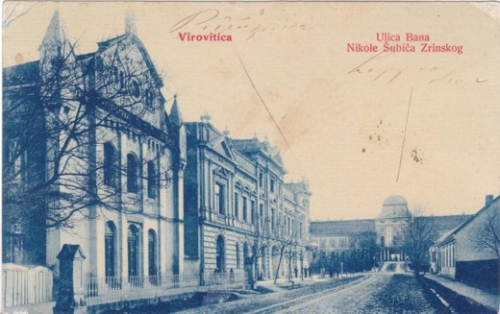
Virovitica Synagogue
Virovitica's synagogue, completed in 1863 and counted among the first in Slavonia, was an early Historicist building with neo-Romanesque details and two pointed pillars flanking its facade. It was looted in 1918, stripped of its organ under the Independent State of Croatia, and demolished from February 1942; most of the community was murdered.
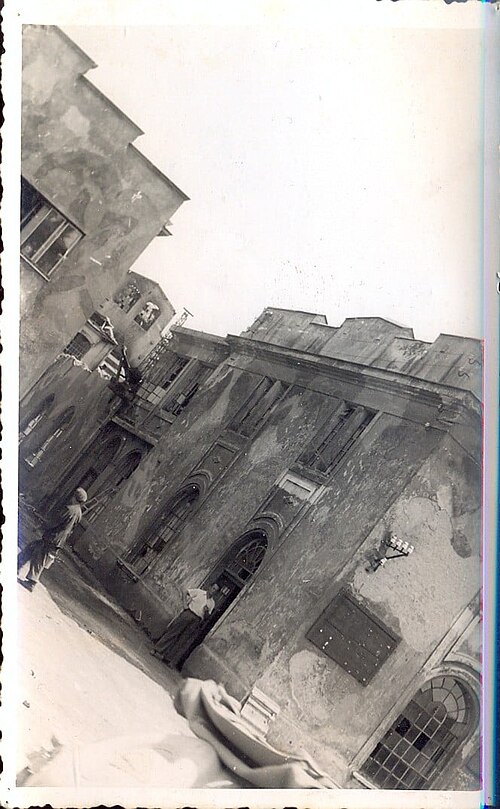
Visoko Synagogue
The Sephardic synagogue of Visoko, a plain stone and brick hall, was built in 1885-1886 on what became Jevrejska ulica. During the Second World War the Nazis made it a military warehouse; by the war's end it was largely destroyed and looted. Private buyers later cleared the remains and built houses on the plot.
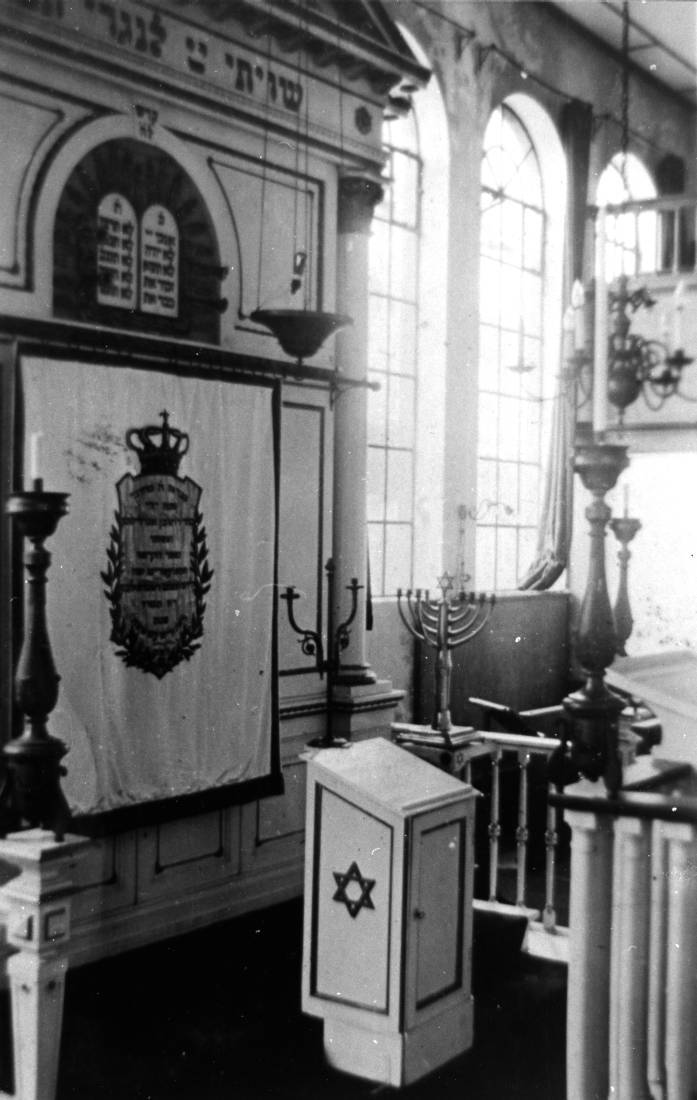
Vlissingen Synagogue (Gravenstraat)
The last synagogue of Vlissingen, opened in 1921 at the corner of Gravenstraat and Paardenstraat, served a small and shrinking Zeeland congregation. The Nazis looted it in 1940, the Jews of the town were deported from 1942, and an Allied bombing raid in November 1944 almost entirely destroyed it. The ruins were cleared in 1945.
Voința Temple, Bucharest
The Voința Temple was a Bucharest synagogue built in 1878 on what became Dacia Avenue, near Calea Moșilor. It survived the Communist demolitions of the 1980s and was a listed historic monument, but in the 1990s it was bought and pulled down by its buyers; local witnesses date the final demolition to 1997.
Votice Synagogue
The synagogue of Votice (Wotitz) in Central Bohemia was built in 1661 and renovated in 1724 for one of the older Jewish communities of the region, recorded since 1538. Its congregation was deported by the Nazis in 1942, and the empty building was demolished in 1949-50; who pulled it down is not recorded.
Vranov nad Topľou Synagogue
Vranov nad Topľou's synagogue was built in 1921-1924 for an Orthodox congregation with money from Max Schwartz, a native of the town who had emigrated to America. Its twin-towered, Moorish-flavoured front had no parallel in the region. Most of Vranov's Jews were deported in 1942, and the building was demolished in 1982.
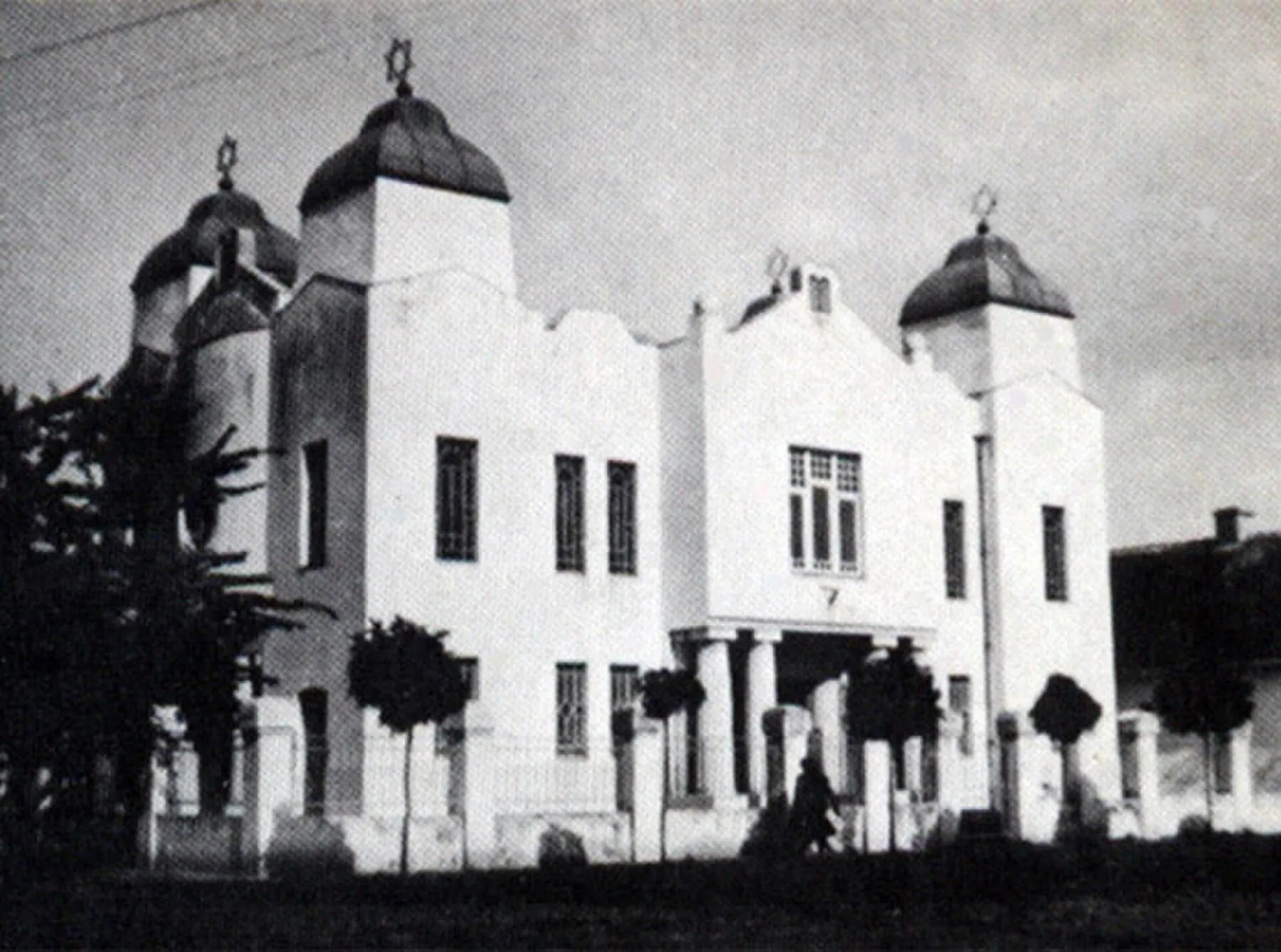
Vrbas Synagogue
The synagogue of Vrbas in Bačka, completed in 1914, was a white rendered building with domed towers crowned by Stars of David. Its congregation was destroyed in the Holocaust, and most sources date the building's demolition to 1948; a tourist board says it was destroyed during the war. Who demolished it is not recorded.
Vráble Synagogue
The synagogue of Vráble (Hungarian Verebély), a small town east of Nitra, was built in 1872 for a community of about two hundred Jews. Its congregation was deported in 1944. The empty building decayed and was demolished in the 1970s by the Communist authorities of Czechoslovakia; only its inscribed marble entrance tympanum survives, in Washington.

Vsetín Synagogue
Vsetín's synagogue, a single-storey Neoclassical building on Štěpánská Street, was built in 1897 for a small Wallachian Jewish community re-founded after 1848. On the night of 19 to 20 March 1939, days after the occupation, Nazi German police set it on fire; the burnt-out shell was sold and pulled down. Almost all its congregation was later murdered.
Všeruby Synagogue
The synagogue of Všeruby (Neumark), a border village south of Domažlice, was built after the town fire of 10 July 1852 destroyed the old prayer house and school, with money raised across Central Europe. It stood abandoned by 1934 as the community dwindled, and was pulled down in 1989.
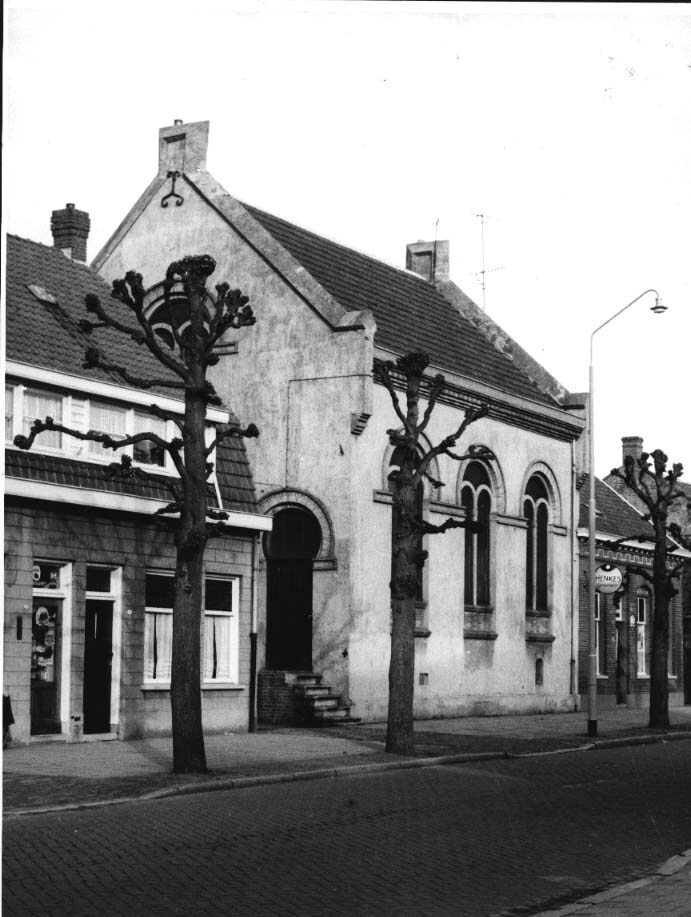
Waalwijk Synagogue
The synagogue of Waalwijk stood in the Grotestraat in Besoijen, on the site of a former 'tempeliershuis' the congregation had used since 1847. Rebuilt after a fire and consecrated in February 1902, it was seized by the Nazi German occupiers in 1940, later served as a gym and a shoe-factory store, and was demolished in 1965.
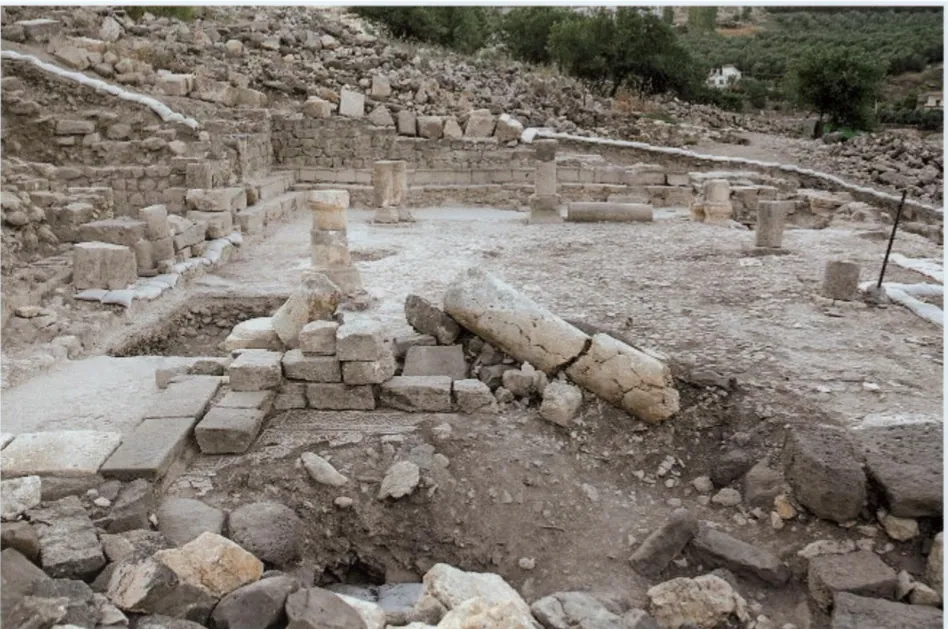
Wadi Hamam Synagogue
The synagogue of Khirbet Wadi Hamam stood in a Jewish village below Mount Nitai in the Lower Galilee. Built in the third century CE and restored around 300 CE with a mosaic floor of biblical scenes, it was abandoned around 400 CE and collapsed soon after, probably in an earthquake.

Wageningen Synagogue
The synagogue on the Walstraat in Wageningen, built in 1903 beside the old town ramparts, replaced a prayer room of 1839 on the Riemsdijkstraat. In May 1940, during the fighting of the Nazi German invasion, it was hit by a bomb or shell and burned out with its contents. Most of the town's Jews were later deported and murdered.
Wiener Neustadt Synagogue
Wiener Neustadt's Moorish-style synagogue on the Baumkirchnerring was designed by Wilhelm Stiassny and completed in 1902. Local Nazis wrecked its interior and hammered the Star of David off its facade in November 1938. The city bought it in 1940, used it as a timber store after the war, and it was demolished in 1952 or 1953.
Woerden Synagogue
Woerden's synagogue stood at the corner of the Hogewoerd and the Groenendaal in this small town in the province of Utrecht. Rotterdam's chief rabbi Joseph Isaacsohn consecrated it on 26 June 1856. Soon after its fiftieth anniversary in 1906 the shrinking congregation could no longer gather a minyan, and the building was demolished in 1920.
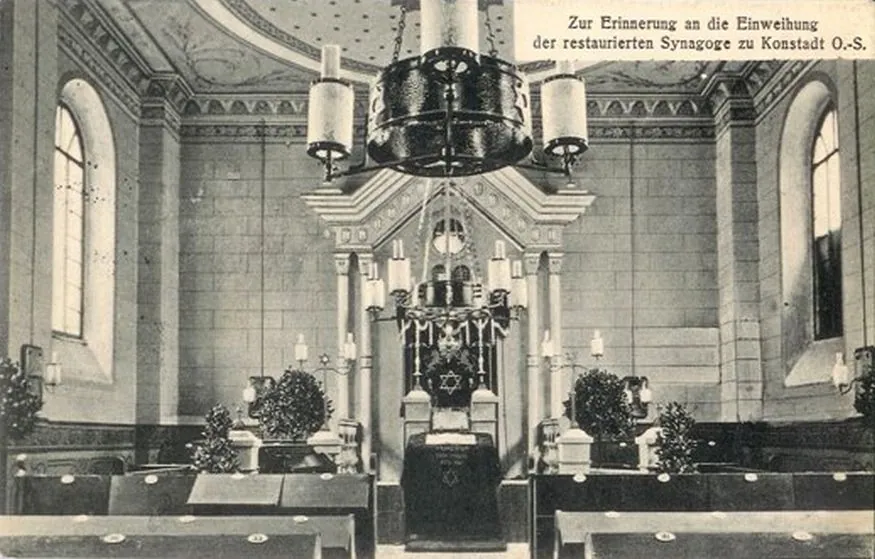
Wolczyn-Konstadt Synagogue
Opened in 1853 in the Silesian town then called Konstadt, this synagogue served Wołczyn’s Jewish community for 85 years before the Nazis burned it during the November 1938 pogrom.
Wooden Synagogue of Brandýs nad Labem
The first known synagogue of Brandýs nad Labem was a small wooden building with a shingle roof, built shortly before 1559 and probably standing in a courtyard. In 1622 a fire caused by soldiers broke out in it and burned the Jewish quarter; by 1656 it lay empty and demolished. A new synagogue replaced it on the same plot.

Wooden Synagogue of Chodorów
The wooden synagogue of Chodorów near Lviv, built in 1652, hid behind a plain timber exterior one of the most famous painted ceilings in Jewish art: a vault of zodiac signs, animals and Hebrew texts by Israel ben Mordechai Liśnicki. It was burned under Nazi German occupation.
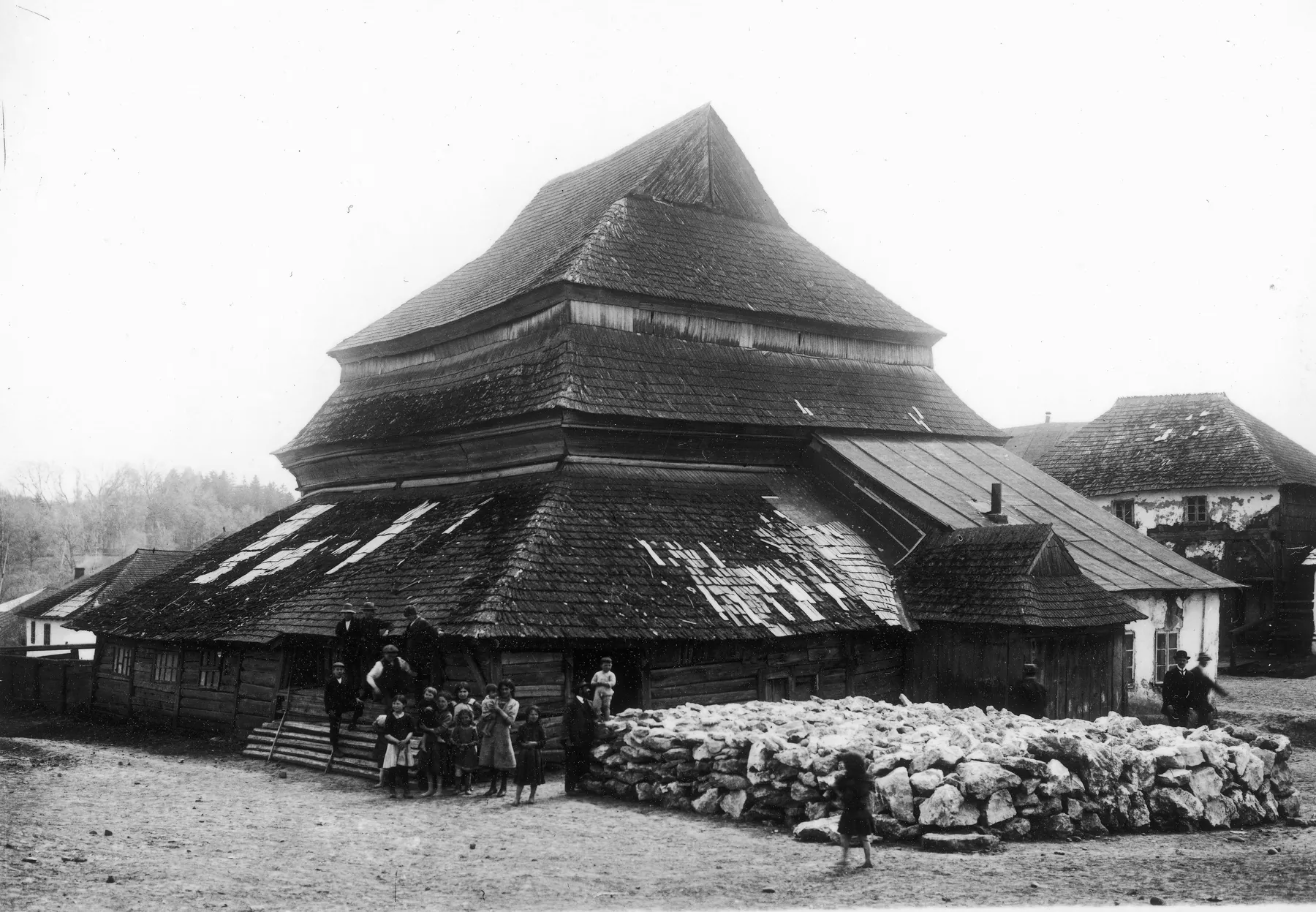
Wooden Synagogue of Gwoździec
The wooden synagogue of Gwoździec in eastern Galicia, built around 1640, had one of the most celebrated painted interiors in Jewish art: a domed ceiling covered with animals, zodiac signs and inscriptions by painters from Jaryczów. It burned in the First World War; sources say its rebuilt remains were destroyed under Nazi German occupation.
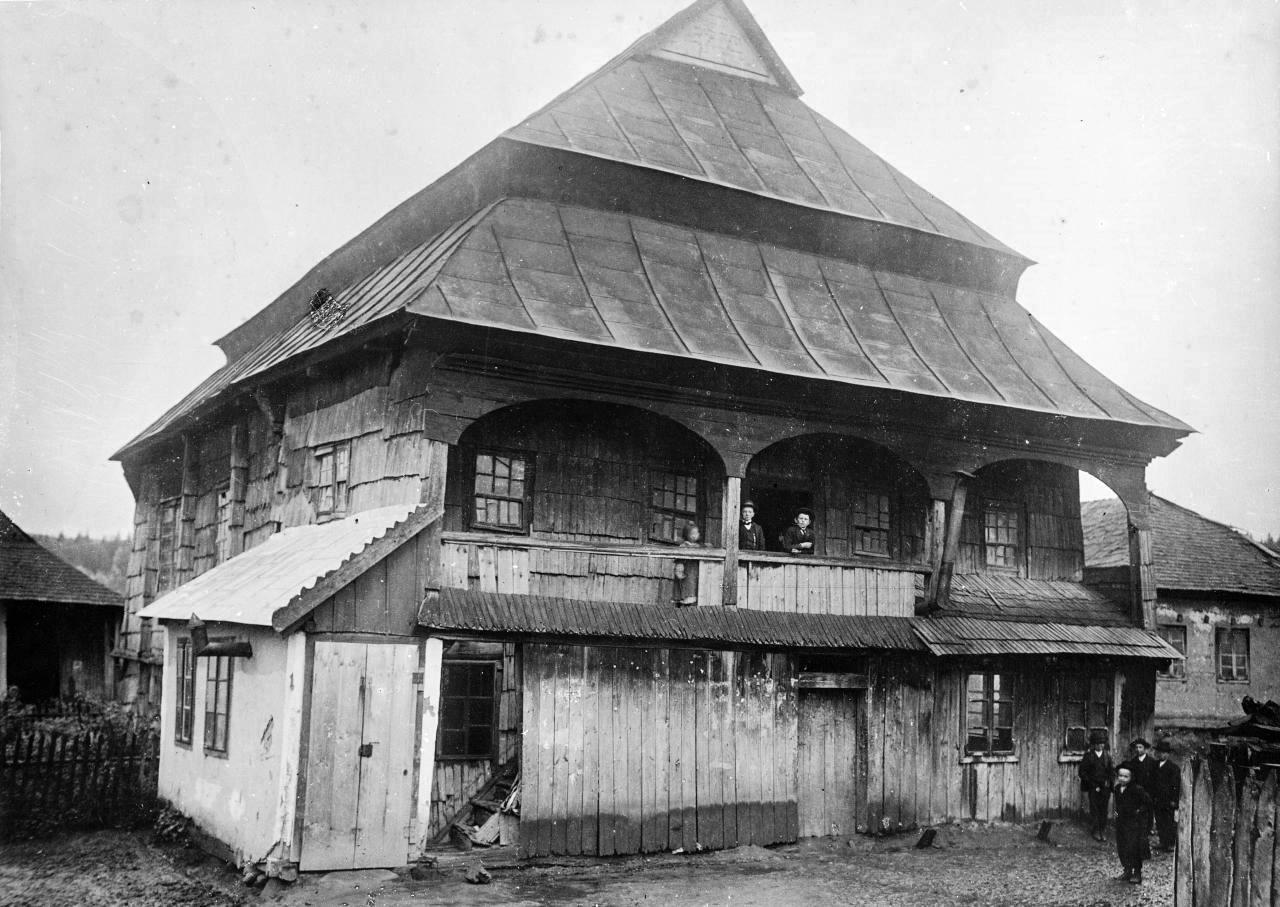
Wooden Synagogue of Jabłonów
The wooden synagogue of Jabłonów, a small Pokuttya town near Kolomyia, was built around 1650–1670 and became known for its two-storey arcaded gallery front and walls covered with painted prayer panels and ornament. It was destroyed during the First World War; the town's Jews were murdered in 1942.

Wooden Synagogue of Janów Trembowelski
A square wooden synagogue raised around 1700 in the small Galician town of Janów near Trembowla, later given a stone western annex with a women's prayer room. Its tall 1795 Torah ark crowned by a bronze eagle made it one of the region's notable wooden synagogues. It was lost during the Second World War.
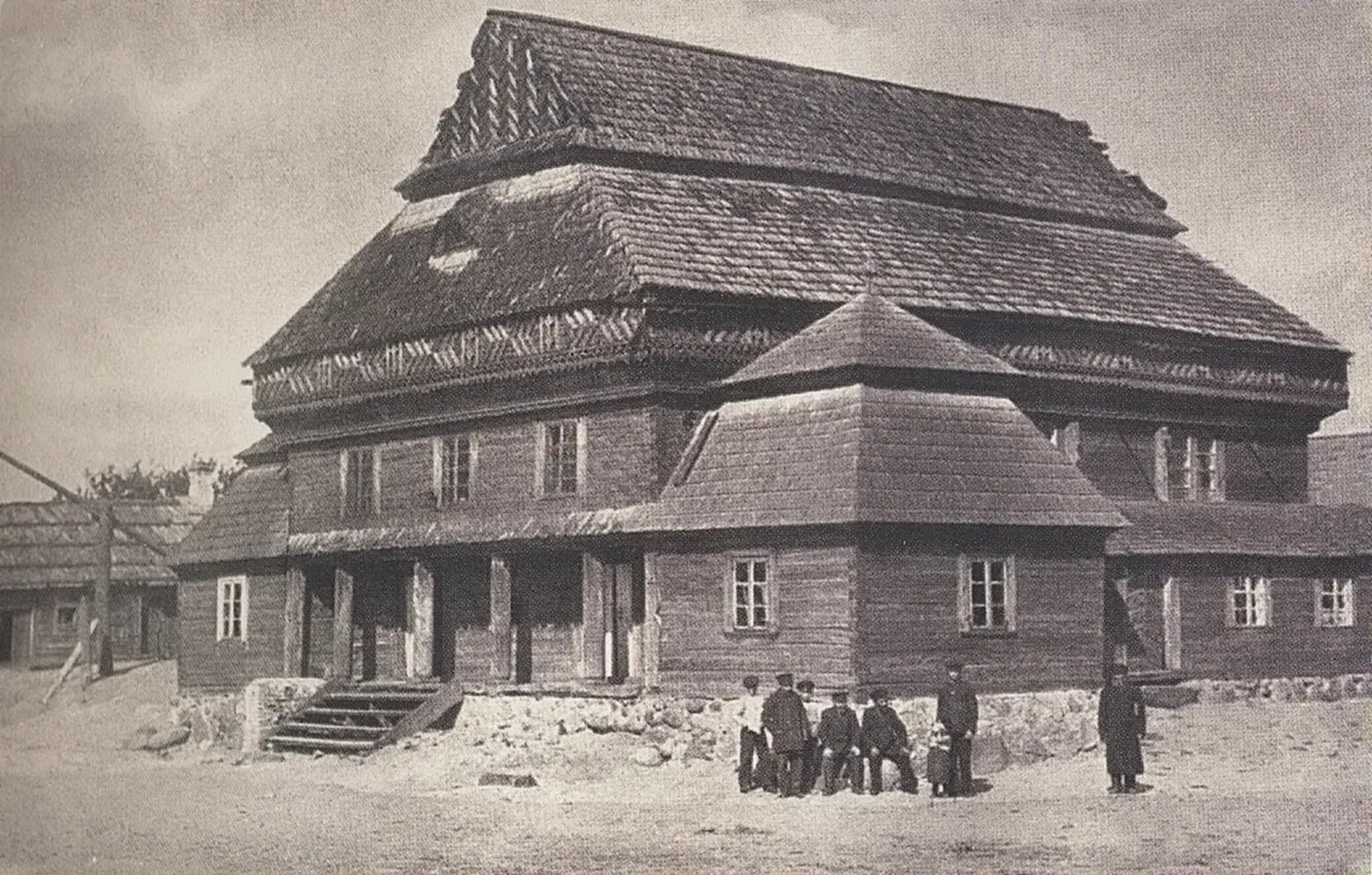
Wooden Synagogue of Jeziory
The wooden synagogue of Jeziory, a lakeside town east of Grodno, was built in the mid-eighteenth century with a tall tiered roof, carved friezes and a richly carved interior. Photographed by German soldiers in the First World War and by scholars in the 1930s, it was lost during the Nazi German occupation of 1941–1944.
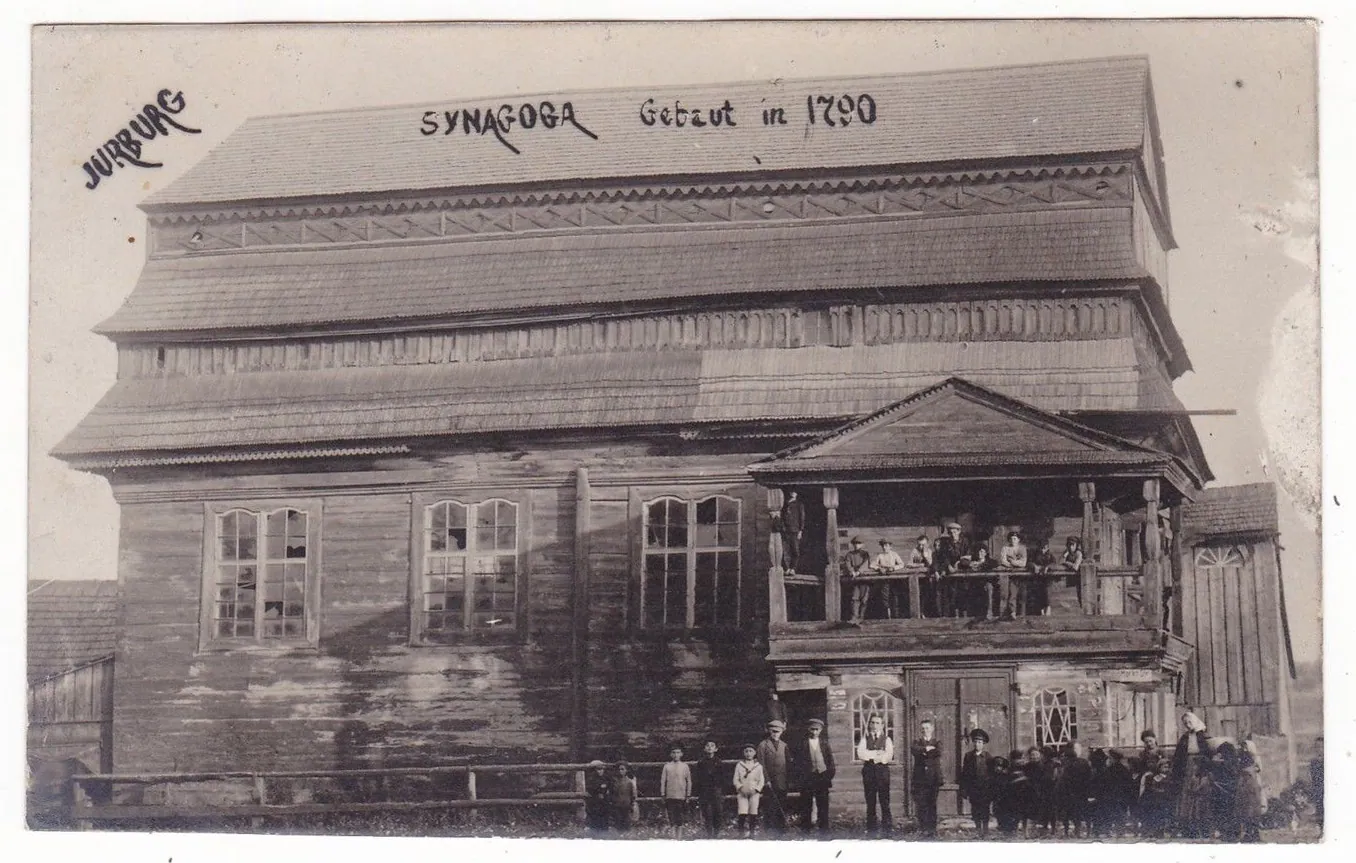
Wooden Synagogue of Jurbarkas
The great wooden synagogue of Jurbarkas (Yurburg) on the Neman, built in 1790, was famous for its stepped roofs, galleried front and a Holy Ark carved with animals, birds and plants. Under Nazi German occupation in 1941 its Jews were forced to tear it down, and it was destroyed.
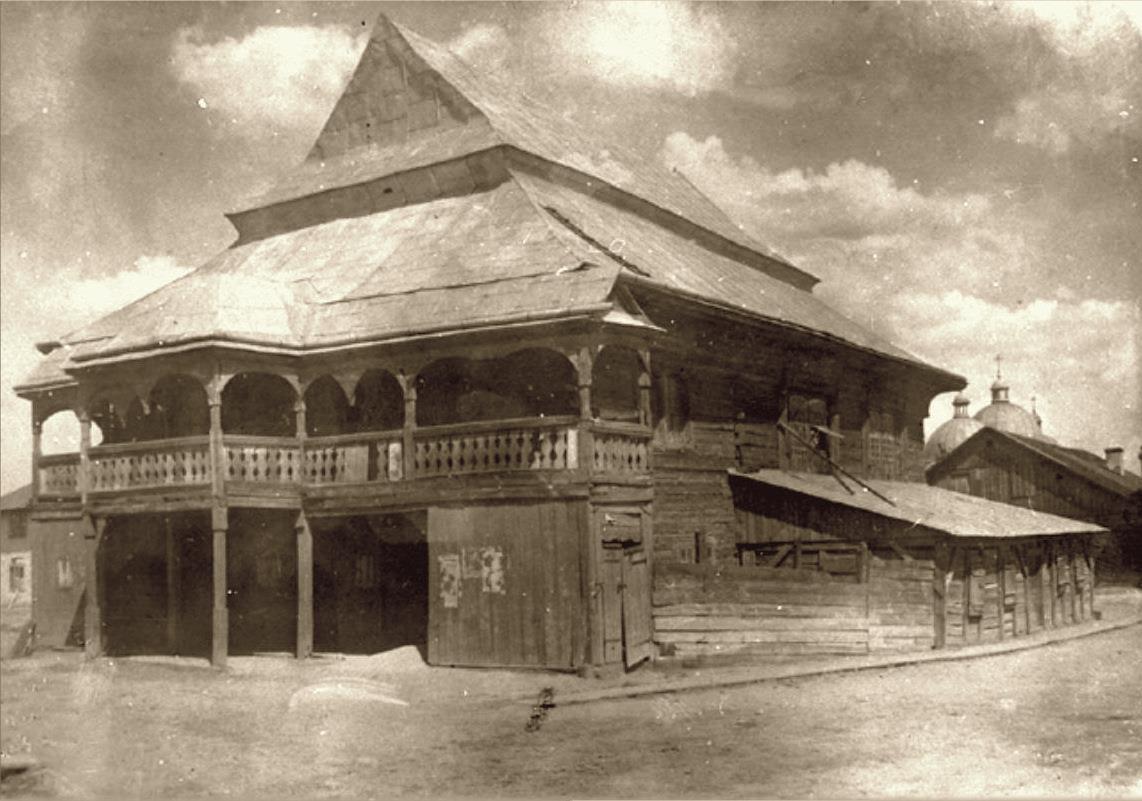
Wooden Synagogue of Kamionka Strumiłowa
The wooden synagogue of Kamionka Strumiłowa on the Bug river, north-east of Lviv, was a tall timber hall with a two-stage roof and a two-storey galleried porch. Inside stood a carved octagonal bimah of 1730 crowned by a double-headed eagle. It was destroyed by the Nazis in 1941.
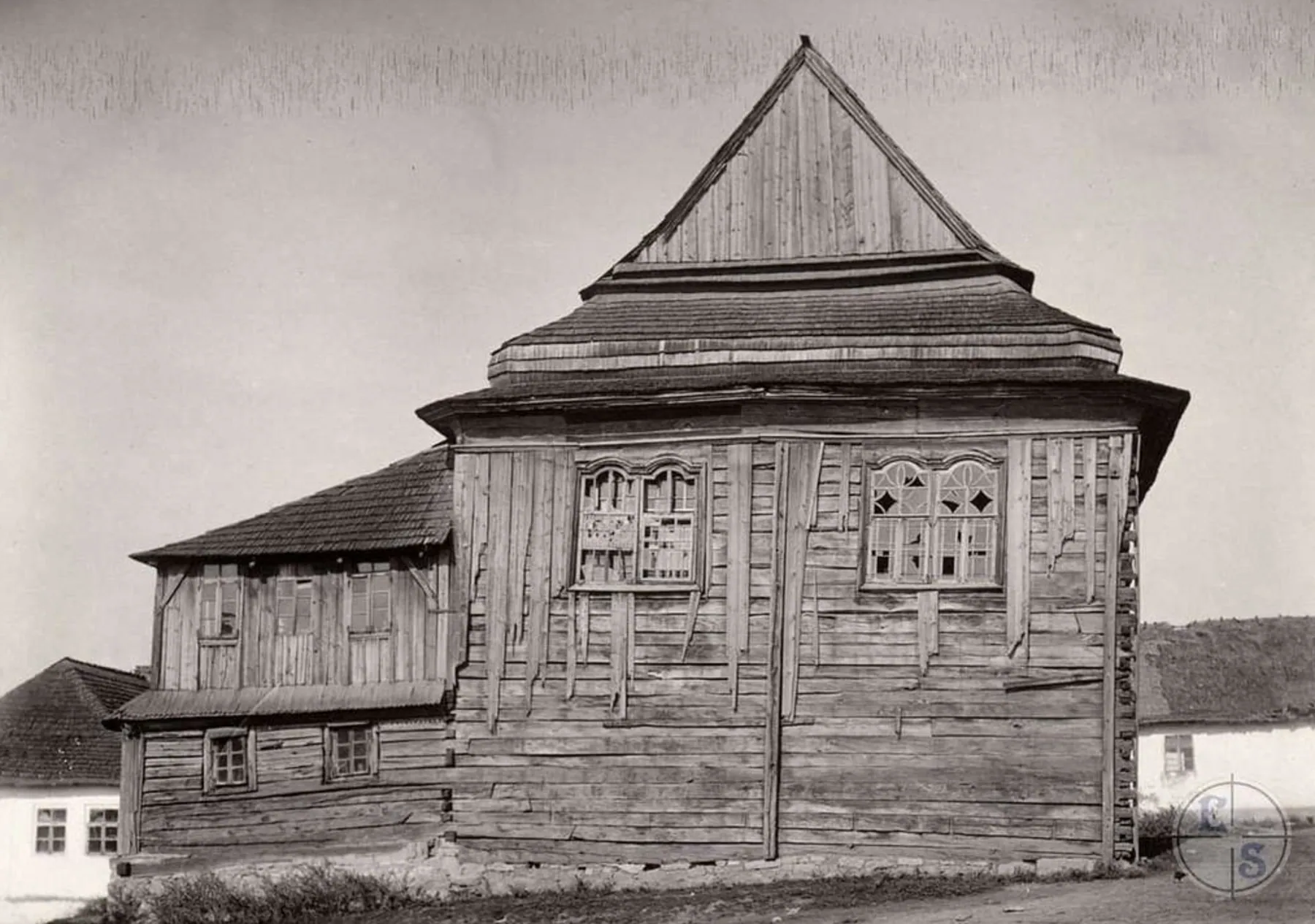
Wooden Synagogue of Lanckorun
The great wooden synagogue of Lanckorun, a Podolian shtetl near Kamianets-Podilskyi, was a tall log prayer hall under a steep tiered roof, wrapped by two-storey galleried annexes. Photographed in 1907, 1916 and 1930, it was destroyed during the Nazi German occupation, when the town's Jews were murdered.
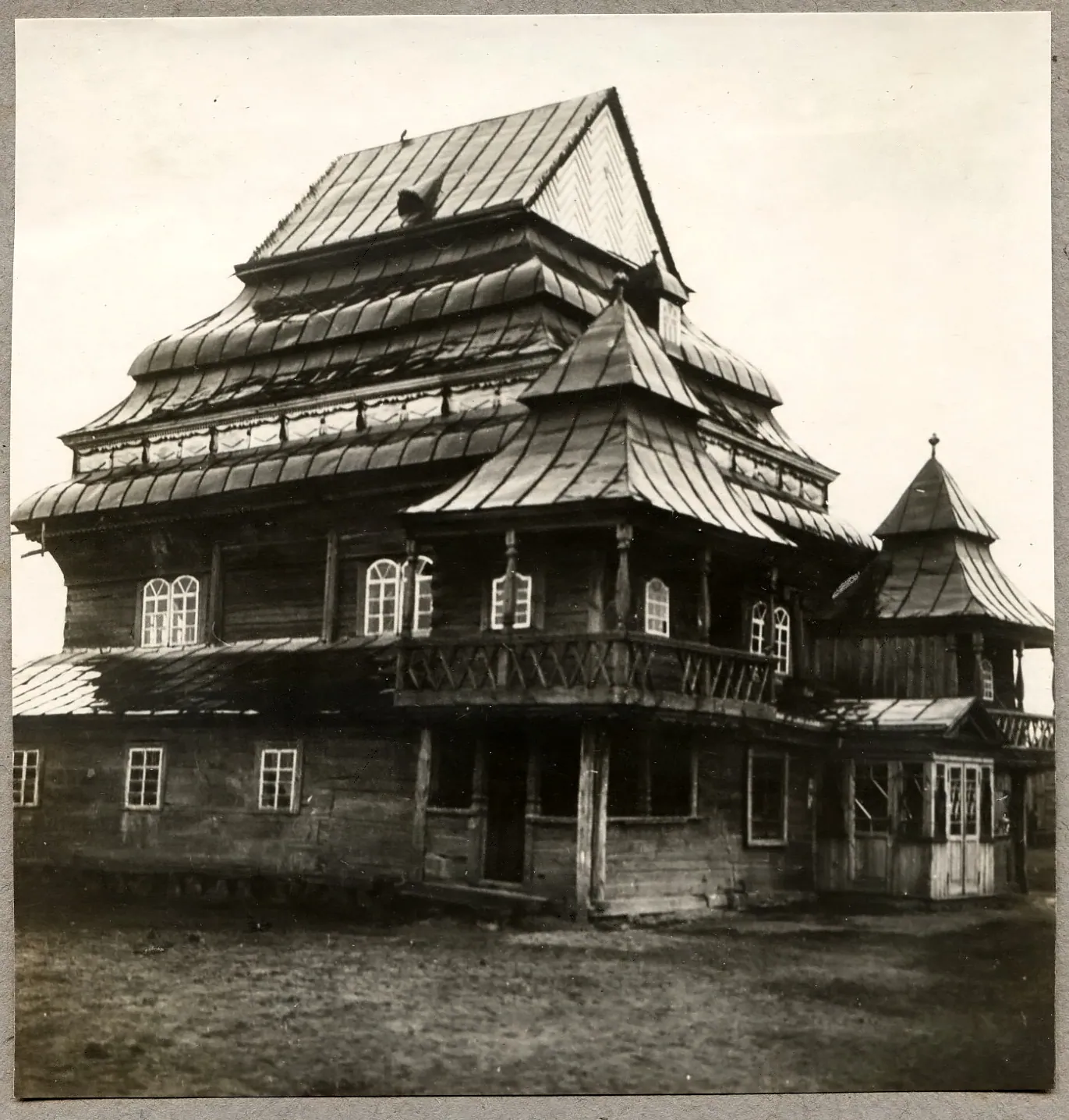
Wooden Synagogue of Narowla
The wooden synagogue of Narowla, on the Pripyat river in southern Belarus, was built in the eighteenth century with a steep three-tiered roof and two towered galleries flanking its porch. Closed by the Soviet authorities in the 1930s, it burned during the Nazi German occupation of 1941–1943.
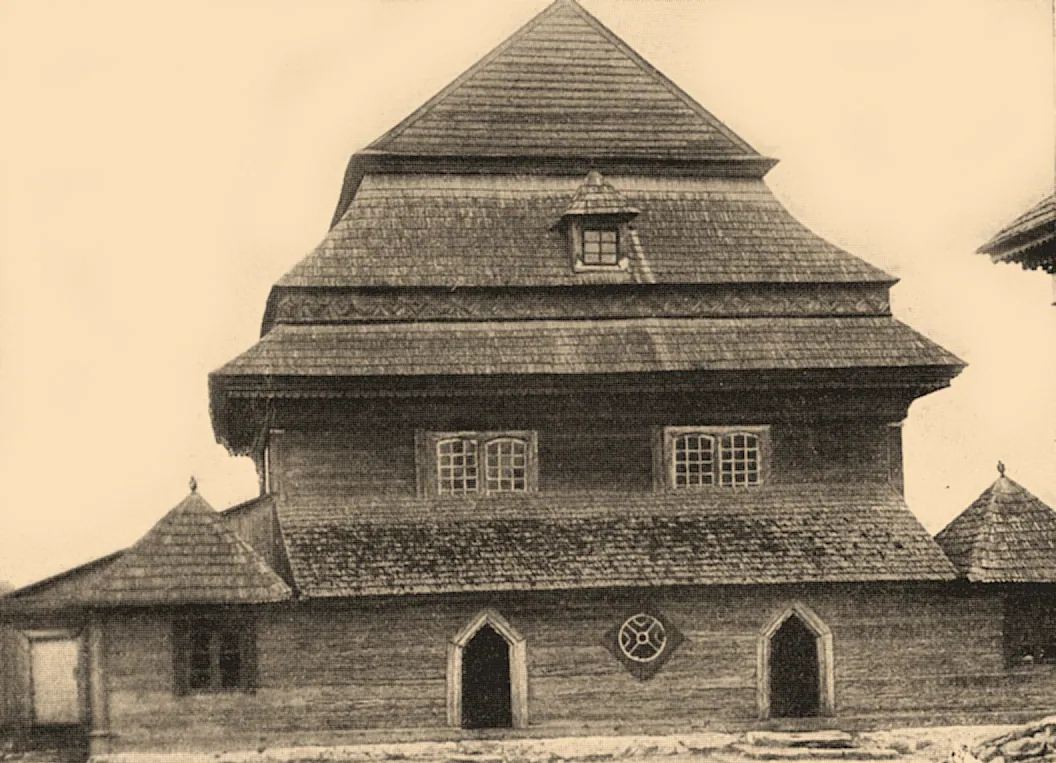
Wooden Synagogue of Olkieniki
The great wooden synagogue of Olkieniki (Valkininkai), south of Vilnius, was built around 1798–1801 with a tiered 'pagoda' roof, a three-storey bimah crowned by an eagle and a Torah curtain said to be made from Napoleon's saddlecloth. It burned on 25 June 1941 in a fire started by Nazi German bombing.
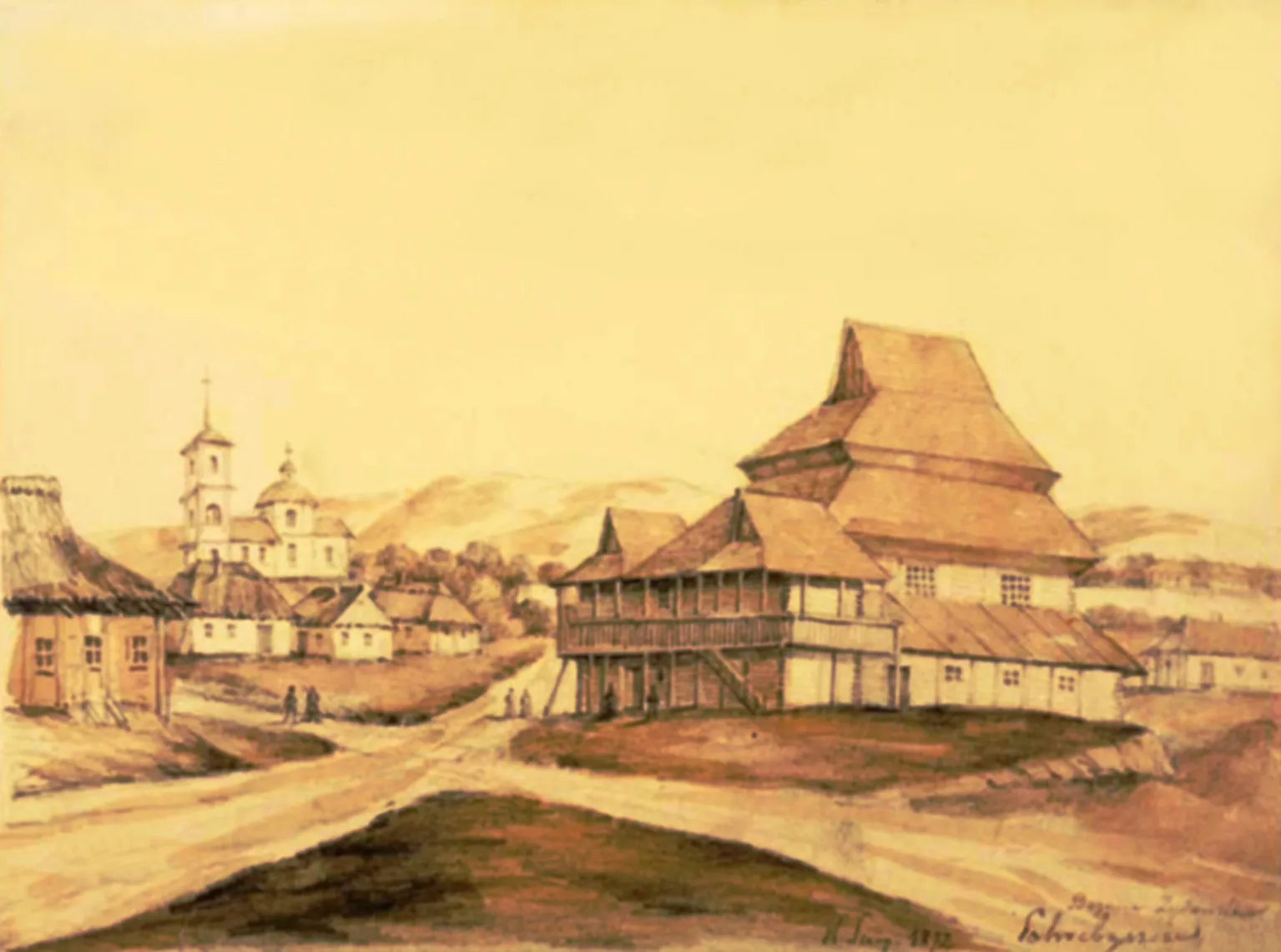
Wooden Synagogue of Pohrebyszcze
Built in 1690 on the ruins of an earlier synagogue destroyed in the Khmelnytsky uprising, the wooden synagogue of Pohrebyszcze south-west of Kyiv had a tall two-tier roof, open galleries and a painted, carved interior. Closed by the Soviets, it was destroyed when Nazi German forces took the town on 21 July 1941.
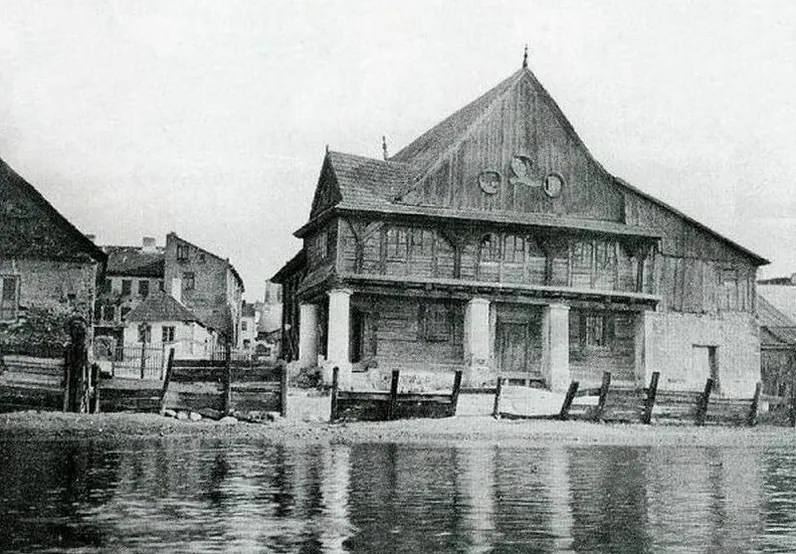
Wooden Synagogue of Przedbórz
Rebuilt after a fire of 1754 and completed in 1760 by the craftsman Yehuda Leib, the wooden synagogue of Przedbórz on the Pilica river was admired for its painted barrel vault, carved ark and three-tier bimah. It burned on 3 September 1939 when a Nazi German armoured vehicle fired on the town.
Wooden Synagogue of Trenčín
Trenčín's first synagogue was a wooden building outside the town walls near the Lower Gate, recorded in archival documents from 1781. It burned in the great fire of 1790 that destroyed most of the town, and a new synagogue was built on the spot the same year. No image of it is known.
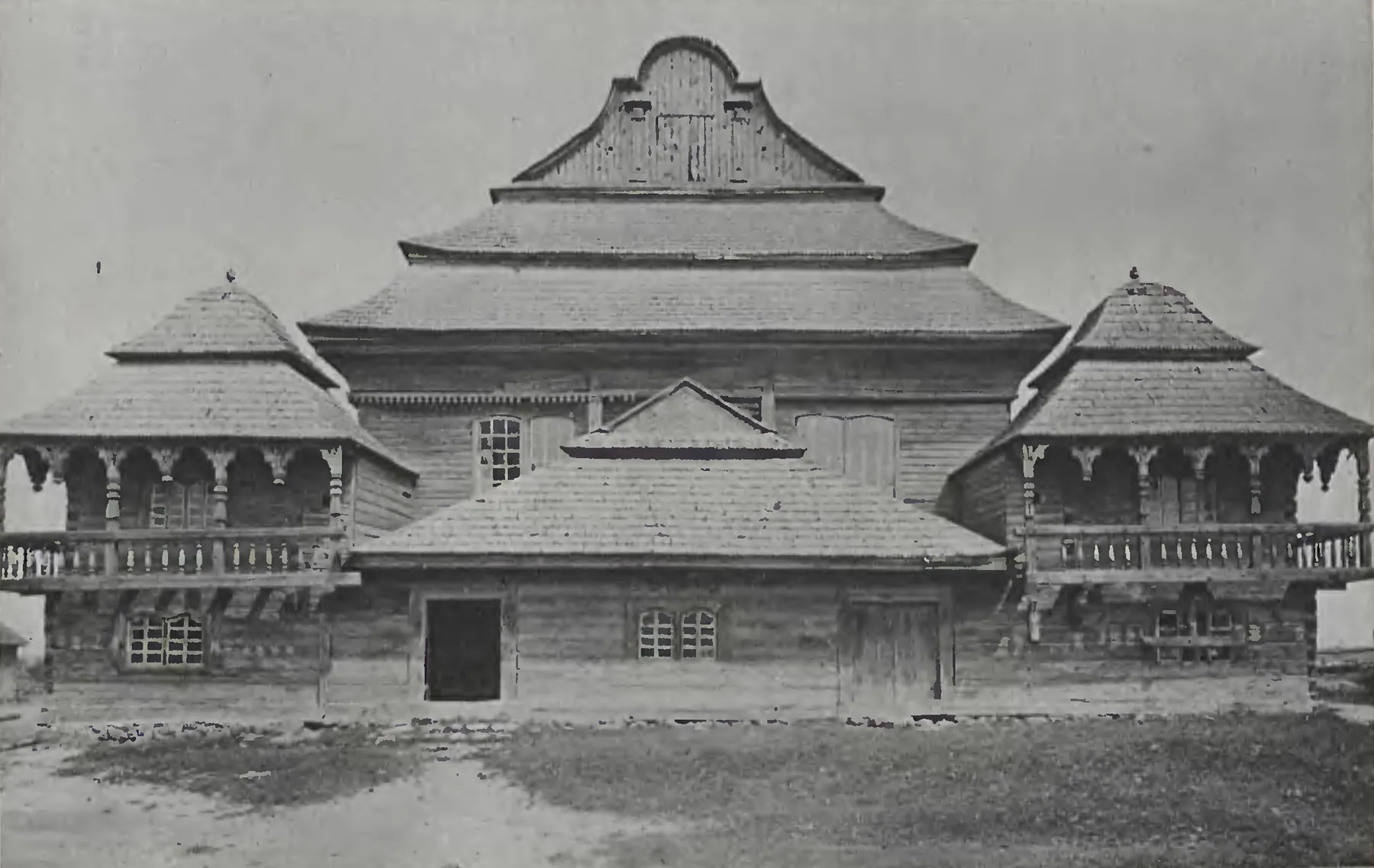
Wooden Synagogue of Wołpa
The wooden synagogue of Wołpa, near Grodno, was often called the most beautiful wooden synagogue of the Polish–Lithuanian Commonwealth: a towering three-tiered roof over a hall with a carved bimah, four great columns and a star-studded vault. It was destroyed in the Nazi German invasion and occupation.
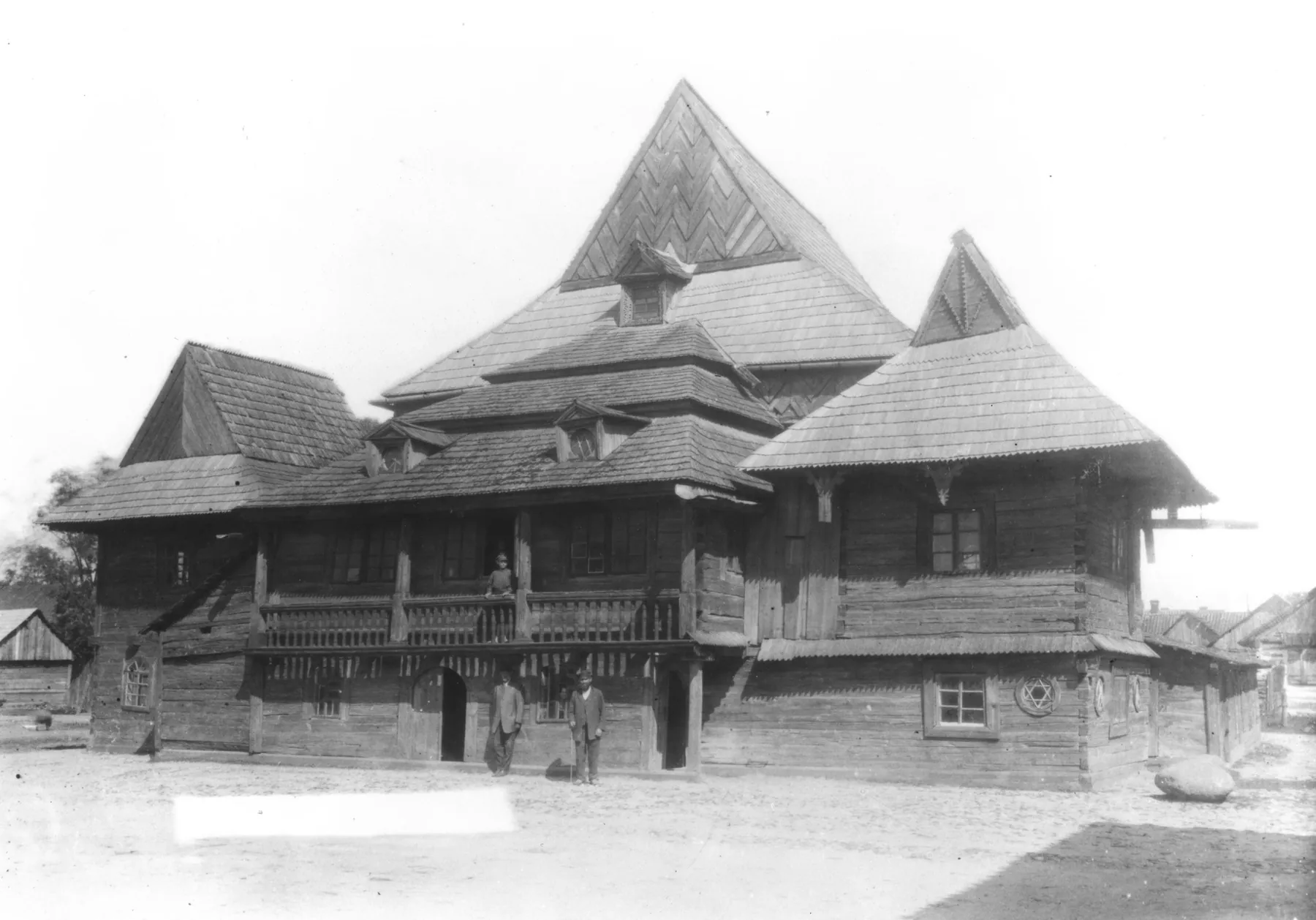
Wooden Synagogue of Zabłudów
Built around 1640 under a Radziwiłł privilege, the timber synagogue of Zabłudów near Białystok was among the oldest and most admired wooden synagogues of the Polish–Lithuanian Commonwealth, famed for its tiered roofs and carved bimah. Nazi German soldiers burned it in June 1941.
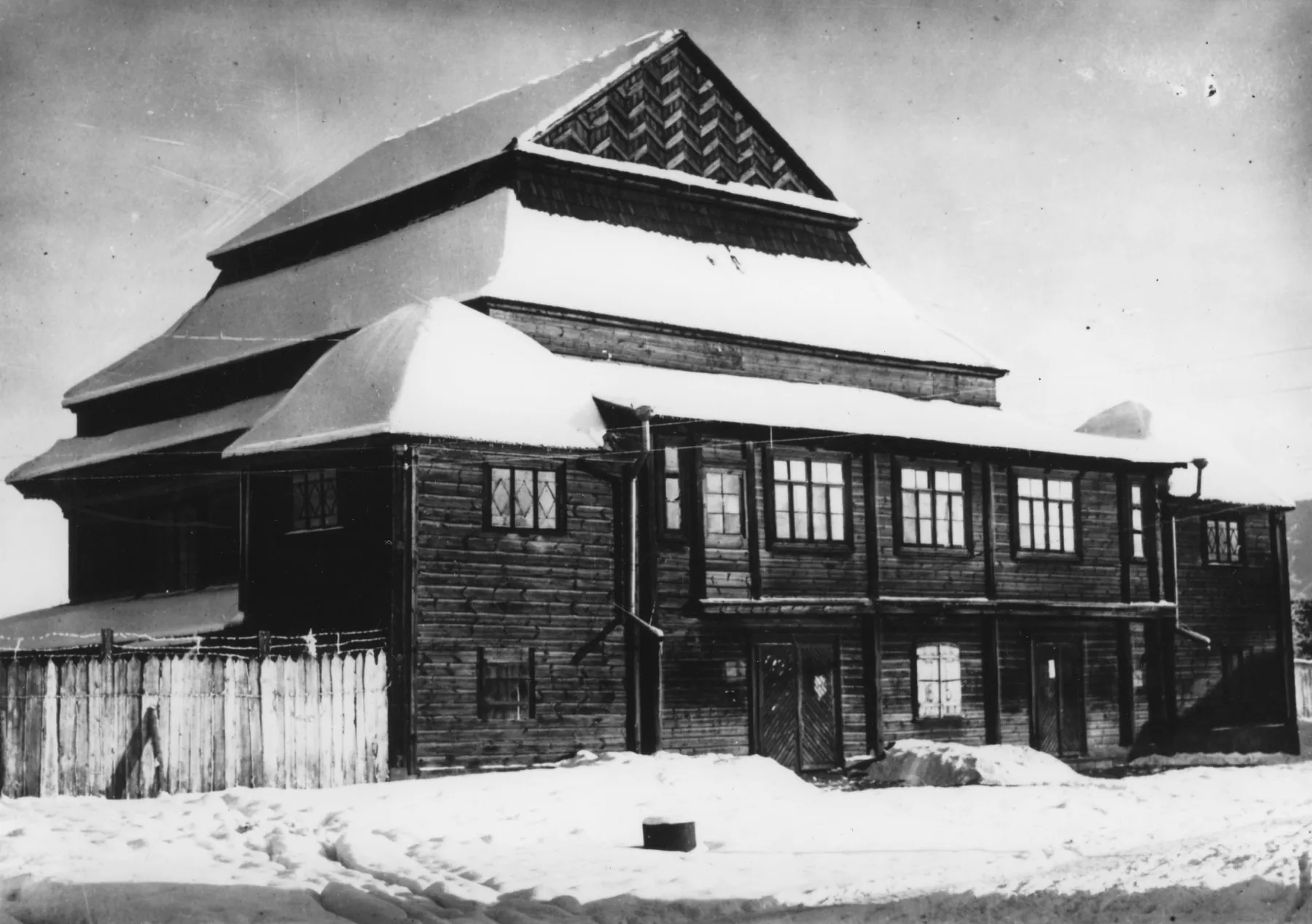
Wooden Synagogue of the Zaniemansk Suburb, Grodno
The great wooden synagogue of Grodno stood on the high left bank of the Niemen in the Zaniemansk suburb. Built around 1750, with a three-tiered roof and corner pavilions, it was one of the most thoroughly documented wooden synagogues of Poland–Lithuania. It burned at the start of the Nazi German invasion in 1941.

Wooden Synagogue of Śniadowo
The wooden synagogue of Śniadowo, near Łomża, built in 1768 on the Narbek river, rose in a cascade of broken roofs over arcaded galleries and corner pavilions. Photographed by Konrad Kłos in September 1913, it was burned by the Russian army during the First World War.
Wooden Synagogue of Šafov
The wooden synagogue of Šafov, in southern Moravia near the Austrian border, was apparently the first house of prayer in the walled Jewish quarter to which the town's Jews were moved in the late 1720s. A simple timber building, it burned down in 1729, and a late Baroque synagogue was later raised on its foundations.
Workers' Union Bet Midrash, Piatra Neamț
The Workers' Union of Piatra Neamț built its own Bet Midrash, a house of prayer and study, in 1903; Pinkas Hakehillot calls it the "real Shevet Achim". Nothing is known of its form or address. The local Jewish community says the Communists pulled down all the town's synagogues but the Baal Shem Tov in the 1960s and 1970s.
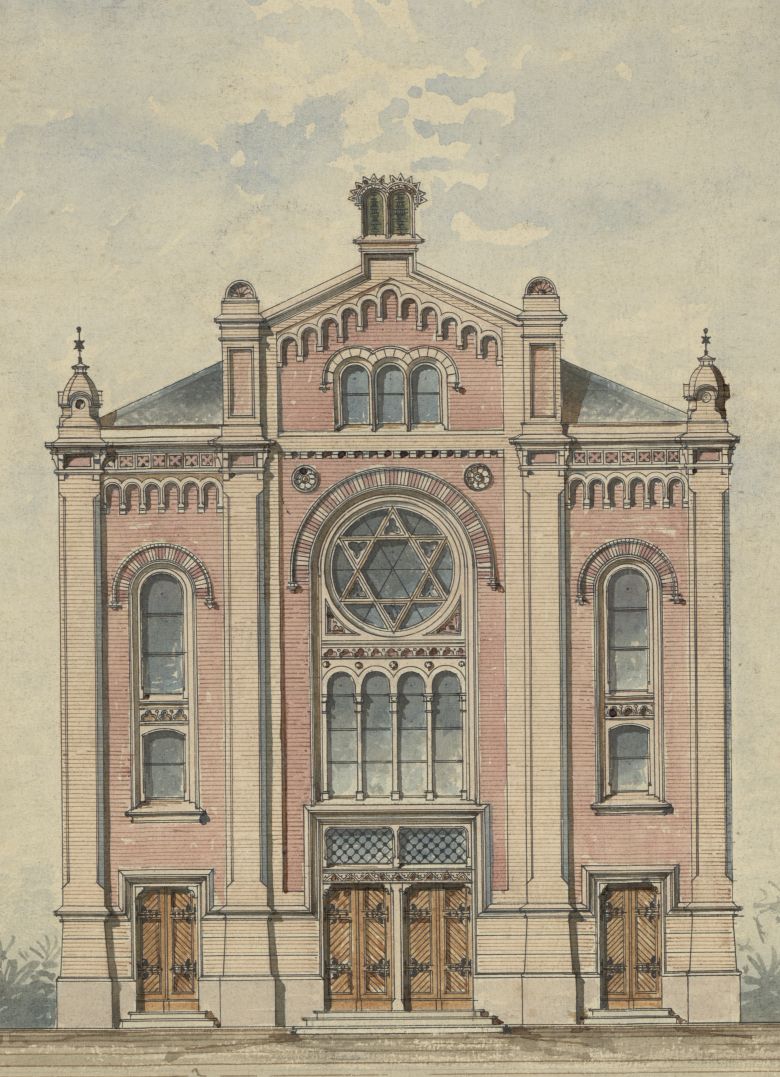
Währing Synagogue (Währinger Tempel), Vienna
The Währinger Tempel, built in 1888-89 to designs by Jakob Modern in a courtyard at Schopenhauerstraße 39, was the main synagogue of Vienna's 18th district. Nazis set it on fire during the November Pogrom of 10 November 1938, and the burnt shell was demolished in 1939-40 at the Jewish community's expense. Housing now stands on the site.

Zagreb Synagogue
The Zagreb Synagogue, consecrated in 1867 on today's Praška Street just south of Ban Jelačić Square, was the city's main synagogue and one of its landmark buildings. In October 1941 the Ustaše authorities of the Independent State of Croatia began demolishing it; by April 1942 it was gone, and the site remains largely empty.
Zalaszentgrót Synagogue
The synagogue of Zalaszentgrót served one of the oldest Jewish communities of Zala county. Tradition held that it was a former fortification and granary, taken over about 1761; the community bought it from Count Ferenc Batthyány in 1809 and enlarged it. It had vanished by a 1955 survey; who demolished it is unknown.
Zandvoort Synagogue
A small synagogue for about 120 people, built in 1922 on the Dr. J.G. Mezgerstraat for the young Jewish community of the seaside resort of Zandvoort. In the night of 4 to 5 August 1940, under the Nazi German occupation, it was blown up; a NIOD photo record and a community history blame Dutch Nazis of the NSB.
Zbraslavice Synagogue
The synagogue of Zbraslavice, a small market town south-west of Kutná Hora, was built in 1832 for a Jewish community that numbered 215 people in 1850. The congregation dissolved before 1921. The building was later converted into a garage and was demolished some time after 1990; who pulled it down is not recorded.
Zemianske Sady Synagogue
Zemianske Sady, the former Nemeskürt in Nyitra county, had a Jewish population of 151 in 1851, when the geographer Elek Fényes recorded that they had their own synagogue. The building is known only from that line and from a later note that the Jewish prayer house was destroyed in 1943; its form and the cause of its loss are unrecorded.
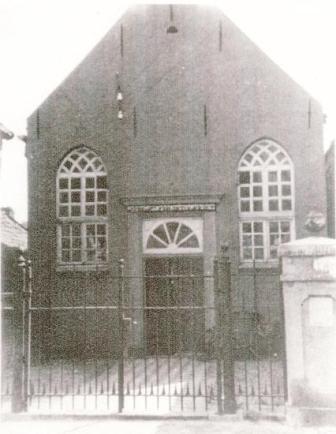
Zevenaar Synagogue
The synagogue of Zevenaar, a small brick hall on the Grietsestraat, was inaugurated in 1833 and served the Jews of this Liemers town for over a century. Most of its congregation was deported and murdered in 1943. An American bombing raid badly damaged the building on 8 February 1945, and it was demolished shortly after the liberation.
Zisu Herman Synagogue, Iași
The Zisu Herman Synagogue was one of the many small synagogues and prayer houses of Iași, the old capital of Moldavia. It stood at Strada Labirint 10 and remained in use until 1979, when it was demolished during the Communist regime's systematization of the area. No photograph or description of the building has been found.
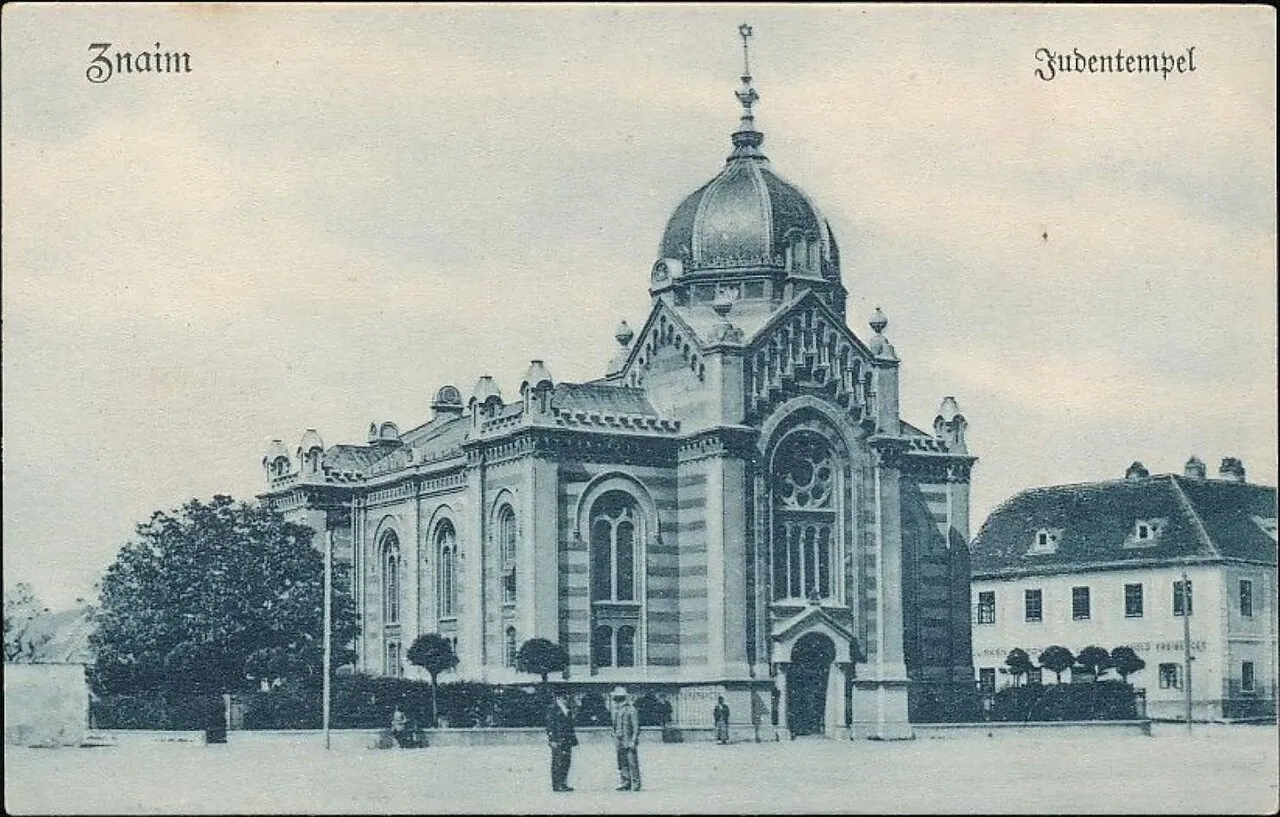
Znojmo Synagogue
Znojmo's domed Moorish-style synagogue, designed by the Viennese architect Ludwig Schöne, was consecrated in September 1888 for a community resettled after 1848. After the town was annexed by Nazi Germany it was closed on 10 November 1938, and the Nazi-era town administration had it pulled down between 1939 and 1942 to make way for a park.
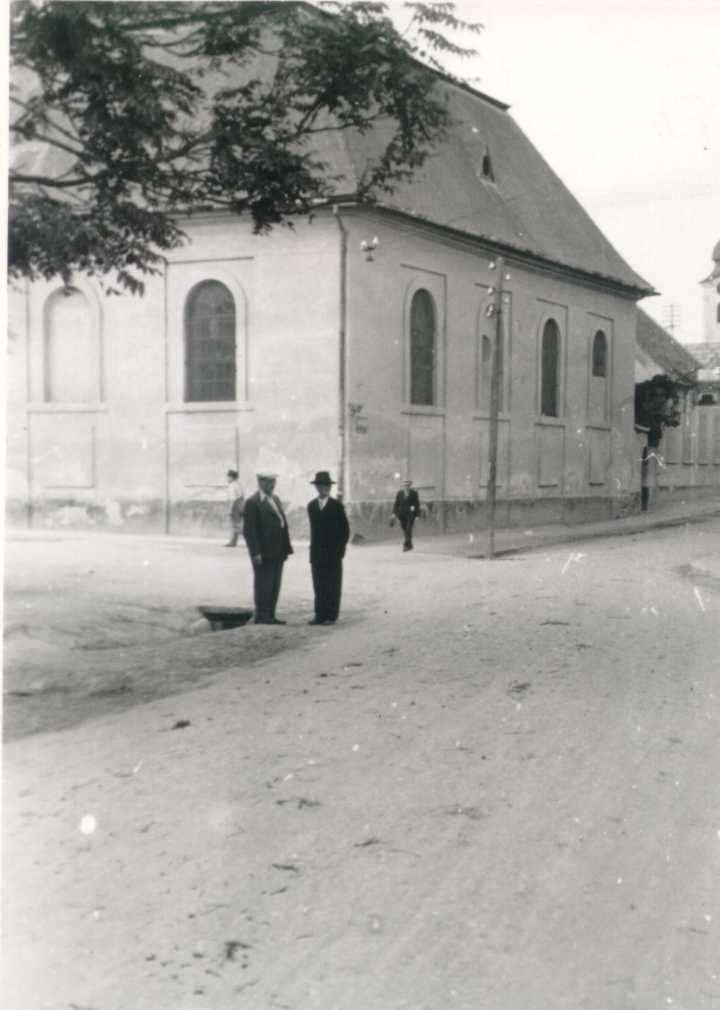
Zsámbék Synagogue
Built in 1810 on a corner of Zsámbék's main square, this four-pillar synagogue served a Jewish community as old as that of Óbuda. Damaged in 1945, it was looted and stripped of its roof, and the ruin was demolished under the Communists soon after 1947. A grocery shop replaced it.
Zuidbroek Synagogue
The synagogue of the Jewish community of Noord- en Zuidbroek was built in 1883 in Uiterburen, a hamlet of Zuidbroek in the province of Groningen. It served a small rural congregation that was independent from 1884 to 1922. After the community shrank and rejoined Hoogezand, the building was demolished in 1934.
Zwartsluis Synagogue
The synagogue on the Baanstraat in Zwartsluis, with an adjoining study house, was dedicated in 1851 for a community dating from the late seventeenth century. Under the Nazi occupation its Jews were deported and murdered, and the building stored their confiscated furniture. Sold after 1948, it became a carpenter's workshop and was demolished in 1969.
Záhorská Ves Synagogue
Záhorská Ves, called Uhorská Ves until 1948, is a village on the Morava river at the Austrian border, west of Malacky. English Wikipedia lists a synagogue there as destroyed during the Second World War, but no other source found describes the building, its date, its builders or who destroyed it.

Ócsa Synagogue
Ócsa's synagogue was a small prayer hall with a cantor's house in a village south-east of Budapest. Its congregation was deported in June 1944. By 1946 the building was partly collapsed and occupied by a local woodworker; its Torah ark went to the Jewish Museum in Budapest. Who finally demolished it, and when, is unknown.

Ónod Synagogue
Ónod's synagogue, a rendered hall with tall round-arched windows, was built in 1883 for a community of grain merchants that had been present since the eighteenth century. Its congregation was deported to Auschwitz in June 1944. The building was later stripped and pulled down, and a Protestant church now stands on its site.
Ózd Synagogue
The synagogue of Ózd, the ironworks town of northern Borsod, opened in the first years of the twentieth century for a congregation founded in 1872. Its worshippers were deported in 1944, and in 1946 a rioting crowd broke into it during a service. It was demolished later under Communist rule; who pulled it down is not recorded.
Údlice Synagogue
The synagogue of Údlice (Eidlitz), near Chomutov in north-western Bohemia, stood at the heart of one of the region's oldest Jewish settlements. Begun about 1694, wrecked by Chomutov students in the 1730s and rebuilt several times, last in 1840, it fell out of use as the community dwindled and was pulled down in the 1920s.
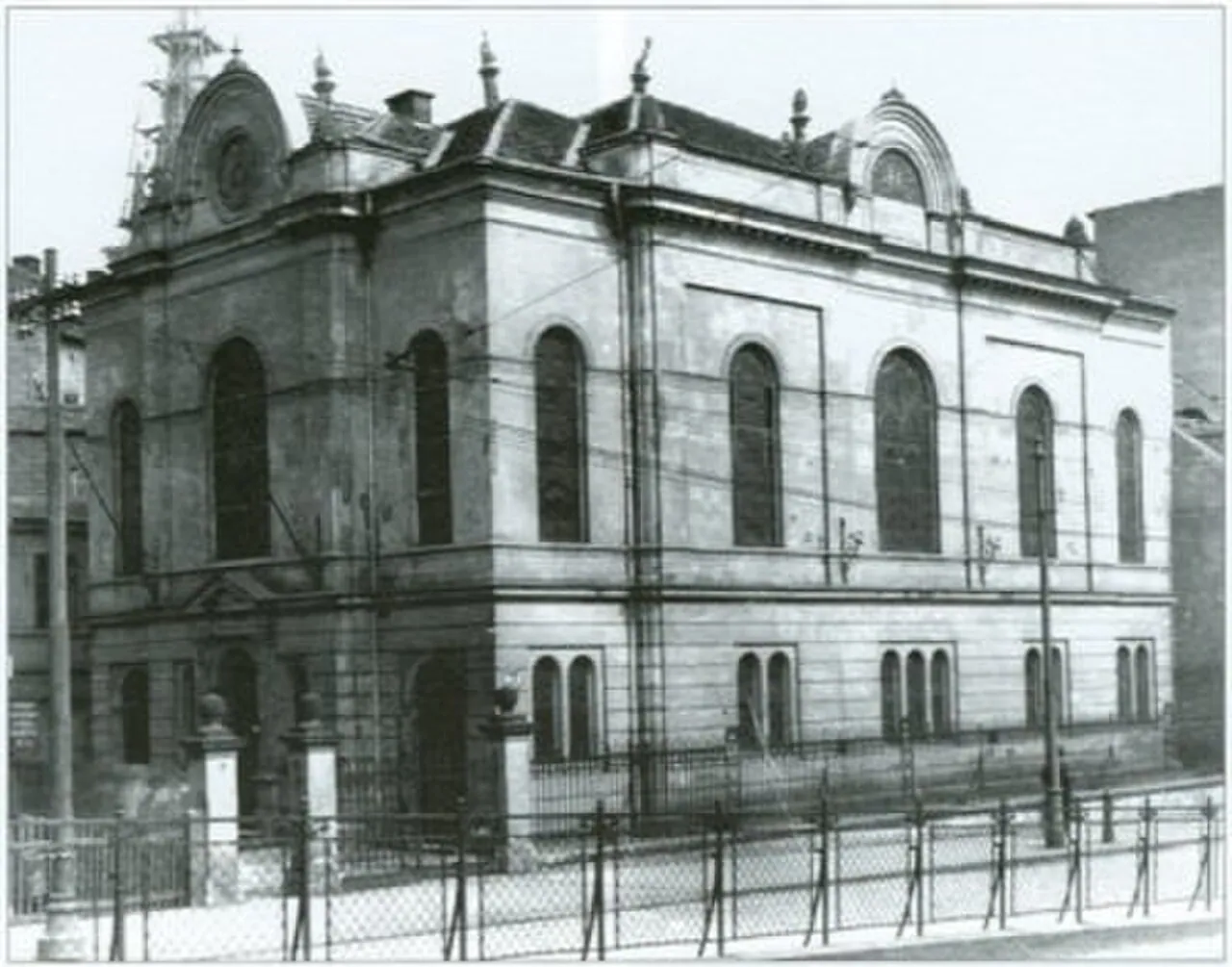
Ústí nad Labem Synagogue
The synagogue of Aussig, today Ústí nad Labem, was built in 1880 to designs by Alwin Köhler and consecrated on 29 August 1880. The Nazis looted and burned it on New Year's Eve 1938, and in 1940 a butcher's firm bought the ruins and built a factory on the site. Most of the community was murdered.

Úvaly Synagogue
The synagogue of Úvaly, east of Prague, was created in 1850 by converting a disused granary beside the old lordship toll house, and received a Romanesque-Gothic facade in 1867. Its shrinking congregation could no longer maintain it: the building was demolished on 1 April 1925, the plot sold and a family house built on it.
Čachtice Synagogue
The synagogue of Čachtice (Csejte), a market town in the Váh valley of western Slovakia, was built in the first third of the nineteenth century. It belonged to the rare group of nine-bay synagogues of Polish origin, with the bimah set between four columns that carried the ceiling. It was demolished in 1955.
Čakovec Synagogue
Built in 1836, the synagogue of Čakovec was the oldest purpose-built synagogue in present-day Croatia, raised when the town belonged to Hungary and enlarged in 1876. Its congregation was deported in 1944. The memorial on its site says Hungarian occupation forces tore it down in April 1944; other sources place the demolition after 1945.
Častkov Synagogue
Častkov, a village in the Senica district of western Slovakia, once had a synagogue standing at the back of the yard of house no. 112. Only a remnant of one of its walls survives. When it was built, who used it and when and by whom it was pulled down are not recorded in the sources found.
Častá Synagogue
The synagogue of Častá, a wine-growing village below Červený Kameň Castle in the Little Carpathians, was built in 1884 at Hlavná street 189 for a Jewish community that had lived on the Pálffy estate since the eighteenth century. It outlasted the community's destruction in the Holocaust but was pulled down after 1953; a private house now stands on its plot.
Đakovo Synagogue
Đakovo's synagogue, a twin-towered historicist building with onion domes and a rose window, was begun in 1863 and finished about 1880. It was deliberately set on fire on the night of 19 April 1941, a burning one historian attributes to members of the town's German national group. A block of flats now occupies the plot.
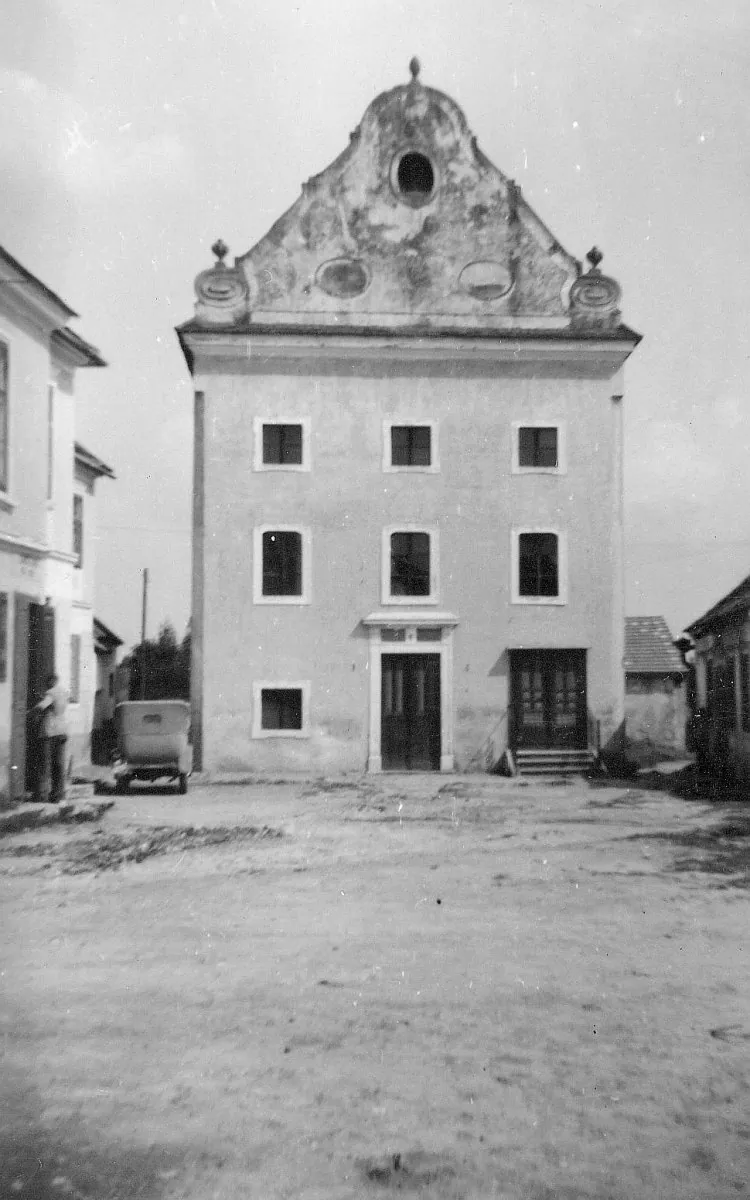
Šafov Synagogue
The synagogue of Šafov (Schaffa), a tall late Baroque hall with a curved gable in the middle of the walled Jewish quarter, was built in 1783-85 for one of southern Moravia's largest rural communities. The Nazis wrecked it after annexing the town in 1938, and its ruins were pulled down in 1942 for road stone.
Štip Synagogue
The synagogue of Štip stood at the heart of the town's Jewish quarter, a Sephardic community recorded from the early sixteenth century. After the Bulgarian occupation authorities, allied with Nazi Germany, deported the town's Jews on 11 March 1943, the building was used as a store for their seized goods and then demolished.
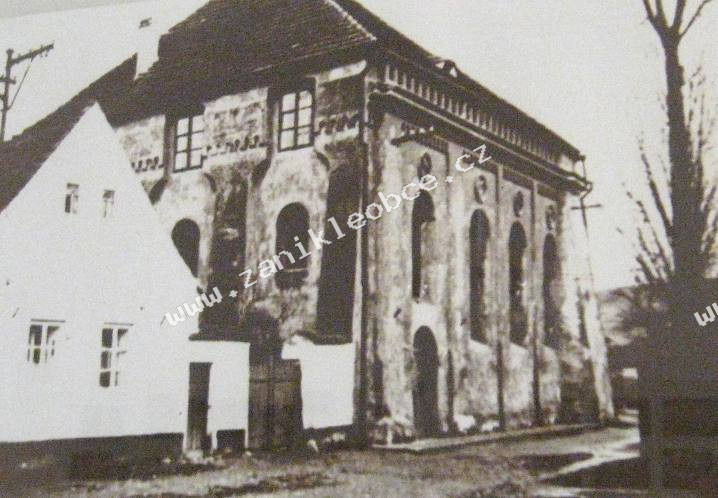
Švihov Synagogue
Švihov's masonry synagogue was built in 1783 on the town's Jewish lane after a fire in 1773 destroyed the earlier wooden synagogue and school. It served a small regional congregation until the Second World War, was sold to a private couple in 1949 and, already dilapidated, was demolished around 1960.
Želiezovce Synagogue
A synagogue of the small Hungarian-speaking Jewish community of Želiezovce (Zselíz) on the lower Hron, in the Levice district of southern Slovakia. Its existence and loss rest on a single unreferenced list entry; when it was built, where it stood and when it was pulled down are unknown. The congregation was deported in 1944.